
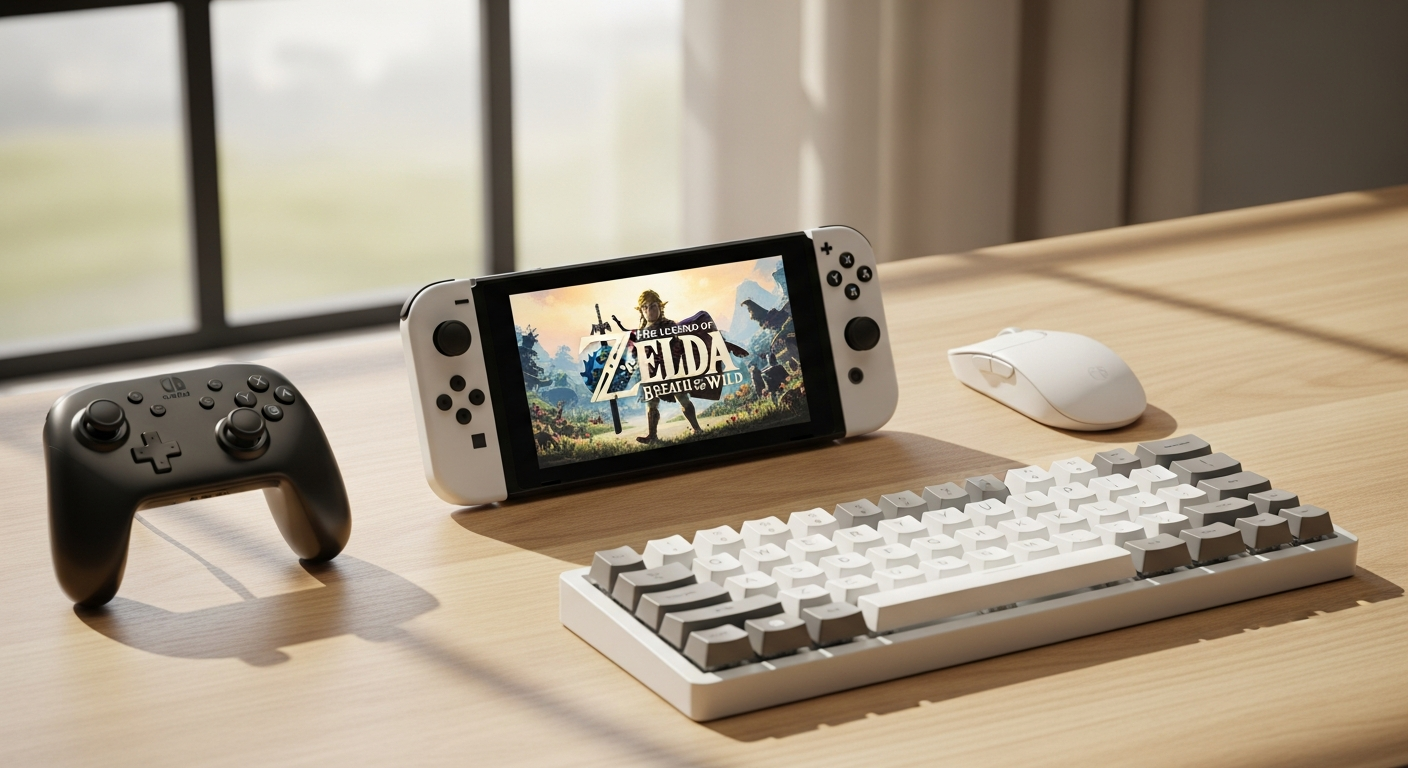
Discover how The Legend of Zelda: Breath of the Wild revolutionized open-world gaming with innovative physics, player freedom, and creative problem-solving. Learn why this Nintendo masterpiece remains a must-play in 2026.
Over 31 million copies sold worldwide. That's not just a number—it's a testament to something genuinely transformative happening in gaming. The Legend of Zelda: Breath of the Wild didn't just meet expectations; it shattered them, redefining what players could accomplish within a virtual world and fundamentally challenging how developers approach open-world design.
When Nintendo launched this title alongside the Switch in 2017, few anticipated the seismic shift it would trigger across the industry. Developed and published by Nintendo, Breath of the Wild transcended typical adventure game conventions by prioritizing player autonomy above linear storytelling. The game handed players the keys to Hyrule and trusted them to explore, experiment, and solve problems their own way—a radical departure from the hand-holding design many open-world games had normalized.
This analysis breaks down what makes this game genuinely exceptional: the physics engine that rewards creative thinking, the environmental puzzle-solving that feels organic rather than forced, and the freedom mechanics that let players approach challenges in countless ways. Understanding why weapon durability sparked debate, how the crafting system deepens exploration, and whether this masterpiece deserves a spot in a 2026 gaming collection requires examining each element carefully.
Discover The Legend of Zelda: Breath of the Wild on Wakkap.com today.
The Physics Engine That Changed Everything
How Environmental Manipulation Becomes Your Primary Problem-Solving Tool
The physics engine in Breath of the Wild operates as the foundation for nearly every challenge the game presents. Rather than relying on predetermined solutions, the engine responds dynamically to player experimentation. Blocks tumble when struck. Fire spreads across grass. Metal objects conduct electricity. These aren't mere visual flourishes—they're tools waiting to be wielded creatively.
Interactive Elements and Their Multiple Applications
Ice blocks freeze water surfaces and create platforms. Fire spreads to alert enemies or solve environmental puzzles. Wind gusts can propel objects or redirect projectiles. Each element serves multiple purposes depending on context and player ingenuity. A block that solves one puzzle might become a battering ram for another challenge. The same fire that cooks an enemy's ammunition can also melt ice blocking a passage.
Creating Unintended Solutions That Developers Anticipated
Nintendo's design philosophy embraced player creativity with genuine openness. The development team anticipated countless unintended solutions and celebrated them rather than patching them out. Players discovered methods the designers hadn't explicitly considered—launching themselves across chasms using exploding barrels, solving shrines through unconventional physics interactions, finding shortcuts that bypass intended paths. These moments became the game's greatest strength, transforming exploration into genuine discovery.
Comparison to Traditional Puzzle Design
Traditional action-adventure games typically present puzzles with single solutions or narrowly defined approaches. Environmental elements exist within predetermined interaction chains. Breath of the Wild inverted this approach entirely. The world respects player problem-solving regardless of methodology. This fundamental shift elevated puzzle-solving from following developer breadcrumbs to genuine intellectual engagement.
Examples of Physics-Based Challenges
Early encounters showcase this design brilliance. A shrine might present enemies protected behind metal walls. Players could approach head-on, but magnets allow lifting those walls. Alternatively, exploiting the physics engine to create an explosive chain reaction eliminates enemies entirely. Another shrine features a puzzle seemingly requiring fire, but wind-based solutions work equally well. The flexibility ensures no two players solve challenges identically.
Why This Approach Feels Fresh After Hundreds of Hours
After 200+ hours in Hyrule, the physics engine still surprises. New environmental combinations generate novel interactions. Creative thinking continues yielding unexpected results. Most open-world games feel mechanically exhausted within 50-60 hours. Breath of the Wild maintains intellectual engagement far longer because the fundamental systems reward experimentation rather than repetition.
Non-Linear Exploration and Player Agency
The Freedom to Tackle Objectives in Any Order
From the moment players emerge from the Great Plateau tutorial area, Hyrule sprawls in all directions with genuine freedom. The final boss awaits immediately—no artificial progression gates prevent a player from confronting Calamity Ganon within the first few hours. This radical approach respects player autonomy entirely. Some elect to pursue the main narrative immediately. Others spend 100+ hours exploring before touching the final quest.
How the Open-World Structure Eliminates Artificial Progression Gates
Traditional open-world games employ level scaling, locked regions, and quest dependencies to control player progression. Breath of the Wild abandons these mechanics almost entirely. A player equipped with beginner gear can technically reach any location. Difficulty emerges organically through enemy encounters and environmental hazards rather than arbitrary barriers. This design choice transforms the world into something genuinely explorable rather than a series of gated content sequences.
Discovery Mechanics That Reward Curiosity
Every vista, every distant mountain, every mysterious structure invites investigation. The game never punishes off-path exploration. Wandering away from objective markers yields shrines, Korok seeds, rare ingredients, and environmental storytelling. Players develop personal narratives through discovery—finding a hidden village, uncovering a character's backstory through exploration, or stumbling upon a shrine that perfectly suits their current equipment loadout.
The Sense of Genuine Achievement
Solving a puzzle independently generates authentic satisfaction. Players cannot follow a map marker to the solution. They cannot consult a quest log for explicit directions. The game trusts players to recognize patterns, observe environmental clues, and develop solutions. This approach transforms problem-solving from task completion into genuine accomplishment. A shrine conquered through creative thinking feels earned in ways that guided gameplay cannot replicate.
Navigation Without Constant Quest Markers
The absence of constant hand-holding creates breathing space for exploration. Players develop navigation skills. Landmarks become memorable through repeated observation. The world exists for its own sake rather than as a corridor connecting objective markers. This design choice extends gameplay through natural curiosity rather than artificial time extension.
How Player Choice Creates Personalized Gaming Narratives
Two players experience radically different games despite playing the same title. One might befriend every NPC and pursue their quests exhaustively. Another might avoid most side content, focusing purely on main objectives. A third could spend hundreds of hours collecting every Korok seed and maximizing inventory space. These personalized narratives emerge from genuine player choice rather than predetermined story branches, creating authentic investment in individual experiences.
Combat Mechanics and Weapon Durability System
Weapon Degradation as a Design Choice
The weapon durability system represents Breath of the Wild's most controversial mechanical decision. Weapons gradually degrade with use and eventually break. This system forces strategic thinking that traditional action games abandoned decades ago. Players cannot become attached to individual weapons. Instead, they adapt constantly, trying new equipment and experimenting with different combat approaches. Some view this as brilliant design that encourages experimentation. Others find it frustrating, preferring the satisfaction of mastering signature weapons.
Why Some Players Embrace Durability While Others Find It Frustrating
Proponents argue durability prevents players from hoarding powerful weapons for emergencies, instead pushing them to engage with moment-to-moment combat variety. Detractors contend it disrupts flow, particularly when favorite weapons shatter during critical moments. The truth encompasses both perspectives—durability undeniably encourages experimentation, but it equally disrupts the classic action-game satisfaction of growing attachment to cherished gear.
Resource Management and Inventory Decisions
Limited weapon slots (expandable to 18 with Korok seeds) force constant inventory prioritization. Players cannot carry every tool simultaneously. This mechanical constraint creates meaningful decisions. What combination suits current objectives? Should players swap gear before encounters? Which weapons justify precious inventory space? These decisions transform combat from pure skill execution to strategic resource management.
Variety in Combat Approaches
The durability system paradoxically creates combat diversity. Stealth approaches reward careful observation and exploit enemy positions. Direct confrontation demands different tactics than environmental manipulation. Using fire to ignite enemy ammunition creates explosive chaos. Wind gusts launch projectiles with precision. Enemies can be lured into hazardous terrain. No single approach dominates—instead, the world accommodates varied strategies with equal effectiveness.
Enemy AI Behavior and Adaptive Difficulty Scaling
Enemy behavior adapts to player actions. Monsters investigate disturbances. Archers respond to arrows by seeking cover. Patrol patterns shift based on discovered threats. Difficulty scaling remains organic rather than arbitrary. Stronger enemies appear gradually, not through artificial level gates. A player attempting challenges beyond their current capability faces genuine danger without feeling artificially restricted.
Trading Durability Concerns Against Freedom to Experiment
Weapon durability fundamentally represents a design trade-off. The system sacrifices the classic satisfaction of obtaining and maintaining powerful equipment in exchange for encouraging constant experimentation. Players discover that "weaker" weapons can achieve remarkable results with creative thinking. The system forces engagement with the full weapon arsenal rather than relying on preferred gear. This philosophical shift separates Breath of the Wild from conventional action-adventure design.
Crafting, Cooking, and Equipment Upgrades
The Meal and Elixir System as Survival and Strategic Advantage
Cooking transforms from narrative side activity into essential gameplay mechanic. Players gather ingredients and combine them thoughtfully. A simple mushroom stew provides basic sustenance. Strategic combinations create meals granting temporary stamina boosts, cold resistance, or heat protection. Elixirs crafted from monster parts and insects provide different benefits. This system makes food preparation integral to exploration strategy rather than optional flavor.
Ingredient Combinations and Their Effects
The cooking system operates with remarkable depth. Certain ingredients boost specific effects. Combining multiple ingredients of the same category multiplies potency. Understanding these relationships becomes crucial for tackling environmental challenges. Volcanic regions demand heat-resistant meals. Snowy mountains require cold protection. The system elegantly teaches players to observe their surroundings and respond strategically rather than relying on fixed equipment.
How Cooking Becomes a Mini-Game
Preparing meals develops surprising tactile satisfaction. Players gather ingredients while exploring. Cooking sequences provide brief interactive moments. The visual presentation of meals simmering in pots creates satisfying feedback. What begins as pure mechanics transforms into a relaxing mini-game that feels essential to the larger adventure rather than mechanical necessity.
Equipment Enhancement and Armor Customization
Beyond simple cooking, armor customization allows meaningful character development. Collecting armor pieces from different sources provides varied aesthetics and protection benefits. Great Fairies upgrade equipment to higher levels of durability. Dyeing armor allows personal expression. This system lets players develop gear reflecting their playstyle and preference without forcing specific builds. Stealth-focused players gather ninja garb. Combat-heavy players pursue heavy armor. Explorers select equipment balancing mobility and protection.
Resource Gathering as Integrated Part of Exploration
Ingredients and upgrade materials sprawl throughout Hyrule. Gathering becomes natural exploration byproduct rather than forced farming. Players notice ingredient patches while traveling. Monster parts drop from defeated enemies. Fish populate streams. Mushrooms grow in forests. The world provides resources organically, making preparation feel like discovering abundance rather than grinding for supplies.
The Balance Between Preparation and Spontaneous Gameplay
The crafting systems encourage planning without demanding meticulous preparation. Players can tackle challenges with minimal equipment. Alternatively, careful preparation amplifies capabilities dramatically. This balance respects different playstyles. Spontaneous players can improvise with found materials. Strategic players can spend hours optimizing their approach. The game accommodates both extremes comfortably.
Explore the crafting depth of The Legend of Zelda: Breath of the Wild available on Wakkap.com.
Artistic Direction and Visual Design
Cel-Shaded Aesthetics Blended with Realistic Textures
The visual presentation balances stylized cel-shaded character models against impressionistically rendered environments. This hybrid approach creates something timeless—not bound to any particular era of graphical realism. Characters possess exaggerated, expressive proportions while environments feature naturalistic lighting and texture detail. The combination generates a world simultaneously fantastical and grounded.
How the Art Style Creates a Timeless Visual Experience
Unlike games chasing photorealism, Breath of the Wild's aesthetics age gracefully. The cel-shaded approach ensures the game remains visually appealing years after release. Player characters and key NPCs feature expressive designs that convey emotion through exaggeration rather than subdivision counts and shader complexity. This philosophical choice prioritizes artistic intent over technical demonstration.
Color Palette Choices That Guide Exploration
Color serves functional purposes beyond aesthetics. Interactive elements often employ subtle color distinction. Puzzle solutions frequently involve environmental color patterns. The surrounding landscape provides visual feedback about available resources. Red tones suggest fire-based puzzles. Blue indicates water or ice mechanics. These color choices guide observant players toward solutions organically.
Performance Considerations and Frame Rate Stability
The Nintendo Switch version occasionally experiences frame rate dips in densely populated areas. Handheld mode prioritizes portability, occasionally sacrificing smoothness. The Wii U version maintains more stable performance but operates at lower resolution. These technical compromises represent intentional choices prioritizing accessibility and portability over graphical performance. Most players find the visual quality-performance balance acceptable, recognizing the technical limitations of hardware release alongside the games ambitions.
The Visual Clarity Supporting Complex Environmental Puzzles
Despite stylized aesthetics, visual clarity remains exceptional. Players can clearly identify interactive elements, enemy positions, and environmental hazards. This clarity proves essential for the physics-based puzzle solving. Players must see possibilities clearly to exploit them creatively. Cluttered visuals would undermine the core design philosophy.
Why the Aesthetic Approach Differs from Hyper-Realistic Competitors
The deliberate move away from photorealism represents artistic confidence. Contemporary open-world games often chase technical realism. Breath of the Wild confidently pursues stylization, accepting that timeless visual design trumps graphical one-upmanship. This approach yields something that feels fresh and interesting years later, while hyper-realistic competitors often appear dated as technology improves.
Platform Performance: Switch vs. Wii U
Resolution and Frame Rate Differences
The Nintendo Switch version renders at 1080p handheld and 720p docked, targeting 30fps. The Wii U version operates at 1080p on television and 720p in gamepad mode, maintaining similar performance targets. Neither version achieves consistent 60fps, but the 30fps target remains stable in most situations. The Switch version occasionally dips below target in populated areas, while the Wii U maintains more stability at the cost of resolution flexibility.
Handheld Portability as a Game-Changer
The Switch's hybrid nature transforms Breath of the Wild from a home console experience into portable adventure. Playing this massive open world on handheld screens fundamentally changes the experience. Extended play sessions become possible anywhere. The game adapts to portable play beautifully, never demanding precise reflexes requiring television-screen visibility. This accessibility likely contributed significantly to the title's massive success.
Technical Limitations and Occasional Performance Dips
Both versions experience occasional frame rate drops when processing complex scenes. Areas with many active enemies or dense foliage occasionally struggle. The Switch version affects portable play more noticeably than docked mode. These performance limitations represent acceptable compromises given the game's ambitions on relatively modest hardware. Most players experience these dips rarely enough that they don't significantly impact enjoyment.
Load Times and Overall Responsiveness
Load times remain mercifully brief on both platforms. Traveling between regions loads quickly. Fast travel executes swiftly. Entering shrines and buildings transitions smoothly. The game prioritizes responsive gameplay over technical perfection, creating a flow that rarely frustrates despite occasional performance hiccups.
Which Platform Offers the Optimal Experience for Different Play Styles
The Nintendo Switch serves better for players valuing portability and flexibility. Handheld mode enables extended play sessions without television access. The Wii U suits players prioritizing stable home console performance, though this platform becomes increasingly difficult to find. The Switch's versatility and continued availability make it the practical choice for new players in 2026.
Availability and Pricing on Platforms Like Wakkap.com
New copies typically range €50-€70 on Wakkap.com, with second-hand prices varying based on condition. The Switch version maintains higher availability and prices than the increasingly scarce Wii U version. Second-hand copies in excellent condition retain value well, suggesting solid long-term investment potential. Pricing reflects the game's enduring demand and collector status.
Narrative and World-Building in Hyrule
The Environmental Storytelling Approach
Rather than relying on exposition-heavy cutscenes, Breath of the Wild reveals narrative through environmental detail. Ruins suggest past civilizations. NPC conversations provide character context. Location design hints at historical events. Observant players piece together Hyrule's story through exploration rather than forced narrative moments. This approach respects player intelligence and creates satisfying discovery.
Main Quest Structure Versus Optional Content
The main narrative questline remains deliberately brief. Players can complete the primary objective relatively quickly. However, dozens of side quests expand character development and world-building substantially. Shrine challenges number in the hundreds, providing consistent engagement. Korok seeds reward thorough exploration. This structure ensures players determine narrative pacing rather than games dictating progression speed.
Character Development and NPC Interactions
NPCs possess defined personalities and circumstances. Many characters recur across multiple locations and questlines, developing relationships throughout the game. Finding an NPC in different locations during different seasons reveals how they spend time and what concerns occupy them. This approach creates character investment without relying on mandatory story missions.
How the Story Unfolds at Your Own Pace
Cutscenes can be skipped. Dialogue can be interrupted. Story moments trigger through exploration and optional quests rather than mandatory progression. Players control narrative pacing entirely. Some choose to understand every story detail. Others focus purely on gameplay. Both approaches remain equally valid and enjoyable.
The Mystery of Hyrule's Past and Link's Connection
The narrative gradually reveals that Link defeated Calamity Ganon once before, 100 years ago. Most of Hyrule's civilization lies in ruins. Link awakened from stasis without memories. This setup creates intrigue without demanding immediate understanding. Players gradually piece together what happened through exploration and NPC conversations. The mystery maintains engagement throughout hundreds of hours.
Themes of Resilience, Redemption, and Heroic Cost
Beneath the adventure narrative lies thematic depth. NPCs frequently reference loss and recovery. Characters rebuild lives from ruins. The overall story suggests heroism carries costs. Completing the narrative reveals the weight of Link's previous sacrifice. These themes develop subtly through environmental storytelling rather than heavy-handed dialogue.
Comparing Breath of the Wild to Modern Open-World Games
Influence on Subsequent Open-World Design Philosophies
Breath of the Wild fundamentally altered industry expectations. Games released afterward frequently borrowed design elements—reduced quest markers, physics-based puzzles, player freedom prioritized over linearity. The industry recognized that open worlds function better when respecting player agency. Developers studying contemporary open-world design cannot ignore Breath of the Wild's innovations.
How It Differs from Mission-Driven Open Worlds
Games like Grand Theft Auto and Assassin's Creed employ mission-based design where specific objectives unlock progressively. Breath of the Wild abandons this structure entirely. Objectives exist equally everywhere simultaneously. No progression gates enforce order. This philosophical difference fundamentally separates Breath of the Wild from the open-world games that preceded it.
Player Freedom Versus Narrative Structure
Traditional narratives demand specific progression to maintain coherent storytelling. Breath of the Wild recognizes that player freedom and compelling narrative need not conflict. By embracing non-linear narrative and environmental storytelling, the game achieves both. Players experience genuine freedom while discovering meaningful story content.
Physics-Based Puzzle Solving Versus Traditional Quest Design
Most contemporary games employ predetermined quest solutions with minor variations. Breath of the Wild's physics engine enables countless valid approaches to identical challenges. This design philosophy extends beyond puzzles into combat and exploration. The game trusts players to develop solutions rather than following developer-intended paths.
The Legacy Effect on Industry Expectations
Modern open-world expectations have shifted toward player autonomy. Younger gamers now expect freedom previously considered revolutionary. This cultural shift stems substantially from Breath of the Wild's success proving that respecting player intelligence yields better games. The title fundamentally changed what developers believe audiences want.
Why Competitors Have Attempted to Replicate Its Formula
Multiple publishers released games specifically designed to capture Breath of the Wild's formula—physics engines enabling creative solutions, expansive open worlds, reduced hand-holding. Few achieved comparable success, suggesting that surface-level replication misses the fundamental design philosophy. True player-focused design requires systemic commitment rather than simple feature adoption.
Purchasing Considerations for 2026 Gamers
New Versus Second-Hand Pricing
New copies on Wakkap.com range €50-€70, reflecting the game's enduring popularity and relatively recent original release. Second-hand pricing varies dramatically based on condition. Excellent condition copies command prices near new retail. Heavily used versions cost significantly less. Collectors and condition-conscious players should carefully assess second-hand listings.
Condition Assessment for Used Copies
Second-hand game condition varies widely. Excellent copies include original cases, manuals, and discs in pristine condition. Good condition items show minimal wear. Acceptable copies function perfectly but display cosmetic damage. Poor condition items may have damaged cases or worn discs. Wakkap.com provides condition ratings helping buyers make informed decisions.
Platform Choice Impact on Long-Term Enjoyment
Choosing between Switch and Wii U impacts experience quality. The Switch version offers portability and continued hardware support. The Wii U version becomes increasingly difficult to maintain as hardware ages. For players purchasing in 2026, the Switch version represents the practical long-term investment.
Whether the Game Justifies Its Price Point
Breath of the Wild routinely provides 100+ hours of engaging gameplay. For players seeking rich open-world experiences, the cost represents exceptional value. Few games offer comparable content depth and replayability. The price point reflects reasonable value for the experience provided.
Availability and Stock Considerations for Collectors
Stock remains generally available on Wakkap.com despite years since release. Collectors should note that complete-in-box versions command premium prices. Loose discs sell more affordably. Limited edition or special packaging variants may warrant premium pricing among collectors valuing completeness.
Complementary Purchases for Optimal Experience
Playing on Switch benefits from portable dock setups enabling convenient handheld-to-television transitions. Extra Joy-Con controllers provide multiplayer options. Screen protectors and carrying cases extend portability protection. These complementary items enhance experience without being strictly necessary.
The Lasting Impact
The Legend of Zelda: Breath of the Wild stands as more than just a critically acclaimed game—it represents a masterclass in respecting player intelligence and autonomy. From its innovative physics engine that turns every environment into a puzzle box, to its refreshing refusal to hold hands, this title fundamentally altered what open-world gaming could be. The weapon durability system sparked genuine debate, and occasional frame rate dips remind players of technical limitations on Nintendo hardware. Yet these minor friction points fade against the sheer brilliance of a world designed around freedom, discovery, and creative problem-solving.
The game's 31 million copies sold worldwide reflect something deeper than commercial success—they represent players worldwide recognizing exceptional design when they encounter it. Whether someone's searching for a new copy or acquiring a second-hand version, investing in Breath of the Wild remains one of gaming's smartest decisions. The game rewards curiosity genuinely. It celebrates experimentation authentically. It delivers hundreds of hours of meaningful adventure without manipulation or artificial time extension.
As gaming continues evolving in 2026 and beyond, Breath of the Wild remains a benchmark—a reference point for what happens when developers trust players to forge their own paths through worlds brimming with possibility. The game proved that respecting player agency and delivering critical acclaim need not conflict. It demonstrated that innovative design can reach commercial heights. Most importantly, it showed that games exist best when they serve player imagination rather than confining it.
Secure your copy of The Legend of Zelda: Breath of the Wild on Wakkap.com now.