
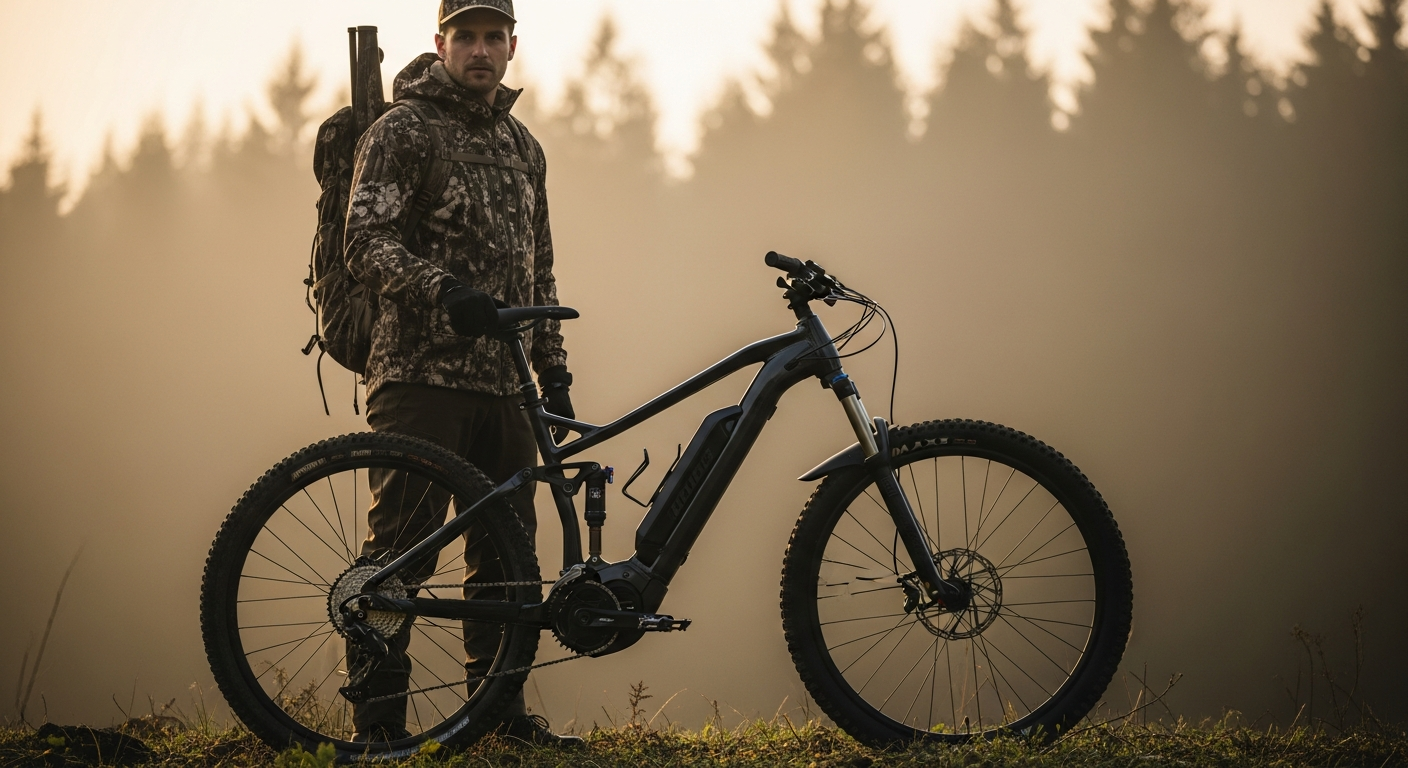
Discover why hunters are switching to the Young Electric E-Scout Pro 750W e-bike. Explore its silent motor, 60-mile range, fat tires, and specialized hunting features.
Over 40% of hunters now consider electric bikes as viable alternatives to traditional vehicles for accessing remote hunting grounds. The shift isn’t just about convenience—it’s about gaining a competitive edge while minimizing your environmental footprint. You’re watching a fundamental change in how backcountry hunters move through wild country, and the advantages go far beyond what most people realize.
The Young Electric E-Scout Pro represents a new breed of hunting equipment: purpose-built e-bikes engineered specifically for backcountry access. Unlike generic electric bikes adapted for hunting, this machine arrives with camouflage framing, a dedicated gear rack, and a whisper-quiet motor that won’t spook wildlife. It’s the difference between forcing standard equipment to work for your needs and owning a tool designed from the ground up for what you actually do in the field.
Discover the E-Scout Pro and transform how you hunt this season.
Throughout this guide, you’ll learn about its raw performance specs, discover how its specialized hunting features work in the field, evaluate whether the current pricing justifies the investment, and understand exactly who should consider this machine for their next season. You’ll also confront the real limitations and learn whether this e-bike aligns with your particular hunting style and terrain.
The Anatomy of Silent Predator Technology: Motor and Battery Performance
750W Motor Power Output and Terrain Capability
The 750W motor is the heart of the E-Scout Pro’s performance. This isn’t a toy motor—it’s engineered to handle the punishment of real hunting terrain. Steep slopes that would exhaust you on a traditional bike become manageable, even when carrying a rifle, ammunition, and gear. The motor handles mud without bogging down, climbs snow-covered ascents with steady power, and maintains torque when you’re navigating the kind of challenging terrain that separates prime hunting locations from the crowds.
You’ll notice the difference immediately in muddy spring conditions or when ascending elevation to reach higher country. The motor doesn’t strain or whine—it simply delivers consistent power, letting you focus on navigation and spotting rather than exhausting yourself with pedaling.
48V 15Ah Battery Specifications and Extended Expeditions
The 48V 15Ah lithium-ion battery represents serious capacity. This isn’t a weekend bike battery—it’s designed for hunters who plan extended missions into backcountry. The specifications translate to real-world capability: sustained power delivery, consistent performance as the battery depletes, and the reserve capacity to handle unexpected terrain challenges or longer-than-planned routes.
For extended hunting expeditions, battery capacity directly impacts your freedom. You’re not constantly worrying about finding electrical outlets or rationing power. The battery architecture supports the demands of serious hunters who might spend a full day scouting multiple ridges or covering territory that would take hours to traverse on foot.
60-Mile Range Under Varying Conditions
The advertised 60-mile range represents the upper capability, not the typical reality. Your actual range shifts significantly based on conditions. Pedal-assist mode stretches range considerably—you’re combining your legs with motor assistance, dramatically extending mileage. Full throttle burns battery faster. Terrain matters enormously: flat, packed trails deliver superior range compared to steep, muddy climbs. Your body weight, gear load, and tire pressure all factor into the equation.
For practical planning, expect 40-50 miles under real hunting conditions—still enough to cover substantial territory on a single charge. This range covers most daily hunting scenarios and permits exploration of new areas without the anxiety of running flat.
28 mph Top Speed and Territory Coverage
The 28 mph top speed falls into Class 3 electric bike territory. This velocity isn’t about racing through the forest—it’s about efficient travel between hunting zones. You can cover distance to productive areas quickly, spending your hunting hours actually hunting rather than traveling. The speed also means you can respond to changing conditions, reach distant terrain before peak activity windows close, or cover multiple properties in a single session.
Motor Noise Levels and Wildlife Considerations
The silent motor technology separates the E-Scout Pro from conventional e-bikes and certainly from gas-powered ATVs. Your engine produces barely perceptible noise—that’s critical. Game animals don’t flee from mechanical hum the way they bolt from engine roar. You can approach hunting zones quietly, accessing areas that loud vehicles would have already spooked. This silent approach fundamentally changes your hunting strategy.
Compare this to traditional ATVs that announce your arrival from miles away, and you understand why silence matters. The motor operates at whisper levels, preserving the stealth advantage that draws hunters to backcountry access in the first place.
Charging Time and Between-Hunt Recharging
The battery charges in reasonable timeframes—not instantly, but practical for hunters with camp infrastructure. If your base camp has power access, full charging between hunting sessions is realistic. You’re not spending all evening waiting for batteries. However, remote camps without electricity require planning. A single charge per hunting day works for most scenarios, but multi-day expeditions far from power sources demand either extended range management or backup battery solutions.
Cold Weather Performance in Late-Season Conditions
Lithium batteries perform differently in cold conditions. Late-season hunting when temperatures drop significantly requires battery management awareness. Capacity decreases in extreme cold, and range expectations shift. The E-Scout Pro handles moderate cold well, but extreme conditions (below freezing) demand route planning adjustments. If your hunting season emphasizes late-fall or early-winter expeditions in alpine regions, this factor deserves consideration.
Fat Tires and Aggressive Traction: Off-Road Dominance in Demanding Terrain
26-Inch Fat Tire Specifications and Grip Advantages
The 26-inch fat tires are the physical foundation of off-road capability. “Fat” means wide—these tires distribute your weight across soft ground that would sink standard bike tires. The increased surface area creates grip on mud, snow, and uneven forest floors where traditional bicycles flounder. You’re essentially floating across terrain that would otherwise demand walking or completely different transportation.
The tire width (typically 4-5 inches) provides stability that surprises riders accustomed to standard e-bikes. Lean into turns or navigate washouts without the tippy feeling of narrow tires. The added rubber also absorbs shock from rough ground, improving comfort and control over extended hunting sessions.
Traction Patterns Designed for Soft, Unstable Ground
The tread design isn’t arbitrary—it’s engineered specifically for hunting environments. Deep lugs bite into mud without caking. The pattern sheds snow effectively on wet, dense pack. Forest floor leaves, moss, and debris don’t cause sliding because the aggressive tread cuts through to firmer ground beneath. You’re riding terrain where traditional mountain bikes simply lose traction and slip.
Stability Benefits When Carrying Gear and Navigating Slopes
The fat tires provide stability advantages that compound when you’re loaded down with hunting gear. A rifle case, ammunition, survival equipment, and harvested game add significant weight. Standard tires might struggle with this load on steep sections. Fat tires maintain composure under burden, keeping you upright when maneuvering on slopes or crossing sketchy sidehills where one mistake means dismounting and walking.
Puncture Resistance and Durability
Thorny brush and rocky terrain threaten standard tires relentlessly. The heavier, more robust construction of fat tires resists puncture from typical hunting obstacles. You’re not constantly patching holes from cacti or sharp rocks. The durability extends hunting season without constant maintenance interruptions. That said, extreme terrain with jagged rock gardens can eventually penetrate any tire, but the E-Scout Pro’s rubber stands up remarkably well to typical backcountry hazards.
Tire Maintenance and Replacement Costs
Fat tires require periodic attention. Pressure management becomes important—incorrect pressure degrades performance and tire lifespan. Replacement fat tires cost more than standard bike tires, but replacement frequency is infrequent for most hunters. The durability essentially means you’re investing once every several seasons rather than annually.
Clearance Advantages Over Standard E-Bikes
The larger diameter and fat construction provide superior clearance for obstacles. Fallen logs that would stop standard e-bikes roll smoothly under the E-Scout Pro. Rocky sections and exposed roots become non-issues. You’re navigating terrain with confidence that lighter bikes simply cannot match.
Hunting-Specific Design: Features That Matter in the Field
Camouflage Frame Finish and Natural Blending
The camouflage frame finish isn’t cosmetic—it’s functional. You blend into natural environments rather than advertising a bright human presence. Game animals have exceptional vision and notice unnatural colors immediately. The camouflage pattern helps you maintain visual concealment while stationary. Combined with the silent motor, you create a low-profile access method that respects wildlife behavior patterns.
Dedicated Hunting Rack System
The integrated hunting rack fundamentally changes how you transport gear. Rifle cases secure firmly. Game bags hang without interference with pedaling or handling. Survival equipment stays organized and accessible. You’re not improvising cargo solutions or overstuffing backpacks that would make paddling exhausting.
The rack design accounts for weight distribution and balance. Your cargo doesn’t destabilize the bike or create handling quirks. This purposeful engineering separates the E-Scout Pro from generic e-bikes with aftermarket racks that feel tacked-on.
Weight Capacity and Handling Impact
The rack supports substantial loads—enough for typical hunting gear plus harvested game. A full-size elk quarter might push limits, but typical deer or elk preparation fits comfortably. The bike’s handling remains predictable even when fully loaded, thanks to frame reinforcement and low center-of-gravity design.
Silent Motor Technology Versus Conventional E-Bike Motors
Standard e-bike motors produce audible whine or hum. The E-Scout Pro’s motor operates at whisper levels. The difference is profound in hunting contexts. You can approach game without mechanical noise announcing your presence. The silence creates psychological advantage—you feel stealthier, and that confidence translates to better hunting outcomes.
Gear Organization and Equipment Integration
The rack integrates with standard hunting equipment. Your existing rifle case, gear bags, and survival kit fit without modification. You’re not buying specialized proprietary components—the system works with conventional hunting gear. This compatibility matters because it means you’re not locked into a single ecosystem or forced to rebuy equipment.
Accessibility Features for Heavily Geared Hunters
Mounting and dismounting while wearing heavy hunting gear presents challenges that the E-Scout Pro addresses through thoughtful design. The frame geometry allows clean dismounting without tangling your jacket, rifle sling, or backpack. You’re not wrestling with the bike every time you need to move quickly or scout on foot.
Weatherproofing of Electrical Components
Hunting environments are wet. Rain, mud splashes, and stream crossings expose electrical components to moisture. The E-Scout Pro’s weatherproofing protects the motor, battery connections, and wiring from the wet conditions that are standard in hunting country. You’re not worried about electrical failure from normal backcountry conditions.
Real-World Range: Planning Multi-Day Hunting Expeditions
Actual Range Expectations Under Variable Conditions
The 60-mile advertised range assumes ideal conditions: flat terrain, light load, moderate assistance, and temperate weather. Real hunting conditions shift these expectations significantly. Mountainous terrain with elevation change cuts range substantially. Heavy loads reduce mileage. Full-throttle riding burns battery much faster than pedal-assist mode. Actual range for typical hunting scenarios lands in the 40-50 mile band.
This range still covers serious territory. You can scout multiple valleys, access distant properties, and explore new hunting areas that hiking would render impractical. The key is understanding actual capability rather than headline numbers.
Battery Drain Rates When Carrying Heavy Loads
Load weight directly impacts energy consumption. Your body weight plus gear plus potential game harvest affects motor demand. A 200-pound hunter with 40 pounds of gear consumes more battery than a lighter rider. Mud and snow terrain dramatically increases drain compared to packed trails. When planning routes, budget conservatively. Assume that heavily loaded mountain traverses will consume battery faster than level terrain.
Extended Trip Planning and Single-Charge Coverage
Most daily hunting scenarios fit within single-charge range. You leave camp, hunt for six to eight hours covering varied terrain, and return with battery reserve remaining. Multi-day expeditions require different planning. If your base camp has power access, daily charging between hunts works perfectly. If you’re hiking to remote camps without electricity, range planning becomes critical.
Optional Battery Solutions for All-Day Expeditions
Extended missions benefit from backup power. Some e-bike systems offer dual-battery configurations that effectively double range. For the E-Scout Pro, check current availability of extended battery options from Young Electric. A second battery allows truly ambitious territory coverage or provides insurance against unexpected detours.
Charging Infrastructure at Hunting Camps
Modern hunting camps often include generator power. If your base location has electrical access, consistent charging between hunting days means unlimited practical range. Remote camps without power infrastructure demand either conservative route planning or battery alternatives.
Backup Power Strategies for Remote Areas
Solar charging panels represent one solution for extended expeditions. Portable power stations can support recharging, though carrying them adds weight. The realistic approach: plan routes assuming single-charge range and avoid circumstances where you’re gambling on finding power far from civilization.
Battery Degradation Over Multiple Seasons
Lithium-ion batteries gradually lose capacity over years. After several seasons of intensive hunting use, expect maybe 10-15% range reduction. This degradation is gradual—you’ll still have functional range, just slightly less than initial capability. Young Electric likely offers replacement battery options for long-term owners, though this represents an eventual maintenance cost.
Price-to-Performance Breakdown: Is $1,399 the Right Investment?
Current Sale Pricing Versus Regular Retail
The E-Scout Pro carries a current sale price of $1,399, reduced from regular retail at $2,599. This substantial discount reflects Young Electric’s pricing strategy for peak-season demand. The question isn’t whether it’s on sale—it’s whether the current price represents genuine value for your specific hunting situation.
Comparative Value Against Traditional Hunting Vehicles
Compare this investment to ATVs (typically $8,000-$15,000+), trucks with hunting modifications (much higher), and motorcycles (similar or higher price). The E-Scout Pro delivers access capability at a fraction of traditional vehicle costs. Operating expenses? Electric charging costs pennies compared to fuel. Maintenance? Far simpler than engines and transmissions. You’re comparing a $1,399 investment to thousands in traditional vehicles.
Cost Per Mile Analysis
Electricity costs roughly 1-2 cents per mile for the E-Scout Pro. Gasoline costs 10-15 cents per mile minimum. Over 1,000 miles of hunting season use, you’re spending $10-20 on electricity versus $100-150 on fuel. The math compounds across multiple seasons. The E-Scout Pro pays for itself in fuel savings alone over several years.
Maintenance Expenses Compared to Gas-Powered Alternatives
Electric bikes require minimal maintenance. No oil changes, spark plugs, air filters, or transmission fluid. Tire maintenance and occasional brake adjustments represent the primary costs. Gas vehicles demand regular service that quickly accumulates expense. An ATV or truck might cost $500+ annually in maintenance; the E-Scout Pro costs fraction of that.
Resale Value and Technology Longevity
E-bike technology is rapidly maturing. Unlike early-adoption products that depreciate dramatically, current generation e-bikes hold value reasonably well. A used E-Scout Pro in good condition might retain 50-60% of purchase price after several seasons. This isn’t wealth preservation, but it’s not catastrophic depreciation either.
Financing Options for Seasonal Budgets
Many hunters work within seasonal budgets—income concentrates during certain periods. Check whether Young Electric or equipment retailers offer financing options that align with your cash flow. Monthly payments might make the investment more digestible than lump-sum outlay.
Long-Term ROI When Factoring Multiple Benefits
The true ROI calculation includes fuel savings, maintenance savings, expanded hunting territory access (potentially better hunting results), reduced vehicle wear on personal trucks, and expanded property manageable in a single season. A hunter managing multiple properties suddenly covers all of them efficiently. Someone previously limited to accessible zones can now scout and hunt new territory. These advantages have real value beyond simple price comparisons.
Durability and Build Quality: Will It Survive Your Hunting Season?
Frame Construction Materials and Rugged Reinforcement
The frame must withstand impacts, twisted weight distribution, and harsh environmental exposure. The E-Scout Pro uses materials selected for durability rather than ultralight performance. This isn’t a racing bike—it’s engineered for punishment. The frame geometry distributes stress loads rather than concentrating them, extending component lifespan through thoughtful design.
Component Quality of Brakes, Gears, and Suspension Systems
Quality brakes are essential when descending loaded with gear. The E-Scout Pro includes reliable braking systems sized for the motor’s power output and typical load. Gears and drivetrain components are commercial-grade rather than high-end racing components, meaning they’re robust and repairable. Suspension components, if included, are tuned for off-road comfort rather than extreme technical performance.
Warranty Coverage and Protection
Check current warranty terms directly from Young Electric. Typical coverage includes motor, battery, and frame defects for specified periods. Understanding what’s protected versus what constitutes user responsibility helps you evaluate support quality and long-term costs.
Durability Testing in Extreme Conditions
Real hunting involves mud, water crossings, temperature swings, and general abuse. The E-Scout Pro has been tested in these conditions by hunters rather than just engineers. User feedback consistently reports reliability across multiple seasons when maintained properly.
Maintenance Schedule to Keep Performing
Regular maintenance extends component lifespan dramatically. Tire pressure checks, brake inspection, chain lubrication (if applicable), and battery management become simple routine. Following Young Electric’s maintenance recommendations prevents premature failure.
Repair Accessibility and Remote Repairs
Hunting often happens far from service centers. Basic repairs—tire patches, brake adjustments, chain maintenance—you can perform in camp with minimal tools. More complex repairs require returning to civilization. The question becomes whether you can reach civilization within a reasonable timeframe if major issues arise.
User Feedback on Long-Term Reliability
Existing E-Scout Pro owners provide valuable insight. Consistent reports from experienced hunters matter more than manufacturer claims. Research user forums and reviews specifically from hunters rather than casual e-bike riders. Their real-world feedback reveals which components prove reliable across seasons and which demand attention.
The Weight Reality: Portability Versus Power
Actual Bike Weight and Comparison Standards
Fat tire e-bikes with 750W motors and substantial batteries are inherently heavier than standard e-bikes or traditional mountain bikes. The E-Scout Pro tips the scales significantly—likely in the 70-85 pound range, though Young Electric’s specifications provide exact figures. This weight enables capability but creates portability considerations.
Portability Challenges When Transporting to Hunting Locations
That substantial weight affects getting the bike to hunting areas. A truck bed or trailer works perfectly. Loading into a car trunk? Challenging. Hand-carrying any distance? Impractical. You need transportation infrastructure that accommodates the bike’s weight. Most hunters transport via truck, which isn’t problematic, but ultralight backpackers might find the system incompatible with their access style.
Handling Characteristics When Maneuvering Through Tight Forest
The weight affects how the bike handles in tight spaces. You won’t maneuver it casually through dense timber the way you might a 30-pound hardtail. On established trails and open terrain, the weight disappears into competent handling. In tight, technical terrain, you’ll notice it. Most hunting situations favor the open terrain where the E-Scout Pro excels.
Storage Solutions for Trucks, Trailers, and Cabins
You need dedicated storage capacity. A truck bed space, small trailer, or cabin storage works. The bike isn’t something you casually prop against the wall in your apartment. Permanent installations at hunting properties or specific storage solutions become necessary.
Physical Demands of Mounting and Dismounting
The weight doesn’t significantly impact riding, but mounting and dismounting when you’re tired demands physical capability. A lighter bike might be easier to handle in some situations. Most hunters manage without issues, but those with mobility concerns should test-ride before purchasing.
Terrain Impact of Extra Weight on Battery Drain and Motor Strain
The bike’s weight itself doesn’t dramatically impact battery efficiency—the motor handles its own weight efficiently. Your load (gear plus body weight) affects drain more significantly than the frame weight. The motor is engineered for this weight range and doesn’t strain under normal hunting conditions.
Trade-Offs Between Power and Transport Ease
You’re choosing between lightweight portability and substantial capability. The extra weight enables the 750W motor, the robust frame, and the specialized hunting features. If you prioritize carrying minimal gear into remote backcountry, a lighter system might suit you better. If you want maximum capability with reasonable access effort, the E-Scout Pro’s weight proves acceptable.
Who Should Buy the E-Scout Pro: Matching Bike to Hunter Profile
Ideal Candidates: Access Hunters and Territory Scouts
Hunters managing multiple properties benefit enormously. You cover all your territory efficiently, scouting thoroughly without burning entire days on travel. Access hunters who target public lands and need to reach less-traveled areas find the E-Scout Pro transforms possibilities. The silent approach and efficient coverage combine perfectly.
Terrain Compatibility: Best Suited for Muddy, Snowy, and Forested Regions
If your hunting territory features moderate elevation, trees, and wet ground, the E-Scout Pro matches perfectly. Muddy spring conditions that bog down traditional bikes? The fat tires handle effortlessly. Snow-covered trails? Superior traction. Dense forests where ATV noise spooks game? Silent approach. Rocky alpine terrain above treeline? Less ideal, but still functional.
Budget-Conscious Hunters Seeking Premium Features
The current sale pricing makes premium features accessible. You get a 750W motor, 60-mile range, and hunting-specific design at $1,399—pricing that undercuts many generic e-bikes. If budget constraints previously excluded e-bikes from consideration, the current pricing might change the equation.
Hunters with Mobility Limitations
Age, injury recovery, or physical limitations don’t preclude hunting with the E-Scout Pro. The motor assistance means you’re not dependent on physical exertion to access productive terrain. Many hunters extend their seasons significantly by reducing the physical demands of backcountry travel.
Eco-Conscious Sportspeople Seeking Low-Impact Access
Electric propulsion eliminates emissions and noise pollution. You’re accessing hunting territory without the environmental footprint of gas engines. For hunters who value conservation and minimal disturbance to wildlife and ecosystems, the E-Scout Pro represents ethical hunting access.
Hunters Managing Large Properties
Efficiently covering 5,000 acres becomes realistic with the E-Scout Pro’s range and speed. Property managers can scout thoroughly, maintain boundaries, and access remote sections that would consume entire days on foot. The efficiency transforms property management.
Seasonal Hunters Who Can Justify Peak-Season Investment
If your hunting season concentrates in a few weeks, the investment in capable equipment makes sense. You’re deploying premium tools when it matters most, maximizing success during limited opportunities.
Potential Limitations: When the E-Scout Pro Might Not Be Your Answer
Weight Concerns for Ultralight Backcountry Travel
If you’re hiking remote alpine terrain counting every ounce, the E-Scout Pro’s weight contradicts your philosophy. Ultralight hunters carrying 15-pound packs benefit from minimal equipment. The heavy e-bike is philosophically opposite to ultralight pursuits.
Customer Service Responsiveness Concerns
Some Young Electric customers have reported slower-than-ideal customer service responsiveness for warranty issues or questions. If you require rapid support, research current customer service performance before purchasing. One-year-old reviews might not reflect current operations.
Battery Limitations for Extended Remote Expeditions
If you regularly spend seven-plus days in roadless wilderness far from power infrastructure, the single-charge range becomes limiting. Backup batteries or alternative access methods become necessary. The E-Scout Pro works for multi-day hunts, but logistics demand planning.
Noise Considerations in Extreme Stealth Situations
The motor is silent relative to gas engines, but it’s not completely noiseless. In situations where even quiet electric hum might spook game, traditional foot access might serve you better. Most hunting situations find the silence sufficient, but hyper-cautious hunters might want quiet alternative access.
Maintenance Complexity for Non-Mechanically Inclined Hunters
Basic maintenance is straightforward. Serious repairs require mechanical knowledge or professional service. If you’re uncomfortable troubleshooting electrical systems or mechanical issues, factor in regular service costs.
Terrain Unsuitability in Extreme Rocky or Technical Mountain Environments
Technical mountain terrain with sharp rocks and extreme elevation changes might exceed the E-Scout Pro’s sweet spot. A lighter, more nimble mountain bike might serve extremely technical terrain better. The E-Scout Pro excels on moderate terrain with mud and snow—not necessarily extreme alpine scrambles.
Climate Extremes in Severe Cold or High-Altitude Conditions
Extreme cold significantly impacts lithium battery performance. High-altitude terrain where the motor’s power becomes marginal might not suit the E-Scout Pro. If your hunting territory is Antarctica or above 12,000 feet elevation, context becomes important.
Alternative Hunting Access Methods: Context and Comparison
Traditional ATVs and UTVs Versus E-Bike Advantages
ATVs deliver capability but create noise, require fuel, demand regular maintenance, and damage vegetation significantly. The E-Scout Pro offers stealth, low operating costs, and minimal environmental impact. ATVs access extreme terrain the E-Scout Pro cannot, but for most hunting situations, the E-Scout Pro provides adequate capability with substantial advantages.
Horses and Pack Animals for Remote Access
Horses provide unmatched capability in extreme terrain and allow extended expeditions. However, they require expertise, infrastructure, and significant investment. The E-Scout Pro offers modern efficiency compared to traditional livestock access.
Foot Hunting Versus Motorized Access Trade-Offs
Traditional foot hunting provides ultimate stealth and zero equipment dependence. The E-Scout Pro reduces physical exhaustion, extends territory accessibility, and maintains reasonable silence. Neither dominates—it depends on personal preference and territory.
Hybrid Approaches Combining E-Bikes with Other Methods
Strategic hunters combine methods. E-bike to access zones, then foot hunt once you’re in territory. This hybrid approach combines efficiency with stealth. The E-Scout Pro serves as access tool rather than destination transportation.
Cost Comparisons Across Different Hunting Transportation Options
E-Scout Pro: $1,399 initial investment, minimal operating costs.
ATV: $8,000-$15,000+, higher fuel and maintenance.
Truck: Similar or higher purchase price, fuel and maintenance add significantly.
Horses: High initial investment, infrastructure needs, but minimal operating costs.
Foot: Zero equipment cost, maximum physical demand.
The E-Scout Pro offers balanced value across cost, capability, and effort.
Environmental Impact of Various Access Methods
Electric provides zero emissions and minimal sound pollution. Gas vehicles create both. Horses have environmental impact from concentration and vegetation damage. Foot hunting is environmentally neutral but physically demanding. The E-Scout Pro represents responsible access technology for conservation-minded hunters.
Skill Requirements and Learning Curves
Operating an E-Scout Pro requires basic e-bike skills—manageable for any reasonably coordinated person. ATV operation demands more familiarity. Horse handling requires specialized expertise. The E-Scout Pro features gentle learning curves and accessible operation.
Getting Started: Practical Tips for Your First E-Scout Pro Ride
Pre-Ride Inspection Checklist
Before every hunting excursion, verify tire pressure (critical for fat tires), confirm battery charge level, check brake responsiveness, inspect cargo rack security, confirm no visible electrical damage, and test all lights or safety equipment. Five minutes of inspection prevents most field problems.
Battery Management Strategies for Maximizing Range
Use pedal-assist mode rather than throttle-only operation to extend range dramatically. Maintain consistent moderate speed rather than constant acceleration and deceleration. Monitor remaining battery percentage and plan routes conservatively, assuming 30-40% lower range than theoretical maximum. Monitor battery health—avoid completely depleting charge, as this stresses cells.
Cargo Loading Techniques for Balanced Weight Distribution
Heavy items belong low and centered on the rack. Rifles secure firmly without shifting. Game bags distribute weight evenly. Unbalanced loads create handling quirks. Proper loading takes sixty seconds and dramatically improves stability.
Terrain Navigation Skills Specific to Fat Tire E-Bikes
Fat tires handle terrain differently than standard bikes. Lean into turns with confidence—the wide contact patch won’t slip. Navigate mud by maintaining steady momentum rather than sudden acceleration. Water crossings work fine, but electrical components prefer staying above water level. Technical rocky sections demand slower speeds and precise line selection.
Safety Equipment and Protective Gear Recommendations
Helmet use is non-negotiable. Eye protection manages branches and insects. Padded gloves prevent blisters on longer rides. Reflective equipment aids visibility in low light. First aid kit, especially for puncture repairs or injuries. Depending on hunting season, weather-appropriate clothing becomes essential.
Breaking In the Bike During Early-Season Scouting Missions
Initial hunting season missions should involve familiar territory and moderate distances. You’re learning how the bike handles, testing cargo configurations, and validating battery range in actual conditions. Early-season scouting trips provide perfect low-stakes practice before serious hunting season.
Maintenance Between Hunts to Ensure Reliability
Rinse mud from the frame and components after muddy terrain exposure. Check tire pressure before the next trip. Inspect brakes for functionality. Ensure battery charging between hunts. Regular brief maintenance prevents problems that could interrupt hunting season. Develop simple routines rather than waiting for obvious failures.
Take Your Hunting to the Next Level: The E-Scout Pro Decision
The Young Electric E-Scout Pro isn’t just another e-bike—it’s a specialized hunting tool that fundamentally changes how you access remote territory. With its powerful 750W motor, impressive 60-mile range, and hunting-specific features like the silent motor and camouflage frame, it delivers genuine advantages for backcountry hunters. The current pricing makes this capability accessible without breaking your budget.
That said, honest self-assessment matters. If you’re hauling ultralight gear across alpine terrain, this fat tire beast might feel like overkill. If you’re already comfortable with traditional access methods and hunting successfully, the learning curve might not justify the switch. But if you’re managing multiple properties, scouting new territory, or simply want to cover more ground with less physical punishment, the E-Scout Pro deserves serious consideration.
The hunting landscape is shifting. Electric bikes are no longer novelties—they’re becoming standard equipment for serious hunters who want efficiency, stealth, and access. Your move is deciding whether the E-Scout Pro aligns with your specific hunting style, terrain, and goals. Test ride one if possible, run the numbers against your current access costs, and imagine how an extra 60 miles of silent, motorized range could transform your next season.
Invest in the E-Scout Pro and revolutionize your hunting access strategy today.