
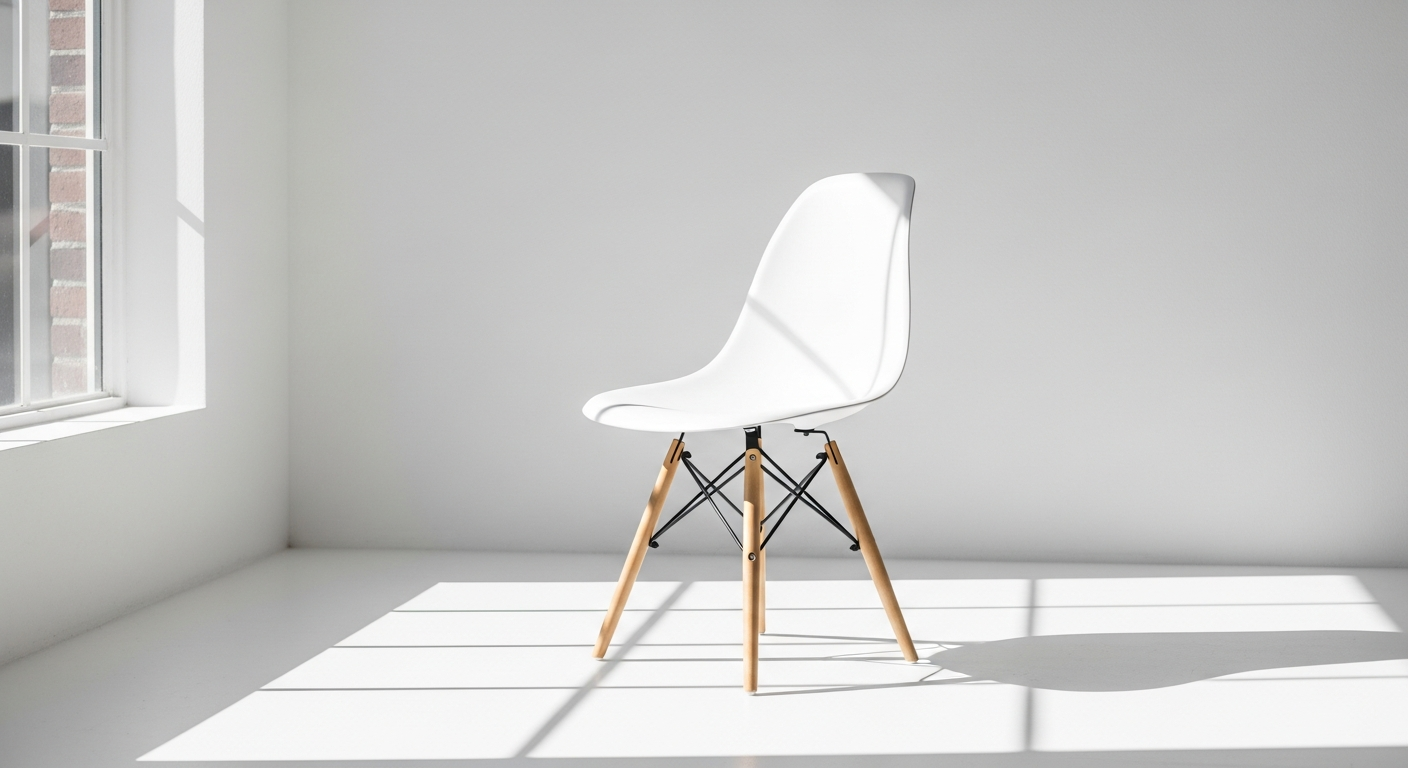
Discover why the Vitra Eames Plastic Side Chair DSW remains a design icon in 2026. Explore its eco-friendly recycled materials, ergonomic comfort, and versatile aesthetic for modern homes and offices.
Over a million Eames Plastic Side Chairs have sold worldwide since 1950—a staggering testament to design that refuses to fade. This number reveals something profound: a single piece of furniture can transcend decades, remaining essential when countless trends vanish. The DSW variant stands as living proof that true design doesn't age—it becomes more valuable.
Charles and Ray Eames envisioned something revolutionary when they created this chair: deliver exceptional design to everyday people without compromise. Vitra continues that mission today, and since 2024, they've fundamentally transformed production by using recycled post-consumer polypropylene sourced from Germany's household recycling programs. This shift bridges heritage craftsmanship with contemporary environmental responsibility—precisely what conscious consumers actively seek. Explore the Vitra Eames Plastic Side Chair DSW and discover your perfect configuration.
This guide reveals the chair's sustainable transformation, ergonomic advantages, customization possibilities, and real-world performance across different interior settings. You'll understand why this iconic piece commands premium pricing and how it justifies that investment through durability and design longevity that spans generations.
From Recycled Materials to Living Room Staple: The Sustainability Story Behind DSW
Vitra's 2024 shift to recycled post-consumer polypropylene represents a watershed moment for heritage design brands. Rather than rely on virgin plastics, they now source material from Germany's "Gelber Sack" household recycling program—transforming discarded consumer goods into seating surfaces. This approach dramatically reduces climate-damaging emissions and energy consumption compared to traditional plastic production methods.
The environmental impact extends beyond material sourcing. Dyed-through composition ensures color consistency throughout the entire shell, eliminating the waste associated with surface coatings. The recycled polypropylene maintains structural integrity while delivering the same ergonomic performance designers engineered decades ago. Consumers receive a chair that performs identically to earlier versions while carrying genuine environmental credentials.
This sustainability commitment resonates particularly with contemporary buyers who view furniture purchases as ethical decisions. The take-back program Vitra offers further extends the chair's lifecycle, ensuring materials return to production cycles rather than landfills. Heritage meets responsibility in every DSW manufactured today.
Ergonomic Excellence: How the DSW Adapts to Your Body
The organically shaped seat shell works with human anatomy rather than against it. Engineers designed those curves specifically to encourage natural spinal support, distributing weight evenly across the seating surface rather than concentrating pressure at contact points. Unlike rigid chairs that force bodies into predetermined positions, the DSW molds itself to individual physiology.
The 43-centimeter seat height reflects a crucial 2015 update. Vitra adjusted dimensions to accommodate increased average body heights since the original 1950 design. This seemingly minor adjustment makes substantial difference during extended sitting sessions—the difference between a chair that accommodates and one that merely exists.
The molded contours address a problem flat surfaces can't solve: maintaining comfort during work, dining, or casual conversation. The shell's geometry encourages proper posture without feeling restrictive, making it equally suitable for a two-hour dinner party or an eight-hour office day.
Design Customization: Building Your Perfect DSW Configuration
The color palette spans mid-century modern hues—warm whites, soft greys, iconic reds—alongside contemporary shades that complement minimalist or maximalist interiors. Shell selection fundamentally shapes the chair's visual impact within any space.
Wood base choices offer subtle but meaningful variation. Maple provides lighter warmth with fine grain patterns, while ash wood delivers cooler tones and slightly bolder characteristics. Both woods receive stained and lacquered finishes, with steel cross struts in basic dark completing the structural foundation. These options mean two DSW chairs can look distinctly different despite identical structural design.
Upholstery transforms functionality and aesthetics. The chair's standard configuration leaves the shell exposed—ideal for minimalist spaces or when visual lightness matters. Adding a seat cushion increases comfort and introduces textile elements. Full upholstery in Hopsak fabrics envelops the entire piece, dramatically shifting its visual presence and tactile experience. Browse customization options and find your ideal DSW configuration at Bruno Wickart CH.
Versatility Across Spaces: Where the DSW Truly Shines
Dining rooms represent the most obvious application, yet the DSW performs equally well around intimate four-person tables or expansive conference surfaces. The compact 46.5-centimeter width means multiple chairs fit comfortable spacing without dominating square footage.
Office and workspace integration reveals another dimension of the chair's adaptability. Collaborative areas benefit from the DSW's aesthetic consistency—multiple chairs create visual cohesion without monotony through color variation. Individual workstations gain flexible seating that supports focus work without the formality of dedicated office furniture.
Hospitality settings—cafes, restaurants, design studios—leverage the chair's durability and design heritage. The DSW signals intentionality and taste to patrons while withstanding the demands of commercial environments. Its iconic status actually enhances hospitality spaces, communicating values around design quality and craftsmanship.
Investment Value: Understanding the DSW Price Structure
Entry-level configurations without upholstery start around CHF 350 to CHF 400. This pricing reflects the manufacturing precision, sustainable material sourcing, and decades of design refinement embedded in each piece. The investment represents access to a design classic rather than merely acquiring seating.
Mid-range options incorporating seat cushions introduce textile comfort while maintaining visual lightness. These configurations split the difference between aesthetic purity and functional comfort, appealing to buyers seeking balance.
Premium fully upholstered versions reach CHF 670 to CHF 695, depending on fabric selection and configuration choices. Higher pricing reflects expanded material use and the labor required for professional upholstery work. For buyers furnishing entire spaces, bulk ordering often allows negotiation on pricing structures.
Durability and Craftsmanship: Why Vitra Remains the Legitimate Choice
Vitra holds exclusive authorization as the only legitimate European and Middle Eastern manufacturer of the Eames Plastic Side Chair. This monopoly exists for sound reasons: Charles and Ray Eames' patents and design specifications remain protected, and Vitra maintains production standards exceeding those of counterfeit manufacturers.
Quality control permeates every stage—material sourcing, shell molding, wood selection, finishing, assembly, and quality inspection. Wooden bases receive careful grain selection and finishing work that justifies premium pricing. Steel cross struts undergo proper treatment to prevent corrosion. These seemingly minor details accumulate into chairs that endure decades without degradation.
Structural integrity comes from engineering discipline. The four-legged base with cross struts creates triangulated support that distributes weight efficiently. The shell-to-base connection uses engineering solutions tested across millions of chairs. Buyers purchasing from Vitra receive furniture designed to function perfectly at year twenty, thirty, or fifty.
Real-World Considerations: Potential Drawbacks and Honest Limitations
Premium pricing creates legitimate barriers for budget-conscious furnishing projects. Outfitting a twelve-chair dining space means substantial investment, particularly if upholstery enters the equation. Buyers should approach the DSW with clear-eyed recognition that heritage design carries corresponding costs.
UV sensitivity presents practical limitations. While special additives retard fading, prolonged direct sunlight exposure will eventually shift shell colors. This isn't a defect but a material characteristic—plastic responds to ultraviolet radiation regardless of manufacturing quality. Positioning chairs away from sustained direct sun preserves color integrity.
Visible speckles appear in lighter shell colors as a natural characteristic of recycled material composition. These small, dark specks don't indicate manufacturing defects; they represent the authentic texture of post-consumer polypropylene. Darker colors conceal this effect, while whites, creams, and pale greys display it prominently.
The Eames Philosophy in Modern Context: Why This Chair Still Matters in 2026
Charles and Ray Eames articulated a democratic design philosophy: "the most of the best to the greatest number of people for the least." They believed exceptional design shouldn't remain exclusive to wealthy collectors. The Plastic Side Chair embodied this vision—industrially manufactured plastic allowed affordable access to sophisticated design.
Historical significance runs deep. The DSW represents one of the first industrially manufactured plastic chairs, predating contemporary furniture by decades. Its influence shaped how designers and manufacturers approach material innovation, production efficiency, and democratic access to quality.
Contemporary alignment strengthens the chair's relevance. Sustainability, timelessness, and ethical production—values that define modern consumer consciousness—aren't retrofitted onto the DSW; they emerge naturally from its design DNA and Vitra's continued evolution. The chair doesn't perform sustainability marketing; it simply represents genuine commitment.
Making Your Decision: Is the Vitra Eames Plastic Side Chair DSW Right for You?
Several assessment questions clarify whether the DSW suits your needs. How much space exists in your dining or work area? What aesthetic preferences dominate—minimalist or eclectic? What budget capacity allows for premium furniture investment?
Comparing the DSW with other Eames variants helps clarify distinctions. The DAR (Dining height with Arms and Rod base) adds armrests and a metal base. The DAX brings arms with a four-leg wooden base. The RAR (Rocker with Arms and Rod base) introduces a rocking mechanism. Each variant serves different functional and aesthetic purposes.
Testing comfort in-person before committing to multiple chairs proves invaluable. Vitra's showrooms and authorized retailers like Bruno Wickart CH allow hands-on evaluation. Sit for several minutes. Notice how the shell supports your back. Consider whether upholstery enhances comfort meaningfully for your use patterns. These physical interactions inform better decisions than specifications alone.
The DSW Legacy: A Chair That Earns Its Place
The Vitra Eames Plastic Side Chair DSW transcends typical furniture categorization. It functions simultaneously as design artifact, ergonomic solution, and environmental statement. The 2024 shift toward recycled materials amplifies its relevance—demonstrating that heritage brands can evolve without abandoning core values.
Yes, the investment requires financial commitment. Yes, lighter colors display subtle speckles. Yes, direct sunlight will eventually shift hues. These aren't flaws but honest characteristics of a chair built to last generations rather than seasons. Premium furniture accepts visible aging as testament to authenticity.
What distinguishes the DSW from disposable alternatives is unwavering commitment to quality, sustainability, and timeless aesthetics. Whether furnishing a single dining space or outfitting an entire office, this chair delivers consistent performance. It ages gracefully. It retains value. Most importantly, it honors the Eames' original philosophy—delivering exceptional design to people who appreciate craftsmanship. Visit Bruno Wickart CH today to experience the DSW firsthand and explore your customization options.