
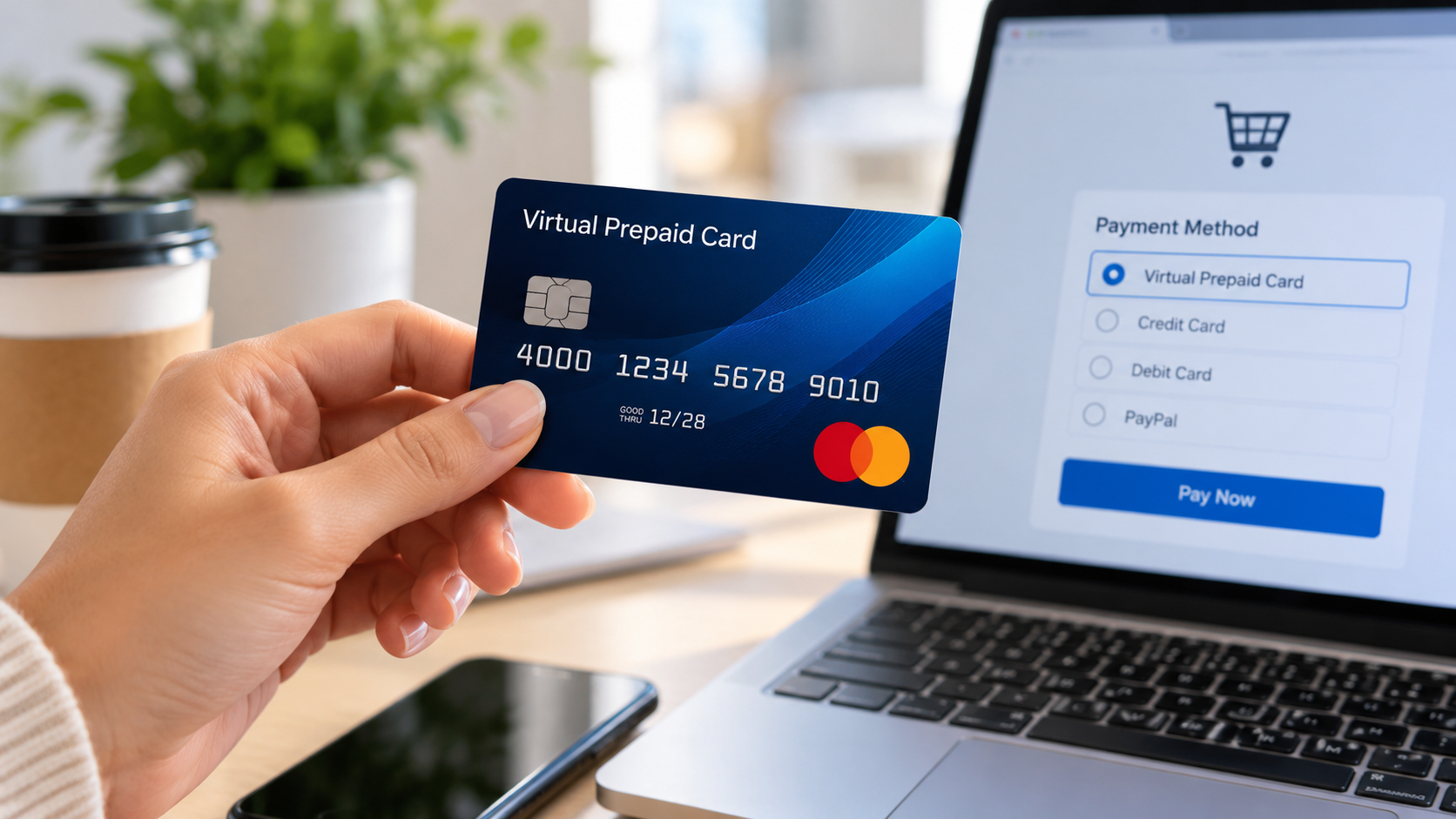
Discover how a virtual prepaid card makes online shopping easier. Explore its benefits, security features, and smart tips for safe, convenient digital payments.
A virtual prepaid card can be a practical payment option when you want to shop online, manage your spending, or avoid sharing your primary bank card details with every merchant.
Unlike a traditional credit card, a prepaid card generally allows you to spend funds that have already been loaded onto it.
However, not every virtual card works the same way. Fees, payment network acceptance, reload options, security controls, and international transaction policies can differ between providers.
Before choosing a card, it helps to understand its features, limitations, and potential costs.
What Is a Virtual Prepaid Card and How Does It Work?
A virtual prepaid card is a digital payment card that typically contains a card number, expiration date, and security code. Instead of receiving a physical card, you access these details through a mobile application, online account, or payment platform.
Most prepaid cards require you to add funds before making purchases. Your available balance generally determines how much you can spend.
For example, if you load $150 onto your card and purchase an item costing $40, your remaining available balance would generally be $110, assuming no additional fees or pending transactions.
How to Use a Virtual Prepaid Card
The process typically involves the following:
- Choose a provider: Select a financial institution or payment service that supports virtual prepaid cards.
- Create an account: Complete registration and any required identity verification.
- Add funds: Load money using an available funding method.
- Access your card details: Find your digital card number, expiration date, and security code.
- Make payments: Enter your card information at a supported online checkout.
- Monitor transactions: Review purchases and available funds through your account.
Some providers allow you to freeze your card, set spending limits, or receive transaction notifications.
These features depend on the card issuer and its associated payment platform.
Benefits of Using a Virtual Prepaid Card
A digital prepaid card may be useful for people who prefer controlled spending and convenient online payments.
1. Better Control Over Spending
Because prepaid cards generally use funds loaded in advance, they can help you establish a spending limit.
For example, you might allocate $200 each month for online shopping. Once those funds are spent, additional purchases would generally be declined until you reload the card.
This approach may help you avoid spending beyond your planned budget.
2. Convenient Online Purchases
You can typically use a virtual card shortly after activation, depending on the provider’s verification and funding requirements.
There is no need to wait for a physical card to arrive.
However, card acceptance depends on the merchant, payment network, country, and card restrictions.
3. Reduced Exposure of Your Primary Card Details
Using a separate virtual card for online purchases can limit how frequently you share your main debit or credit card information.
Some providers also allow you to generate temporary card numbers or lock cards when they are not in use.
Nevertheless, prepaid cards are not immune to fraud, unauthorized transactions, or merchant data breaches.
4. No Traditional Credit Line Required
Many prepaid cards do not involve borrowing money.
As a result, they generally do not charge interest on purchases or require the same credit assessment associated with conventional credit cards.
Identity verification and eligibility requirements may still apply.
5. Useful for Specific Spending Categories
A prepaid card can help separate spending for:
- Online shopping
- Digital subscriptions
- Gaming purchases
- Travel reservations, subject to merchant acceptance
- Business-related online payments
- Personal budgeting
You should still confirm that your chosen provider supports the intended transactions.
Virtual Prepaid Card vs. Debit Card vs. Credit Card
Understanding the differences between payment cards can help you select an appropriate option.
| Feature | Virtual Prepaid Card | Debit Card | Credit Card |
|---|---|---|---|
| Funding source | Preloaded balance | Linked bank account | Borrowed credit |
| Credit check | Generally unnecessary | Generally unnecessary | Often required |
| Interest charges | Typically none | Typically none | Possible |
| Spending limit | Available prepaid funds | Available account funds and limits | Credit limit |
| Physical card | Not necessarily | Usually available | Usually available |
| Rewards | Provider-dependent | Provider-dependent | Often available |
| Credit-building potential | Generally none | Generally none | Possible with responsible use |
A prepaid card may suit you if you want to separate online spending from your primary account.
Meanwhile, a debit card may be convenient for everyday purchases directly from your bank account.
A credit card may provide access to borrowing, rewards, and certain protections, although interest and debt risks require careful management.
What to Look for in the Best Virtual Prepaid Card
Choosing the best virtual prepaid card depends on your spending habits, location, and preferred payment methods.
Instead of selecting a provider based on advertising claims, compare its practical features.
Card Acceptance
Check which payment network supports the card.
Cards operating through major networks, such as Visa or Mastercard, may be accepted by many online merchants.
However, some merchants restrict prepaid cards, particularly for subscriptions, deposits, and certain international transactions.
Reloading Options
Find out how you can add money to your card.
Common funding methods may include bank transfers, linked debit cards, or supported digital payment services.
Also check the minimum reload amount, maximum balance, and processing time.
Account Security
Look for features such as:
- Two-factor authentication
- Transaction alerts
- Card freezing or locking
- Spending controls
- Secure account access
- Clear procedures for reporting unauthorized payments
These controls can help you manage account access and detect suspicious activity.
Transparent Fees
Review the provider’s complete fee schedule before registration.
A card advertised as free may still involve charges for funding, currency conversion, inactivity, or certain transactions.
Customer Support
Check the available support channels and how disputes are handled.
Reliable access to assistance can be particularly important when a payment fails or an unauthorized transaction appears.
Understanding Virtual Prepaid Card Fees
The total cost of using a card depends on the provider’s pricing structure and your transaction habits.
Here are common fees to investigate:
| Fee Type | What It Means | What to Check |
|---|---|---|
| Issuance fee | Charge for creating the card | One-time or recurring |
| Reload fee | Cost of adding funds | Fixed amount or percentage |
| Monthly fee | Ongoing account charge | Conditions for avoiding it |
| Foreign transaction fee | Charge for payments in another currency or country | Currency conversion rules |
| Inactivity fee | Charge after a period without activity | When the fee begins |
| Replacement fee | Charge for issuing another virtual card | Applicable circumstances |
Example of Potential Costs
Suppose you load $200 onto a card and the provider charges a 2% funding fee.
Your loading cost would be:
$200 × 2% = $4
If you subsequently make a $50 foreign-currency purchase subject to a 3% transaction fee, that fee would be:
$50 × 3% = $1.50
Your combined fees would be $5.50, excluding any exchange-rate differences or other charges.
These figures are illustrative and do not represent the pricing of a specific provider.
Can You Get a Free Virtual Prepaid Card?
A free virtual prepaid card may be available through certain banks, financial technology platforms, or digital payment providers.
However, the word “free” can refer to different conditions.
Some providers waive the initial issuance fee but charge for account maintenance, loading funds, or international transactions.
Others may require you to maintain an account or meet eligibility conditions.
Before registering, ask:
- Is the card free to create?
- Are there monthly maintenance charges?
- Does adding funds cost anything?
- Are international purchases subject to additional fees?
- Can the provider charge for inactivity?
- Are there fees when closing the account?
Reviewing these details helps you identify the actual cost of using the service.
Is a Virtual Prepaid Card Safe for Online Shopping?
A virtual card for online shopping can help reduce exposure of your primary bank card information.
However, security depends on the provider’s systems, your account settings, and how you handle card information.
Security Practices Worth Following
Enable two-factor authentication. This adds another verification requirement when accessing your account.
Avoid suspicious payment links. Access your provider through its official application or website.
Monitor transactions regularly. Review purchases and report unfamiliar charges promptly.
Keep your card details private. Avoid sharing security codes or account credentials through messages.
Use card-locking features when available. Temporarily disabling an unused card may help prevent certain unauthorized payments.
You should also review the issuer’s fraud protection and dispute policies.
Prepaid card protections vary by jurisdiction, issuer, and payment network. They should not automatically be assumed to match those of a credit card.
Can You Use a Virtual Prepaid Card for International Payments?
Some cards support foreign-currency purchases, making them potentially useful for international shopping.
However, international acceptance is not guaranteed.
Before using your card overseas or on a foreign website, verify the following:
- Supported currencies
- Foreign transaction charges
- Exchange-rate calculation methods
- Merchant and country restrictions
- International spending limits
- Refund processing rules
For instance, an international retailer may accept cards from a particular payment network but decline prepaid cards issued in certain countries.
Checking the provider’s terms beforehand can reduce the likelihood of a declined transaction.
How Does a Reloadable Virtual Prepaid Card Compare With a Single-Use Card?
A reloadable virtual prepaid card allows you to add funds after the initial balance has been spent, subject to the provider’s rules.
A single-use virtual card, by comparison, may be designed for one transaction or a limited period.
| Feature | Reloadable Card | Single-Use Card |
|---|---|---|
| Repeated purchases | Generally supported | Usually restricted |
| Adding funds | Supported | Typically unavailable |
| Subscriptions | May be supported | Often unsuitable |
| Ongoing budgeting | Potentially useful | Limited |
| Card number lifespan | Usually longer | Often temporary |
| Ideal use | Regular purchases | Individual transactions |
If you frequently purchase products online, a reloadable option may be practical.
For occasional purchases, a single-use card may provide an alternative, provided the merchant accepts it.
Note that some single-use virtual cards are linked to credit or debit accounts rather than prepaid balances.
Common Limitations You Should Know
Virtual prepaid cards have advantages, but several limitations deserve attention.
Merchant Restrictions
Some businesses do not accept prepaid cards.
Hotels, car rental companies, and subscription platforms may require payment cards that support security deposits or recurring authorization.
Refund Processing
Refunds generally return to the original payment method, but processing times and procedures vary.
Closing or replacing your card before a refund is completed may create additional complications.
Balance Requirements
You need sufficient available funds to cover purchases, applicable fees, and possible authorization holds.
A transaction can fail even when your displayed balance appears close to the purchase amount.
Limited Credit Benefits
Prepaid card activity generally does not build your credit history because you are spending previously funded money rather than repaying borrowed funds.
Regional Availability
Providers may restrict eligibility based on residency, age, identification requirements, and local financial regulations.
Always confirm that a card is legally available in your country.
How to Choose a Virtual Prepaid Card for Your Needs
A practical comparison should begin with how you intend to use the card.
| Your Priority | Features to Prioritize |
|---|---|
| Everyday online purchases | Broad merchant acceptance and low transaction fees |
| Subscription payments | Recurring payment support |
| International shopping | Transparent exchange rates and foreign transaction costs |
| Budget management | Reload controls and transaction tracking |
| Occasional purchases | Low issuance costs and no inactivity charges |
| Account security | Card locking, authentication, and alerts |
Questions to Ask Before Applying
Before selecting a provider, check these points:
- Is the issuer regulated or otherwise authorized where required?
- Is the card available to residents of your country?
- What are the total expected fees?
- Which merchants and payment types are supported?
- How quickly can you load funds?
- Can you withdraw or recover unused funds?
- What happens if the provider closes your account?
- What protections apply if your card information is stolen?
A provider that clearly explains these conditions may be easier to evaluate than one that focuses primarily on promotional features.
Is a Virtual Prepaid Card Right for You?
A virtual prepaid card may be suitable if you want a separate payment method for online purchases, controlled spending, or selected international transactions.
Its usefulness depends on merchant acceptance, funding methods, security features, and the total fees associated with your transactions.
Before applying, compare providers carefully, review their terms, and confirm that their services support your intended purchases.