
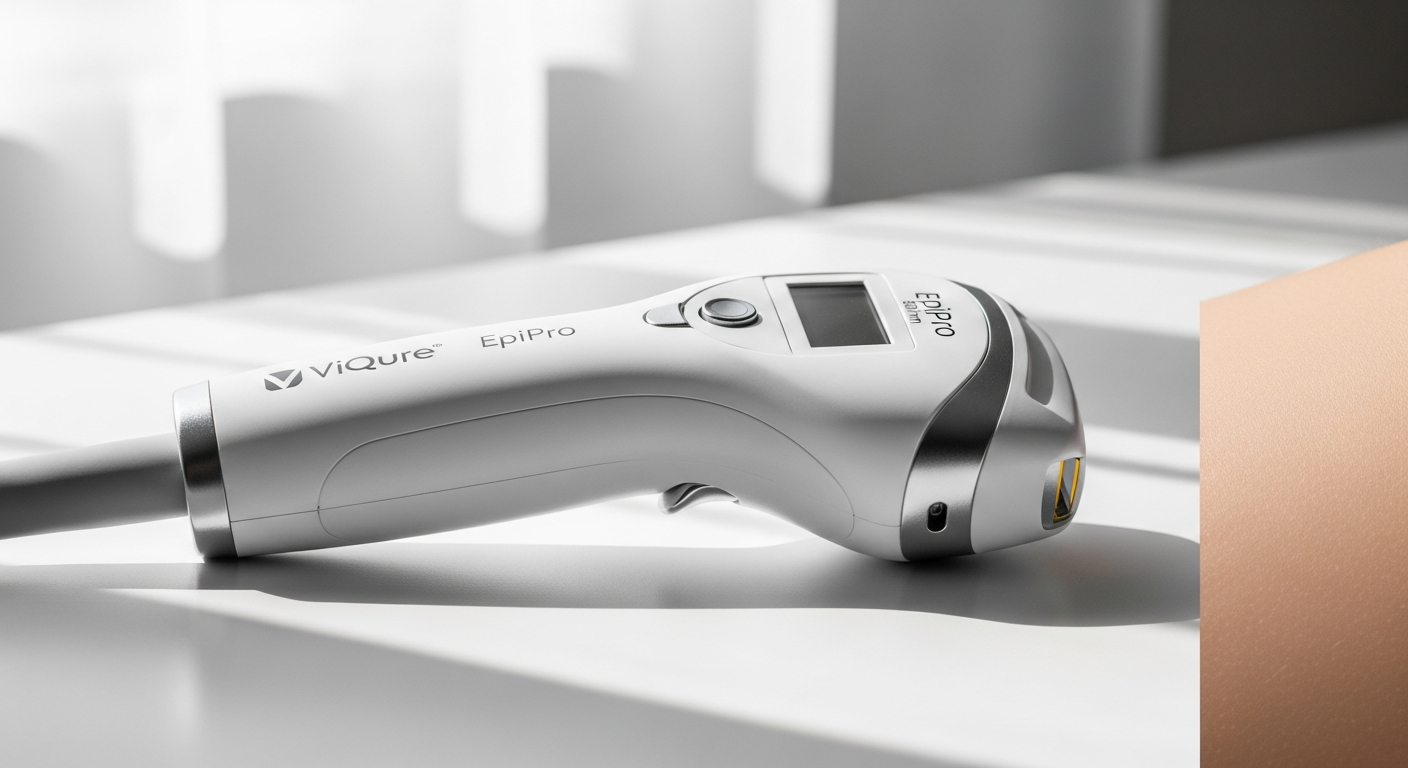
Discover how the ViQure EpiPro 808nm diode laser hair removal device delivers clinic-grade results at home with up to 98% hair reduction in 4–6 treatments. Learn if it’s worth the investment.
Americans spend over $1 billion annually on professional hair removal treatments, yet most people never consider that clinic-grade technology could work from home. The ViQure EpiPro 808nm Diode Laser Hair Removal Device bridges this gap by bringing the same gold-standard laser technology used in dermatology offices into your bathroom. No appointments, no travel time, no recurring salon fees—just results.
The hair removal landscape has shifted dramatically in recent years. While IPL devices flood the market with promises of quick fixes, true diode laser technology remains the proven gold standard for deeper penetration and lasting results. The difference between marketing hype and genuine permanent hair reduction comes down to wavelength precision, energy density, and engineering. Understanding these distinctions helps explain why some devices deliver noticeable results while others barely make a dent.
This guide covers how the ViQure EpiPro's superior energy output compares to competitors, why it works across all skin types including darker tones, realistic timelines for seeing results, and whether the investment truly pays off over time. You'll also discover the actual cost comparison between at-home treatment and professional salons, addressing the question many people wrestle with: is the upfront cost worth it?
Explore the ViQure EpiPro 808nm Diode Laser specifications and current pricing today.
How 808nm Diode Laser Technology Outperforms IPL Alternatives
True laser vs. broad-spectrum light: why diode technology penetrates deeper into hair follicles
The fundamental difference separating the ViQure EpiPro from most competitors comes down to physics. Diode lasers emit a single, concentrated wavelength of light—808nm in this case—that targets melanin in the hair shaft with precision. IPL devices, by contrast, emit broad-spectrum light across multiple wavelengths, much of which gets absorbed by the skin's surface without reaching the follicle.
Think of it this way: a diode laser is like a focused beam with a specific mission, while IPL is like shining a flashlight with the brightness spread across a wall. The concentrated approach penetrates deeper, damages the hair follicle more effectively, and requires fewer sessions to achieve results.
Energy density comparison: 30–40 J/cm² (EpiPro) vs. 4–6 J/cm² (typical IPL devices)
Energy density—measured in joules per square centimeter (J/cm²)—determines how much power reaches the target tissue. The ViQure EpiPro delivers 30 J/cm² for the 200W version and 40 J/cm² for the 300W model. This vastly exceeds the 4–6 J/cm² standard in most IPL devices and is 1.5 times stronger than many competing diode lasers.
Higher energy density means each pulse does more damage to the hair follicle, translating to more dramatic results per treatment. It's the reason why professional laser clinics can achieve permanent hair reduction in fewer sessions than at-home IPL users typically experience.
Wavelength precision: how 808nm specifically targets melanin in the hair shaft
The 808nm wavelength sits in the sweet spot for targeting melanin—the pigment responsible for hair color. This particular wavelength penetrates through the epidermis to reach the hair follicle in the dermis, while minimizing absorption by competing chromophores like water and hemoglobin that can cause pain or damage to surrounding tissue.
Wavelengths that are too short get absorbed by surface melanin, causing pain and potential skin damage. Wavelengths that are too long lose their targeting precision. The 808nm standard has been refined over decades of clinical use, which is precisely why professional laser clinics standardized around this wavelength.
Fewer treatments needed: achieving results in 4–6 sessions instead of 8–12+
ViQure claims up to 98% hair reduction in just 4–6 treatments. This timeline contrasts sharply with IPL devices, which typically require 8–12 sessions to achieve comparable results, if they achieve them at all. The superior energy density means each session accomplishes more, compressing the treatment schedule significantly.
This efficiency has real-world implications. A faster timeline means you see results sooner, maintain motivation longer, and start enjoying the benefits of permanent hair reduction while other people are still scheduling their next appointment.
FDA approval status and what permanent hair reduction actually means
The ViQure EpiPro carries FDA approval for "permanent hair reduction"—a distinction worth understanding. Permanent hair reduction doesn't mean 100% of hair never grows back; it means a significant percentage of hair follicles are destroyed permanently and won't regenerate. The 98% reduction claim ViQure makes aligns with this definition and exceeds what most IPL devices achieve.
FDA approval provides regulatory assurance that the device has been tested for safety and efficacy. This matters because not all hair removal devices on the market have undergone this scrutiny.
Heat distribution and why this matters for consistent results across treatment areas
Consistent heat distribution across the treatment window ensures that all targeted hair follicles receive equal energy. Devices with poor heat distribution create hot spots and dead zones—some areas get adequate treatment while others are undertreated. This explains why some users report patchy results from competing devices.
The ViQure EpiPro's engineering prioritizes uniform energy delivery, meaning the results are consistent whether you're treating your legs, underarms, or facial areas. This consistency becomes especially important for larger body areas where multiple overlapping pulses are necessary.
The Real Cost Comparison: At-Home Device vs. Professional Salon Treatments
Upfront investment breakdown: 150W ($1,149), 200W ($1,299), and 300W ($1,520) models
The ViQure EpiPro comes in three power configurations, each serving different needs. The 150W version costs around $1,149 and suits those focusing on smaller treatment areas or less frequent use. The 200W model at approximately $1,299 represents the mid-range sweet spot, offering strong performance without the premium price of the most powerful option. The 300W version at roughly $1,520 caters to serious users treating multiple body areas or households with multiple people sharing the device.
These aren't cheap devices, but context matters. A single professional laser treatment typically costs $200–$400 per session. At 4–6 treatments minimum to achieve desired results, professional laser clinics cost $800–$2,400 just for the initial course of treatment.
Promotional pricing strategies and how to maximize savings
ViQure frequently runs promotional campaigns that reduce these prices substantially. With promotional codes, the 150W drops to around $970, and the 200W to approximately $1,128. The 300W model can be found for about $1,520 with discounts. Checking the official ViQure website for current promotions can yield significant savings on your initial investment.
Timing your purchase strategically around sales events or seasonal promotions can reduce your entry cost by $100–$200, which may be the difference between a viable purchase and one that stretches the budget too far.
Cost-per-treatment analysis: at-home device vs. professional laser clinics
Professional laser treatments average $250–$350 per session. For permanent hair reduction on multiple body areas, expect 6–8 professional sessions, totaling $1,500–$2,800. Many people then require annual maintenance treatments, adding another $250–$700 yearly.
The ViQure EpiPro amortizes across your treatments. If you purchase the 200W model at $1,299 and complete 6 treatments, that's approximately $216 per treatment in device cost. After 6 sessions, every subsequent treatment costs only the electricity to operate the device—effectively zero additional cost. This cost-per-treatment calculation reveals the economic advantage of ownership over time.
Long-term savings potential over 5 years and beyond
Over five years, if you were to visit a professional clinic quarterly for maintenance treatments, you'd spend roughly $5,000–$7,000 on hair removal services. The ViQure EpiPro, purchased once for $1,299, handles all your hair removal needs for that entire period. The break-even point occurs after just 5–6 professional treatments, meaning everything beyond that represents pure savings.
For someone committed to permanent hair reduction as a lifestyle choice, a five-year analysis shows savings of $3,700–$5,700. Extended over a decade, the financial argument becomes even more compelling.
Hidden salon costs: travel time, scheduling flexibility, and convenience factor
Professional salons impose hidden costs beyond the treatment fee itself. Travel time, parking, scheduling around business hours, and the time spent in a waiting room all represent real costs measured in inconvenience and lost productivity. For someone with a busy schedule, coordinating multiple salon appointments compounds the friction.
At-home treatment eliminates these friction points. Treat yourself at midnight if you prefer. Skip the traffic. Avoid the awkward small talk. This convenience factor might not appear on a spreadsheet, but it influences whether people actually complete their treatment course or abandon the process midway.
ROI timeline: when the device pays for itself through avoided treatments
The return on investment (ROI) timeline for the ViQure EpiPro is remarkably short. If you would otherwise spend $250 per professional session, the device pays for itself after 5–6 avoided salon visits. Most people complete these 6 sessions within 3–6 months, meaning the device reaches break-even within half a year.
Every treatment after break-even represents pure savings. This rapid ROI makes financial sense for anyone seriously considering permanent hair removal, transforming what seems like an expensive purchase into a shrewd investment.
Warranty and money-back guarantee: financial protection for buyers
The ViQure EpiPro includes a 1-year warranty covering manufacturing defects and operational failures. This protection matters because it shields your investment during the period when device issues are most likely to surface. After the warranty period, you're relying on the device's durability, which is supported by the 5 million shot lifespan.
More importantly, ViQure offers a 60-day money-back guarantee. This policy eliminates purchase risk. If you start using the device and realize it doesn't meet your needs or expectations, you can return it for a full refund within two months. This risk-reversal approach demonstrates confidence in the product while giving buyers genuine peace of mind.
Check the official ViQure website for current pricing and available promotions.
Universal Skin Compatibility and Safety Across Fitzpatrick Types
Why the EpiPro works on all six Fitzpatrick skin types (I–VI)
The ViQure EpiPro is engineered to function safely and effectively across all six Fitzpatrick skin types, from the palest complexions (Type I) to the darkest skin tones (Type VI). This universal compatibility exists because the 808nm wavelength penetrates to the hair follicle without being excessively absorbed by melanin in the epidermis—the key limitation of many competing devices.
Devices designed primarily for lighter skin tones absorb too much light in the epidermis of darker skin, causing pain, burns, and inconsistent results. The EpiPro's engineering avoids this pitfall through wavelength selection and customizable energy settings that adapt to different skin tones.
Addressing myths about laser hair removal and darker skin tones
A persistent myth suggests that laser hair removal doesn't work well on darker skin tones. This misconception stems from outdated technology and careless marketing. Early laser hair removal devices were indeed problematic for darker skin, but the field has evolved significantly. Modern diode lasers like the EpiPro represent the current standard that dermatologists use safely on all skin types.
The science is clear: 808nm diode lasers target melanin in the hair shaft preferentially over melanin in the skin. Darker skin contains more epidermal melanin, but the EpiPro's energy density and wavelength are calibrated to reach the hair follicle without overheating the surrounding tissue. Customizable settings further refine safety by allowing users to adjust power levels for their specific skin tone.
Safety mechanisms built into the device for pain-free treatment
The ViQure EpiPro incorporates multiple safety features designed to minimize discomfort. A built-in cooling mechanism keeps the skin surface cool during treatment, preventing pain that comes from excessive heat. The cooling works continuously throughout your session, maintaining comfort even as the device delivers powerful energy to deeper follicles.
Additional safety features include skin contact sensors that prevent the device from firing unless it's properly positioned against skin, safeguarding against accidental pulses. Intelligent power modulation adjusts energy delivery based on skin type and sensitivity, reducing the risk of adverse reactions while maintaining efficacy.
Customizable energy settings for different skin sensitivities
Not all skin reacts identically to laser energy. The ViQure EpiPro offers adjustable power settings, allowing users to start conservatively and increase intensity as their skin acclimates to treatment. Someone with very sensitive skin can operate at lower settings initially, then progress to higher power as tolerance builds.
This customization proves essential for users with darker skin tones or heightened sensitivity. Rather than a one-size-fits-all approach, the device adapts to individual characteristics, optimizing both safety and results.
Body areas where the device performs best and areas requiring caution
The ViQure EpiPro performs exceptionally well on larger body areas like legs, underarms, and the bikini line—regions with dense, dark hair and relatively uniform skin. Results are consistent and dramatic in these areas. Facial treatment is possible but requires more precision and typically uses lower power settings due to thinner, more delicate skin.
Areas requiring extra caution include the upper lip and chin, where thin skin sits close to the bone and some people experience more discomfort. The inner thighs also demand careful attention due to sensitive skin. Avoid treating directly over bones or bony areas, as the lack of soft tissue cushioning can amplify sensation. The device should never be used on the eye area or directly on tattoos.
Pre-treatment and post-treatment care for optimal safety
Proper preparation ensures better results and minimizes complications. Before treatment, shave the area thoroughly but avoid waxing, plucking, or chemical depilatories for at least a week prior. Hair must exist beneath the skin surface for the laser to target the follicle. Avoid sun exposure for two weeks before and after treatment, as tanned skin is more sensitive to laser energy.
Post-treatment care is equally important. Apply soothing products like aloe vera or prescription hydroquinone if recommended. Wear sunscreen daily for at least two weeks after treatment, as treated skin is temporarily more photosensitive. Avoid hot showers, chlorinated pools, and strenuous exercise for 24 hours after treatment. Refrain from additional hair removal methods like waxing between laser sessions.
Clinical testing data supporting efficacy across diverse skin tones
ViQure backs the EpiPro's universal skin compatibility with clinical testing across diverse populations. The 98% hair reduction claim reflects results observed in users with various Fitzpatrick types. Independent reviews and user testimonials consistently confirm that the device performs effectively regardless of skin tone, which wouldn't be possible with inferior technology.
This clinical validation matters because it separates genuine universal compatibility from marketing spin. The data supports what the specs suggest: a truly inclusive hair removal device that works as effectively on darker skin as it does on lighter complexions.
Dual Functionality: Hair Removal and Skin Rejuvenation Benefits
Skin rejuvenation mode: collagen stimulation and skin tightening mechanisms
Beyond hair removal, the ViQure EpiPro includes a skin rejuvenation function that delivers additional beauty benefits. This mode operates at different energy parameters specifically calibrated to stimulate collagen production without destroying hair follicles. The mechanism works by creating controlled thermal stimulation in the dermal layer, prompting the body's natural healing response that includes collagen synthesis.
As collagen is stimulated and regenerated, the skin becomes firmer and more youthful in appearance. This process takes weeks to months to fully manifest, as new collagen gradually replaces aged or damaged tissue. The result is skin that looks tighter, smoother, and more radiant—benefits that extend far beyond the hair removal aspect of the device.
Treating acne-prone areas while removing unwanted hair
The rejuvenation function provides an unexpected bonus for acne-prone skin. The controlled heat and light energy help reduce active acne inflammation while simultaneously improving skin texture and tone. For people dealing with both facial hair growth and acne concerns, this dual functionality addresses both issues in one treatment protocol.
The rejuvenation mode isn't marketed as an acne treatment, and it shouldn't replace dermatological care for severe acne. However, the anti-inflammatory effects can complement existing acne management routines, making treatment sessions simultaneously productive for multiple skin concerns.
Improving skin tone and texture beyond hair removal results
Sun damage, age spots, and uneven skin tone often accompany unwanted hair growth. The skin rejuvenation mode targets these concerns by promoting cellular turnover and stimulating even collagen distribution. Over multiple sessions, discoloration fades, texture irregularities smooth out, and overall skin tone becomes more uniform.
Users frequently report that their skin looks healthier and more vibrant after completing a full treatment course. Makeup sits more smoothly on tighter skin, and skin feels softer to the touch. These improvements accumulate gradually but become quite noticeable when comparing before and after photos from several months apart.
Combining hair removal and rejuvenation treatments in one session
The ViQure EpiPro allows flexible treatment protocols. Some users dedicate each session purely to hair removal, while others combine both functions in a single appointment. Treating the hair removal first, then switching to rejuvenation mode on the same area maximizes time efficiency and allows you to complete multiple objectives in one sitting.
This flexibility lets users customize their approach based on current priorities. During the intense phase of initial hair reduction, focus purely on hair removal. Once hair growth has diminished significantly, shift focus toward rejuvenation to address remaining skin concerns.
Expected timeline for visible skin improvements
Hair reduction becomes noticeable within weeks, but skin rejuvenation requires longer to manifest. Most users report initial improvements in skin texture and brightness within 4–6 weeks of beginning rejuvenation treatments. More dramatic improvements in skin tightness and tone typically emerge after 2–3 months of consistent treatment.
The extended timeline for rejuvenation benefits requires patience. Unlike hair reduction, where follicles progressively stop producing hair, skin rejuvenation depends on collagen remodeling—a biological process that simply cannot be rushed. Consistency matters more than intensity; regular treatments over months yield better results than aggressive sporadic efforts.
Who benefits most from the dual-function approach
The dual-function feature appeals primarily to people with multiple simultaneous skin concerns. Someone dealing with unwanted facial hair, acne, and sun damage benefits tremendously from a device that addresses all three issues. Similarly, someone wanting hair-free skin plus anti-aging benefits finds the combination particularly valuable.
The rejuvenation mode is less critical for someone seeking only permanent hair removal on body areas where fine aging isn't a concern. A person focusing exclusively on bikini line or leg hair removal might never use the rejuvenation function, though having it available costs nothing extra.
Realistic expectations: what the rejuvenation mode can and cannot achieve
The rejuvenation mode works best for addressing mild to moderate skin concerns—subtle aging signs, minor discoloration, acne scars, and textural irregularities. It cannot eliminate deep wrinkles, severe acne scarring, or profound sun damage. It's a maintenance and enhancement tool, not a wrinkle removal system.
Setting realistic expectations prevents disappointment. The rejuvenation mode produces noticeable but modest improvements over time. It won't transform skin dramatically, but it will enhance overall appearance and support healthy skin aging. Thinking of it as a long-term investment in skin quality rather than a quick fix to specific problems provides appropriate perspective.
Durability and Long-Term Value: 5 Million Shots Explained
Shot capacity: what 5 million treatments actually means for lifespan
The ViQure EpiPro is rated for 5 million shots—a specification that translates to extraordinary longevity. To contextualize this number: if you treated your entire body once weekly with 100 pulses per session, you'd use 5,200 shots annually. At that rate, the device would last approximately 961 years. Even aggressive usage patterns yield device lifespans measured in decades, not years.
For realistic use—treating various body areas across multiple sessions—a 5 million shot capacity means the device should outlast your interest in using it. This isn't a device you'll exhaust in five years and discard. It's a purchase that will likely remain functional for your entire life.
Average usage patterns and how long the device realistically lasts
A typical user might complete 4–6 initial treatment sessions over 3–6 months, using perhaps 500–1,000 shots total. After achieving desired hair reduction, maintenance treatments might occur quarterly or semi-annually, adding another 200–500 shots annually. Over a decade, realistic usage might total 8,000–10,000 shots—a trivial fraction of the 5 million capacity.
This means practical device lifespan is determined not by shot depletion but by technological obsolescence or physical damage. With reasonable care, your EpiPro will remain functional for 15–20 years or longer. This extended lifespan dramatically improves the cost-per-treatment calculation across the device's actual functional life.
Maintenance requirements to maximize device longevity
The ViQure EpiPro requires minimal maintenance beyond basic care. Keep the treatment window clean between uses—a simple wipe with a soft, dry cloth removes any residue. Store the device in a cool, dry location away from extreme temperatures and humidity. Avoid dropping it or subjecting it to physical shock.
These simple precautions—the kind of care you'd give any electronic device—ensure the EpiPro functions optimally throughout its lifespan. There are no moving parts to wear out, no filters to replace, and no consumables to purchase. The simplicity of maintenance contributes directly to the device's reliability and longevity.
Replacement parts and ongoing costs (if any)
Unlike some competing devices that require expensive electrode replacements or other consumables, the ViQure EpiPro has minimal ongoing costs after purchase. The treatment window might eventually require replacement if significantly damaged, but under normal use conditions, this rarely happens. Replacement parts, if needed, are inexpensive compared to the device cost.
This cost structure is fundamentally different from some competitors that trap users in perpetual spending cycles by requiring replaceable cartridges or electrodes. The EpiPro's design emphasizes minimal ongoing expense, meaning your $1,299 investment truly represents the total cost of ownership.
Warranty coverage and what happens after the first year
The ViQure EpiPro includes a 1-year warranty covering manufacturing defects and operational failures. If the device malfunctions within this period, ViQure repairs or replaces it at no cost. After the warranty expires, you're responsible for any repairs, though the device's durability means repairs are unlikely during normal use.
The 60-day money-back guarantee operates independently of the 1-year warranty, addressing different concerns. The guarantee protects you if the device doesn't meet expectations before you've committed fully. The warranty protects your investment once you've decided to keep the device long-term.
Comparing lifespan to competing diode laser devices
Most competing diode lasers offer similar shot capacities—3–5 million shots—suggesting comparable durability. However, not all manufacturers back their claims with the same confidence. ViQure's explicit 5 million shot rating and focus on durability sets a clear standard.
When comparing devices, lifespan matters less than reliability. A device with 5 million shots that fails after 500,000 uses is worse than a competitor with 3 million shots that functions reliably throughout. ViQure's reputation for durability, supported by user testimonials and warranty policies, suggests the EpiPro will deliver on its capacity claims.
Resale value and the device's reputation for holding value
The ViQure EpiPro maintains strong resale value because the technology doesn't rapidly obsolete. A used EpiPro with half its shot capacity remaining still works effectively and appeals to secondhand buyers seeking to reduce initial investment. Secondary markets like Facebook Marketplace or Craigslist show used EpiPro devices selling for 40–60% of the original purchase price.
This resale value provides a financial cushion. If you purchase the device at $1,299, use it extensively, then decide to upgrade to a newer model in five years, you could reasonably recover $500–$700 by selling the used device. This reduces your net cost of ownership further.
Treatment Frequency, Results Timeline, and Realistic Expectations
Initial treatment schedule: spacing between sessions for optimal results
The ViQure EpiPro requires treatments spaced 2–4 weeks apart during the initial phase. Spacing treatments too closely doesn't improve results and can stress the skin unnecessarily. Spacing them too far apart allows hair regrowth and extends the overall timeline. Most users achieve optimal results by scheduling treatments every 2–3 weeks initially.
The reason for this spacing relates to hair growth cycles. Hair exists in multiple growth phases—anagen (active growth), catagen (regression), and telogen (resting). Laser hair removal only works on actively growing hair (anagen phase). Spacing treatments appropriately targets different hair as it enters the active growth phase, progressively eliminating more follicles with each session.
When to expect visible hair reduction (weeks 1–4)
Many users notice hair shedding within the first week following treatment—these are damaged follicles expelling their hair shafts. However, this initial shedding shouldn't be confused with permanent reduction. True permanent hair reduction becomes apparent after 2–4 weeks as treated areas display noticeably less hair density and slower regrowth.
This timeline can be psychologically important. Seeing visible changes within days reinforces that the treatment is working, maintaining motivation through the full treatment course. The psychological boost of early visible results encourages treatment adherence, which directly determines whether users complete the 4–6 sessions needed for maximum results.
Progressive results: the 4–6 treatment pathway to 98% reduction
Each treatment progressively reduces the hair population. After the first treatment, perhaps 15–25% of targeted hair is permanently eliminated. After the second session, cumulative reduction reaches 30–40%. By session four, most users report 70–80% reduction. Sessions five and six target remaining stubborn hairs, pushing toward the claimed 98% reduction.
This progressive reduction explains why patients report changing their behavior over time. Early sessions deliver obvious improvements that motivate continued treatment. Later sessions target increasingly sparse remaining hair, with diminishing visible changes between sessions. Understanding this progression prevents disappointment when session five produces less obvious results than session one.
Maintenance treatments after achieving desired results
Once you've reached your target hair reduction—typically after 4–6 treatments—complete permanent removal doesn't mean you're done forever. A small percentage of follicles may eventually regenerate, and dormant follicles might eventually activate. Most users require maintenance treatments 1–2 times annually to maintain their desired level of hair reduction.
These maintenance sessions take only 15–30 minutes and use minimal device shots. The ongoing cost and time commitment remains far below ongoing professional salon treatments, but it's important to understand that perfect permanence requires occasional touch-ups.
Factors that influence individual results (hair color, thickness, skin type)
Laser hair removal works optimally on dark, thick hair because melanin (dark pigment) absorbs the laser energy effectively. Blonde, red, or gray hair contains less melanin and responds less effectively to laser treatment. Someone with dark coarse hair will see dramatically faster results than someone with fine blonde hair.
Skin type influences results through different mechanisms. Lighter skin allows the laser to penetrate more deeply without being absorbed by epidermal melanin. Darker skin types contain more surface melanin, sometimes affecting depth of penetration, though the EpiPro's 808nm wavelength minimizes this issue compared to competing technologies.
Individual variations in hair growth cycles, hormonal influences, and genetic factors also affect results. Hormonal conditions like PCOS can stimulate new hair growth throughout treatment, potentially extending the timeline. Understanding these variables prevents unrealistic expectations and frustration if results don't match theoretical timelines exactly.
Hair growth cycles and why patience is essential
Human hair doesn't all grow simultaneously. At any given moment, approximately 65–85% of scalp hair is in the anagen (active growth) phase, 1–3% is in catagen (regression), and 10–15% is in telogen (resting). Body hair has even more variation in growth cycle distribution. Laser hair removal only eliminates actively growing hair, which is why a single treatment cannot permanently eliminate all hair.
This biological reality makes patience essential. Someone who rushes through treatments or skips sessions to speed up the process will likely achieve inferior results. The optimal approach requires spacing treatments appropriately and completing the full recommended course, even when progress seems to plateau temporarily.
Before-and-after timelines based on different body areas
Different body areas show results on different timelines. Underarm hair, being coarse and dark, shows dramatic reduction within 2–3 sessions. Leg hair, typically lighter and finer, may require the full 4–6 sessions to achieve similar density reduction. Facial hair varies depending on whether it's upper lip fuzz or darker coarse beard growth.
Bikini and Brazilian areas often show fast results because the hair is typically dark and coarse. However, hormonal sensitivity in this region sometimes means new hair growth continues in existing follicles even as the laser eliminates others. Documenting progress with photos taken at consistent intervals, in consistent lighting, provides objective evidence of results even when subjective impressions become fuzzy after multiple months.
Who Should (and Shouldn't) Choose the ViQure EpiPro
Ideal candidates: hair removal goals, skin type, and lifestyle fit
The ViQure EpiPro suits people with clear permanent hair removal goals who commit to 4–6 treatment sessions over several months. Ideal candidates have moderate to dark hair on skin types ranging from very light to very dark—essentially anyone with dark hair that provides strong melanin contrast for the laser to target.
Lifestyle fit matters considerably. Someone comfortable with at-home medical devices and willing to dedicate 15–45 minutes per treatment session fits the EpiPro's model well. People who value convenience and cost savings over immediate results also align well with this purchase. The ideal candidate views this as an investment in long-term freedom from hair removal chores rather than seeking a quick fix.
Best results for light to medium skin tones with dark hair
While the EpiPro works across all Fitzpatrick types, results appear most dramatic in users with light to medium skin tones combined with dark hair. The contrast between dark hair and lighter skin allows the laser to distinguish targets clearly. Users with this combination typically see impressive results by session two and approach maximum reduction by session four.
This doesn't mean darker skin types won't see excellent results—they absolutely will. However, the visual contrast between dark hair and dark skin sometimes makes results appear less dramatic photographically, even though the hair is genuinely reduced. Objectively measuring hair density through touch and density assessment reveals results that photographs might underestimate.
Considerations for those with fine, blonde, or red hair
People with fine, blonde, or red hair face longer timelines and potentially less dramatic results. These hair colors contain little melanin, so the laser energy isn't absorbed efficiently. Blonde hair sometimes shows minimal response to laser treatment, while red hair typically responds better than blonde but worse than dark hair.
This doesn't mean the device won't work for lighter hair—it will—but expectations should adjust accordingly. Someone with fine blonde leg hair might need 8–10 sessions instead of 4–6, or might achieve 70–80% reduction instead of 98%. Consulting reviews from users with similar hair characteristics provides realistic benchmarks.
Pregnancy, medications, and medical conditions affecting eligibility
Pregnancy presents a contraindication for laser hair removal. Hormonal changes during pregnancy increase hair growth and skin sensitivity, making treatment both less effective and potentially uncomfortable. Most providers recommend waiting until after pregnancy and breastfeeding before beginning treatment.
Certain medications increase photosensitivity or affect healing, sometimes requiring treatment delay. Conditions like lupus, rosacea, or severe eczema might contraindicate or complicate treatment. Discussing your medical history with a dermatologist before purchase ensures the device suits your situation. While the ViQure website mentions these considerations, personalized medical advice supersedes general guidance.
Commitment level required for consistent treatment adherence
Completing 4–6 treatments over 8–24 weeks requires genuine commitment. Users who purchase the device then procrastinate on treatment see results very slowly. The treatment schedule feels demanding to people with chaotic schedules or low self-discipline around wellness routines.
Successful users treat the device like a scheduled appointment with themselves—same time each week or every other week. This routine prevents indefinite postponement. People who excel at maintaining exercise routines, meditation practices, or other wellness commitments usually succeed with the EpiPro. Those who struggle with consistency benefit from understanding this reality before purchasing.
Realistic assessment for people with unrealistic expectations
The ViQure EpiPro is not a magic device that eliminates all unwanted hair permanently after one miraculous session. Anyone hoping for instant, complete results in a single treatment will be disappointed. Similarly, people expecting the device to work on nearly-invisible fine blonde peach fuzz, or those with unrealistic skin tone expectations, should pause before purchasing.
Honest self-assessment of expectations improves satisfaction dramatically. People who understand the timeline, accept the 4–6 session commitment, and measure progress realistically become delighted users. Those hoping for something the device cannot deliver become frustrated despite the product working exactly as designed.
Alternative solutions for those who don't fit the ideal profile
People with fine blonde hair might achieve better results with electrolysis, which targets individual follicles based on structure rather than pigmentation. Those physically unable to operate the device themselves might continue relying on professional treatments despite higher costs. People with medical contraindications need dermatologist-approved alternatives.
The market offers options beyond the EpiPro. Not everyone fits the ideal user profile, and that's perfectly valid. Acknowledging misalignment prevents wasted money and frustration. The ViQure EpiPro is an excellent solution for many, but it's not a universal solution for everyone's hair removal needs.
Addressing Common Concerns: Pain, Effectiveness, and Stock Availability
Pain levels compared to professional laser treatments and waxing
The ViQure EpiPro is described by users as "virtually pain-free," which is accurate relative to other hair removal methods. The cooling mechanism keeps the skin surface cool while the laser energy penetrates deeper