
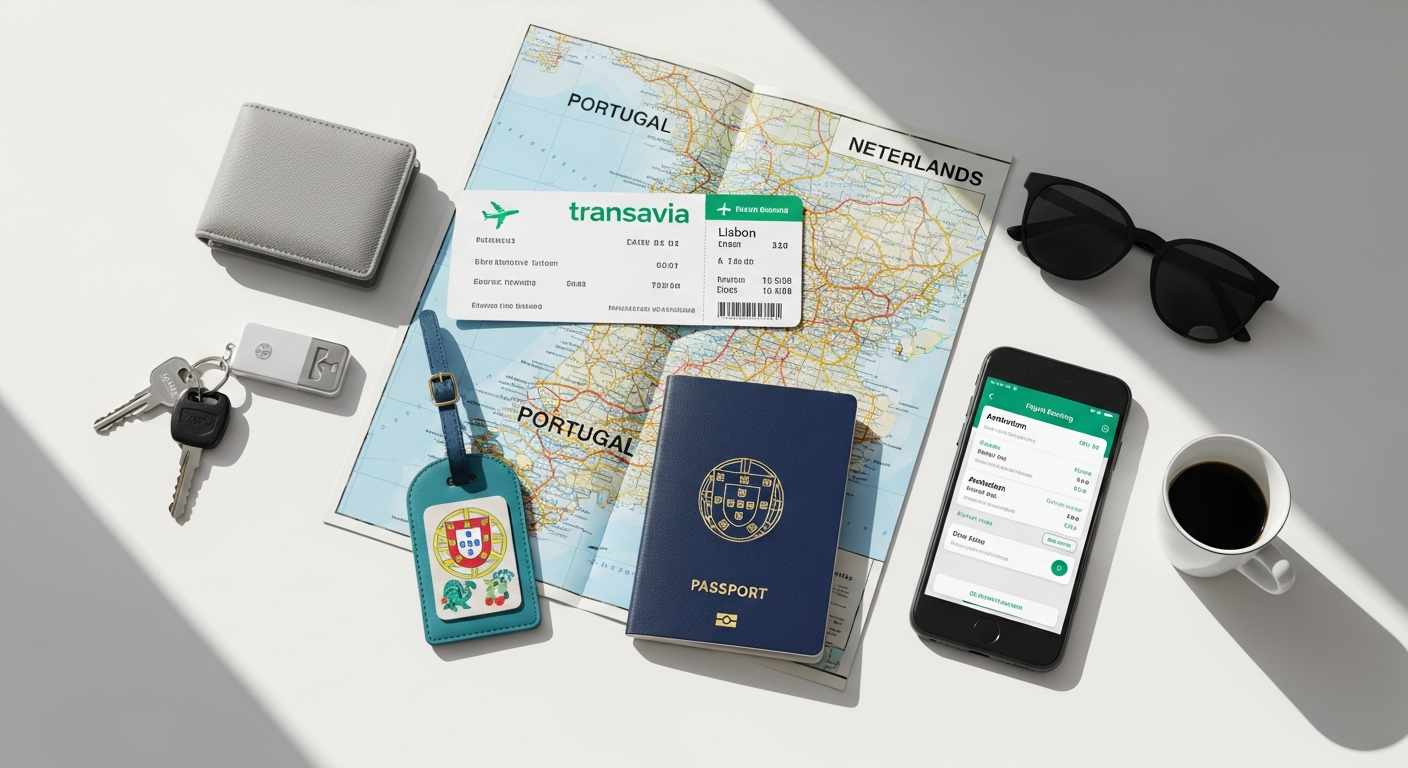
Discover insider tips for flying Transavia Faro to Amsterdam. Learn how to avoid hidden fees, secure comfortable seating, and maximize value on Europe's most popular budget route.
Over 500,000 passengers annually board Transavia flights between Faro and Amsterdam, yet the vast majority overpay significantly. I've observed countless travelers discover their bargain ticket suddenly costs €50 more for carry-on baggage or €30 extra for seat selection upon checkout. The reality is straightforward: flying Transavia doesn't require draining your finances if you understand how the system operates.
Transavia, Air France-KLM's no-frills subsidiary, commands the Faro-Amsterdam route for solid reasons. It's the bridge between Portugal's sun-drenched Algarve and Amsterdam's major Schiphol hub. The airline operates modern Boeing 737s alongside newer Airbus A320neo aircraft, delivering competitive fares that can reach as low as $93 for round-trip bookings. The tradeoff is evident: their ultra-low-cost model means practically every amenity beyond your seat carries an additional charge.
Start planning your Faro-Amsterdam flight with insider knowledge today.
This guide breaks down everything budget travelers need to know about this route. You'll uncover the exact fees lurking at checkout, identify which aircraft feature USB-C charging ports at every seat, learn proven methods for securing comfortable legroom, and understand when advance booking genuinely saves money. By the conclusion, you'll possess a complete strategy for maximizing value from your Transavia experience.
Understanding Transavia's True Cost Structure on the Faro-Amsterdam Route
Base fares versus all-inclusive pricing: Why the advertised €49 ticket often costs €120+ by checkout
Transavia's advertised prices are deceptively low. A €49 base fare sounds incredible until you reach checkout. That price covers nothing beyond your seat on the aircraft. Add checked baggage (€20-€40), carry-on oversize fees (€10-€25), seat selection (€5-€15), and a meal (€8-€15), and your "cheap" flight suddenly costs €120 or more. The airline's pricing strategy is transparent but aggressive—they front-load marketing with the lowest possible base fare, then collect revenue through ancillary charges. Understanding this structure prevents sticker shock and allows you to calculate your genuine total cost before committing to a booking.
Carry-on baggage policies and recent changes: Standard allowance, oversized bag fees, and exemptions
Transavia permits one personal item free of charge on all fares. This typically means a small backpack, purse, or laptop bag. However, their updated carry-on policy now charges for standard cabin bags (roughly €10-€25 depending on booking timing) unless you purchase a higher fare tier. Some exceptions exist: passengers traveling with infants receive one complimentary diaper bag, and certain frequent flyer members enjoy exemptions. The policy has generated considerable passenger frustration, particularly among budget-conscious travelers accustomed to one free carry-on across European budget carriers. Reviewing your specific ticket terms before arrival at the airport prevents surprises during check-in.
Checked baggage charges: Weight limits, number of bags permitted, and strategic packing approaches
Each checked bag costs approximately €20-€25 for the first bag, with subsequent bags costing more. Weight allowances typically max out at 20kg for standard economy fares, though higher tiers provide more generous limits. Strategic packing becomes essential—compression bags and rolling techniques maximize your free personal item space. Consider whether your destination allows laundry access, which might justify traveling with minimal checked luggage. The financial math often works in your favor when you minimize checked bags, even if carry-on fees apply.
Seat selection costs: Standard seat pricing, extra-legroom options, and when seats are free
Standard seat selection typically costs €5-€10, while extra-legroom seats (generally offering 32-34 inches of pitch) run €15-€25. Front row seats and emergency exit rows command premium prices. However, Transavia occasionally offers free seat selection during specific promotional periods, and some passengers report receiving complimentary seat assignments when booking through certain third-party sites. Families traveling with young children sometimes receive free seat assignments to keep them together. Evaluating whether the extra legroom investment makes sense for a three-hour flight depends on your height and comfort tolerance.
Meal and beverage pricing: What's included versus à la carte options
Transavia includes no complimentary meals or beverages on this route. Water is available upon request (generally free), but snacks, sandwiches, and beverages range from €3-€8. The onboard menu features limited options, and quality varies considerably based on passenger reviews. Packing your own snacks and a reusable water bottle saves money and ensures you have preferred items available throughout the flight.
Aircraft Types and Comfort Realities on This Popular Route
Boeing 737 specifications: Seating configuration, pitch measurements of 28-29 inches, and passenger feedback
Transavia operates Boeing 737-800 aircraft on many Faro-Amsterdam flights. These jets feature a 189-seat configuration with notoriously tight 28-29 inch pitch (the distance from the back of one seat to the back of the seat in front of it). For context, standard seat pitch in economy on full-service carriers typically measures 31-32 inches. Passengers of average height often report discomfort, particularly on the three-hour flight. The armrests don't always retract, and overhead bin space fills quickly on full flights. However, the 737 remains reliable and generally performs well operationally, with respectable on-time performance records on this route.
Airbus A320neo and A321neo advantages: Modern features, USB-C charging at every seat, and fuel efficiency
Transavia has been introducing newer Airbus A320neo and A321neo aircraft to the Faro-Amsterdam route. These aircraft represent a significant comfort upgrade. The A320neo offers USB-C charging ports at every seat—a genuine game-changer for business travelers and smartphone-dependent passengers. The cabin feels more modern, and noise levels are lower due to advanced engine technology. The A321neo provides additional cabin length, offering slightly more space despite similar pitch measurements. Booking strategically to secure these newer aircraft can meaningfully enhance your experience, though availability isn't guaranteed.
Fleet composition: Which aircraft operate Faro-Amsterdam flights and booking timing for newer planes
Transavia's fleet composition on this route continues evolving as they phase in newer aircraft. Older 737s still operate frequently, but A320neo and A321neo aircraft appear increasingly on this popular route. Booking 6-8 weeks in advance sometimes allows you to review which aircraft your specific flight uses (this information becomes available in your booking confirmation). If aircraft type matters to you—particularly for charging availability—monitor your booking details closely and consider rebooking if an older 737 is assigned to your preferred flight.
Legroom comparison: Pitch measurements versus competitors like Ryanair and EasyJet
Transavia's 28-29 inch pitch matches Ryanair's tight configurations but trails EasyJet's slightly more generous 29-31 inch pitch on some aircraft. None of these budget carriers offer truly comfortable legroom for economy passengers. The differentiator isn't pitch but rather seat width, armrest design, and overall cabin environment. Transavia's seats feel marginally wider than Ryanair, and the cabin atmosphere tends to be calmer. For a three-hour flight, the pitch difference between carriers becomes less critical than for longer routes, though tall passengers (6'2" or taller) should seriously consider paying for extra-legroom seats regardless of carrier.
Strategic Booking Tactics to Minimize Your Total Fare
Optimal booking windows: How far in advance to book for lowest fares on this route
The sweet spot for booking Faro-Amsterdam flights falls 6-8 weeks in advance. Transavia releases initial inventory at this timeframe, and competition hasn't yet driven prices upward. Booking too early (10+ weeks out) sometimes yields higher prices as Transavia tests demand. Last-minute bookings (less than two weeks) typically reflect premium pricing as seat inventory depletes. Monitor the route regularly from week 12 onwards, then commit to purchasing when prices hit your target during the 6-8 week window. This approach consistently beats both early and last-minute strategies.
Price volatility patterns: When fares spike and when deals emerge throughout the week
Transavia follows seasonal patterns with notable accuracy. Summer months (June-August) and school holidays spike dramatically, with prices potentially doubling compared to shoulder seasons. Tuesday and Wednesday departures typically offer lower fares than weekend flights. Midday flights (10 AM – 2 PM departures) often undercut early morning or evening options. Price drops frequently occur on Tuesday and Wednesday mornings as Transavia adjusts inventory. Setting up price alert notifications through Google Flights or Skyscanner helps identify these favorable moments without requiring constant manual checking.
Last-minute booking risks: Why €194 one-way fares happen and who should avoid them
One-way fares reaching €194 occur when demand spikes beyond available inventory—typically during school holidays, summer weekends, or when major events draw crowds to either destination. Last-minute bookings against this demand almost guarantee premium pricing. Business travelers with flexible budgets accept these prices, but leisure travelers planning ahead can avoid them entirely. If your travel dates remain flexible, shifting by even one or two days can reduce fares by 30-50%. If your dates are fixed, lock in pricing at least 6-8 weeks beforehand rather than gambling on last-minute deals.
Round-trip versus one-way economics: The €93 round-trip sweet spot explained
The €93 round-trip figure represents Transavia's promotional pricing during optimal booking windows in shoulder seasons (April-May or September-October). These deals exist and are genuinely achievable, but only with precise timing and flexibility. Round-trip bookings often provide better per-leg pricing than combining two separate one-way tickets. The €93 round-trip typically reflects €46-50 per leg before ancillary charges. When you encounter these prices, the booking becomes an exceptional value—significantly below competing carriers and worth purchasing even if your travel dates shift slightly.
Book your Faro-Amsterdam flight during the optimal booking window for maximum savings.
Navigating Ancillary Services Without Breaking the Bank
Free baggage allowance: What you get without paying extra on Transavia flights
Your Transavia ticket includes one personal item at no additional charge. That's it. Everything else costs extra—checked baggage, standard carry-on bags, even oversized personal items. Understanding this baseline prevents accidental fees. The personal item must fit under the seat in front of you and typically allows items measuring roughly 40x20x25cm. Maximizing this free allowance through compression packing and strategic item selection becomes your primary cost-control mechanism.
Strategic baggage packing: Maximizing your free allowance to avoid overage fees
Compression bags shrink clothing volume by 50-70%, allowing you to fit surprising quantities into your free personal item allowance. Rolling clothes instead of folding saves additional space. Wearing your bulkiest items (jacket, heavy shoes) onto the aircraft instead of packing them further stretches your allowance. For a three-day weekend, many travelers pack entirely within their personal item, avoiding checked baggage fees altogether. For longer trips, evaluate whether laundry facilities at your destination justify minimal luggage. This strategic approach transforms your travel from "paying for convenience" to "planning for efficiency."
Priority boarding worth: Cost-benefit analysis for this 3-hour flight
Priority boarding costs approximately €10-€15 and guarantees overhead bin space plus earlier boarding. On a crowded three-hour flight, this might seem valuable. However, Transavia's boarding process usually accommodates all passengers eventually, and checked baggage can work around full overhead bins. Unless you're traveling with multiple carry-on items requiring bin space or have mobility concerns that benefit from boarding early, priority boarding represents an optional expense rather than a necessity.
Seat selection strategy: When to pay for extra legroom versus accepting standard seats
For passengers under 5'10", standard seats during a three-hour flight remain tolerable despite tight pitch. Paying €15-€25 for extra legroom provides minimal additional comfort for the duration. Passengers 5'10" or taller should seriously consider the investment, as standard seating becomes genuinely uncomfortable. Traveling with a partner? One of you might accept standard seating while the other splurges on extra legroom, balancing cost against comfort. Aisle seats provide slightly more psychological comfort than middle seats despite identical pitch, yet often cost the same.
Real Passenger Experiences: What Travelers Actually Report
On-time performance: Transavia's reliability record on the Faro-Amsterdam route
Transavia maintains respectable on-time performance on the Faro-Amsterdam route, with punctuality rates generally exceeding 80%. This compares favorably against some competitors and reflects the airline's operational efficiency despite their budget model. Delays do occur—weather, crew issues, and technical problems affect all carriers—but passengers typically report fewer chronic delays on this route than on some other budget carriers.
Boarding chaos: Common complaints about disorganized procedures and solutions
Boarding procedures occasionally become chaotic, particularly on fully booked flights during peak travel seasons. Passengers report crowded gate areas, unclear boarding group announcements, and bottlenecks at the aircraft door. Arriving at your gate early and remaining attentive to announcements helps you board efficiently. Having your boarding pass and identification readily accessible speeds the process. Patience during boarding prevents frustration—remember you're sharing the experience with 180+ other passengers and one aircraft door.
Seating comfort feedback: Honest assessments from passengers of different sizes
Passengers consistently report the 28-29 inch pitch as tight but tolerable for three hours. Larger passengers (over 220 lbs) frequently describe discomfort, particularly with armrests in the down position. Passengers of average build report manageable but not luxurious comfort. Taller passengers (over 6'2") commonly express knee contact with the seat in front. These realities aren't unique to Transavia—budget carriers uniformly prioritize seat density—but knowing them in advance prevents disappointment.
Staff interactions: Positive experiences with crew versus customer service frustrations
Flight crews on this route generally receive positive feedback for professionalism and friendliness. Cabin crew handle tight quarters with patience and maintain reasonable beverage service standards. Customer service challenges emerge more often during disruptions (delays, cancellations, rebooking needs), where passengers report inconsistent help and frustration with communication. Ground staff experiences vary by airport and timing. Planning ahead to avoid edge cases (tight connections, ambiguous baggage situations) minimizes your likelihood of encountering customer service friction.
Comparing Transavia to Competing Budget Carriers on This Route
Transavia versus Ryanair: Pricing, fees, and service quality head-to-head comparison
Transavia and Ryanair often price similarly on this route, with either carrier potentially offering better deals depending on your booking window. Transavia's baggage allowances marginally exceed Ryanair's, and boarding feels less confrontational. Ryanair charges more aggressively for seat selection and priority boarding but sometimes offers ultra-low base fares that offset higher ancillaries. Service quality differs minimally—both prioritize efficiency over comfort. Comparing specific dates and your likely ancillary purchases (checked bags, seat selection) reveals which carrier provides better total value for your specific trip rather than assuming one always beats the other.
Transavia versus EasyJet: Comfort, reliability, and total cost analysis
EasyJet typically offers marginally more generous seat pitch (29-31 inches depending on aircraft) and includes carry-on baggage in most fares. These comfort advantages often justify EasyJet's slightly higher base fares, particularly for passengers prioritizing legroom. EasyJet's on-time performance sometimes trails Transavia's on this route. When comparing total costs (base fare plus your anticipated ancillaries), EasyJet's inclusive approach sometimes undercuts Transavia's à la carte model, while other times Transavia emerges cheaper. Calculate your specific scenario rather than defaulting to assumptions.
Baggage allowance comparison: How Transavia stacks up on inclusions
Transavia's carry-on policy now charges for standard cabin bags on lower fares, putting it below EasyJet's complimentary carry-on inclusion. Transavia's checked baggage pricing matches competitors (€20-€25 for first bag). Ryanair charges for both carry-on bags and checked luggage on base fares, making Transavia slightly more generous. EasyJet includes one carry-on and provides competitive checked baggage pricing. For passengers traveling light (personal item only), the differences matter less. For those with standard luggage, EasyJet's inclusive model often provides better value.
Seat pitch comparison: Legroom across budget carriers on European routes
Transavia matches Ryanair's tight 28-29 inch pitch, trailing EasyJet's 29-31 inch configuration on many aircraft. Wizz Air sometimes undercuts all three with ultra-tight 28 inch pitch on certain routes. The 1-3 inch differences matter most for taller passengers and longer flights. On this three-hour route, the pitch differences become secondary to other comfort factors—seat width, armrest design, cabin amenities. Transavia's seats feel slightly less cramped than Ryanair despite identical pitch, though this remains subjective assessment.
Money-Saving Hacks Exclusive to Transavia's Faro-Amsterdam Service
The free baggage loophole: Understanding what actually counts as carry-on luggage
Transavia's free personal item allowance doesn't technically limit what fits in your under-seat space, provided your item dimensions stay within specifications. A 40x20x25cm limit allows surprisingly large soft-sided bags. Rolling suitcases technically classify as carry-on (chargeable) rather than personal items, but soft backpacks or duffels in the same dimensions count as personal items (free). Understanding this distinction allows you to use bulkier soft luggage without triggering carry-on fees. This loophole remains valid as long as your item legitimately fits within stated dimensions.
Booking through third-party sites: When aggregators offer better deals than direct booking
Skyscanner, Kayak, and Google Flights sometimes display prices lower than Transavia's direct website, occasionally including bundled baggage allowances not available through direct booking. These aggregators negotiate package deals with Transavia. Your savings might reach 5-15% on total price when baggage inclusions are considered. Always review what's included in aggregator pricing versus Transavia's direct fares before assuming savings. Direct booking occasionally offers loyalty discounts unavailable through third parties.
Combining with budget accommodations: Algarve hotel packages that offset flight costs
Several Algarve accommodation providers partner with Transavia to offer bundled flight-plus-hotel packages at reduced total prices. These packages aren't always visible through standard booking channels—checking Transavia's website for package deals sometimes reveals significant savings. A bundled €93 round-trip flight plus three nights' accommodation might cost less than booking components separately. This strategy requires booking both simultaneously, reducing flexibility but maximizing cost efficiency for planned trips.
Frequent flyer sweet spots: Maximizing miles on this popular route
Transavia participates in the Air France-KLM frequent flyer program (Flying Blue). This route generates decent mileage given the distance (roughly 1,200 km). Members accumulate miles toward future redemptions faster on this popular route than less-traveled segments. Short-haul premium redemptions sometimes cost 7,500-10,000 miles, making this route viable for mileage redemption if you've accumulated sufficient balance. If you're a regular Faro-Amsterdam traveler, enrolling in Flying Blue and tracking redemption opportunities provides long-term savings despite paid flights in the interim.
Practical Pre-Flight and Onboard Survival Guide
Online check-in advantages: Timing and fee avoidance strategies for Transavia
Check in online exactly 24 hours before departure. Transavia's system opens online check-in at this timeframe, and boarding passes become available immediately. Checking in early secures your boarding group assignment and ensures your preferences (baggage, seat selection) are locked in before peak times when systems sometimes experience delays. Avoid airport check-in except when required (significant baggage changes, new passenger additions), as it costs extra and requires waiting. Mobile boarding passes work seamlessly for this route—screenshot or save your digital pass to your phone as backup.
Baggage drop-off timing: Arriving early to avoid last-minute fees
Transavia closes baggage drop-off 2-3 hours before departure for domestic European flights. Arriving at the airport 3-3.5 hours early ensures ample time for baggage processing and security without rushing. Airport lines peak 2-3 hours before departure, so arriving earlier provides faster processing. If you're flying with minimal baggage (personal item only), arriving 2-2.5 hours early suffices. Missing baggage drop-off deadlines requires rebooking or extraordinary measures, making early arrival genuinely important rather than merely convenient.
What to pack smart: Maximizing comfort within Transavia's baggage restrictions
Pack your personal item with items you'll use during the flight—compression socks, neck pillow, medications, phone charger, light entertainment, snacks. This strategy keeps comfort items accessible without requiring checked baggage access mid-flight. For the checked bag (if used), prioritize essentials at the top for quick accessibility upon arrival. Pack shoes in the outer pockets for easy removal at security. Wear your bulkiest items (winter jacket, hiking boots) onto the aircraft rather than packing them. These small optimizations transform your packing from frustrating to efficient.
Onboard comfort hacks: Neck pillows, compression socks, and seat positioning tricks
Neck pillows provide genuine comfort advantage on three-hour flights—they're lightweight, worth bringing even if Transavia charges for checked baggage inclusion. Compression socks reduce leg swelling and improve circulation during flight, particularly valuable with tight seating. Adjusting your seat to maximum recline (though modest on budget aircraft) combined with strategic pillow positioning creates acceptable sleep opportunity. Standing and walking the aisle every hour prevents stiffness. These low-cost hacks meaningfully improve your in-flight experience without requiring airline cooperation.
Your Transavia Faro-Amsterdam Playbook: Fly Smart, Save Big
Flying Transavia between Faro and Amsterdam doesn't demand accepting mediocre value or uncomfortable conditions. The route's popularity reflects legitimate appeal—competitive pricing and modern aircraft genuinely attract travelers. Yet success requires strategy. You now understand the true cost structure, know which aircraft feature USB-C charging, and can identify optimal booking windows separating savvy travelers from overpayers.
The real distinction is approaching Transavia with informed expectations. Budget airlines thrive because passengers either overlook fees or treat them as inevitable costs. You're different. You'll check in online, pack strategically within baggage rules, and book 6-8 weeks ahead when fares reach their lowest points. You'll compare against Ryanair and EasyJet to confirm Transavia genuinely offers best value for your specific dates. The €93 round-trip flights aren't myths—they're real prices accessible to travelers understanding when and how to book.
USB-C charging on A320neo aircraft represents genuine modern convenience. The 28-29 inch pitch remains manageable with realistic expectations and proper preparation. Start your next Faro-Amsterdam journey with this playbook actively guiding your decisions. Monitor fares using incognito browsing, set price alerts 8 weeks out, and commit to booking when you spot your target price. Your wallet and comfort level will reward you. The Algarve's beaches and Amsterdam's canals await. Fly there smarter than the other 500,000 annual passengers on this route.
Secure your best Faro-Amsterdam fare and begin your journey with confidence.