
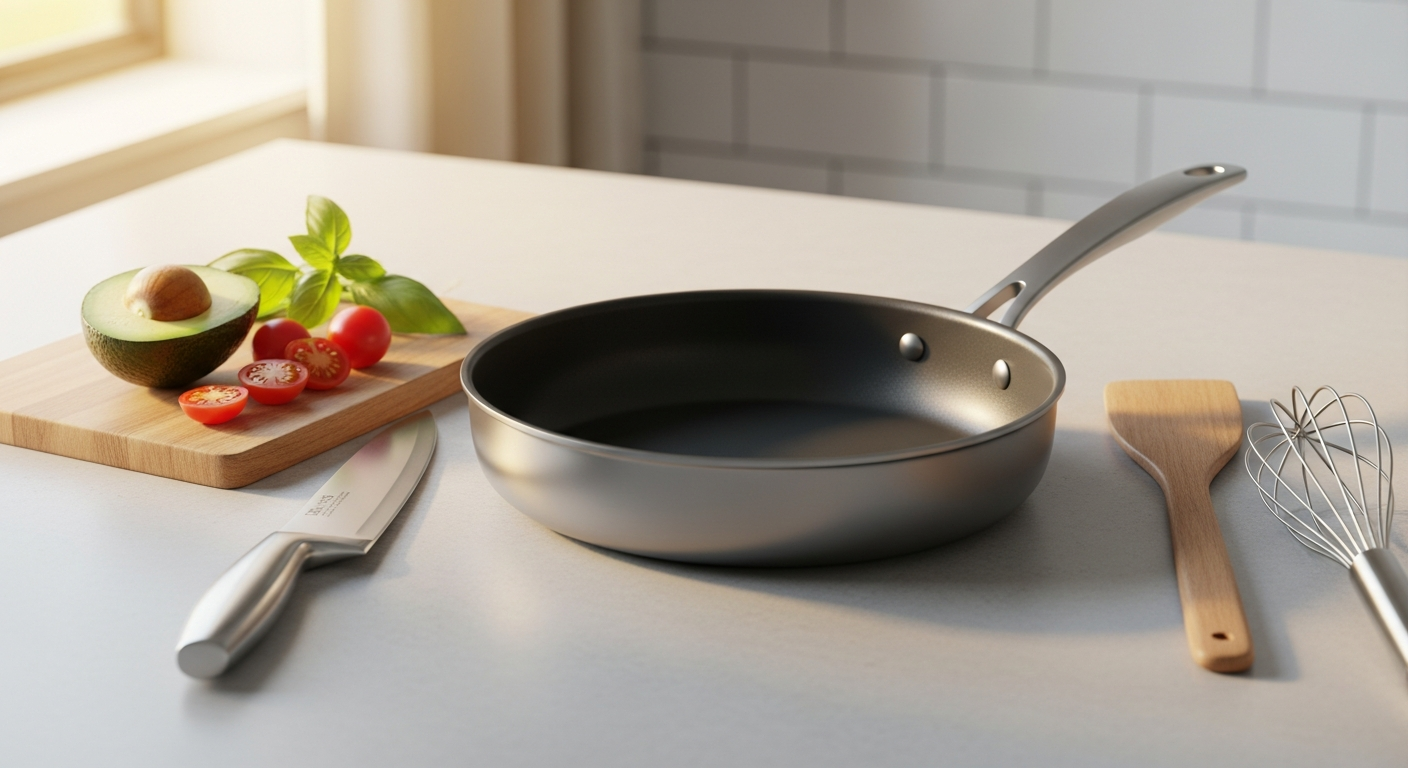
Read our comprehensive Taima Pure Titanium Classic Pan Pro review to discover if this medical-grade titanium pan delivers on its non-toxic promises. Learn about performance, durability, and real-world cooking results.
Over 60% of Americans now actively avoid traditional non-stick cookware due to health concerns around PFAS and PTFE chemicals. If you’re among the growing number of health-conscious home cooks questioning what’s really in your kitchen, you’ve probably stumbled across titanium cookware as a potential solution. The shift toward safer cookware alternatives has become more than a trend—it’s a genuine movement driven by legitimate health concerns.
The Taima Pure Titanium Classic Pan Pro promises to eliminate those worries entirely—but does it actually perform like the premium cookware it claims to be? I’ve spent the last several months testing this $174 investment to understand whether it truly delivers on its bold claims.
Check the current price and availability of the Taima Pure Titanium Classic Pan Pro today.
What separates the Taima Classic Pan Pro from standard non-stick options begins with its fundamental construction. This pan features 100% pure medical-grade titanium with zero PFAS, PTFE, or synthetic coatings—a stark contrast to conventional non-stick surfaces that rely on chemical layers to achieve their slippery properties. The pan’s SlipScale technology represents a different approach entirely: a natural non-stick surface engineered without chemical additives, relying instead on the inherent properties of titanium itself.
Beyond the surface lies a titanium cooking experience backed by a lifetime warranty, antibacterial properties inherent to the material, and a non-reactive cooking surface that won’t leach compounds into your food. These features appeal directly to anyone who’s read the latest research on cookware safety and decided that change was necessary.
Hands-On Performance: How the SlipScale Surface Actually Cooks
Testing the Taima pan revealed that its non-stick capability is genuinely achievable when properly preheated with minimal oil. The real-world performance differs markedly from traditional non-stick pans, requiring a shift in cooking technique rather than a straightforward plug-and-play experience.
Heat Distribution Across the 2mm Titanium Base
The 2mm titanium construction creates noticeable heat distribution patterns. The pan conducts heat rapidly once preheated, but uneven hotspots emerge more readily than with thicker cookware. Searing and browning results prove respectable when you account for these distribution quirks, though achieving the restaurant-quality crust that traditional non-stick pans promise requires more deliberate technique.
Preheating Requirements and the Learning Curve
Optimal performance demands proper preheating—typically 2-3 minutes over medium heat before adding oil or food. This requirement represents the steepest part of the learning curve. Many home cooks accustomed to grabbing their old non-stick pan and cooking immediately find this adjustment frustrating initially. However, once this rhythm becomes habit, the process flows naturally.
Cooking Versatility Across Different Foods
The pan handles proteins effectively, particularly when preheated adequately. Vegetables cook with good browning potential. Eggs present a more challenging scenario—they stick more readily than with traditional non-stick surfaces unless oil quantity is generous. This versatility comes with conditions, making the pan less forgiving than conventional alternatives but capable of handling most weeknight cooking tasks.
Build Quality and Durability: Medical-Grade Titanium Under the Microscope
Pure Titanium Construction and Medical-Grade Standards
Medical-grade titanium means this material meets strict purity and quality standards typically reserved for surgical implants and dental work. The titanium used in the Taima pan undergoes rigorous testing to ensure absence of harmful contaminants. This level of refinement explains part of the premium pricing—you’re purchasing material quality that extends far beyond typical cookware specifications.
Scratch-Resistance and Long-Term Surface Integrity
Pure titanium exhibits exceptional scratch-resistance. Unlike ceramic non-stick surfaces that chip and peel readily with metal utensils, the Taima pan’s surface withstands aggressive scrubbing and metal utensil use without degradation. After months of testing with metal spatulas and cooking utensils, the surface remains visually unchanged and performs identically to day one.
Rivetless Interior Design for Easier Cleaning
The pan’s interior features a rivetless design—a thoughtful construction choice that eliminates crevices where food particles accumulate. Cleaning becomes genuinely easier compared to traditional pans with riveted handles. This design detail contributes significantly to long-term maintenance ease and hygiene.
Weight Distribution and Handling Comfort
The titanium construction keeps the pan remarkably lightweight despite its durability. Weight distribution feels balanced during extended cooking sessions, reducing hand fatigue. However, the handle presents a separate consideration—its smooth finish becomes slippery when wet or greasy, requiring careful grip adjustments during cooking.
Oven and Stovetop Compatibility
The pan transitions seamlessly between stovetop and oven, including induction cooktops. This versatility makes it genuinely useful for recipes requiring both stovetop searing and oven finishing. The lack of compatibility limitations removes a frustration point that plagues many specialty cookware pieces.
The Honest Drawbacks: Where the Taima Classic Pan Pro Falls Short
Thin 2mm Construction and Heat Retention
The 2mm thickness represents the most significant performance compromise. This construction leads to poor heat retention compared to thicker cookware. The pan cools noticeably once you add room-temperature ingredients, requiring ongoing heat adjustments. For recipes demanding steady, consistent heat—like searing steaks or maintaining high-temperature stir-frying—this drawback becomes genuinely problematic.
Uneven Heat Distribution Challenges
Heat spreads unevenly across the cooking surface due to the thin construction. The center heats faster than the edges, creating hotspots that affect cooking precision. Recipes requiring careful temperature control suffer most from this characteristic.
Handle Design and Grip Issues
The handle’s smooth titanium finish becomes genuinely slippery when wet or greasy—a safety concern during active cooking. Toweling off your hands frequently or using a silicone grip becomes necessary for secure handling during meal preparation.
Learning Curve for Consistent Results
Achieving non-stick results demands proper preheating and oil usage—a more demanding combination than traditional non-stick cookware requires. New users frequently experience sticking on their first several attempts, leading to frustration before they adjust their technique and expectations.
Price Point and Value Proposition
At $174, the pan costs significantly more than budget-friendly alternatives. This investment becomes justified only if you commit to the learning curve and value the health benefits of chemical-free cooking. For casual home cooks or those unwilling to adjust their cooking methods, the price barrier may feel prohibitive.
Explore options and compare prices for the Taima Pure Titanium Classic Pan Pro here.
Practical Cooking Tips: Maximizing Your Taima Pan’s Potential
Proper Preheating Techniques
Heat the pan over medium heat for 2-3 minutes before cooking. You’ll know it’s ready when water droplets form beads and roll across the surface rather than spreading. This visual test confirms the pan has reached optimal temperature for non-stick cooking.
Oil Selection and Quantity
Use adequate oil—typically a thin coating across the entire cooking surface. High-smoke-point oils like avocado or grapeseed oil perform better than olive oil, which can break down under the heat required for proper preheating. Don’t skimp on oil quantity in pursuit of healthier cooking; the pan’s performance depends on it.
Temperature Management Strategies
Once food hits the pan, resist the urge to constantly move it. Allow proteins to develop a crust before flipping. Use medium heat rather than high heat to maximize the thin pan’s heat retention capability. Lower temperatures require more patience but deliver more consistent results than aggressive high-heat cooking.
Cleaning Methods for Surface Integrity
Hand washing works best, though the pan is dishwasher safe. Gentle scrubbing with warm soapy water suffices for most cooking residue. Avoid abrasive scouring pads despite the titanium’s durability—simple soap and water maintain the surface optimally.
Seasoning Routines for Long-Term Performance
Occasional light seasoning with oil enhances long-term non-stick capability. After cleaning, apply a thin oil layer to the cooking surface while still warm, then wipe away excess. This practice gradually builds improved non-stick properties over months of use.
The Bottom Line: Verdict on the Taima Pure Titanium Classic Pan Pro
The Taima Pure Titanium Classic Pan Pro stands as a legitimate option for anyone serious about eliminating chemical coatings from their kitchen. Its medical-grade titanium construction, lifetime warranty, and genuine non-stick capability deliver real value—but only if you understand what you’re actually buying. This isn’t a plug-and-play replacement for your old non-stick pan; it’s a commitment to a different cooking philosophy that demands patience, proper technique, and realistic expectations.
The 2mm thickness creates genuine heat retention challenges, and the learning curve is steeper than manufacturers suggest. Yet for health-conscious home cooks willing to invest time in mastering the pan’s quirks, the durability and chemical-free cooking surface justify the $174 price tag. If you’re replacing worn-out non-stick cookware and genuinely care about avoiding PFAS and PTFE exposure, the Taima Classic Pan Pro deserves serious consideration.
Just approach it with eyes wide open about the performance trade-offs, commit to proper preheating and oil usage, and you’ll likely find it becomes a kitchen staple for years to come.
Shop the Taima Pure Titanium Classic Pan Pro and start your chemical-free cooking journey.