
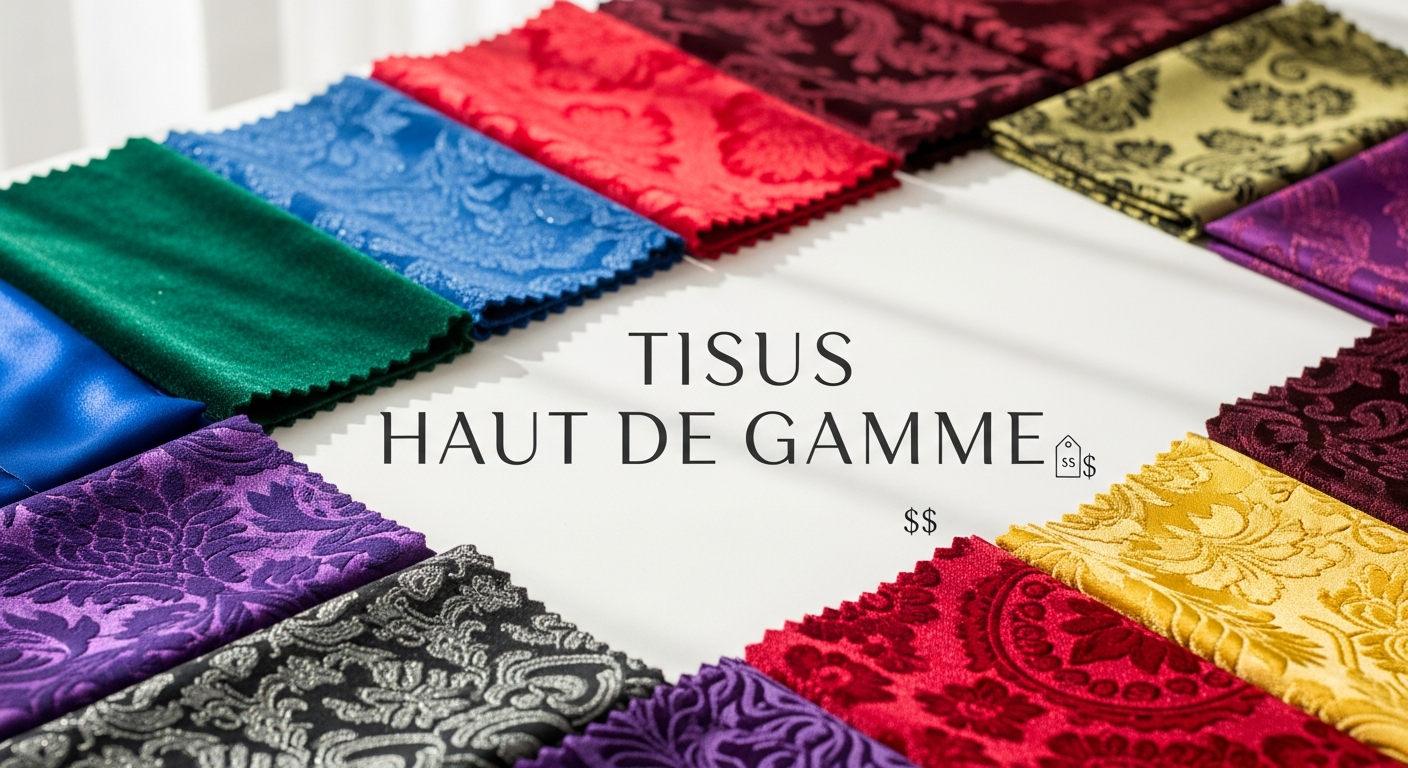
Découvrez les tissus de créateurs haut de gamme et fins de collection chez Tissus de Rêve. Accédez à des tissus de luxe de designers renommés avec jusqu’à 80% de réduction. Guide complet des meilleures affaires textile premium.
Did you know that luxury designer fabrics can cost 10 times more when purchased directly from couture houses? For years, creating high-end garments meant either stretching budgets to breaking point or settling for lower-quality alternatives. The textile world has long been divided between those who could afford genuine luxury and those who couldn't, with little middle ground for the passionate creators caught in between.
Tissus de Rêve has fundamentally shifted this dynamic by specializing in end-of-collection fabrics and designer overruns. Rather than selling full production runs at premium prices, they've built their reputation on sourcing the remnants and final pieces from renowned couture houses and prestigious fashion brands. This distinctive business model opens doors that were previously locked behind exclusive boutiques and professional networks.
This guide walks you through everything needed to access extraordinary fabrics, discover what makes end-of-collection textiles special, explore the stunning variety available, understand the pricing strategy that makes luxury accessible, and navigate the world of high-end designer materials with confidence.
Explore the current designer fabric collection at Tissus de Rêve.
What Are Tissus de Créateurs Haut de Gamme and Why They Matter
Definition and distinction between end-of-collection fabrics and regular designer fabrics
End-of-collection fabrics represent the final pieces from a designer's seasonal lineup—materials that didn't sell out during the initial commercial window but carry identical quality standards as anything that did. This distinction matters profoundly. These aren't damaged goods, seconds, or inferior stock. They're premium textiles that simply didn't find their initial buyer within the narrow window of seasonal fashion. Once a collection closes, designers move forward, leaving perfectly exquisite materials behind.
Regular designer fabrics, by contrast, are typically the star performers—pieces that sold briskly and generated revenue during their commercial period. They command full pricing because demand remains active. End-of-collection fabrics cost less not because they're compromised, but because the commercial window has closed and space must be made for new designs.
The sourcing model: how Tissus de Rêve partners with renowned couture houses and fashion brands
Tissus de Rêve maintains direct relationships with factories, prestigious couture houses, and established fashion brands. When these designers finalize their seasonal collections, they're left with inventory that needs clearing. Rather than allowing these materials to languish in storage or face destruction, Tissus de Rêve acquires them at substantially reduced rates. The sourcing is continuous—new fabrics arrive constantly, ensuring fresh discoveries on every visit.
This partnership model benefits everyone involved. Designers reclaim warehouse space and convert inventory into revenue. Tissus de Rêve gains access to genuine luxury textiles at acquisition costs that allow for significant markups while still offering customers extraordinary value. Customers access materials they could never otherwise afford.
Why end-of-collection materials represent genuine luxury, not compromised quality
The quality of these fabrics remains untouched by their end-of-collection status. A silk charmeuse from a renowned designer carries the same thread count, weight, and drape whether it sells during week one or arrives at Tissus de Rêve three months later. The finishing, weaving standards, and fiber sourcing mirror exactly what couture clients would have purchased.
What changes is exclusively the commercial context—not the material itself. When you purchase an end-of-collection fabric, you're acquiring textiles that met the exacting standards of professional designers and were deemed worthy of their collections. The only difference is timing and availability.
The sustainability angle: upcycling designer remnants and reducing textile waste
Fashion generates staggering textile waste annually. When designers' collections close, unsold materials often face incineration or landfill disposal. Tissus de Rêve interrupts this cycle by giving designer fabrics a second life. These materials transform from waste streams into creative projects—bespoke garments, unique accessories, elevated home furnishings.
This circular approach appeals to environmentally conscious creators who refuse to compromise on quality while maintaining ethical standards. Purchasing end-of-collection fabrics represents an active choice to reduce textile waste while supporting sustainable production practices.
The Fabric Variety That Sets Designer End-of-Collection Apart
Premium natural fibers available: silk, wool, cashmere, alpaca, mohair, linen, and cotton blends
The natural fiber selection rivals what you'd encounter in exclusive designer boutiques. Silk appears in multiple forms—charmeuse with its elegant drape, crepe de chine with subtle texture, satin-backed crepe combining luxury with practicality. Wool ranges from lightweight suiting fabrics to rich coating weights suitable for tailored garments. Cashmere and alpaca represent the pinnacle of luxury fiber work, offering unparalleled softness and thermal properties.
Linen varieties showcase the fiber's characteristic texture in both fine and substantial weights. Cotton blends combine the breathability and comfort of cotton with performance properties derived from synthetic additions. These aren't commodity-grade materials—they're the fiber selections that distinguish couture construction from ready-to-wear production.
Specialty textiles: velvet, jacquard, lace, jersey, crepe, and broderie anglaise
Specialty fabrics expand creative possibilities beyond conventional suiting and dress materials. Velvet from designer collections displays exquisite pile density and color saturation impossible to source in mass-market versions. Jacquard weaves feature complex pattern integration requiring sophisticated looms and expertise.
Lace selections showcase both classic patterns and contemporary designs, from delicate Alençon-inspired work to modern geometric compositions. Jersey fabrics provide stretch and comfort suitable for contemporary silhouettes. Crepe offers distinctive texture and movement characteristics prized by designers for sophisticated draping. Broderie anglaise—eyelet embroidery on cotton bases—represents the meticulous handwork that distinguishes couture materials.
Technical fabrics: waterproof materials and performance textiles from designer collections
Contemporary designer collections increasingly incorporate technical innovations. Waterproof materials suitable for high-fashion rainwear and outerwear appear regularly. Performance textiles engineered for moisture management, temperature regulation, and durability bring functionality to luxury construction.
These technical innovations prove invaluable for creators seeking to blend luxury aesthetics with practical performance—combining designer sophistication with real-world wearability.
Unique design characteristics: exquisite drape, rich textures, and sophisticated patterns
Every fabric in Tissus de Rêve's inventory reflects the design philosophy of its originating house. Pattern sophistication goes far beyond basic prints—expect subtle colorways, intricate geometric compositions, and artistic interpretations that speak to professional design training. Textures reveal themselves through hand-feel and visual depth impossible to replicate through digital imagery alone.
Drape characteristics define the movement of finished garments. Designer fabrics typically display exceptional drape because their fiber composition and weave construction deliberately cultivate this quality. This translates directly to finished pieces that move gracefully, hang beautifully, and convey luxury through their behavior on the body.
Discover the latest designer fabric selections available now.
Decoding the Pricing Strategy Behind 80% Discounts
Understanding why designer end-of-collection fabrics command such significant reductions
The discounts Tissus de Rêve offers—frequently reaching 80% off—reflect market economics rather than quality compromises. A designer offering fabric at full price during its collection season operates under different cost structures than a company acquiring excess inventory six months later. The original designer has already recouped development costs, marketing expenses, and brand positioning investments through the initial sales window.
When Tissus de Rêve acquires this inventory, the development costs have been absorbed. Storage, carrying costs, and the need to liquidate inventory create urgency for sellers. These economic realities translate into pricing that seems almost unbelievable when compared to comparable designer materials available through traditional channels.
How Tissus de Rêve's business model enables competitive pricing without sacrificing quality
The sourcing model itself eliminates middlemen present in conventional luxury retail. Tissus de Rêve purchases directly from designers and factories, not through distributor networks. This direct relationship eliminates multiple margin layers that traditionally inflate luxury fabric pricing. The inventory moves quickly—Tissus de Rêve's rotating selection means fabrics sell before holding costs accumulate.
The volume approach compensates for individual item discounting. Rather than selling one bolt at maximum margin, Tissus de Rêve moves higher quantities at reduced margins, creating revenue sustainability without compromising on material quality.
Breakdown of typical price ranges for various fabric types and compositions
Price variation depends on fiber composition, origin, and design complexity. Natural fiber blends typically occupy the mid-range, offering quality without the premium positioning of pure cashmere or silk. Pure natural fibers command higher prices reflecting their sourcing costs. Specialty fabrics like velvet or intricate jacquard weaves price higher than basic wovens due to production complexity.
Designer origin significantly influences pricing. Fabrics sourced from legendary couture houses carry different valuations than materials from emerging designer collections. The specificity of sourcing—a limited-edition designer collaboration versus a core collection item—also affects final pricing. Despite these variations, all materials maintain the quality standards that define luxury textiles.
Flash sale mechanics: Wednesday and Saturday promotions explained
Tissus de Rêve operates flash sales on Wednesdays and Saturdays, reducing specific fabrics by up to 70% for limited periods. These promotions serve multiple strategic purposes: they accelerate inventory movement, create urgency that drives purchasing decisions, and reward engaged customers monitoring the site regularly.
The mechanics require strategic shopping. Promoted items are announced during specific windows and disappear quickly as stock clears. Success requires either notification settings or regular checking during sale windows. The appeal lies partly in the hunt itself—discovering exceptional materials at prices that seem impossible.
Navigating Stock Scarcity and Making Strategic Purchasing Decisions
The ephemeral nature of end-of-collection inventory and what it means for buyers
This is perhaps the most critical characteristic of shopping at Tissus de Rêve: nothing lasts forever. Once a fabric sells out, it's gone permanently. Designers don't restock their end-of-collection items—by definition, the collection has closed. This creates genuine scarcity that affects purchasing psychology and decision-making.
For seasoned shoppers, this ephemeral nature becomes part of the appeal. It transforms fabric shopping from a casual, indefinite activity into an engaged hunt requiring attention and decisiveness. The fabric you love today might disappear tomorrow, creating urgency that separates browsers from committed makers.
Why specific fabrics won't be restocked once sold out
Understanding the supply chain explains this finality. Tissus de Rêve sources from a finite pool of end-of-collection materials. Once they've acquired available inventory from a specific designer season, that's the complete supply. Designers don't produce additional stock of closed collections for aftermarket retailers.
This irreplaceability is worth embracing rather than resenting. It guarantees that fabrics you purchase are genuinely rare, impossible for others to acquire identical yardage of months or years later. Your finished garment becomes distinctly yours, incorporating materials no one else can source.
Strategies for identifying must-have fabrics before they disappear
Active engagement proves essential. Visit the site regularly—multiple times weekly provides optimal monitoring. Follow Tissus de Rêve's social media for collection announcements and preview opportunities. Sign up for email notifications to receive alerts about new arrivals and flash sales. Create detailed wishlists noting specific fabrics that resonate with your vision.
Develop project planning skills that accelerate from inspiration to purchase. When you discover a fabric that speaks to you, move quickly through evaluation. Ask yourself whether this material aligns with planned projects, whether you have yardage calculations prepared, and whether hesitation reflects genuine uncertainty or simple buyer's second-guessing.
Building a curated wishlist and monitoring new arrivals
Sophisticated shoppers maintain digital wishlists organized by project, color palette, or fiber type. This preparation transforms browsing into strategic decision-making. When you encounter a fabric, you immediately know whether it fits existing plans or represents a new inspiration. Wishlist curation also clarifies your aesthetic preferences—patterns you're drawn to, color combinations that excite you, fiber preferences that work best with your construction style.
New arrivals require attention. Tissus de Rêve adds inventory continuously, and the most exceptional fabrics disappear fastest. Early access to new collections provides the best selection, though flash sales can sometimes offer deeper discounts on slower-moving items.
Quality Markers and How to Evaluate Designer Fabric Authenticity
Identifying hallmarks of genuine couture house fabrics
Authentic designer fabrics display specific quality indicators reflecting their professional origins. Selvage edges—the finished sides of fabric—often carry designer branding or mill information. The selvage finish is invariably clean and professionally executed, not rough or prone to fraying. Thread count in woven fabrics is consistently high, indicating dense construction typical of luxury production.
Fiber content declarations are precise and detailed, not vague or approximate. Premium fabrics specify exact fiber percentages and often identify specific material sources—"Italian silk," "Swiss cotton," or "German wool." Color consistency across the entire bolt shows proper production controls. Pattern registration on printed or woven designs is flawless, without misalignment or color bleeding.
Understanding fabric weight, thread count, and weave quality indicators
Fabric weight—typically expressed in grams per square meter—indicates substance and durability. Lightweight silks for evening wear typically measure 90-130 gsm. Dress-weight cottons range from 200-250 gsm. Suiting fabrics and coat materials exceed 350 gsm, providing structure and stability.
Thread count measures the number of threads per square inch. Higher thread counts indicate denser, more durable construction. Dress fabrics typically contain 200-300 threads per inch; premium materials often exceed these baselines. Weave quality reveals itself through consistency and precision. Tight, even weaves indicate controlled production processes and superior quality compared to loose or irregular construction.
How to assess drape, hand-feel, and texture in online shopping environments
Evaluating physical properties through images and descriptions requires knowledge. Designer photography typically captures drape through styling—how fabric falls on garment forms reveals its movement characteristics. Rich, fluid drapes suggest appropriate fiber composition and weave construction for garments requiring movement and elegance.
Detailed descriptions provide hand-feel information—whether a fabric is crisp or soft, stiff or fluid, structured or malleable. Texture appears through photography, though accurate assessment requires understanding how lighting and camera angles affect perception. Cotton will display matte finish characteristics; silk reflects light and gleams; technical fabrics may show subtle sheen.
Video content, when available, provides superior insight. Watching fabric move in video reveals drape characteristics impossible to assess through still images. Detailed close-up photography shows weave structure, pattern precision, and surface finish quality.
Recognizing designer signatures in pattern work and finishing details
Pattern work in designer fabrics reflects artistic training and design philosophy. Sophisticated color combinations appear intentional—colors complement rather than clash, suggesting professional color theory application. Pattern scale is typically considered—elements aren't arbitrarily sized but balanced against typical garment proportions. Border designs or panel directions indicate advanced construction thinking.
Finishing details distinguish couture fabrics. Selvages often feature colored threads or designer markings. Some designer fabrics include woven information or branding directly into selvage edges. Hem finishing on certain fabrics displays quality—hand-rolled or specialty edges rather than simple cut edges. Embellishments like embroidery or beading, when present, show meticulous execution reflecting handwork standards.
From Discovery to Creation: Real-World Applications for Designer Fabrics
Couture garment construction: leveraging premium materials for bespoke clothing
The most ambitious application of designer fabrics is bespoke garment construction. Premium cashmeres and wools transform tailored pieces into investment classics. Silk charmeuses and crepe de chines enable evening wear that flows beautifully and photographs magnificently. Designer-sourced materials justify the meticulous construction techniques that distinguish couture—hand-finishing, precise seaming, intricate details that justify the material quality.
Designer fabrics inspire elevated construction standards. When working with materials that cost a fraction of what they'd be at original pricing, makers often invest additional time in techniques they might skip with commodity fabrics. The result transcends typical home-sewn garments, approaching professional quality through both material and execution.
Accessory design: maximizing small quantities for scarves, bags, and statement pieces
End-of-collection fabrics often arrive in modest quantities—sometimes only 1-3 meters available. This limitation doesn't constrain projects; it encourages creativity. Small quantities suffice for scarves, which require minimal yardage while showcasing fabric beautifully. Lined bags and pouches maximize limited materials through structured designs. Statement jackets, waistcoats, and vests concentrate premium materials where they'll be seen and appreciated.
Blouse fronts, bodice details, and fabric-coordinating accessories extend limited yardage further. A designer silk in minimal quantity becomes a camisole to layer under blazers or cardigans. Premium cotton becomes a structured shirt or tailored dress. Creative project planning allows exceptional materials to impact finished pieces regardless of available quantity.
Home décor projects: upholstery, curtains, and luxury interior applications
Designer fabrics transform living spaces. Curtain panels in luxury silks or designer jacquards create focal points. Premium wools and linens reupholster vintage furniture, revitalizing pieces with contemporary aesthetic. Throw pillows coordinate with room schemes while showcasing exceptional materials. Table runners and textile accents introduce designer sophistication throughout homes.
The sustainability angle appeals to interior designers and homeowners alike. Using designer end-of-collection materials respects both the craftsmanship in the textiles and the environment, transforming materials destined for waste into lasting home elements.
Blending designer fabrics with everyday materials for elevated finished pieces
Perhaps the most practical approach combines premium designer materials with everyday fabrics, creating layered luxury. A designer silk camisole paired with a basic cotton t-shirt elevates casual dressing. A jacket in designer wool worn over regular knits introduces luxury without overwhelming everyday styling. Accessories in premium materials—scarves, bags, details—create high-impact visual interest at controlled costs.
This blending approach stretches limited yardage while maximizing visual impact. It builds wardrobes and homes systematically, accumulating luxury elements rather than requiring complete overhauls. The designer fabric becomes the statement piece that energizes surrounding basics.
The Treasure Hunt Never Ends: Embracing the Designer Fabric Lifestyle
Accessing tissus de créateurs haut de gamme through end-of-collection sources transforms how you approach creative projects. You're no longer confined by budget limitations or forced to compromise on material quality. Every visit to Tissus de Rêve becomes an opportunity to discover something extraordinary—a fabric that speaks to your vision, carries the prestige of a renowned designer, and arrives at your door at a price that feels almost too good to be true.
The economics of luxury textiles have fundamentally shifted. What was once exclusively available to professional designers and wealthy collectors is now within reach for anyone willing to be strategic, decisive, and engaged with the community. The thrill of discovering a "treasure textile" from a major fashion house at a fraction of its original cost becomes addictive, fostering a loyal following of creative individuals who appreciate both exceptional quality and genuine value.
This lifestyle extends beyond individual purchases. It becomes a philosophy—understanding that luxury doesn't require premium pricing when you embrace sourcing strategies others haven't considered. It means celebrating the hunt itself, finding joy in the discovery process, and building communities of makers who share this perspective.