
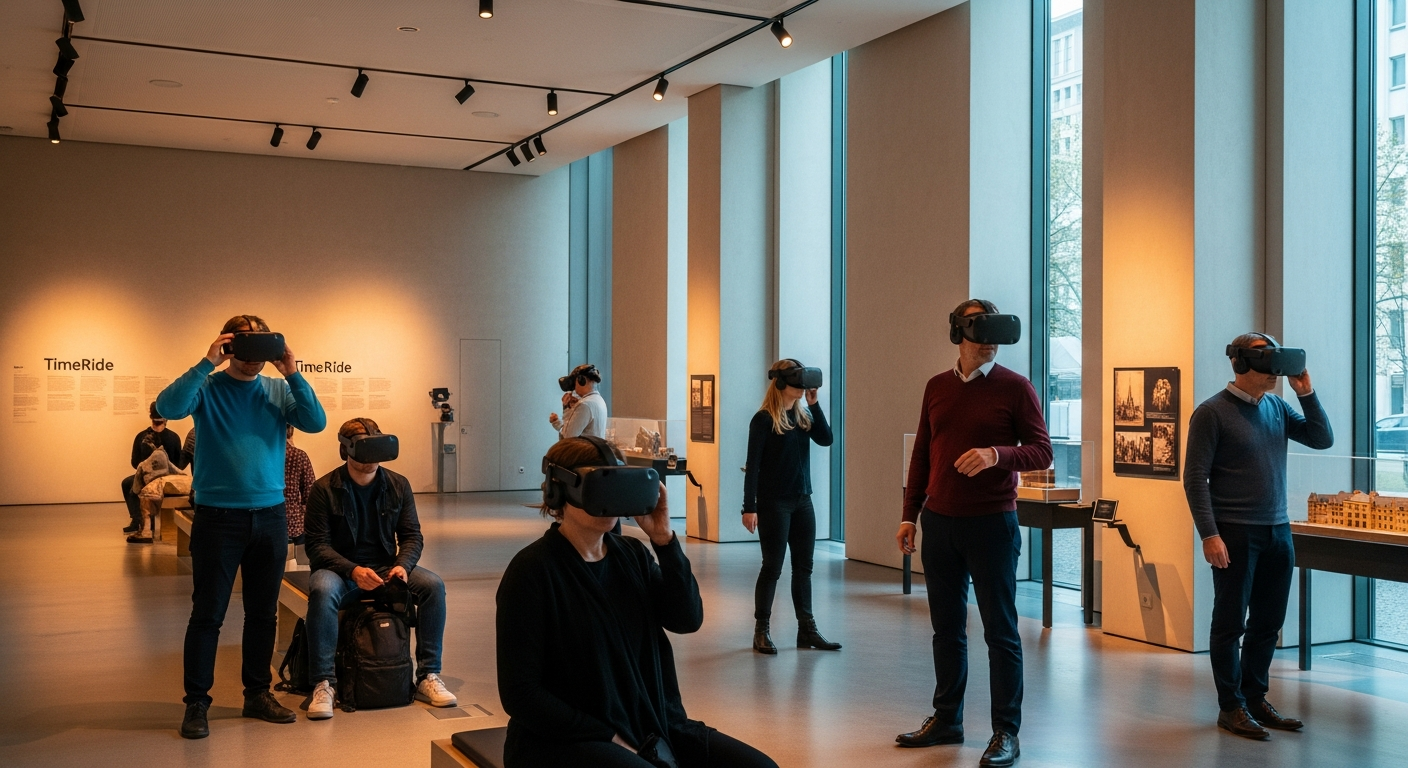
Discover the immersive TimeRide Cologne Virtual Reality Experience—a 45-minute journey through 1920s Cologne combining VR technology, historical accuracy, and multi-sensory effects. Learn what makes this award-winning attraction a must-visit destination.
Imagine stepping into a time machine that actually works. Nearly 80% of travelers crave experiences that transcend ordinary sightseeing, and TimeRide Cologne delivers exactly that kind of breakthrough moment. Virtual reality technology has evolved far beyond gaming and fantasy worlds—it's become a powerful gateway to authentic historical exploration, allowing visitors to witness pivotal moments in a city's past with unprecedented clarity and emotional resonance.
TimeRide DE has fundamentally changed how people connect with history by merging cutting-edge immersive technology with meticulous historical storytelling. This isn't a conventional museum exhibit where you observe artifacts behind glass. Instead, it's a fully sensory expedition into Cologne's vibrant streets during the Roaring Twenties, an era that shaped the city's modern character. The attraction earned the prestigious German Tourism Award—a recognition that underscores how successfully the experience balances education with entertainment.
This comprehensive guide unpacks everything that makes the TimeRide Cologne Virtual Reality Experience exceptional, from its distinctive three-part structure to the centerpiece VR tram ride, educational depth, pricing strategies, and real visitor experiences.
Book your TimeRide Cologne experience now and step into 1926
How the TimeRide Cologne Experience Unfolds: A 45-Minute Journey Through Time
Opening Historical Film with Archival Footage
The experience begins with a carefully curated short film featuring genuine historical material from the 1920s. Rather than launching directly into the virtual reality segment, TimeRide uses these authentic recordings to establish context and emotional connection. Visitors see real people moving through Cologne's streets, real buildings in their original splendor, and real moments frozen in time. This foundation proves crucial—it grounds the subsequent virtual experience in documented reality, transforming what could feel like pure fantasy into something historically grounded and meaningful.
The Hat Maker's Shop: Witnessing Craftsmanship of the Era
After the film, guests transition into a replica hat maker's shop where a period-appropriate skit unfolds. A staff member dressed in 1920s attire demonstrates the craftsmanship and daily routines of the era, offering insights into how ordinary people lived, worked, and created. This theatrical element serves multiple purposes: it breaks up the experience, provides breathing room before the intense VR segment, and humanizes history by connecting visitors to the actual professions and skills that defined the period. The authenticity of details—from tools to shop layout—reinforces the commitment to historical accuracy throughout.
The VR Tram Ride: The Experience's Centerpiece
The pinnacle arrives with the VR tram ride. Visitors board a replica tram and don VR headsets paired with spatial audio headphones. Once seated, the journey begins—a 360-degree exploration of 1926 Cologne from the perspective of a tram passenger. The headsets deliver incredibly realistic visuals while the directional sound design creates a convincing sense of presence. Passengers hear the ambient sounds of the city, street vendors calling out, conversations in period-appropriate German, and the mechanical sounds of the tram itself. This segment typically comprises the majority of the 45-minute total experience, offering an immersive exploration of landmarks, neighborhoods, and daily street scenes.
Multi-Sensory Immersion Techniques
What elevates TimeRide beyond standard VR experiences is the deliberate integration of multiple sensory channels. Sound design extends beyond simple background audio—it uses spatial techniques so visitors perceive sounds originating from specific locations around them. The tram's motion synchronizes with visual movement, creating physical sensations that reinforce the virtual journey. Environmental details matter: the slight vibrations of the vehicle, temperature variations in different parts of the city, even subtle scents occasionally diffuse through the experience. These layered elements work together to create genuine immersion rather than mere visual spectacle.
Guided Tour Structure and Staff Expertise
Throughout the experience, staff members provide narrative context and educational guidance. They're not passive facilitators—they actively shape understanding by highlighting significant locations, explaining historical significance, and connecting what visitors see to broader stories about Cologne's development. This guided approach ensures the experience remains educational rather than purely recreational, helping visitors construct meaningful knowledge frameworks around what they encounter.
Discover the full TimeRide experience with expert staff guidance
The Technology Behind the Immersion: What Makes the VR Experience Work
VR Hardware and Comfort Considerations
The quality of VR headsets directly impacts how visitors experience the 45-minute journey. TimeRide employs equipment that balances visual fidelity with extended-wear comfort. The headsets deliver sharp image rendering while distributing weight evenly across the head to prevent fatigue. Proper calibration ensures images align correctly with head movements, avoiding the nausea that can occur with poorly synchronized displays. Given that visitors remain seated throughout, equipment designers prioritized stability and sustained visual quality over the raw technical specifications that matter more in standing VR experiences.
360-Degree Environmental Reconstruction
Creating a convincing 1926 Cologne required meticulous digital archaeology. Developers combined historical photographs, architectural records, city plans, and eyewitness accounts to reconstruct the urban environment with remarkable specificity. Buildings stand in their original forms—some demolished decades ago—rendered with accurate proportions, materials, and decorative details. Street layouts match historical maps precisely. This reconstruction demanded extensive research and 3D modeling to ensure authenticity. The result allows visitors to explore spaces that no longer exist in the physical world, experiencing them as if they were present a century ago.
Spatial Audio Design and Directional Sound
Audio engineering proves as critical as visual rendering. Rather than playing a stereo soundtrack, spatial audio creates a convincing soundscape where specific sounds originate from identifiable locations. A street musician performs to the left; a vendor calls from the right; church bells ring from above. This technique, combined with the visual environment, creates a powerful sense of presence. Visitors don't just watch 1926 Cologne—they feel surrounded by it, with acoustic information reinforcing spatial awareness and historical authenticity.
Motion Synchronization and Vestibular Integration
The seated tram moves subtly in coordination with the virtual journey. When the VR tram accelerates, the physical replica moves forward slightly. Turns in the virtual street correspond with gentle rotations of the actual vehicle. This synchronization prevents the motion sickness that commonly occurs when visual information contradicts vestibular (balance) signals. By maintaining congruence between what eyes see and what the body feels, TimeRide creates comfort alongside immersion—a technical achievement that allows extended engagement without discomfort.
Graphics Quality and Historical Authenticity Balance
An interesting design choice distinguishes TimeRide from cutting-edge consumer VR: the developers prioritized historical accuracy over bleeding-edge graphics. While the visuals are certainly high-quality and realistic, they maintain period-appropriate aesthetics rather than maximizing technical polish. This choice serves the educational mission—visitors see Cologne as it actually appeared, not as a hyper-stylized recreation. The balance acknowledges that historical authenticity matters more than pushing technological boundaries.
Real Footage Integration and Historical Grounding
The experience doesn't rely entirely on 3D digital recreation. Throughout the journey, genuine archival footage appears—people actually filmed in 1926 Cologne, integrated into the VR environment. Seeing real historical imagery alongside the reconstructed cityscape creates a powerful cognitive effect: it grounds the virtual experience in documented reality. This blending transforms the experience from pure entertainment into genuine historical documentation, anchoring imagination in fact.
Your TimeRide Cologne Adventure Awaits
The TimeRide Cologne Virtual Reality Experience represents a genuine transformation in how we engage with history. It refuses the false choice between entertainment and education—instead, it weaves both together seamlessly. The combination of cutting-edge VR technology with meticulous historical reconstruction creates something that educates while it entertains, converting abstract historical knowledge into visceral, personal understanding.
Whether you approach this as a history enthusiast seeking deeper connection with Cologne's past, a family wanting multi-generational activities that genuinely engage everyone, or a traveler determined to move beyond standard tourism, TimeRide Cologne delivers what most attractions merely promise. The 45-minute duration fits comfortably into any itinerary. Online booking saves money compared to window purchases. Staff expertise ensures you grasp the significance of everything you experience, transforming observation into genuine learning.
Don't settle for reading about 1920s Cologne in guidebooks or examining photographs in museums. Step directly into the period, walk its streets, hear its sounds, and witness its daily life through the eyes of someone actually there. This is how history becomes real.
Book your TimeRide Cologne experience today and step into authentic history