
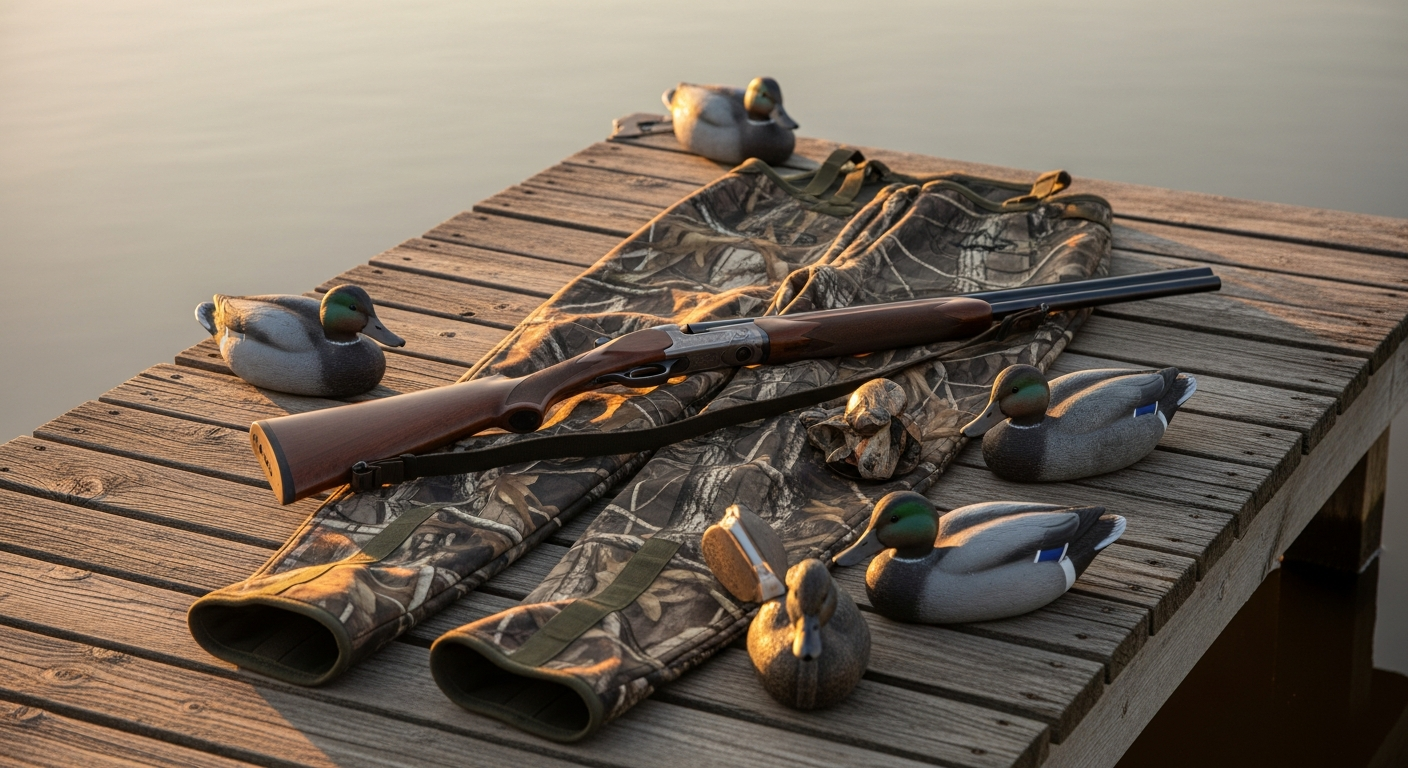
Discover why TideWe Realtree MAX5 Insulated Hunting Waders are the go-to choice for budget-conscious waterfowl hunters. Learn about their warmth, waterproofing, and exceptional value.
Over 60% of hunters abandon their favorite hunting spots during peak waterfowl season simply because they can't afford premium wader gear. Cold water, early mornings, and endless hours in marshes demand equipment that won't fail you—yet traditional hunting retailers push gear that costs more than a quality rifle. The gap between aspiration and affordability has kept countless enthusiasts sidelined.
The TideWe Realtree MAX5 Insulated Hunting Waders have quietly become the best-selling waterfowl waders on the market by delivering genuine performance without eye-watering price tags. Built with neoprene construction, dependable insulation options, and thoughtful engineering throughout, these waders tackle the core challenge every waterfowl hunter faces: staying warm and dry in brutal conditions while protecting your budget.
The Neoprene Foundation: How TideWe's Core Construction Delivers Waterproof Protection
Durable Neoprene Shell Construction and Why It's Ideal for Waterfowl Hunting
Neoprene forms the backbone of TideWe waders, and for waterfowl hunting, it's genuinely the right material choice. Unlike breathable fabrics that struggle with sustained moisture exposure, neoprene creates a genuine barrier between you and water. This synthetic rubber compound excels in exactly the environments waterfowl hunters encounter: marshes, muddy banks, and icy shorelines where conditions shift throughout the day.
The material's inherent flexibility means you're not moving in a stiff suit that fights your natural range of motion. You can wade through dense vegetation, bend to retrieve decoys, and shift your weight across uneven terrain without feeling constrained. Neoprene also resists the degradation that happens when hunting gear cycles through wet-dry-wet conditions repeatedly over an entire season.
Double-Stitched Seam Technology That Prevents Water Infiltration
Water finds every seam. TideWe addresses this reality with double-stitched construction throughout their waders, which means each critical seam receives two passes of stitching rather than one. This redundancy matters because a single compromised stitch in a shoulder seam or leg crotch can transform a successful hunt into a miserable, wet experience.
The double-stitch approach significantly extends the timeline before seam failures occur under heavy use. Regular hunters who spend 20+ days annually in their waders notice the difference—single-stitched alternatives often show seam leakage after 2-3 seasons, while double-stitched pairs maintain integrity considerably longer. Combine this with proper storage and maintenance, and you're looking at gear that won't betray you mid-season.
Comparison of Neoprene Durability Versus Other Wader Materials
Rubber waders offer thickness but sacrifice mobility—you're essentially moving in a barrel for eight hours straight. Breathable fabric waders promise lightness but collapse under the moisture-heavy environment waterfowl hunting creates; they're designed for fly fishing in streams, not sitting in flooded timber with condensation building on the interior. Neoprene sits in the practical middle ground.
Where neoprene truly outperforms other materials is in maintaining its protective properties across seasons. Rubber degrades and becomes brittle in cold storage. Breathable membranes accumulate organic growth and lose function over time. Neoprene remains stable, predictable, and responsive regardless of storage conditions. You'll get consistent performance from your waders season after season.
How Neoprene Maintains Flexibility in Cold Temperatures Without Becoming Brittle
Temperature extremes reveal material quality. Neoprene's synthetic polymer structure doesn't harden the way natural rubber does when exposed to sustained cold. A waterfowl hunt in December means temperatures dropping into the 20s or lower, and your waders need to flex as you move through ice-edged water. TideWe's neoprene maintains suppleness in these conditions, allowing you to bend at the knees, reach forward, and adjust your stance without the material cracking or losing its waterproof integrity.
This flexibility also reduces fatigue during long hunts. Your legs aren't fighting against stiff material all day; you're moving naturally, which translates to fewer muscle groups compensating and better circulation to extremities.
Insulation Options That Actually Keep You Warm: 600g vs. 800g Thinsulate Breakdown
Understanding Thinsulate Technology and How It Traps Body Heat Efficiently
Thinsulate works through a fundamentally different principle than traditional down or thick foam. Rather than creating large air pockets, Thinsulate uses microfiber technology to create numerous tiny air pockets throughout the material. These micro-pockets trap dead air space close to your skin, preventing convective heat loss—the primary mechanism through which cold water saps body heat. The denser the fiber arrangement, the more effective the insulation.
What makes Thinsulate particularly suitable for waders is its performance-to-bulk ratio. You get meaningful warmth without adding excessive thickness that compromises mobility or makes the waders difficult to put on. For hunters who might wear these for 12+ hours on a single day, that balance between warmth and wearability is critical.
Detailed Comparison of 600-Gram Thinsulate for Moderate Cold Conditions
The 600-gram Thinsulate option represents TideWe's baseline insulation level, and it handles conditions effectively down into the 30s and upper 20s Fahrenheit. If your waterfowl season involves early-season hunts in September through November, or late-season hunting that doesn't extend into true deep-winter territory, 600-gram insulation provides adequate warmth without overheating during active movement.
This thickness also offers practical advantages: the waders pack slightly smaller for transport, they're easier to maneuver into when wearing heavy base layers, and they offer responsiveness if you're hunting mobile scenarios where you're moving between different locations throughout the day. The reduced bulk also means less material fatigue over extended seasons, potentially extending the overall lifespan of the waders.
Detailed Comparison of 800-Gram Thinsulate for Extreme Cold and Extended Hunts
The 800-gram option is engineered for serious commitment: ice-laden marshes, sub-zero wind chills, and marathon hunting days during peak waterfowl season in December and January. This insulation level maintains comfort even when stationary for extended periods—critical for duck hunters sitting in blinds waiting for flights.
The trade-off is minimal bulk increase and slightly reduced mobility compared to 600-gram, though TideWe's construction minimizes this impact. If you're hunting exclusively during peak season when conditions are consistently brutal, or if you're someone who runs cold naturally, the 800-gram investment is justified. The difference in comfort between inadequate and adequate insulation often determines whether you hunt or stay home—and that determines your entire season's success.
Temperature Rating Guidance for Different Insulation Levels
600-gram Thinsulate effectively operates from roughly 35°F down to 20°F in active hunting scenarios. If conditions dip below 20°F, you're relying on layering beneath the waders and core body heat generation from movement. 800-gram Thinsulate maintains comfort from 35°F down to 5°F or lower, with layering providing additional margin below that threshold. For true ice-fishing conditions below 0°F, even 800-gram requires serious thermal base layers.
Most waterfowl seasons hit their stride between 25°F and 40°F—right in the performance range of both options. The decision ultimately depends on your specific hunting dates and cold tolerance. Early-season hunters typically do fine with 600-gram; late-season devotees should seriously consider 800-gram.
Boot Engineering That Handles Unpredictable Terrain
Reinforced Toe Vamp Design and Protection Against Sharp Rocks and Debris
Your toes are vulnerable. They're the first contact point when wading through rocky shorelines, sharp vegetation, and uneven terrain. TideWe addresses this reality with reinforced toe vamps—essentially thickened material across the boot's forefoot that absorbs impact and resists puncture. You can step on submerged rocks, broken shells, and sharp sticks without constantly worrying about compromising the wader's integrity.
This reinforcement also extends the boot's lifespan significantly. The toe area experiences the most wear during typical hunting, so thickening it strategically delays the inevitable degradation that occurs from friction and impact. Hunters using TideWe waders for multiple seasons report that the toe reinforcement notably extends usable life compared to waders with standard construction.
Anti-Slip Tread Patterns and Their Effectiveness on Muddy, Icy, and Wet Surfaces
Slipping in cold water is more than embarrassing—it's dangerous. The boot treads on TideWe waders feature aggressive patterns specifically designed for the surfaces waterfowl hunters encounter. Muddy banks, icy shorelines, and slippery rocks all require grip that standard boots simply don't provide.
The tread depth is substantial enough to genuinely bite into surfaces rather than skate across them. Hunters switching from regular boots to waders equipped with these treads immediately notice the difference in confidence. You can move deliberately across terrain that would otherwise demand slow, careful steps. That confidence translates to more efficient hunts, safer navigation, and better focus on hunting rather than foot placement.
Arch Support Features and Why Foot Fatigue Matters During 8-Hour Hunting Days
Eight hours standing in water creates challenges your daily shoes never encounter. The constant slight pressure from water against your feet, combined with uneven terrain and the weight of wet neoprene, fatigues feet and calves remarkably quickly. Poor arch support compounds this problem—your foot muscles work harder to compensate, leading to cramping and exhaustion that radiates up through your legs.
TideWe integrated proper arch support into their boot design, which reduces the muscular effort required to maintain stability and posture throughout the day. Hunters report noticeably less foot fatigue and calf soreness after full hunting days compared to waders without structured support. Over a full season of 15-20 hunting days, this translates to meaningfully improved comfort and the ability to hunt harder without physical breakdown.
Boot Sizing Accuracy and Why TideWe Boots Fit True to Size
Many wader manufacturers force you to choose between sizing options that don't match your actual foot—you're either squeezing into tight boots or swimming in oversized pairs. TideWe's boots are engineered to fit true to size, which means you can order your normal shoe size with confidence. This accuracy matters because proper fit determines whether the boot provides support or creates pressure points.
Well-fitted boots also mean you can wear multiple layers of thermal socks without excessive compression. Tight boots restrict circulation and actually reduce warmth; properly fitted boots with layered socks maintain blood flow and insulation simultaneously. If you've experienced numb toes in poorly fitting waders, you understand how critical proper sizing is to actually enjoying your hunt.
Comfort Features That Make Long Hunts Bearable
Fleece-Lined Hand Warmer Pockets and Their Practical Value in Cold Weather
Your hands suffer first in cold water conditions. Even when the rest of your body stays warm, exposed hands battling wind and spray lose heat rapidly. TideWe's fleece-lined hand warmer pockets provide genuine relief—they're positioned accessibly and lined with material that retains warmth while allowing enough access to remove hands for hunting tasks.
The psychological value shouldn't be underestimated either. Knowing you have a warm refuge for your hands every few minutes reduces anxiety about cold exposure and lets you focus on your hunt. Experienced hunters often rate hand warmer pockets as a major quality-of-life improvement that extends their willingness to stay in the field during brutal conditions.
Interior Lining Quality and Moisture Management During Extended Wear
The interior surface touching your skin directly impacts comfort during long hunts. TideWe uses quality interior lining that manages moisture effectively—sweat and condensation don't accumulate in clammy pools that accelerate heat loss. The lining is smooth enough to reduce friction when you're layering beneath, but textured sufficiently to provide grip and prevent shifting.
Moisture management is genuinely important because even high-quality insulation loses effectiveness when wet. By managing interior moisture, TideWe waders maintain their insulation performance throughout your hunt rather than gradually deteriorating as dampness accumulates.
Shoulder Strap Design and Weight Distribution for All-Day Comfort
Chest waders rest on your shoulders for hours. Poor strap design creates pressure points, uneven load distribution, and gradual fatigue that builds throughout the day. TideWe's shoulder straps are engineered with padding and width sufficient to distribute weight broadly across your shoulders rather than concentrating pressure at stress points.
The strap attachment also provides enough adjustability to customize fit for your specific frame. Someone with narrow shoulders needs different tension than someone broader; proper adjustment prevents straps from slipping or digging in. After an eight-hour hunt, you'll appreciate well-designed straps that haven't created pressure points or compromised circulation.
Chest Wader Height and Accessibility for Different Hunting Scenarios
TideWe waders are designed at heights that balance full coverage with functional accessibility. You get chest protection in flooded timber without the material riding so high that mobility is compromised. The height also means you can crouch in the blind or adjust your position without water spilling over the top.
Pocket placement and zipper accessibility are thoughtfully positioned so you can access necessary items without completely removing your waders. Calls, ammunition, and other hunting essentials remain accessible throughout your time in the field.
The Value Equation: What You're Actually Getting for Under $150
Price Point Analysis Compared to Premium Brands
Premium wader brands—Sitka, Orvis, Cabela's Pro series—often cost $300-$600. TideWe delivers comparable core functionality at a fraction of that investment. You're getting genuine neoprene construction, legitimate insulation, reinforced boots, and practical comfort features. The primary difference isn't in fundamental performance but in brand reputation, cutting-edge material innovations, and marginal durability improvements that might add a season or two to lifespan.
For most hunters, that value proposition is entirely compelling. You're acquiring dependable waders that handle the job effectively, not paying for prestige or extreme longevity that exceeds your actual needs.
Cost-Per-Season Breakdown and Long-Term Investment Perspective
If you hunt 15-20 days annually and your TideWe waders last four seasons—a realistic expectation with proper care—you're investing roughly $30-$35 per hunting day for premium wader performance. That's less than the cost of a mid-range shotgun shell box. By comparison, premium waders at $400+ cost roughly $50+ per day across comparable lifespan. The savings compound when you multiply across multiple seasons or expand your gear collection.
For hunters who are building their waterfowl arsenal, TideWe's affordability means you can invest in quality waders without sacrificing budget for other essential equipment: decoys, calls, ammunition, blinds. That strategic allocation of resources often improves your overall hunting success more than spending $500 on the most premium waders available.
Feature Parity with Waders Costing 2-3 Times More
The practical features that matter in the field are present: waterproof neoprene, adequate insulation, reinforced boots, hand warmer pockets, proper sizing. Premium brands add innovations like advanced material blends, marginally better insulation efficiency, or proprietary construction techniques—improvements that offer incremental gains, not transformative differences.
A hunter in TideWe waders and a hunter in waders costing three times more are both staying warm, dry, and mobile. The premium purchaser might have slightly better insulation efficiency or marginally better durability, but they're not experiencing fundamentally different performance in the field.
Entry-Level Hunter Accessibility and Removing Financial Barriers to Waterfowl Hunting
Cost represents a genuine barrier for many hunters considering whether to pursue waterfowl hunting. Purchasing waders, decoys, calls, and ammunition requires significant investment. When waders alone cost $400-$600, the entry barrier becomes prohibitively high for many interested hunters. TideWe's pricing—often under $150 for quality pairs—removes that specific barrier substantially.
New hunters can commit to learning waterfowl hunting without the financial anxiety that premium-only pricing creates. That accessibility builds the hunting community and provides a viable entry point for people who otherwise might never pursue the sport.
Real-World Durability: Honest Assessment of Longevity and Wear Patterns
Expected Lifespan Under Regular Use
Seasonal hunters who pursue waterfowl during a concentrated season (roughly 2-3 months annually) can reasonably expect TideWe waders to perform reliably for 4-6 seasons with proper care. That's genuinely solid longevity given the price point. Year-round hunters pushing waders hard might see lifespan compress to 2-3 seasons, which still represents strong value when you calculate cost-per-use.
Premium waders might extend lifespan to 7-10 seasons, but you're also paying 3-5 times more, making the cost-per-season advantage neutral or favoring TideWe depending on your specific use patterns.
Common Wear Points and Where Failures Typically Occur
Seams, especially at the crotch and shoulders, experience the most stress during normal use. Lower leg areas where material flexes during wading show wear patterns first. Boot seams occasionally develop leaks after sustained use, particularly at the calf-boot junction where flex is constant. These aren't design failures—they're inevitable consequences of any wader material after extended use.
Knowing where failures typically develop allows hunters to monitor those areas and schedule maintenance or replacement proactively rather than experiencing failure mid-hunt.
Seam Durability Reports from Multi-Season Users
Hunters using TideWe waders across multiple seasons report that seams generally hold through 3-4 seasons of regular use before showing stress. TideWe's customer service has earned positive reputation for addressing seam failures when they occur, often providing repair guidance or replacement options. The double-stitch construction significantly delays typical seam compromise compared to single-stitched alternatives.
Real-world reports from long-term users consistently indicate that TideWe waders deliver reliability that justifies their market popularity. Issues occur, but they're manageable and typically addressed responsibly by the company.
Preventative Maintenance Practices That Extend Wader Life Significantly
Proper storage is critical: keep waders away from direct sunlight, extreme heat, and extreme cold. Rinse the exterior thoroughly after hunts to remove salt spray, mud, and organic growth. Store with the chest area inflated slightly to prevent seam stress. Inspect seams and reinforcements regularly for early signs of failure. Apply neoprene-compatible sealant to existing seams as preventative maintenance every season or two.
These practices are simple but genuinely effective. Hunters who implement basic maintenance consistently report extended lifespan compared to those who store waders casually. The difference between 3-season and 5-season lifespan often comes down to consistent care rather than material quality.
The Bottom Line: Making Your Waterfowl Season More Affordable Without Sacrificing Comfort
The TideWe Realtree MAX5 Insulated Hunting Waders prove that exceptional performance and reasonable pricing aren't mutually exclusive. You're acquiring genuine neoprene construction, reliable insulation available in 600g or 800g Thinsulate, thoughtful boot engineering with reinforced toes and aggressive treads, and practical comfort features—all the fundamentals that keep you warm and dry when conditions turn brutal.
These waders shine brightest for hunters who value accessibility and dependability over cutting-edge materials. Whether you're starting your waterfowl hunting journey or expanding your gear collection without depleting your budget, TideWe delivers measurable value where it matters most: in the field during actual hunts. The insulation works. The seams hold. The boots grip. The waders don't fail you.
Your waterfowl season shouldn't be dictated by equipment costs or cold weather anxiety. Proper waders mean more hunting days, better performance in harsh conditions, and genuine confidence that your gear will perform reliably. TideWe has built a best-selling product because they focused on delivering the performance hunters actually need at prices hunters can actually afford.