
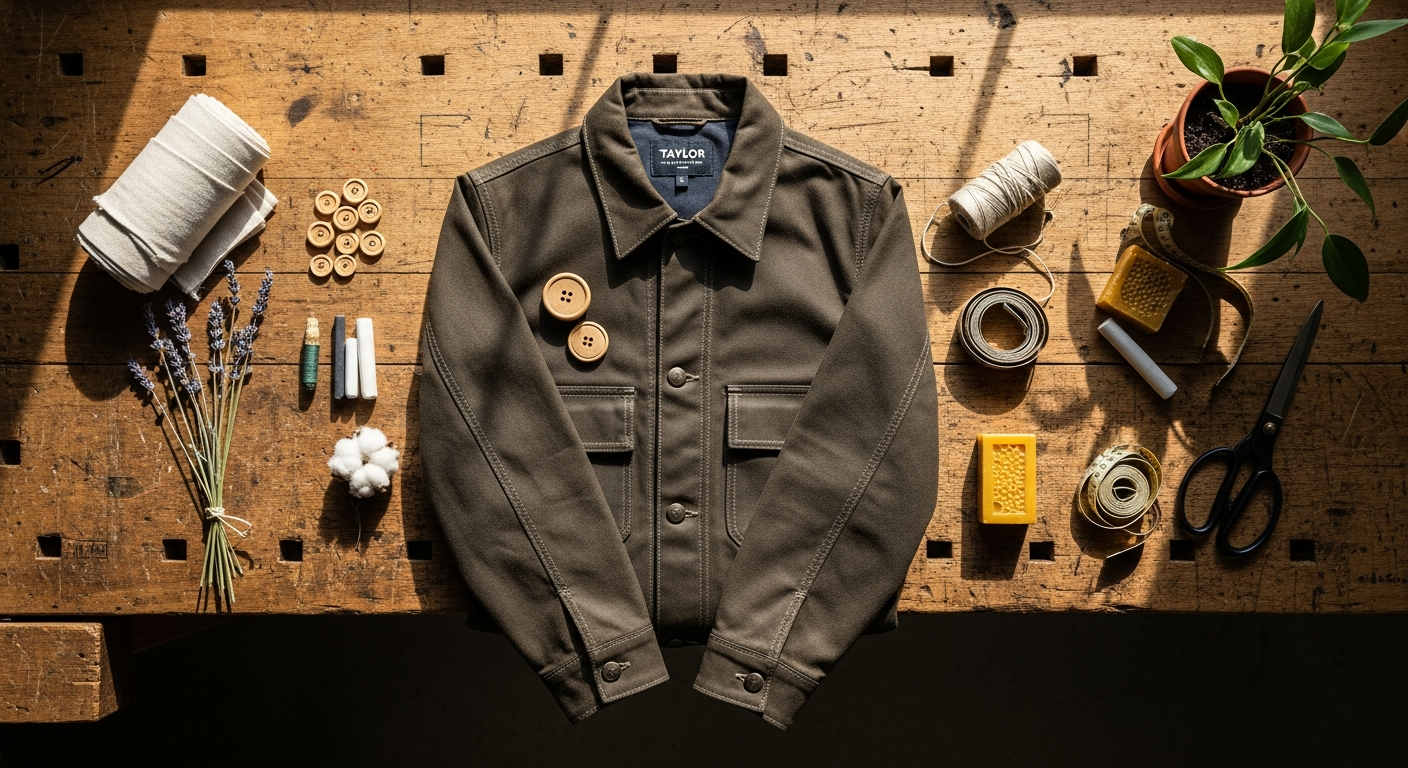
Discover how the Taylor Stitch Jack Everyday Oxford Shirt becomes the foundation of an eco-conscious, durable workwear wardrobe. Learn sizing tips, fabric options, and styling strategies for professional settings.
Introduction
The average professional buys 60 new pieces of clothing annually, yet wears only 20% of their wardrobe regularly. This wasteful cycle perpetuates itself year after year—drawers stuffed with forgotten pieces, hangers crowded with regrets. If you're tired of this pattern and searching for garments that actually earn their place in your closet, you're among a growing number of professionals demanding better. Consumers increasingly want pieces built to last, made responsibly, and versatile enough to justify the investment.
Enter Taylor Stitch's The Jack Everyday Oxford Shirt, a garment that's become synonymous with intentional dressing. This isn't just another button-down; it's the cornerstone piece that Taylor Stitch built their entire brand around. With its commitment to 100% organic cotton, meticulous construction, and timeless design, The Jack represents a fundamentally different approach to workwear—one that prioritizes longevity over trends and sustainability over disposability.
Discover The Jack Everyday Oxford Shirt and transform your workwear approach today.
Understanding The Jack's Construction Quality and Durability Promise
Double-Needle Felled Seams and Unraveling Prevention
The most telling sign of quality in any garment lies in the seams. The Jack employs double-needle felled construction throughout, a technique that involves two parallel rows of stitching with the fabric edges folded inward. This method doesn't just look refined—it fundamentally changes how a shirt ages. Conventional seams eventually unravel at the edges; felled seams are engineered to withstand years of washing, stretching, and movement without compromising structural integrity. When you examine a decade-old Jack that's been worn and washed hundreds of times, those seams remain intact while mass-produced alternatives have begun their slow deterioration.
Lock-Stitched Buttons and Buttonholes
Pay attention to how buttons are attached on most oxford shirts, and you'll find they're sewn with a simple loop stitch that gradually loosens with repeated fastening and unfastening. The Jack uses lock-stitching—a technique that creates interlocking stitches impossible to unravel cleanly. Buttonholes receive the same treatment, reinforced to prevent fraying even after thousands of button presses. For professionals wearing dress shirts daily, this detail accumulates into years of reliable performance. You won't be replacing buttons on The Jack; they'll outlast the fabric.
Pre-Washed Organic Cotton and Immediate Wearability
Factory-fresh oxford shirts often feel stiff and slightly uncomfortable against the skin. The Jack arrives pre-washed, a process that softens the fibers and eliminates much of that new-garment stiffness. This means the shirt feels broken in from the first wear, a significant advantage that casual shoppers often overlook. The organic cotton fabric benefits from this treatment without sacrificing durability—the washing process actually sets the fibers, making them more resistant to future pilling or degradation.
Weight Specifications and Seasonal Performance
The Jack comes in multiple weights: typically 5.5-oz and 6.5-oz organic cotton oxford. The heavier option provides more structure and durability for year-round wear, maintaining its appearance through frequent washing. The lighter weight offers better drape and slightly more breathability, ideal for professionals in warmer climates or heated office buildings. Neither feels flimsy; both are substantially constructed. Weight directly correlates to longevity—heavier fabrics simply withstand repeated wear and washing more effectively.
The Wear In, Not Out Philosophy
Taylor Stitch's foundational principle centers on garments that improve with age rather than deteriorate. The Jack's organic cotton develops subtle character over time—slight softening of edges, a comfortable molding to your body shape, a deepening of color that signals authenticity. This contrasts sharply with fast-fashion pieces that begin pilling within months or losing shape after a few dozen washes. The Jack genuinely wears in, with professionals often reporting their shirts feel better after five years than they did at purchase.
Comparison to Mass-Produced Oxford Shirts
Most conventional oxford shirts use single-needle stitching, standard button attachment, and less expensive cotton blends. These construction shortcuts seem minor until you're comparing a five-year-old Jack to a five-year-old mass-market alternative. The difference compounds dramatically—the Jack maintains its appearance and structure while the cheaper alternative has begun showing significant wear. Cost-per-wear calculations heavily favor quality construction when examined over extended timelines.
Care Instructions for Maximum Longevity
The Jack recommends cold-water washing and low-temperature tumble drying. These instructions aren't suggestions for minor convenience; they're preservation guidelines developed through decades of garment testing. Cold water prevents dye bleeding and reduces fabric stress. Low heat preserves the integrity of stitching and prevents fiber shrinkage. Professionals who follow these guidelines report their shirts remaining in excellent condition for 10+ years.
Invest in construction quality that lasts—get The Jack Everyday Oxford Shirt now.
Navigating Sizing and Fit for the Perfect Workwear Fit
Documented Sizing Inconsistencies
One consistent complaint across customer reviews involves sizing variance between different fabric types and production runs. A small in the heavier 6.5-oz cotton might fit differently than a small in chambray or linen. This inconsistency stems from how different fabrics behave during manufacturing and how various suppliers handle production. Understanding this reality helps you approach sizing strategically rather than assuming a standard size will work across all options.
Chest-Based Sizing and Accurate Measurement
The Jack uses chest-based sizing rather than relying on neck measurements like traditional dress shirts. Measure around the fullest part of your chest with a soft tape measure, keeping it parallel to the ground. Add half an inch for comfort, then select your size based on this measurement rather than guessing. This approach proves more accurate than traditional methods because it accounts for the tailored, close-to-body cut that defines The Jack's aesthetic.
High Armhole Design and Office Mobility
The Jack features notably high armholes—the point where the sleeve meets the body—that sit higher than conventional shirts. This design choice prevents the common bunching that occurs when your arms are raised at a desk or during presentations. For professionals spending eight hours daily at computers or in meetings, this architectural detail significantly impacts comfort and appearance. The high armhole creates range of motion without sacrificing the tailored silhouette.
Tailored Fit Profile Without Restrictive Feel
The shirt's close-to-body cut traces your shape without binding. It's tailored in the sense that excess fabric has been eliminated, not in the sense that movement becomes restricted. Professionals often confuse these concepts—tailored doesn't mean tight. The Jack provides what might be called "athletic tailoring," where the fit accommodates natural body movement while maintaining clean lines.
Pleatless Design and Professional Appearance
Many oxford shirts incorporate pleats—small folds of fabric at the back yoke designed to provide additional fabric for movement. The Jack omits these pleats entirely, creating a flat, streamlined back that photographs well on camera and maintains a polished appearance throughout the day. Without pleats, the shirt lines remain uninterrupted, contributing to a more contemporary, refined aesthetic regardless of how you move.
Sleeve Length Considerations
Sleeve length represents one of the trickiest sizing variables. The Jack's sleeves should reach your wrist bone when your arm hangs naturally at your side. Too-long sleeves bunch at the wrist and require constant rolling; too-short sleeves look sloppy and restrict wrist movement. Measure from the center back neck to your wrist with your arm bent slightly, then cross-reference this with the product specifications. Don't rely on size charts alone—call or email Taylor Stitch's customer service with your measurements if uncertainty persists.
Length Versatility for Tucking and Untucked Wear
The Jack's overall length positions it between traditional dress shirts and casual button-downs. It can be tucked cleanly into trousers for business formal settings without excessive fabric bunching at the waistband. It also works untucked with chinos or weekend jeans, though you'll want to ensure the hem reaches mid-zipper length for proper proportions. This versatility makes it genuinely functional across casual and formal contexts.
Fabric-Specific Sizing Strategies
Heavier organic cotton tends to shrink slightly despite pre-washing, so some professionals prefer ordering a size up in the 6.5-oz weight. Linen and waffle weave typically maintain their dimensions more consistently. Chambray falls somewhere between these extremes. Your first purchase should be in the standard weight you plan to wear most frequently, ordered in your measured size. Once it arrives, you'll have concrete information for future fabric variations.
Exploring Fabric Options for Year-Round Professional Wear
Everyday Organic Cotton Oxford as the Foundation
The Everyday Organic Cotton Oxford serves as The Jack's foundational offering and remains its most versatile version. At 5.5-oz or 6.5-oz, it balances breathability with structure, performing well in most office environments. The organic cotton provides excellent durability while maintaining the pre-washed softness that makes The Jack distinctive. This version works year-round in climate-controlled spaces and serves as the logical starting point for anyone building a rotation.
Linen Variations for Warm-Weather Workplaces
Linen versions of The Jack emerge during warm months, offering significantly better breathability than cotton. Linen naturally wicks moisture and feels cooler against the skin, making it ideal for professionals in hot climates or non-air-conditioned environments. The tradeoff involves more pronounced wrinkles—part of linen's casual charm but something to consider if your workplace demands pristine appearance. Linen also softens beautifully with age, developing an even more relaxed aesthetic over time.
Waffle Weave Fabric for Texture and Visual Interest
The waffle weave version introduces textural interest without abandoning professionalism. The raised grid pattern adds visual dimension while maintaining clean lines. Waffle-weave cotton offers slightly improved breathability compared to standard oxford and photographs particularly well on video calls, where the texture reads clearly. This option appeals to professionals seeking subtle individuality within conservative dress codes.
Chambray Options and Versatility
Chambray—a lighter-weight fabric created by weaving colored warp threads with white weft threads—sits at the intersection of casual and professional. The Jack in chambray works confidently in creative industries and business-casual environments, though some traditional corporate settings might view it as too informal. The fabric's natural texture and lighter weight make it comfortable in warm seasons while maintaining enough substance for layering.
Stripe Patterns and Solid Colorways
The Jack extends beyond solids to include subtle stripe patterns in complementary colorways. Fine stripes add visual interest while remaining conservative enough for formal contexts. Solid colors—whites, blues, grays, and earth tones—form the foundation of any professional rotation. Consider purchasing at least one white and one blue as anchors, then add complementary colors based on your specific workplace aesthetic and personal preferences.
Weight Variations and Office Climate Performance
In heavily air-conditioned offices, heavier fabrics prevent the overcooling that lighter options sometimes create. In naturally warm spaces or those with inconsistent temperature control, lighter weights prove more comfortable. The 5.5-oz organic cotton provides an excellent middle ground. Some professionals maintain separate rotations for hot and cold seasons rather than wearing the same weights year-round.
Seasonal Rotation Strategy
Spring and fall typically benefit from the standard organic cotton weight, which neither overheats nor requires layering. Summer demands linen or the lighter cotton options. Winter rotation can incorporate heavier 6.5-oz weights and position The Jack under sweaters and cardigans as a layering base. Strategic fabric selection ensures comfort without requiring a complete separate wardrobe.
Fabric Durability and Color-Holding Performance
All Jack fabrics share the same construction quality, but durability varies slightly by material. Heavy organic cotton withstands more washing cycles without visible degradation. Linen and waffle weave maintain excellent durability but may show subtle color fading slightly faster than heavier cottons. The organic certification ensures all versions resist color bleeding and maintain their appearance longer than conventional alternatives.
Building a Sustainable Workwear Rotation Around The Jack
Creating a Capsule Wardrobe Foundation
Rather than accumulating dozens of shirts, sustainable dressing means building a thoughtful rotation of 3-5 Jack shirts in complementary colors. Three shirts allows 2-3 days between washing cycles, extending fabric lifespan by reducing washing frequency. Five shirts accommodates a full week between laundry while providing enough variety for outfit combinations. This foundation proves sufficient for most professionals; additional pieces can be added based on specific needs.
Color Selection Strategy for Maximum Combinations
Begin with two anchors: a white shirt and a light blue. These pair with virtually any trousers or blazer color and form the foundation of countless outfit combinations. Add a neutral like light gray or pale pink, depending on your skin tone and workplace aesthetic. Consider a subtle pattern—a fine stripe in navy or a small-scale check—that coordinates with your anchors. Skip trendy colors that limit outfit flexibility.
Pairing with Tailored Trousers, Chinos, and Blazers
The Jack's tailored fit pairs exceptionally well with tailored trousers in neutral tones—charcoal, navy, black, and gray. Chinos in khaki, tan, and light gray offer a business-casual option that coordinates naturally with most Jack colors. Layer The Jack under blazers or sport coats for formal occasions; the shirt's trim fit prevents bunching beneath structured outerwear. This pairing foundation creates dozens of distinct outfits using relatively few pieces.
Mixing Casual and Formal Presentations
The same shirt transforms depending on context. Tucked into tailored trousers with a blazer reads formal. The identical shirt worn untucked with chinos reads casual-professional. Sleeves rolled and worn with weekend jeans becomes purely casual. This presentation flexibility means each shirt earns its place across multiple contexts rather than serving a single purpose.
Layering Strategies Using The Jack as Base Layer
As a base layer under sweaters, cardigans, and jackets, The Jack extends versatility across seasons. The tailored fit prevents excessive bulk beneath structured outerwear. The collar remains visible and contributes to the overall aesthetic. During transitional seasons, layering The Jack under lighter sweaters manages temperature fluctuations while maintaining a cohesive appearance.
Accessory Coordination for Extended Variety
Accessories multiply outfit combinations without requiring additional clothing purchases. Ties, pocket squares, and scarves introduce color and pattern variation. Watches, cufflinks, and other accessories personalize the look without changing the foundational garment. Shoes—leather oxford, loafer, or casual sneaker depending on context—dramatically shift the overall impression while the shirt remains constant.
Investment-Per-Wear Calculation
A $130 shirt worn 200 times annually over 10 years costs approximately $0.07 per wear. Compare this to a $40 fast-fashion shirt that might withstand 100 wears before degradation, costing $0.40 per wear. The math strongly favors quality investment pieces. When calculated honestly, The Jack competes favorably on cost-per-wear even against seemingly cheaper alternatives.
Maintenance Rotation and Washing Frequency
Rotating between multiple shirts reduces washing frequency significantly. Wearing the same shirt multiple times weekly with only spot-cleaning between wears (acceptable for oxford cloth that doesn't directly contact skin in most areas) extends lifespan dramatically. Many professionals report their Jack shirts remaining in excellent condition for 10+ years when rotated among several options rather than worn daily.
Price Point Analysis and Value Proposition
Price Range Against Competitor Offerings
At $118-$138, The Jack positions itself in the premium workwear category but remains accessible compared to luxury alternatives. Department store button-downs in similar quality typically range $150-$200. High-end designer versions exceed $300. Conversely, fast-fashion alternatives start at $30-$50. The Jack occupies the sweet spot between accessibility and genuine quality—expensive enough to signal durability, affordable enough for professionals to build a rotation of multiple colors.
Promotional Pricing and Strategic Purchasing
Taylor Stitch periodically offers sales bringing prices toward the lower end of the range. Email subscribers often receive promotional codes. Seasonal clearances provide opportunities to purchase previous season's colors at discount. Strategic timing—purchasing during sales rather than full price—can reduce costs by 15-20% without sacrificing quality.
Cost-Per-Wear Across Extended Timelines
The calculation shifts dramatically depending on wear duration. Over five years with two washes weekly, a $130 shirt costs approximately $0.25 per wear. Extend this to 10 years, and the cost drops to $0.125 per wear. At 15 years, it reaches $0.084 per wear. These numbers dramatically outperform fast-fashion alternatives that rarely survive five years of regular wear.
Organic Cotton Premium and Durability Relationship
Organic cotton costs more than conventional cotton due to farming practices, certification, and smaller production scales. This premium translates directly to better durability—organic cotton fibers remain stronger longer, resisting pilling and maintaining structure better than conventional alternatives. The premium isn't a marketing gimmick; it reflects genuine material superiority.
Comparison to Mass-Market Oxford Shirts
Fast-fashion oxford shirts typically cost 60-70% less initially but require replacement every 2-3 years of regular wear. A professional buying fast-fashion replacements over a decade spends significantly more money and generates far more textile waste. One quality Jack shirt genuinely costs less than purchasing three to four fast-fashion alternatives over the same period.
Resale Value in Secondary Markets
Well-maintained Jack shirts retain remarkable resale value. Used versions in good condition command $60-$90 on secondary markets, representing 50-70% of original purchase price. This resale potential further improves the true cost-per-wear calculation. Some professionals purchase multiple colors, wear them for several years, then sell them to recoup 50%+ of their investment.
Return on Investment for Sustainable Wardrobes
For professionals committed to sustainability, The Jack delivers measurable return. Fewer pieces purchased annually means lower overall spending, reduced environmental impact, and simplified decision-making. The shirt's versatility means you're buying genuine utility rather than redundant options. The ROI extends beyond financial calculation into reduced decision fatigue and increased confidence in your professional appearance.
Sustainability and Ethical Considerations
Organic Cotton Sourcing and Environmental Benefits
Conventional cotton production uses approximately 16% of the world's insecticides despite occupying only 2.5% of agricultural land. Organic cotton eliminates synthetic pesticides and fertilizers, reducing environmental toxicity significantly. Organic farming also improves soil health and reduces water pollution from agricultural runoff. When you purchase organic cotton garments, you're directly supporting agricultural practices with measurably lower environmental impact.
Manufacturing Transparency and Production Locations
The Jack is manufactured in multiple locations including China and India. Taylor Stitch provides information about production facilities and maintains relationships with manufacturers who meet ethical standards. This transparency allows conscious consumers to understand their purchase's supply chain rather than remaining in the dark about garment origins.
Commitment to Responsible Production Practices
Taylor Stitch's philosophy emphasizes fair labor practices and responsible manufacturing. The brand maintains relatively small production runs and prioritizes quality over volume, enabling better oversight of manufacturing conditions. This approach contrasts sharply with fast-fashion models dependent on massive production volumes and minimal oversight.
Longevity as Sustainability Core Principle
The most sustainable garment is one you wear repeatedly for years. The Jack's durability directly contributes to environmental goals by reducing consumption. Manufacturing a garment produces carbon emissions and water usage. Wearing that garment for 10 years rather than replacing it annually reduces per-wear environmental impact more effectively than most other sustainability measures.
Organic Cotton Certifications and Guarantees
Look for certifications from organizations like GOTS (Global Organic Textile Standard) that verify organic production practices throughout the supply chain. These certifications ensure that claims about organic production aren't simply marketing language but reflect actual farming and manufacturing practices meeting rigorous standards.
Water Usage and Pesticide Reduction
Organic cotton production uses approximately 91% less water than conventional cotton and eliminates synthetic pesticides entirely. For professionals seeking genuinely sustainable clothing, these metrics translate to meaningful environmental impact reduction with each purchase.
End-of-Life Considerations and Recyclability
100% organic cotton garments are fully biodegradable and can be recycled into new textiles or composted. When a Jack shirt finally reaches the end of its lifespan after 10-15 years, the organic cotton can re-enter production cycles rather than creating permanent textile waste. This circular economy potential distinguishes genuine organic cotton from synthetic blends.
Alignment with Corporate Sustainability Goals
Professionals working for companies with sustainability commitments can align personal purchasing with organizational values. Buying durable, responsibly-produced garments demonstrates commitment to sustainability beyond corporate initiatives. This alignment often resonates in creative industries and companies with stated environmental goals.
Styling The Jack Across Different Professional Contexts
Business Casual with Chinos and Leather Shoes
The Jack in light blue or white paired with khaki or tan chinos and leather oxfords or loafers creates the quintessential business-casual ensemble. This combination communicates competence and approachability without excessive formality. Roll the sleeves slightly for warmer months or when seated in meetings. This styling works across industries and office environments.
Business Formal Under Blazers and Sport Coats
Tuck The Jack into tailored trousers, layer it under a blazer or sport coat, and add a tie for business formal contexts. The shirt's trim fit prevents bunching beneath structured outerwear. Choose white or light blue for maximum versatility with different blazer and trouser combinations. The simplicity and quality of The Jack ensures it complements rather than competes with more formal layering pieces.
Creative Workplace Personality Expression
In creative industries with relaxed dress codes, wear The Jack untucked with darker jeans and interesting sneakers or boots. Layer it under vintage cardigans or modern sweaters. Roll the sleeves and pair it with minimal jewelry. The shirt's quality and clean lines elevate casual combinations into intentional styling while respecting workplace culture.
Weekend-to-Workweek Transitions
The Jack's versatility enables seamless transitions from weekend casual to workweek professional. Wear it untucked with jeans on Saturday, tuck it into trousers on Monday. This consistency means your core pieces work across contexts rather than requiring separate weekend and work wardrobes.
Casual Friday Transformations
On casual Fridays, wear The Jack untucked with chinos or dark jeans, add a relaxed cardigan or casual jacket. The shirt maintains its polish while the overall presentation feels less formal. Sneakers or canvas shoes complete the transformed look while maintaining professional boundaries.
Video Call Optimization
The Jack photographs exceptionally well on video calls. The subtle texture of oxford cloth reads clearly on camera. The tailored fit flatters on-screen. The classic collar sits perfectly in frame. Choose solids or fine patterns that don't create moiré effects on camera. Position lighting to highlight rather than shadow the fabric's texture.
Travel-Friendly Packing and Wrinkle Management
Organic cotton inherently wrinkles more than synthetic blends, but oxford cloth's weight minimizes dramatic creasing. Pack The Jack with lighter layers on top, smooth it out upon arrival, and any wrinkles typically release with wearing or brief steaming. The durability means you can confidently pack The Jack knowing it will withstand the rigors of travel.
Seasonal Styling and Layering Adjustments
In winter, layer The Jack under sweaters, cardigans, or jackets. In summer, wear it solo or with just a linen blazer. In spring and fall, the shirt functions perfectly alone. The versatility accommodates seasonal transitions without requiring entirely different pieces.
Long-Term Investment Perspective for Career Professionals
Building a 10-Year Wardrobe Foundation
Rather than purchasing impulsively each season, build intentionally over time. Year one, invest in 3-4 Jack shirts in core colors. Year two, add complementary pieces and perhaps one statement color. Year three, introduce seasonal variations like linen. By year five, you've established a foundation requiring minimal additions. This strategic approach creates a cohesive wardrobe that evolves gradually rather than chaotically.
Career Progression and Adaptive Styling
The Jack's versatility accommodates career progression without obsolescence. Whether you're advancing from individual contributor to management or changing industries, The Jack adapts to new contexts through layering, accessory changes, and presentation adjustments. The same shirt serves you at multiple career stages.
Versatility Across Industries
Tech companies with casual dress codes? The Jack works untucked with jeans. Finance with formal expectations? Tucked into trousers with a blazer. Creative industries? Layered under interesting pieces. Traditional corporate? The classical silhouette feels at home. This cross-industry versatility makes The Jack a genuinely strategic piece for professionals with uncertain career trajectories.
Resale and Hand-Me-Down Potential
Garments that survive 10-15 years of regular wear can be passed to younger family members, sold to recoup investment, or donated to quality-conscious consumers. The Jack's enduring style means its relevance extends beyond your personal use, creating options for the garment's end-of-life journey.
Cost Comparison to Fast-Fashion Replacement Cycles
Over a decade, the average professional purchasing inexpensive fast-fashion replacements spends substantially more money than investing in quality pieces. The cost compounds through endless replacement cycles. Quality investment pieces reduce total spending while improving appearance and confidence.
Professional Image Consistency
Consistent, high-quality basics project competence and intentionality. Colleagues and clients notice when someone dresses in well-maintained pieces rather than visibly worn fast-fashion. This perception, while perhaps unfair, influences professional opportunities and relationships. The Jack's ability to maintain appearance across years directly supports professional image.
Wardrobe Evolution Without Purchasing Fatigue
Many professionals experience decision fatigue from constantly evaluating clothing purchases. Building a rotation of quality basics eliminates this stress. You develop confidence in your pieces and stop second-guessing purchases. The evolution toward a functional wardrobe reduces mental burden significantly.
Legacy Pieces and Emotional Connection
Garments worn consistently for 10+ years develop character and meaning. You remember specific moments while wearing them. They become more than clothing—they become witnesses to your professional journey. This emotional value, while intangible, resonates with professionals seeking meaning beyond consumption.
The Jack as Your Workwear Foundation
The Taylor Stitch Jack Everyday Oxford Shirt isn't a trendy piece that'll feel dated in two seasons. It's a strategic investment in a wardrobe that genuinely works for you. From the meticulous double-needle construction to the pre-washed organic cotton that feels right from day one, every detail signals commitment to durability that justifies the price tag. Yes, sizing inconsistencies can be frustrating, and you'll need to think carefully about fabric weight and fit proportions. But once you crack the code—once you find your size and preferred fabric—you've got a reliable workhorse that transforms how you approach getting dressed.
The versatility is genuinely remarkable: dress it up under a blazer for client meetings, wear it casually with weekend jeans, layer it under sweaters as seasons shift. For professionals building sustainable wardrobes, The Jack represents something increasingly rare: a piece designed to wear in, not out. By rotating multiple colors and fabrics strategically, you reduce washing frequency, extend lifespan, and create a cohesive professional rotation that actually makes sense. That's not just smart dressing—it's intentional consumption that aligns with both your values and your wallet.