
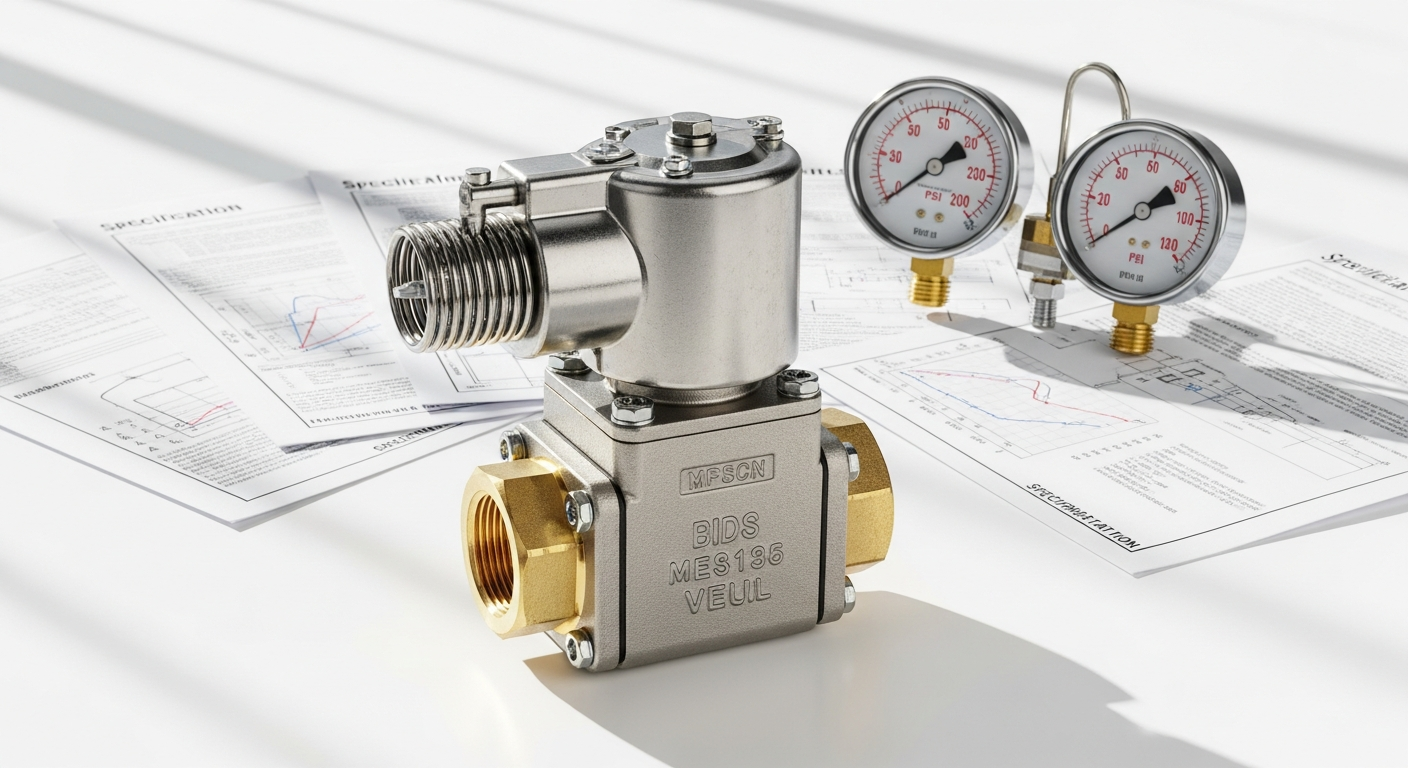
Discover how Tameson’s solenoid valves handle extreme pressures and specialized materials. Learn which valve configurations suit corrosive environments, chemical applications, and high-performance industrial systems in 2026.
In industrial operations, a single material choice in your solenoid valve can determine whether your system survives five years or fails in five months. The stakes are real, and I've watched too many facilities struggle with preventable valve failures because they overlooked material compatibility during the selection phase. Industrial fluid control demands far more than raw speed—it requires the right construction for your specific environment, whether that's corrosive chemical processing, sterile pharmaceutical applications, or extreme high-pressure systems.
Tameson's industrial solenoid valves transcend basic functionality. They're engineered with customizable body materials, sealing compounds, and pressure ratings specifically designed to withstand the harshest conditions. From stainless steel that resists corrosion in chemical plants to specialized plastics that handle aggressive media, these valves give you the material advantage your operations need.
This article breaks down how material selection—from stainless steel to aluminum to plastic—protects your operation. You'll understand pressure ratings that climb to 250 bar, discover which sealing materials work best for your media, and learn how to match valve specifications to your toughest industrial challenges.
Stainless Steel Solenoid Valves for Corrosive and Hygienic Applications
Stainless steel construction represents the gold standard when corrosion resistance matters. In chemical processing facilities, food production environments, and pharmaceutical manufacturing, brass simply doesn't hold up. Stainless steel resists attack from saltwater, acidic solutions, and alkaline media—conditions that would degrade standard materials in months.
Beyond raw corrosion resistance, stainless steel delivers hygienic design advantages critical for medical device integration and sterile fluid handling. These valves meet FDA standards and industry-specific sanitary requirements, making them essential for applications where contamination cannot be tolerated. Temperature stability is another advantage; stainless steel maintains its integrity through washdown environments and thermal cycling that would compromise other materials.
The durability advantage translates to longevity. A stainless steel valve operating in a demanding pharmaceutical facility will outlast multiple brass alternatives in identical conditions. Yes, the initial investment is higher, but when you calculate replacement costs, downtime, and production interruptions, stainless steel often becomes the economically superior choice.
High-Pressure Solenoid Valve Specifications (Up to 250 Bar)
Pressure rating selection directly impacts system performance and safety. Tameson's solenoid valves span the entire pressure spectrum, from direct-acting valves operating at 0 bar minimum pressure to high-pressure models handling 250 bar.
Direct-Acting and Indirect-Acting Configurations
Direct-acting valves operate at atmospheric pressure or below, making them ideal for low-pressure applications with smaller flow rates. They respond with exceptional speed because they lack the complexity of larger indirect systems.
Indirect-acting valves require a minimum pressure differential to function—typically around 0.5 bar—but they deliver significantly higher flow capacity for larger flow rates. This design trades absolute speed for flow handling capability, making them essential when your system demands both pressure and volume.
Semi-direct acting configurations bridge the performance gap, combining direct-acting speed with indirect-acting flow capacity. These hybrid designs work across a broader pressure range, accommodating systems that don't fit neatly into either category.
High-Pressure Capabilities and Safety Integration
High-pressure models reaching 250 bar open possibilities in hydraulic systems, industrial presses, and specialized manufacturing processes. Understanding your maximum operating pressure ensures you select equipment rated appropriately—oversizing introduces cost without benefit, while undersizing creates dangerous conditions.
Pressure relief integration becomes critical in high-pressure applications. Your solenoid valve must work alongside relief systems that protect downstream equipment from destructive surges. Kv-value calculations determine how much flow your valve can handle at given pressure differentials; matching these specifications prevents bottlenecks and ensures responsive system behavior.
Sealing Materials and Media Compatibility
The fluid flowing through your valve determines which sealing material will perform reliably. Incompatible seals fail rapidly, causing leaks and system downtime.
NBR, EPDM, FKM, and PTFE Seals
NBR (Nitrile) seals represent the standard choice for general industrial applications, offering reliable performance across moderate temperature ranges. They handle water, oils, and mild chemicals effectively but reach their limits with extreme temperatures or aggressive chemical exposure.
EPDM seals excel with water and steam, making them ideal for HVAC systems, cooling circuits, and washdown environments. Their temperature stability in steam applications makes them indispensable in certain industries.
FKM (Viton) seals provide chemical resistance and extreme temperature performance that NBR cannot match. When your application involves corrosive fluids or temperature swings from -20°C to +200°C, FKM becomes necessary. This superior performance commands a higher price, justified by longevity in demanding conditions.
PTFE seals occupy the specialized niche—applications with non-reactive environments where other materials would degrade. Laboratory applications and ultra-pure fluid handling benefit from PTFE's inert characteristics.
Matching seal materials to your specific fluid or gas media prevents compatibility disasters. A valve with excellent pressure ratings and responsive control becomes worthless if the seals fail within weeks due to chemical incompatibility.
Aluminum and Brass Body Options for Specialized Environments
Material selection extends beyond pressure and temperature to encompass weight, thermal properties, and cost considerations.
Aluminum construction dominates pneumatic systems and lightweight applications. Aluminum's thermal conductivity provides superior heat dissipation compared to brass, preventing coil overheat in continuous-duty applications. Machinability advantages mean custom configurations and modifications are straightforward and cost-effective.
Brass valves remain the cost-effective solution for general industrial use where corrosion resistance isn't critical. A brass valve in a standard air compressor circuit delivers reliable performance at minimal cost. However, in wet environments or near salt spray, corrosion will eventually penetrate even brass, compromising sealing integrity.
Weight considerations matter in portable or mobile fluid control systems. An aluminum valve weighs significantly less than brass, accumulating to meaningful differences in vehicle-mounted or handheld applications.
Plastic Solenoid Valves for Chemical Resistance
Plastic construction enables superior chemical compatibility that metal alternatives cannot match. In laboratories handling aggressive chemicals, waste treatment facilities, and specialized chemical processing, plastic becomes the material of choice.
Weight and installation simplicity represent additional advantages. Plastic valves are lighter and easier to integrate into experimental setups or portable systems. Cost advantages in specialized chemical processing can be substantial; when you're handling corrosive media that would require expensive stainless steel, plastic offers dramatic savings.
Temperature limitations and pressure ceilings do exist. Plastic valves don't perform at the 250-bar pressures that high-pressure stainless steel models handle, nor do they tolerate the extreme temperature ranges of metal alternatives. These limitations aren't drawbacks—they're natural constraints that simply define where plastic is appropriate versus where metal construction becomes necessary.
Durability in corrosive atmospheres and reactive media gives plastic its real strength. A plastic valve exposed to concentrated acids or alkaline solutions outlasts any metal alternative, with maintenance and replacement cycles reflecting this superior chemical resistance.
Voltage and Control Specifications Across Tameson's Range
Electrical specifications determine integration capability and operational characteristics within your existing infrastructure.
AC coil options spanning 12V to 400V accommodate industrial power availability worldwide. Standard three-phase power in manufacturing facilities typically runs 400V, matching common solenoid coil specifications. Smaller equipment might operate at 110V or 240V, requiring corresponding coil selections.
DC coil configurations enable battery-powered applications and remote installations where AC power isn't available. These configurations support 12V, 24V, and higher DC specifications, offering flexibility in mobile or decentralized systems.
Voltage selection impacts response time and energy consumption. Lower voltage systems often show slightly faster response times, while higher voltages may increase heat generation in continuous-duty applications. Latching valve technology reduces power consumption and heat generation by holding the valve position mechanically rather than electromagnetically—an important consideration in energy-intensive operations.
AC-powered systems can produce vibrations and humming; coil design and mounting isolation mitigate these effects. Integration with automation controllers and PLC systems requires voltage compatibility and electrical isolation considerations for safety and signal integrity.
Matching Valve Configuration to Your Application Demands
Solenoid valve types—2-way, 3-way, proportional, and specialized pneumatic or hydraulic variants—each solve specific control challenges.
2-way valves provide simple on-off flow control, ideal for straightforward circuit designs where you need to block or allow flow in a single direction. Irrigation systems, compressed air tools, and basic automation benefit from 2-way simplicity.
3-way valves enable directional control and complex fluid routing, essential when your system must switch flow between multiple paths or reverse direction. Manufacturing assembly lines frequently employ 3-way solenoid valves for sequential control.
Proportional valves adjust flow continuously rather than simply switching on and off. Medical device infusion systems, precision dosing applications, and process control systems demand proportional control for accuracy and safety.
Normally Open (NO) versus Normally Closed (NC) configurations address safety requirements. A fail-safe system might require NC valves that default to closed, preventing fluid flow if electrical power is lost. Other applications need NO valves that maintain flow unless actively switched off.
Pneumatic, electric coaxial, and hydraulic solenoid valve distinctions reflect the media type and pressure characteristics. Response time expectations—often in milliseconds—enable synchronization accuracy critical for automated manufacturing and precise process control.
Real-world applications demonstrate this versatility: assembly line automation synchronizing multiple actuators, medical devices delivering precise drug infusions, irrigation systems maximizing water efficiency, and HVAC systems modulating refrigerant flow for temperature control.
Water Hammer Prevention and System Integration Challenges
Rapid valve closure generates pressure surges that can damage downstream equipment. Understanding and preventing water hammer becomes essential in high-speed switching applications.
Water hammer occurs when fluid inertia creates shock waves during sudden stops. A solenoid valve closing in milliseconds can generate pressure spikes double or triple the normal operating pressure. Sensitive equipment downstream—sensors, smaller valves, flexible lines—suffers damage from these surges.
Pressure surge management requires damping solutions and careful system design. Accumulator tanks, shock absorption fittings, and adjustable valve closure timing all reduce surge effects. Some applications benefit from slower indirect-acting valves that inherently limit closure speed.
Indirect-acting valve limitations include their requirement for minimum pressure differential. These valves won't function below approximately 0.5 bar, restricting their use in low-pressure applications. Understanding this limitation prevents specifying the wrong valve type for marginal-pressure conditions.
Shock absorption techniques range from simple rubber mounting to sophisticated hydraulic dampers designed for specific pressure ranges. Monitoring and diagnostic approaches—pressure transducers, flow monitoring, and vibration sensors—provide early warning of system stress before catastrophic failure occurs.
Integration of Tameson valves into existing infrastructure requires calculating system transient response. Best practices include oversizing piping to reduce flow velocity (lower water hammer energy), incorporating isolation check valves, and consulting Tameson's technical team about surge management strategies specific to your system.
Customization Options and Technical Support Resources
Unique industrial requirements rarely match off-the-shelf specifications. Tameson addresses this through extensive customization capabilities.
Material, pressure, and voltage combinations available span nearly infinite permutations. Kv-value customization enables precise flow control matching your specific circuit demands. The company's technical team brings foundational expertise—they literally originated as a solenoid valve shop—to your application challenges.
Documentation and specification sheets ensure compliance verification for regulated industries. Custom testing and validation for critical applications provides confidence before production deployment. Ongoing support for troubleshooting and optimization prevents problems from developing into expensive downtime.
Pressure and Flow Capacity Comparisons with Alternative Valve Types
Solenoid technology has inherent advantages and limitations compared to mechanical alternatives.
Solenoid valves deliver response speed that ball valves and gate valves cannot match. Millisecond activation enables synchronized control across complex systems. However, they don't match the pressure handling of heavy-duty ball or gate valves rated for thousands of bar.
Flow capacity considerations center on Kv-value performance metrics. Larger mechanical valves handle flow volumes that solenoid valves reach their limits approaching. This doesn't mean solenoid valves are inferior—it means each technology serves different purposes.
Cost-per-performance analysis often favors solenoid technology for automated applications where response speed matters. Hybrid approaches combining multiple valve types appear in complex systems where some circuits demand mechanical robustness while others require precise electromagnetic control.
The Bottom Line for Industrial Fluid Control
Material selection, pressure ratings, and sealing specifications aren't afterthoughts—they form the foundation of system reliability. I've outlined how Tameson's solenoid valves deliver customizable solutions that tackle corrosive environments, extreme pressures, and specialized media with precision.
Whether you're protecting pharmaceutical processes with stainless steel, managing 250-bar high-pressure systems, or handling aggressive chemicals with plastic construction, the right valve configuration transforms your operation from reactive to proactive. Your next step involves evaluating specific application demands: pressure requirements, fluid compatibility, environmental conditions, and response time needs.
Reach out to Tameson's technical team with your specifications. Their foundational expertise guides you toward the valve configuration that eliminates downtime and maximizes performance. The difference between a system that merely functions and one that excels often comes down to one critical decision: choosing the right material for the job.