
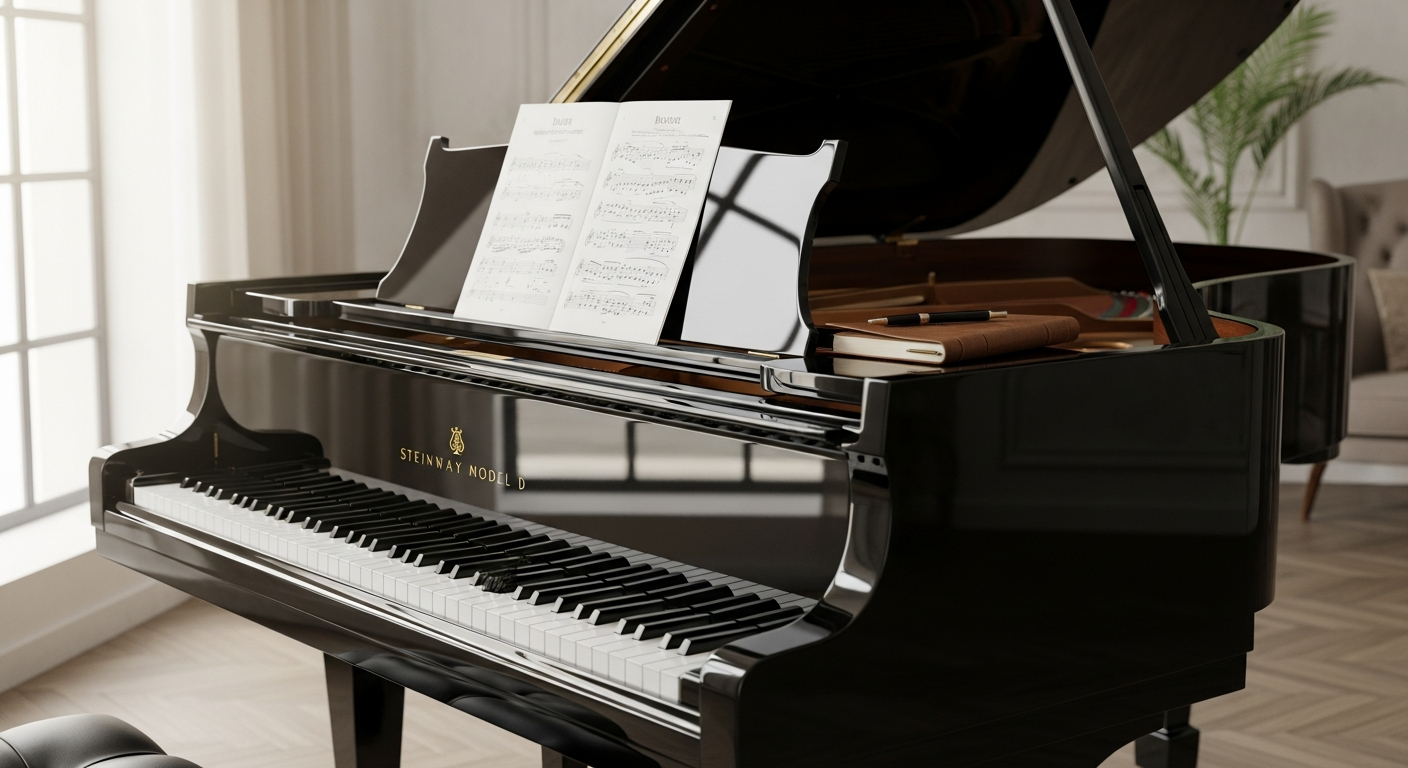
Discover why the Steinway Model D Concert Grand Piano is both a masterpiece and sound investment. Learn about craftsmanship, value appreciation, and ownership costs.
When a single musical instrument can retain—or even increase—its value over decades while delivering world-class performance, you're looking at something truly exceptional. The Steinway Model D Concert Grand Piano consistently achieves this rare combination, commanding respect from concert halls in Vienna to recording studios in Nashville.
The Model D isn't just another piano; it's a 274-centimeter masterpiece born from over a year of meticulous handcrafting and more than 12,000 individual components working in perfect synchronization. Since 1853, Steinway & Sons has positioned this particular model as the gold standard for concert grand pianos, earning endorsements from legendary artists and a presence in the world's most prestigious performance venues.
Throughout this article, you'll uncover what makes the Model D a coveted investment piece, examine the engineering innovations that produce its legendary tone, evaluate the real costs and space considerations involved in ownership, and determine whether this instrument aligns with your musical ambitions and financial goals.
The Engineering Behind Concert-Hall Brilliance: What Makes the Model D Sound Legendary
Diaphragmatic Soundboard Innovation
The Model D's patented Diaphragmatic Soundboard represents decades of acoustic research and precision engineering. This design features variable thickness—thinner at the edges and thicker in the center—to optimize acoustic resonance and projection. The result is a soundboard that responds with remarkable sensitivity to the pianist's touch while maintaining structural integrity across its entire surface.
Sitka Spruce Soundboard Construction
The soundboard itself is crafted from select Sitka spruce, chosen specifically for its superior tonal clarity, responsiveness, and exceptional longevity. This wood variety has been the foundation of Steinway's sonic reputation for generations, delivering the warmth and clarity that distinguishes a Model D from lesser instruments.
Hard Rock Maple Rim Structure
The piano's rim consists of multiple layers of hard rock maple, providing robust structural support while enhancing tonal projection. This layered construction distributes stress evenly across the instrument's frame, ensuring that the remarkable engineering within remains protected and functional for decades.
12,000+ Individual Components
Precision engineering ensures every single component—from the smallest regulating screw to the largest internal frame member—contributes meaningfully to harmonic balance. Each part is manufactured to exacting tolerances and assembled by master craftspeople whose expertise has been refined through years of specialized training.
Responsive Action Mechanism
The action mechanism features individually weighted spruce keys that deliver nuanced touch control essential for concert-level performers. This responsiveness allows pianists to execute everything from delicate, crystalline passages to thunderous, commanding statements with equal eloquence.
Full Resonant Tone Profile
The Model D's construction enables a complete tonal spectrum, capable of producing delicate pianissimo passages alongside powerful fortissimo dynamics. This range gives serious musicians the expressive palette they need for the full scope of classical, romantic, and contemporary concert repertoire.
Dimensions, Specifications, and Space Requirements: Planning Your Model D Installation
Concert Grand Length
At approximately 8 feet 11¾ inches (274 cm), the Model D is a full concert grand requiring dedicated room space. This substantial footprint means that casual placement isn't an option—ownership demands thoughtful spatial planning and architectural consideration.
Weight and Structural Considerations
The Model D's substantial mass demands reinforced flooring and climate-controlled environments. A concert grand of this caliber typically weighs over 900 pounds, making structural assessment essential before installation. Professional builders and architects should evaluate your space to ensure adequate support and environmental control.
Acoustic Placement Best Practices
Optimal positioning away from walls and heating/cooling vents dramatically impacts acoustic performance. The piano should have adequate breathing room to allow sound waves to project naturally throughout the performance space. Corner placement or proximity to mechanical systems degrades the instrument's remarkable tonal qualities.
Room Size Recommendations
A minimum of 400–500 square feet is recommended to accommodate the instrument properly and allow its sound to develop naturally. Smaller spaces can work, but they may not permit the full sonic spectrum that makes the Model D exceptional. Room acoustics become increasingly important in smaller environments.
Professional Installation Requirements
Specialized moving and setup services are essential for protection. Piano movers trained specifically in concert grand transportation understand how to navigate stairs, doorways, and tight spaces without damage. The action requires regulation and testing after installation to ensure optimal playability.
Environmental Control Needs
Humidity and temperature stability are critical for maintaining tuning and wood integrity. Fluctuations in seasonal humidity cause the wooden components—particularly the soundboard—to swell and contract, compromising structural integrity and tonal consistency. A dedicated humidity management system is a worthwhile investment.
The Investment Case: Why Model D Pianos Appreciate in Value
Historical Appreciation Trends
Documented evidence shows Model D pianos increasing in value over decades. Unlike most consumer goods that depreciate immediately, well-maintained Steinway concert grands have consistently appreciated at rates exceeding inflation and many alternative luxury investments. This trend reflects sustained demand from professional musicians and institutions worldwide.
Limited Production Numbers
The handcrafted nature and year-long production timeline restrict supply significantly. Each piano receives over 12 months of meticulous construction, meaning Steinway cannot dramatically increase production volume in response to demand spikes. This supply constraint naturally supports value appreciation.
Artist Endorsement Impact
The Steinway Artist program creates consistent demand and prestige associations. When Grammy-winning pianists perform exclusively on Model D instruments at Carnegie Hall, they're simultaneously validating the instrument's tonal superiority and reinforcing its status in the marketplace. This endorsement effect translates directly to resale value.
Collector Market Demand
Vintage and well-maintained Model Ds command premium prices in the secondary market. Collectors recognize that finding a Model D from the 1920s in pristine condition is increasingly rare, making such instruments worth considerably more than their original purchase price.
Condition and Maintenance Correlation
Properly serviced instruments show stronger appreciation potential. Regular professional tuning, regulation, and maintenance preserve structural integrity and tonal quality—factors that directly impact market value. A Model D with meticulous service records commands 20–30% premiums over comparable instruments with unclear histories.
Comparative Asset Performance
How does Model D appreciation stack against other luxury goods? Fine art appreciates unpredictably and requires specialized expertise to evaluate. Luxury watches hold value but rarely appreciate substantially. Model D pianos offer more stable, documented appreciation with the added benefit of functional use during ownership.
Bespoke and Artist-Edition Premium
Limited-run custom models can exceed $500,000 and appreciate rapidly. Artist-edition instruments created in collaboration with renowned pianists, or custom finishes and configurations, command premium pricing that often exceeds standard models by 50% or more.
Understanding the True Cost of Ownership: Beyond the Purchase Price
Initial Investment Range
New Model D pricing typically ranges from $180,000 to $230,000 (2026 estimates), with some configurations pushing toward $250,000. This represents the baseline investment required to bring a new instrument home. Bespoke modifications and artist editions can exceed these figures substantially.
Professional Tuning and Regulation
Annual or bi-annual professional service costs range from $300 to $800 per visit. Active-use concert pianos may require tuning multiple times per month, while occasional-use instruments need fewer adjustments. Budget accordingly based on your performance schedule.
Regulation and Voicing Services
Periodic adjustments to maintain optimal playability and tone quality extend beyond simple tuning. Action regulation, hammer voicing, and pedal servicing are specialized procedures that command premium fees and require experienced Steinway technicians.
Environmental Control Systems
Investment in humidity management and climate control for preservation ensures your soundboard remains stable. A quality whole-room humidity system ranges from $2,000 to $5,000 initially, with ongoing operational costs. This investment pays dividends in tone preservation and resale value.
Insurance Requirements
Specialized coverage for instruments valued in the six-figure range typically costs $300–$600 annually, depending on your location and coverage specifics. Standard homeowners insurance provides inadequate protection for instruments of this value. Verify that your policy includes proper valuation and replacement coverage.
Restoration and Refurbishment
Long-term maintenance costs for vintage or heavily-used instruments can vary significantly. A complete reconditioning—including soundboard repair, action replacement, and refinishing—might cost $15,000 to $40,000. Factor these potential expenses into your long-term ownership planning.
Transportation and Moving
Specialized piano moving services command premium fees, typically ranging from $1,500 to $4,000 depending on distance and complexity. Never use standard movers for an instrument of this value—the risk of damage far outweighs any cost savings.
Storage Considerations
Climate-controlled storage solutions, if the piano isn't in active use, add $200–$400 monthly to ownership costs. Storage should never be a permanent solution, but temporary arrangements during relocations or renovations are sometimes necessary.
Who Buys the Steinway Model D: From Concert Halls to Private Collections
Professional Concert Pianists
Primary users for international recitals and recording sessions, concert pianists often perform on Model D instruments exclusively. Many participate in the Steinway Artist program, which provides institutional support or personal instruments. These musicians understand that the Model D's responsiveness and tonal range are essential for executing their artistic vision at the highest levels.
Prestigious Venue Acquisitions
Symphony orchestras, concert halls, and performing arts centers worldwide invest in Model D instruments as centerpieces of their performance facilities. A venue's reputation becomes partially tied to the quality of its piano, making the Model D a status symbol and functional necessity.
Conservatory and Music School Investments
Educational institutions seeking benchmark instruments for advanced students acquire Model Ds to provide the highest possible training environment. Students who learn on world-class instruments develop superior technique and musicianship compared to those studying on lesser pianos.
Serious Amateur Musicians
Affluent enthusiasts committed to mastering classical repertoire pursue Model D ownership as the culmination of their musical journey. These individuals have typically studied for decades and recognize that a truly exceptional instrument unlocks musical possibilities unavailable on student or intermediate pianos.
Estate and Legacy Collectors
Buyers seeking heirloom instruments that appreciate and inspire generations view Model D ownership as a multi-generational investment. These individuals prioritize instruments that will outlive them and potentially become family treasures.
Recording Studios and Music Production
High-end facilities requiring studio-quality grand pianos install Model Ds as primary recording instruments. The tonal clarity and responsiveness of the Model D translate directly to superior recordings, making it the preferred choice for professional session work.
Steinway Artist Program Participants
Endorsed performers receiving institutional or personal support often acquire Model Ds through artist discounts or direct Steinway support. Participation in this prestigious program signals recognition of one's professional standing in the classical music world.
Maintenance, Tuning, and Long-Term Care: Preserving Your Investment
Regular Tuning Schedules
Professional recommendations vary based on use intensity. Active-use concert pianos may require monthly or weekly tuning, while occasional-use instruments benefit from quarterly or semi-annual tuning. Establish a regular schedule with your technician and stick to it religiously.
Action Regulation Procedures
Mechanical adjustments maintaining responsive touch and playability are specialized work requiring expertise. Over time, felt compresses, wooden components settle, and mechanisms wear. Periodic regulation—typically every 1–2 years for active-use instruments—restores the responsive action that defines the Model D experience.
Soundboard Inspection Protocols
Monitoring for cracks, warping, or structural issues prevents catastrophic damage. Annual professional inspections can identify developing problems before they compromise tonal quality or structural integrity. Soundboard repairs are expensive and should be addressed promptly when detected.
Hammer Voicing and Replacement
Periodic renewal of striking surfaces maintains tonal quality as felt hardens and compresses through use. Voicing adjusts hammer density to optimize the tonal palette; replacement becomes necessary when felt deteriorates beyond voicing recovery. Budget for hammer replacement every 10–20 years, depending on usage.
Pedal Mechanism Service
Ensuring sustain, soft, and una corda pedals function optimally preserves the full expressive range the Model D offers. Mechanical linkages can bind or wear, requiring lubbrication or replacement of internal components.
Humidity and Temperature Monitoring
Seasonal adjustments and environmental controls prevent wood damage and tonal inconsistency. Maintaining 40–60% relative humidity year-round protects the soundboard and internal wooden components from excessive expansion or contraction.
Professional Technician Selection
Finding Steinway-certified specialists with Model D expertise is crucial. Not all piano technicians possess the knowledge and experience to service concert-level instruments properly. Verify credentials and request references before authorizing work on your instrument.
Documentation and Service Records
Maintaining detailed logs that support value retention creates a documented history of meticulous care. Prospective buyers recognize well-documented maintenance histories and often pay premium prices for instruments with comprehensive service records.
The Bottom Line: Investing in Excellence
The Steinway & Sons Model D Concert Grand Piano transcends the category of mere musical instrument—it's a tangible representation of acoustic perfection, artistic possibility, and sound financial stewardship. What truly sets this instrument apart is its remarkable ability to satisfy multiple objectives simultaneously: you gain access to tonal quality that has inspired countless Grammy-winning recordings, you acquire an asset with documented appreciation potential, and you join a legacy of ownership that includes some of history's most celebrated performers.
The financial commitment is substantial—ranging from $180,000 to $500,000+ depending on configuration—yet these considerations fade into insignificance when you experience the responsiveness of the action mechanism and recognize that you're playing an instrument that will likely appreciate in value while delivering incomparable musical satisfaction. Beyond the initial purchase, understanding ongoing costs for maintenance, environmental control, and professional servicing ensures you can sustain ownership without financial strain.
The Model D demands respect: respect for the year-long construction process, respect for the master craftspeople who assemble each component, and respect for the musicians whose artistry it has amplified across generations. Whether you're a concert professional seeking the benchmark instrument for your career, a serious amateur pursuing the highest musical attainment, or a collector recognizing enduring value, the Model D represents an investment in excellence that transcends temporary trends.