
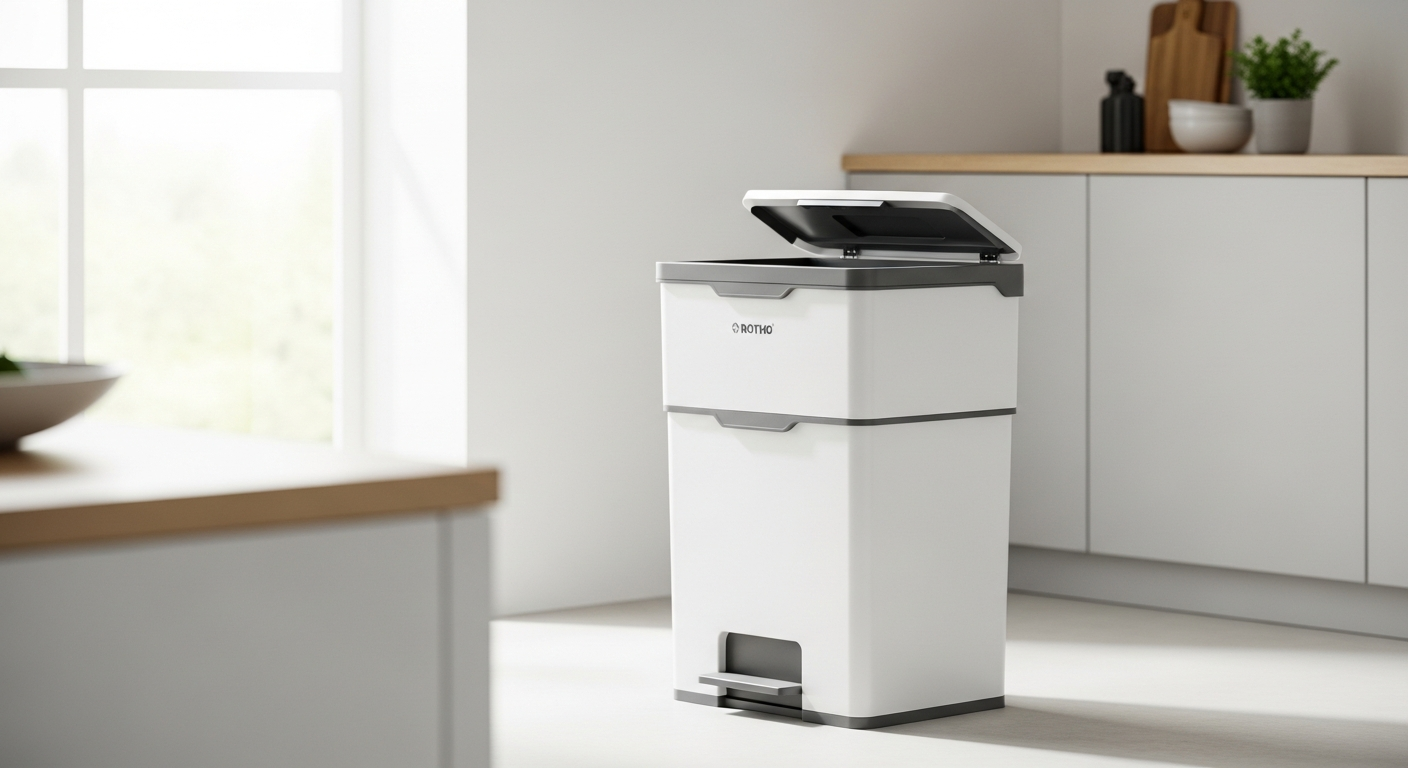
Discover how the Rotho Albula 40L stackable recycling bin transforms compact spaces with smart vertical storage. Learn about its space-saving design, color options, and pricing for apartment living.
Nearly 60% of apartment dwellers struggle with waste management in cramped kitchens and bathrooms. The frustration is real—you want to recycle responsibly, yet traditional bins sprawl across your floor like unwanted furniture. The Rotho Albula 40L from Swiss manufacturer Rotho Kunststoff represents a breakthrough for anyone battling spatial constraints.
This stackable recycling system transforms how we approach waste separation in compact homes, offices, and studios. Rather than sacrificing floor space, you gain a vertical recycling solution that's both functional and visually cohesive with modern interiors. The system's modular architecture means you're not locked into one configuration; you adapt it to your actual needs.
Discover how the Rotho Albula 40L can revolutionize your recycling setup today.
Why Vertical Recycling Beats Horizontal Storage
The fundamental advantage of stacking multiple bins is straightforward: you preserve valuable floor real estate. A galley kitchen measuring just two meters can't accommodate three large recycling bins arranged horizontally, yet two bins stacked vertically consume a footprint barely larger than a single unit standing alone. This vertical approach addresses the core challenge of waste separation in studio apartments and small kitchens where every square centimeter matters.
Traditional side-by-side bins demand horizontal sprawl. The Albula's vertical strategy inverts this problem entirely. Instead of claiming territory, the system climbs upward, utilizing the often-wasted space between countertop and overhead cabinets. For apartment dwellers managing kitchen corners or bathroom nooks, this shift from horizontal to vertical storage creates psychological relief as well as practical space.
The 40 kg load capacity per bin means stacking multiple units increases total recycling capacity substantially. A household generating significant recyclable volume can maintain two or three stacked bins without dominating the room. The stability features prevent shifting or toppling when bins are properly positioned, ensuring that weight distribution remains safe even when bins sit fully loaded atop one another.
Unpacking the Stackable Design Features
The Albula's modular construction allows genuine customization based on household recycling needs. You're not purchasing a pre-determined system; you're acquiring building blocks. Some households require five separate waste categories, while others manage with three. The stackable design accommodates both approaches without waste.
The lid mechanism functions seamlessly even when bins are stacked, a feature that separates thoughtful design from merely stacking containers. You can access the top bin without disturbing those beneath it. The front flap design offers convenient access to contents without removing the entire bin from the stack, further enhancing usability in tight spaces where lifting becomes awkward.
Two carrying handles make transportation practical when bins are full or stacked. The dimensions—38.8 cm (L) × 35.5 cm (W) × 33.9 cm (H)—fit effectively into various living spaces, from kitchen corners to office alcoves to bathroom storage areas. The stability features prevent shifting or toppling when multiple bins are stacked, a critical consideration for households with children or pets who might bump the arrangement.
Compatibility between different Albula models means you can expand your system over time, mixing colors and creating configurations suited to your evolving recycling needs. This flexibility transforms the initial purchase into a scalable long-term solution rather than a fixed expenditure.
Color Selection & Interior Design Integration
The available color palette—anthracite, blue, green, and white—extends beyond mere functionality into aesthetic territory. Neutral tones like anthracite and white blend seamlessly into minimalist and Scandinavian interiors, essentially disappearing into the background while performing their duty. They coordinate with stainless steel appliances and light wood cabinetry without demanding visual attention.
Bold color choices—blue and green—appeal to those wanting recycling bins as design statement pieces. A bright blue Albula stacked in a kitchen corner becomes an intentional accent rather than an appliance to hide. Green options resonate with environmentally conscious households, reinforcing the sustainability message through color alone.
The material finish complements different décor styles effectively. Modern minimalist spaces benefit from the clean lines and neutral colors. Eco-conscious, contemporary homes appreciate the visible commitment to recycled materials represented by the bin's substantial presence. Coordinating the bin system with kitchen cabinetry and bathroom fixtures creates visual continuity, while matching multiple bins in the same color produces a cohesive, professional appearance.
The long-term color durability resists fading from sunlight exposure, maintaining its aesthetic appeal over years of use. This resistance to discoloration matters, particularly for bins positioned near windows or in bathrooms receiving indirect sunlight.
Labeling and Waste Separation Made Simple
Six included adhesive stickers enable clear waste categorization: paper, glass, PET, cardboard, general waste, and others. Proper labeling encourages household members to sort waste correctly, particularly important in multi-person households where everyone must understand the system. Visual hierarchy of labels when bins are stacked vertically remains legible without tilting your head or bending awkwardly.
The common issue of sticker adhesion quality occasionally surfaces in user feedback. Some individuals report that included stickers prove difficult to remove cleanly without leaving residue. This drawback isn't universal—many users experience no issues—but represents an honest consideration. Maintaining label legibility over time requires occasional attention, particularly in humid bathroom environments where moisture degrades adhesive bonds.
Alternative labeling solutions exist if included stickers don't meet your needs. Permanent markers on the plastic surface, removable decals, or hand-written labels on durable tape all work effectively. Customization options for households with unique recycling requirements stretch beyond the standard six categories; you can create your own labels reflecting your local recycling program's specific guidelines.
Start organizing your waste separation system with the Rotho Albula 40L stackable bins.
Material Quality and Environmental Credentials
BPA-free recycled plastic construction means you're purchasing a product made from materials already diverted from waste streams. This choice carries real significance for environmentally conscious households. The recycled plastic maintains structural integrity, resisting the brittleness that sometimes affects virgin plastic under UV exposure and temperature fluctuations.
Durability standards position the Rotho Albula for extended service life, typically supporting years of daily use in residential environments. The robustness of the plastic under regular use and weight distribution remains consistent across normal household applications. The material's density prevents warping or deformation, even when bins sit full and stacked for extended periods.
Using recycled materials aligns with sustainable living principles beyond simple gesture. You're reducing demand for virgin plastic production, lowering the embodied energy embedded in the product, and participating in a circular economy model. Comparison of Rotho's manufacturing standards to competitor products reveals a commitment to quality that justifies the price point within the market.
The bin's ability to contain odors effectively stems partly from material choice and partly from lid design. The plastic's closed-cell structure prevents absorption of liquids that cause smells, maintaining freshness between collection days. End-of-life recyclability of the bin itself ensures that when replacement becomes necessary after years of service, the material returns to recycling streams rather than landfills.
Maintenance and Cleaning Protocols
Simple cleaning with water and dish soap handles routine maintenance between collections. A quick rinse removes residual particles and keeps the interior fresh. Dishwasher-safe components allow high-heat washing for those preferring industrial-level sanitization, though standard manual cleaning suffices for most households.
Odor control features of the lid design prevent smell buildup naturally. The seal created when the lid closes traps odors inside rather than releasing them into your living space. This design proves particularly valuable in compact kitchens and bathrooms where ventilation might be limited.
Seasonal deep-cleaning recommendations for apartment dwellers involve emptying the bins completely and wiping interior surfaces with a mild bleach solution, particularly before recycling collection weeks. Preventing mold and mildew in humid bathroom environments requires ensuring adequate airflow around the bins and occasional inspections for moisture accumulation.
Storage tips when bins are not in use include keeping them upright in a dry location, maintaining the lids in place to prevent dust accumulation, and avoiding stacking under heavy objects that might cause deformation. Longevity practices that extend the lifespan of your recycling system involve consistent gentle handling, avoiding sharp impacts when moving bins, and addressing any visible cracks or damage promptly to prevent spreading.
Pricing Breakdown and Value Assessment
Current market pricing ranges from CHF 20 to CHF 45 (approximately €18.62 to €43), with specific retailer pricing examples providing practical reference points. Galaxus lists the anthracite version at CHF 26.90 and the blue version at CHF 23.70, representing mid-range pricing within the available market.
Cost-per-bin comparison when purchasing multiple units for stacking reveals modest volume discounts in some cases, though most retailers maintain consistent pricing regardless of quantity. Price variations by color and availability sometimes favor neutral tones like anthracite or white, which move more predictably through inventory.
The value proposition compares favorably to durability and space-saving benefits. Cheaper alternatives exist at lower price points, but often sacrifice material quality and stackability features. Investing CHF 30 in the Albula versus CHF 15 in a basic bin often means extending usable lifespan from three years to seven or eight, fundamentally improving the cost-per-year metric.
Budget-friendly entry points for testing the system before full commitment suggest starting with a single bin at the lower price end of the range. This approach lets you confirm the system works for your household without overcommitting resources. Long-term cost analysis reveals that the Albula's durability and design features ultimately represent better value than replacement frequency of lower-quality alternatives, provided you plan to use the system for several years.
Real-World Limitations and Honest Considerations
Sticker adhesion issues, while not universal, do occur. Workarounds include reapplying fresh stickers after a year, using permanent markers for labels, or accepting that some residue remains during removal. Lid robustness concerns surface when bins are stacked multiple levels high—three or four bins stacked creates sufficient top-level weight that repeated opening and closing might eventually stress the hinge mechanism.
Front flap operation feedback from users with specific stacking configurations occasionally reports that accessing the lower bins becomes awkward when the upper bin remains in place. Weight distribution challenges when fully loaded bins are stacked demand careful placement to avoid tipping, particularly in households with children who might climb or lean on the structure.
Space requirements for comfortable lid opening in tight corners sometimes prove tighter than anticipated. A bin positioned with minimal clearance might not allow the lid to open fully. Noise considerations when opening and closing lids in quiet environments are minimal—the plastic doesn't bang or rattle like metal—yet some notice the lid's solid snap when closing.
Suitability assessment for different household sizes and recycling volumes matters significantly. Single-person households managing minimal recyclables might find even one Albula excessive, while large families generating substantial volume might require three or four bins. Casual recyclers whose sorting commitment remains inconsistent might not justify the investment, while dedicated separators find exceptional value in the system's organization capability.
Building Your Ideal Recycling System
Determining how many bins your household actually needs starts with honest assessment of your recycling volume. Measure your weekly recyclables and calculate how many 40-liter containers this represents. Most households benefit from two to three bins; oversizing the system wastes resources while undersizing creates overflow frustration.
Strategic placement options extend across multiple rooms. A primary system might occupy kitchen counter space or below-sink storage, while a secondary setup in the bathroom captures paper towels and packaging. Office corners, laundry rooms, and entryway spaces all become viable locations depending on household recycling patterns.
Creating a multi-tier system for households with high recycling volume means stacking bins by frequency of use, with most-accessed bins positioned at comfortable reach height. Matching bin quantity to local recycling program requirements ensures your system aligns with what your municipality actually accepts. Research your specific guidelines before purchasing, as requirements vary significantly by region.
Scaling your system as lifestyle changes occur maintains relevance across seasons and life transitions. Moving to a smaller apartment might call for reduction, while growing families might require expansion. The modular design accommodates these changes without replacing the entire investment.
Integration with existing waste management infrastructure involves considering how full bins reach collection points. Building layouts, stairwell access, and outdoor storage all factor into whether stacking creates more convenient transportation than traditional arrangements. Tips for introducing the system to household members establish sorting habits and responsibility distribution, particularly important in shared living situations where buy-in matters.
Making the Right Choice for Your Space
The Rotho Albula 40L stackable recycling bin addresses a genuine pain point for anyone living in compact quarters. It's not about cramming more bins into less space—it's about rethinking how waste separation works within your actual lifestyle. The thoughtful engineering delivers on its promise: vertical efficiency without sacrificing accessibility or aesthetics.
Your decision ultimately hinges on three factors. First, assess whether your living situation genuinely demands space optimization; if you have room to spare, traditional side-by-side bins might serve you equally well. Second, evaluate your household's recycling commitment—this system shines for those serious about waste separation, less so for casual recyclers. Third, consider your budget tolerance; the CHF 20–45 price point represents solid value for durable, eco-conscious design, yet cheaper alternatives exist if budget is your primary constraint.
Starting with a single bin allows you to test the system before committing to a full stack. This approach lets you experience the lid mechanism, assess label durability, and confirm the dimensions work in your chosen location. Once you're confident, expanding to two or three bins creates a genuinely transformative recycling setup. The Albula system rewards thoughtful planning—invest that effort upfront, and you'll enjoy years of streamlined waste management in your small space.
Get your Rotho Albula 40L stackable recycling bin and transform your waste management today.