
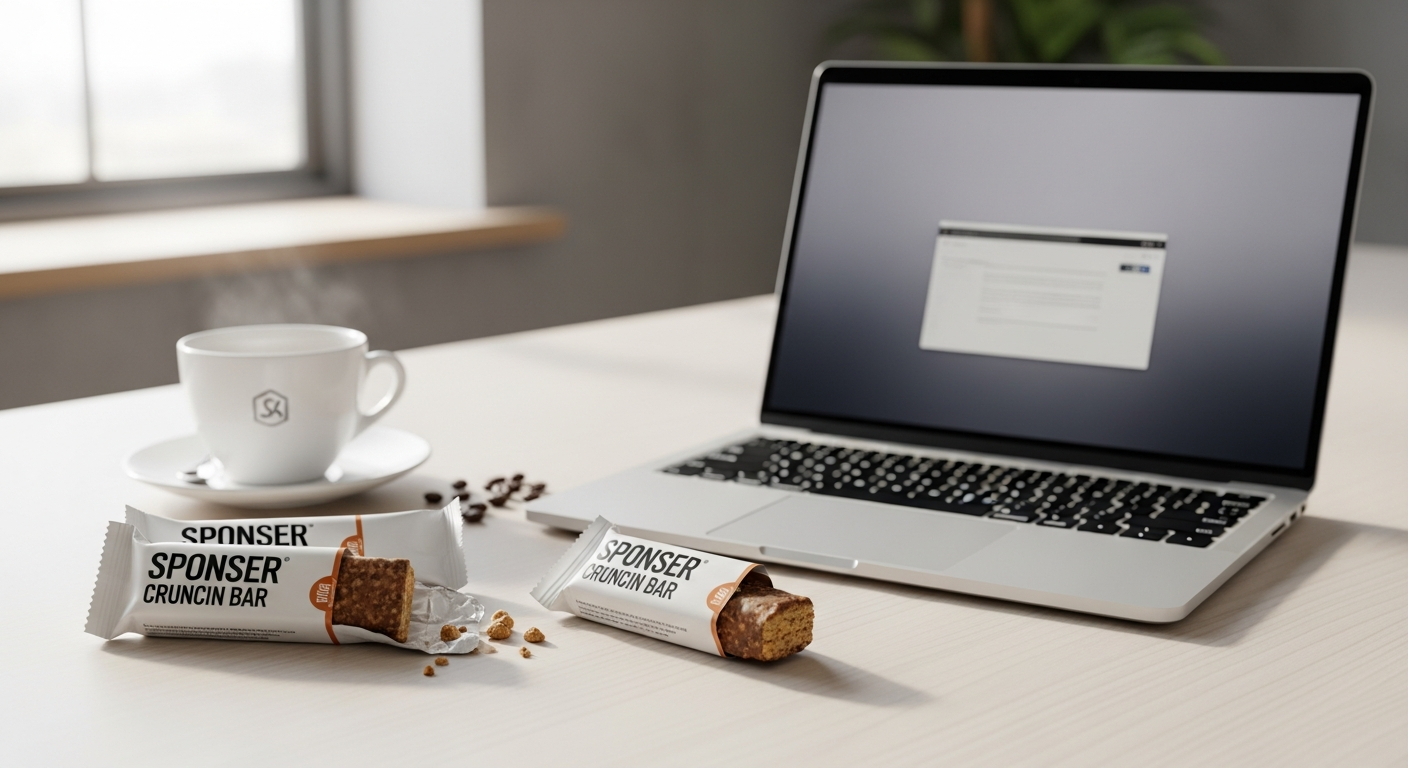
Discover how Sponser Crunchy Protein Bars fuel productivity for desk workers. Learn why this high-protein snack with 30%+ protein and under 2g sugar is the ideal alternative to afternoon energy crashes. Explore flavors, nutrition, and real-world benefits.
Afternoon slumps cost professionals an estimated 2.5 hours of productivity per week. That’s roughly two full workdays vanishing each month, dissolved in the fog of the 3 PM energy crash. Whether you’re fielding back-to-back meetings, racing toward a deadline, or simply watching your focus evaporate around mid-afternoon, your body is screaming for sustained fuel. Yet most office snacks—vending machine cookies, sugary energy drinks, candy bars masquerading as nutrition—leave you feeling more depleted than energized, trapped in a cycle of brief spikes followed by deeper crashes.
The Sponser Crunchy Protein Bar represents a fundamental shift in how busy professionals approach midday nutrition. Unlike traditional protein supplements designed purely for athletes, this bestseller from Sponser DE/AT bridges the gap between functional nutrition and genuine snacking pleasure. It’s engineered for people who refuse to sacrifice taste for health, who want their snacks to work as hard as they do.
This guide examines exactly how the Sponser Crunchy Protein Bar fits into a work-focused lifestyle. You’ll discover the nutritional science behind its effectiveness, explore why professionals are making the switch from conventional snacks, and find practical strategies to incorporate it into your daily routine.
Discover how the Sponser Crunchy Protein Bar can transform your afternoon energy levels.
How Sugar Crashes Sabotage Afternoon Productivity and Focus
Standard office snacks create what researchers call the “blood sugar rollercoaster.” You consume a sugary treat, your glucose spikes rapidly, and your body responds by flooding your system with insulin. For approximately 90 minutes, you feel energized. Then comes the crash—a sudden drop in blood glucose that triggers fatigue, mental fog, and cravings for more sugar. This cycle repeats throughout your workday, each crash deeper than the last.
The cognitive impact is measurable and severe. Research in nutritional neuroscience demonstrates that blood sugar fluctuations impair executive function, decision-making speed, and sustained attention. For professionals managing complex projects or high-stakes negotiations, this translates directly into diminished performance.
The Blood Sugar Rollercoaster of Typical Vending Machine Options
Consider a typical vending machine snack: a standard candy bar contains 20-30g of simple carbohydrates with minimal protein. Within 30 minutes, your blood glucose peaks. Your pancreas overshoots its insulin response, causing a sharp decline approximately 60-90 minutes later. This is when you feel the crash most intensely—exactly when you should be mentally sharp for an important client call or creative brainstorming session.
Energy drinks follow a similar pattern, with the added stimulant effect of caffeine masking the underlying blood sugar instability. You feel artificially energized, but the fundamental metabolic problem remains unaddressed.
Why Protein-Rich Snacking Stabilizes Energy Levels for Desk Workers
Protein fundamentally changes how your body processes food. Unlike carbohydrates, which trigger rapid glucose elevation, protein is digested slowly and triggers a measured, sustained increase in blood amino acid levels. This stabilization prevents the sharp spikes and crashes that characterize traditional snacking.
Protein also activates satiety signals in your brain more effectively than carbohydrates alone. You feel genuinely full, not artificially satisfied by empty calories. For desk workers battling between-meal hunger, this distinction matters enormously.
The Hidden Costs of Energy Crashes on Work Performance
The productivity impact of afternoon energy crashes extends beyond obvious fatigue. Each crash compromises your ability to sustain attention during meetings, slows your reaction time in collaborative settings, and reduces creative problem-solving capacity. Over a week, these micro-impairments compound. Your output diminishes, projects slip, and the stress of falling behind generates additional fatigue.
The cost isn’t merely personal—it’s organizational. Teams with unsustained energy levels show measurable decreases in project completion rates and collaboration quality. Sustained nutrition becomes a competitive advantage.
How Sustained Nutrition Supports Cognitive Function During Long Workdays
Your brain consumes approximately 20% of your body’s total energy despite representing only 2% of body weight. During demanding cognitive work—writing, analyzing data, strategic thinking—your brain’s energy consumption increases further. Stable blood glucose ensures that your prefrontal cortex, the region responsible for executive function and decision-making, maintains consistent metabolic support.
When glucose levels remain stable, you maintain consistent access to neurotransmitters that regulate focus, motivation, and mood. Dopamine production stays steady. Serotonin remains balanced. Your mental clarity persists from first meeting to final email.
The Difference Between Quick Energy Spikes and Sustained Fuel
The distinction between “energy” and “sustained fuel” is biochemical. A quick spike feels energetic in the moment—you experience a temporary sense of vitality. But this isn’t true energy; it’s a neurochemical artifact of rapid glucose elevation. Sustained fuel means stable blood glucose, which requires protein, fiber, and minimal simple carbohydrates working in concert.
Sustained fuel doesn’t feel like an intense rush because it doesn’t create one. It feels like normal, consistent clarity—the absence of fatigue rather than the presence of artificial stimulation. For professionals accustomed to energy drink culture, this shift can feel understated. Yet it’s precisely this stability that enables genuine productivity.
Sponser Crunchy Protein Bar Nutritional Profile for Professionals
Breaking Down the 30%+ Protein Content and What It Means for Muscle Preservation
The Sponser Crunchy Protein Bar delivers over 30% protein content, translating to approximately 15-16g of protein per 50g serving. For desk workers, this matters beyond muscle building. Protein supports tissue maintenance, immune function, and the synthesis of neurotransmitters that regulate focus and mood.
More immediately, that protein content is what stabilizes your energy curve. Unlike carbohydrate-dominant snacks that spike and crash, the Sponser bar’s protein foundation creates a gentle, sustained elevation in amino acid availability. Your body isn’t flooded with glucose; it’s receiving steady nutritional support.
Why Less Than 2g Sugar Matters for Weight Management and Mental Clarity
The less-than-2g sugar content per bar is where functional design becomes apparent. Most commercially available snacks contain 15-25g of sugar per serving. This 90% reduction in sugar content fundamentally changes your metabolic response.
For weight management, lower sugar intake means fewer empty calories and more consistent satiety signaling. Your body isn’t triggered by rapid glucose spikes to store excess energy as fat. For mental clarity, the absence of blood sugar volatility means your prefrontal cortex maintains steady dopamine production, reducing the afternoon fog that drives poor decision-making and procrastination.
Fiber Content (4.2g Per 70g Bar) and Its Role in Sustained Fullness
The 4.2g of dietary fiber per 70g bar serves a critical function: it slows gastric emptying and extends satiety. Fiber creates bulk in your digestive system, activating stretch receptors that signal fullness to your brain. Simultaneously, fiber fermentation in your colon produces short-chain fatty acids that further enhance satiety signaling.
Practically, this means consuming a Sponser bar at 2 PM genuinely prevents hunger until dinner. You’re not managing cravings through willpower; you’re addressing the underlying physiological signals that drive hunger. For professionals trying to maintain structured meal timing, this stability becomes invaluable.
Macronutrient Balance for All-Day Energy Without Digestive Discomfort
The macronutrient composition—high protein, low sugar, substantial fiber—creates a metabolic profile optimized for sustained energy without digestive disruption. High-sugar snacks often trigger insulin spikes that can cause bloating or digestive distress. High-fiber snacks consumed without sufficient protein can cause gas or intestinal discomfort.
The Sponser bar’s balance prevents both. Protein consumption supports healthy microbiota function. The moderate fiber level (not excessive) promotes digestive health without causing distress. Professionals consuming this bar report no afternoon digestive complaints—no bloating during meetings, no intestinal discomfort derailing focus.
Clean Ingredients: No Added Sugars, No Preservatives, No Artificial Fillers
The absence of added sugars and preservatives aligns the Sponser bar with modern professional values around food transparency. You’re not consuming mysterious chemical compounds designed to extend shelf life. You’re eating recognizable ingredients engineered for nutrition and taste.
This clean ingredient approach matters beyond abstract health consciousness. It’s about confidence. You know exactly what you’re consuming. There’s no ambient anxiety about hidden additives or long-term health effects from artificial sweeteners. In high-stress professional environments, this transparency reduces cognitive burden.
How the Nutritional Composition Compares to Energy Drinks and Traditional Snacks
A typical energy drink contains 25-35g of sugar, minimal protein, and hundreds of milligrams of caffeine. It delivers an intense but brief metabolic spike followed by a sharp crash. A traditional candy bar offers similar sugar content with virtually no protein or fiber.
The Sponser bar’s nutritional profile is fundamentally different. With 15-16g protein, less than 2g sugar, and 4.2g fiber per 70g serving, it addresses the metabolic needs that energy drinks and candy bars ignore. You’re receiving sustained nutritional support rather than chemical stimulation masquerading as energy.
Caloric Efficiency for Those Managing Daily Intake
The Sponser bar typically contains 180-220 calories per 50-70g serving, depending on flavor. For professionals managing total daily caloric intake—whether for weight management or athletic performance—this caloric density is remarkably efficient. You’re receiving substantial protein and satiety-promoting fiber within a modest caloric envelope.
Start incorporating the Sponser Crunchy Protein Bar into your daily nutrition strategy.
Flavor Variety Meets Professional Preferences
Peanut-Caramel: Satisfying Sweet-Savory Cravings Without Guilt
The Peanut-Caramel flavor combines the psychological satisfaction of indulgence with actual nutritional support. Peanut provides earthiness and familiar comfort, while caramel delivers sweetness without the metabolic consequences of sugar. This flavor appeals to professionals with afternoon sweet cravings—those 3 PM moments when willpower faces genuine temptation.
The sweet-savory balance prevents the one-dimensional experience of purely sweet snacks. You’re consuming something that feels genuinely indulgent, which matters for adherence. A nutrition strategy that requires constant deprivation fails. A strategy that offers genuine pleasure succeeds.
Raspberry: Lighter Option for Mid-Morning or Afternoon Breaks
Raspberry provides a fresher, lighter sensory experience compared to the richness of caramel or chocolate. Professionals often prefer this flavor for mid-morning consumption when full indulgence feels excessive. The fruit notes create a perception of lightness, even though the nutritional profile remains identically supportive.
For afternoon breaks when you want nutrition without the heaviness of chocolate, raspberry delivers. It pairs exceptionally well with herbal tea, creating a ritual around snacking that extends beyond mere fuel consumption.
Chocolate-Banana: Familiar Comfort Flavor for Consistent Enjoyment
Chocolate-banana occupies the middle ground between indulgent and light. It’s familiar enough to feel safe—most professionals have positive memories associated with chocolate and banana combinations. Yet it’s not so rich that it feels excessive as an afternoon snack.
This flavor’s familiarity drives compliance. You’re not forcing yourself to develop a taste for unfamiliar flavor profiles. You’re consuming something that aligns with your existing preferences, making consistent consumption feel natural rather than disciplined.
How Diverse Flavors Prevent Snacking Monotony and Maintain Compliance
Nutritional monotony undermines long-term adherence. If your snack tastes the same every day, you eventually experience flavor fatigue. You begin unconsciously seeking variety, which often leads to abandoning your structured snacking strategy for more interesting options.
Three distinct flavors prevent this monotony. Over a four-week rotation, you’re consuming sufficient variety to maintain interest while still benefiting from structured nutrition. This flavor diversity is why professionals successfully maintain Sponser bars as consistent daily snacks rather than reverting to less nutritious alternatives.
Pairing Recommendations With Coffee, Tea, or Water Throughout the Day
The Peanut-Caramel flavor pairs exceptionally well with black coffee, complementing the bitterness with familiar sweetness. Chocolate-Banana pairs with both coffee and milk-based beverages, creating a pseudo-dessert experience that feels indulgent. Raspberry pairs beautifully with herbal tea, particularly chamomile or hibiscus, creating bright sensory combinations.
Water pairing works universally but particularly suits hydration-focused professionals who’re tracking daily water intake. Consuming a bar with water supports nutrient absorption and prevents the dry-mouth sensation that can follow protein-dense snacks.
Seasonal Flavor Preferences for Office Environments
Office culture subtly shapes flavor preferences. Summer months often see increased preference for Raspberry—lighter, fresher flavors align with seasonal appetite patterns. Winter months favor Peanut-Caramel and Chocolate-Banana, richer flavors that feel appropriately warming.
This seasonal variation, while subtle, matters for maintaining consumption patterns. Your body is signaling flavor preferences that align with seasonal metabolic shifts. Honoring these signals through flavor selection maintains consistent enjoyment and adherence.
Texture Experience: The Crunchy-Soft Distinction That Sets It Apart
The Psychological Satisfaction of the Crunchy Chocolate Coating
The crunchy chocolate coating creates what neuroscientists call “mouthfeel satisfaction”—a texture-based pleasure response in your brain. Crunchiness triggers mechanoreceptors in your mouth that signal pleasure and satisfaction beyond the bar’s nutritional content.
This is why potato chips and other crunchy snacks feel satisfying despite minimal nutritional density. The Sponser bar weaponizes this psychological response, pairing it with actual nutritional value. You’re receiving both genuine fuel and genuine sensory pleasure—a combination that sustains long-term adherence far better than nutrition that requires deprivation.
Soft Core Design That Prevents Jaw Fatigue During Work Hours
The soft interior core prevents the jaw fatigue that dense, hard protein bars create. Professionals who’ve experienced the unpleasant sensation of chewing a dense bar for minutes on end appreciate this design choice immediately.
During a long workday when you might consume a bar at 2 PM and another at 5 PM, jaw fatigue becomes a genuine consideration. The Sponser bar’s soft core ensures that consumption remains pleasant regardless of frequency or timing.
How Texture Contributes to Perceived Value and Enjoyment
Texture influences how your brain evaluates value. A bar that’s pleasant to consume, with satisfying contrasts between soft and crunchy elements, feels more valuable than a bar that’s monotonously dense or unpleasantly chalky. This perceived value translates into psychological satisfaction—you feel like you’ve consumed something genuinely worthwhile.
This perception matters. If your snacking strategy feels like deprivation, you’ll eventually abandon it. If it feels like treating yourself well, you’ll maintain it indefinitely.
Comparison to Chalky, Dense, or Overly Chewy Protein Bar Alternatives
Many protein bars suffer from texture failures. Chalky bars feel like consuming compressed sawdust—technically functional but psychologically punishing. Dense bars require excessive chewing, creating jaw fatigue and the sensation of consumption rather than enjoyment. Overly chewy bars stick to your teeth and feel unpleasant in your mouth.
The Sponser bar avoids these pitfalls entirely. The texture is optimized for professional settings—pleasant to consume, requiring minimal jaw effort, creating no sense of being forced to consume something unpalatable.
The Sensory Experience as Motivation for Consistent Healthy Snacking
Your brain is fundamentally motivated by pleasure. A snacking strategy that requires constant deprivation fails because it opposes your brain’s reward-seeking nature. A strategy that delivers genuine pleasure—through taste, texture, and the satisfaction of sustained energy—aligns with your brain’s intrinsic motivation systems.
The Sponser bar motivates consistent consumption because consuming it feels good. This isn’t manipulation; it’s alignment between functional nutrition and genuine sensory pleasure. You’re not disciplining yourself to eat healthy snacks; you’re choosing snacks you actually enjoy.
Why Texture Matters for Professional Settings (Quiet Consumption, No Mess)
The Sponser bar’s firm chocolate coating prevents the crumbly mess that many granola-based or loose-ingredient bars create. You can consume it at your desk without scattering debris across your keyboard or leaving sticky residue on documents. You can eat it during a meeting without creating visible mess or distracting sounds.
This practical advantage matters in professional settings where eating at your desk is necessary but discretion is valued. You’re not announcing your snacking to everyone within visual range.
Practical Integration Into Your Work Schedule
Pre-Meeting Fuel: Consuming 30-45 Minutes Before Important Presentations
Consuming a Sponser bar 30-45 minutes before a significant presentation or client meeting optimizes your metabolic state. Protein begins entering your bloodstream approximately 20-30 minutes after consumption. Steady amino acid availability supports sustained focus, steady blood glucose, and consistent neurotransmitter production.
You’re not entering the meeting in a metabolic state of decline or facing a glucose crash mid-presentation. Your brain has reliable fuel, your glucose levels are stable, and your neurotransmitter production supports calm clarity rather than anxious volatility.
Post-Lunch Slump Prevention: Timing for Maximum Afternoon Productivity
The classic post-lunch energy decline occurs 60-90 minutes after eating a carbohydrate-heavy meal. Your digestive system diverts blood flow and metabolic resources toward food processing, and your glucose levels rise then fall as the carbohydrates are processed.
Consuming a Sponser bar 60-90 minutes after lunch—approximately 2-2:30 PM—prevents this decline. The protein provides sustained metabolic support precisely when your energy naturally dips. You maintain productivity through the critical late afternoon hours when you’d normally experience significant focus decline.
Desk Drawer Storage Without Refrigeration Requirements
The Sponser bar requires no refrigeration, making it ideal for desk drawer storage. Unlike fresh food snacks or yogurt-based products, the bar maintains quality and safety at room temperature. You can maintain a supply directly at your workspace, eliminating the friction of remembering to bring snacks from home or purchasing suboptimal convenience store options.
This accessibility matters. Nutrition strategies fail when they require excessive friction. When your healthy snack is immediately accessible at your desk, you consume it. When it requires a trip to the break room or corner store, you eventually settle for less optimal options.
Portability for Commutes, Business Travel, and Remote Work Setups
The Sponser bar’s compact size and lack of refrigeration requirements make it ideal for professionals with mobile lifestyles. Commuters can maintain bars in their bags. Business travelers can pack bars in luggage without concern about melting or refrigeration. Remote workers can access them in home offices without any special storage requirements.
Portability ensures that your nutrition strategy remains consistent regardless of your location or schedule. You’re not forced to rely on available options in unfamiliar environments; you carry your strategy with you.
Pairing With Hydration Strategies for Optimal Nutrient Absorption
Protein requires water for optimal absorption and utilization. Consuming a Sponser bar with 250-500ml of water supports your kidneys’ ability to process dietary protein and facilitates nutrient absorption in your small intestine.
Hydration pairing also prevents the dry-mouth sensation that can follow protein-dense snacks. For professionals conscious of their appearance in meetings or presentations, this matters. You’re not managing dry mouth discomfort during important interactions.
How to Use as a Bridge Between Meals Without Disrupting Meal Timing
Strategic bar consumption between meals prevents excessive hunger that might drive poor meal choices while maintaining your structured meal timing. A bar consumed at 3 PM with your evening meal at 6 PM provides sustained energy without creating fullness that interferes with dinner consumption or satiety.
This bridging function prevents the common pattern where afternoon hunger drives excessive consumption at dinner, disrupting both meal timing discipline and evening satiety. You’re consuming moderate calories at strategic times rather than attempting to suppress afternoon hunger through willpower, then overconsuming at dinner.
Incorporating Into Intermittent Fasting or Time-Restricted Eating Protocols
For professionals following intermittent fasting, the Sponser bar’s nutritional density makes it ideal for breaking extended fasts. The combination of protein and carbohydrates (from the bar’s carbohydrate content) supports glycogen replenishment and provides sustained energy.
For time-restricted eating (consuming food within a specific window), the bar’s caloric efficiency and nutritional density make it valuable. You’re receiving substantial nutrition within a modest caloric and volume footprint, maximizing nutrient availability during your eating window.
Cost-Effectiveness for Regular Consumers
Individual Bar Pricing (€2.99–€3.50) Versus Convenience Store Alternatives
Individual Sponser bars cost €2.99–€3.50. Compare this to convenience store snacking: a typical premium energy bar costs €2.50–€3.00, a specialty coffee drink costs €3.50–€5.00, and a nutritionally questionable vending machine snack costs €1.50–€2.50. The Sponser bar’s individual pricing is competitive, yet it delivers superior nutritional content compared to most alternatives.
Bulk Box Pricing (€29.69–€35.88 For 12–15 Bars) and Per-Bar Savings
Bulk purchasing reduces per-unit cost significantly. At €29.69–€35.88 for 12–15 bars, your per-bar cost drops to approximately €2.00–€2.40. Compared to individual purchasing at €2.99–€3.50, bulk purchasing generates 20-33% savings.
For professionals consuming one bar daily, bulk purchasing becomes financially optimal. A monthly supply costs less than €70, representing modest investment in sustained nutrition.
Long-Term Budget Comparison: Sponser Bars Versus Daily Coffee Shop Snacks
Most professionals spend €4.00–€6.00 daily on coffee shop snacks and beverages. Over a month, that’s €80–€180. Over a year, that’s €960–€2,160.
Sponser bars consumed daily cost approximately €30–€45 monthly, or €360–€540 annually. The annual savings are €400–€1,800 compared to typical coffee shop spending. That’s significant financial impact from shifting snacking patterns.
ROI Calculation: Productivity Gains Versus Snacking Investment
Financial ROI extends beyond direct snacking costs. Sustained afternoon energy drives measurable productivity improvements. Research demonstrates that stable blood glucose increases problem-solving speed, reduces decision-making errors, and improves focus during complex cognitive tasks.
For professionals billing hourly or managing client relationships, even modest productivity improvements—perhaps 10-15% reduction in afternoon fatigue-driven inefficiency—generate substantial financial value. The cost of sustained nutrition becomes negligible compared to the productivity improvements it enables.
Subscription or Workplace Bulk Ordering Options
Many retailers offer subscription options for regular Sponser bar purchases, automatically delivering monthly supplies at bulk pricing. Workplace bulk ordering through suppliers like Amazon Business or fitness nutrition retailers can further reduce per-unit costs while ensuring consistent availability.
These options eliminate the friction of remembering to repurchase while maximizing cost savings. You’re receiving optimal pricing for consistent consumption.
Value Proposition Compared to Energy Drinks, Supplements, and Meal Replacements
Energy drinks cost €2.00–€4.00 per serving while providing unstable energy and significant sugar or artificial sweetener consumption. Protein powders cost €0.50–€2.00 per serving but require preparation and aren’t convenient for office consumption. Meal replacement shakes cost €2.00–€4.00 per serving and require careful timing around meals.
The Sponser bar’s value proposition is its all-in-one functionality: convenient (no preparation), portable (no special storage), cost-effective (bulk pricing available), and nutritionally complete (protein, fiber, minimal sugar). You’re receiving superior value compared to alternatives that require trade-offs.
Managing Expectations: The Sweetener Consideration
Understanding the Laxative Effect From Excessive Consumption
The Sponser bar uses sugar alcohols or non-caloric sweeteners to achieve less-than-2g sugar content. These sweeteners are poorly absorbed in your small intestine, passing largely unchanged into your colon where they attract water and promote bacterial fermentation. This can create a laxative effect when consumed in excessive quantities.
This isn’t a defect in the product; it’s a biochemical reality of non-sugar sweeteners in general. Understanding this mechanism removes the surprise element if you consume multiple bars daily without adjustment.
Recommended Daily Intake Guidelines for Professionals
For most professionals, one Sponser bar daily creates no noticeable laxative effects. Two bars daily remains tolerable for most individuals. Three or more bars daily begins triggering digestive effects in sensitive individuals, though many people tolerate this without concern.
These are guidelines, not absolute rules. Individual variation is substantial based on gut microbiota composition, previous exposure to non-sugar sweeteners, and overall digestive health.
Individual Tolerance Variations and Adaptation Periods
Your gut microbiota adapts to regular non-sugar sweetener consumption. Individuals consuming sweeteners regularly often develop tolerance that those consuming them sporadically don’t experience. Your initial response to the Sponser bar may differ from your response after four weeks of regular consumption.
This adaptation happens naturally. Your microbial community adjusts its composition to handle the sweetener load more efficiently, reducing fermentation and associated digestive effects.
How to Identify Your Personal Threshold Without Trial and Error
Start with one bar daily for one week, observing your digestive response. If you experience no discomfort, increase to two bars daily for another week. Most professionals can increase consumption gradually without encountering problems. You’re identifying your individual tolerance threshold through systematic observation rather than random experimentation.
Pairing Strategies to Minimize Digestive Impact
Consuming bars with substantial water intake and food timing deliberateness minimizes digestive effects. Consuming a bar alongside your lunch (which already contains food volume) reduces concentrated sweetener load in your digestive tract compared to consuming it alone.
Pairing with water-rich foods or beverages also helps. The increased hydration promotes gentler sweetener processing without concentrated fermentation in your colon.
Alternative Sweetener Profiles and Their Effects on Different Individuals
Different non-sugar sweeteners trigger different digestive responses. Erythritol (sugar alcohol) is better absorbed than sorbitol or maltitol, making it less likely to trigger laxative effects. Stevia and monk fruit are naturally derived sweeteners with different fermentation profiles.
If the Sponser bar triggers digestive effects, investigating the specific sweetener used and your response to other products using that sweetener provides useful information. Some individuals tolerate erythritol beautifully while experiencing problems with sorbitol.
When to Reduce Consumption and Listen to Your Body’s Signals
If you experience consistent digestive discomfort—gas, bloating, or laxative effects—despite water intake and food pairing strategies, reduce your consumption frequency. There’s no virtue in forcing your body to consume more than it comfortably tolerates.
Your body’s signals matter more than adherence to a target consumption pattern. One bar daily that you tolerate perfectly is more valuable than two bars daily that create discomfort. Consistency beats quantity.
Real-World Use Cases: From Startups to Corporate
Startup Environments: Sustained Energy for Long Coding or Creative Sessions
Startup professionals often work extended hours on intensive creative or technical problems. Long coding sessions or creative brainstorming marathons demand sustained focus and energy. The Sponser bar provides the kind of midday and mid-afternoon fuel that maintains productivity through these extended sessions.
Startup culture often involves constant snacking but minimal nutrition planning. Sponser bars introduce structure and nutritional quality to environments where ad-hoc snacking is the norm.
Corporate Offices: Professional Snacking During Meetings and Presentations
Corporate professionals navigate meeting-heavy schedules with limited opportunity for proper meals. The Sponser bar enables professional-appropriate snacking during packed schedules. You can consume a bar before a presentation, maintaining energy and focus without the disruption of leaving for a proper meal.
Corporate culture values discretion and professionalism. The Sponser bar’s packaging, lack of mess, and quick consumption fit corporate norms perfectly.
Sales Professionals: Portable Nutrition for Client Meetings and Travel
Sales professionals spend significant time traveling, attending client meetings, and navigating irregular meal schedules. The Sponser bar’s portability and lack of refrigeration requirements make it ideal. You maintain nutrition and energy consistency regardless of where your workday takes you.
Client meetings demand sharp mental acuity and composed presence. Stable blood glucose from pre-meeting bar consumption supports both.
Remote Workers: Maintaining Structure and Nutrition Without Kitchen Access
Remote workers often lack immediate kitchen access and the structure that commuting and office environments provide. Home offices can devolve into irregular eating patterns and unmotivated snacking. The Sponser bar introduces structure and quality to remote work nutrition.
Consuming a bar at a specific time (2 PM, for example) creates ritual and structure that remote work environments often lack. The bar becomes a marker that organizes your workday.
Student Professionals: Balancing Study Sessions With Work Commitments
Professionals balancing graduate studies or professional certifications with full-time work face extended cognitive demands. The Sponser bar supports this demanding lifestyle by providing sustained energy that matches the cognitive intensity. During intense study sessions or late work projects, the bar maintains mental clarity.
Shift Workers: Consistent Nutrition Across Irregular Schedules
Shift workers face irregular meal schedules and disrupted circadian rhythms. Consistent nutrition becomes challenging when normal meal timing is impossible. The Sponser bar provides a standardized, portable nutrition source that works across any schedule. Regardless of whether your shift runs early morning, evening, or overnight, bars remain accessible.
Healthcare and Service Professionals: Quick Fuel During Demanding Shifts
Healthcare professionals, first responders, and service industry workers often work lengthy shifts without adequate meal breaks. The Sponser bar provides calorie-dense, portable nutrition that doesn’t require preparation or cleanup. You can consume it during a brief break without the time burden of a proper meal.
Why Professionals Choose Sponser Over Generic Protein Bars
Taste Credibility: Actual Enjoyment Rather Than Forced Consumption
Most protein bars are technically functional but subjectively unpleasant. They’re products you force yourself to consume because they’re good for you, not products you consume because they taste good. The Sponser bar delivers both functionality and genuine taste satisfaction.
This matters because adherence requires actual enjoyment. Willpower eventually fails when directed against constant deprivation. The Sponser bar removes the deprivation element by delivering a product that’s both nutritionally sound and genuinely pleasurable.
Functional Design: Engineered for Sustained Energy, Not Just Muscle Building
Most protein bars are designed for post-workout recovery—high protein for muscle synthesis, carbohydrates for glycogen replenishment. The Sponser bar is designed for sustained energy across an entire workday. The macronutrient balance, fiber content, and carbohydrate profile support sustained glucose throughout afternoon hours rather than rapid post-workout recovery.
This distinction matters because professional needs differ from athletic needs. You’re not trying to synthesize muscle; you’re trying to maintain mental clarity through 6 PM. The bar’s design aligns with actual professional needs.
Clean Label Appeal: Transparency in Ingredient Sourcing and Manufacturing
Sponser DE/AT’s reputation for quality sports nutrition is built on transparent ingredient practices and rigorous manufacturing standards. You’re not consuming mystery ingredients or proprietary blends that obscure what you’re actually eating.
This transparency aligns with modern professional values around food quality and health consciousness. You can investigate the bar’s ingredients and understand exactly what you’re consuming.
Bestseller Status: Proven Track Record With Thousands of Satisfied Users
The Sponser bar’s status as a consistent bestseller from Sponser DE/AT represents real-world validation. Thousands of professionals and athletes have sustained this product’s popularity through actual purchase and repeat consumption. It’s not a niche product; it’s a mainstream choice backed by substantial consumer validation.
Brand Heritage: Sponser DE/AT Reputation for Quality Sports Nutrition
Sponser’s established reputation in quality sports nutrition extends beyond this single product. The company has built credibility through years of producing effective, quality nutrition products. When you consume a Sponser product, you’re benefiting from decades of nutritional science and manufacturing expertise.
Absence of Artificial Additives: Alignment With Health-Conscious Values
The absence of artificial additives, preservatives, and fillers appeals to health-conscious professionals who’ve moved beyond convenience-focused nutrition. You’re consuming a product that aligns with intentional, thoughtful nutrition practices.
Consistency: Reliable Nutrition Across Every Bar in the Box
Manufacturing consistency matters when you’re depending on a product for sustained nutrition. Each Sponser bar in the box delivers identical nutritional content and quality. You’re not discovering variation between individual bars, which can occur with less rigorous manufacturing.
Beyond the Bar: Complementary Nutrition Strategies
Hydration Protocols to Maximize Protein Absorption and Sustained Energy
Consuming 200-300ml of water with each bar supports optimal protein absorption while promoting sustained hydration. Most professionals underestimate hydration’s role in energy stability. Dehydration creates fatigue and mental fog that mimics energy crashes from poor nutrition.
Consistent hydration throughout your workday—approximately 2-3 liters for most professionals—amplifies the Sponser bar’s energy-stabilizing effects. You’re addressing hydration and nutrition simultaneously.
Pairing With Specific Beverages (Coffee, Herbal Tea, Water) for Synergistic Effects
Black coffee with Peanut-Caramel creates a flavor synergy and the caffeine supports mental alertness without the additional sweetness that creates blood sugar volatility. Herbal tea with Raspberry provides hydration and subtle flavor enhancement without caffeine. Water with any flavor creates optimal absorption conditions.
These pairings are more than flavor matching; they’re metabolic pairing. Your beverage choice influences how your body processes the bar’s nutrition.
Meal Timing Strategies That Amplify the Bar’s Nutritional Benefits
Consuming a bar 60-90 minutes after lunch provides metabolic support exactly when afternoon energy typically declines. Consuming a bar 30-45 minutes before an important meeting optimizes your mental state for performance. These timing strategies amplify the bar’s benefits