
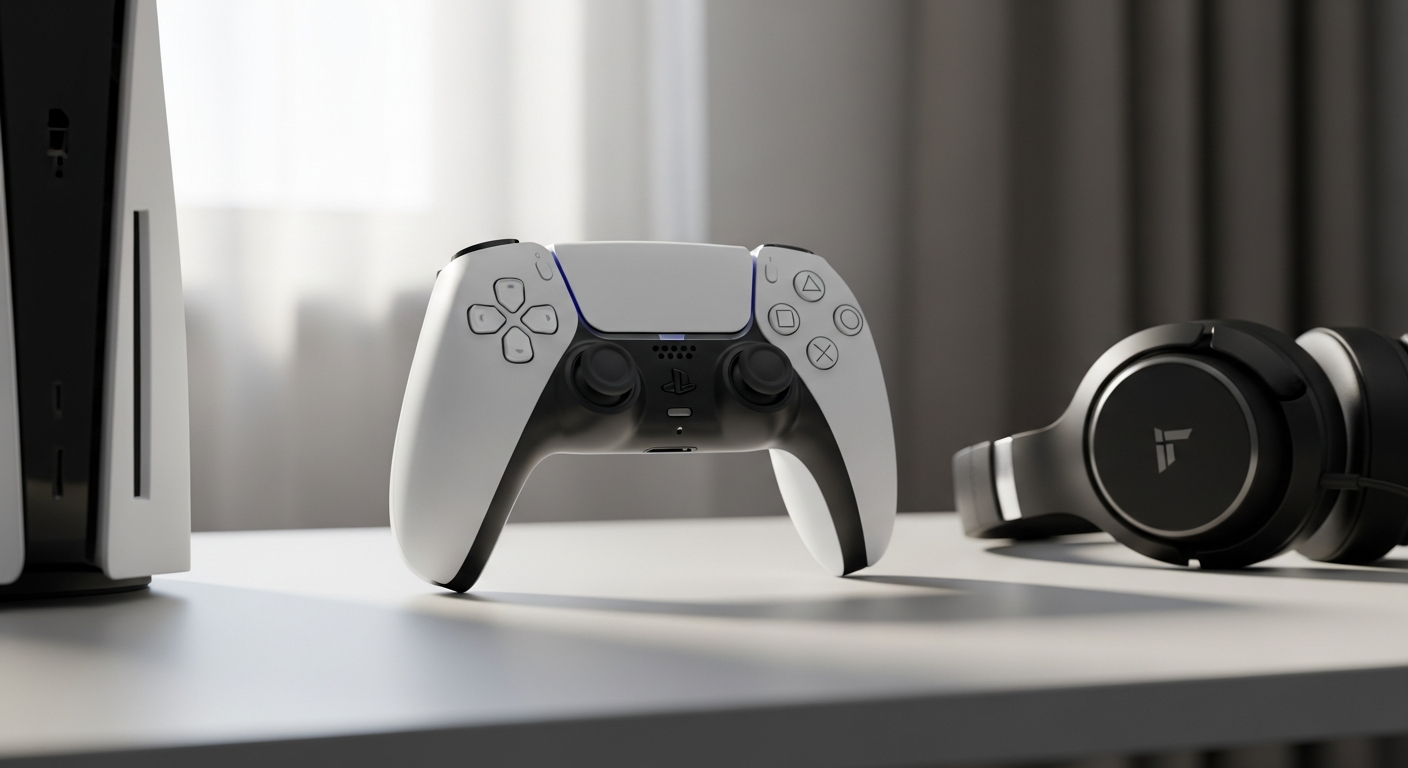
Discover what makes the Sony DualSense Wireless Controller a PS5 essential in our comprehensive 2026 review. Explore haptic feedback, adaptive triggers, battery life, pricing, and whether it’s worth your investment.
The PlayStation 5 launched over five years ago, yet the Sony DualSense Wireless Controller remains the most sought-after gaming accessory on the market. Walk into any gaming store—particularly specialized retailers like Wakkap Es that focus on competitive pricing and quality gaming merchandise—and you'll find the DualSense consistently ranking among bestsellers. This isn't nostalgia or hype; it's the direct result of genuinely transformative technology.
The haptic feedback and adaptive triggers aren't marketing buzzwords designed to inflate the price tag. They're revolutionary systems that fundamentally changed what console gaming can feel like. Sony's dual actuators deliver nuanced vibrations with precision, while the adaptive triggers simulate real-world resistance in ways previous controllers couldn't achieve. These features transform passive gameplay into immersive experiences where your hands become extensions of the game world itself.
This review examines what makes the DualSense special, from its groundbreaking haptic and trigger systems to its technical specifications, genuine strengths, and realistic drawbacks. You'll understand exactly what you're investing in at the €60-75 price point and whether that investment aligns with your gaming priorities.
Explore the Sony DualSense Wireless Controller and its innovative features today.
Haptic Feedback Technology – Redefining Tactile Gaming
Dual Actuator System Replacing Traditional Rumble Motors
The DualSense ditches the conventional rumble motors found in older controllers. In their place, Sony installed dual actuators that operate independently, creating vibrations with far greater precision. Rather than a simple on-off rumble, these actuators can produce complex patterns and varying intensities simultaneously across different parts of the controller. This architectural shift allows developers to craft feedback that feels intentional, purposeful, and deeply connected to what's happening on screen.
Real-World Sensation Simulation
The practical applications become apparent immediately in gameplay. Feel the texture of different terrain as your character walks across grass, gravel, and concrete. Experience the impact of weapons firing, the resistance of environmental obstacles, and the subtle vibrations of machinery operating. When rain pelts against a window or sand crunches beneath your feet, the haptic feedback mirrors these sensations through your hands. This level of detail creates a bridge between the digital and physical that fundamentally changes how you perceive the game world.
Game-Specific Implementation
Developers who fully embrace haptic feedback create experiences that simply don't translate to standard controllers. A bow-drawing sequence becomes tactile as tension builds. Driving games simulate road conditions and vehicle dynamics through nuanced vibrations. Horror games use haptic feedback to create unease and tension without relying solely on audio or visual cues. The best PS5 titles leverage these capabilities to enhance storytelling, build atmosphere, and create memorable moments that stick with players long after the controller goes down.
Adaptive Trigger Mechanics – Physical Resistance That Matters
L2 and R2 Button Integration
The L2 and R2 buttons integrate adaptive triggers that add physical resistance as you press. This isn't a software illusion—the buttons actually fight back against your fingers with varying degrees of force. Drawing a bowstring requires progressively increasing pressure that mimics real muscle resistance. Pulling a gun's trigger feels different from pressing a car's accelerator, each simulating the unique resistance you'd encounter in reality.
Practical Applications Across Games
The versatility of adaptive triggers extends across multiple gaming scenarios. In action games, the difference between a light tap and a full trigger pull becomes physically apparent. In racing titles, progressive resistance simulates engine acceleration and brake pressure. Tactical games use adaptive triggers to differentiate between weapon types and actions. Even puzzle games benefit from subtle resistance that provides tactile feedback for interactions. This technology removes the abstraction between input and consequence.
Progressive Resistance Levels
Rather than simple binary on-off states, adaptive triggers respond dynamically to gameplay. Resistance increases or decreases based on in-game conditions, battery level, and developer implementation. A nearly-empty magazine might offer lighter trigger resistance than a fully loaded weapon. A damaged vehicle's controls might feel sluggish. This dynamic response system ensures that physical feedback always remains contextual and meaningful rather than generic or repetitive.
Complete Technical Specifications and Connectivity
Ergonomic Design Elements
The DualSense maintains PlayStation's signature controller shape with refinements that prioritize comfort. The grip angle suits extended gaming sessions without causing hand fatigue. Button placement feels natural and responsive under your fingers. The controller's weight distribution prevents hand strain even during hours-long gameplay marathons. The matte finish on the back provides secure grip without sweating, while the textured side panels offer additional control. These seemingly minor details combine to create a controller that feels like an extension of your hands rather than a foreign object.
Wireless Connectivity
Bluetooth 5.1 connectivity ensures stable, low-latency connections across typical gaming distances. The wireless range handles most living room setups without dropping connection. Response time remains imperceptible during competitive play, with latency matching wired controller performance. Connection stability remains consistent even with multiple Bluetooth devices present, and reconnection after turning the controller back on happens instantly.
Built-In Microphone Array
The integrated microphone array enables voice chat without requiring a headset. The noise cancellation filters out background noise effectively, ensuring teammates hear you clearly even in noisy environments. The built-in speaker delivers game audio and voice communication without requiring external speakers for immersive experiences. These features make the DualSense a comprehensive communication and audio device, not just a controller.
Check current pricing and availability of the DualSense controller now.
Battery Life Reality Check – What You Actually Get
Standard Battery Capacity
The DualSense contains a rechargeable lithium-ion battery that typically delivers 6 to 12 hours per charge under normal gaming conditions. This range reflects real-world variation based on usage patterns and feature intensity. Casual gameplay with haptic and adaptive triggers at default settings pushes toward the higher end. Sessions prioritizing extended play time without relying on advanced features also achieve longer battery life.
Usage Variables Affecting Longevity
Battery drain correlates directly with how intensively you utilize haptic and trigger features. Games with minimal haptic implementation preserve battery life significantly better than titles designed around constant haptic feedback. Wireless connectivity overhead is minimal compared to feature usage. Players who reduce haptic intensity in controller settings can extend battery life noticeably. Adaptive trigger engagement similarly affects power consumption—games with constant trigger resistance drain faster than those using triggers sparingly.
Heavy Feature Usage Impact
Games implementing aggressive haptic feedback and constant adaptive trigger resistance drain the battery noticeably faster. Extended play sessions in these titles might see battery depletion in 6 hours or less. This represents a genuine trade-off: the advanced features that make the DualSense special consume more power than traditional rumble motors. Players must either accept shorter sessions between charges or reduce haptic/trigger intensity through settings. This isn't a flaw but an inherent consequence of delivering sophisticated sensory feedback.
Genuine Strengths That Justify the Hype
Unmatched Immersion Technology
No competing controller currently matches the haptic feedback and adaptive trigger capabilities of the DualSense. These aren't incremental improvements over previous technology—they're entirely new input paradigms. Xbox controllers lack adaptive triggers entirely. Nintendo Joy-Cons offer rumble but nothing approaching haptic sophistication. The DualSense stands alone in delivering this level of sensory feedback, making the PS5 a uniquely immersive gaming platform.
Build Quality and Durability
The controller uses premium materials that feel substantial in hand. Buttons respond consistently through thousands of presses. The construct survives drops and rough handling better than expected. The finish resists wear from extended use. Battery contacts remain corrosion-resistant through proper charging practices. This build quality justifies the premium price point and supports extended use without degradation.
Ergonomic Comfort
Extended gaming sessions reveal the controller's comfort advantages. The grip doesn't create hand fatigue or cramping even after 8+ hours of continuous use. The button layout allows natural finger positioning without stretching. The weight distribution prevents forearm strain. Players with various hand sizes report comfortable experiences. This ergonomic sophistication makes the DualSense suitable for marathon gaming sessions without physical discomfort.
Real Limitations Worth Considering
Battery Life Trade-Offs
Compared to previous PlayStation controllers, the DualSense offers shorter battery life despite modern charging technology. The PS4 DualShock 4 achieved 8 hours under standard use, while the DualSense reaches similar figures only under light usage. This reduction directly results from powering the advanced haptic and trigger systems. Players accustomed to day-long gaming sessions without charging will notice the difference.
Premium Price Point
At €60-75, the DualSense costs significantly more than standard wireless controllers. Budget alternatives exist at €30-40. This price premium reflects the advanced technology, but it nonetheless represents a substantial investment for players already spending €500+ on the console itself. Multiple controllers for household use or backup options compound this cost consideration.
Haptic Drain During Intense Sessions
Games maximizing haptic implementation drain the battery noticeably during extended play. This creates a practical limitation: you must charge more frequently if you consistently play titles with aggressive haptic feedback. Developers who design games around constant haptic engagement effectively reduce battery life by 30-40% compared to standard usage patterns.
The Bottom Line on DualSense Value
The Sony DualSense Wireless Controller represents genuine innovation rather than incremental improvement. The haptic feedback and adaptive triggers deliver sensations that traditional controllers simply cannot match. These technologies don't just feel gimmicky—they fundamentally transform how specific games play and how immersive those experiences become.
The €60-75 price tag stings compared to budget alternatives, and the battery life won't match older controllers, especially during intensive gaming sessions. These trade-offs are real and worth acknowledging. However, they fade into insignificance when you're immersed in a game that leverages these technologies fully, feeling every environmental detail and every interaction through physical feedback.
For PS5 owners who prioritize immersion and can afford the premium investment, this controller represents the gold standard. Your decision ultimately hinges on what matters most in your gaming experience. If cutting-edge immersion and sensory feedback excite you, the DualSense demands a spot in your setup. If you value battery life and lower costs above advanced haptic features, standard alternatives might serve you better.
Understanding exactly what the DualSense delivers ensures you make an informed choice that aligns with your gaming priorities and financial situation. You're not just buying a controller—you're investing in a fundamentally different way to experience PlayStation 5 games.
Order your DualSense controller today and experience the future of gaming.