
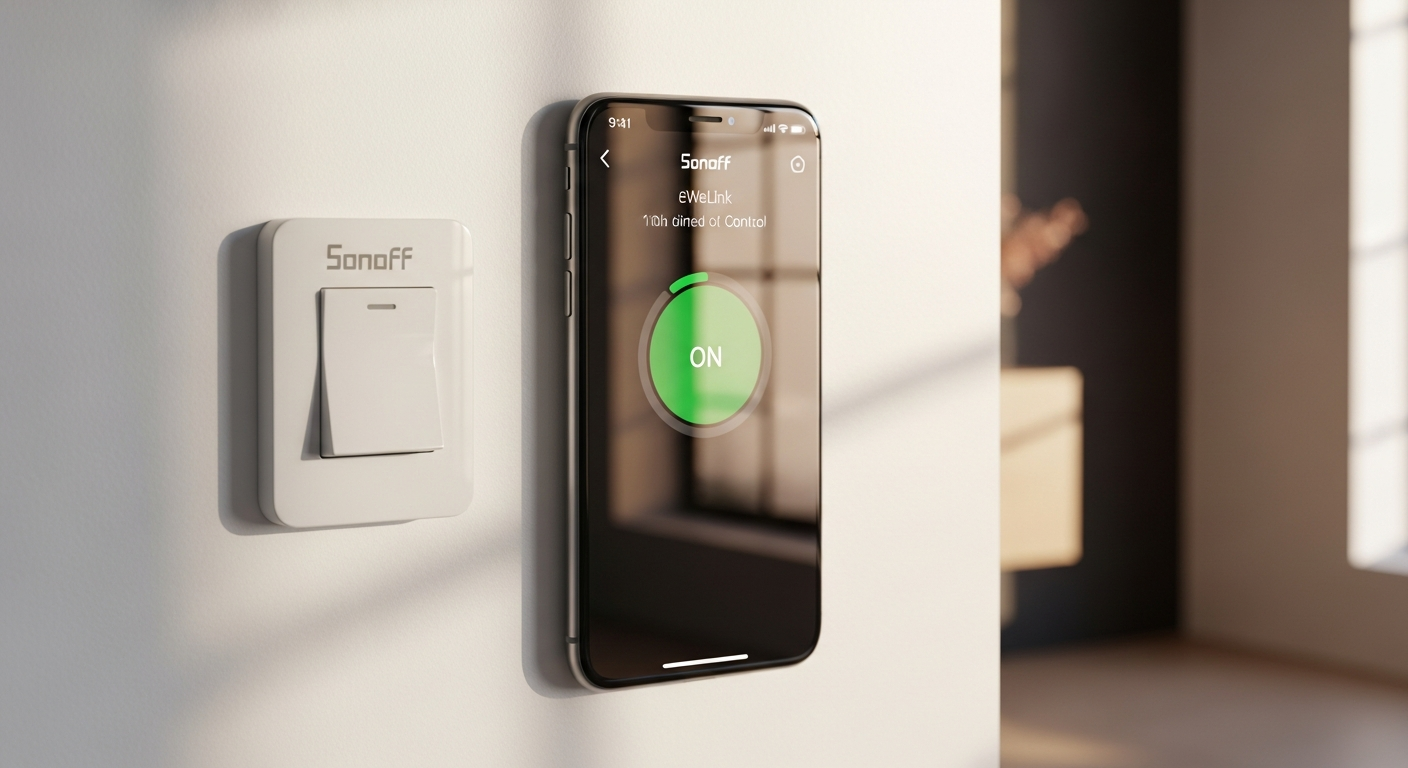
Discover why the Sonoff Basic R2 WiFi Smart Switch is the go-to budget smart home device. Learn its specs, compatibility, real-world applications, and whether it's right for your automation needs.
Smart Home Automation Made Affordable: The Sonoff Basic R2 WiFi Smart Switch Guide
Over 90% of smart home adopters cite cost as their primary barrier to entry—yet the Sonoff Basic R2 has shattered that excuse entirely. At under $2, this tiny WiFi switch has quietly become one of the best-selling smart home devices globally, proving that transformative home technology doesn't demand a premium price tag.
Smart home automation used to feel like a luxury reserved for tech enthusiasts with deep pockets. ITEAD changed that narrative with the Sonoff Basic R2, a plug-and-play WiFi switch that converts any standard appliance into a remotely controllable device. Whether you're a complete beginner or someone looking to expand an existing setup, this switch delivers essential functionality without the premium price that typically accompanies smart home technology.
Get started with the Sonoff Basic R2 today and transform your home into a smart space.
Real-World Use Cases That Make the Sonoff Basic R2 Shine
The beauty of this device lies in its versatility. Consider automating entertainment systems—you can control fans, humidifiers, and air purifiers with scheduled timers or voice commands, tailoring your environment to your preferences without manual intervention.
Lighting control on a budget becomes possible without replacing entire fixtures. Retrofit existing lamps and light fixtures with remote on/off capability, giving older spaces modern convenience at a fraction of the cost.
Appliance monitoring and safety improves significantly through countdown timers. Set a coffee maker to stop after 30 minutes or prevent space heaters from running overnight accidentally—small features that prevent potential hazards and save energy.
Multi-device scene automation lets you create movie modes that turn off lights and power on projectors simultaneously. One tap controls everything. Family-shared device management enables household members to control shared devices through the eWeLink app without needing admin access, promoting household autonomy.
Vacation mode automation simulates occupancy by scheduling lights and devices on/off patterns while you're away from home, deterring potential intruders and creating lived-in appearance.
Outdoor and garage applications extend functionality beyond the house. Control extension cords powering outdoor lights, pumps, or workshop equipment from inside, eliminating trips to physically flip switches.
Installation, Setup, and Network Requirements Explained
Physical installation requires basic wiring knowledge. The Sonoff Basic R2 connects to standard wall outlets and light switches using straightforward procedures—no licensed electrician needed for simple plug-in applications.
Voltage compatibility spans 100-240V AC (50/60Hz), supporting global use. Verify your local electrical standards before installation to ensure safe operation in your region.
WiFi connectivity hinges on a critical requirement: the device only works with 2.4GHz networks. If your router broadcasts exclusively on 5GHz, you'll encounter compatibility issues. This becomes increasingly relevant as newer routers push 5GHz connectivity. Troubleshooting weak signal areas requires strategic placement or WiFi extenders to maintain stable connections.
eWeLink app configuration begins with account creation. The step-by-step device pairing process takes minutes—scan a QR code, connect to your WiFi, and the switch appears in your app. First-time setup rarely causes frustration for users with basic smartphone experience.
LAN control activation enables operation without internet connectivity. This feature matters during network outages or for enhanced privacy-conscious users who prefer local-only control.
Firmware updates and maintenance happen automatically through the app, ensuring security patches and feature optimizations reach your device regularly.
The physical button provides manual override functionality. Situations where app or voice control isn't available—network failures, dead batteries in your phone, or simple preference for tactile control—benefit from this failsafe option.
Voice Assistant Integration and Smart Home Ecosystem Compatibility
Amazon Alexa voice control becomes accessible by enabling Sonoff skills. Voice command setup takes moments, allowing hands-free operation like "Alexa, turn on the coffee maker."
Google Assistant integration works seamlessly with Google Home devices. Google Home compatibility and voice routine creation with the Sonoff Basic R2 opens possibilities for natural language control integrated into your existing Google ecosystem.
IFTTT automation possibilities expand significantly through conditional workflows. Trigger device actions based on external events or sensors—turn on a fan when your phone detects you're approaching home, or activate a light when your security camera detects motion.
Multi-ecosystem management becomes feasible when running Sonoff devices alongside other smart home brands like Philips Hue or TP-Link. Single-platform lock-in isn't necessary with the Basic R2's broad compatibility.
Routine creation and automation chains build complex sequences using multiple platforms. Morning routines could sequence lights, coffee makers, and music in perfect timing.
Voice command customization means naming devices intuitively. Instead of "Device1," name your switch "Living Room Fan" for natural voice control. Custom voice routines for household tasks emerge naturally once devices have logical names.
Third-party integration limitations exist. Some platforms require workarounds or don't work perfectly, but major systems like Alexa, Google Home, and IFTTT function reliably.
Explore the full potential of voice-controlled automation with the Sonoff Basic R2 right now.
Timing, Scheduling, and Automation Features Deep Dive
Eight customizable timer options provide scheduling flexibility. Scheduled timers set recurring on/off times for weekdays, weekends, or specific days. A bathroom exhaust fan might run for 30 minutes after you shower every morning automatically.
Countdown timer functionality creates temporary automation for safety and energy management. Turn off a device after 30 minutes—perfect for space heaters or devices prone to being forgotten.
Loop timer cycles repeat on/off sequences for devices like fans or circulation pumps. Alternating 15-minute intervals conserve energy while maintaining comfort.
Scene control capabilities group multiple devices under single-tap control. A "Movie Time" scene might dim lights, close blinds, and activate your projector simultaneously.
Time zone management ensures accurate scheduling across different locations. Travel frequently or manage properties remotely without manual time adjustments.
Energy-saving automation strategies reduce standby power consumption and lower utility bills substantially. Automated schedules eliminate phantom power drain from devices left running unnecessarily.
Specifications, Power Ratings, and Device Limitations
Voltage input/output specifications range from 100-240V AC (50/60Hz) with safety certifications including ETL, CE, FCC, and RoHS. These certifications guarantee the device meets international safety standards.
Maximum load capacity reaches 10A/2200W. Understanding which appliances fall within this rating matters significantly. Coffee makers, fans, and light fixtures work fine. Geysers, large heaters, and heavy-duty equipment exceed these limits and risk damaging the device.
Inductive versus resistive loads behave differently. Resistive loads like heating elements handle consistently. Inductive loads like motors draw higher startup currents that could stress the 10A maximum. Verify appliance specifications before connection.
Physical dimensions measure 90x41x27mm with a form factor comparable to two matchboxes. This compact size fits most standard outlets but challenges tight fits in crowded electrical boxes or older homes with densely packed wiring. Some installations require extension cords or creative placement.
WiFi specifications limit connectivity to 2.4GHz IEEE 802.11 b/g/n. The absence of 5GHz support creates network compatibility issues for modern WiFi-6 routers that prioritize faster 5GHz bands.
Operating temperature and environmental conditions demand moderate climates. Suitable environments for reliable long-term operation typically range from 0°C to 40°C. Extremes of heat, cold, or moisture reduce lifespan.
Comparison to higher-tier models reveals what the Basic R2 lacks. The Sonoff Mini R2 adds external switch connections for dual-control scenarios. Pro variants include energy monitoring and advanced diagnostics that the Basic R2 omits entirely.
Advantages That Explain Its Massive Market Popularity
The lowest barrier to entry for smart home beginners attracts price-conscious experimenters. Affordable enough for experimentation without financial risk, users can test automation concepts before investing in premium systems.
Plug-and-play simplicity means minimal technical knowledge is required for installation and configuration. Most users complete setup within 10 minutes of unboxing.
Broad ecosystem compatibility works with Alexa, Google Assistant, and IFTTT out of the box. No proprietary platforms restrict functionality or force ecosystem lock-in.
Reliable performance for basic automation ensures consistent operation for straightforward on/off control tasks. Users report stable connectivity and predictable switching behavior over months and years.
Active community and support resources provide abundant tutorials, forums, and user guides available online. Troubleshooting becomes easier when thousands of users have documented solutions.
The compact form factor fits into most standard outlets and switch boxes without modification. Installation rarely requires extensive rewiring or structural changes.
No subscription fees burden users. The free eWeLink app contains all essential features without hidden costs or premium tier requirements that drain wallets over time.
Critical Drawbacks and Scenarios Where the Basic R2 Falls Short
Power limitations for high-draw appliances make the device incompatible with geysers, large heaters, and heavy-duty equipment. Exceeding the 10A limit risks damage and safety hazards.
Tight fit in crowded electrical boxes frustrates installers with densely wired setups. Physical size challenges in older homes or installations with multiple cables require creative solutions or alternative mounting approaches.
2.4GHz WiFi dependency creates incompatibility with 5GHz networks. Potential connectivity issues emerge in congested frequency bands where dozens of neighbors also broadcast 2.4GHz signals.
Lack of advanced features distinguishes the Basic R2 from premium alternatives. No magic switch functionality or support for external trigger sensors limits automation complexity.
No external switch connections mean users cannot add a physical wall switch for dual-control scenarios. The Mini R2 solves this, but Basic R2 users rely entirely on app and voice control.
Limited smart features result in absence of energy monitoring and power consumption tracking. Users cannot analyze appliance energy usage or optimize for cost savings.
WiFi reliability concerns plague some homes with weak signal or network congestion. Occasional disconnections disrupt automation patterns until connectivity restores.
The Smart Home Automation Verdict
Smart home automation doesn't require a six-figure investment or a computer science degree. The Sonoff Basic R2 proves that transformative home technology can be accessible, affordable, and genuinely useful for everyday living. This device has earned its reputation as a market leader by delivering on its promise: simple, reliable smart control at a price point that won't make you think twice.
Whether you're automating your first appliance or building a multi-device ecosystem, the Sonoff Basic R2 deserves serious consideration. Its limitations are real and worth understanding, but they rarely outweigh the value proposition for appropriate use cases. Start small, experiment boldly, and scale your smart home ambitions as your comfort level grows.
The future of home automation is democratized, affordable, and ready to plug into your wall. The Sonoff Basic R2 isn't just a budget option—it's a gateway to a smarter, more convenient living space that works within your means, not against them.
Start your smart home journey with the Sonoff Basic R2 today.