
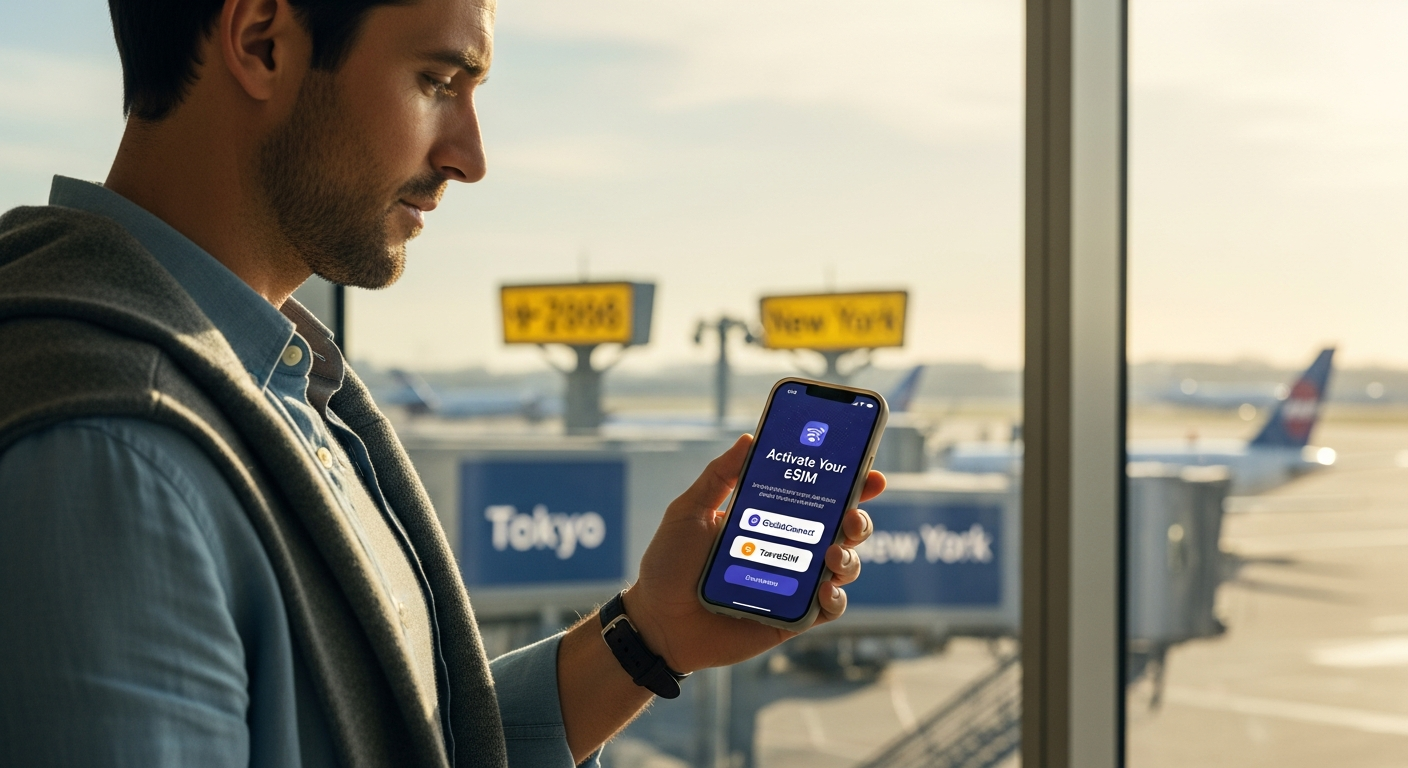
Discover how Sim Local’s international travel eSIM plans eliminate roaming charges and keep you connected across 150+ countries. Instant activation, local network speeds, and affordable plans starting at $3.75.
International roaming charges can drain your travel budget faster than a leaky water bottle on a desert trek. Most travelers face a brutal choice: pay astronomical per-megabyte fees through their home carrier, hunt down sketchy local SIM vendors in unfamiliar cities, or risk staying disconnected. The frustration is real, and it’s universal.
Enter eSIM technology—a game-changing solution that’s quietly transforming how globetrotters stay connected. Sim Local has emerged as a frontrunner in this space, offering digital SIM cards that activate instantly and work across 150+ countries without requiring physical card swaps. Unlike traditional roaming that chains you to your home carrier’s inflated rates, these plans leverage local networks like EE in the UK, Orange across Europe, and AU Japan in Japan, delivering genuine local speeds and reliability.
Discover how Sim Local eSIM plans can transform your travel connectivity today.
What Makes eSIM Technology Different From Physical SIM Cards
Physical SIM cards have been the standard for decades, but they come with genuine friction. You arrive in a new country, desperately searching for a local carrier’s kiosk, fumbling with tiny plastic cards, and hoping the vendor speaks your language. eSIM technology eliminates this entire headache by storing your carrier information digitally on your phone’s embedded secure element.
How eSIMs Eliminate the Physical Card Swap Problem
The core difference is straightforward: there’s nothing physical to swap. Instead of locating a shop, waiting in line, and dealing with activation paperwork, you download an app or scan a QR code. Your phone reads the digital instructions and configures itself for your chosen carrier. No more emptying your pockets at airport kiosks or juggling two SIM cards in unfamiliar cities. The process happens entirely within your device.
Instant Activation Through App or QR Code
Sim Local’s activation process typically completes within minutes. Purchase your plan online, receive a QR code via email, and scan it with your phone’s camera. The eSIM downloads and installs automatically. You’re connected before you even leave the airport. For users who prefer the app route, downloading Sim Local’s application provides the same seamless experience with a few additional taps.
Maintaining Your Primary Number While Using Data
One of the most practical advantages is the ability to keep your home carrier’s SIM card active simultaneously. This means your family, friends, and work contacts can still reach you on your regular number for calls and text messages, while your eSIM handles all data traffic. You’re not choosing between staying reachable and having mobile data—you get both.
Device Compatibility and How to Check
Most modern smartphones support eSIM technology. iPhones from the XS generation onward, Samsung Galaxy S21 and newer models, Google Pixel phones, and many others all include eSIM capability. Before purchasing, check your device specifications or visit the Apple, Samsung, or manufacturer’s support page. The good news: if your phone was manufactured in the last three to four years, compatibility is likely not an issue.
The Environmental Advantage of Digital SIMs
Beyond convenience, eSIMs represent a genuine environmental win. Physical SIM cards require manufacturing, packaging, and shipping—each step generates waste and emissions. Digital distribution eliminates plastic card waste entirely. For environmentally conscious travelers, this matters. You’re making an active choice to reduce your travel footprint before you even book your flight.
Security Features Protecting Your Data
eSIM technology incorporates robust security measures. Your carrier information is encrypted and stored in a secure element on your phone—essentially a hardened vault that’s separate from regular storage. Switching plans doesn’t expose your personal data, and Sim Local’s servers don’t store sensitive information in a way that’s vulnerable to breaches. Your account is protected by authentication protocols comparable to, or stronger than, traditional SIM card setups.
Sim Local’s Network Partnerships: Why Local Networks Beat Global Roaming
The difference between generic global roaming and genuine local connectivity is night and day. When your home carrier provides international roaming, they’re essentially renting capacity from local carriers at wholesale rates, then marking it up dramatically for you. Sim Local bypasses this middleman by partnering directly with tier-1 carriers in each country.
Strategic Partnerships With Tier-1 Carriers
Sim Local has secured agreements with the strongest carriers in major destinations. In the UK, that means EE and Three—both top-tier networks. Across Europe, Orange provides expansive coverage. In Japan, AU Japan delivers reliable service. These aren’t secondary networks or budget carriers; they’re the dominant players that local residents use daily. You’re accessing the same infrastructure that powers a country’s primary mobile network.
Local Network Access Translates to Real Speed and Coverage Advantages
When you connect to EE in London or Orange in Paris, you’re connecting to the same towers and infrastructure that local users benefit from. Your traffic isn’t being deprioritized or throttled to make room for premium customers. You receive genuine local speeds. In practical terms, this means faster downloads, snappier app performance, and reliable navigation in cities and rural areas alike. Video calls don’t buffer. Maps load instantly. Your work doesn’t grind to a halt because of weak connectivity.
Generic Global Roaming Versus Localized Performance
Generic global roaming services operate differently. They typically connect you to smaller, secondary networks or MVNO (Mobile Virtual Network Operator) partners that don’t own infrastructure. These services prioritize capacity management over customer experience, which often results in speed throttling and congestion during peak hours. A Sim Local user in Spain connects to a top-tier Spanish carrier; a generic roaming user connects to whoever’s cheapest for the roaming provider. The difference in real-world performance is substantial.
Coverage Maps Across Major Travel Regions
Sim Local’s coverage extends across Europe, the USA, Mexico, the Caribbean, and Asia—essentially anywhere modern travelers venture. Europe enjoys particularly comprehensive coverage through partnerships with Orange and other major carriers. The USA benefits from agreements with leading American carriers. Mexico and Caribbean islands are well-covered for beach vacations and tropical adventures. Asia’s coverage spans from Japan to Southeast Asia, making it ideal for extended Asian travels. Before purchasing, you can review detailed coverage maps for your specific destination.
Real-World Speed Comparisons
Users consistently report faster speeds with Sim Local compared to traditional roaming. While traditional roaming might deliver 3-5 Mbps during peak hours in popular destinations, Sim Local users often experience 15-25 Mbps or higher. These aren’t theoretical figures—they’re what travelers experience when streaming, working, and communicating. The difference becomes obvious the moment you activate your eSIM.
Network Reliability in Tourist Hotspots Versus Remote Areas
In major cities and tourist destinations, Sim Local’s partnerships with tier-1 carriers ensure rock-solid reliability. Barcelona, Tokyo, New York, London—you’ll experience consistent, fast connectivity. Remote areas present more variables, but Sim Local’s local network partnerships generally deliver better coverage than generic roaming. If you’re planning a backcountry adventure, reviewing specific area coverage beforehand is wise, but for the vast majority of travel destinations, reliability is excellent.
Check Sim Local’s coverage map for your destination and experience genuinely local speeds.
Flexible Plan Options for Every Travel Style and Budget
Sim Local recognizes that travelers have vastly different needs. Weekend city breakers need different plans than digital nomads or long-term travelers. The solution is a tiered approach offering genuine flexibility.
Fixed Data Plans: 10GB, 20GB, and 30GB Options
For travelers with predictable data usage, fixed plans provide clear parameters. A 10GB plan suits users who stick primarily to messaging, occasional video calls, and standard web browsing. The 20GB option handles more intensive use: daily video streaming, regular video calls, and heavy social media activity. The 30GB tier accommodates users who work remotely while traveling or consume significant media. Each plan comes with a defined validity period, typically 30 days, so you know exactly when your coverage expires.
Unlimited Plans With Generous Daily High-Speed Caps
“Unlimited” plans sound appealing until you hit throttling limits. Sim Local’s approach is transparent: their unlimited plans provide 5GB or 10GB per day at full speeds, depending on the plan tier. After reaching your daily high-speed allowance, speeds reduce to roughly 2-3 Mbps—functional for messaging and web browsing, but not streaming or demanding work. This generous daily cap system means most travelers never experience throttling on practical travel days. You’re not rationing data paranoia-style; you’re getting genuinely usable connectivity throughout your trip.
Short-Term Plans for Weekend Trips
Starting at just $3.75, short-term plans cater to travelers taking quick getaways. These budget-friendly options include modest data allowances—perfect for a weekend escape where you’re primarily using WiFi at your hotel and occasionally needing data for navigation or messaging. For the cost of a couple of coffees, you eliminate roaming anxiety.
Mid-Range Options: 20GB for 30 Days
The 20GB for 30 days plan at approximately $40 represents strong value for month-long trips. This aligns with the travel duration and data needs of most leisure travelers and light business users. You’re getting comprehensive coverage at a fraction of what traditional roaming would cost.
Extended Stays: Plans Up to Three Months
Digital nomads and long-term travelers can purchase plans lasting up to three months. These extended plans provide continuity without the hassle of purchasing new plans mid-journey. Pricing scales appropriately for longer durations, making extended travel economically feasible without resorting to local SIM cards in every destination.
Regional Versus Multi-Country Coverage
Sim Local offers both regional plans (covering a specific country or region like Europe) and multi-country options. Single-country plans work well if you’re spending substantial time in one place. Multi-country plans eliminate the need to purchase new plans when crossing borders. For a European tour hitting five countries in 30 days, a regional Europe plan makes far more sense than hunting for local SIMs in each country.
Hotspot Capabilities for Sharing Data
Most Sim Local plans include hotspot functionality, allowing you to share your data connection with other devices. Traveling with a partner, colleague, or family member? You can tether your laptop, tablet, or their phone to your primary phone’s eSIM connection. This shared connectivity eliminates the need for everyone to purchase individual plans, significantly reducing overall costs.
Cost Comparison: eSIM Plans vs. Traditional International Roaming
Understanding the financial impact makes the eSIM advantage undeniable. Traditional international roaming isn’t just inconvenient—it’s financially devastating.
Why Traditional Carrier Roaming Charges Are Unsustainable
Most home carriers charge per-megabyte or per-gigabyte rates that are staggering. A major U.S. carrier might charge $10 per gigabyte in Europe. A modest 2GB of data—barely enough for a day of light use—costs $20. Exceed your plan’s hidden threshold, and overage fees kick in. A short video call can cost several dollars. After a week in Europe on traditional roaming, you’re looking at $150-300+ for something Sim Local provides for $40. It’s not just expensive; it’s unconscionable when alternatives exist.
Total Cost of Ownership: eSIM Plans Versus Local Physical SIMs
The comparison isn’t just eSIM versus roaming. Local physical SIMs present an alternative worth considering. For a single-country, extended stay, a local SIM is often cheaper than any eSIM plan. However, the convenience factor tips the scales for most travelers. You’re not factoring in the time spent finding a SIM vendor, dealing with registration paperwork (which some countries require), or managing multiple cards. For multi-country trips, local SIMs become impractical—you’d be purchasing new cards constantly. Sim Local’s all-in-one approach beats local SIMs for flexibility, even if it’s occasionally slightly more expensive for single-country stays.
Savings for Multi-Country Trips
This is where Sim Local truly excels. A multi-country European tour costs you $40-50 for a month of comprehensive coverage. Purchasing local SIMs in each country—France, Italy, Spain, Germany—would require five separate purchases, each with its own activation fee, registration hassle, and minimum plan. You’d easily spend $100+ and waste hours dealing with local carriers. Sim Local covers all five countries with one activation. The financial and logistical advantage is massive.
Pricing Transparency: No Hidden Fees
Sim Local’s pricing is straightforward. The quoted price is what you pay—no surprise overage charges, no hidden administration fees, no fine-print clauses. This transparency contrasts sharply with traditional roaming, where bills arrive weeks later with unexpected charges. You control exactly what you’re spending before you activate.
Value Proposition for Business Travelers, Leisure Tourists, and Digital Nomads
Business travelers benefit from reliable connectivity at predictable costs—no more shocking phone bills from a conference trip. Leisure tourists save dramatically compared to roaming while gaining freedom to navigate, communicate, and share experiences without watching their data meter. Digital nomads working remotely need consistent connectivity, and Sim Local’s generous data allowances and extended plans make sustained travel economically viable. Each user type wins financially.
Break-Even Analysis: When eSIMs Become the Obvious Choice
The break-even point comes remarkably quickly. A single day of traditional roaming exceeds a full week of Sim Local costs. Even comparing to local SIMs, after about three days in a country, you’d have spent more on separate local SIM purchases than a Sim Local multi-country plan. The obvious choice becomes eSIMs within hours of landing.
Currency Considerations and Regional Pricing
Sim Local pricing varies by region and currency, but the value proposition holds globally. Pricing is competitive across major currencies, with no apparent regional gouging. A European traveler pays roughly the same value in Euros as a North American traveler pays in U.S. dollars.
Seamless Setup and Activation: Getting Connected in Minutes
The theoretical benefits mean nothing if activation is complicated. Sim Local’s process is deliberately designed for simplicity.
Step-by-Step Activation Process
Start by purchasing your plan on Sim Local’s website or app. Specify your destination, desired data amount, and plan duration. Complete payment using your preferred method. Within seconds to minutes, you receive a confirmation email containing a QR code and activation instructions. Open your phone’s camera app, scan the QR code, and follow the prompts to install the eSIM profile. Your phone’s settings will reflect the new carrier connection. Open a browser and test your connection. That’s it. From purchase to live connectivity typically takes under five minutes, often just two or three.
QR Code Scanning Method
For users who prefer visual simplicity over navigating menus, the QR code route is the fastest. The unique code provided contains all necessary configuration information. Your phone’s camera app scans it, detects it’s an eSIM profile, and prompts you to install. No manual entry, no account numbers to remember.
Device Compatibility Checks Before Purchase
Sim Local’s website includes a compatibility checker. Enter your phone model, and it instantly confirms eSIM support. This pre-purchase verification prevents purchasing a plan only to discover incompatibility. If your device isn’t compatible, you’ll know before spending money.
Troubleshooting Common Activation Issues
Occasionally, activation encounters hiccups. A phone might not recognize the eSIM profile, or connectivity won’t initiate despite proper installation. Sim Local’s 24/7 WhatsApp support handles these situations quickly. Most common issues—forgotten to enable mobile data, incorrectly configured APN settings, temporary server delays—resolve within minutes with support assistance.
Switching Between Plans Mid-Trip
Plans can be switched mid-journey if your data needs change unexpectedly. You’re running low on data and need more? Purchase an additional plan. Your primary plan expires, and you’re extending your trip? Activate a renewal. The process is as simple as initial activation. You’re not locked into a plan you chose three weeks ago.
Time Zone Considerations and Plan Validity Periods
Plan validity periods begin upon activation, not upon purchase. Your timezone doesn’t matter—validity is based on calendar days from activation forward. This prevents paying for time zones you’re not currently using. A 30-day plan activated at 2 PM on January 15th expires at 2 PM on February 14th, regardless of your timezone.
Testing Your Connection Immediately After Activation
Once activated, immediately test your connection. Open a browser, load a website, or perform a speed test. This instant verification confirms everything is functioning before you venture away from connectivity (like leaving the airport). If any issues exist, troubleshooting while support is fresh is far easier than diagnosing problems later.
Customer Support and Trust-Building Features
Technical support and customer service matter enormously when you’re abroad. A connectivity issue at night in a foreign country requires responsive help.
24/7 WhatsApp Support for Immediate Assistance
Sim Local provides round-the-clock WhatsApp support. Send a message, and a human support agent responds within minutes, not hours or days. WhatsApp is particularly convenient for international travelers—the same platform you’re using to stay in touch with friends and family handles your technical support. Language barriers are minimal with translation support available.
Physical Airport Kiosks in Select Locations
For users who prefer in-person assistance, Sim Local operates physical kiosks in select major airports. Walk up, explain your needs, and have someone physically verify your device compatibility and activation. This option eliminates any remaining friction for nervous first-time users.
The 100% Refund Policy and Risk Removal
Sim Local’s unconditional 100% refund policy removes purchase risk entirely. Activate a plan, discover it doesn’t meet your needs, and request a refund—no questions, no catches. This policy demonstrates confidence in their service and removes the buyer’s risk. You’re not committing to a service that might disappoint; you’re trying a service knowing you can reverse course if necessary.
User Reviews and Travel Blogger Testimonials
Independent travel bloggers and users consistently praise Sim Local. Reviews highlight reliability, fast speeds, and excellent customer service. These aren’t paid endorsements—they’re genuine experiences from travelers who’ve relied on Sim Local eSIMs across numerous countries. When dozens of independent sources report the same positive experiences, credibility is established.
Response Times and Support Quality Compared to Competitors
Sim Local’s response times are notably faster than most competitors. Traditional carriers’ international support lines might involve waiting on hold for 20+ minutes before speaking to someone who reads from a script. Sim Local’s direct WhatsApp support responds within minutes with knowledge of eSIM-specific issues. The difference in experience is stark.
Knowledge Base Resources and FAQs
Beyond live support, Sim Local maintains comprehensive FAQs and knowledge base articles covering common questions. Before contacting support, you might find your answer instantly in the documentation. This self-service resource is particularly valuable at odd hours when you need quick answers.
Community Forums Where Travelers Share Tips
User communities exist where travelers share experiences, recommendations, and troubleshooting tips. These peer-to-peer resources provide real-world insights that official documentation might not cover. A question about eSIM use in a specific country likely has answers from multiple travelers who’ve been there.
Real-World Use Cases: Who Benefits Most From Sim Local eSIMs
Understanding whether Sim Local fits your travel style requires considering specific scenarios.
Multi-Country European Tours
A typical European adventure hitting France, Italy, Spain, and Germany is Sim Local’s ideal use case. Purchasing four separate local SIMs means four activation processes, four different carrier interfaces, four potential language barriers. A single Sim Local plan covers all four countries with unified billing, consistent speeds, and zero carrier-switching hassle. You save roughly $50-100 compared to local SIMs and countless hours of administrative headache.
Business Travelers Needing Reliable Connectivity Across Time Zones
A consultant traveling from New York to London to Singapore needs consistent, reliable connectivity. Email, video calls, and document uploads can’t fail due to connectivity issues. Sim Local’s tier-1 network partnerships ensure reliability in each timezone. The fixed monthly cost simplifies expense reporting compared to variable roaming charges. Business value aligns perfectly with Sim Local’s offering.
Digital Nomads and Remote Workers
Extended travel combined with work requirements demands connectivity you can depend on. Backpacking across Southeast Asia for six months requires plans that accommodate extended stays and working professionals’ data demands. Sim Local’s extended plans (up to three months) and generous daily high-speed allowances make sustained remote work viable. You’re not watching your data meter obsessively, wondering if you’ll have enough for a work call.
Adventure Travelers Exploring Regions With Limited Local SIM Availability
Traveling to remote regions or less-developed countries where local SIM acquisition is difficult benefits from Sim Local’s pre-purchased approach. You buy your plan before departure, eliminating arrival-day stress about finding connectivity. You’re not hunting for SIM vendors in areas where they’re scarce or require documentation you don’t have.
Budget Backpackers Maximizing Connectivity Without Breaking the Bank
Backpackers on tight budgets need affordable options. Sim Local’s entry-level plans starting at $3.75 and mid-range options at $40 for 20GB fit the budget-conscious traveler perfectly. Traditional roaming would destroy a backpacker’s budget; Sim Local preserves it.
Families Traveling Together and Sharing Hotspot Capabilities
A family of four traveling together can purchase a single plan with hotspot capability rather than four individual SIM cards. Cost savings are immediate and dramatic. Children can access navigation, translation apps, and communication without separate lines. Parents manage one connection point rather than coordinating four separate carriers.
Expats Maintaining Connectivity While Visiting Home Countries
Expats returning home for holidays want to stay in their adopted country’s carrier network for calls and messages—maintaining their local social connections. Sim Local’s approach lets them use a home country eSIM for data while keeping their adopted country’s SIM active. You’re present in both networks simultaneously.
Potential Limitations and When Alternatives Might Be Better
Sim Local is excellent, but it’s not universal. Certain scenarios favor alternatives.
Single-Country, Low-Data Needs
A traveler spending a week in Spain with minimal data needs—mostly WiFi at accommodations, occasional navigation—might find a local Spanish SIM cheaper than any eSIM plan. Local carriers often offer throwaway SIMs with minimal data for a few euros. The eSIM overhead isn’t worth the cost savings for this specific scenario. Local SIMs remain the economical choice here.
Devices Without eSIM Capability
iPhone 6s and older, early Samsung Galaxy models, and many phones manufactured before 2017 lack eSIM support. If your device predates eSIM adoption, you’re physically unable to use Sim Local. A new phone purchase might not make sense just for a trip. Traditional roaming or local SIMs are your only options.
Countries With Limited eSIM Network Coverage or Regulatory Restrictions
Some countries restrict eSIM technology due to regulatory frameworks or haven’t been included in carrier partnerships. Certain Middle Eastern and African nations fall into this category. Coverage maps explicitly show these limitations, but if your destination isn’t supported, Sim Local simply isn’t available as an option.
Voice Call Requirements
Most Sim Local plans are data-centric. Some include voice calling and SMS, but not all. If you’re traveling and need to make frequent calls—not video calls over data, but actual voice calls—you need a plan that includes calling. Verify voice call inclusion before purchasing if calls are essential.
Speed Throttling on Unlimited Plans
Sim Local’s “unlimited” plans include daily high-speed caps. After your daily limit (typically 5GB or 10GB), speeds reduce. For users who consistently exceed daily limits—heavy video streamers on longer trips—this throttling becomes noticeable. You’re not truly “unlimited” at full speed. If maximum sustained speed is non-negotiable, fixed high-capacity plans might work better than throttled unlimited plans.
Comparison With Competitor Unlimited Plans
Some competitors offer true unlimited plans without throttling, though speeds might be lower and pricing higher. If unlimited, unthrottled data is your requirement and price isn’t a constraint, you might find better options elsewhere. However, Sim Local’s transparent approach to daily caps is arguably better than competitors’ opaque throttling policies.
Situations Where Backup Connectivity Solutions Remain Necessary
Travelers heading to genuinely remote areas—backcountry hiking, island hopping in areas with limited infrastructure—should maintain backup connectivity. A satellite communicator or backup SIM provides redundancy if eSIM connectivity fails. Sim Local is reliable, but redundancy matters for survival scenarios.
Tips for Maximizing Your Sim Local eSIM Experience
Getting the most from your eSIM requires strategic planning and awareness.
Pre-Activation Planning: Purchasing Before Travel
Buy your plan before departing. Airport purchases or arrival-day activations add unnecessary stress. Purchasing in advance from home lets you verify device compatibility, test activation, and confirm connectivity before traveling. If issues arise, you have days to troubleshoot rather than hours at departure.
Data Usage Monitoring Through the Sim Local App
The Sim Local app includes data monitoring tools. Check your usage regularly, not obsessively. Knowing you’ve used 3GB of your 20GB plan lets you travel without paranoia while still being aware of consumption. This balanced awareness prevents surprise overages or rationing data you actually have available.
Enabling Airplane Mode Strategically
Airplane mode stops all radio activity, including eSIM connectivity. Enable it during flights, obviously, but also consider enabling it at night or during extended WiFi periods. This preserves battery and prevents accidental data usage. Disable it when you need connectivity, then re-enable after you’re settled.
Using WiFi Calling as a Complementary Solution
Most smartphones support WiFi calling. When connected to WiFi, you can make voice calls without cellular connectivity. This complements your Sim Local eSIM perfectly. You’re preserving cellular data for when WiFi isn’t available while maintaining communication capability everywhere. Many people don’t realize this feature exists.
Managing Multiple eSIM Profiles for Frequent Travelers
If traveling frequently, you can store multiple eSIM profiles on your phone. Having a European profile, Asian profile, and Americas profile pre-installed means switching is instant—no waiting for new eSIM delivery or activation. This is particularly useful for frequent business travelers.
Keeping Your Physical SIM Active for Important Notifications
Leaving your home carrier’s SIM active ensures you receive crucial notifications—bank alerts, two-factor authentication codes, emergency messages. You’re not completely cutting the connection to your home carrier; you’re just using a different network for data. This safety net is invaluable.
Sharing Hotspot Responsibly
Hotspot capabilities are shared, not unlimited. If traveling with others using your hotspot, establish data etiquette. Streaming video on someone else’s hotspot depletes collective data quickly. Communication prevents surprises.
The Future of Travel Connectivity: Where eSIMs Are Heading
eSIM technology isn’t static. The future holds meaningful evolution.
Increasing eSIM Adoption Rates
eSIM adoption is accelerating globally among both carriers and travelers. Within five years, physical SIM cards will likely be considered outdated for international travel. This shift creates competitive pressure driving innovation and price reductions.
Expanding Network Partnerships and Coverage in Emerging Markets
Sim Local and competitors are continuously expanding partnerships into emerging markets. Africa, South America, and Southeast Asia are adding coverage. Eventually, eSIM coverage will be nearly global, with only the most remote areas lacking service.
Technological Improvements in Speed, Reliability, and Data Allowances
5G deployment is expanding. As 5G networks mature, eSIM plans will deliver speeds previously exclusive to home carriers. Data allowances are increasing faster than consumption patterns, ensuring plans remain generous.
Integration With Travel Apps and Booking Platforms
Imagine booking a flight and automatically receiving eSIM plan recommendations for your destination. Travel apps and booking platforms increasingly integrate eSIM provisioning, making activation seamless within existing workflows.
Potential Price Reductions as Competition Intensifies
With multiple eSIM providers competing aggressively, pricing will continue declining. Plans that cost $50 today might cost $30 in three years. Competitive pressure benefits consumers.
Enhanced Features Like Bundled Travel Insurance or Loyalty Rewards
Future eSIM plans likely bundle travel insurance, loyalty programs, or emergency assistance services. The eSIM becomes the foundation of integrated travel services rather than a standalone connectivity product.
The Gradual Shift Away From Physical SIM Cards Industry-Wide
Major carriers are already phasing out physical SIM card support. Transition to eSIM-only devices accelerates this timeline. Within a decade, physical SIM cards will be historical artifacts discussed in technology museums.
Ready to Ditch Roaming Charges? Make Your Next Trip Smarter With Sim Local eSIMs
Sim Local’s international travel eSIM plans represent a fundamental shift in how modern travelers stay connected—and they’re doing it without the headaches of traditional roaming or the hassle of hunting for local SIM vendors. The combination of instant activation, local network speeds, flexible plans starting at just $3.75, and genuine customer support creates a compelling package that addresses nearly every pain point international travelers face. Whether you’re planning a month-long European adventure, a quick business trip across multiple time zones, or a year-long nomadic journey, there’s a Sim Local plan designed for your specific needs.
The 100% refund policy removes the risk, while the partnership with tier-1 local carriers ensures you’re getting genuine local speeds and coverage—not watered-down global roaming. Real travelers and travel bloggers have already made the switch, and their positive experiences speak volumes about the reliability and value this service delivers. The only question left is whether you’re ready to reclaim your travel budget and simplify your connectivity strategy.
Your next international adventure deserves better than expensive roaming charges and connectivity anxiety. Explore your destination’s coverage, verify your device compatibility, and activate your eSIM before your next departure. Start your Sim Local eSIM journey now and travel smarter.