
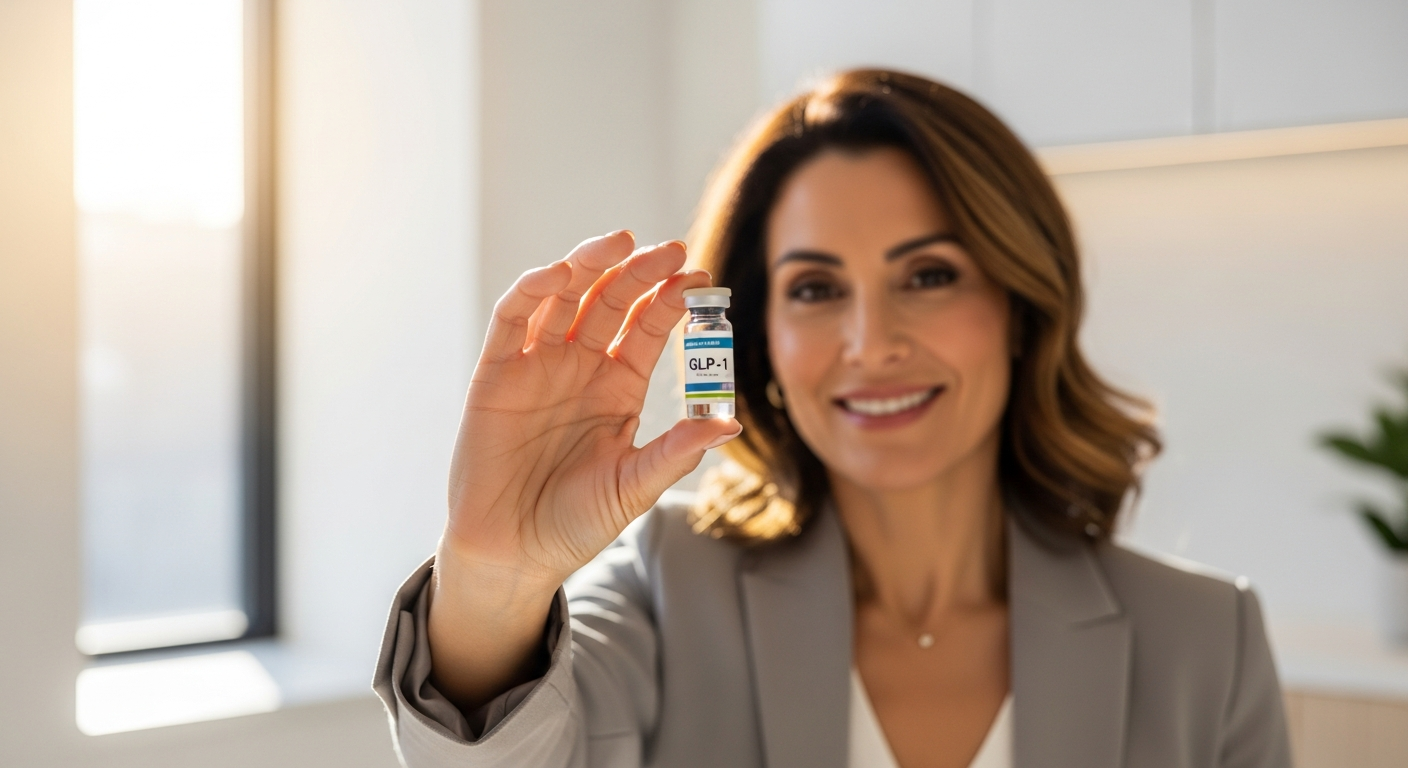
Discover how the SheMed GLP-1 Weight Loss Program delivers personalized, medically-supervised weight loss for women. Learn about eligibility, medication options, costs, and real outcomes—plus what to expect from their clinician-led support system.
Women over 40 face a metabolic reality that younger bodies rarely encounter: weight loss becomes exponentially harder, hormonal shifts complicate every effort, and generic diet programs simply don't work anymore. Your body has changed, and the strategies that worked at 25 won't deliver results at 45 or 55. This isn't failure—it's biology.
The SheMed GLP-1 Weight Loss Program represents a fundamental shift in how women access medically-supervised weight management. Rather than generic telehealth platforms, SheMed integrates FDA-approved GLP-1 medications like Semaglutide and Tirzepatide with mandatory health screening, monthly clinician consultations, and round-the-clock support specifically calibrated for women's health needs. The company's recent $50 million funding round and unicorn valuation ($1 billion) signal genuine market validation, not hype. Plans for U.S. nationwide expansion in Q4 2025 mean access is rapidly expanding.
This program goes beyond offering medications—it establishes a new standard for what women's health support actually looks like. Throughout this article, you'll discover what makes SheMed fundamentally different from competitors, how their eligibility screening protects your safety, which medications deliver superior outcomes, real results from current users, and whether the investment aligns with your life and budget.
Explore SheMed's female-focused GLP-1 program and start your assessment today.
Why Women Are Choosing SheMed Over Traditional Weight Loss Programs
Gender-specific design matters. Women's bodies respond differently to weight loss medications than men's, yet most GLP-1 programs treat them identically. SheMed was built explicitly for women's physiology—accounting for hormonal fluctuations, metabolic patterns unique to female biology, and the specific concerns women face during midlife transitions.
Clinical-grade oversight separates SheMed from direct-to-consumer competitors. A licensed clinician reviews your individual health profile, lab results, and medical history before determining eligibility. This isn't an algorithm making decisions; it's a qualified healthcare provider ensuring the medication matches your specific body and circumstances.
The outcomes validate the approach. Mounjaro users report 22.5% average body weight reduction, while Wegovy delivers up to 20.7%. These aren't outliers—they're the standard experience for women following SheMed's protocol. Beyond weight loss, users document improved energy, better sleep, reduced joint pain, clearer skin, and enhanced mood.
Convenience removes friction from the process. At-home blood tests eliminate trips to labs. Medications arrive at your door. Consultations happen via video from your home. Weekly check-ins keep you accountable without requiring time off work. For women juggling careers, family, and existing health obligations, this accessibility shifts everything.
Safety prioritization catches problems before they develop. The mandatory health screening identifies contraindications—thyroid cancer history, medullary thyroid carcinoma, severe kidney disease—that would make GLP-1 therapy dangerous. You're protected before you even start.
Market validation through rapid growth confirms genuine demand. SheMed raised $50 million and achieved unicorn status ($1 billion valuation) because women are choosing this program at scale. This isn't niche interest—it's a significant shift in how women access weight management support.
User testimonials consistently highlight professional staff, smooth technology platforms, and genuine results. These aren't fabricated endorsements; women publicly share their experiences and recommend SheMed to friends and family.
Understanding SheMed's Comprehensive Health Screening Process
The at-home blood test forms the foundation of SheMed's personalized approach. You receive a needle-free collection kit, complete it at home, and return it. Results come back within 5–7 business days. This test, valued at £100, comes free with enrollment—a significant advantage over programs requiring you to arrange and pay for baseline bloodwork separately.
Key biomarkers assessed include HbA1c (measuring blood sugar control), thyroid function (TSH and free T4), cholesterol panels (total, HDL, LDL, triglycerides), and liver function tests (AST, ALT, bilirubin). These markers reveal your metabolic baseline and identify conditions that would contraindicate GLP-1 therapy.
Personalization begins with your lab results. A clinician reviews your bloodwork alongside your medical history, current medications, and weight loss goals. If your HbA1c suggests prediabetes, that influences medication selection. If your thyroid function is abnormal, additional monitoring becomes standard. Your biology drives the treatment plan—not a standardized protocol applied to everyone.
The licensed clinician makes the final eligibility determination. They're not rubber-stamping applications; they're making clinical judgments about whether SheMed is safe and appropriate for your specific health profile. This gatekeeping prevents harm and ensures only suitable candidates proceed.
Baseline establishment creates a reference point for tracking progress. Beyond weight, your clinician documents energy levels, sleep quality, hunger patterns, and medication side effects. At subsequent consultations, you compare against this baseline, quantifying improvements beyond the scale.
Contraindication detection is the screening's critical safety function. Certain conditions make GLP-1 therapy inappropriate or dangerous. A thyroid cancer history, for instance, makes GLP-1s contraindicated due to increased risk of thyroid complications. The screening catches these before treatment begins.
Ongoing monitoring through regular blood work ensures medications remain safe and effective long-term. Your clinician may repeat thyroid panels after starting GLP-1s, checking liver function as doses escalate, or assessing kidney function if you have diabetes. This isn't a one-time check—it's continuous oversight.
Complete your eligibility assessment and access SheMed's comprehensive health screening.
Medication Options: Semaglutide (Wegovy) vs. Tirzepatide (Mounjaro)
Semaglutide (Wegovy) Mechanism and Delivery
Semaglutide functions as a GLP-1 receptor agonist, targeting the hormonal pathways controlling hunger and blood sugar. When you inject Wegovy weekly, it binds to GLP-1 receptors in your brain and gut, increasing satiety signals while slowing digestion. You eat less because you feel fuller longer, not through willpower or restriction.
Wegovy comes in two delivery forms: traditional injectable weekly doses and a newly licensed oral tablet. The injectable version has longer clinical history and slightly more robust weight loss data. The oral option appeals to needle-averse patients, though some find the tablet less effective than injections. Your clinician helps you choose based on your preferences and response.
Weight loss outcomes with Wegovy reach up to 20.7% body weight reduction over 68 weeks of treatment. For a 200-pound woman, that's approximately 41 pounds. Results improve with adherence and dose escalation; higher doses deliver better outcomes than lower maintenance doses.
Tirzepatide (Mounjaro) Dual-Mechanism Advantage
Tirzepatide operates as a dual GLP-1 and GIP receptor agonist. While Semaglutide activates one appetite-control pathway, Tirzepatide simultaneously activates two. This dual mechanism produces superior metabolic effects—increased satiety plus enhanced insulin sensitivity and glucose control.
The injection protocol involves weekly Mounjaro injections with dose escalation based on your tolerance and response. Most users start at 2.5mg weekly, increasing every four weeks to 5mg, 7.5mg, 10mg, 12.5mg, and potentially 15mg. Your clinician adjusts timing based on side effect tolerance and weight loss progress.
Mounjaro delivers superior outcomes, with 22.5% average body weight reduction outperforming single-mechanism medications. For the same 200-pound woman, that's 45 pounds—a meaningful difference attributable to Tirzepatide's dual mechanism. Not every person responds better to Mounjaro than Wegovy, but statistically, Mounjaro users see larger reductions.
Individual Response Variation
Your genetics, metabolism, and starting weight influence medication effectiveness. A woman with insulin resistance may respond more dramatically to Mounjaro's dual GLP-1/GIP activation than someone with normal insulin sensitivity. Someone starting at 280 pounds experiences different outcomes than someone starting at 200 pounds. Baseline metabolic health shapes the trajectory.
Side effect profiles differ slightly between medications. Wegovy users commonly report nausea, appetite suppression, and mild constipation. Mounjaro users experience similar side effects but occasionally report slightly more GI distress due to the dual mechanism. However, individual experiences vary widely—some women tolerate one medication perfectly while struggling with the other.
Your clinician may recommend starting with Wegovy if you're medication-sensitive, then escalating to Mounjaro if results plateau. Alternatively, they might recommend Mounjaro from the start if your baseline metabolic markers suggest you'd benefit from dual-mechanism therapy. The choice reflects clinical judgment applied to your specific profile.
The Real Cost of Commitment: SheMed Pricing Breakdown
Introductory and Standard Pricing
SheMed's introductory offer starts at £59 per month for the lowest Wegovy dose, typically requiring a 12-month commitment. This aggressive pricing captures new users who might otherwise hesitate about cost. After the introductory period, standard Wegovy costs range from £139–£239 monthly depending on dose escalation and supply duration.
Mounjaro pricing sits at £229–£319 monthly, reflecting its superior efficacy and dual-mechanism advantages. The higher cost reflects the better outcomes—Mounjaro users achieve 22.5% average weight loss versus Wegovy's 20.7%, making the additional expense statistically justified if you have the budget.
Included Services and Hidden Value
The free £100 blood test included with enrollment removes a barrier that some competitors exploit. That test is genuinely valuable; you'd pay separately at most other services. Initial clinician consultation, medication delivery, and app access are also included—not add-ons or premium features.
Monthly clinical touchpoints provide consultations without per-visit fees. Your clinician doesn't charge additional money for that monthly check-in; it's built into your membership cost. This contrasts sharply with traditional medicine where consultations add to expenses.
24/7 access to clinician guidance and side effect care packages represents significant value. When you experience nausea at midnight, you're not paying an emergency fee—you're accessing included support. The care packages containing remedies, hydration solutions, and comfort items have real costs that SheMed absorbs.
Long-Term Investment Reality
A 12-month Wegovy commitment at the introductory rate costs £708 (£59 × 12). At standard rates, expect £1,668–£2,868 annually. Mounjaro runs £2,748–£3,828 yearly. These aren't trivial amounts for most women, and they represent committed spending for an entire year minimum.
Compare against alternatives: gym memberships ($40–100 monthly), failed diet programs ($50–300 monthly), and weight loss supplements ($30–100 monthly). Most women spend substantial money on weight management already. SheMed redirects that spending toward a clinically validated approach with measurable outcomes.
The long-term cost-to-outcome ratio improves as you progress. A woman achieving 45-pound weight loss over 12 months through Mounjaro calculates to roughly £63 per pound lost—modest compared to surgical weight loss options costing £10,000–$25,000 with comparable results.
What Happens During Your First Month: The SheMed Experience
Days 1–3: Blood Test Completion
Upon enrollment, you receive the at-home blood test kit and complete it within the first few days. The needle-free collection process takes minutes. You return it via prepaid postage, and lab processing begins immediately.
Week 1: Clinical Review and Eligibility Determination
Your lab results return within 5–7 business days. A licensed clinician reviews your bloodwork alongside your medical history and health questionnaire. They assess contraindications, evaluate your metabolic baseline, and make the eligibility determination. Most women receive approval; those with contraindications learn why SheMed isn't appropriate and receive referrals to alternative approaches.
Week 2: Initial Consultation with Assigned Clinician
You connect with your assigned clinician—the same person you'll work with throughout your SheMed journey rather than rotating through different providers. This consultation covers your goals, expectations, lifestyle factors, and medication preferences. Your clinician recommends Wegovy or Mounjaro based on your profile, explains how the medication works, discusses realistic outcomes, and addresses concerns.
Week 3: First Medication Delivery and Training
Your first medication arrives at home. If you're receiving injectable Wegovy or Mounjaro, your clinician provides injection training via video—demonstrating technique, injection sites, and storage. If you're receiving oral Wegovy, you receive dosing instructions and guidance on timing with meals.
Week 4: First Weekly Check-in and Dose Assessment
Seven days after your first dose, you complete a check-in documenting how you tolerate the medication. Are you experiencing nausea? Appetite suppression? Energy changes? Digestive shifts? Your clinician reviews your responses and determines whether to maintain the current dose, escalate sooner, or implement side effect management strategies.
Ongoing Cadence and Dose Escalation
Weekly check-ins become standard through month three as doses escalate. Most protocols increase dosage every 4 weeks—starting at the lowest dose, then stepping up to progressively higher doses. This gradual escalation allows your body to adapt while maximizing weight loss results. Monthly full consultations replace weekly check-ins after month three, though weekly check-ins resume if you need additional support.
Side Effect Management and Documentation
Your clinician documents side effects, their severity, and timing. This data informs decisions about dose escalation timing. If week two brings intense nausea, your clinician might delay dose increase until week four. If you tolerate the dose beautifully, escalation proceeds as scheduled.
An app or portal tracks your progress—weight, measurements, energy levels, side effects, and clinician notes. This creates accountability and provides data your clinician uses to optimize your treatment.
Managing Side Effects With SheMed's 24/7 Support Infrastructure
Most Common Side Effects and Timeline
Nausea ranks as the most frequently reported side effect, peaking in weeks 1–3 as your body adjusts to the medication. Most women describe it as mild to moderate, manageable with dietary changes, though some experience more significant nausea. Reduced appetite represents the intended effect but sometimes feels excessive initially. Constipation occurs as digestion slows due to the medication. Mild fatigue occasionally emerges, usually resolving by week three.
Most adjustment symptoms peak in week 2–3, then subside significantly as your body adapts. By week 4–6, many women report the initial side effect storm has passed and they've entered a comfortable equilibrium where appetite suppression feels manageable rather than overwhelming.
24/7 Clinician Accessibility
You're never troubleshooting alone at 2 a.m. when nausea hits or you're panicking about an unexpected symptom. SheMed's round-the-clock support means messaging your clinician anytime, with response within hours rather than business days. This accessibility reduces anxiety and ensures problems get addressed quickly rather than festering into reasons for discontinuation.
Side effect care packages arrive at your home containing remedies, hydration solutions, and comfort items specifically chosen to help you navigate adjustment symptoms. These aren't marketing gestures—they're thoughtfully curated tools.
Dietary Adjustments and Medication Timing
Your clinician provides meal timing and composition guidance to minimize nausea and GI distress. Some women find eating smaller, more frequent meals helps. Others do better with specific food types—bland proteins, simple carbohydrates, and hydrating foods—rather than rich or fatty options. Timing medication at night versus morning sometimes reduces daytime nausea. Your clinician personalizes these strategies based on your response.
When to take your injection or tablet matters. Some women find evening injections allow them to sleep through peak nausea. Others prefer morning doses to monitor symptoms during waking hours. Your clinician guides this timing optimization.
Dose Adjustment Protocols
If side effects become intolerable, your clinician can reduce dose temporarily, delay escalation, or implement other management strategies before considering discontinuation. Most side effects resolve without dose reduction; your body simply needs more adaptation time. However, if nausea persists severely or other side effects become unbearable despite management strategies, dose reduction or medication switching remains an option.
Long-Term Tolerance and Psychological Support
Most women report side effects diminish significantly after month 2–3. The nausea that felt overwhelming in week two becomes a minor annoyance by week six. Your body adapts, tolerance builds, and the medication becomes part of your routine rather than a constant adjustment.
Beyond physical side effects, psychological support matters. Your hunger cues change dramatically—you might lose interest in foods you previously loved or feel weird eating so little. Your body image shifts as weight drops. Your identity transforms as food occupies less mental space. Your clinician addresses these psychological adjustments through conversation and validation, recognizing that sustainable weight loss involves mental and emotional shifts alongside physical changes.
Eligibility Requirements and Who Shouldn't Use SheMed
Basic Age and BMI Considerations
You must be 18 years or older with no upper age limit. In fact, women 60+ often experience excellent results because they're frequently more committed to the process and have better side effect tolerance than younger women. Age alone never disqualifies you.
BMI considerations typically place GLP-1s in the recommended category for BMI ≥27 with weight-related conditions (prediabetes, hypertension, sleep apnea) or BMI ≥30 regardless of comorbidities. Your clinician determines your specific threshold based on your health profile.
Medical Disqualifiers
Personal or family history of medullary thyroid carcinoma (MTC) or C-cell thyroid tumors is an absolute contraindication. GLP-1s carry a theoretical risk of thyroid cancer, making this history incompatible with the medication. Severe pancreatitis history also contraindicates GLP-1s.
Severe kidney disease (eGFR <15) typically contraindicates GLP-1s due to concerns about medication clearance. Moderate kidney disease might be manageable with closer monitoring, but your clinician makes this determination.
Medication Interactions and Mental Health Screening
Certain diabetes medications, particularly sulfonylureas, interact with GLP-1s and require monitoring or adjustment. Some blood pressure medications need dose reduction as GLP-1s can lower blood pressure. Your clinician reviews all current medications and screens for problematic interactions.
Mental health screening assesses for eating disorders or disordered eating patterns that could be exacerbated by appetite suppression. If you have a history of anorexia, bulimia, or binge eating disorder, GLP-1s may not be appropriate, or they might require specialized monitoring. Your clinician makes this determination through careful questioning and professional judgment.
Pregnancy and Lifestyle Commitment
You cannot be pregnant or breastfeeding while taking GLP-1s. The medications haven't been adequately studied in pregnancy, and they cross into breast milk. Women of childbearing age must use reliable contraception during treatment.
Realistic expectations matter for eligibility. You must understand that medication is a tool, not a magic solution. Without nutritional awareness, movement, and sleep prioritization, weight loss stalls or reverses. Your clinician assesses whether you're genuinely ready to make lifestyle changes alongside medication use.
Genuine readiness for 12-month minimum enrollment prevents cancellation regrets. If you're testing whether you might want to stop after a month or two, you're not a good candidate for the commitment structure. Your clinician explores your motivation and timeline expectations.
Geographic Availability
SheMed currently operates in the UK. U.S. nationwide expansion launches in Q4 2025. If you're outside these regions, the program currently isn't accessible. As expansion occurs, eligibility expands accordingly.
SheMed vs. Competitors: How This Program Stands Apart
Female-centric design represents SheMed's foundational difference. The program was built explicitly for women's bodies, concerns, and lived experiences. Competitors typically offer generic GLP-1 programs available to anyone. SheMed's clinical team, support systems, and educational content all reflect deep understanding of women's health specifically.
Mandatory health screening through at-home blood work sets a safety standard competitors don't match. Many direct-to-consumer GLP-1 services skip comprehensive baseline testing or require you to arrange it separately. SheMed includes it automatically, protecting you from hidden contraindications.
Clinician continuity throughout your journey differs from competitors who rotate you through different providers. You build a relationship with your assigned clinician; they understand your specific response patterns, health history, and personality. This continuity enables better optimization than transactional interactions with rotating doctors.
Support infrastructure with 24/7 access and side effect care packages exceeds what most direct-to-consumer programs offer. You're not left googling symptoms at midnight or waiting until Monday for clinician response. SheMed's commitment to accessible support reflects their clinical philosophy.
Medication flexibility offering both Wegovy and Mounjaro distinguishes SheMed from competitors limited to one option. If your response to Wegovy plateaus, your clinician can switch to Mounjaro without leaving the program. Competitors often require you to transfer to a different service for medication changes.
Pricing transparency publishing clear costs upfront contrasts with competitors hiding fees until checkout. You know exactly what you'll pay monthly and annually. No surprise charges emerge later; you make informed decisions with complete information.
Clinical outcomes matching or exceeding competitor averages validate SheMed's approach. The 22.5% weight loss on Mounjaro ranks among the best published results for GLP-1 therapy. Competitors making similar claims often don't match SheMed's evidence.
Funding and financial stability through $1 billion valuation and $50 million funding round signal long-term viability. Competitors funded from smaller rounds carry greater discontinuation risk. SheMed's capitalization suggests they'll be operating in five years, honoring long-term commitments.
User experience reflected in reviews highlighting smooth technology, professional staff, and efficient processes indicates genuine operational excellence. Competitors receiving complaints about billing, customer service, and app functionality suggest different operational priorities.
Expansion trajectory with U.S. nationwide launch in Q4 2025 demonstrates confidence and scalability. Competitors remaining regional or limited in scope face geographic constraints. SheMed's aggressive expansion reflects successful UK operations and venture confidence.
Real Results: What Women Are Actually Experiencing on SheMed
Weight loss benchmarks show Mounjaro users averaging 22.5% body weight reduction and Wegovy users achieving up to 20.7%. These aren't theoretical maximums—they're the standard experience for women completing SheMed's protocol. A 200-pound woman on Mounjaro realistically expects 45-pound weight loss. A 200-pound woman on Wegovy anticipates 41 pounds.
Timeline expectations demonstrate noticeable changes within 2–4 weeks and visible weight loss by week 8–12. You won't wake up on day eight dramatically transformed, but subtle shifts emerge—looser clothing, slightly lower scale readings, comments from people who see you regularly. By week 12, changes become obvious to everyone.
Non-scale victories often matter more than the number on the scale. Women report improved energy allowing them to keep up with children or grandchildren without exhaustion. Better sleep transforms their daily experience. Reduced joint pain makes movement enjoyable rather than painful. Clearer skin reflects improved metabolic function. Enhanced mood accompanies weight loss, often attributed to increased movement capacity and improved body image.
Metabolic improvements complement weight loss. HbA1c reductions indicate improving blood sugar control. Cholesterol panels improve as weight drops. Blood pressure normalizes, sometimes allowing medication reduction. Women returning to clinician check-ins discover their lab work has transformed alongside their weight.
Sustainability factor operates through GLP-1-induced appetite suppression making calorie restriction feel effortless rather than restrictive. You're not white-knuckling through hunger; you genuinely feel less hungry. Overeating becomes physically uncomfortable. This biological shift creates sustainable weight loss because you're not fighting constant deprivation.
Body composition shifts concentrate fat loss in problem areas rather than distributed proportionally. Many women notice weight loss first in their face and upper body, then midsection and thighs. The distribution varies individually, but most report losing weight from places they most wanted to lose it.
Plateau management by clinicians adjusting doses or considering medication switches overcomes the common month 4–6 plateau where weight loss stalls. Rather than assuming you've hit your limit, your clinician proactively addresses plateaus through optimization, preventing them from becoming reasons for discontinuation.
Long-term adherence with most women staying enrolled beyond their initial 12-month commitment suggests results justify investment. Women aren't quitting at month 13 when commitment ends; they're renewing because results continue and they fear regaining weight if they stop.
Psychological transformation accompanying weight loss includes confidence boosts, improved body image, and mental health improvements. Women describe feeling seen again—like their bodies match how they feel internally. This psychological shift often exceeds the importance of the actual weight loss number.
Navigating Potential Drawbacks and Setting Realistic Expectations
Cost barrier at £1,668–£3,828 annually places SheMed out of reach for budget-conscious patients. This isn't inexpensive healthcare; it's premium healthcare with a price tag to match. Financial accessibility remains a legitimate concern for many women who would benefit but can't afford it.
Commitment lock-in with 12-month minimum creates financial obligation even if side effects become unbearable or circumstances change. You're contractually committed for the year. While clinicians may discuss early termination in genuine hardship situations, the expectation is 12-month adherence.
Cancellation friction where some users report difficulty canceling subscriptions or billing issues after termination represents a real concern. While not universal, some women have experienced frustration with termination processes or surprise charges after cancellation. This administrative friction contrasts with SheMed's otherwise professional operations.
Medication dependency means weight often returns if you stop GLP-1s without lasting lifestyle changes. The medication isn't a permanent cure; it's a tool enabling weight loss while you rebuild eating patterns and movement habits. If you don't make psychological and behavioral shifts, weight rebounds when you discontinue medication.
Supply chain risks from Mounjaro or Wegovy shortages disrupt treatment—an industry-wide issue not unique to SheMed. Manufacturing constraints, regulatory issues, or increased demand can limit medication availability. You might experience delays or temporary medication switches despite clinician preferences.
Side effect severity occasionally proves unbearable for individual women. Most tolerate side effects well, but some experience persistent nausea, severe constipation, or GI issues requiring discontinuation. Medication responsiveness varies individually; an option that works beautifully for 90% of users might not work for you.
Appetite suppression challenges some women psychologically. The loss of interest in food they previously loved feels like loss. The lack of hunger feels abnormal. The struggle to eat adequate nutrition despite diminished appetite creates psychological friction. Your clinician can help navigate this, but it's a real psychological adjustment for some.
Insurance coverage gaps mean out-of-pocket costs with no financial assistance if insurance doesn't cover GLP-1s for weight loss. Many insurance plans cover GLP-1s only for diabetes treatment, not weight management. You're responsible for the entire cost unless your insurance explicitly covers weight loss indication.
Lifestyle expectations require that medication alone won't deliver results. You need nutrition awareness, regular movement, and sleep prioritization. The medication suppresses appetite and supports weight loss, but behavioral changes create sustainable results. Women expecting medication to work without any lifestyle adjustment experience disappointment.
Long-term safety data shows GLP-1s have decades of use in diabetes treatment, but long-term weight loss safety data still accumulates. The medications are FDA-approved and MHRA-licensed, indicating rigorous safety vetting. However, 5–10 year safety data on weight loss specifically remains limited since GLP-1s for weight loss represent relatively recent applications.
Preparing for Your SheMed Journey: A Pre-Enrollment Checklist
Financial and Medical Preparation
Financial readiness requires confirming you can sustain £139–£319 monthly for 12+ months without financial strain. Calculate your realistic monthly budget and ensure SheMed fits comfortably. If you're stretching finances to afford it, financial stress may undermine results.
Medical records gathering involves compiling complete health history, current medications, dosages, past surgeries, and known allergies. Your clinician needs this information for thorough review. Having it organized saves time during the initial consultation.
Baseline Measurements and Goal Setting
Baseline measurements including weight, progress photos, and current energy and hunger patterns create a reference point for tracking progress. Weigh yourself on a consistent scale, in consistent conditions (same time of day, similar clothing). Take photos from multiple angles in consistent lighting. Note your typical hunger signals, eating patterns, and energy levels.
Realistic goal setting defines success beyond the number on the scale. If you achieve 30-pound weight loss but gain energy and reduce joint pain, that's success—even if your goal was 45 pounds. Women experiencing the most satisfaction set outcomes including energy improvements, clothing size changes, and biomarker improvements alongside weight loss numbers.
Lifestyle Audit and Support System
Lifestyle audit assessing current diet, exercise routine, sleep quality, and stress levels informs your baseline. Understanding your current patterns helps your clinician recommend specific changes. If you're sleeping four hours nightly, that's addressed before medication starts. If your diet consists primarily of processed foods, that's a starting point for nutrition education.
Support system activation means informing family and friends of your commitment. Their encouragement matters during adjustment periods. Partners who understand why you're experiencing appetite suppression and side effects provide better support than partners surprised by changes. Family members aware of your goals can support your commitment.
Schedule Flexibility and Mindset Preparation
Schedule flexibility ensuring you can attend weekly check-ins and monthly consultations of 15–30 minutes each matters for adherence. These aren't one-time appointments; they're ongoing commitments. If your work schedule doesn't allow 15–30 minutes weekly, you'll struggle with engagement.
Mindset preparation accepting side effects are temporary, results take time, and this is a marathon rather than sprint prevents early discontinuation. Women entering with realistic expectations about week two nausea handle it better than women expecting immediate comfort. Understanding that plateau management requires patience prevents panic during normal weight loss variations.
Questions Documentation and Alternative Research
Questions documentation listing concerns about medications, side effects, and eligibility prepare you for initial consultation. Writing questions ensures you remember them and don't overlook important concerns. Your clinician welcomes thorough questioning; it indicates genuine engagement.
Alternative research exploring competitors and other GLP-1 programs confirms SheMed aligns with your needs. You're making a significant financial commitment; understanding your options and selecting SheMed deliberately rather than by default increases satisfaction and commitment.
The SheMed Difference: Your Path to Sustainable Weight Loss Starts Here
The SheMed GLP-1 Weight Loss Program operates fundamentally differently than typical telehealth services offering quick medication prescriptions. Every component reflects genuine commitment to supporting women's sustainable weight loss. From mandatory blood work catching hidden contraindications to 24/7 clinician support handling your 3 a.m. nausea concerns, the program demonstrates that women's health requires intentional, rigorous clinical infrastructure.
The outcomes speak definitively. Twenty-two point five percent average body weight reduction with Mounjaro represents the gold standard among GLP-1 programs. Professional medical oversight prevents the complications and regrets that emerge from unregulated or minimally supervised medication use. The support infrastructure—weekly check-ins, monthly consultations, side effect care packages, round-the-clock access—actually answers when you need help rather than directing you to FAQ pages.
The investment is substantial. £1,668 to £3,828 annually demands serious financial commitment. The 12-month minimum requires genuine readiness, not casual experimentation. The lifestyle changes remain necessary; medication is a tool, not a substitute for personal accountability. These requirements filter for women genuinely ready to prioritize their health rather than seeking effortless transformation.
For women tired of generic solutions that ignore female biology, frustrated by one-size-fits-all approaches that don't work, and ready to invest in their health with clinical precision, SheMed delivers results that most competitors promise but rarely execute. The $1 billion valuation and $50 million funding reflect genuine market demand from satisfied users, not marketing hype. The expansion into U.S. nationwide markets beginning Q4 2025 indicates SheMed's confidence in their clinical model and operational excellence.
Your next step begins with understanding your eligibility. Review the requirements, gather medical records, assess financial readiness, and honestly evaluate your commitment level. Schedule an initial consultation with SheMed's team. A clinician will review your health profile, discuss medications, address concerns, and determine whether SheMed aligns with your specific needs. Some women will qualify immediately; others may discover underlying conditions requiring different approaches. Either way, you'll have clarity about whether this program matches your circumstances.
Thousands of women are already experiencing the results that $1 billion in venture funding validates. If you're ready to invest in your health with clinical precision, professional support, and evidence-based medications specifically calibrated for women's bodies, SheMed represents your path forward.
Begin your SheMed assessment and discover your personalized weight loss pathway today.