
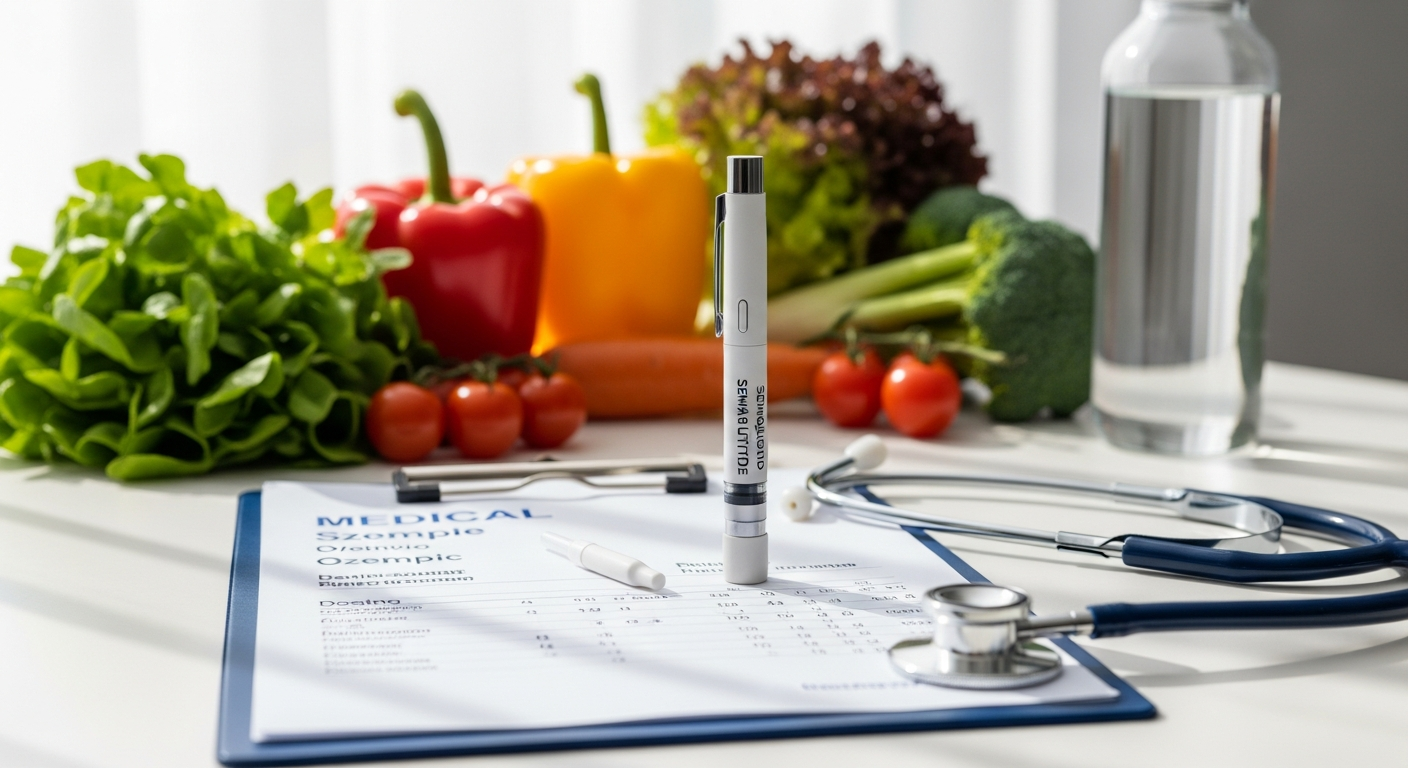
Discover how semaglutide injections work for weight loss, understand dosing schedules, manage side effects, and learn what realistic results look like. Complete guide to Wegovy treatment.
Semaglutide Weight Loss Injections: A Complete Guide to Wegovy Treatment
Around 67% of UK adults are now classified as overweight or obese, yet many struggle to find weight loss solutions that actually work. The frustration is real—restrictive diets fail, gym memberships gather dust, and the pounds refuse to budge. You're not alone in this struggle, and the barrier often isn't willpower; it's biology itself.
Semaglutide—the active ingredient in Wegovy—represents a significant shift in how we treat obesity by working at a biological level to regulate appetite and food cravings. Rather than fighting against your body's natural hunger signals, this medication rewires them. Studies show users can lose up to 21% of their body weight when combined with reduced-calorie diet and increased physical activity, a result that far exceeds traditional weight loss methods.
This guide walks you through everything you need to know about semaglutide injections—from how the dosing schedule works to what side effects you might encounter and what genuine weight loss outcomes look like. You'll discover practical strategies for managing the injection itself and maximizing your results through lifestyle integration.
Start your semaglutide consultation with The Independent Pharmacy today.
How Semaglutide Works: Understanding the GLP-1 Mechanism
The science behind GLP-1 receptor agonists and appetite suppression
Semaglutide belongs to a class of medications called glucagon-like peptide-1 (GLP-1) receptor agonists. This technical name describes a straightforward biological action: the drug mimics a hormone your body naturally produces. GLP-1 normally activates when you eat, signaling your brain that you're satisfied. It slows stomach emptying, reduces hunger hormones, and increases feelings of fullness.
Semaglutide supercharges this natural process. By activating GLP-1 receptors throughout your body, it creates a more powerful appetite-suppressing effect than your body produces on its own. The result is that food cravings diminish, portions feel excessive, and you naturally consume fewer calories without constant willpower battles.
How semaglutide mimics natural hormones to regulate blood sugar and hunger signals
Your body maintains hunger through a complex interplay of hormones. Ghrelin—the "hunger hormone"—increases when your stomach is empty. Leptin—the "satiety hormone"—signals fullness when fat stores are adequate. In obesity, this system often malfunctions. Leptin resistance develops, meaning your brain doesn't register fullness properly despite adequate fat stores, and ghrelin remains elevated, constantly triggering hunger signals.
Semaglutide recalibrates these signals. Beyond appetite suppression, it also improves insulin sensitivity and helps regulate blood sugar levels. This dual action means you're not just eating less; you're also stabilizing the hormonal environment that previously drove overeating. Many users report that food simply loses its psychological grip—snacking urges fade, emotional eating patterns break, and portion control becomes effortless rather than exhausting.
The difference between semaglutide's mechanism and traditional weight loss medications
Previous weight loss medications typically worked through stimulation—increasing metabolism or energy output. Semaglutide takes the opposite approach. Rather than forcing your body to work harder, it aligns your internal signals with your weight loss goals. This fundamental difference explains why users experience such dramatic results without the jitteriness, anxiety, or cardiovascular strain associated with older appetite suppressants.
Traditional diet pills often felt like fighting biology. Semaglutide feels like biology finally working with you rather than against you. Users consistently report that the medication makes weight loss feel sustainable rather than punishing, which is why adherence rates remain high and long-term results are measurable.
Wegovy Dosing Schedules: Finding Your Optimal Treatment Level
Starting dose protocols: beginning at 0.25mg and titration schedules
Your semaglutide journey begins conservatively. The standard starting dose is 0.25mg, administered as a once-weekly injection. This low initial dose accomplishes two things: it allows your body to adjust to the medication's effects, and it minimizes gastrointestinal side effects during the adaptation period.
You'll maintain 0.25mg for your first four weeks. During this time, you'll likely notice reduced hunger and increased fullness after meals. Some users report mild nausea, which typically subsides within a few days as your body acclimates.
Weekly progression from 0.25mg through 7.2mg maximum dose
After four weeks at 0.25mg, your dose increases to 0.5mg for another four weeks. This gradual titration continues: 1.0mg in week 5-8, 1.7mg in week 9-12, 2.4mg in week 13-16, and potentially up to the maximum of 7.2mg depending on your response and tolerance.
Not every user reaches 7.2mg, nor does everyone need to. Your doctor will assess your weight loss progress, side effect tolerance, and overall response at each four-week interval. Some patients achieve their target weight loss at 2.4mg and remain there indefinitely. Others progress to higher doses for more aggressive results.
How dosage adjustments impact weight loss results and side effect management
Higher doses typically produce more significant weight loss results, with most dramatic reductions occurring at 2.4mg and above. However, higher doses also correlate with more pronounced side effects, particularly gastrointestinal discomfort. Your doctor's titration strategy balances these factors, seeking the sweet spot where weight loss is maximized without compromising your quality of life.
Interestingly, weight loss doesn't simply increase proportionally with dose. Many patients notice that results plateau once they reach their personal optimal dose. Continuing to increase beyond that point adds side effects without additional weight loss benefit. This is why individual dosing protocols matter—your ideal dose reflects your unique biology, not a one-size-fits-all standard.
Managing Common and Serious Side Effects
Gastrointestinal side effects: nausea, vomiting, diarrhea, and constipation
Gastrointestinal effects represent the most frequent side effects users encounter. Nausea affects approximately 25-40% of users, particularly during the initial four weeks and when doses increase. The sensation typically emerges within hours of injection and subsides within 2-3 days. Most users describe it as mild queasiness rather than severe nausea, and many report that eating smaller, protein-rich meals reduces the symptom considerably.
Vomiting is less common than nausea, occurring in roughly 5-10% of users. Diarrhea and constipation can occur unpredictably—some patients experience diarrhea initially, then constipation weeks later. These effects generally improve within the first 4-8 weeks as your digestive system adjusts to semaglutide's effects on stomach emptying.
Why GI issues are most common during dose escalation periods
Your gastrointestinal system experiences the most disruption when doses increase. When you move from 0.25mg to 0.5mg, your gut must recalibrate to handle stronger GLP-1 signaling. This is why side effects often spike in the week following a dose increase, then improve by week three of the new dose level.
The nausea and digestive changes occur because semaglutide slows how quickly food moves through your stomach and intestines. Higher doses amplify this effect. Your body gradually adapts to this new pace, which is why most side effects prove temporary rather than permanent.
Strategies to minimize nausea and digestive discomfort
Practical approaches reduce side effect severity significantly. Eating smaller, frequent meals prevents overwhelming your slower-digesting system. Prioritizing protein and healthy fats while minimizing high-fat, greasy, or overly sweet foods reduces nausea. Staying hydrated aids digestion and reduces queasiness.
Timing matters too. Taking semaglutide on Friday evening means GI effects primarily occur over the weekend when you're less likely to have work commitments. Ginger supplements, peppermint tea, and over-the-counter anti-nausea medications provide additional relief. Most importantly, these effects are temporary—they almost never persist beyond 8 weeks into your treatment plan.
Discover personalized dosing strategies through The Independent Pharmacy's clinical consultations.
Real Weight Loss Results: What to Expect in Your First Year
Clinical data showing up to 21% body weight reduction with semaglutide
Clinical trials demonstrate that semaglutide delivers measurable, substantial results. Across multiple studies, patients receiving semaglutide combined with diet and exercise lost an average of 15-21% of their body weight over 68 weeks. To put this in perspective, someone weighing 100kg could realistically lose 15-21kg. These aren't marginal improvements—they're transformative changes.
The comparison context amplifies the significance. Traditional dietary interventions alone produce 2-3% weight loss. Exercise-only programs average 3-5% loss. Older weight loss medications achieved perhaps 5-10%. Semaglutide represents a genuine leap forward in efficacy.
Realistic timelines for noticing weight loss changes
Patience matters here. Most users don't notice weight changes in the first two weeks. By week 4-6, many report that clothes fit slightly differently or the scale shows modest reductions (1-3kg). Significant, visible weight loss typically becomes apparent around week 12-16 when you've experienced 5-8kg of loss.
Months 4-6 bring more dramatic changes. This is when friends and family begin commenting, when you need new clothes, and when the psychological impact becomes profound. The most aggressive weight loss typically occurs between months 3-9, then plateaus as you approach your body's set point.
Individual variation factors: metabolism, diet adherence, and exercise
Not everyone loses weight at identical rates. Your individual metabolic rate, age, starting weight, and genetic factors influence results. Someone with a slower metabolism might lose 12% over a year, while someone with a faster metabolism could achieve 21% loss in the same timeframe.
Diet adherence creates the largest variable. Semaglutide suppresses appetite, but you must still choose nutritious foods and maintain a calorie deficit. Users who carefully track intake and prioritize protein consistently achieve better results than those who passively eat less without intentional dietary choices. Similarly, adding exercise—particularly resistance training—accelerates results and improves body composition. Weight loss with exercise tends to be leaner, preserving more muscle mass than weight loss from medication and diet alone.
The Self-Injection Process: Technique and Practical Tips
Pre-filled FlexTouch pen design and ease of use
Wegovy comes in a pre-filled, disposable FlexTouch pen designed for simplicity. The device resembles a large marker and contains your weekly dose pre-measured and ready to inject. You don't mix solutions, measure volumes, or manipulate vials—you simply press a button and the injection occurs.
The needle is fine-gauge, meaning the injection itself causes minimal discomfort. Many users report that they barely feel the needle entering the skin. The entire injection process takes less than 10 seconds, making it far simpler than many imagine.
Step-by-step injection technique for beginners
Begin by removing your pen from the refrigerator 15-30 minutes before injection, allowing it to reach room temperature. Cold medication can be more uncomfortable to inject. Examine the pen to confirm it contains clear, colorless solution—if it's cloudy or discolored, don't use it.
Select your injection site and gently clean the area with an alcohol wipe. Hold the pen firmly and place the needle against your skin at a 90-degree angle. Press the activation button fully and hold for 3 seconds to ensure the full dose is delivered. Remove the pen and gently apply pressure to the injection site. You can massage the area lightly to distribute the medication.
Most users inject into the abdomen, thigh, or upper arm. These areas have sufficient subcutaneous fat to accommodate the injection comfortably and consistently absorb the medication effectively.
Choosing injection sites and rotating locations to prevent lipodystrophy
Rotating injection sites prevents lipodystrophy—the development of fatty lumps or dimpled areas that occur when you inject repeatedly into identical spots. Over several months or years of injections, using the same site can damage fat tissue and create visible deformities.
Create a rotation schedule: inject abdomen one week, right thigh the next, left arm the third week, left thigh the fourth. Within each region, vary the exact location slightly. This systematic approach prevents both lipodystrophy and injection site reactions.
Combining Semaglutide with Diet and Exercise for Maximum Impact
Why medication alone isn't sufficient for optimal results
Semaglutide suppresses appetite and improves satiety, but it doesn't force weight loss independently. You still require a calorie deficit—eating fewer calories than you burn. The medication makes that deficit achievable by reducing hunger and cravings, but you must capitalize on that biological advantage through intentional food choices.
Users who take semaglutide but continue eating excess calories will lose weight slowly or not at all. Those who combine medication with genuine dietary changes achieve the transformative 15-21% weight loss demonstrated in clinical trials. The medication is the catalyst, but your dietary decisions are the accelerant.
Calorie reduction strategies that work alongside semaglutide
Begin by establishing a moderate calorie deficit rather than attempting extreme restriction. A 500-calorie daily deficit—consuming 500 fewer calories than your maintenance level—typically produces 0.5kg weekly weight loss without creating unsustainable hunger or energy depletion.
Semaglutide naturally facilitates this deficit. Reduced portions satisfy you. Snack cravings diminish, eliminating 200-300 calories automatically. You genuinely want less food, which makes the calorie reduction feel sustainable rather than punishing.
Track your intake initially to understand actual consumption versus perceived consumption. Many people underestimate their calorie intake significantly. After several weeks of tracking, you'll develop intuition about portions and can estimate without meticulous counting.
Nutrition adjustments: protein intake, meal timing, and food choices
Prioritize protein across all meals. Aim for 25-35g of protein at breakfast, lunch, and dinner. Protein triggers the strongest satiety signals and preserves muscle mass during weight loss. A chicken breast with vegetables feels more satisfying with semaglutide than pasta, allowing you to consume fewer overall calories while feeling adequately full.
Meal timing provides less importance than previously believed, but many semaglutide users find success with three structured meals rather than six small meals. With semaglutide's appetite suppression, eating frequently throughout the day often means forcing down food you don't want. Three satisfying meals spaced 4-6 hours apart aligns better with semaglutide's effects.
Focus on whole foods: vegetables, lean proteins, whole grains, and healthy fats. Ultra-processed foods often trigger digestive discomfort with semaglutide and provide less satiety per calorie. Many users find that as their appetite decreases, they naturally gravitate toward nutritious choices because they're selecting only foods that truly appeal to them.
Taking the Next Step: Your Semaglutide Success Starts Here
Semaglutide injections represent a genuinely transformative option for individuals struggling with obesity and weight-related health conditions. The science is compelling—up to 21% body weight reduction is achievable—and the once-weekly injection format removes the burden of daily medication adherence. The clinical evidence speaks clearly: this medication works.
Yet here's what truly matters: the medication itself is only one piece of your success puzzle. Your results depend on three interconnected factors working together. First, consistent weekly injections at your prescribed dose, administered exactly as directed. Second, meaningful dietary changes that capitalize on your reduced appetite—not restrictive starvation, but intentional nutrition choices. Third, physical activity that builds strength and metabolic resilience, transforming not just your weight but your physical capability.
The Independent Pharmacy streamlines access through discreet online consultations and clinical support, making treatment genuinely accessible for UK residents seeking private solutions. Your consultation determines whether semaglutide aligns with your health profile, medical history, and weight loss goals. No judgment. No shame. Simply healthcare that meets you where you are.
Weight loss is possible. Real, sustainable, health-transforming weight loss. Semaglutide can be your catalyst, but your dedication becomes the fuel. The science supports your success. The medication removes biological barriers. Now the choice becomes yours.