
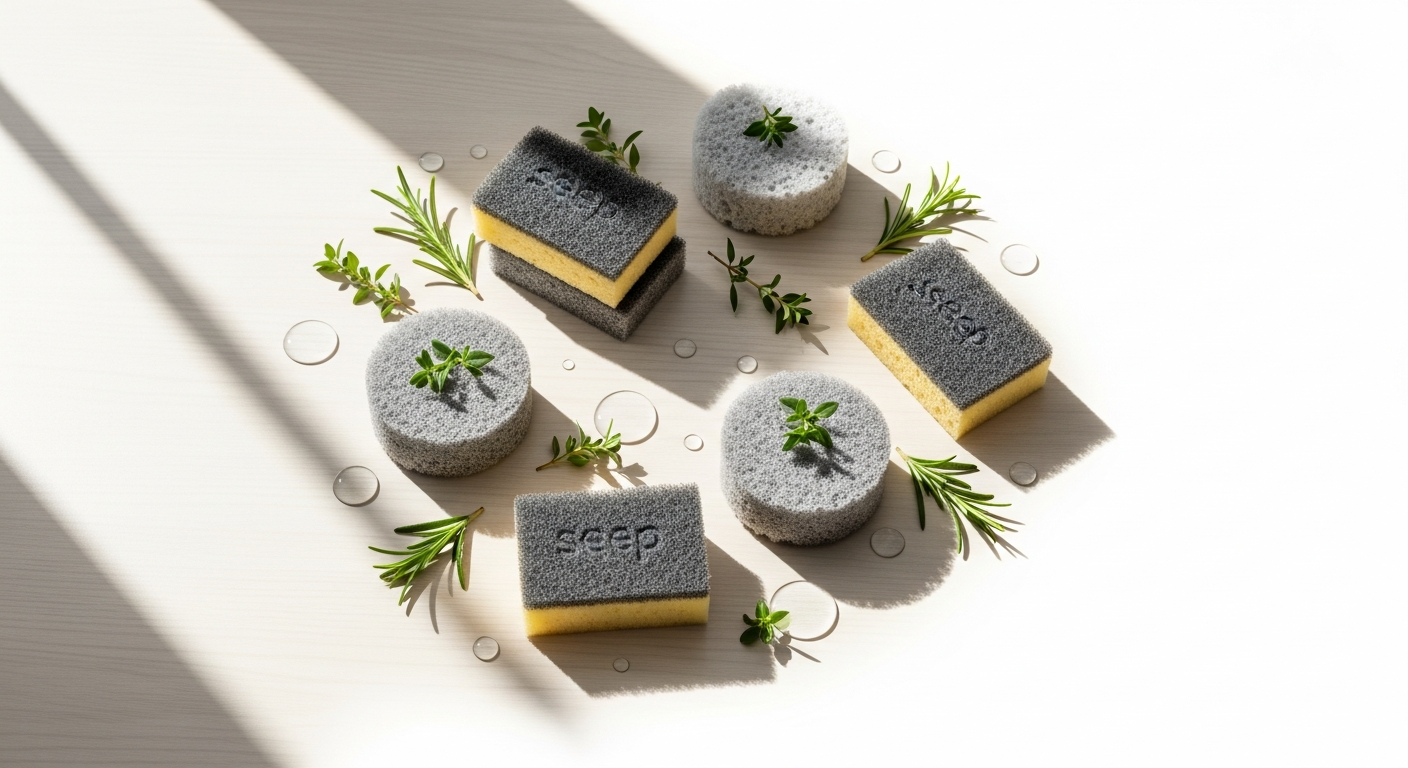
Discover how Seep Eco Sponge Scourers deliver powerful, plastic-free cleaning without environmental guilt. Learn why these compostable scourers are winning over eco-conscious households with performance that matches traditional alternatives.
Every year, 141 billion plastic-based cleaning products end up in landfills, yet most households never pause to consider what happens after that grimy sponge gets tossed away. The materials we use for everyday tasks accumulate silently—in oceans, in soil, in the bodies of marine life—while we reach for the next disposable option without thinking twice.
The Seep Eco Sponge Scourers represent a practical shift in how we approach household cleaning. Built from cellulose and loofah rather than synthetic polymers, these scourers tackle the real problem: the gap between convenience and environmental responsibility. They prove that sustainable doesn't mean settling for less performance.
Discover the full range of Seep Eco Sponge Scourers and start your plastic-free cleaning journey today. This guide examines what makes these scourers genuinely different, from their plant-based construction to their performance in real kitchens, and whether they justify the investment for your home.
The Plant-Based Engineering Behind Seep Eco Sponge Scourers
Natural Cellulose: Renewable and Biodegradable
The sponge component of Seep scourers uses cellulose derived from renewable wood pulp rather than petroleum-based synthetics. This material biodegrades within 60-90 days in composting conditions, breaking down into harmless organic matter instead of persisting in landfills for centuries. The cellulose absorbs water effectively and releases it without requiring chemical surfactants to manage oily residue, making it both functional and genuinely compostable.
Loofah Scouring Surface: Nature's Abrasive
The scouring component comes from loofah, a natural plant fiber with inherent abrasive properties. Unlike synthetic scrubbing materials made from polyurethane or other polymers, loofah naturally wears down as you use it—a feature that actually signals environmental benefit rather than product failure. Its gentle abrasiveness handles stubborn, charred food residue without scratching delicate non-stick surfaces, ceramic, or glass cookware.
Zero Synthetic Materials, Zero Microplastics
Seep scourers contain no polyurethane, no petroleum-based compounds, and no synthetic polymers. This means they don't shed microplastics during use or decomposition. When conventional plastic sponges break down—whether in your home, at sea, or in landfills—they fragment into microplastics that contaminate waterways and enter the food chain. Seep's plant-based design eliminates this cycle entirely.
Breaking Down the Environmental Impact of Choosing Plastic-Free Alternatives
The difference between a Seep scourer and a conventional plastic sponge extends far beyond the moment you use them. A traditional plastic sponge persists in the environment for over 500 years, slowly fragmenting into increasingly smaller pieces of pollution. A Seep scourer breaks down naturally in 2-3 months under composting conditions, returning to soil without leaving behind any synthetic residue.
The energy required to produce plant-based materials is significantly lower than manufacturing synthetic polymers, which rely on fossil fuel extraction, refining, and polymerization processes. By choosing compostable scourers, you're reducing the carbon footprint associated with your household cleaning—a compounding benefit across the years you use them.
Real-World Cleaning Performance: Matching and Beating Traditional Sponges
Performance anxieties often hold people back from switching to eco-friendly alternatives. The concern is understandable: will a plant-based scourer actually clean as well as the synthetic version I've relied on for years?
The answer is straightforward—yes, and often better. The loofah surface tackles stubborn, charred residue on cookware with minimal scrubbing effort. Unlike some natural alternatives that feel flimsy or ineffective, Seep's loofah component provides genuine abrasive power that doesn't require excessive pressure or repetitive scrubbing. The cellulose component absorbs and releases water effectively, managing oily residue naturally without needing chemical surfactants to do the work.
Across various cookware types—non-stick pans, stainless steel, ceramic, and glass—these scourers perform without scratching or leaving synthetic residue. Users consistently report that Seep scourers handle the same range of cleaning tasks as conventional sponges, and the plant-based construction means you're not leaving any chemical traces behind on surfaces where food will be prepared.
The Sustainable Swap That Actually Works
Making the switch to Seep Eco Sponge Scourers doesn't require sacrificing cleaning effectiveness for environmental principles. These plant-based scourers deliver on both fronts—they handle tough kitchen grime while preventing hundreds of plastic sponges from entering your household's annual waste stream.
Yes, they cost slightly more upfront than conventional alternatives. However, when you calculate the actual cost-per-use across the lifespan of a pack and factor in the environmental impact of keeping plastic out of landfills, the value proposition becomes remarkably clear. A year's supply of twelve scourers eliminates the need for dozens of plastic sponges, each of which persists in the environment for centuries.
If reducing plastic waste in your home feels important but overwhelming, Seep Eco Sponge Scourers represent one of the easiest, most impactful changes you can make. They're not a compromise—they're a straightforward upgrade.