
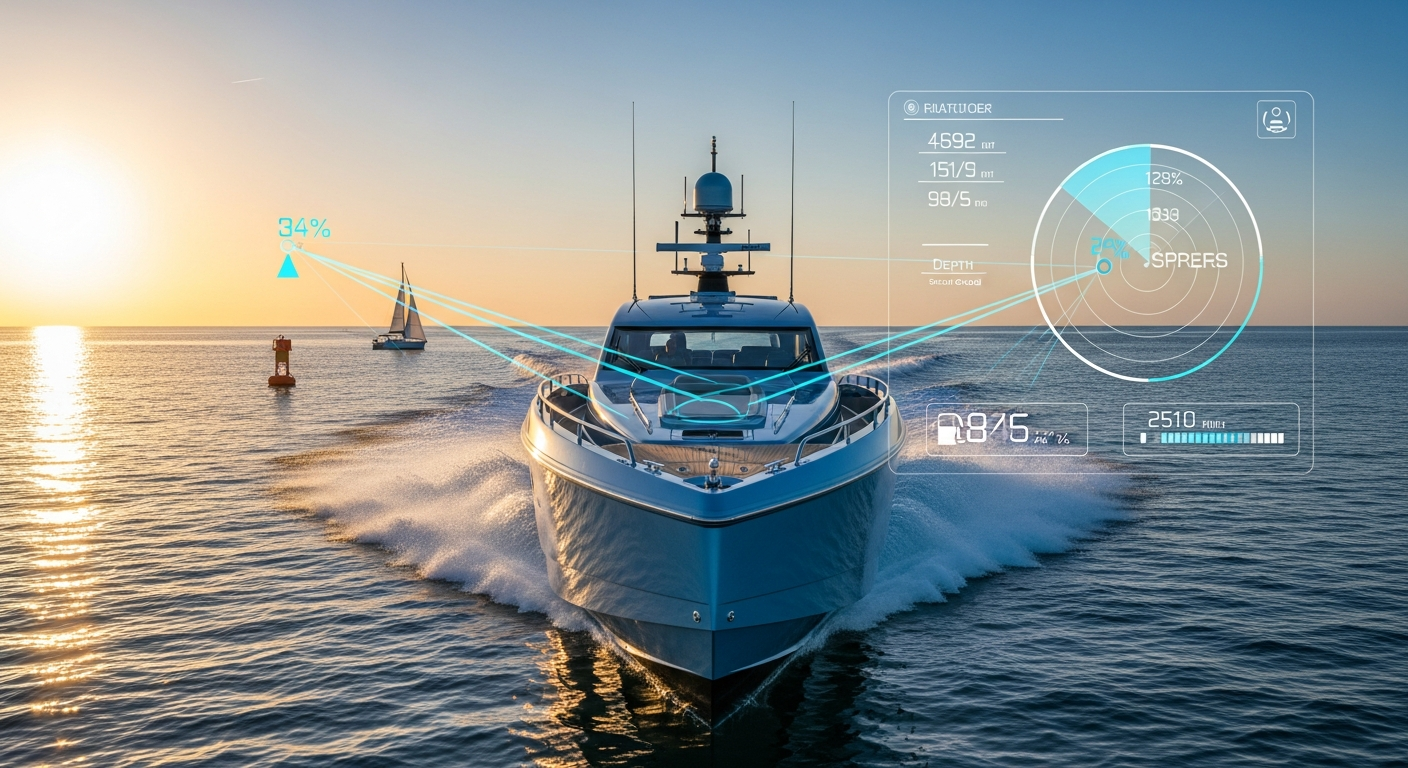
Discover how SEA.AI Watchkeeper’s AI marine collision avoidance system detects hidden hazards radar misses. Explore thermal imaging, real-time alerts, and pricing for safer boating.
AI-Powered Marine Collision Avoidance: How SEA.AI Watchkeeper Transforms Boating Safety
Every year, thousands of recreational boaters experience near-misses with unlit vessels, submerged debris, and floating hazards that their radar systems completely fail to detect. The gap between what traditional marine electronics can see and what actually lurks in the water creates a dangerous blind spot—one that human fatigue and darkness only amplify.
SEA.AI Watchkeeper represents a fundamental shift in how modern vessels approach collision avoidance. Developed by SEA.AI (formerly OSCAR), this AI-powered system uses advanced machine vision trained on over 24 million annotated marine objects to identify hazards that slip through traditional radar and AIS systems. The technology combines low-light optical cameras with thermal imaging to operate around the clock, delivering real-time alerts when danger approaches.
Explore SEA.AI Watchkeeper systems and find the right model for your vessel.
The Technology Behind AI-Powered Marine Hazard Detection
How Machine Vision and Thermal Imaging Work Together
The Watchkeeper system operates on a principle that traditional marine electronics have largely ignored: thermal signatures and optical detail matter just as much as radio frequency returns. Low-light optical cameras capture visual information with exceptional clarity, even during twilight or overcast conditions. These cameras don't require bright sunlight—they excel precisely when human vision deteriorates.
Thermal imaging sensors add a completely independent layer of detection. Rather than relying on reflected light, thermal cameras detect the heat signatures of vessels, debris, and living creatures. A small fishing boat running without lights becomes immediately visible to thermal sensors. A piece of floating debris that would never trigger radar becomes trackable. This dual-sensor approach means the system catches hazards through multiple detection pathways simultaneously.
The Proprietary AI Software: 24 Million+ Annotated Objects
The real magic happens in the software layer. SEA.AI trained its machine learning models on a dataset containing over 24 million annotated marine objects—everything from commercial cargo ships and sailboats to jet skis, kayaks, buoys, and even people in the water. This training enables the AI to instantly classify what it detects rather than simply flagging anonymous blips on a screen.
When the system identifies an object, it doesn't just say "something is there." It classifies the object type, estimates its trajectory, and calculates collision risk. A drifting piece of plastic debris gets a different alert priority than a small unlit fishing vessel on a collision course with your boat. This contextual intelligence, built through exposure to millions of real-world examples, transforms raw sensor data into actionable navigation decisions.
Real-Time Classification of Marine Hazards
The system continuously classifies hazards across multiple categories: unlit boats, submerged or partially submerged debris, buoys and navigation markers, people overboard, and marine mammals. Each classification triggers appropriate alert protocols. A person overboard detection generates immediate, urgent notifications—the kind that get a skipper's full attention in seconds. A distant buoy generates a visual notation without audio alarm.
This graduated alert system prevents alert fatigue, a critical problem in marine safety. Crews that ignore constant false alarms are crews that miss real emergencies. By intelligently prioritizing threats based on proximity, classification, and trajectory, Watchkeeper maintains crew attention where it matters most.
Low-Light Optical Camera Performance Across Visibility Conditions
The optical cameras perform reliably across a spectrum of challenging visibility scenarios. Twilight navigation, when the sun has set but some ambient light remains, shows Watchkeeper's optical strength. The cameras maintain excellent detail resolution in these conditions where human vision struggles. Overcast days with heavy cloud cover present no problem—the cameras adjust dynamically to available light levels.
Where optical sensors naturally underperform—complete darkness, for instance—the thermal imaging layer takes over seamlessly. This redundancy ensures 24/7 operational capability without gaps in hazard detection.
Thermal Sensor Capabilities and Independent Operation
Thermal sensors function independently of external lighting conditions entirely. They detect infrared radiation emitted by warm objects. A running engine generates distinctive thermal patterns. A group of people in a lifeboat produce detectable heat signatures. Even a large marine mammal—a whale or dolphin—creates a thermal signature that the AI recognizes.
The thermal layer's independence from lighting makes it invaluable during night passages, when visibility drops to zero despite good weather. Where human lookouts become functionally blind, thermal imaging maintains full operational awareness.
Integration With Existing Multifunction Displays
Watchkeeper connects to your existing marine electronics ecosystem. Alerts appear directly on your multifunction display (MFD)—the same screen where you view charts and radar returns. Rather than forcing crews to monitor a separate device, the system integrates hazard alerts into their primary navigation interface.
Visual alerts include object location, classification, range, and bearing. Audio alerts provide secondary confirmation during critical situations. Crews adapt quickly because the information appears in familiar contexts with familiar navigation tools.
LTE Connectivity and Continuous AI Model Updates
The system maintains LTE connectivity when available, enabling cloud-based AI updates. As SEA.AI encounters new object categories, refines classification algorithms, and improves detection accuracy through expanded training datasets, these improvements deploy automatically to your vessel. Your Watchkeeper system becomes more capable over time, not less.
Check out the latest SEA.AI Watchkeeper updates and specifications at New Marine Store.
Watchkeeper Model Comparison: Finding Your Fit
Entry-Level Watchkeeper Lite Specifications and Ideal Use Cases
The Watchkeeper Lite represents the accessibility point for AI-powered collision avoidance. Starting at approximately $4,990, it provides optical camera-based hazard detection without thermal imaging. Ideal use cases include day cruising, coastal navigation, and boaters seeking enhanced awareness without the premium investment. The Lite model still accesses the 24-million-object training database and delivers real-time classification and alerts.
Weekend boaters who primarily navigate in daylight conditions find the Lite model sufficient for their safety priorities. It integrates with existing MFDs just like higher-tier models and provides immediate hazard detection capabilities that traditional radar cannot match.
Watchkeeper Motor/Sail 320: Compact Systems for Smaller Recreational Vessels
The Motor/Sail 320 adds thermal imaging to the optical foundation, creating true 24/7 hazard detection for vessels where space constraints matter. Compact installation footprints make it practical for sailboats and smaller motor yachts. Detection range extends to approximately 0.5 nautical miles, sufficient for vessels operating in recreational cruising patterns.
This model targets owners who regularly navigate at night or in conditions where thermal imaging adds measurable safety value. The price point falls in the mid-range, typically under $10,000, making the leap to thermal capability more accessible than premium models.
Watchkeeper Motor/Sail 640: Mid-Range Detection Capabilities and Coverage Zones
The 640 model escalates thermal imaging resolution while extending detection range to roughly 0.75 nautical miles. For cruisers operating in busier waters or those who frequently navigate at night, the 640 provides substantially improved hazard visibility compared to the 320. Thermal resolution at this tier supports confident object classification at greater distances.
Pricing typically ranges from $12,000 to $16,000, reflecting the additional sensor capability and extended detection range.
Watchkeeper Motor/Sail 1024: Advanced Thermal Resolution for Serious Cruisers
The 1024 model serves cruisers undertaking extended voyages and those operating in challenging navigation environments. Thermal imaging resolution climbs significantly, enabling confident object identification at distances exceeding one nautical mile. Detection capabilities extend across most realistic navigation scenarios for recreational and small commercial operators.
Crews planning extended offshore passages, liveaboards operating in congested waters, and commercial operators with safety obligations find the 1024's capabilities justify its investment, typically ranging from $18,000 to $24,000.
Watchkeeper Motor/Sail 1280: Premium Detection Range Exceeding One Nautical Mile
The flagship 1280 model represents the pinnacle of Watchkeeper capability. Thermal imaging resolution reaches maximum specification, enabling early detection of hazards at ranges exceeding one nautical mile. For commercial operators, charter fleets, and serious cruisers navigating the most challenging conditions, the 1280's detection superiority and confidence levels justify the premium investment around $27,990.
Commercial shipping operations, passenger vessel operators, and offshore research vessels benefit from the 1280's extended hazard visibility horizon.
How Thermal Imaging Resolution Scales Across Different Models
Thermal resolution, measured in pixel count, directly impacts the detail visible at distance. Lower-resolution thermal sensors capture object presence and general classification at distance but struggle with fine detail. Higher-resolution thermal imaging maintains detail recognition at greater ranges, enabling earlier threat identification and more confident object classification.
The progression from 320 to 1280 represents roughly a quadrupling of thermal resolution, translating to dramatically improved performance in identifying small objects, estimating vessel size and type, and detecting human figures in water.
Detection Range Capabilities by Model Tier
Detection range varies by model tier and environmental conditions. Optical detection generally performs to 0.3-0.5 nautical miles depending on light conditions and object size. Thermal detection extends further—0.5 to 1.25+ nautical miles depending on the thermal resolution tier. Commercial shipping lanes and offshore navigation benefit dramatically from these extended ranges; detection at one nautical mile provides 3-4 minutes of response time at typical cruising speeds.
Recreational coastal cruising typically operates effectively with the mid-range models; open ocean passages benefit from the extended range of premium tiers.
Pricing Breakdown: From $4,990 to $27,990 and What Each Investment Covers
The Watchkeeper Lite at $4,990 provides optical-only hazard detection with full AI classification capability. The Motor/Sail 320 thermal entry point typically begins around $8,000-$10,000, adding 24/7 thermal capability. Mid-range models (640/1024) occupy the $12,000-$24,000 bracket, scaling in detection range and thermal resolution. The flagship 1280 represents the maximum investment, justifiable primarily for commercial operations or extended offshore cruising where early hazard detection measurably reduces collision risk.
Each price tier includes professional installation consultation, firmware updates, and customer support. Financing options through dealers can reduce the annual cost burden for larger investments.
Real-World Performance in Low-Visibility Scenarios
Night Navigation Advantages: Thermal Imaging as Your 24/7 Lookout
Night passages represent where Watchkeeper truly separates itself from traditional marine electronics. Human lookouts become functionally blind after sunset despite decades of maritime tradition. Radar catches large metal objects but misses small wooden boats, debris, and swimmers. AIS depends on vessels broadcasting their position—enforcement remains spotty, particularly among fishing boats and smaller commercial operators.
Thermal imaging transforms night navigation. Every vessel running an engine becomes visible. Debris creates distinctive thermal signatures. A disabled vessel or person in water generates detectable heat. The AI classifies what it detects instantly, freeing crews from the burden of interpreting thermal imagery themselves.
Fog and Rain Performance: Where Watchkeeper Excels Versus Traditional Radar Limitations
Fog creates particular challenges for radar systems. Dense fog conditions reflect radar pulses unpredictably, generating false returns and masking real targets. Optical cameras obviously cannot penetrate fog. Thermal imaging, however, maintains performance through fog because it detects infrared radiation directly rather than relying on reflected signals or visible light.
Rain presents similar challenges for radar. Thermal imaging similarly maintains capability in rain—precipitation does not significantly attenuate infrared signatures. The dual optical-thermal approach means the system gracefully degrades rather than failing entirely when visibility conditions challenge traditional systems.
Detection of Small Unlit Vessels That AIS Systems Ignore Completely
Thousands of small fishing boats, work boats, and recreational vessels operate without AIS transponders. Many operate without proper navigation lighting. Traditional radar struggles to return strong signals from wooden-hulled small craft. Thermal imaging captures them instantly.
This capability addresses a fundamental maritime safety gap. Recreational boaters transiting at night frequently encounter commercial fishing operations running minimal lights. Watchkeeper detects these encounters 3-4 minutes before visual contact becomes possible, enabling collision avoidance well before emergency maneuvers.
Identifying Floating Debris and Hazardous Objects in Shipping Lanes
Shipping lanes accumulate floating debris—lost cargo containers, broken pallets, derelict fishing gear, and miscellaneous flotsam. Radar returns from debris vary wildly; small pieces generate no detectable return. Large pieces sometimes create confusing returns that operators discount as clutter.
Watchkeeper's optical and thermal sensors detect debris across size ranges. The AI classifies floating objects intelligently, distinguishing between navigation hazards and harmless flotsam. This capability proves invaluable in shipping lanes where collision with floating debris can disable smaller vessels.
People Overboard Detection Capabilities and Response Time Advantages
People overboard situations demand immediate response. Traditional radar cannot detect a person in the water. Optical systems struggle at night or in rough conditions. Thermal imaging detects human body heat reliably. The AI's training specifically includes person overboard classification, enabling immediate alert generation.
Response time advantage becomes critical. A person overboard alert delivered within seconds of the person entering the water dramatically improves rescue outcomes. Watchkeeper's 24/7 monitoring means crew distraction never delays person overboard detection—the system maintains constant vigilance.
Marine Mammal Identification to Prevent Accidental Strikes
Large marine mammals—whales, dolphins, manatees—create distinctive thermal and optical signatures. The AI training includes marine mammal classification. Vessels operating in waters with marine mammal populations can adjust course proactively when Watchkeeper identifies large mammals ahead.
Environmental responsibility combined with vessel safety drives growing interest in marine mammal detection capability, particularly for commercial operators transiting sensitive coastal waters.
Case Studies: How Commercial and Recreational Operators Use Watchkeeper in Challenging Conditions
Commercial fishing operations operating at night report dramatic improvements in collision avoidance with other vessels and debris detection. Charter yacht fleets value the system's 24/7 capability for guest safety, particularly during extended passages. Liveaboards cruising remote waters emphasize the peace of mind knowing an AI system watches continuously, reducing fatigue-related mishaps during solo passages.
These operators consistently report discovering hazards they simply would not have seen with traditional systems—small unlit vessels, debris, unusual objects. The system pays for itself through avoidance of even a single significant collision.
Integration With Your Existing Marine Electronics
Compatibility With Major Multifunction Display Systems
Watchkeeper integrates directly with industry-standard multifunction displays from manufacturers including Garmin, Raymarine, Navico, and others. The system outputs alerts to existing chart plotters and navigation displays, eliminating the need for separate monitoring screens.
This integration architecture proves critical for adoption. Crews already familiar with their MFDs adapt to Watchkeeper alerts in hours rather than weeks. Navigation workflows remain unchanged; hazard information simply enriches existing displays.
Mobile Device Connectivity for Remote Monitoring
Many Watchkeeper configurations support mobile device connectivity, enabling skippers to monitor alerts on tablets or smartphones. This capability proves particularly valuable for larger vessels where bridge access from all crew stations matters, or for liveaboards who want to monitor vessel safety while below deck.
Cloud connectivity architecture means alerts reach authorized crew regardless of their current location aboard the vessel.
Audio and Visual Alert Customization Options
Crews customize alert parameters to their preferences. Audio alert volume and frequency adapt to vessel noise conditions. Visual alert prominence adjusts based on navigation mode. These customization options prevent alert fatigue while ensuring critical threats receive immediate attention.
Progressive alert escalation helps as well—distant hazards generate quiet notifications; imminent threats trigger urgent audio alarms.
How Watchkeeper Complements Radar and AIS Rather Than Replacing Them
The Watchkeeper design philosophy emphasizes complementary capability rather than replacement. Radar provides reliable long-range detection of large metal objects and weather systems. AIS broadcasts position information from equipped vessels. Watchkeeper detects unequipped vessels, smaller craft, debris, and hazards at medium range that traditional systems miss.
Integrated operation of all three systems—radar, AIS, and Watchkeeper—provides genuinely comprehensive situational awareness. None replaces the others; together they address capability gaps that each system exhibits individually.
Wired and Wireless Installation Configurations
Installation flexibility accommodates various vessel types and layouts. Wired configurations provide robust, interference-resistant connections for vessels where cabling is practical. Wireless configurations enable faster installation on vessels where running new cables presents challenges.
Professional installers assess vessel-specific needs and recommend configurations that optimize reliability and performance.
System Redundancy and Failover Capabilities
Advanced Watchkeeper configurations support redundant sensor and processing architecture. If primary optical cameras fail, thermal sensors maintain hazard detection. If one processing module fails, backup modules continue operation. This redundancy proves particularly valuable for commercial operators and vessels undertaking extended offshore passages where service access remains limited.
Redundancy design ensures the system continues protecting crews even if individual components fail.
Firmware Updates and Ongoing Performance Optimization Through Cloud Connectivity
Regular firmware updates improve detection accuracy, add new hazard classifications, and optimize performance based on operational feedback from thousands of vessels worldwide. Cloud connectivity enables these improvements to deploy automatically without requiring dockside service appointments.
The system essentially learns and improves continuously as the global fleet provides feedback to SEA.AI's development team.
Safety Advantages That Extend Beyond Collision Prevention
Reduced Skipper Fatigue Through Continuous Automated Monitoring
Traditional navigation demands constant vigilance—maintaining lookout, monitoring radar, interpreting AIS, planning course adjustments. This cognitive load increases substantially during night passages or solo sailing. Fatigue-induced errors account for significant percentages of marine incidents.
Watchkeeper offloads hazard detection burden from human operators to AI systems that don't tire. Crews maintain strategic awareness and decision-making responsibility while the system handles continuous tactical threat monitoring. This division of labor reduces fatigue-related errors dramatically.
Enhanced Situational Awareness During Solo Sailing or Single-Handed Passages
Solo sailing creates unique vulnerabilities. A single skipper cannot simultaneously steer, monitor instruments, manage sails, and maintain effective lookout. Extended passages compound fatigue effects. Watchkeeper enables solo sailors to maintain reasonable rest schedules knowing an ever-vigilant AI system monitors for threats continuously.
The solo sailing community increasingly recognizes Watchkeeper as transformative for feasibility of extended single-handed passages. The ability to rest knowing complete hazard coverage remains active addresses a fundamental safety limitation of solo operations.
Peace of Mind for Night Passages and Extended Offshore Voyages
Beyond quantifiable risk reduction, Watchkeeper delivers psychological safety value. Crews undertaking challenging passages—extended night navigation, offshore voyages, solo adventures—gain measurable confidence knowing an AI system maintains uninterrupted hazard awareness. This psychological factor matters. Confident crews make better decisions; anxious crews make reactive mistakes.
Survey data from Watchkeeper operators consistently highlights peace of mind as a primary benefit, sometimes cited alongside or ahead of quantifiable risk reduction.
Documented Risk Reduction for Collision Incidents
As Watchkeeper deployments accumulate, marine insurers and regulatory bodies track collision incidents among equipped vessels. Preliminary data suggests equipped vessels experience fewer collision incidents, particularly those involving unlit or AIS-unequipped vessels. Statistical significance remains limited due to small sample sizes, but trend data supports the system's value for collision prevention.
Insurance Implications and Potential Premium Benefits
Forward-thinking insurers recognize Watchkeeper as a genuine risk reduction measure. Some offer premium reductions for equipped vessels—typically 3-5% reductions depending on the insurer and vessel profile. Over a 10-year ownership period, insurance savings can offset 20-30% of system costs on higher-value vessels.
Boaters considering Watchkeeper investment should inquire specifically with their insurers about premium considerations.
Training Requirements and Crew Adaptation Considerations
Despite sophisticated AI, crews still require training on alert interpretation and appropriate response. A thermal image showing a distant blob means nothing without context—is it a vessel, debris, or marine mammal? Crew training programs address alert interpretation, appropriate response protocols, and integration with existing navigation procedures.
Most operators achieve proficiency within the first several passages; the learning curve remains modest compared to radar or other complex marine electronics.
Cannes Innovation Route Award Recognition and Industry Validation
The Cannes Innovation Route Award in 2025 provides significant industry validation. This recognition reflects not just technical innovation but practical application and real-world impact on marine safety. Awards from respected maritime institutions enhance credibility and validation beyond marketing claims.
Honest Assessment of Limitations and Trade-offs
Watchkeeper Operates as an Assistance System, Not a Replacement for Human Watchkeeping
Critical point: Watchkeeper enhances human decision-making but never replaces it. International maritime regulations still require human lookouts. The system assists but cannot take full responsibility for collision avoidance. Crews must maintain awareness and readiness to take manual control instantly if system alerts indicate threat.
This reality shapes appropriate expectations. The system is extraordinarily capable, but human judgment remains essential.
Performance Degradation in Extreme Weather Conditions
Extreme conditions—severe storms with driving rain, extremely heavy seas creating spray and foam, near-zero visibility from dense fog—can degrade Watchkeeper's performance. This degradation rarely creates complete blindness, but detection ranges shorten and classification confidence decreases.
During extreme weather, mariners should rely increasingly on radar, traditional watchkeeping, and reduced speed until conditions improve.
Dependency on Clear Lens Surfaces and Regular Maintenance
The system depends on clear optical and thermal sensor windows. Salt spray, fog residue, and general weathering necessitate regular cleaning. Neglected maintenance leads to performance degradation. Unlike some electronics that tolerate some environmental challenges, Watchkeeper's sensor windows require active attention.
This maintenance burden remains minor compared to traditional radar systems but exceeds fully passive electronics.
Significant Upfront Investment for Higher-End Models ($20,000+)
The flagship systems represent genuine capital investments. For many boat owners, $25,000+ expenditures require serious financial consideration. Entry-level models reduce the barrier, but the optical-only Lite lacks the 24/7 thermal capability that distinguishes Watchkeeper from basic radar systems.
Budget constraints rightfully influence decision-making. The system's value becomes clearer for vessels operating regularly in challenging conditions where hazard detection truly matters.
Learning Curve for Crew Interpretation of Thermal Imagery
Raw thermal images can confuse crews unfamiliar with how thermal signatures appear. Initial thermal imagery interpretation requires training and experience. While learning curves remain modest, expecting crews to instantly interpret thermal data without preparation creates frustration.
Professional installation services typically include crew training. Budget for it and embrace it rather than rushing crews into unfamiliar technology.
System Power Consumption and Electrical Infrastructure Requirements
Watchkeeper systems draw meaningful electrical power—particularly thermal imaging and processing components. Vessels with marginal electrical infrastructure may require upgrades to battery capacity or charging systems. This represents a hidden cost sometimes overlooked in initial budget planning.
Solar and wind power systems increasingly handle this demand for cruising vessels, but budget accordingly.
When Traditional Radar and AIS Remain Superior Solutions
In some scenarios, traditional marine electronics outperform Watchkeeper. Extreme long-range detection favors radar. Vessel-to-vessel communication favors AIS. Fully automated, unmanned systems favor radar and AIS without human interpretation requirements. Weather detection remains radar's domain.
Watchkeeper complements these systems; it doesn't universally replace them.
Cost-Benefit Analysis for Different Boating Profiles
Recreational Cruisers: ROI Through Enhanced Safety and Insurance Considerations
Typical recreational cruisers—operating weekends and occasional weeks-long passages—need to assess whether Watchkeeper's safety benefits justify the investment. For cruisers operating regularly at night or in congested coastal waters, the hazard detection capabilities provide genuine value. Insurance premium reductions may offset 20-30% of costs over a decade.
ROI for recreational cruisers depends heavily on baseline risk exposure. Cruisers operating primarily in clear daylight coastal conditions experience minimal financial benefit. Those undertaking extended night passages or operating in shipping lanes benefit substantially.
Liveaboard Considerations: 24/7 Protection and Peace of Mind Value
Liveaboards operate continuously in variable conditions, often at night and in diverse anchorages. The 24/7 threat monitoring capability translates to measurable safety benefits—detecting anchored vessels drifting into your vessel, identifying debris in anchorages, maintaining awareness during night watch rotation. The psychological benefit of continuous monitoring during extended residency carries genuine value.
For liveaboards, mid-range to advanced models typically provide better ROI than entry-level systems.
Commercial Operators: Liability Reduction and Regulatory Compliance Advantages
Commercial operators face liability implications for collision incidents. Insurance premiums reflect operational risk profiles. Documented collision risk reduction through Watchkeeper creates direct financial benefits through reduced insurance premiums and avoided liability exposure.
Commercial operators regularly recoup Watchkeeper investments within 3-5 years through insurance savings and avoided incidents.
Charter and Rental Fleet Applications: Passenger Safety and Operational Efficiency
Charter operators prioritize passenger safety and operational efficiency. Watchkeeper enhances both—reducing collision risk and enabling operations in conditions where unequipped charter vessels cannot operate safely. Charter fleets increasingly recognize Watchkeeper as competitive differentiator for client confidence and safety reputation.
Fleet economics support Watchkeeper investments when systems can be amortized across multiple vessel deployments.
Weekend Boaters: Whether Entry-Level Lite Models Justify the Investment
Weekend boaters operating primarily in daylight coastal conditions face the weakest ROI case. The Lite model at $4,990 costs less than premium radar systems but delivers no night capability. Weekend operators genuinely need to assess whether the investment aligns with their actual operational profile.
For weekend boaters, clear-eyed assessment of night passage frequency and visibility conditions encountered is essential before investment.
Upgrade Pathways: Starting With Lite and Scaling to Advanced Models
Some operators opt for the Lite model initially, evaluating operational benefit before committing to thermal imaging systems. This phased approach spreads costs across multiple seasons and allows crews to gain proficiency gradually. Trading Lite systems for advanced models remains technically feasible, though often more economical to retain initial systems and add them to different vessels.
Phased adoption strategies enable operators to validate ROI before committing to premium systems.
Financing Options and Long-Term Value Retention
Marine electronics dealerships increasingly offer financing for major system purchases. Spreading $20,000+ investments across 3-5 year payment plans improves cash flow management. Watchkeeper systems retain value reasonably well in used equipment markets, supporting trade-in value if vessels are eventually sold.
Explore financing options with authorized dealers—the availability of reasonable financing dramatically improves accessibility.
Installation, Training, and Ongoing Support
Professional Installation Requirements and Typical Timeframes
Watchkeeper installations require professional expertise. Sensor placement optimizes field of view and minimizes blind spots created by vessel superstructure. Wiring runs must follow proper marine electrical practices. Integration with existing MFDs demands technical knowledge. Professional installation typically requires 8-20 hours depending on vessel complexity, performed over 1-3 days.
Budget $2,000-$5,000 for professional installation labor depending on vessel configuration.
DIY Installation Possibilities for Certain Model Configurations
Entry-level Watchkeeper Lite systems and certain mid-range configurations support DIY installation for technically proficient boaters. Installation manuals provide detailed guidance. Wireless sensor configurations eliminate complex wiring. However, improper installation can degrade performance significantly—professional installation remains recommended unless you possess genuine marine electronics expertise.
Crew Training on Alert Interpretation and Response Protocols
Professional installers typically include initial crew training as part of installation packages. Training addresses alert interpretation, distinguishing hazard types, understanding thermal imagery, and integrating alerts with existing navigation workflows. Comprehensive initial training—typically 2-4 hours—dramatically improves crew confidence and system acceptance.
Budget time for training; it directly impacts system effectiveness.
System Monitoring and Maintenance Schedules
Regular maintenance includes lens cleaning (monthly during heavy cruising), sensor lens inspections, electrical connection verification, and firmware update deployment. Maintenance burden remains minimal—perhaps 15-20 minutes monthly for active cruising vessels.
Establish maintenance schedules as part of regular vessel upkeep protocols.
SEA.AI Customer Support Resources and Community Forums
SEA.AI maintains comprehensive customer support including phone/email technical support, online documentation, and increasingly active user community forums. Community forums prove particularly valuable for troubleshooting and sharing operational best practices among global Watchkeeper operators.
Access these resources actively; community wisdom frequently resolves questions faster than formal support channels.
Warranty Coverage and Extended Protection Plans
Standard warranty typically covers 2-3 years. Extended protection plans are available, typically $500-$1,500 covering 5-7 additional years. Extended plans become economically attractive for vessels undertaking extended offshore passages where service access remains limited.
Evaluate warranty options based on your operational profile and intended passage schedules.
Software Updates and Feature Additions Post-Purchase
SEA.AI regularly deploys software updates adding detection capabilities for new hazard categories, improving classification algorithms, and optimizing performance. These updates deploy automatically for connected systems, creating continuous performance improvement throughout system ownership.
Maintain cloud connectivity when feasible to capture these improvements automatically.
The Future of AI in Marine Navigation Safety
How Machine Learning Improves Detection Accuracy Over Time
Machine learning systems improve as they encounter and classify more objects. Every Watchkeeper deployment contributes data that improves the global AI model. As millions of voyages occur across the global fleet, the AI becomes increasingly sophisticated at distinguishing subtle hazard indicators and predicting collision threats accurately.
This continuous improvement architecture means Watchkeeper systems purchased today become more capable as deployment base expands.
Emerging Hazard Categories Being Added to the AI Training Database
SEA.AI continuously expands hazard classification categories. Fishing nets, partially submerged containers, derelict vessels, and emerging threats from maritime commerce all become training categories as field deployments identify them. The system's ability to detect novel hazards expands measurably each year.
Integration With Autonomous Vessel Technology and Future Navigation Systems
Autonomous vessel development increasingly incorporates machine vision and AI-based collision avoidance systems. The trajectory increasingly points toward AI-based systems like Watchkeeper becoming standard maritime infrastructure rather than premium optional equipment.
Operators investing in Watchkeeper today position themselves ahead of regulatory and technology curves.
Regulatory Developments in Marine Collision Avoidance Requirements
Maritime regulatory bodies are increasingly considering AI-based collision avoidance systems in navigation safety standards. International Maritime Organization (IMO) discussions increasingly reference autonomous and AI-assisted systems. Regulatory acceptance of AI-based hazard detection may eventually become expected equipment on commercial vessels.
Early adopters position themselves favorably for anticipated regulatory evolution.
Competitive Landscape and Alternative AI-Based Systems
While Watchkeeper leads the recreational and smaller commercial vessel market, competitors are emerging with alternative AI-based collision avoidance systems. Competitive pressure will drive innovation, lower costs, and expanded capability across the market. The market trajectory favors increasingly accessible AI-based maritime safety systems.
Current competitive advantage will erode; future systems will likely offer better performance at lower costs.
Roadmap for Watchkeeper Technology Advancement
SEA.AI's published roadmap indicates continued expansion of detection capabilities, improved cold-weather performance, expanded marine mammal detection, and integration with emerging marine technologies. The system continues evolving toward more sophisticated threat prediction and automated evasion recommendation features.
Industry Adoption Trends Among Commercial and Recreational Fleets
Adoption is accelerating across commercial shipping, charter fleets, and serious cruising enthusiasts. Survey data suggests 5-10% adoption rates among recreational vessels and substantially higher rates among commercial operators. Industry observers project continued acceleration as costs decline and performance improves.
Making Your Decision: Questions to Ask Before Purchasing
What Vessel Type and Typical Navigation Conditions Match Your Boating Profile?
Begin with honest assessment of your actual vessel and operation. Coastal weekend cruising, extended night passages, offshore voyages, and solo sailing create entirely different risk profiles. Understanding your specific exposure shapes appropriate system selection.
Which Watchkeeper Model Aligns With Your Safety Priorities and Budget Constraints?
Model selection depends on whether night operation, thermal capability, and extended detection range match your operational needs and budget reality. Resist the temptation to over-specify; select the model that addresses your actual hazard exposure.
How Will Integration With Existing Electronics Affect Your Current Workflow?
Assess your current navigation setup and whether Watchkeeper integration will streamline or complicate your existing workflows. Test integration at dealer facilities if possible before committing to purchase.
What's Your Crew's Comfort Level With AI-Assisted Navigation Systems?
Crew acceptance significantly impacts system effectiveness. Crews skeptical of AI systems underutilize them. Conservative crews may over-rely on alerts. Honest assessment of your crew's technology comfort and learning capacity shapes training expectations and likely success.
Are Insurance or Financing Options Available Through Dealers or Manufacturers?
Investigate insurance premium reduction possibilities with your current provider. Explore financing options with authorized dealers. These financial considerations often prove decisive in investment decisions.
What's the Realistic Maintenance and Support Commitment Over 5-10 Years?
Budget realistic maintenance requirements and support relationships. Identify authorized service centers convenient to your base of operation. Assess long-term support availability and parts availability for the systems you're considering.
How Does Watchkeeper Address Your Specific Navigation Pain Points?
Finally, articulate the specific navigation challenges driving your Watchkeeper consideration. Is it night passage anxiety? Solo sailing fatigue? Commercial liability concerns? Debris collision risk in specific waters? The system addresses distinct pain points with varying effectiveness. Clear identification of your core problem shapes system selection and realistic expectation setting.
Navigating Toward Smarter, Safer Boating
The SEA.AI Watchkeeper AI marine collision avoidance system fills a genuine safety gap that traditional radar and AIS systems have overlooked for decades. By combining thermal imaging, low-light optical cameras, and sophisticated machine learning trained on millions of real-world marine objects, Watchkeeper delivers the kind of 24/7 hazard awareness that transforms how you approach night passages, fog navigation, and solo sailing adventures. The range of models—from the accessible Watchkeeper Lite at $4,990 to the comprehensive Motor/Sail 1280 at $27,990—means there's a configuration suited to virtually every vessel type and boating style.
That said, this technology shines brightest when you understand what it actually is: an extraordinarily capable assistance system that amplifies human decision-making, not a replacement for it. The investment is real, particularly for advanced models, and performance does degrade in extreme weather. But for recreational cruisers, liveaboards, and