
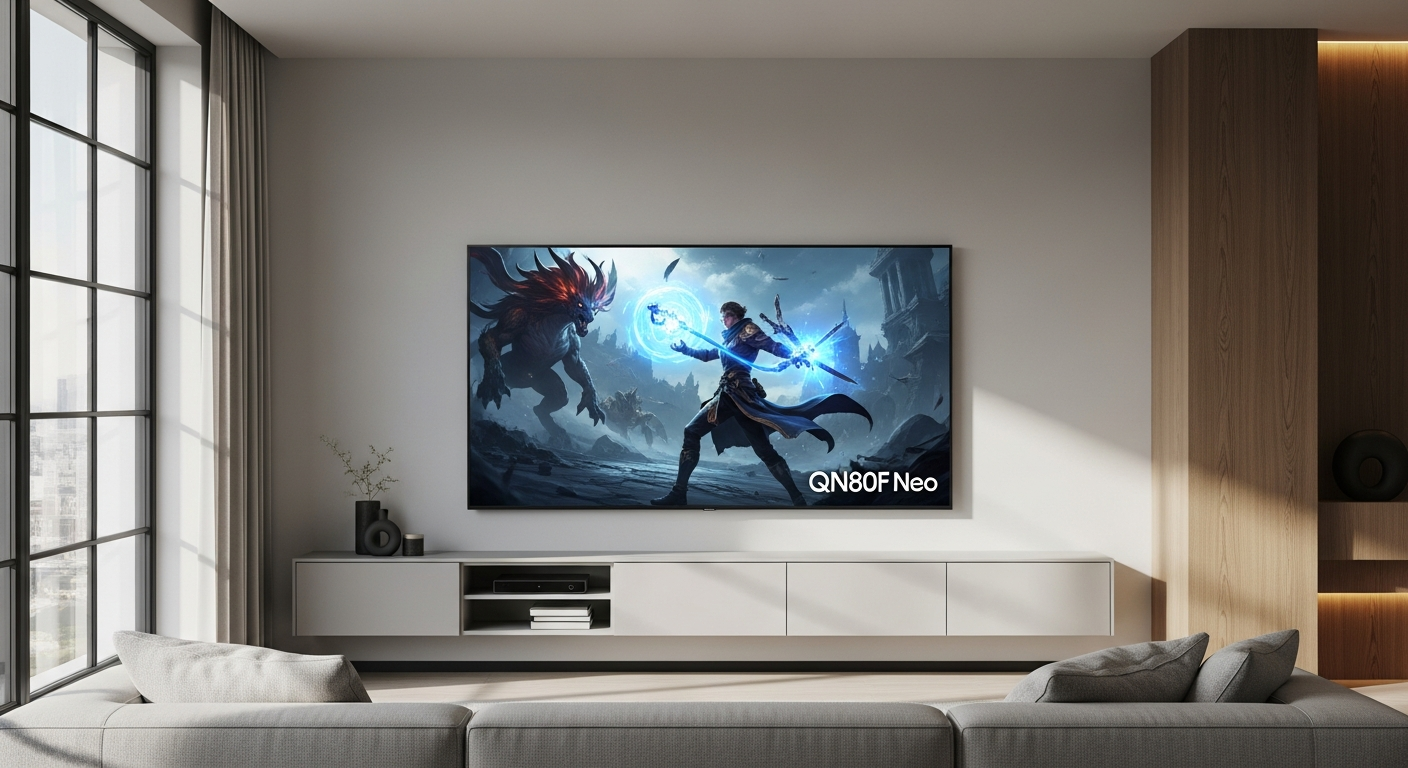
Discover if the Samsung QN80F Neo QLED 4K TV delivers premium gaming performance and AI-enhanced picture quality. Compare specs, gaming features, and real-world performance for gamers and content creators.
The Samsung QN80F Neo QLED 4K TV combines advanced Mini LED technology, powerful AI-driven processing, and immersive gaming features to deliver an impressive home entertainment experience.
Designed for viewers who want exceptional picture quality, vibrant colors, and smooth performance, the QN80F stands out as one of Samsung’s most attractive Neo QLED televisions.
Whether you’re streaming movies, watching live sports, gaming on next-generation consoles, or enjoying everyday TV content, the Samsung QN80F offers a premium viewing experience with remarkable clarity and brightness.
Explore the Samsung QN80F Neo QLED 4K TV at Crampton and Moore
Key Features of the Samsung QN80F Neo QLED 4K TV
Neo QLED Technology with Quantum Mini LEDs
At the heart of the Samsung QN80F is Neo QLED technology, powered by Quantum Mini LEDs.
These ultra-precise LEDs provide enhanced brightness control and deeper contrast compared to traditional LED televisions.
The result is sharper details in both bright and dark scenes, allowing viewers to enjoy realistic images with excellent depth and clarity.
NQ4 AI Processor for Enhanced Picture Quality
The Samsung QN80F features the advanced NQ4 AI Processor, which intelligently analyzes content and optimizes picture quality in real time.
AI-powered upscaling enhances lower-resolution content, helping older movies, TV shows, and streaming videos appear closer to native 4K quality.
This technology ensures consistently sharp visuals across a wide range of content sources.
4K Resolution with Exceptional Detail
With 4K Ultra HD resolution, the Samsung QN80F delivers four times the detail of Full HD televisions.
Every frame appears crisp and lifelike, making it ideal for movies, documentaries, sports broadcasts, and gaming sessions.
The combination of 4K resolution and Neo QLED technology creates a viewing experience filled with rich detail and vibrant colors.
Quantum HDR for Enhanced Contrast
The QN80F supports Quantum HDR, providing improved brightness levels and contrast performance.
HDR content appears more realistic, with brighter highlights, deeper shadows, and better overall image balance.
Whether you’re watching blockbuster films or nature documentaries, HDR technology helps reveal details that may otherwise go unnoticed.
Gaming Performance Designed for Modern Consoles
Smooth Motion and High Refresh Rates
Gamers will appreciate the Samsung QN80F’s support for smooth motion handling and high refresh rates.
Fast-moving action scenes remain clear and responsive, helping reduce blur during competitive gameplay.
HDMI 2.1 Connectivity
The inclusion of HDMI 2.1 ports allows gamers to take full advantage of modern gaming consoles such as the PlayStation 5 and Xbox Series X.
Features like Variable Refresh Rate (VRR) and Auto Low Latency Mode (ALLM) contribute to a more responsive gaming experience.
Samsung Gaming Hub
Samsung’s Gaming Hub provides convenient access to cloud gaming services and gaming-related content.
Players can enjoy a streamlined gaming ecosystem directly from the television without relying solely on external hardware.
Check current pricing and availability on the Samsung QN80F at Crampton and Moore
Smart TV Features and Connectivity
Samsung Tizen Operating System
The Samsung QN80F runs on Samsung’s intuitive Tizen Smart TV platform, offering quick access to popular streaming services, apps, and smart home integrations.
Users can easily browse content from platforms such as Netflix, Disney+, YouTube, Amazon Prime Video, and many others.
Voice Assistant Compatibility
The television supports voice control through compatible assistants, allowing users to search for content, adjust settings, and control connected smart devices using simple voice commands.
Smart Home Integration
As part of Samsung’s connected ecosystem, the QN80F integrates seamlessly with compatible smart home devices, making it easier to manage entertainment and home automation from a single screen.
Immersive Audio Experience
Object Tracking Sound Lite
Samsung’s Object Tracking Sound Lite technology helps create a more engaging audio experience by aligning sound effects with on-screen action.
This feature enhances immersion when watching movies, sports, and gaming content.
Q-Symphony Support
When paired with compatible Samsung soundbars, Q-Symphony enables the TV speakers and soundbar to work together, producing fuller and more dynamic sound.
Sleek Design for Modern Living Spaces
The Samsung QN80F features a slim, contemporary design that complements a variety of room styles.
Its minimalist aesthetic allows viewers to focus on the content while maintaining a sophisticated appearance in any entertainment setup.
The thin bezels help maximize screen space and create a more immersive viewing experience.
Why Choose the Samsung QN80F Neo QLED 4K TV?
The Samsung QN80F is an excellent choice for consumers seeking a premium 4K television with advanced picture technology, smart features, and gaming capabilities.
Its Neo QLED display, AI-powered processing, HDR support, and modern connectivity options make it suitable for a wide range of entertainment needs.
Pros
- Bright and vibrant Neo QLED display
- Quantum Mini LED technology for improved contrast
- AI-powered 4K upscaling
- Excellent gaming features with HDMI 2.1 support
- User-friendly Tizen Smart TV platform
- Sleek and modern design
- Smart home integration and voice control support
Samsung QN80F Neo QLED 4K TV Overview and Final Assessment
The Samsung QN80F Neo QLED 4K TV delivers a strong balance of premium picture quality, intelligent processing, immersive gaming features, and smart functionality.
With its advanced Mini LED backlighting, vivid 4K visuals, and versatile entertainment ecosystem, the QN80F is a compelling option for anyone looking to upgrade their home theater experience.
For movie enthusiasts, sports fans, and gamers alike, the Samsung QN80F offers impressive performance that helps justify its position among Samsung’s leading Neo QLED television models.
Purchase the Samsung QN80F Neo QLED 4K TV from Crampton and Moore today