
Discover how to select the perfect rug for any room with our comprehensive buying guide. Learn what makes quality rugs stand out and explore the diverse selection available at Alfombra.es today.
Most homeowners spend hours scrolling through rug options, only to end up confused by conflicting advice and overwhelming choices. The scrolling continues past midnight, tabs multiply, and somehow you're no closer to a decision than when you started. You've read contradictory reviews, encountered price tags that don't match quality claims, and wondered whether anyone actually knows what makes a rug worth buying.
The truth is simpler than you think. Finding a rug that genuinely transforms your space while fitting your budget doesn't require expert knowledge—it requires the right framework. Alfombra.es has built a reputation as a destination for rug shoppers seeking variety and quality, yet many visitors struggle to navigate their options effectively because they lack a structured approach to evaluation.
Understanding Rug Materials: What Actually Makes a Difference
Natural fiber options (wool, cotton, jute, sisal) and their individual benefits
Natural fibers offer distinct advantages that explain their enduring popularity. Wool stands out for its resilience—it bounces back from foot traffic and resists crushing better than most alternatives. The fiber naturally repels moisture and resists stains through lanolin content, meaning spills sit on the surface longer, giving you time to blot them away. Wool also provides inherent warmth underfoot and acoustic benefits, absorbing sound that synthetic materials often amplify.
Cotton brings affordability and softness to the equation. It feels pleasant against bare feet and works beautifully in casual settings. Cotton rugs are machine-washable, making them practical for high-traffic areas or homes with children and pets. The trade-off involves less durability than wool—cotton fibers wear faster under heavy use and show stains more readily.
Jute and sisal deliver texture and visual interest. These coarse fibers create rugs with character, their natural variations adding depth to any room. They excel in low-traffic areas where their rougher texture won't cause discomfort. Both materials are eco-friendly, appealing to environmentally conscious shoppers, though they're less forgiving with spills and require careful maintenance.
Synthetic alternatives (polypropylene, polyester, nylon) and performance characteristics
Synthetic materials have evolved significantly beyond their early reputation for cheap feel and appearance. Polypropylene leads the synthetic category in affordability and practicality. It resists moisture, making it ideal for basements and bathrooms where natural fibers would deteriorate. Polypropylene doesn't absorb spills, which sounds beneficial until you realize stains can set quickly without proper absorption-and-release properties of natural fibers.
Polyester offers better softness and visual depth than polypropylene, approaching natural fiber aesthetics while maintaining synthetic durability. It handles staining moderately well and resists fading, making it suitable for sunlit rooms. The material works particularly well in homes prioritizing easy maintenance over maximum durability.
Nylon represents the premium synthetic option. It rivals wool in resilience, bouncing back from compression and resisting wear patterns. Nylon's durability makes it smart for high-traffic commercial and residential spaces. The initial cost runs higher than polypropylene or polyester, but nylon rugs often outlast their synthetic counterparts by years.
Blend compositions and how mixed materials affect durability and feel
Blended rugs combine fibers strategically, trading some pure-material advantages for balanced performance. A wool-and-synthetic blend captures wool's natural feel while reducing cost and increasing stain resistance. The synthetic component boosts practicality without completely sacrificing that natural fiber warmth and texture.
Cotton-and-jute combinations create texture-rich rugs that feel softer than pure jute while maintaining visual interest. These blends work beautifully in eclectic or bohemian spaces where layered textures enhance the aesthetic.
The key consideration involves understanding what you're sacrificing. A 70-30 wool-to-synthetic ratio leans toward wool benefits, while a 50-50 split emphasizes equal trade-offs. Check blend percentages carefully—marketing sometimes emphasizes the premium fiber while the synthetic component does most of the work.
Pile height variations and their impact on comfort and maintenance
Pile height fundamentally changes how a rug feels and how it wears. Low-pile rugs sit close to the backing, creating a sleek appearance and easy vacuuming. They resist trapping dirt and pet hair, making them practical for high-traffic zones and homes with pets. The trade-off involves less cushioning underfoot and reduced sound absorption.
Medium-pile rugs balance comfort and practicality. They provide noticeable softness while remaining manageable to clean. Most rugs sold today fall into this category because the middle ground appeals to the broadest audience.
High-pile and shag rugs deliver plush comfort that feels luxurious underfoot. They excel in bedrooms and low-traffic sitting areas where their depth adds coziness. Maintenance demands more effort—vacuuming requires attention to not damage the fibers, and dirt buries deeper in the pile, requiring more frequent cleaning. These rugs also show footprints and vacuum lines prominently, which bothers some people and delights others who enjoy the aesthetic.
Room-Specific Selection: Matching Rugs to Your Space
Living room requirements: traffic patterns, furniture placement, and aesthetic priorities
Living rooms demand versatility from their rugs. These spaces receive constant foot traffic from family members, guests, and pets. They anchor furniture arrangements and set the room's aesthetic tone. Start by observing traffic patterns—where do people naturally walk? Heavy-traffic pathways need durable materials like wool or nylon that handle compression and wear.
Furniture placement influences rug size and shape decisions. Ideally, a living room rug should extend under at least the front legs of major seating pieces, creating visual cohesion. If the room feels cramped, a rug that's slightly too small creates a floating island effect, while an oversized rug makes the space feel intentional and expansive.
Aesthetic priorities—whether you're drawn to bold patterns, neutral backgrounds, or textured surfaces—should align with your lifestyle. A cream-colored wool rug in a living room with young children and light-colored furniture requires honest assessment about staining risk. Medium-toned, patterned rugs hide wear better than light solids and create visual interest that disguises inevitable footprints and dust.
Bedroom considerations: comfort underfoot, sound absorption, and relaxation factors
Bedrooms prioritize comfort and atmosphere over durability. The rug you step on immediately after waking sets the tone for your morning. Soft materials like wool, cotton, or plush synthetics create that luxurious feeling that makes you want to linger.
Sound absorption matters more in bedrooms than living spaces. A thick, natural-fiber rug dampens noise from footsteps, reducing the hollow echo that hard floors create. This acoustic benefit improves sleep quality by minimizing disruptions and creating a cocooned feeling.
Relaxation factors include color and texture psychology. Warm, earthy tones—beiges, soft browns, muted blues—promote calmness. Textured surfaces add visual interest that sophisticated bedrooms appreciate. Since bedrooms typically see lower traffic, you can prioritize feel and appearance over durability, allowing for higher-pile options and more delicate natural fibers that wouldn't survive living room conditions.
Kitchen and dining area challenges: spill resistance, easy cleaning, and practical solutions
Kitchens and dining areas present the toughest rug challenges. Food, beverages, and cooking splatters demand immediate response. Rugs in these spaces must resist staining and clean easily, or you'll face constant frustration.
Synthetic materials like polypropylene excel here—they repel moisture, preventing deep staining, and resist mildew in potentially damp environments. Wool, while naturally stain-resistant through lanolin content, requires prompt blotting of spills before they set. Jute and sisal become impractical in kitchens because their porous nature absorbs everything, and they can't handle moisture without deteriorating.
Practical solutions include runner rugs positioned specifically in high-risk zones rather than wall-to-wall coverage. A runner behind a dining table or in front of the kitchen sink isolates spill risk. Stain-treated options—available for both natural and synthetic fibers—provide additional protection. Dark colors and patterns hide stains that lighter rugs would showcase constantly. Accept that kitchen rugs will show wear; choose materials and colors that age gracefully rather than fighting a losing battle against pristine appearance.
Sizing and Placement Strategies for Maximum Impact
Measuring techniques to ensure proper rug dimensions for your room
Accurate measurements prevent the frustration of rugs that look wrong once delivered. Measure your room length and width first, then consider how the rug will anchor your furniture arrangement.
The standard approach uses a 50-50 rule for room rug placement: ideally, at least 50% of your seating furniture should sit on the rug. In a living room, this typically means the rug extends under the front legs of sofas and chairs, creating visual unity. If budget constraints require a smaller rug, position it as the focal point under a coffee table, ensuring it anchors the seating arrangement even if not all furniture touches it.
For dining areas, measure from the table's edge outward—you want the rug to extend at least 2 feet beyond the table in all directions so chairs remain on the rug when pulled back for seating. Measure from each wall to identify clearance space; you typically want at least 18 inches of bare floor between the rug edge and walls to create visual breathing room and prevent the space from feeling cramped.
Mark your measurements with painter's tape on the floor to visualize placement before ordering. This simple step prevents expensive mistakes and ensures the rug you select will enhance rather than disrupt your room's layout.
Standard rug sizes and how they relate to furniture arrangements
Standard rug sizes provide reference points for planning. A 5×8 rug works well in medium-sized living rooms, anchoring seating areas in roughly 300 square feet of space. An 8×10 rug functions better in larger living rooms or primary bedrooms, providing substantial coverage and furniture anchoring. A 3×5 rug fits narrow hallways or acts as a layering piece in larger rooms. Runner rugs—typically 2.5×8 or 3×10—extend down hallways or behind furniture.
Understanding how these dimensions relate to your furniture arrangement prevents mismatches between rug and room. A 5×8 rug in a spacious 20×20 living room will feel small and ineffective, leaving the space disconnected. Conversely, an 8×10 rug in a compact bedroom overwhelms the proportions.
Layering rugs for visual interest and practical zoning
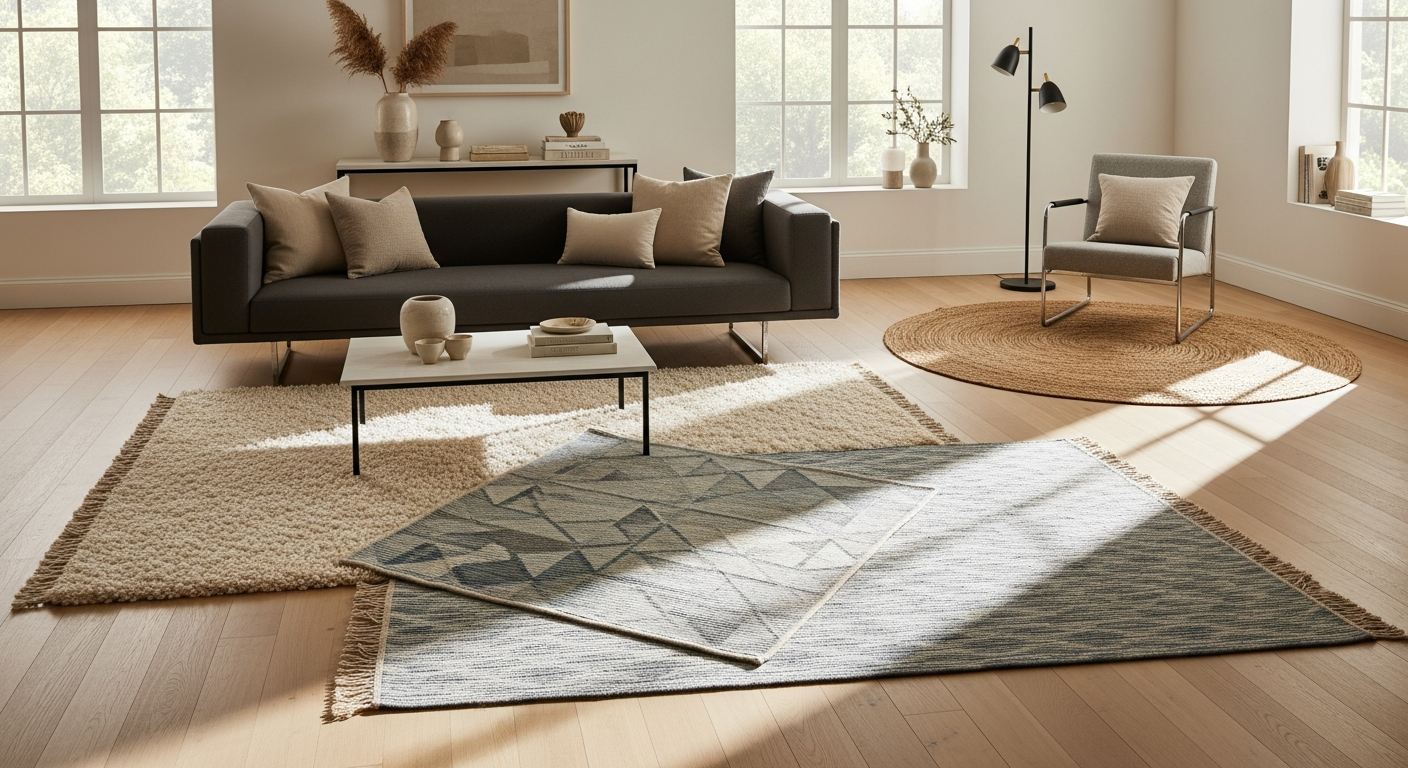
Layering involves placing a smaller rug atop a larger one, creating visual depth and defining zones within open spaces. This technique works beautifully in homes with large open-plan layouts where you want to visually separate living and dining areas without walls.
A neutral, larger rug serves as the foundation, while a smaller patterned or textured rug on top creates focal interest and psychological boundaries. The layering effect makes spaces feel intentional and allows you to experiment with pattern and color in ways full-room coverage doesn't permit. Practically, layering protects high-traffic zones from wear by localizing heavier use to the top rug.
Explore size and layering options that maximize your space's potential at Alfombra.es.
Evaluating Quality Indicators Without Expert Training
Density assessment: how to feel and evaluate rug construction
Quality rugs feel substantial. Pick up a rug sample or examine one in person—high-quality construction feels dense and hefty for its size, not flimsy or thin. The backing should feel sturdy, not papery. Run your hand across the pile surface and feel how tightly the fibers pack together.
Density directly correlates with longevity. Loosely constructed rugs crush and wear faster because fibers lack support. Dense construction means fibers stand upright, resist matting, and maintain appearance through years of use.
Test density by pressing your palm firmly into the pile, then lifting your hand. A dense rug springs back immediately, returning to original height. A less dense rug shows your palm print temporarily before slowly recovering. While this isn't scientific testing, it provides tactile feedback about construction quality.
Knot count and weave tightness as quality markers
For hand-knotted or hand-woven rugs, knot count matters—it represents the number of knots per square inch. Higher knot counts mean finer detail and tighter construction, though this matters less for machine-made rugs where mechanical consistency produces uniform quality regardless of knot density.
Weave tightness can be assessed by attempting to see through the rug to the backing. With the rug held up to light, a tight weave reveals minimal backing, while a loose weave shows prominent foundation threads. Tight weaves resist fraying, wear better, and last longer.
Run your fingers along the rug edge—fraying or loose fibers indicate looser construction. Quality rugs maintain edge integrity because tightly constructed edges resist unraveling. This simple observation reveals production quality without requiring specialized knowledge.
Backing materials and their role in rug longevity
Rug backing matters as much as the pile itself. Quality backing stabilizes the rug, prevents shifting on floors, and resists deterioration. Cotton backing provides basic support but can deteriorate in humid environments. Jute backing offers durability and eco-friendliness, though it can mildew in very wet conditions.
Latex or rubber backing provides superior slip resistance and stabilization. Rugs with this backing stay in place, particularly important on hardwood or tile floors where movement creates tripping hazards. The backing shouldn't emit strong chemical odors—some new rugs smell intensely, but this should fade within days, not persist for weeks.
Flip the rug over and examine the backing. It should feel uniform and secure, not separating from the pile or showing loose threads. Any separation indicates poor construction that will worsen over time.
Price Points and Value Across the Market
Budget-friendly options that don't sacrifice quality
Budget rugs exist at every price point, but smart shopping distinguishes genuine value from false economy. A $200 rug that lasts three years costs more annually than a $600 rug lasting eight years. Calculate cost-per-year to compare across price tiers.
Budget-friendly rugs typically use synthetic materials—polypropylene or polyester—and employ machine manufacturing for cost efficiency. Many perform excellently for their price, especially in low-traffic bedrooms or spaces where durability matters less. Look for tight weaves, quality backing, and reputation rather than assuming lower price always means compromise.
Seasonal sales offer legitimate savings on quality rugs. End-of-season clearances allow you to purchase premium rugs at reduced prices. Online retailers typically offer better prices than brick-and-mortar stores because they have lower overhead costs—factor this into your budget planning.
Mid-range selections offering optimal value propositions
Mid-range rugs—typically $400 to $1000—represent where most shoppers find optimal value. These rugs combine decent materials with solid construction, offering longevity without premium pricing. You'll find wool blends, quality synthetics, and hand-knotted options at lower knot counts.
Mid-range pricing allows brands to use better materials than budget options while avoiding luxury markups. A $600 wool blend rug outperforms a $200 synthetic rug dramatically over a decade, making the higher price point rational despite the larger upfront cost.
This category includes options from reputable manufacturers with track records of quality and customer service. You're paying for reliability and recourse if problems arise, not just the physical product.
Premium offerings and what justifies higher price tags
Premium rugs—$1000 and above—command higher prices through superior materials, meticulous craftsmanship, or designer status. Hand-knotted rugs with high knot counts, vintage pieces, and natural fiber selections from prestigious mills justify premium pricing through durability and aesthetic refinement.
Designer collaboration and brand heritage add cost. A rug designed by a celebrated designer costs more than an identical construction from an unknown manufacturer because you're purchasing the designer's reputation and design sophistication.
Premium rugs maintain value. Quality wool rugs appreciate or hold value like fine furnishings, while budget rugs depreciate to nothing when worn out. If you plan long-term ownership and want investment pieces that appreciate, premium rugs offer financial logic alongside aesthetic benefits.
Your Next Steps in the Rug Selection Journey
Finding the right rug transforms more than just your floor—it anchors your entire room's atmosphere. When you approach the selection process strategically, considering materials, room function, sizing, quality markers, and your personal style, you move from feeling overwhelmed to feeling empowered.
Start by identifying which room needs attention, then assess the specific demands that space presents. A kitchen rug requires entirely different criteria than a bedroom rug. Evaluate materials with clear priorities—is durability your primary concern, or does comfort matter more? Determine your budget realistically, understanding that cost-per-year often reveals better value than lowest upfront price.
The choices available through Alfombra.es reflect the diversity of modern rug shopping, where options span every budget level and aesthetic preference imaginable. Their selection encompasses materials from delicate natural fibers to resilient synthetics, sizes from runners to room-covering pieces, and price points from accessible to investment-grade.
Begin your confident rug selection journey with the comprehensive collection at Alfombra.es.