
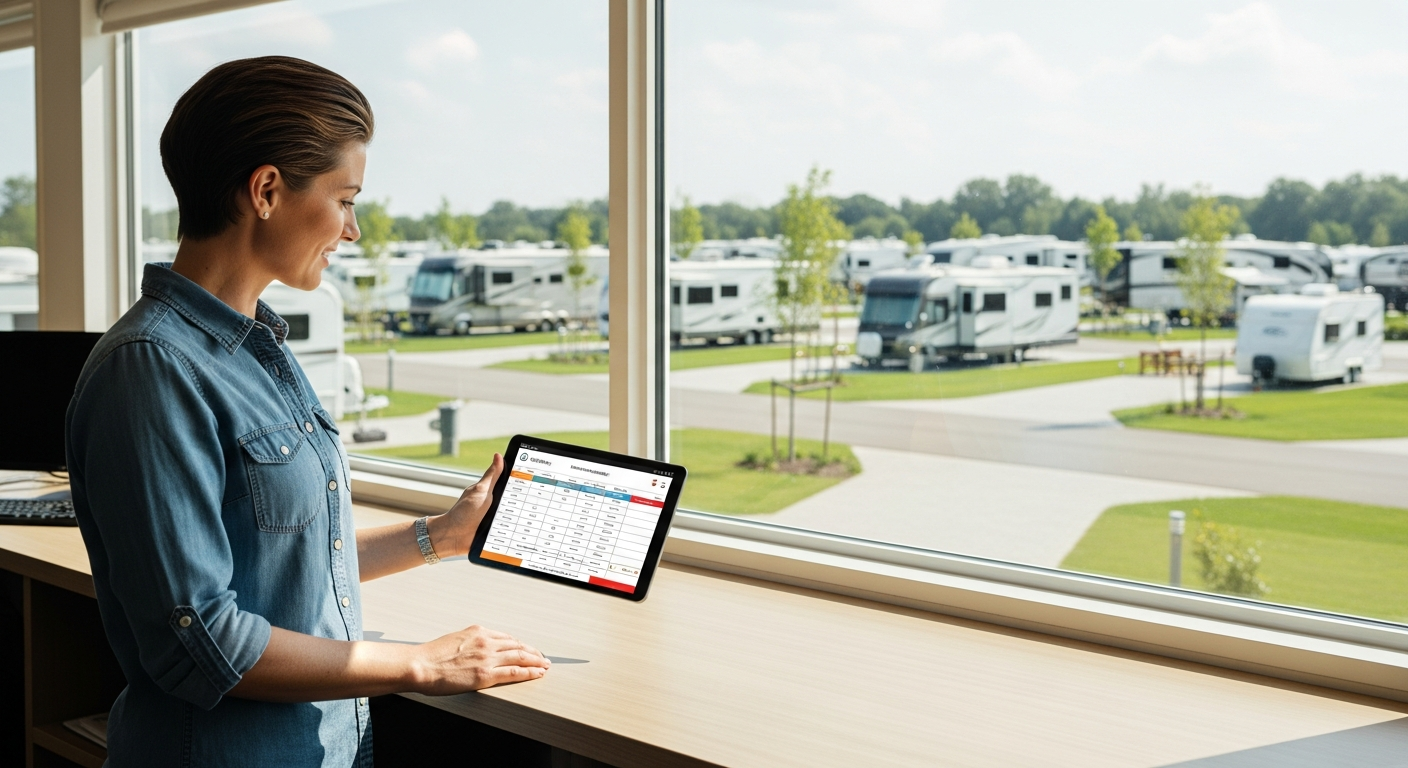
Discover how small RV park owners use RoverPass campground reservation software to boost revenue with dynamic pricing, multi-channel distribution, and streamlined operations. Learn the platform’s key features and pricing model.
Small RV park operators are quietly hemorrhaging revenue through outdated reservation systems. Studies show that manual booking processes cost independent campground owners an average of 15-20% in lost revenue annually—money that evaporates through double-bookings, pricing inefficiencies, and administrative overhead that consumes countless hours. For owners running lean operations, this isn't just a technology gap; it's a competitive disadvantage that compounds every season.
RoverPass emerged as a cloud-based solution purpose-built to solve exactly these problems. The platform functions as both powerful management software for operators and a consumer-friendly marketplace for travelers, creating a two-sided ecosystem that benefits everyone involved. Unlike generic hospitality platforms built for hotels or resorts, RoverPass was architected from the ground up for RV parks, glamping sites, and independent campgrounds.
Your park doesn't need to stay stuck in the manual reservation era. This guide breaks down how RoverPass works for small park operators, why it's become the go-to platform for independent campground owners scaling their businesses, and how the platform's revenue management tools, marketplace reach, and operational efficiency features directly impact your bottom line.
Start optimizing your campground with RoverPass today.
Why Small RV Park Owners Are Switching to RoverPass for Reservation Management
How manual booking systems drain time and create revenue leaks for independent operators
A spreadsheet isn't a reservation system—it's a time sink masquerading as one. Small park owners juggling multiple booking channels, email inquiries, and phone calls find themselves managing the same reservation across several platforms simultaneously. A guest books through Airbnb, but the calendar doesn't sync with the direct booking on your website. Another reservation comes via phone, and now you're manually updating three different systems to prevent double-bookings. By midweek, the administrative burden consumes 10-15 hours that could be spent growing the business or improving guest experiences.
Revenue leaks compound the problem. Without automated rate management, owners either underprice to maximize occupancy or overprice and watch bookings decline. Seasonal pricing becomes guesswork rather than strategy. Last-minute cancellations don't trigger dynamic repricing to recapture lost revenue. Peak season arrives, and you're still charging the same rate you set three months ago, leaving thousands on the table.
The shift from spreadsheet-based management to automated, cloud-based reservation systems
The transition to cloud-based reservation management fundamentally changes how operators work. Instead of managing bookings manually, the system becomes the single source of truth. A booking made on any channel instantly updates across all platforms. Guest information, payment processing, and communication flow through one integrated dashboard rather than scattered across email folders and sticky notes.
Automation removes the friction points that drain hours from your week. Guest confirmations send automatically. Check-in reminders eliminate no-shows. Payment processing happens in the background. The operational burden shifts from manual data entry to strategic decision-making around pricing, marketing, and guest experience improvements.
Why RoverPass appeals specifically to micro and small-sized parks (not just large resorts)
Large resort chains have the budget to build custom software solutions or hire dedicated reservation staff. Small operators need something different—an affordable, all-in-one platform that delivers enterprise-level capabilities without enterprise-level pricing. RoverPass was built with this reality in mind, scaling from micro-parks with just a few sites to larger independent operations with hundreds of spaces.
The platform's pricing model reflects this focus. There's no massive upfront software license fee that requires venture funding to afford. Instead, small parks pay only when bookings convert through the platform. This aligns incentives perfectly—RoverPass succeeds when you succeed, and the risk of adoption falls on the platform provider, not the operator.
Real-time availability tracking that prevents double-bookings and maximizes occupancy
Every booking system failure costs money. A double-booking creates an angry guest, a lost reservation, and damage to your reputation. Real-time availability tracking across all channels eliminates this risk. When a camper books through Airbnb, the calendar immediately reflects that site as occupied across your website, Expedia, and Hipcamp simultaneously.
This synchronized approach does something subtle but powerful—it maximizes occupancy. Without real-time visibility, owners tend toward conservative availability windows. They might block off extra days as a safety buffer. With accurate real-time tracking, every bookable day becomes a selling opportunity. That flexibility translates directly to higher occupancy rates and more consistent revenue.
Automated guest communications that reduce administrative workload by hours per week
Pre-arrival emails, check-in reminders, post-stay thank yous, and payment confirmations constitute dozens of individual messages per season. Sending these manually multiplies the hours already consumed by reservation management. Automated communication sequences handle this without any effort from you.
The secondary benefit runs deeper—guests receive consistent, professional communication. Booking confirmations arrive instantly rather than after you check email. Reminders arrive at optimal times based on arrival date. Follow-ups requesting reviews happen automatically. This professional communication stream builds trust with guests while freeing your team to focus on on-site service excellence.
Mobile-first booking management that lets owners control reservations from anywhere
Park operations don't stop when you leave the office. A cancellation arrives while you're checking on the maintenance crew. A guest calls with questions about site options during the afternoon. A last-minute booking opportunity appears, and you need to check if inventory is available. Cloud-based systems let you manage everything from a smartphone, tablet, or laptop anywhere with internet access.
This flexibility means you're never truly disconnected from your business. You can approve reservations, adjust pricing, check occupancy, and communicate with guests in real-time regardless of physical location. Seasonal operators or those splitting time between multiple properties find this mobile access particularly valuable.
Dynamic Pricing and Revenue Optimization Strategies Built Into RoverPass
How dynamic pricing adjusts rates based on demand, seasonality, and local events
Static pricing leaves money on the table. When demand spikes—a holiday weekend, a nearby festival, or a sporting event—demand exceeds supply, but your rates stay the same. When demand softens, you maintain rates that only incentivize bookings from the most price-sensitive campers. Dynamic pricing inverts this relationship. Rates rise and fall based on real-time demand signals, maximizing revenue in both scenarios.
RoverPass incorporates demand data, seasonal patterns, and local event calendars to suggest optimal pricing automatically. You can set parameters and let the system adjust rates within your guidelines, or manually control pricing if you prefer. Either way, the intelligence behind the recommendations comes from aggregated data across thousands of parks, giving small operators access to pricing optimization strategies that previously required expensive consultants.
Real-world examples of small parks increasing revenue 20-30% through intelligent pricing
Small parks implementing dynamic pricing through RoverPass consistently report significant revenue lifts. A 20-30% increase in annual revenue isn't uncommon—sometimes from the same number of bookings, just at optimized rates. A micro-park with 15 sites might generate $180,000 annually under static pricing. With dynamic pricing, that same park generates $225,000-$235,000 annually from essentially the same operational effort.
These results stem from precision. Dynamic pricing doesn't mean raising rates indiscriminately. It means charging premium rates when demand justifies it and competitive rates during softer periods to maximize occupancy. The result is higher average daily rates and higher occupancy percentages simultaneously—a combination that static pricing rarely achieves.
Automated price adjustments that respond to occupancy rates and booking patterns
Manual pricing reviews happen quarterly or semi-annually at best. Occupancy patterns shift weekly. A sudden cancellation creates a pricing opportunity in that now-available week. A competing park suddenly fills up, signaling demand strength in your market. Automated pricing responds to these signals in real-time.
The system monitors occupancy, tracks booking velocity, observes competitor availability, and adjusts rates accordingly. If occupancy sits at 40% with three weeks to arrival, rates might automatically lower to stimulate demand. If occupancy reaches 85% in the same window, rates might increase to maximize revenue from the final bookings. This responsiveness captures value that manual systems can never achieve.
Seasonal rate management for peak and off-season periods
Every park experiences seasonal variation. Summer weekends command premium rates. Winter weekdays struggle to fill. Shoulder seasons require careful calibration. Managing this variation manually requires predicting demand months in advance and hoping your forecast proves accurate.
RoverPass enables seasonal rate structures that automatically activate on predetermined dates. You can build peak, shoulder, and off-season rate tiers and let the system activate them. As actual booking data arrives, the platform can adjust within your seasonal framework, adding intelligence to the basic seasonal structure. This approach delivers the simplicity of seasonal pricing with the sophistication of dynamic adjustment.
Competitive pricing intelligence features that keep your rates competitive
Operating in isolation means guessing at competitive rates. What are nearby parks charging? How do those rates vary by date, occupancy, and season? Without this visibility, you either risk overpricing and losing bookings or underpricing and leaving revenue on the table.
RoverPass incorporates competitive pricing data into its recommendations, giving small operators visibility into market rates for comparable properties. You can see what competitors charge, understand the variation patterns, and ensure your rates remain competitive while avoiding a destructive price war.
Revenue reporting dashboards that show exactly where your income comes from
Understanding your revenue sources drives better decisions. Which booking channels generate the most revenue? Which dates command the highest average daily rates? Do peak weekend rates actually drive more total revenue than lower off-season rates? Detailed revenue dashboards answer these questions through accessible visualizations.
Reporting clarity reveals patterns invisible in raw reservation data. You might discover that a specific marketing channel drives volume but at lower average daily rates. Or that certain dates consistently underperform despite seemingly attractive pricing. These insights guide strategic adjustments that compound into significant revenue improvements.
Maximizing ADR (Average Daily Rate) without sacrificing occupancy numbers
The tension between ADR (average daily rate) and occupancy drives endless debate among park operators. Raising rates increases revenue per booking but might decrease occupancy. Lowering rates fills sites but reduces per-unit revenue. The optimal strategy doesn't choose between them—it optimizes both simultaneously through sophisticated pricing.
Dynamic pricing enables this balance by adjusting rates based on demand elasticity. During peak periods, demand exceeds supply, so higher rates maximize revenue with minimal occupancy impact. During softer periods, lower rates stimulate demand, filling the inventory that would otherwise sit vacant. The result is higher ADR on occupied sites and higher occupancy percentages—the exact combination that drives revenue growth.
Discover how dynamic pricing can transform your park's revenue today.
Multi-Channel Distribution: Reaching Campers Beyond Your Website
Why single-channel selling limits your market reach and booking potential
A direct website represents only one access point for potential guests. Most travelers planning RV trips search multiple platforms simultaneously. They check Airbnb, browse Expedia, scroll through Hipcamp, and visit Google Maps. A park that only accepts direct bookings through its website captures only the subset of travelers who happen to visit that specific URL—a fraction of the addressable market.
Single-channel operators compete entirely on organic traffic and paid marketing directed to their website. Expanding to multiple channels means meeting travelers where they already search. A guest finds your park on Hipcamp and books without ever visiting your website. Another discovers you through Expedia while comparing options for a specific weekend. This multi-channel presence captures bookings that single-channel operations leave on the table.
How RoverPass connects your inventory to Airbnb, Expedia, Hipcamp, and other OTAs
RoverPass functions as a command center connecting your inventory to major online travel agencies and booking platforms simultaneously. Your availability calendar syncs to Airbnb, Expedia, Hipcamp, and other channels that RoverPass integrates with. When you adjust pricing in RoverPass, those changes propagate across all connected channels. When a booking arrives through any platform, it updates your central reservation system instantly.
This multi-channel connection transforms your inventory from siloed to networked. Your 20 sites become visible to millions of travelers across multiple platforms, dramatically expanding your marketing reach without proportional increases in marketing spend.
Synchronized calendars across all platforms to prevent overselling and conflicts
Calendar synchronization sits at the heart of effective multi-channel management. Without it, accepting bookings through multiple channels creates chaos—a site booked on your website might also get booked on Airbnb, creating double-bookings and angry guests.
RoverPass maintains synchronized calendars across all channels through real-time data synchronization. A booking on any platform instantly updates everywhere, preventing the availability conflicts that plague disconnected systems. This technical elegance allows operators to safely expand to multiple channels without multiplying operational complexity.
Expanded visibility that puts your park in front of millions of potential guests
Airbnb alone reaches over 150 million users globally. Expedia operates across multiple brands serving hundreds of millions of travelers. Hipcamp connects outdoor enthusiasts actively searching for unique camping experiences. Distributing through these channels puts your park in front of audiences that dwarf even aggressive direct marketing campaigns.
This visibility compounds seasonally. During peak travel seasons, millions of travelers plan trips through these platforms daily. Your park appears in search results alongside nearby options, competing for attention. During off-season periods, the ability to reach scattered interested travelers across multiple platforms becomes even more critical for maintaining occupancy.
Commission-based pricing model that only charges when bookings actually convert
Most software platforms charge recurring monthly or annual fees regardless of revenue generated. This creates risk for small operators—paying for software while building their customer base feels counterproductive. RoverPass flips this model. You pay commission only on bookings that actually convert through the platform.
This approach aligns incentives perfectly. RoverPass succeeds when you succeed, and the risk of adoption sits with the platform rather than the operator. A park implementing RoverPass doesn't pay platform fees in month one, month two, or month three if no bookings arrive. It only pays when guests book, making the financial case for adoption significantly easier.
Automated channel management that eliminates manual listing updates
Managing multiple channel listings manually means duplicating effort across platforms. Rate changes require updating each channel individually. New photos need uploading to multiple systems. Descriptions must be maintained across numerous listings. Promotional periods require coordinating updates across all channels simultaneously.
Automated channel management centralizes this work. Update rates in RoverPass, and changes synchronize across all channels. Upload new photos once, and they propagate everywhere. This centralized approach eliminates the manual coordination that makes multi-channel selling seem unmanageable for small operators with limited staff.
Integrations with Zapier and other tools for custom workflow automation
Parks operate with different workflows and priorities. Some tightly integrate with local tourism boards. Others coordinate with specific marketing partners or accounting systems. Custom integrations through Zapier and similar automation platforms extend RoverPass beyond its native features, adapting the platform to existing business processes rather than forcing businesses to adapt to the platform.
These integrations enable sophisticated automations without requiring development resources. A booking arriving through Hipcamp could automatically trigger a welcome email, sync to accounting software, and add the guest to a CRM system—all without manual intervention. This automation depth becomes particularly powerful as parks grow and operational complexity increases.
Empowering Small Parks to Compete at Scale
Small RV park owners no longer choose between operational simplicity and revenue growth—RoverPass delivers both. The platform automates the tedious reservation management work that consumes hours weekly while simultaneously expanding reach through a nationwide marketplace accessible to millions of travelers. Dynamic pricing algorithms that rival those deployed by large resort chains now sit within reach of micro-park operators.
The integrated approach to guest management, point-of-sale operations, and multi-channel distribution fundamentally transforms how independent operators compete with larger chains. What previously required fragmented systems, manual workarounds, and expensive consulting now consolidates into a single platform built specifically for campground operations.
The risk-free pricing model deserves particular emphasis. Small operators recoup platform investment within 2-3 months of active use. That first booking through a new channel, that optimized rate capturing premium revenue during peak demand, that automated guest communication improving satisfaction—these aren't theoretical possibilities. They're outcomes documented across thousands of parks already operating on RoverPass.
Your next booking could be the one that tips the scales toward growth. Reach it through a channel you haven't yet accessed. Price it at the optimal rate that would be invisible without dynamic pricing intelligence. Manage it from a mobile device while standing on your park's grounds. This is the operational reality that RoverPass creates for independent campground owners.
Begin your transformation with RoverPass and unlock your park's revenue potential.