
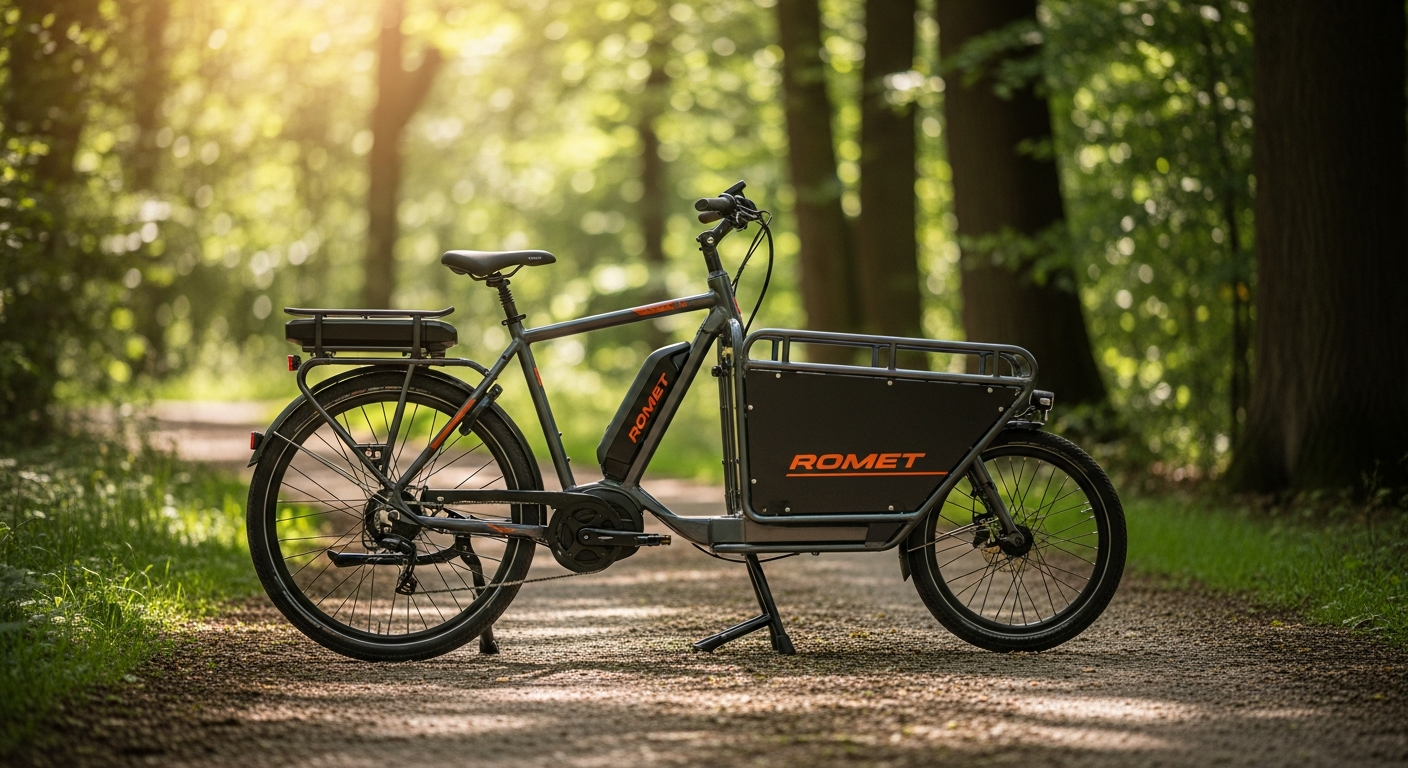
Discover how the Romet E-Wagant 3.0 electric trekking bike handles gravel, forest trails, and urban commutes with its Bafang motor, suspension fork, and all-weather tires.
E-bike buyers face a persistent dilemma: most models excel on one terrain type but falter on another. Road-focused e-bikes feel sluggish on gravel. Mountain e-bikes prove overkill for commuting. Over 60% of riders end up compromising, choosing a specialist model when they really need a generalist. The Romet E-Wagant 3.0, engineered by Polish manufacturer Romet, directly challenges this false choice by combining practical versatility with genuine performance across multiple environments.
This electric trekking bike integrates a Bafang mid-drive motor, suspension fork, and all-weather tires into a geometry designed for control rather than speed. Whether you’re navigating gravel paths, rolling through forest trails, or navigating city streets, the E-Wagant 3.0 presents itself as a single solution that handles technical terrain without sacrificing daily usability.
Discover the Romet E-Wagant 3.0’s full specifications and capabilities today.
Beyond Pavement—How the Suspension and Geometry Handle Real Trails
Upright Geometry: Control Over Speed
The E-Wagant 3.0’s upright riding position fundamentally changes how you interact with varied terrain. Rather than hunching forward in an aggressive posture, riders sit centered over the frame with ergonomic grips positioned for stability and comfort. This geometry delivers tangible benefits: your center of gravity remains higher and more controlled, weight distribution favors the rear wheel on climbs, and your vision extends further ahead to anticipate obstacles.
On technical sections, the upright position proves decisive. Roots, rocks, and ruts become negotiable rather than threatening. Your hands sit ready to modulate braking, and body positioning shifts intuitively without requiring aggressive seat-to-bar reach adjustments.
Suntour NVX32-Boost-NLO-DS Front Fork: 80mm of Confidence
The front fork absorbs impact with 80mm of travel—substantial without being excessive. This suspension range targets the sweet spot: enough compliance for backcountry roughness, yet firm enough to remain responsive on hardpack and asphalt. The NVX32 designation indicates a lockout feature, allowing riders to stiffen the fork during road sections to eliminate bobbing and improve pedaling efficiency.
Field performance across gravel and light singletrack demonstrates this fork’s competence. The suspension soaks up root strikes and stream-crossing impacts without diving excessively. Rebound tuning feels neutral—the fork settles quickly without feeling overly damped or bouncy.
Suspension Seatpost: The Overlooked Comfort Detail
The suspension seatpost addresses a gap many e-trekking designs neglect: rear-wheel impact absorption. While front suspension garners attention, the rear wheel encounters identical bumps and obstacles. A rigid seatpost transfers every vibration directly to your lower spine. The E-Wagant 3.0’s seatpost flexes slightly, decoupling your body from the trail surface.
Across longer rides on technical terrain, this compliance accumulates into genuine fatigue reduction. Your lower back absorbs fewer shocks, allowing you to maintain focus and control through sustained technical sections.
Michelin Protek 29-Inch Tires: Traction Without Compromise
The E-Wagant 3.0 rolls on 700x47C (29-inch) Michelin Protek tires mounted to double-wall aluminum rims. The 47mm width provides flotation over loose surfaces while remaining nimble enough for pavement. Michelin Protek tires feature reinforced sidewalls designed for puncture resistance—a practical advantage on rocky terrain and thorny vegetation.
Traction characteristics vary meaningfully by surface. On gravel, the knobby tread pattern grips effectively without requiring aggressive tire pressure. Wet grass and muddy sections benefit from side knobs that bite into soft surfaces. Hardpack and asphalt work adequately, though these tires clearly prioritize rough-surface performance over rolling efficiency.
Motor Performance on Inclines and Challenging Terrain
Bafang M200: 250W of Practical Assistance
The Bafang M200 mid-drive motor delivers 250W of rated power and 65Nm of claimed torque. These specifications position it as entry-level within the e-bike market—notably modest compared to 750W mid-drive systems or 1000W+ hub motors. However, mid-drive placement and torque characteristics matter more than raw wattage.
Mid-drive motors apply power directly to the chain, leveraging the bike’s gearing to multiply torque. A 250W mid-drive at the 7:1 mechanical advantage of a granny gear produces force equivalent to motors with substantially higher ratings. The E-Wagant 3.0’s Shimano Cues 1×9 drivetrain ensures this multiplication occurs reliably across all terrain.
Climbing 20% Gradients: Where 65Nm Proves Sufficient
Real-world climbing performance on inclines reaching 20% gradient demonstrates the motor’s effectiveness. At 65Nm, the M200 avoids the dramatic assist some riders expect. Instead, it smooths effort rather than eliminating it. Steep pitches still require pedaling pressure, but the assistance makes sustained climbs manageable without exhaustion.
Riders report that the motor feels “natural”—responding proportionally to pedal input rather than providing all-or-nothing engagement. This characteristic suits mixed-terrain riding where climbs alternate with technical sections requiring precise control. The motor never dominates the riding experience; instead, it whispers assistance when terrain demands it.
Mid-Drive Architecture and Weight Distribution Benefits
Positioning the motor at the crank rather than the hub delivers multiple advantages. Weight centers within the frame rather than concentrating at wheel locations, lowering the center of gravity and improving cornering confidence. The motor assists naturally through the bike’s gearing, eliminating the sensation of “being pushed” that hub-motor riders sometimes report.
Mid-drive systems also maintain the mechanical feel of traditional cycling. Pedal input directly translates to chain engagement and motor response, creating intuitive feedback that accelerates the learning curve for new e-bike riders.
Battery Range and Real-World Endurance Testing
BMZ Battery: Capacity Options Shape Your Range
The E-Wagant 3.0 pairs the Bafang motor with a BMZ-branded battery available in two capacities: 540Wh or 720/725Wh. The base configuration with 540Wh represents a practical compromise between weight and range. Higher-capacity batteries add approximately 1–1.5 kg, creating a meaningful difference in handling and portability.
Range estimates for the 540Wh version hover around 60–80 km under typical mixed-terrain conditions. The 720/725Wh option extends this to approximately 90–120 km. These figures assume moderate assistance levels and averaging 15–20 km/h speeds across varied terrain.
Factors That Dramatically Affect Real-World Distance
Estimated range specifications bear surprisingly little resemblance to actual distances because terrain, rider weight, assistance level, and tire pressure vary dramatically. Riding exclusively on flat pavement might extend range to 120+ km; technical singletrack with constant climbing might reduce it to 40 km. Assistance level selection proves decisive—eco mode can double range compared to maximum assistance.
Cold temperatures suppress battery efficiency by 20–30%, and tire pressure deviations of just 0.5 bar shift range by 10%. Heavier riders and sustained high-speed riding both reduce distance meaningfully.
Hilly vs. Flat Performance: Where Battery Strategy Matters
Flat terrain allows the motor to work minimally, requesting power only during acceleration and maintaining speed against rolling resistance. Hilly routes demand continuous climbing assistance, exhausting battery capacity far more rapidly. On rolling terrain mixing climbs with descents, the E-Wagant 3.0’s battery proves adequate for 50–80 km half-day adventures.
The integrated display provides estimated remaining range based on current terrain and assistance level. This information allows riders to adjust strategy mid-ride, shifting toward lower assistance when battery life appears challenged.
Learn more about the E-Wagant 3.0’s battery performance and specifications.
Drivetrain and Braking for Varied Conditions
Shimano Cues RD-U4000: E-Bike Engineering, Not Repurposed Mountain Parts
The Shimano Cues RD-U4000 represents a significant detail often overlooked by casual buyers. Rather than using standard mountain bike derailleurs, Romet specified a derailleur engineered specifically for e-bikes. The Cues platform features reinforced cage construction, optimized cable pull ratios, and tuning designed to manage the rapid cadence changes and increased chain tension that mid-drive motors generate.
This engineering distinction matters. Traditional derailleurs on e-bikes experience premature wear because motor torque exceeds the loads they were designed for. Shimano Cues components tolerate these forces, extending component lifespan and maintaining consistent shifting precision across thousands of kilometers.
Nine-Speed Range: Adequate for Most Mixed-Terrain Needs
The 1×9 drivetrain provides gear spacing suitable for both paved climbs and technical terrain. The lowest gear offers sufficient mechanical advantage for steep gradients, while the highest gear allows reasonable pedaling efficiency on flat sections and descents. Riders transitioning from 10 or 12-speed systems notice slightly larger gaps between consecutive gears, requiring more deliberate gear selection rather than fine-tuning.
For mixed-terrain riding, nine speeds prove sufficient. The motor’s consistent torque assist reduces the need for perfect gear matching that pure muscle-powered bikes demand.
Shimano BL-MT200 Hydraulic Disc Brakes: Confidence in Wet Conditions
The E-Wagant 3.0 pairs 180mm front and 160mm rear hydraulic disc rotors with Shimano MT200 calipers. These specifications indicate mid-range braking performance—neither lightweight road-style stoppers nor full-sized downhill systems, but genuinely adequate for extended trekking.
Hydraulic braking delivers modulation and power superior to mechanical disc systems. The larger 180mm rotor up front accommodates the bike’s weight distribution and higher speeds compared to unpowered trekking bikes. Real-world stopping performance in rain and mud proves confident; the system maintains consistent bite regardless of wet conditions.
Complete Accessory Package—What You Get Out of the Box
Full-Length Mudguards: Practical Protection
The E-Wagant 3.0 arrives equipped with full-length fenders rather than abbreviated models. During wet and muddy conditions, these guards prevent road spray and mud from covering your legs, shoes, and bike frame. This protection extends component lifespan by reducing water and corrosive spray contact.
For recreational riders planning to ride year-round or in variable conditions, integrated fenders eliminate the need for separate purchases and clunky retrofit installations.
Rear Rack with Integrated LED Light
The rear carrier integrates seamlessly with the frame geometry and includes a wired LED light powered by the main battery. This design prevents the common frustration of lights requiring separate battery systems that drain or require replacement. The integrated light works with bike functionality rather than existing as an afterthought.
The rack accepts standard panniers and cargo bags, enabling the E-Wagant 3.0 to function as a utility bike for weekend camping trips or daily commuting with groceries and gear.
Kickstand and Internal Cable Routing
A kickstand allows parking on uneven terrain without requiring a separate support structure. Internal cable routing hides brake and derailleur cables within the aluminum frame, protecting them from mud, rocks, and weather exposure while creating a clean visual appearance.
Weight, Portability, and Practical Considerations
26.7–27.6 kg: Understanding E-Bike Heft
The E-Wagant 3.0 weighs between 26.7 kg and 27.6 kg depending on battery capacity—nearly double a comparable unpowered trekking bike. This weight reflects the integrated battery (3.5–4 kg), motor assembly, reinforced frame required for structural integrity, and comprehensive accessory package.
Carrying this bike up stairs, loading it into vehicles, or maneuvering in tight spaces requires deliberate technique. Single-handed lifting proves impractical; mounting it on standard wall hangers demands secure installation.
How Weight Affects Handling Across Different Terrain
On technical terrain, the distributed weight (concentrated around the bottom bracket rather than at wheel hubs) proves manageable. The center of gravity positions low and central, supporting control through technical sections. Riders find the handling responsive despite the overall mass.
Flat sections and flowing terrain feel heavier because momentum depends more directly on muscle power. The motor compensates for climbing effort, but accelerating from standstill or navigating tight flat corners requires accepting the added inertia.
Storage Solutions for Heavier E-Bikes
Practical ownership requires considering storage. Lightweight unpowered bikes fit in apartment corners or hang on standard hooks. The E-Wagant 3.0 demands dedicated space: a sturdy bike stand, secured wall mounting, or garage floor placement. Battery charging similarly requires accessible outlet access for nightly charging cycles.
Apartment dwellers should evaluate storage reality before purchasing any 27+ kg e-bike.
Value Proposition and Price-to-Performance Analysis
€2,890 Positioning in a Crowded Market
The E-Wagant 3.0 with 540Wh battery carries a base price of approximately €2,890 (roughly $3,130 USD). This positioning places it mid-range within the e-trekking category: significantly below €5,000+ premium brands, but above €1,500 budget models that sacrifice durability and performance.
At this price point, the E-Wagant 3.0 competes against established brands like Haibike, Trek, and Specialized. The Polish engineering and Romet’s established reputation provide credible alternatives to household names.
Component Quality Relative to Price Point
The specification sheet reveals deliberate choices favoring durability over specification inflation. The Bafang M200 motor, while entry-level in wattage, represents proven, reliable engineering used across thousands of bikes. The Shimano Cues drivetrain costs more than standard derailleurs because it’s engineered specifically for e-bikes rather than adapted from mountain bike components.
Hydraulic disc brakes, suspension fork with 80mm travel, and reinforced aluminum frame construction typically appear on bikes costing 50% more. The complete accessory package (mudguards, lights, rack) alone represents €400–600 in retail value on bikes sold without these items.
Component choices reflect a philosophy: build for reliability and versatility rather than specification maximization.
Long-Term Ownership Costs and Resale Value
E-bikes depreciate less aggressively than many buyers expect. A 5-year-old Romet E-Wagant 3.0 in good condition maintains approximately 50–60% of original purchase price on secondary markets. This depreciation, while notable, proves comparable to automobiles and better than many consumer electronics.
Annual ownership costs center on battery replacement when capacity drops below acceptable levels (typically 7–10 years), chain and drivetrain component replacement due to regular wear, and occasional brake bleeding on hydraulic systems. Annual maintenance costs typically range from €150–300 if riders perform basic care themselves.
Making Your Move: Is the Romet E-Wagant 3.0 Your Next Trail Partner?
The Romet E-Wagant 3.0 occupies a genuinely compelling position within the e-trekking market. This bike serves riders unwilling to sacrifice comfort, versatility, or affordability—the traditional trade-off triangle that defines mid-range purchasing decisions.
The suspension fork and upright geometry transform technically challenging terrain from intimidating to manageable. Muddy forest paths, gravel fire roads, and rocky stream crossings become explorable rather than avoided. Meanwhile, the Bafang motor quietly handles steep pitches without drama, transforming physical exhaustion into sustained cruising. The hydraulic brakes inspire confidence in wet conditions, and the comprehensive accessory package means you’re riding equipped from day one without dropping additional euros on mudguards, lights, and racks before your first adventure.
Yes, the weight is substantial—but that’s the predictable trade-off for durability and genuine all-weather capability. Heavier frames tolerate impacts better; reinforced components shrug off abuse that lightweight bikes would struggle with. If you’re a recreational rider seeking a reliable companion for weekend trail adventures and weekday commutes, the E-Wagant 3.0 deserves serious consideration.
Start by comparing it directly against similarly priced competitors available in your region. Research local dealer networks and warranty support, then take one for an extended test ride across the terrain you actually ride most frequently. The difference between specification sheets and real-world performance becomes immediately apparent during even a short ride.
Explore the Romet E-Wagant 3.0 and start your versatile trail riding journey today.