
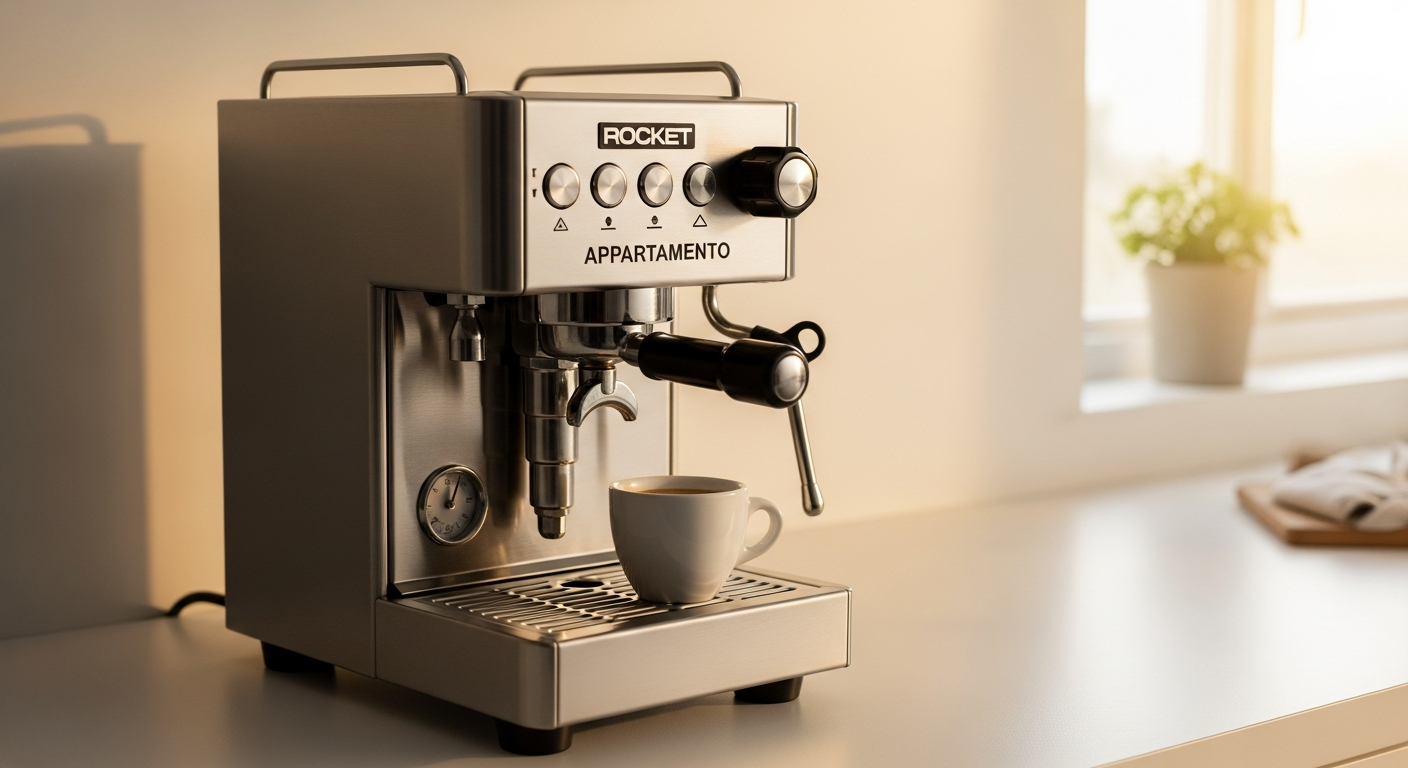
Discover how the Rocket Appartamento compact heat exchanger espresso machine delivers café-quality espresso in kitchens with limited counter space. Learn why home baristas choose this Italian-built machine for professional results at home.
Nearly 70% of specialty coffee enthusiasts cite limited kitchen space as their biggest barrier to owning an espresso machine. If you've felt that frustration—staring at machines that sprawl across countertops like they own the place—you're not alone. The good news? Professional-grade espresso doesn't require sacrificing your entire kitchen layout.
The Rocket Appartamento has become the solution for home baristas working with compact kitchens. Hand-built in Milan and engineered with a 1.8-liter copper boiler and the legendary E61 group head, this machine proves that serious performance doesn't need a commercial footprint. It's the bridge between professional capability and practical living space.
Discover how the Rocket Appartamento transforms compact kitchens into espresso havens.
Deconstructing the Compact Footprint: How Rocket Engineered Maximum Performance in Minimal Space
The Appartamento measures approximately 10.5 inches wide, 17 inches deep, and 14.25 inches high (274W × 439.5D × 360H mm). To put this in perspective, most prosumer machines stretch 18–24 inches wide and demand similar depth. This difference translates directly to fitting on apartment counters, kitchen islands, or small café bars where standard machines simply won't work.
Strategic Boiler Placement and Thermal Design
The 1.8-liter copper boiler sits at the machine's core, designed for thermal efficiency rather than bulk. Copper conducts heat evenly, eliminating hot spots that plague less thoughtfully engineered machines. The boiler's size allows simultaneous espresso brewing and milk steaming without the temperature recovery lag common in single-boiler machines. You pull a shot while water heats for the next cup, then steam milk—all without waiting.
Counter Space Reality and Kitchen Integration
Real kitchens have real constraints. The Appartamento fits on standard 24-inch-deep counters with room to spare. Most home setups place it at the corner of an island or against a backsplash, leaving adjacent counter space for grinders and cup warming. Weight distribution remains stable even on older countertops, thanks to a design that concentrates mass low and central rather than creating a top-heavy footprint.
Why Compact Doesn't Mean Cramped
The machine's functionality remains unrestricted despite its size. The 58mm portafilter uses standard espresso baskets and tampers. Steam wand reach extends fully, accommodating 12-ounce milk pitchers and larger cups. Internal components—pump, group head, solenoid valve—operate identically to their positions in larger frames. Rocket simply removed excess bulk, not capability.
The E61 Group Head Advantage: Thermal Stability Meets Simultaneous Brewing
The E61 group head represents seven decades of refinement. Designed in 1961 and still manufactured to the original specifications, this component maintains water temperature within narrow tolerances throughout extraction. The machined brass construction and internal passages create a thermal mass that prevents temperature swings during shot pulling.
Pre-infusion and Pressure Dynamics
Water doesn't slam into grounds at full pressure. Instead, the E61's design gradually increases pressure over the first few seconds—a pre-infusion phase that allows even wetting before full extraction begins. Grounds absorb water uniformly, preventing channeling (water racing through weak points). The result? Fuller flavor profiles with better sweetness and complexity than machines lacking this feature.
Heat Exchanger Technology Explained
Heat exchanger machines (like the Appartamento) use a single boiler with a tube running through it. Incoming water passes through this tube, heating as it travels toward the group head. The boiler maintains brewing temperature constantly while the tube delivers water at the precise temperature needed for espresso. This design eliminates the wait between brewing and steaming—the boiler stays hot, and the tube delivers appropriate temperatures for both functions.
Compare this to single-boiler machines, which sacrifice steaming temperature to achieve brewing temperature, requiring a cooldown flush before pulling shots. Dual-boiler machines maintain separate boilers for brewing and steaming but cost substantially more and occupy significantly larger footprints.
Thermal Mass and Back-to-Back Shots
The E61's thermal mass absorbs heat from the boiler and releases it gradually during extraction. Pull multiple shots consecutively, and this mass keeps temperatures stable. Larger machines with more massive group heads offer similar advantages, but the Appartamento achieves comparable performance through superior thermal engineering rather than pure size.
Italian Craftsmanship Meets Modern Engineering: Build Quality That Justifies the Investment
Rocket builds machines in Milan using the "Fatto a Mano" tradition—handmade craftsmanship emphasizing meticulous attention to detail. Each Appartamento receives individual assembly, pressure testing, and calibration before shipping. This isn't mass production with quality assurance checkpoints; it's artisanal manufacturing.
Materials and Design Integration
The polished stainless steel body features distinctive circular cutouts that serve dual purposes: they reduce material weight while creating visual interest. The design catches light and becomes a kitchen statement piece rather than an appliance. Professional baristas recognize this machine instantly—it signals serious commitment to home espresso.
Commercial-Grade Components
The 58mm portafilter uses the same diameter as commercial espresso machines, meaning compatibility with standard baskets and tampers. Included accessories—tamper, distribution tool, and portafilter—meet commercial standards rather than consumer-grade compromises. This approach means you're not locked into proprietary parts or limited baskets.
Durability and Longevity Expectations
Hand-built construction means experienced technicians identify potential weak points before assembly. Internal gaskets, solenoids, and pump components receive individual inspection. Rocket typically provides a one-year warranty with optional extended coverage available. Many machines exceed 15–20 years of reliable operation with basic maintenance—descaling, backflushing, and occasional gasket replacement.
Invest in the hand-built Rocket Appartamento and brew with confidence for decades.
Steam Power Without the Footprint: The No-Burn Wand and Microfoam Mastery
The Appartamento's steam wand delivers surprising power from its compact body. A three-hole steam tip produces robust pressure for milk texturing while remaining proportional to the machine's overall design. The "no-burn" design features a stainless steel exterior that stays cool to the touch, preventing the common burns home baristas experience when adjusting steam pressure mid-steaming.
Microfoam Creation and Milk Texture Control
Quality steaming requires controlling two variables: heat intensity and air incorporation. The Appartamento's wand positioning and pressure consistency allow baristas to position the tip at the milk surface (incorporating air for foam) then deeper in the pitcher (heating the body). This technique creates microfoam—tiny, uniform bubbles that pour smoothly into espresso without separating.
The no-burn design means adjusting wand position or pressure without burning fingers, encouraging the experimentation that builds steaming skill. Within a few sessions, users develop the feel for creating silky microfoam comparable to café-quality drinks.
Steaming Performance Against Larger Machines
Steaming 4–5 ounces of milk takes 30–45 seconds on the Appartamento—identical to commercial machines with substantially larger footprints. Steaming 8+ ounces requires longer and sometimes a cooling flush before the next shot, but household consumption patterns rarely exceed 2–3 milk drinks consecutively. For typical home use, steam performance proves entirely adequate.
Original vs. TCA: Choosing Your Temperature Control Strategy
The standard Appartamento uses a pressurestat—a mechanical device that triggers the pump when boiler pressure drops below a set point, maintaining temperature through pressure stability. The TCA (Temperature Control Adjustment) introduces choices: a multi-setting pressurestat with four preset temperatures or PID-controlled temperature management with three settings (low, medium, high).
Pressurestat-Based Temperature Management
Pressurestat machines maintain boiler pressure within a narrow band. Since water temperature correlates directly to pressure, this approach keeps brewing temperature consistent. Most espresso roasts extract well within the pressurestat's range. The limitation emerges with light roasts or specific extraction profiles requiring precise temperature tuning—a pressurestat offers less flexibility.
PID Control and Multi-Setting Options
The TCA's PID system reads boiler temperature constantly and adjusts heating elements to maintain exact set points. This precision allows dialing in different roasts—lower temperatures for light roasts prone to under-extraction, higher for dark roasts requiring aggressive extraction. Four discrete temperature options (or three on the PID model) provide flexibility without overwhelming complexity.
Which Control System Fits Your Needs
Beginning home baristas benefit from pressurestat simplicity—there's less to think about, fewer variables affecting shot quality. As skill develops and bean exploration increases, PID flexibility becomes valuable. The standard model costs less but commits you to one temperature range. The TCA investment ($200–$350 more) pays dividends if you plan to explore different roasts and extraction profiles beyond "perfectly dialed."
The Honest Trade-Offs: What You're Giving Up for Compact Design
Compact design requires decisions. The Appartamento isn't perfect—understanding its limitations prevents frustration and helps determine if this machine matches your needs.
Pressure Gauge and Boiler Visibility
The original Appartamento lacks a brew group pressure gauge, showing only boiler pressure on a single gauge. This means you see what the boiler reads, not what the pump delivers to the group head. For experienced baristas, this becomes irrelevant—extraction feel and espresso appearance guide adjustments more than gauges. For beginners, a pressure gauge assists learning optimal extraction pressure (typically 9 bars at the group head).
Small Drip Tray Management
The compact footprint necessitates a proportionally small drip tray. Expect emptying every 3–5 shots during regular use. It's a minor inconvenience in exchange for a machine that fits your kitchen. Adding a larger aftermarket knock box beneath the portafilter catches most spent grounds, reducing tray usage.
Vibratory Pump Noise
The vibratory pump produces audible noise—not quiet, but typical for machines in this price range. Early morning shots might wake light sleepers in adjacent rooms. Some users place vibration-dampening mats beneath the machine; others accept the sound as part of the ritual. Larger machines with rotary pumps run quieter but cost substantially more.
Water Reservoir Refilling
The 2.5-liter water reservoir requires refilling after 8–12 shots depending on milk steaming volume. For daily household use with 2–3 drinks, refilling happens every other day. For larger households or entertaining, expect daily refilling. Installing an inline water filter connection (common in prosumer setups) eliminates reservoir refilling entirely at the cost of installation complexity.
Cooling Flush Requirements
After idle periods (a few hours or overnight), the boiler retains heat. A cooling flush—running water through the group head for 10–15 seconds without the portafilter—expels excess heat before brewing. This takes 30 seconds and ensures consistent shot temperature. It's a minor routine rather than a significant burden.
Who Should Buy the Rocket Appartamento: Matching Machine to User Profile
The Appartamento shines for specific user profiles while proving less ideal for others.
Ideal Candidates
Apartment dwellers with limited counter space represent the primary audience. The compact footprint lets enthusiasts own serious equipment in studios or small kitchens where full-size machines won't fit. Home baristas upgrading from super-automatic machines benefit enormously—the jump to manual espresso preparation pairs well with a machine that emphasizes craftsmanship and precision.
Households consuming 2–4 espresso or milk-based drinks daily find the Appartamento's capacity and steaming power perfectly calibrated. Aesthetically conscious users appreciate the Italian design as a kitchen centerpiece rather than an eyesore. Those prioritizing reliability and longevity value the hand-built construction and reputation for durability.
Less Ideal Scenarios
High-volume commercial or café-style home setups require larger machines capable of handling 30+ drinks daily. The small drip tray and occasional cooling flush requirements become genuine annoyances at that volume. Users requiring extreme temperature precision for competition-level espresso benefit from dual boilers or sophisticated PID control (though the TCA addresses this concern partially).
Neighbors in thin-walled apartments might appreciate machines with rotary pumps instead of vibratory models—noise considerations matter in shared housing. Kitchen layouts with no available counter space require completely different solutions like under-cabinet mounting (not recommended for this machine's design).
Maximizing Your Compact Machine: Setup, Maintenance, and Longevity Tips
Owning an espresso machine brings responsibility. Proper setup and maintenance extend lifespan while ensuring consistent performance.
Counter Placement for Ventilation and Stability
Position the Appartamento away from direct heat sources and exterior walls prone to condensation. Adequate ventilation prevents humidity accumulation around the machine. Ensure the counter is level—use adjustable feet if necessary—as tilting affects internal components and shot consistency. Most kitchens offer suitable placement within 18 inches of a water source and electrical outlet.
Water Filtration Systems
Unfiltered water minerals accumulate inside boilers and tubes, reducing heat transfer and eventually requiring descaling or professional cleaning. Carbon-based water filters or reverse osmosis systems prevent mineral buildup, extending intervals between descaling from monthly to quarterly. This investment pays dividends in maintenance reduction.
Descaling Schedules and Heat Exchanger Cleaning
Heat exchanger machines require descaling every 2–4 months depending on water hardness. Commercial descaling solutions (citric acid-based or proprietary products) remove mineral deposits. The process involves running descaling solution through the group head and steam wand, then flushing extensively with fresh water. Quarterly backflushing (forcing water backward through the E61 group head) prevents scale accumulation between descaling sessions.
Backflush Techniques
The E61 group head accommodates backflushing—inserting a blind basket (no holes) and briefly activating the pump, sending water backward through the group. This dislodges coffee oils and loose grounds, maintaining thermal stability and pressure consistency. Ten-second backflush cycles, 5–10 times during a morning session, keep the group clean without damaging components.
Seasonal and Climate Considerations
Machines in high-humidity climates risk internal corrosion. Occasional operation during idle periods and thorough drying after use prevent moisture accumulation. Cold climates require ensuring water lines don't freeze if the machine remains unheated overnight. These considerations matter more in extreme climates but remain relevant for long-term reliability everywhere.
Accessory Upgrades Without Expanding Footprint
Superior tampers, distribution tools, and precision baskets improve shot quality without adding bulk. Many home baristas upgrade the included portafilter to precision-engineered versions or add a second portafilter for convenience. These upgrades sit beside the machine rather than expanding its footprint, allowing incremental equipment investment as skill develops.
Your Compact Kitchen Deserves Professional-Grade Espresso
The Rocket Appartamento compact heat exchanger espresso machine shatters the myth that serious home espresso requires sprawling countertop real estate. By combining Italian hand-built craftsmanship, the thermally stable E61 group head, and thoughtful engineering, Rocket created a machine that performs without compromise.
You'll manage a smaller drip tray and navigate some pressurestat limitations on the standard model—but these prove minor inconveniences compared to what you gain. Café-quality espresso, simultaneous steaming capability, and striking Italian design that becomes a kitchen centerpiece rather than an eyesore transform your relationship with home brewing.
The $1,890–$2,150 investment represents serious commitment, but for apartment dwellers, small-space enthusiasts, and home baristas ready to elevate their craft, the Appartamento delivers exceptional value. Whether you choose the original pressurestat model or upgrade to the TCA's PID precision, you're investing in a machine built to last decades—one that transforms limited kitchen space into a personal espresso sanctuary.
If you've been waiting for permission to stop sacrificing your kitchen layout for professional espresso, the Appartamento is your answer. Your compact kitchen doesn't demand compromise; it demands a machine engineered specifically for its constraints.
Reclaim your countertop and brew like a pro with the Rocket Appartamento today.