
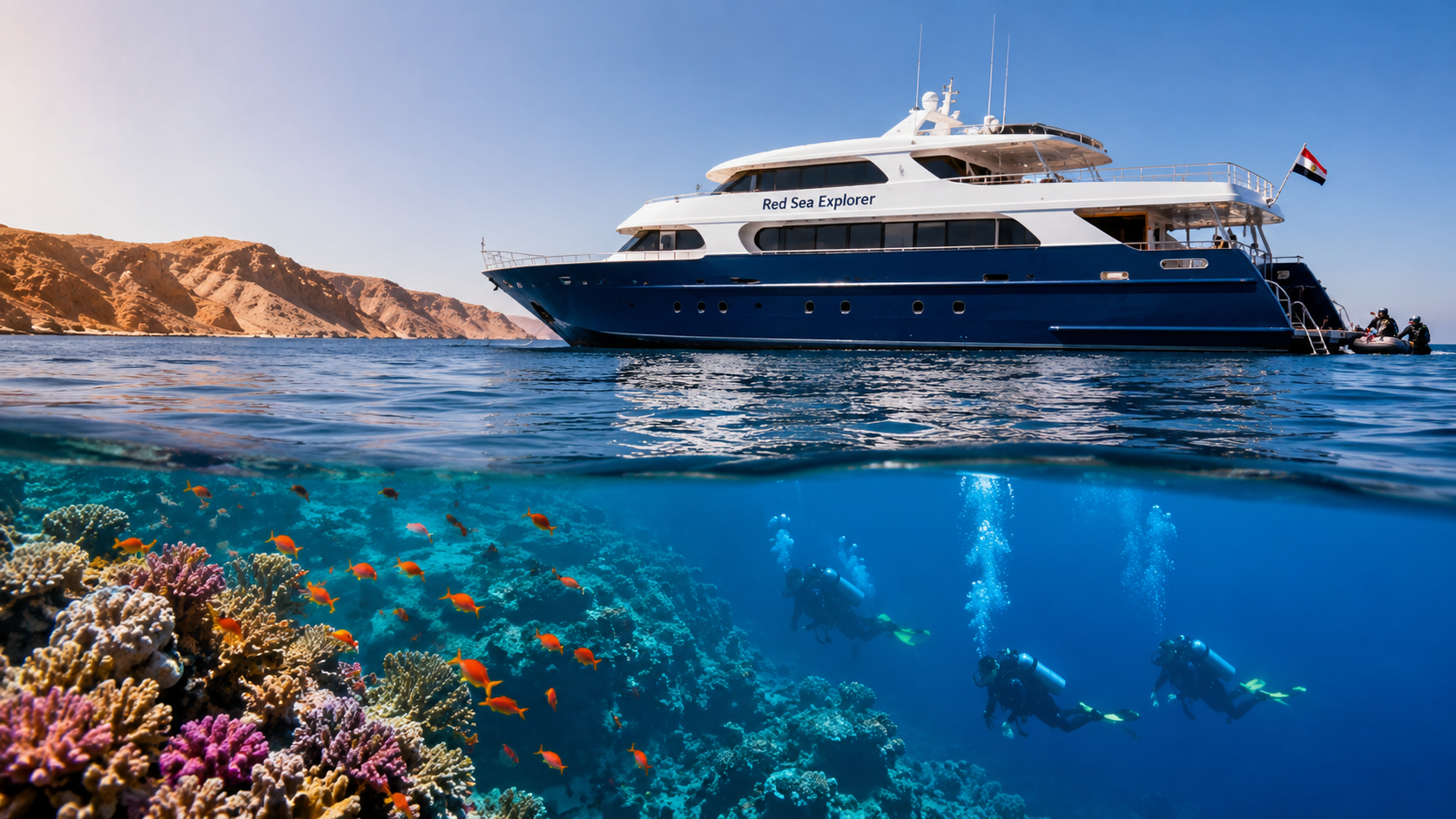
Discover why advanced divers prefer Red Sea liveaboard diving safaris for unmatched access to pristine dive sites, 3-4 daily dives, and exceptional marine biodiversity. Learn what makes Orca Tauchreisen’s liveaboard packages the gold standard.
Over 85% of certified divers rate liveaboard experiences as their most transformative underwater adventure—and the Red Sea consistently claims the top spot. There’s something fundamentally different about waking up each morning aboard a floating dive base, your next underwater world just steps away. Orca Tauchreisen DE has perfected this art, operating modern vessels like the MY Blue Pearl and MY Blue Seas that transform a week into an expedition of unprecedented underwater access.
These aren’t standard vacation packages. They’re meticulously crafted journeys designed for divers who refuse to compromise on access, safety, or the quality of their underwater encounters. From daily dive schedules that maximize your time beneath the surface to remote sites you simply can’t reach from land, every element serves your diving passion.
The Liveaboard Advantage: Maximizing Dive Time in the Red Sea
The fundamental superiority of liveaboard diving becomes immediately apparent when you compare schedules. While land-based resorts typically offer 1-2 dives daily, liveaboards consistently deliver 3-4 immersive dives per day. This isn’t merely more diving—it’s exponentially more underwater experience compressed into a single week.
Consider the operational mechanics. Your accommodation floats at the dive site. No sunrise commute from a distant resort. No equipment transport. No surface interval spent traveling rather than preparing for your next descent. You emerge from one dive, rinse your gear, enjoy a meal, and position yourself for the next entry within hours.
Daily Dive Schedules and Bottom Time Advantages
The typical liveaboard structure prioritizes efficiency. Morning dives occur before breakfast, afternoon dives follow a midday meal, and twilight dives capture the magical hours when nocturnal marine life emerges. Each dive averages 45-60 minutes of bottom time—substantial periods for meaningful underwater exploration rather than rushed tourist schedules.
The absence of daily commute fatigue amplifies your capability underwater. Your body adapts to a consistent rhythm: dive, surface, recover, dive again. This pattern, repeated across seven days, compounds your total underwater exposure to levels impossible aboard land-based operations.
Positioning Overnight to Pristine, Uncrowded Dive Locations
Every evening, your vessel repositions to the next day’s dive sites. You transition from crowded reef systems in one location to pristine, rarely visited formations elsewhere. The outer reefs that host pelagic encounters remain accessible only because liveaboards can anchor at positions unreachable by daily boats operating from coastal resorts.
This nocturnal repositioning creates a critical advantage: you encounter coral gardens and wreck sites with minimal human interference. Fish populations remain abundant and curious rather than conditioned by constant diver presence. The underwater realm reveals itself as it exists when human activity ceases.
Access to Remote Dive Sites Inaccessible from Land-Based Operations
Certain Red Sea locations demand a vessel based offshore. Deep wrecks requiring specific positioning, outer reef systems stretching kilometers beyond coastal visibility, and protected areas designated for liveaboard access exclusively—these environments exist beyond the operational range of daily boat services. A liveaboard doesn’t merely visit more sites; it visits different sites entirely, places where marine biodiversity flourishes undisturbed.
Iconic Red Sea Dive Sites Only Accessible via Liveaboard Expeditions
Wreck Diving Opportunities: Thistlegorm, Dunraven, and Salem Express
The Red Sea hosts some of the world’s most celebrated shipwrecks, and their depths demand liveaboard positioning. The SS Thistlegorm, a British cargo vessel sunk in 1941, rests at 20+ meters, its cargo holds and deck structures preserved in the Red Sea’s exceptional clarity. Navigating this wreck requires precise boat placement, multiple dives at the same location, and the luxury of time that liveaboards provide.
The Dunraven, a British merchant vessel wrecked in 1876, presents similar complexities. The Salem Express, a modern ferry that sank in 1991, offers wreck exploration that demands both experience and proper vessel support. Land-based operations simply cannot justify the fuel expenditure and timing constraints these sites require. Liveaboards, anchored nearby and scheduling multiple dives at each location, make this exploration economically and logistically viable.
Outer Reef Systems and Pristine Coral Formations
Beyond the coastal reefs lie outer reef systems where coral growth reaches its apex. These formations exist in deeper water (15-30+ meters), requiring dedicated dives rather than casual snorkeling. The biodiversity here surpasses sheltered inner reefs—fish populations remain larger and more curious, coral colonies display colors rarely seen in photographed images, and the sheer density of marine life creates an underwater abundance that transforms your expectations of what reef ecosystems contain.
Pelagic Encounters and Large Marine Life
The open water surrounding outer reefs hosts pelagic species: hammerhead sharks, eagle rays, groupers, tuna, and occasionally larger animals drawn to the reef’s abundance. These encounters occur during specific dives, at specific times, on specific reefs—all conditions that liveaboards can optimize through their flexibility and positioning strategy. A land-based diver might glimpse these animals once during a week-long stay; a liveaboard diver encounters them regularly.
Soft Coral Gardens and Macro Photography Hotspots
Protected zones and deeper reef sections host soft coral formations of extraordinary delicacy. These gardens, often overlooked in favor of hardcoral structures, provide unparalleled macro photography opportunities. Nudibranchs, small shrimp, juvenile fish species, and intricate symbiotic relationships unfold across these coral branches. Accessing these areas requires the precise boat positioning and multiple-dive scheduling that liveaboards uniquely enable.
Vessel Specifications and Onboard Comfort Standards
Modern Motor Yacht Accommodations
Orca Tauchreisen DE operates modern vessels designed specifically for diving tourism. The MY Blue Pearl and MY Blue Seas represent current-generation liveaboard standards, combining safety systems with genuine comfort rather than basic functionality. Cabins range from private en-suite accommodations to shared multi-person configurations, accommodating various budget preferences without compromising quality.
Each cabin includes proper ventilation, comfortable sleeping arrangements, and sufficient storage for diving equipment and personal belongings. The vessels maintain climate control throughout, essential for recovering physically between intensive dive days. Modern liveaboards have abandoned the cramped, utilitarian design of older vessels—comfort directly impacts your ability to perform optimally underwater.
Full-Board Catering and Dietary Considerations
Meals form the connective tissue of liveaboard life. Professional galleys prepare food timed to diving schedules: substantial breakfasts before morning dives, lighter snacks between dives, hearty dinners after surface intervals. Dietary requirements receive accommodation—vegetarian, vegan, gluten-free, and allergy-conscious meal preparation ensures no diver experiences nutritional compromise.
The consistent availability of hydration and nutrition distinguishes liveaboards from land-based operations where you chase meals around resort schedules. Your energy levels remain stable, your body recovers efficiently, and your performance underwater reflects proper physiological support.
Professional Dive Deck Operations
The dive deck represents organized complexity. Equipment storage systems keep cylinders secure and accessible, rinse stations allow immediate freshwater treatment of gear, and maintenance facilities address technical issues before they compromise safety. Dive masters coordinate entry and exit procedures, managing multiple groups and dive profiles simultaneously.
This professional infrastructure exists because liveaboards conduct 3-4 dives daily—a volume requiring systematic organization. Each element serves function: the rinse stations prevent salt corrosion, the equipment storage prevents loss of expensive gear in rough seas, the maintenance facilities enable rapid repairs. Land-based resorts manage 1-2 dives; liveaboards have engineered systems for sustained intensive operations.
Onboard Safety Equipment and Medical Response
Modern liveaboards carry decompression chambers, oxygen systems, medical kits, and trained first responders. These aren’t theoretical safety measures—they represent immediate, on-site medical capability. A trained medic remains available 24/7, and evacuation procedures account for remote positioning far from coastal medical facilities.
The presence of proper safety infrastructure allows confidence in deeper diving and more challenging environments. You’re not gambling with emergency response; you’re supported by systems specifically designed for diving-related incidents.
Certification Requirements and Diver Experience Levels
Minimum Open Water Certification Standards
All Red Sea liveaboards require open water certification at minimum. This baseline ensures every diver possesses foundational knowledge of dive physics, equipment operation, and emergency procedures. Some itineraries specify additional credentials—advanced open water, rescue diver, or deep diving certifications—depending on the planned dive depths and complexity.
Orca Tauchreisen DE evaluates your certification level during booking, matching you to appropriate vessels and itineraries. Beginning divers with recent certifications can participate on designated liveaboards, while experienced technical divers can select advanced itineraries with deeper, more challenging dives.
Logged Dive Requirements for Intensive Itineraries
Most Red Sea liveaboards targeting wreck diving and deep outer reef exploration require 50-100+ logged dives. These numbers reflect the intensity of the diving, not arbitrary gatekeeping. Deep wreck penetration, navigation in strong currents, rapid descent to substantial depths, and multi-dive days demand physiological adaptation and technical skill that accumulates through experience.
Orca Tauchreisen DE maintains this requirement because it directly correlates with diver safety and satisfaction. Less experienced divers on challenging itineraries experience exhaustion, nitrogen narcosis complications, and reduced enjoyment. Matching divers to appropriate experience levels protects everyone involved.
Skill Assessments and Dive Group Matching
On your first day aboard, the dive team conducts skill assessments. These aren’t tests in an academic sense—they’re practical evaluations of buoyancy control, underwater navigation, equipment familiarity, and comfort at depth. Based on these assessments, divers are matched with appropriate groups for subsequent dives.
This system prevents faster divers from becoming frustrated with slower groups and protects less experienced divers from being swept into advanced dive profiles. You spend the week diving with individuals at comparable skill levels, maximizing both safety and enjoyment.
Specialized Training and Competency Development
Many liveaboards offer specialty training during the week: wreck specialty certification, deep diving certification, advanced navigation, or technical skills development. Professional instructors conduct this training in your actual diving environment, making it immediately applicable and deeply meaningful. You don’t attend classroom sessions teaching wreck diving theory—you practice wreck techniques on the actual wrecks you’re exploring.
Investment Breakdown: Red Sea Liveaboard Pricing and Value Proposition
Price Range and Package Inclusions
Red Sea liveaboard packages from Orca Tauchreisen DE range from approximately €875 to €1,290+ per person for 7-night expeditions. This range reflects variation in vessel type, season, cabin configuration, and itinerary specifics. Peak season pricing (winter months, optimal diving conditions) occupies the higher end, while shoulder seasons offer more economical rates.
Package inclusions typically encompass accommodation in your selected cabin, full board catering, professional diving operations, air fills and tank service, and airport transfers. Many packages include dive computer rental, underwater photography opportunities, and equipment servicing. Verify specific inclusions with Orca Tauchreisen DE, as offerings vary by package and season.
Cost-Per-Dive Analysis Compared to Land-Based Operations
The financial advantage becomes clear through cost-per-dive calculation. A typical Red Sea liveaboard conducting four dives daily across seven days produces 28 dives. At the mid-range price of €1,080, this calculates to approximately €38 per dive—an exceptional figure when accommodation, meals, and transfers are included.
Land-based resort diving commonly costs €50-80 per dive for the diving operation alone, excluding accommodation and meals. Over a seven-day week with 2-3 daily dives, land-based operations quickly exceed liveaboard costs while delivering fewer dives in less pristine locations. The liveaboard model, seemingly expensive initially, represents superior economic value.
Hidden Value: Inclusions Beyond Basic Diving
The apparent price tag obscures included components. You’re not paying for diving only—you’re purchasing accommodation, meals, professional instruction, safety infrastructure, and logistical coordination. Separating these components would multiply your actual expenditure. A comparable week purchasing accommodation, meals, diving, and transfers independently would exceed liveaboard pricing significantly.
Additionally, group discounts and early-booking incentives from Orca Tauchreisen DE reduce effective costs further. Booking multiple cabins qualifies for discounts, and advance reservations often include supplementary services at no additional charge.
Your Red Sea Liveaboard Awaits: Making Your Decision
The Red Sea liveaboard diving safari represents far more than a vacation—it’s an immersive commitment to experiencing one of Earth’s most biodiverse underwater realms in the most efficient, comprehensive way possible. The financial investment—ranging from €875 to €1,290 per person—translates to exceptional value when you calculate the cost per dive and factor in full accommodation, meals, and transfers.
The experience transforms how you understand underwater ecosystems. You don’t observe the Red Sea from brief surface intervals; you inhabit it across dozens of dives, watching behavioral patterns emerge, recognizing individual fish, understanding the reef’s rhythms and interconnections. You encounter marine life rarely seen by land-based divers, navigate legendary wrecks, and photograph coral formations of extraordinary beauty.
If you’re a certified diver with 50+ logged dives, a hunger for pristine coral gardens and wreck exploration, and a week to dedicate to your passion, this experience aligns with your diving aspirations. The combination of Orca Tauchreisen DE’s expertise, professional vessel operations, and Red Sea’s exceptional underwater environment creates conditions for transformative diving that extends far beyond typical vacation experiences.