
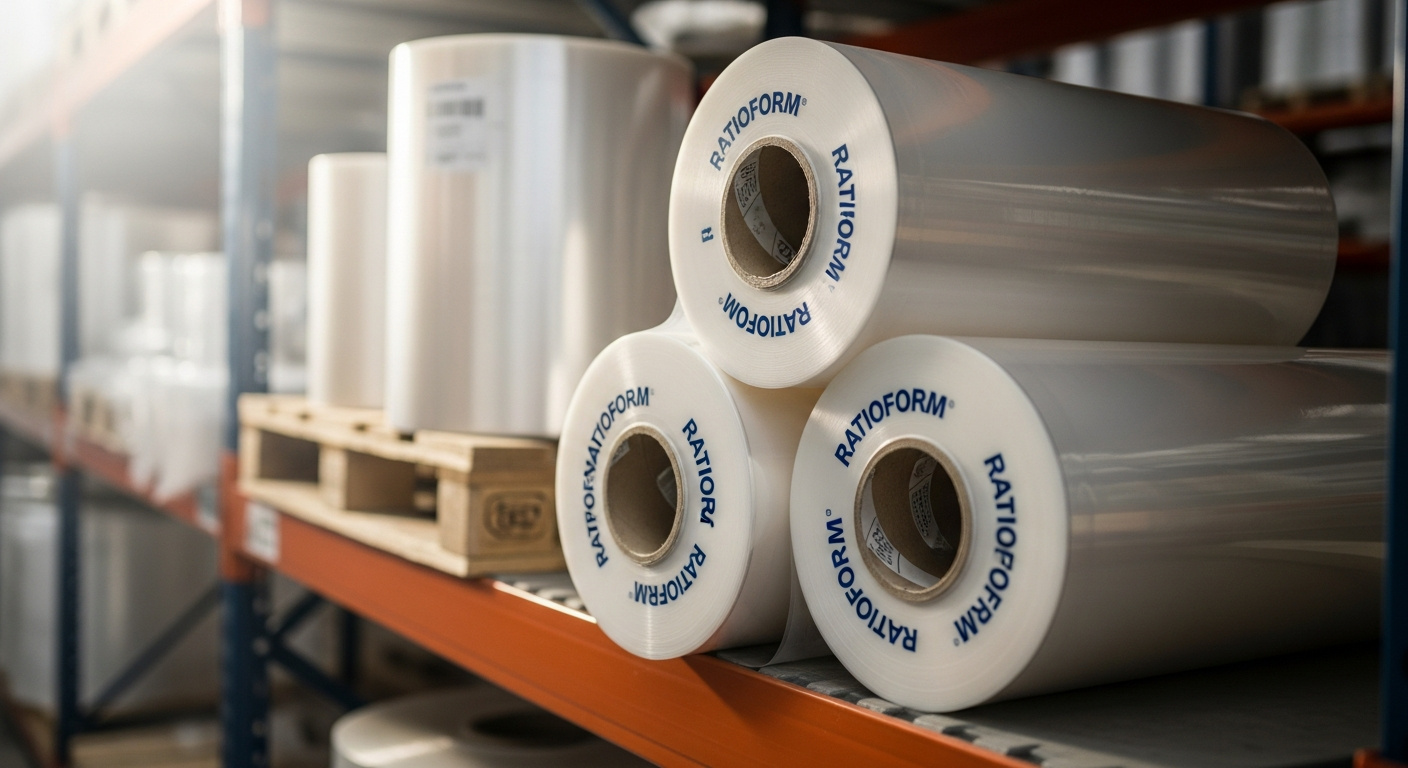
Discover why Ratioform’s tubular film packaging solution delivers superior protection for heavy, sharp-edged products. Learn about 100 µm PE/LDPE film specifications, welding compatibility, and cost-effective shipping solutions.
When goods arrive damaged, the fallout extends far beyond the broken item itself. Customers lose trust, return rates spike, and your bottom line suffers. Over 80% of businesses report that inadequate packaging leads to damaged goods during transit—resulting in costly replacements, customer dissatisfaction, and eroded profit margins. The financial drain is real, and it compounds with every failed shipment.
Ratioform, a leading European distributor of transport packaging, has engineered the tubular film packaging solution specifically for businesses that refuse to compromise on protection. This best-selling material combines industrial-grade durability with practical usability, addressing the exact pain points that logistics managers face daily. The solution doesn't require specialized equipment or complex training—it integrates seamlessly into existing operations while delivering measurable results.
Throughout this article, you'll discover the technical specifications that make this solution stand out, how it outperforms traditional packaging methods, real-world applications across industries, and why the investment pays for itself through reduced damage claims and operational efficiency.
Explore Ratioform's tubular film packaging solutions today.
Unpack the Technical Specifications Behind Ratioform's Tubular Film
Material Composition: High-Pressure PE/LDPE Construction
The foundation of Ratioform's tubular film lies in its high-pressure PE/LDPE (polyethylene/low-density polyethylene) construction. This material selection isn't arbitrary—it delivers superior flexibility and puncture resistance that standard films simply cannot match. The result is a film that flexes with product movement during transit while maintaining a protective barrier against sharp edges and rough handling.
Thickness Advantage: 100 µm Gauge Provides Exceptional Protection
At 100 µm, this film sits in the sweet spot between protection and practicality. Thinner alternatives in the 50-75 µm range offer basic containment, but they falter under real-world shipping conditions. The 100 µm gauge provides exceptional protection without unnecessary bulk that drives up material costs or makes the product difficult to handle.
Standard Roll Dimensions: 250-Meter Length and 400 mm Width
The specifications come in practical, production-ready dimensions. A 250-meter roll with 400 mm width accommodates diverse packaging scenarios without excessive waste or storage headaches. Operators can cut custom lengths based on product size, whether wrapping compact electronics or large industrial equipment.
Black Film Aesthetic: Professional Appearance and Functionality
The black color serves dual purposes. Visually, it projects professionalism and quality—customers notice the difference when products arrive in premium-looking packaging. Functionally, the black pigmentation blocks light, protecting light-sensitive contents from UV degradation during storage and transport.
Welding Machine Compatibility: No Specialized Equipment Required
Perhaps the most practical advantage: this film works with standard welding machines already present in most packaging operations. There's no need to invest in specialized sealing equipment or retrain staff. Existing infrastructure handles the film without modification.
How the 100 µm Thickness Transforms Your Damage Prevention Strategy
Superior Puncture Resistance Stops Sharp Objects
During transit, packages encounter countless hazards—forks from material handling equipment, rough warehouse floors, other boxes with protruding corners. A thinner film tears on contact. The 100 µm thickness creates a barrier that absorbs impact and resists penetration. Sharp objects that would punch through thinner alternatives encounter material with enough mass to deflect damage.
Tear Propagation Prevention: Material Thickness Stops Small Failures
Even when a small tear does occur, the 100 µm gauge prevents it from expanding. Thinner films experience tear propagation—once a small hole appears, stress concentrates around it and the tear spreads rapidly. The thickness of Ratioform's film distributes stress across a larger area, containing damage and preserving package integrity.
Compression Durability: Maintaining Structural Integrity Under Load
Warehouses stack boxes high. Vehicles load packages tightly. Ground transport involves constant vibration and pressure changes. The 100 µm thickness maintains structural integrity under stacked loads, preventing the film from compressing so much that it loses its protective envelope around the product.
Cost-Benefit Analysis: Why Thicker Film Reduces Overall Expenses
The upfront cost per roll is higher for 100 µm film compared to thinner alternatives. However, the economics become clear when tracking replacement claims. Fewer damaged goods means fewer customer service interactions, fewer return shipments, fewer refund transactions. Packing operations also move faster—staff confidence in protection increases, and they handle packages with normal efficiency rather than extra caution. These operational gains typically offset the material cost increase within weeks.
Comparison to Thinner Alternatives: Industrial Applications Demand Thickness
In light-duty applications—small consumer goods, soft products, minimal handling—thinner films might suffice. But industrial applications tell a different story. Heavy machinery, sharp metal components, rough warehouse environments, multiple transfers between vehicles—these scenarios require the protective insurance that 100 µm delivers.
Versatility Across Industries and Product Categories
Machinery and Equipment Packaging: Protection for Heavy Industrial Components
Heavy machinery arrives at job sites in perfect condition thanks to tubular film wrapping. The film conforms to complex shapes, holds components securely during rough handling, and resists the inevitable banging that occurs when equipment gets loaded onto trucks or moved through tight spaces. The flexibility of PE/LDPE allows the film to stretch around irregular edges without tearing.
Automotive Parts Logistics: Securing Sharp Metal Edges and Irregular Shapes
Automotive suppliers ship thousands of components daily—stamped metal parts, castings, assemblies with sharp edges and protrusions. Tubular film wraps these items individually or in groups, protecting both the products and the workers handling them. The film prevents metal-to-metal contact that would scratch or dent expensive components.
Electronics Shipment: Static-Resistant Properties for Sensitive Components
Electronics require protection from physical damage and static discharge. Ratioform's film provides the physical barrier, while its material properties prevent static buildup. Components arrive functioning perfectly rather than damaged by electrostatic discharge during handling.
Food Service Equipment: Hygienic Containment for Commercial Kitchen Products
Food service distributors wrap stainless steel equipment, cookware, and components in tubular film before shipment. The black film presents a professional appearance in commercial environments, and the material resists the oils and chemicals present in foodservice settings.
Construction Material Protection: Weatherproofing for Job Site Deliveries
Construction sites expose materials to weather, dirt, and rough conditions. Tubular film wraps materials for delivery to site, protecting them during transport and initial storage. The film's durability withstands construction site conditions better than paper or lighter alternatives.
Discover how Ratioform tubular film solves packaging challenges across your industry.
Maximizing Protection: Best Practices for Tubular Film Application
Proper Cutting Techniques: Ensuring Clean, Precise Lengths
The film comes in 250-meter rolls, requiring custom cutting for specific products. Clean cuts matter—ragged edges can lead to unraveling during handling. Sharp cutting tools and consistent technique ensure the film cuts cleanly without fraying. A properly cut length seals more effectively and provides superior containment.
Product Positioning Within Film: Centering Heavy Items to Distribute Pressure Evenly
Heavy products must sit centered within the film wrapping. Eccentric loading—where the product positions toward one side—creates uneven stress on the film. During transit vibration and compression, stress concentrates on the thinner portion, potentially causing failure. Centering the load distributes pressure evenly across the entire film surface.
Seal Placement Strategy: Optimal Positioning for Maximum Containment
Where the film seals matters. Seals work best when positioned perpendicular to the direction of primary stress. For items wrapped along their length, longitudinal seals running the product's length prove stronger than seals across the width. This positioning strategy maximizes tear resistance where it matters most.
Multiple Sealing Approach: When and Why Double-Sealing Enhances Protection
For high-value items or particularly hazardous products, double-sealing provides insurance. Two sealed seams instead of one mean that if one seal fails during transit, the second maintains containment. The minimal additional material cost offers significant protection increment for critical shipments.
Transform Your Shipping Strategy: Making the Switch to Ratioform Tubular Film
The Ratioform tubular film packaging solution represents far more than a commodity material—it's a strategic investment in operational excellence and customer satisfaction. The combination of 100 µm thickness, PE/LDPE durability, welding machine compatibility, and proven versatility creates a compelling case for businesses serious about reducing damage claims and accelerating packing workflows.
What makes this solution particularly compelling is its ability to consolidate multiple packaging needs into a single, cost-effective material. Rather than maintaining inventory of different film thicknesses, specialty wraps, and various protective materials, operations streamline by standardizing on tubular film that handles diverse applications. This consolidation reduces complexity, cuts storage requirements, and simplifies procurement.
If your current packaging strategy leaves you wrestling with damaged goods, frustrated customers, or bloated labor costs, it's time to evaluate what Ratioform's tubular film can do for your operation. Start with a pilot program on your highest-risk product category. Track your damage rates and packing times carefully. Measure the impact on customer satisfaction and return rates. Then scale up as the results speak for themselves.
The investment typically pays dividends within months as damage rates decline, labor efficiency improves, and customer satisfaction rises. Ratioform's reputation as a market leader in packaging, with genuine commitment to quality and customer success, backs every roll shipped.