
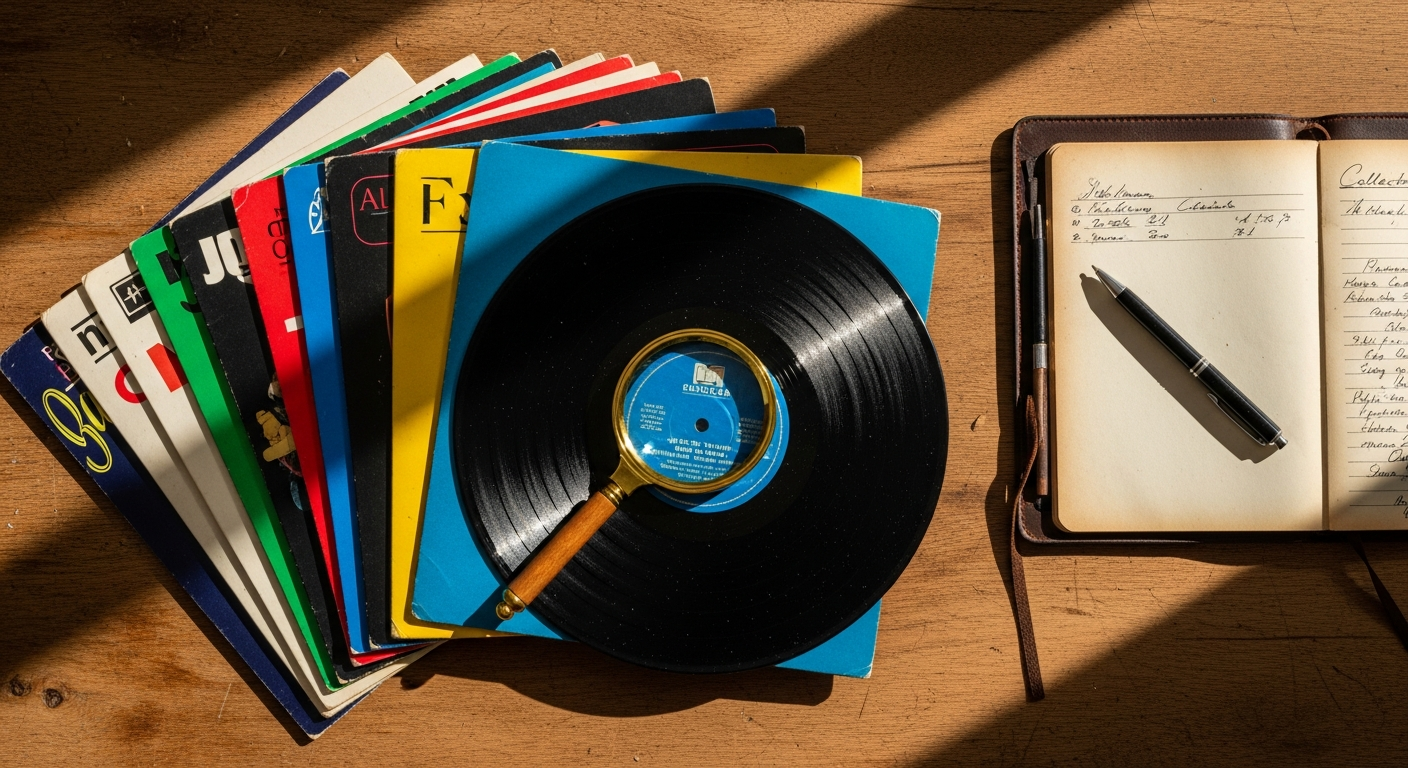
Discover how to curate an exclusive collector’s limited edition vinyl collection with insider tips on sourcing rare pressings, 180g vinyl quality, and investment-grade records from Exitmusic.it and beyond.
If you’ve noticed vinyl sales climbing past $1 billion annually, you’re witnessing a genuine cultural shift. Yet here’s what casual listeners often miss: not all records deserve shelf space. The true collector’s obsession centers on that singular hunt—the pressing with immaculate sound quality, artwork that commands attention, a limited run so restricted that owning it transforms your collection from ordinary to exceptional. This distinction separates the serious from the superficial.
Since 1994, Exitmusic.it has served as the epicenter for discerning music enthusiasts pursuing exactly these kinds of treasures. Their approach combines meticulous curation with genuine expertise, transforming the hunt for exclusive collector’s limited edition vinyl into something more than a hobby—it becomes a discipline. The Italian retailer’s reputation rests on selecting records “with attention, passion, and competence,” ensuring each acquisition carries genuine value for your collection.
This guide unpacks the strategies that transform casual record buying into purposeful collecting. You’ll master the distinction between investment-grade pressings and standard releases, understand the mechanics that determine rarity and desirability, navigate pricing with confidence, and recognize the defining characteristics that separate truly collectible records from forgettable releases.
Explore Exitmusic.it’s exclusive vinyl collection today
What Makes a Vinyl Record Exclusive and Collectible?
Understanding the difference between limited edition pressings and standard releases
Standard releases hit pressing plants with minimal restrictions—manufacturers produce enough copies to satisfy expected demand, which typically means thousands or tens of thousands of units. Limited editions operate under completely different economics. A label deliberately restricts the pressing run to a specific number, sometimes as low as 500 copies or fewer. This intentional scarcity transforms the record from a consumable product into a genuinely rare object.
The psychological impact matters profoundly here. When you own one of 1,000 pressed copies rather than 50,000, you’re holding something that fewer people will ever possess. That reality shapes collector behavior and long-term value trajectories.
How pressing numbers affect rarity and desirability among collectors
Pressing numbers function as the primary determinant of rarity in the vinyl world. A record pressed in 3,000 copies occupies a different tier than one pressed in 30,000. Collectors obsessively track these numbers because they directly correlate with availability and potential future scarcity.
As collectors age and circumstances change, they liquidate their holdings. A record originally pressed in 5,000 copies might see half those copies destroyed, damaged, or abandoned in attics. The surviving stock shrinks dramatically. A title pressed in 500 copies, however, faces exponential pressure—lose just 10% to damage or discarding, and suddenly only 450 copies remain worldwide. This mathematical reality explains why lower-numbered pressings command premium pricing.
The role of colored vinyl, picture discs, and special packaging in collectibility
Visual presentation elevates vinyl from functional format to collectible art object. Standard black vinyl tells you nothing about the record’s intended status. Colored vinyl—whether it’s deep purple, blood red, or translucent blue—signals intentional differentiation. Manufacturers typically reserve colored variants for special editions, creating visual hierarchy within a release.
Picture discs represent the next tier of visual collectibility. Rather than printed sleeves with photos, the artwork appears directly on the vinyl surface itself. These records transcend audio format and become visual statements, sometimes commanding 2-3x the price of their black vinyl counterparts despite identical audio content.
Special packaging elevates the experience further. Gatefold sleeves with elaborate liner notes, die-cut jackets with unusual shapes, or rigid cardboard slipcovers all signal premium treatment. Collectors recognize these choices as intentional decisions by labels to create something genuinely special—not merely a different product configuration, but a distinct artistic statement.
Why certain reissues command premium prices despite being new releases
Reissues seem paradoxical at first—if the original pressing from 1975 is genuinely rare, how does a 2024 reissue command comparable prices? The answer lies in reissue specification and timing. A reissue mastered from pristine original tapes, pressed on 180g vinyl, and limited to 5,000 copies becomes a different object entirely from the original.
Some reissues actually exceed original pressing prices because they’re more accessible than originals while maintaining sonic quality. A record might have original pressings worth €200+ due to rarity, but those original copies often suffer from audible surface noise from decades of play. A carefully mastered reissue pressed at the right specifications offers comparable or superior sound at €30-50, capturing collector interest from those who prioritize listening experience over historical provenance.
Record Store Day exclusives and their significance in the collector market
Record Store Day (RSD) events occur roughly quarterly, with participating stores receiving exclusive releases specifically pressed for those dates. These releases typically carry limited pressing runs—often 2,000-5,000 copies across all RSD participating stores globally. The exclusivity derives from timing and distribution method rather than overall scarcity, yet collectors treat RSD releases with reverence.
The strategy works because RSD exclusives create urgency and discovery moments. Collectors must visit physical record stores on specific dates, creating community experiences that transform the purchasing moment into an event. This ceremonial aspect, combined with genuinely limited availability windows, ensures RSD exclusives develop active collector markets where pricing reflects demand from those who missed initial release windows.
The Science of Superior Sound: 180g Vinyl and Pressing Quality
How vinyl weight impacts audio fidelity and longevity
Standard vinyl records weigh 120-140 grams. The 180g variant, pressed at roughly 50% heavier, offers measurable improvements in two critical areas: groove stability and longevity. Heavier vinyl exhibits less groove distortion during playback—the stylus sits more securely in the groove rather than migrating slightly across the surface.
The longevity benefit proves equally significant. Standard vinyl degrades noticeably after 50-100 plays, particularly if played on lower-quality turntables. The needle pressure gradually compresses the vinyl material, creating micro-fractures that manifest as surface noise and reduced dynamic range. Heavier vinyl resists this degradation more effectively, maintaining fidelity through hundreds of plays. Collectors viewing their records as long-term assets recognize 180g vinyl as an investment in playback quality spanning decades.
Mastering quality and its relationship to the listening experience
The mastering engineer makes choices that fundamentally shape what you hear. Two pressings of identical content can sound dramatically different if mastered differently. A remastering might optimize for modern digital playback systems, emphasizing brightness and compression, while an original mastering might prioritize dynamic range and natural tonal balance.
Exitmusic.it’s curated selections include releases specifically praised for mastering excellence. A “Symphonic Suite” release, for instance, might be selected precisely because its mastering preserves orchestral dynamics in ways compressed modern pressings cannot. Collectors who prioritize this aspect recognize that superior mastering creates listening experiences—moments where recorded music transcends reproduction and achieves emotional immediacy.
Pressing plant reputation and its effect on record quality
The facility where vinyl is pressed dramatically influences the final product. Premium pressing plants invest in modern equipment, maintain strict quality control, and employ experienced technicians. These facilities typically operate at lower volumes than volume-focused plants, allowing attention to detail that cheaper operations cannot match.
Records pressed at renowned facilities like RTI or Optimal in Germany command collector respect because these plants have earned reputations through decades of consistent excellence. The physical quality—reduced warping, superior surface finish, accurate groove cutting—becomes immediately apparent during first play. Collectors often research pressing plants before purchasing, recognizing that facility reputation provides genuine quality assurance.
The difference between audiophile-grade pressings and commercial releases
Audiophile-grade pressings constitute a distinct product category. Labels like Analogue Productions, Mobile Fidelity, and Speakers Corner create releases specifically engineered for maximum sonic performance. These records often employ original analog master tapes, employ audiophile mastering engineers, and utilize premium 180g or even 200g vinyl from specialized suppliers.
Commercial releases prioritize accessibility and profitability—they’re pressed on standard-weight vinyl, mastered for average playback systems, and distributed widely. The sonic differences are substantial and immediately apparent. An audiophile-grade pressing of a classic album might reveal instrumental details that previously seemed hidden in standard commercial versions. Collectors willing to invest €35-55 per record recognize audiophile pressings as genuine sonic upgrades, not merely higher-priced variations.
Why some collectors prioritize sound quality over visual aesthetics
A small but passionate subset of collectors belongs to the “ears over eyes” philosophy. These individuals view vinyl as primarily an audio format, with visual presentation secondary to sonic performance. They’ll select a plain black vinyl pressing that sounds exceptional over a visually striking colored edition with sonic compromises.
This approach reflects genuine commitment to the medium’s technical capabilities. Vinyl, when properly pressed and mastered, reproduces music with characteristics that digital formats struggle to match—a warmth, musicality, and three-dimensional quality that many believe superior to digital. For these collectors, owning records means owning listening experiences, making sonic quality the only metric that matters.
Discover sonically exceptional pressings at Exitmusic.it
Sourcing Rare Pressings: Where and How to Find Hidden Gems
Navigating specialized retailers like Exitmusic.it for curated selections
Specialized retailers operate under fundamentally different principles than generalist music stores. Rather than stocking everything with modest depth, they cultivate expertise in narrow niches. Exitmusic.it’s focus on exclusive collector vinyl means their inventory reflects intentional curatorial choices by staff who understand the collector market intimately.
The benefit of this approach extends beyond selection quality to discovery. Browsing Exitmusic.it, you encounter records specifically chosen because they meet quality standards, possess genuine collector value, or represent significant cultural or technical achievements. This curation saves time and money by filtering out mediocre releases before they reach your attention. The retailers’ve already asked whether records merit shelf space; their affirmative answers guide your purchasing decisions.
Leveraging international platforms to access European and region-specific releases
Certain records never receive international distribution, existing only in specific territories. Japanese pressings of American albums often feature different mastering or packaging; European releases sometimes include bonus tracks; limited regional editions vanish within weeks. International platforms and retailers with global reach unlock access to these region-specific releases.
Exitmusic.it’s location in Italy provides advantages for European-specific and Italian releases that American retailers cannot easily source. By shopping internationally, collectors dramatically expand the universe of available records. A €30 shipping cost to Italy might cost $50+ from domestic retailers, but access to exclusive European editions justifies the investment.
Using eBay and auction sites strategically for hard-to-find editions
eBay functions as a secondary market for records no longer in production. A release that sold out five years ago might eventually appear listed by collectors liquidating holdings. Auction dynamics create both opportunities and risks—you might acquire a genuinely rare pressing at surprisingly modest pricing, or you might overpay during bidding wars driven by emotion rather than logic.
Strategic eBay collectors establish saved searches, monitor listing patterns, and develop relationships with repeat sellers whose inventory suggests professional knowledge. They recognize that patience wins auctions—sometimes waiting weeks for the right copy at the right price beats purchasing the first available option. Most importantly, they verify pressing information meticulously, as eBay listings often contain errors that separate genuinely valuable pressings from standard editions.
Building relationships with record store owners for first access to new arrivals
Record store owners with strong collector networks receive inventory no one else accesses initially. A retailer might reserve certain Record Store Day releases for regular customers, or contact collectors about acquisitions before listing them publicly. These relationships create preferential access to the market’s most desirable items.
Building these relationships requires genuine engagement—visiting stores, making purchases, demonstrating knowledge about vinyl culture, and expressing genuine interest in the store owner’s curation. Over time, retailers recognize which customers represent serious collectors and which merely browse casually. Those relationships transform into valuable first-access opportunities that secondary market hunting never provides.
Online communities and collector forums for sourcing tips and recommendations
Collector communities exist across Discogs, Reddit, vinyl-focused forums, and private collector groups. These communities share sourcing strategies, identify pressing variations, warn about counterfeits, and discuss emerging trends. A question posed in the right forum might generate recommendations for specific retailers or alerts to upcoming releases matching your collection focus.
These communities also provide emotional support for the collecting journey—others understand the obsession, validate the purchases, and celebrate significant acquisitions. For collectors navigating solo in their physical communities, these online networks provide irreplaceable connection with like-minded enthusiasts.
Budget-Smart Collecting: Pricing Strategies and Value Assessment
Understanding the €17-€55 price range and what determines cost variations
The €17-19 range typically represents basic limited editions—new releases with modest pressing runs, standard pressing weight, and straightforward packaging. These records offer genuine exclusivity at accessible prices, making them ideal entry points for building collections without significant investment.
The €25-40 range includes releases with enhanced specifications: 180g vinyl, superior mastering, special packaging, or Record Store Day status. A €36.64 release like “The Boy And The Heron Symphonic Suite” sits in this tier because orchestral reissues typically receive premium treatment—careful mastering, often audiophile specifications, and thoughtful packaging befitting classical material.
The €45-55 range represents premium collectibles: audiophile-grade pressings, multi-disc sets, exclusive box editions, or culturally significant releases commanding collector premiums. Understanding these tiers prevents overpaying for standard editions and helps identify genuine value when higher-priced records truly justify their cost.
Identifying genuine value versus hype-driven pricing in the collector market
Hype-driven pricing occurs when collector demand temporarily exceeds supply, inflating prices beyond long-term value. Record Store Day releases sometimes fall victim to this dynamic—collectors overpay for exclusivity without considering whether the record’s audio or visual qualities justify the premium.
Genuine value involves records that maintain or appreciate in price over years because they represent true scarcity, superior specifications, or cultural significance. A carefully mastered reissue that improves upon the original maintains value because subsequent collectors recognize its superiority. A Record Store Day release simply packaged differently from the standard version might decline in value as the exclusivity premium fades.
Distinguishing between these requires research: read reviews from credible sources, check historical pricing patterns on Discogs, and assess whether visual or sonic differences genuinely justify cost. Impulse purchases rarely demonstrate value appreciation; thoughtful acquisitions almost always do.
Building a collection incrementally without overspending on impulse purchases
A sustainable collecting approach requires establishing annual budgets and monthly spending limits. Allocating €50-100 monthly creates opportunities for meaningful acquisitions without financial strain. This approach also introduces beneficial delays—initial impulses fade after a few weeks, allowing logic to override emotion.
The incremental approach builds stronger collections than sporadic large purchases. €50 monthly acquisitions over a year (€600 total) typically result in more diverse and carefully selected records than spending €600 at once, when fatigue and decision paralysis typically lead to poor choices.
Recognizing multi-disc sets and box editions as potential long-term investments
Multi-disc sets and box editions initially appear as premium purchases, often priced at €40-70 or significantly higher. Yet these items frequently appreciate more reliably than single LPs because their production runs are typically tighter and collector demand remains consistent.
A four-disc box set might cost €60 initially but appreciate to €80-100 within five years as original copies enter private collections and new copies sell out. The physical presence and perceived value of box editions make them attractive to serious collectors, supporting long-term demand that single releases cannot match.
Comparing pricing across retailers and currency considerations for international buyers
Record prices vary significantly across retailers due to supplier relationships, inventory acquisition costs, and regional pricing strategies. Comparing prices across Exitmusic.it, other European retailers, and even American options reveals potential savings—though shipping costs often offset price differences.
For international buyers, currency considerations matter substantially. The €17-55 range offers excellent value for collectors in weaker currencies, but shipping fees can double effective costs. Strategic purchasing—accumulating several items before ordering—amortizes shipping across multiple records, reducing per-record costs significantly.
Building Your Collection Strategy: From Casual Listener to Serious Collector
Defining your collecting focus by genre, artist, era, or pressing type
Undirected collecting creates chaotic accumulations rather than coherent collections. Successful collectors establish focus parameters: perhaps collecting all original pressing runs of a specific artist, focusing exclusively on jazz releases from the 1970s, or hunting every vinyl edition of a particular label’s catalog.
This focused approach creates numerous advantages. You develop genuine expertise within your chosen domain, making informed purchasing decisions increasingly easier. Your collection develops visual and thematic coherence, making display more satisfying. Most importantly, focused collections appreciate more reliably than random accumulations because demand from other collectors in your niche supports value.
Creating a collection inventory system for tracking acquisitions and values
Serious collectors maintain detailed inventories—spreadsheets or dedicated software like Discogs that track acquisition dates, prices, pressing information, and condition assessments. This system serves multiple purposes: it prevents duplicate purchases, enables value tracking for insurance purposes, facilitates eventual selling decisions, and creates searchable databases for personal reference.
Inventory systems reveal collection patterns and guide future acquisitions. You notice gaps—artists you love with missing releases, eras underrepresented in your holdings—and pursue those gaps strategically. The inventory becomes a conversation partner, suggesting directions your collection naturally evolves.
Balancing nostalgia purchases with forward-thinking investment pieces
Every collection benefits from nostalgic elements—records connected to meaningful moments, artists you love despite objective collector value assessments. These purchases create emotional satisfaction that financially strategic acquisitions cannot match.
However, collections dominated by nostalgia purchases often stagnate in value, creating holdings primarily satisfying to their original owner. Balancing nostalgia with strategic acquisitions—records you believe will appreciate or represent significant cultural achievements—ensures your collection evolves meaningfully while maintaining personal connection.
Developing aesthetic coherence in your collection’s visual presentation
Display quality transforms collections from stored assets to visible achievements. Records displayed on shelves create visual statements about collector taste and knowledge. Aesthetically coherent displays—organized by color, era, or thematic grouping—create more satisfying visual experiences than random arrangements.
This aesthetic consideration influences purchasing decisions. You become conscious of how new acquisitions visually interact with existing holdings, sometimes choosing variants based on sleeve design rather than purely sonic qualities. This integration of visual and sonic considerations creates collections transcending mere accumulation and becoming genuine art installations.
The psychology of collecting and avoiding completionist burnout
The completionist impulse—the drive to own every pressing variation, every regional edition, every format version—destroys collecting joy and creates financial burnout. Collectors pursuing completionism often spend beyond their means, accumulate redundant variants with minimal meaningful differences, and experience diminishing satisfaction as collection size increases.
Healthy collecting maintains realistic scope: perhaps you’ll own ten pressings of your favorite album (original, reissues, variants), but not thirty. You’ll accept that the 1,000-copy Japanese pressing might never surface at reasonable prices, and you’re satisfied owning the Italian edition instead. This perspective maintains the joy and discovery at collecting’s core while preventing the desperation and financial strain that completionism creates.
Packaging, Preservation, and Display: Protecting Your Investment
Proper storage techniques to prevent warping, mold, and deterioration
Vinyl’s greatest enemies are heat, humidity, and light. Records should be stored vertically (never stacked flat) in cool environments, ideally between 60-70°F with relative humidity maintained between 40-50%. This temperature range prevents warping while humidity control prevents mold growth and paper deterioration.
Vertical storage prevents pressure damage that stacked records experience—the weight of records above compresses those below, slowly warping them. Vertical shelving requires spacing that permits easy removal without bending adjacent records. Specialized record shelving, while more expensive than generic bookcases, prevents the storage mistakes that transform valuable pressings into unplayable warped discs.
Climate control considerations for long-term vinyl preservation
Climate consistency matters more than specific absolute conditions. A stable 65°F with steady 45% humidity preserves records more effectively than fluctuating conditions that sometimes reach 80°F with humidity spikes to 70%. Basements and attics—common record storage locations—typically experience uncontrolled temperature and humidity swings that damage collections over years.
Serious collectors invest in climate control, sometimes maintaining dedicated rooms with controlled conditions. The investment seems excessive until you realize that a 50-record collection at average €30 per record represents €1,500 in holdings—suddenly, €200 climate control equipment becomes wise investment protecting valuable assets.
Archival-quality sleeves and inner sleeves for protecting original packaging
Original sleeves deteriorate through handling and age. Collectors preserving records for decades invest in archival-quality outer and inner sleeves—acid-free materials that won’t degrade the original packaging. Outer sleeves typically cost €0.50-1.00 each; inner sleeves cost €0.10-0.25. These modest investments prevent jacket deterioration that would devastate collection value.
Many collectors sleeve original jackets in preservation sleeves while maintaining a separate playable copy in regular sleeves. This approach allows occasional aesthetic appreciation of original packaging without exposing it to handling wear. For genuinely rare or valuable records, this dual-sleeve strategy preserves resale value and aesthetic quality indefinitely.
Display solutions that showcase your collection while maintaining protection
Specialized record shelving with backing panels provides better protection than open shelving while allowing visual display. These units cost €50-300 depending on quality and materials, but they transform records from hidden storage into visible statements about collector taste.
Display considerations influence purchasing decisions toward visual presentation. A collector with prominent display space might prioritize records with exceptional artwork or seek colored vinyl variants that create visual impact when displayed. The symbiosis between preservation and display pushes collections toward higher-quality selections.
Handling techniques that minimize dust and surface contamination
Record surfaces require minimal contact with bare hands—oils from skin create buildup that affects sound quality. Handling records by edges and labels only preserves groove surfaces. Before every play, collectors should brush records with soft-bristled brushes designed for vinyl, removing dust accumulated since last play.
Some collectors maintain elaborate rituals: separate brushes for different records, record-cleaning machines that employ solutions and vacuum drying, systems of sleeves and cases preventing dust accumulation. While enthusiasts debate whether these elaborate approaches yield audible benefits, they certainly extend record lifespan and maintain collection condition.
Your Collector’s Journey Starts Now
Pursuing exclusive collector’s limited edition vinyl transcends mere record acquisition. It becomes an exploration of taste, a commitment to audio quality, and a participation in a global community preserving music in physical form. Your collection embodies choices about what matters—whether that’s sonic excellence, visual beauty, cultural significance, or nostalgic connection.
Begin by identifying what exclusivity genuinely means within your context. Some collectors chase sonic perfection, spending €40-55 on audiophile masterings that reveal previously hidden dimensions in beloved albums. Others prioritize visual rarity, building collections around picture discs and colored variants that transform listening sessions into visual experiences. Still others pursue cultural significance, acquiring records that represent artistic achievements or historical moments worth preserving.
The €17-55 price range makes meaningful collection-building accessible without requiring significant financial investment. You might allocate €500 annually—roughly €42 monthly—and build remarkably rich collections within five years. The global vinyl renaissance ensures new discoveries constantly enter the market, whether reissues of classic recordings or contemporary releases receiving collector treatment.
Your journey begins with Exitmusic.it’s carefully curated catalog, international communities sharing sourcing wisdom, and collectors enthusiastically explaining why specific pressings transformed their listening experiences. Trust your instincts about what resonates with you personally. The most valuable collections are those reflecting their owner’s genuine taste and knowledge, not those assembled to impress others or satisfy arbitrary completionist impulses.
Your collection will become far more than organized records—it transforms into a living document of your musical journey, your aesthetic sensibilities, and your commitment to experiencing recorded music at its finest. The marketplace constantly offers temptations; successful collectors develop frameworks guiding acquisition decisions. Your budget, your focus, your preservation commitment—these factors conspire to create collections that appreciate in both monetary value and personal satisfaction.