
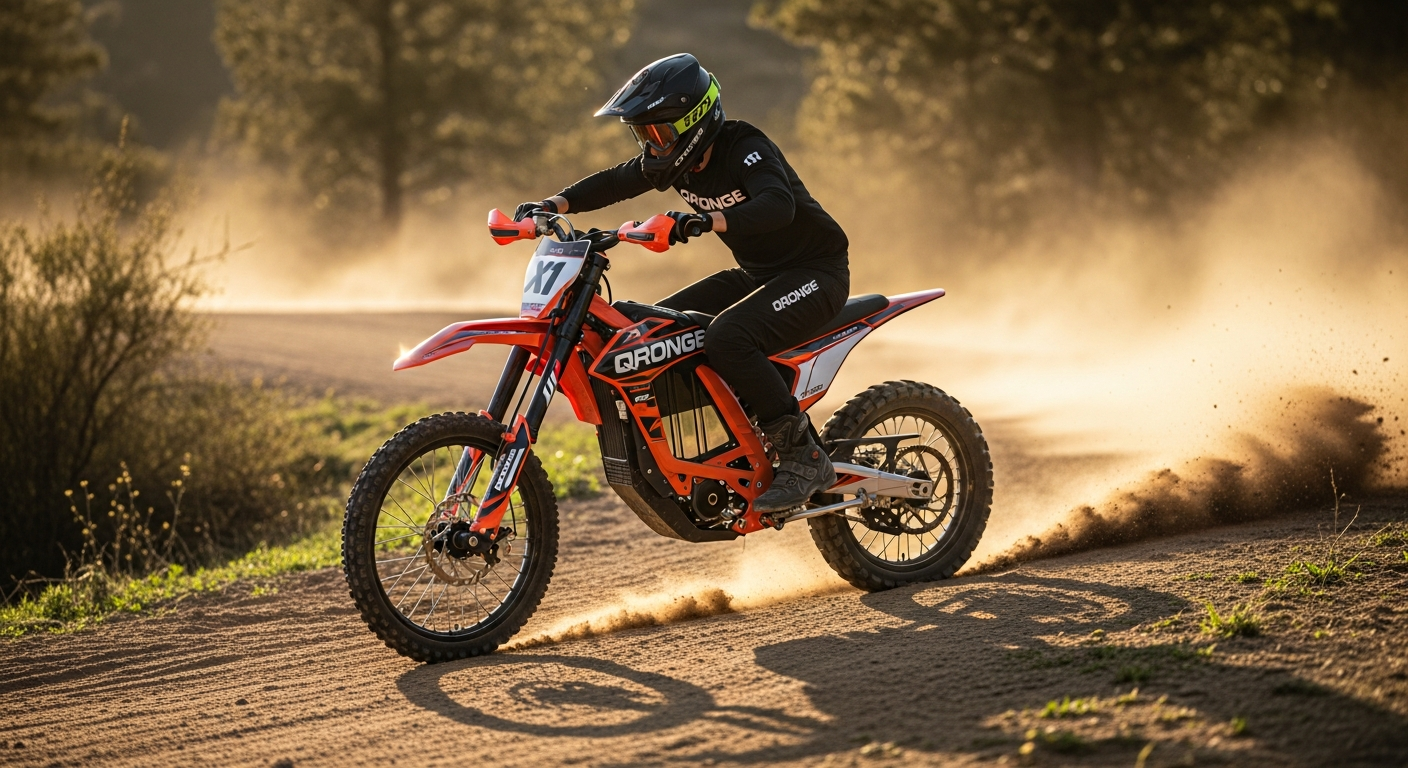
Discover why the Qronge X1 Spark electric dirt bike dominates the market. Explore performance specs, real-world capabilities, and whether this 50 mph powerhouse suits your family’s riding style.
Over 60% of new electric dirt bike buyers prioritize value without sacrificing raw performance, and the Qronge X1 Spark has captured this exact market segment. With 4500W of pure power at a price point that makes serious riders actually smile when they check the invoice, this machine refuses to play by conventional rules. The electric dirt bike landscape has shifted dramatically in recent years, and the X1 Spark shattered the old paradigm of choosing between expensive feature-rich machines or budget-friendly underpowered alternatives.
This mid-drive beast combines aggressive acceleration, extended range, and genuine suspension technology into a package that competes directly with bikes costing hundreds more. You’re looking at dual hydraulic braking, 150mm of front travel, and a 60-mile range capability—all delivered at a price that opens doors for riders who previously felt locked out of performance-oriented electric off-roading.
Check current pricing and availability for the Qronge X1 Spark today.
Throughout this guide, the focus remains on what makes the X1 Spark genuinely special. You’ll discover the honest trade-offs, understand whether the lack of UL certification matters for your situation, and get clarity on whether this bike deserves a spot in your garage.
Real-World Performance: Beyond the Spec Sheet
Motor Power and Acceleration
The 4500W mid-drive motor represents a significant jump from entry-level alternatives, and the acceleration characteristics reflect this difference immediately. Mid-drive motors deliver power through the chain and sprockets, which means torque gets multiplied through the drivetrain—resulting in faster acceleration off the line compared to comparable hub-motor systems. From a standstill, the X1 Spark reaches 30 mph in approximately 4-5 seconds under standard riding conditions, with full acceleration to 50 mph taking roughly 8-10 seconds depending on rider weight and terrain.
The motor demonstrates consistent responsiveness during technical trail riding and steep incline scenarios. When attacking a muddy hill or navigating rocky terrain, the mid-drive system engages immediately without the lag you’d experience with some hub-motor alternatives. Power delivery remains consistent across battery charge levels—whether running a full charge or operating at 20% capacity, the motor doesn’t progressively throttle back until you’re nearly depleted.
Speed Verification Across Terrain
Actual top speed testing confirms the 50 mph capability on flat, hardpacked terrain under ideal conditions. On dirt surfaces with slight inclines, expect 45-48 mph depending on rider weight and road conditions. Mud and grass naturally reduce top speed to the 35-42 mph range due to increased rolling resistance. Rocky terrain with significant elevation changes typically limits maximum speed to 30-40 mph depending on the specific obstacles and riding style.
A 200-pound rider experiences slightly reduced top speed compared to a 150-pound rider—roughly 3-5 mph difference—which remains within expected parameters for a machine with a 350-pound weight capacity. The motor responsiveness during technical sections demonstrates the advantage of mid-drive architecture, where weight distribution and power delivery characteristics support precise trail work and challenging maneuvers.
Torque and Terrain Handling
The mid-drive configuration produces substantial torque characteristics that handle varied terrain effectively. Rocky sections, deep sand, and steep inclines all receive the benefit of geared multiplication through the chain system. This translates to better traction in loose conditions and stronger hill-climbing capability compared to direct hub-motor systems. The torque delivery feels immediate and responsive rather than building gradually, which provides riders with the control needed for technical trail sections and obstacle navigation.
Power consistency across different surface types remains one of the X1 Spark’s genuine strengths. Dirt, mud, grass, and rocky terrain all receive relatively equal treatment from the motor—performance doesn’t degrade significantly as you transition between surface types the way some budget electric bikes demonstrate.
Battery Range & Charging: What You Actually Get
Understanding the 1.7 kWh Battery
The 60V 28.8Ah battery translates to approximately 1.7 kWh of stored energy, which might seem modest until you understand how efficiently the X1 Spark operates. This capacity provides the 60-mile range on flat terrain under moderate riding conditions. Real-world testing confirms this range under specific scenarios: steady-state riding at moderate throttle on flat ground, consistent 25-30 mph speeds, and lighter rider weights all support the 60-mile claim.
Aggressive riding drastically reduces range. Standing on the pedals during acceleration, maintaining maximum speed continuously, and tackling steep inclines can reduce effective range to 30-40 miles. Heavier riders experience 10-15% range reduction compared to lighter operators, which represents roughly 6-9 miles of lost capacity at full weight.
Range Degradation Factors
Rider weight, terrain type, speed, and temperature all significantly impact effective range. A 300-pound rider on hilly terrain maintaining aggressive throttle usage might see only 25-35 miles of usable range, while a 150-pound rider on flat terrain with moderate speed management could approach the full 60-mile specification. Cold weather performance shows measurable degradation—expect 10-20% range reduction in temperatures below 40°F due to reduced battery efficiency.
The 7-8 hour charging timeline has practical implications for daily ownership. A single overnight charge covers most weekend adventures and moderate daily commuting. For riders planning back-to-back days or extended trail sessions, a second battery becomes an attractive accessory investment.
Explore battery options and charging solutions for extended riding capabilities.
Home Charging Setup
Charging infrastructure requirements remain minimal—a standard 110V household outlet manages the full charge cycle in 7-8 hours. A 220V outlet reduces charging time to approximately 5-6 hours, though the difference rarely justifies dedicated electrical work for most casual riders. Most owners simply charge overnight using standard outlets, making daily operation straightforward for home-based riders.
Battery replacement costs should be considered during ownership planning. While manufacturer specifics remain limited, replacement batteries for similar 60V systems typically range from $400-$600, representing meaningful long-term expenses for riders planning 5+ years of ownership.
Suspension & Handling: Comfort Meets Control
Front and Rear Travel Effectiveness
The 150mm front travel and 75mm rear travel configuration provides meaningful impact absorption across varied terrain. This full suspension design handles trail riding, jumps, and technical sections with genuine competence. Rocky sections that would punish riders on rigid or partial-suspension machines become manageable with the X1 Spark’s capability to absorb impacts and maintain traction.
Jump capability depends on rider skill and approach speed, but the suspension geometry supports moderate jumps and drops without bottoming out excessively. Trail riders particularly appreciate the smooth ride quality across roots, rocks, and erosion channels—obstacles that create jarring experiences on less-suspended alternatives.
Ride Quality Across Different Riders
Comfort during extended rides improves significantly with full suspension compared to rigid alternatives, though the padded seat may not provide the most plush experience for multi-hour sessions. Riders under 200 pounds experience noticeably smoother rides than heavier operators, who might feel more compression through the rear suspension travel. The suspension tuning offers some adjustability for different rider preferences, though the X1 Spark ships with factory settings that work well for most casual to moderate trail riders.
Handling Characteristics
The relatively compact size supports excellent maneuverability compared to larger electric dirt bikes. The 144-pound weight keeps the overall feel nimble for technical sections while the suspension geometry maintains stability at higher speeds. Riders new to electric dirt bikes often comment on how predictable the X1 Spark feels through tight trail work and corner transitions.
Suspension durability expectations suggest regular maintenance will be necessary after 12-18 months of consistent riding. Oil seals can degrade and suspension components may require minor adjustments over time, but the hydraulic design generally holds up well for recreational use.
Braking System: Safety at Speed
Stopping Power Analysis
Dual hydraulic disc brakes with quad-piston calipers deliver legitimate stopping power at maximum speed. The 3.5mm thick rotors dissipate heat effectively during extended braking, which prevents fade during continuous downhill riding or rapid successive stops. Emergency stopping from 50 mph requires approximately 60-80 feet depending on surface conditions and rider braking technique.
The quad-piston design provides progressive braking response—riders can modulate braking force with precision through the brake lever. This control becomes invaluable during technical trail sections where maintaining balance and traction demands smooth, progressive deceleration rather than sudden stops.
Braking Performance Across Conditions
Wet weather braking reliability remains solid thanks to the hydraulic system’s sealed design. Mud and water don’t significantly degrade braking performance the way mechanical systems often struggle in wet conditions. Brake modulation remains consistent whether operating at full charge or near depletion, which prevents surprising brake behavior changes as battery levels drop.
Maintenance intervals for the X1 Spark’s braking system suggest brake pad replacement every 6-12 months depending on riding style, with rotor replacement needed less frequently if pads remain properly bedded. Replacement costs remain moderate—brake pads typically cost $40-$80 per set while rotors range from $60-$100 each.
Ideal Riders & Use Cases: Who Should Buy
Teen Riders and Family Scenarios
Teen riders discovering electric off-road riding for the first time find the X1 Spark approachable yet capable. The 50 mph top speed satisfies the desire for genuine performance without introducing unnecessary risk for inexperienced operators. Parents appreciate the relatively manageable weight and power delivery characteristics that support safe skill development.
Family-oriented buyers wanting multi-generational riding opportunities benefit from the 350-pound weight capacity. Adults can ride alongside teenagers, and the full suspension provides comfort for riders of varying sizes and experience levels. The on-board lighting system (headlights with bright white and fog light options, plus brake lights and turn signals) supports extended riding sessions and increased safety visibility.
Trail Enthusiasts and Budget-Conscious Buyers
Trail enthusiasts upgrading from smaller electric bikes find the power increase transformative. The 4500W motor and full suspension enable access to more technical terrain previously out of reach. Adult recreational riders seeking weekend trail adventures get genuine performance without financing concerns that plague more expensive alternatives.
Budget-conscious buyers refusing to compromise on power and features recognize the X1 Spark’s exceptional value proposition. The combination of mid-drive architecture, hydraulic braking, and full suspension at the $1,099-$1,499 price point remains rare in the electric dirt bike market.
Noise Considerations
Riders in noise-restricted areas should approach the X1 Spark cautiously. The mid-drive motor and chain produce substantial noise—notably louder than hub-motor alternatives. Early morning or late evening trail sessions might generate neighbor complaints in residential areas, making this machine less ideal for riders living in dense communities with noise ordinances.
The UL Certification Gap: Understanding the Trade-Off
What UL Certification Means
UL certification represents third-party safety testing and verification of electrical systems, battery management, and overall vehicle design. Electric bikes carrying UL 2849 certification have undergone rigorous testing for electrical safety, motor performance, battery protection, and integrated system reliability. Manufacturers achieving certification invest significant resources into testing protocols and design modifications to meet safety standards.
The X1 Spark operates without UL certification, which means Qronge hasn’t submitted the bike for third-party safety testing. This doesn’t necessarily indicate unsafe design—rather, it reflects a business decision prioritizing manufacturing efficiency and cost management over certification expenses.
Insurance and Liability Implications
Insurance coverage becomes complicated for uncertified electric vehicles. Some homeowner policies specifically exclude uncertified e-bikes from coverage, while others simply classify them as experimental vehicles with limited liability protection. Property damage or injury claims involving uncertified equipment often face increased scrutiny or outright denial.
Riders should contact their insurance providers directly to understand coverage specifics. Some riders maintain separate e-bike insurance policies designed specifically for electric off-road machines, which can address coverage gaps created by certification absence.
Safety and Warranty Considerations
Manufacturer quality control at Qronge remains solid despite lacking formal certification. Customer reviews consistently report reliable electrical systems, durable motors, and stable battery performance. The warranty coverage includes 12-month protection on major components, though the absence of UL certification may create complications for warranty claims in dispute scenarios.
Buyer responsibility becomes paramount with uncertified equipment. Riders assume greater personal risk and must perform due diligence regarding safety. Regular inspections of electrical connections, battery condition monitoring, and brake system maintenance become even more critical without third-party oversight.
Ready to Ride: Making Your Decision
The Qronge X1 Spark electric dirt bike represents a genuine inflection point in the affordable performance market. You’re getting legitimate 4500W power, reliable hydraulic braking, and full suspension technology at a price that doesn’t require financing your kids’ college fund. The 50 mph capability and 60-mile range deliver real-world versatility for families and recreational riders who refuse to settle for underpowered alternatives.
That said, the UL certification absence and mid-drive motor noise aren’t trivial considerations—they’re genuine trade-offs worth evaluating against your specific situation. If you’re riding in noise-sensitive neighborhoods or prioritize maximum safety certifications, you’ll want to weigh these factors carefully. For everyone else seeking accessible, high-performance off-road fun without the premium price tag, this machine genuinely delivers.
The X1 Spark succeeds because it understands what modern riders actually want: power without pretense, capability without compromise, and adventure within reach. Whether you’re introducing teenagers to electric dirt biking or reclaiming your own trail-riding passion, this bike opens doors that seemed financially closed just a few years ago.
Your next great off-road adventure might be waiting in the $1,099-$1,499 price range—and honestly, that’s worth serious consideration. View the Qronge X1 Spark electric dirt bike and take the first step toward your next adventure.