
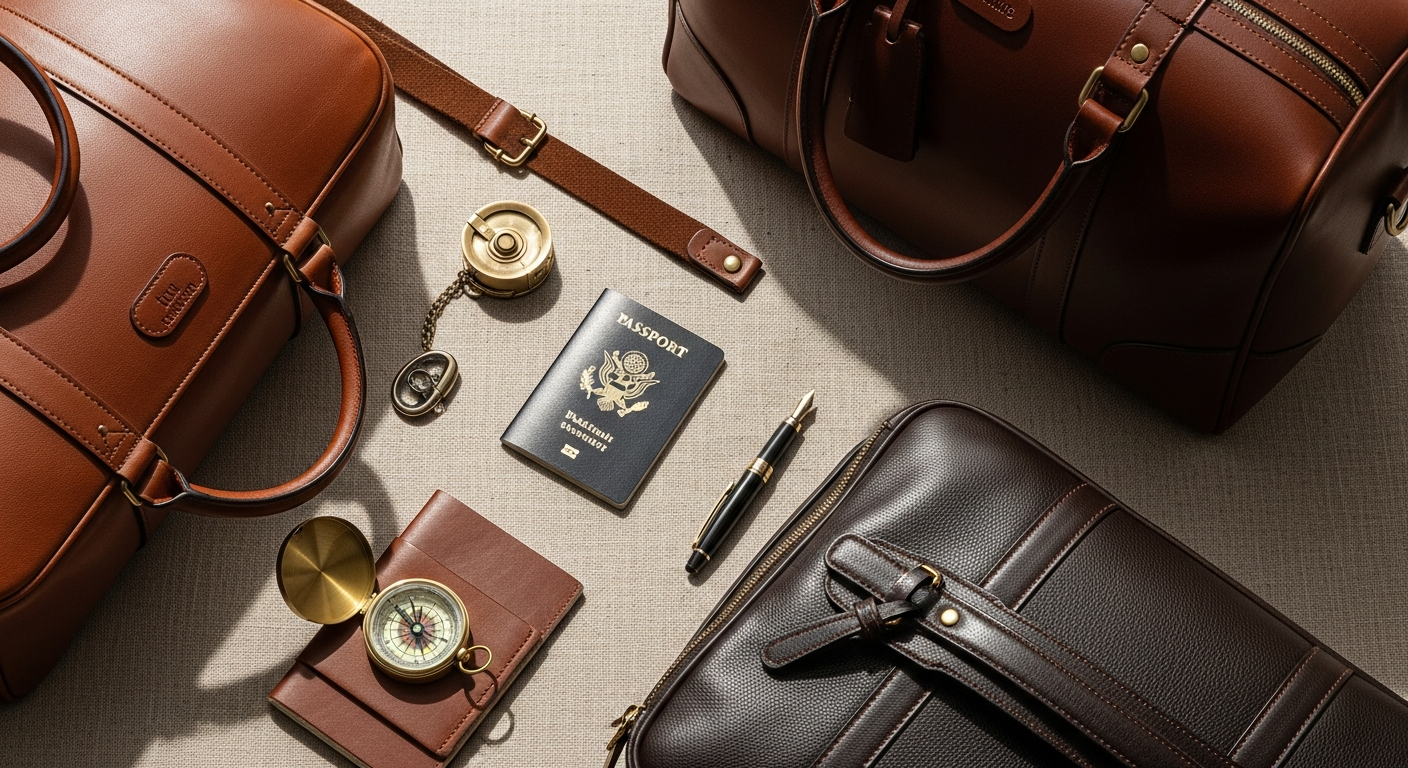
Discover why premium designer leather travel bags are worth the investment. Learn about Italian craftsmanship, durability, and how to choose the perfect luxury travel companion from ScaglioneIschia.
Seventy-three percent of affluent travelers prioritize quality over quantity when selecting luggage—and they’re willing to spend significantly more for pieces that deliver. A premium designer leather travel bag isn’t just another accessory; it’s a statement about your standards and a practical investment that transforms how you experience travel. ScaglioneIschia, a curated multi-brand fashion boutique nestled on Italy’s picturesque island, has built its reputation on connecting luxury seekers with exceptional accessories. Premium leather travel bags represent a cornerstone of their collection—pieces crafted from full-grain Italian leather with meticulous attention to hardware, stitching, and interior organization.
The distinction between a premium leather bag and ordinary luggage lies in philosophy. While mass-produced travel gear focuses on cost efficiency, luxury travel bags prioritize longevity, aesthetics, and the sensory experience of ownership. Discerning travelers recognize that a well-crafted bag becomes an extension of their identity, signaling refinement and intentionality. ScaglioneIschia’s selection reflects this philosophy, featuring iconic bags that transcend seasonal trends and reward their owners with years of reliable service.
Explore ScaglioneIschia’s premium travel bag collection to discover your perfect luxury companion. This guide will walk you through the craftsmanship elements that justify the €500–€2,000 price range, reveal the specific features that enhance your travel experience, and help you select a bag that aligns with both your practical needs and aspirational standards.
Italian Leather Craftsmanship: Understanding What You’re Buying
Full-Grain and Top-Grain Leather: The Foundation of Quality
Full-grain leather represents the highest tier of leather quality. This material retains the hide’s natural surface, complete with its inherent character marks and variations. The tanning process preserves the leather’s original strength and breathability, resulting in material that actually improves with age. Top-grain leather, while slightly processed to remove surface imperfections, maintains excellent durability and develops a beautiful patina over time.
The distinction matters because these materials flex, breathe, and age in ways that synthetic alternatives cannot replicate. They resist cracking better than bonded leather and develop a warm, lived-in appearance that collectors prize. When you purchase a bag from ScaglioneIschia, you’re investing in leather that will soften beautifully and tell the story of your travels through its surface.
Italian Leather Production: Heritage and Heritage Standards
Italy’s leather industry has dominated luxury manufacturing for centuries. Regions like Tuscany produce leather using tannery methods refined over generations, where artisans understand the relationship between tannin composition, aging time, and final quality. Italian tanners often use vegetable tanning—a labor-intensive process that takes months—rather than faster chemical methods. This commitment to time-intensive production explains both the superior quality and the corresponding investment required.
Italian leather’s reputation stems from three factors: consistent fiber structure, superior dyeing that penetrates rather than coats, and tannery oversight that borders on obsessive. When you hold a bag made from Italian full-grain leather, you’re holding the product of expertise that cannot be rushed or compromised without degradation.
Tannery Standards and Their Impact on Longevity
Different tanneries produce remarkably different results, even when using similar raw hides. High-standard tanneries control temperature, humidity, and chemical composition with precision. They test their leather extensively and reject batches that fall short of specifications. This quality control directly affects how your bag will perform. Leather from premium tanneries resists moisture penetration, develops richer patina, and maintains structural integrity even under demanding travel conditions.
Patina development—the gradual darkening and character marks that appear on leather surfaces—becomes a visual record of your bag’s journey. Premium leather develops patina that enhances aesthetics rather than suggesting wear and tear.
Italian Leather Versus Alternative Materials
Synthetic materials offer genuine advantages: they resist water, require minimal maintenance, and weigh less than leather. However, they degrade in predictable ways. Synthetic travel bags typically show permanent creases, discoloration, and material breakdown within three to five years. Bonded leather—leather fibers held together with polyurethane—performs worse, often peeling and disintegrating within two years.
Full-grain leather ages gracefully. A five-year-old leather bag often looks better than a new synthetic bag, having developed patina and character while maintaining structural integrity. This longevity transforms the economics of ownership entirely.
Artisanal Production Methods Justifying Premium Pricing
Mass production prioritizes consistency and speed. Artisanal production prioritizes quality and craftsmanship. A premium leather travel bag requires hand-cutting, hand-stitching, and hand-finishing processes that simply cannot be mechanized without compromising the final result. Skilled artisans examine each piece individually, adjusting techniques based on leather characteristics and identifying potential issues before they become problems.
This labor intensity costs significantly more than industrial production. A single artisan might complete three to four premium bags per month, versus industrial production rates of dozens per day. That investment in human skill becomes embedded in the finished product—visible in symmetry, in stitch precision, and in the way hardware sits perfectly aligned.
Quality Certifications and Leather Grading Systems
The luxury leather market uses certification systems to communicate quality transparently. Genuine Italian leather often carries geographical indication (GI) markings that verify production origin. Vegetable-tanned leather frequently includes certifications about tannery standards and chemical usage. Understanding these credentials helps you assess what you’re purchasing.
Look for designations indicating Tuscan tannery production, vegetable tanning methods, and third-party quality verification. ScaglioneIschia’s curation process focuses on brands that meet these rigorous standards, ensuring that each bag represents genuine craftsmanship rather than premium branding alone.
Regional Leather Producers and Their Reputation
Tuscany’s leather industry centers around towns like Santa Croce sull’Arno, where family-operated tanneries have produced high-grade leather for centuries. These producers maintain waiting lists and limit production deliberately to preserve quality standards. Their leather commands premium pricing because their reputation—built across generations—guarantees consistent excellence.
Other respected regions include the leather districts of Bari in southern Italy, where vegetable-tanned leather production continues using traditional methods. Each region develops distinctive characteristics in their leather based on local mineral composition in water, climate conditions, and inherited techniques.
Leather Sourcing and Sustainability Implications
Premium brands increasingly emphasize ethical sourcing, tracing hides to specific ranches and tanneries. Vegetable tanning, while slower, uses natural materials rather than harsh chemicals, making it more sustainable than alternatives. Some luxury brands commit to supporting small tanneries and traditional production methods, preserving ancient crafts while ensuring ethical practices.
Sourcing decisions directly affect your bag’s lifespan. Ethically-sourced, carefully-selected leather simply performs better. It resists damage, ages beautifully, and maintains structural integrity across decades of use.
Hardware, Stitching, and Interior Architecture: The Details That Define Quality
Premium Metal Hardware: Zippers, Buckles, and Corrosion Resistance
The hardware on a luxury travel bag represents a significant portion of the overall cost. Premium bags feature solid brass or stainless steel hardware rather than plated zinc alloy. Polished zippers glide smoothly and resist jamming. Heavy-duty buckles distribute weight evenly. Reinforced attachment points prevent hardware from tearing free from leather.
Hardware quality matters because travel subjects bags to constant stress. Frequent opening and closing, temperature changes, and moisture exposure all challenge metal components. Hardware from reputable manufacturers—often Japanese companies specializing in precision metal work—resists corrosion and maintains smooth operation after thousands of cycles.
Reinforced Stitching Techniques and Stitch Density
Professional stitching density typically ranges from 6 to 8 stitches per inch on premium bags. Higher stitch density requires more thread and more skilled labor, but creates seams that resist tearing under stress. The stitching pattern itself matters—diagonal patterns distribute stress more effectively than straight stitches.
Premium bags often use double or triple stitching in high-stress areas. The thread itself—often waxed polyester or nylon—resists fraying and maintains integrity for decades. Visible stitching on quality bags shows consistent tension, even spacing, and careful attention to corners and curves.
Interior Compartment Design and Organization
The interior architecture of a travel bag separates functional luggage from purposefully-designed travel companions. Premium bags feature multiple compartments sized for specific items—document sleeves for passports, padded sections for electronics, and smaller pockets for accessories. This organization serves two purposes: it reduces stress on seams by distributing weight logically, and it makes travel more convenient by keeping essentials accessible.
Thoughtful design prevents items from shifting during travel, which reduces internal friction and extends the bag’s lifespan. Items cannot damage each other when properly separated and secured.
Specialized Pockets for Electronics and Valuables
Modern travel bags increasingly incorporate specialized compartments for electronics. RFID-blocking pockets protect credit cards from digital skimming. Padded sleeves protect tablets and laptops. Ventilated compartments prevent moisture accumulation around electronics.
These features seem minor until they prevent disaster—a cracked laptop screen, a ruined passport, or stolen financial information. Premium bags incorporate these protections as standard rather than afterthoughts, reflecting understanding of contemporary travel needs.
Lining Materials and Durability Contributions
The interior lining affects both aesthetics and function. Premium bags typically use high-quality cotton blends or specialty synthetics that resist staining and tearing. The lining protects the leather interior from abrasion and moisture. Quality lining also indicates the manufacturer’s attention to detail—if the interior is carefully finished, the exterior craftsmanship is equally rigorous.
Durable lining prevents the bag’s interior from deteriorating before the leather exterior, extending overall usable lifespan significantly.
Padding and Reinforcement in High-Stress Areas
Travel bags concentrate stress on specific areas: handles, corners, and the bag’s base. Premium bags reinforce these zones with additional leather layers, strategic padding, and extra stitching. The base often features a reinforced leather panel that extends wear resistance. Handles receive additional internal support to distribute weight evenly.
These reinforcements prevent the failure points that plague lesser bags. They represent the difference between a bag lasting three years and lasting thirty.
Waterproofing Treatments and Protective Coatings
Quality leather travel bags receive protective treatments that enhance water resistance without compromising breathability. Wax applications, resin coatings, and specialized finishes repel light moisture while allowing the leather to age naturally. These treatments aren’t permanent—they require renewal periodically—but they provide practical protection against everyday moisture exposure.
Different leather finishes receive different treatments. Vegetable-tanned leather typically receives light wax finishes. Chrome-tanned leather often receives synthetic coatings. Understanding your bag’s finish helps you maintain it properly.
Interior Organization Reducing Wear and Extending Lifespan
Thoughtful interior organization directly extends bag lifespan. When items remain properly separated and supported, they don’t shift and create stress points. Sharp objects cannot puncture the interior. Heavy items don’t concentrate pressure on limited areas. This engineering approach treats interior design as a durability feature rather than mere convenience.
Carry-On Compatibility and Practical Dimensions for Modern Travel
Standard Carry-On Dimensions Across Airlines
Most major airlines enforce similar carry-on restrictions: approximately 55 x 40 x 20 centimeters (22 x 16 x 9 inches) for economy, with slight variations by carrier. Premium travel bags are deliberately designed to fit these specifications, eliminating the need to check luggage for short trips. This compatibility matters because checked luggage risks delays, damage, and theft.
Understanding these dimensions allows you to select a bag that maximizes capacity while remaining compliant with all major carriers’ requirements. ScaglioneIschia stocks bags specifically engineered around these standard dimensions.
Weight Considerations for Frequent Air Travelers
Airlines impose weight limits on carry-on items—typically 7 to 10 kilograms depending on the carrier. Genuine leather adds weight compared to synthetic materials. A premium leather travel bag typically weighs 2 to 3 kilograms empty, leaving 4 to 8 kilograms for contents. For frequent business travelers packing minimally, this matters. For leisure travelers, the weight investment yields structural strength that lighter alternatives cannot match.
The trade-off: a slightly heavier bag that lasts decades, versus lighter bags that deteriorate within years.
Shoulder Strap Design and Ergonomic Comfort
Extended wear with a shoulder bag requires ergonomic strap design. Premium bags feature padded straps that distribute weight across your shoulder rather than concentrating it at a single point. Adjustable straps accommodate different clothing thicknesses and body frames. Strap attachment points sit well back on the bag, positioned to balance weight naturally rather than pulling forward.
Ergonomic strap design prevents shoulder and neck pain during extended travel—matters that seem minor until you’re navigating an airport while managing pain.
Top Handle Construction and Load-Bearing Capacity
Premium travel bags feature top handles reinforced to bear significant weight. The handles often use thick leather wrapping over reinforced internal structure. These handles accommodate carrying the bag in crowded situations, lifting it onto luggage racks, and other load-bearing scenarios. Well-constructed handles prevent the common failure point of lesser bags—handles tearing away from the body.
Load-bearing capacity directly reflects handle engineering. Premium bags typically support 15 to 20 kilograms comfortably, versus 5 to 8 kilograms for lightweight alternatives.
Expandable Compartments and Flexible Packing Options
Some premium travel bags incorporate expandable sections that increase capacity when needed. Accordion-style bottoms, side expansion panels, and gusseted compartments allow you to increase capacity by 20 to 30 percent for extended trips. This flexibility provides utility without compromising the bag’s aesthetics when traveling light.
Expandability requires careful engineering—the expansion mechanisms must maintain structural integrity when fully loaded and must not compromise the bag’s appearance when compressed.
TSA-Friendly Features and Security Considerations
Modern travel bags increasingly incorporate TSA-approved lock integration, allowing secure closure with TSA master keys. Interior organization with compartments for electronics facilitates security screening. Some bags feature TSA PreCheck compatibility that streamlines airport security.
Understanding these features streamlines your travel experience—reducing fumbling at security checkpoints and preventing rushed repackaging.
Wheeled Versus Non-Wheeled Design Trade-Offs
Premium travel bags typically emphasize non-wheeled designs, relying on comfortable shoulder and top handles. Wheeled luggage requires structural rigidity that can compromise the bag’s aesthetic elegance. Non-wheeled bags offer advantages: they navigate stairs and cobblestone streets that wheeled luggage struggles with, they remain usable if wheels damage, and they typically age more gracefully.
This represents a lifestyle choice—embracing the tactile experience of travel rather than optimizing for mechanical convenience.
Versatility Across Different Travel Scenarios
The finest travel bags perform across multiple scenarios: business conferences, weekend leisure travel, airport transit, and daily carry. This versatility comes from thoughtful design that balances formality, capacity, and accessibility. Neutral colors, timeless styling, and functional compartments enable seamless transitions between contexts.
A truly premium bag doesn’t require you to own multiple pieces for different travel situations—it adapts to whatever your journey demands.
The Investment Case: Why Premium Designer Bags Hold Value
Resale Market Trends for Luxury Leather Accessories
The luxury leather goods market has demonstrated consistent strength in the secondhand sector. Premium leather bags routinely resell for 60 to 80 percent of original purchase price when properly maintained—substantially higher than the 20 to 40 percent resale value of mass-produced luggage. This premium reflects genuine scarcity, quality reputation, and enduring desirability among luxury consumers.
Auction houses, consignment boutiques, and specialized luxury resale platforms actively seek premium leather travel bags. Demand remains stable across economic cycles, suggesting these items represent stores of value rather than purely consumable goods.
Brand Equity and Value Maintenance
Designer brands stocked by ScaglioneIschia—prestigious international and national luxury houses—maintain brand equity across decades. Their commitment to quality, heritage marketing, and selective distribution creates scarcity that supports pricing. A bag from an established luxury brand carries brand recognition that translates to resale demand.
Newer or lower-tier brands, by contrast, depreciate rapidly as their market perception shifts. Brand equity compounds over time, making established labels more valuable as resale assets.
Depreciation Rates Compared to Fast-Fashion Alternatives
Fast-fashion luggage depreciates 70 to 90 percent within five years as consumers recognize deterioration and material failure. Premium designer bags depreciate 20 to 40 percent over the same period, and primarily due to cosmetic aging rather than structural failure. The math becomes compelling: a €2,000 designer bag that depreciates to €1,200 after five years costs €160 per year. A €400 fast-fashion bag that becomes unusable after two years costs €200 per year, and requires replacement.
Over a ten-year period, the premium bag proves more economical despite higher initial investment.
Timeless Design Principles and Trend Transcendence
Premium travel bags prioritize timeless design—clean lines, neutral colors, and classic proportions—over trendy elements. Trends date quickly; classics endure. A beautifully proportioned leather travel bag from the 1990s remains desirable today. Fashion-forward bags from the same period often appear dated and unmarketable.
Timeless design preserves both resale value and personal satisfaction. You don’t face the psychological burden of owning an item that feels outdated.
Condition Preservation and Resale Potential
A bag in pristine condition commands premium resale pricing—sometimes approaching 85 to 90 percent of original purchase price. Proper maintenance directly translates to financial returns. Storing bags carefully, conditioning leather regularly, and handling minor damage immediately preserves condition and resale value.
This creates a virtuous cycle: the investment justifies careful maintenance, which preserves condition, which preserves resale value.
Collectibility of Limited Editions and Exclusive Releases
Some designer leather goods are produced in limited quantities, creating collectibility among enthusiasts. Seasonal releases, collaboration pieces, and exclusive color options sometimes appreciate in value as scarcity increases. While not all premium bags become collectible, the potential for appreciation exists—particularly with brands known for thoughtful design and selective production.
Cost-Per-Wear Analysis Over Extended Ownership
A €1,500 premium leather bag used twice weekly for ten years represents 1,000 uses. Cost per wear: €1.50. The same bag used for business travel, weekend trips, and leisure exploration might easily reach 2,000 uses, reducing cost per wear to €0.75. Compare this to a €300 synthetic bag lasting two years with 200 uses—€1.50 per wear—and the premium bag becomes economically rational despite higher initial investment.
Extended ownership dramatically improves the cost-per-wear equation, making premium quality the more economical choice for anyone who travels regularly.
Emotional and Psychological Value
Beyond financial calculations, owning a premium leather travel bag provides psychological and emotional benefits. Carrying an item crafted from the finest materials, designed with meticulous attention, and bearing the heritage of luxury creates confidence and satisfaction. You’re not managing anxiety about equipment failure; you’re experiencing the quiet certainty of quality.
This psychological value—the confidence that your bag will perform flawlessly, that your belongings are well-protected, that you’re presenting yourself thoughtfully—provides returns beyond financial metrics.
Maintenance Rituals: Keeping Your Leather Bag in Pristine Condition
Essential Leather Conditioning Products and Application Frequency
Leather naturally dries over time, requiring periodic conditioning to maintain suppleness. High-quality leather conditioners—typically mink oil, lanolin-based products, or specialized formulations—restore natural oils and preserve texture. Application frequency depends on climate and usage: dry climates or heavy use might require conditioning every three to four months, while mild climates with light use might sustain six-month intervals.
Conditioning should be a pleasant ritual rather than a chore. Many owners discover that regular maintenance creates deeper appreciation for their bags as they observe patina development and evolving character.
Protective Treatments for Water and Stain Resistance
After conditioning, protective coatings enhance water resistance without compromising the leather’s natural aging. Wax-based protectants create hydrophobic surfaces that shed water while remaining breathable. Silicone-free options preserve the leather’s ability to develop patina naturally.
Protective treatments require periodic renewal—typically every six to twelve months depending on product and use. This maintenance actually becomes enjoyable once you develop the habit, transforming leather care from obligation into ritual.
Proper Storage Techniques During Off-Season Periods
Leather bags stored for extended periods require environmental control. Store in cool, dry locations—not damp basements or hot attics. Interior crumpled newspaper helps bags maintain shape while absorbing excess moisture. Avoid plastic storage, which traps moisture and promotes mildew. Breathable cotton or muslin storage bags protect from dust while allowing air circulation.
Proper storage preserves bags throughout seasons, preventing the moisture and temperature damage that degrades leather over time.
Cleaning Methods for Different Leather Finishes
Different leather finishes require different cleaning approaches. Aniline leathers (retaining natural texture) should be cleaned with soft brushes and mild leather soap. Protected finishes tolerate more vigorous cleaning. Always test cleaning products on inconspicuous areas before applying broadly.
Understanding your bag’s specific finish prevents accidental damage from using inappropriate cleaning methods.
Handling Salt, Sun Exposure, and Environmental Damage
Salt from ocean environments and winter roads can damage leather if not properly addressed. Wipe salt residue away promptly with damp cloths. Extended sun exposure fades leather—particularly lighter colors—so avoid leaving bags in direct sunlight during storage. Environmental pollutants and urban grime require gentle wiping with slightly damp cloths.
Environmental awareness prevents the premature aging that damages character development and structural integrity.
Professional Restoration Services and When to Use Them
Professional leather restoration specialists can address damage that exceeds home maintenance. Significant stains, deep scratches, hardware damage, and structural repairs benefit from professional expertise. Luxury brands sometimes offer factory restoration services that maintain their standards and ensure authenticity.
Investing in professional restoration when necessary preserves bags through damage events, often extending usable lifespan significantly. This represents insurance for premium goods.
Common Mistakes That Damage Leather Prematurely
Several mistakes accelerate leather deterioration: using harsh soaps that strip natural oils, storing in plastic that traps moisture, exposing to extreme heat or cold, allowing water damage to dry without intervention, and applying incorrect products to sensitive finishes. Knowledge prevents these mistakes—understanding your bag’s specific requirements protects your investment.
Building a Maintenance Schedule Extending Bag Lifespan
Systematic maintenance dramatically extends bag lifespan. A simple routine—quarterly conditioning, biannual protective treatment renewal, immediate attention to spills or damage, and proper seasonal storage—requires minimal time while yielding maximum protection. Many owners discover that maintenance rituals create deeper connection with their bags, transforming practical care into meditative practice.
Navigating the Luxury Market: How to Choose Your Perfect Travel Companion
Assessing Your Travel Patterns and Frequency
The ideal travel bag matches your specific usage patterns. Frequent business travelers require different bags than leisure explorers. International travelers need different capacity than weekend-trip travelers. Heavy packers need different construction than minimalist travelers. Honestly assessing your travel reality—frequency, distance, typical contents, and duration—guides you toward bags designed for your lifestyle rather than generic luxury.
ScaglioneIschia’s specialists understand these distinctions and help match bags to actual travel patterns.
Selecting Appropriate Size and Capacity
Size selection balances competing demands. Larger bags encourage overpacking and create unnecessary weight. Smaller bags force decisions about what truly matters. The ideal bag holds everything you need without excess capacity. For most travelers, this means bags between 30 and 50 liters—large enough for comfortable travel, small enough to encourage intentionality about packing.
Testing bags with your actual travel items reveals whether size matches your genuine needs.
Color Psychology and Versatility in Neutral Versus Statement Tones
Neutral colors—black, navy, brown, cognac—maintain versatility across contexts and seasons. They pair with any clothing, work in professional and casual settings, and never appear dated. Statement colors—burgundy, forest green, deep purple—allow personal expression but require more thoughtful styling and may eventually feel limiting.
First-time luxury bag buyers typically benefit from neutral palettes that prove endlessly useful across years and contexts.
Brand Curation at ScaglioneIschia and Selection Distinctiveness
ScaglioneIschia’s reputation rests on thoughtful curation—selecting brands and pieces that meet specific standards of quality, design integrity, and brand heritage. Their selection represents a carefully maintained list of international and national luxury houses, rather than volume-driven stocking. This curation guarantees that every bag meets consistent quality standards, removing the uncertainty of navigating luxury markets.
The boutique’s specialized expertise becomes invaluable in contexts where product knowledge fundamentally improves purchasing decisions.
Price-to-Quality Ratio Across Different Designer Labels
Not all premium brands offer equal value. Some established houses maintain exceptional quality standards at justified price points; others charge premiums based primarily on branding. Understanding price-to-quality relationships prevents overpaying for brand name while missing superior quality at alternative price points.
ScaglioneIschia’s specialists help identify exceptional value within luxury markets—pieces where price accurately reflects quality rather than brand markup.
Trying Bags In-Person Versus Online Purchasing Considerations
Premium leather goods benefit from in-person evaluation. You’ll experience how leather feels, how the bag sits on your shoulder, how hardware functions, and how proportions complement your frame. Interior organization becomes apparent through hands-on exploration. Weight distribution, strap comfort, and overall balance cannot be fully assessed through photographs.
If possible, visiting ScaglioneIschia’s boutique provides direct access to expertise and the ability to evaluate bags in person before committing financially.
Return Policies and Warranty Coverage for Luxury Purchases
Luxury boutiques typically offer more generous return policies and warranty coverage than mass-market retailers. Understanding return windows, restoration warranties, and customer service expectations provides reassurance for significant purchases. Boutiques specializing in luxury goods often provide lifetime support—future maintenance, repair referrals, and advice on preserving your investment.
These services add substantial value beyond the initial purchase.
Building Relationships with Boutique Specialists for Personalized Recommendations
Developing relationships with boutique specialists creates ongoing value. They remember your preferences, alert you to arrivals matching your interests, and provide personalized recommendations as your needs evolve. This relationship-based approach benefits both parties—you receive genuinely helpful guidance, and the boutique cultivates loyal customers.
Specialists at boutiques like ScaglioneIschia become trusted advisors for luxury purchases across categories, not merely transactional salespeople.
Beyond the Bag: The Lifestyle and Status Implications
How Luxury Accessories Communicate Personal Values and Standards
Your choice of luggage communicates preferences and values to observers and, importantly, to yourself. Premium designer luggage signals that you prioritize quality over price, durability over convenience, and thoughtful design over fashion trends. These signals accumulate across your choices—your bags, your accessories, your presentation—creating coherent narratives about your values.
The psychological benefits extend beyond external communication; they shape your self-perception and the care you invest in your possessions.
The Psychology of Owning Investment-Grade Fashion Pieces
Owning items chosen specifically for longevity and appreciation creates psychological benefits distinct from typical consumer purchases. Rather than the diminishing satisfaction that accompanies fashion purchases, owning quality investment pieces provides growing satisfaction as they prove their durability and develop patina. The anxiety about equipment failure disappears, replaced by confidence.
This psychological shift—from consumption anxiety to ownership satisfaction—represents a meaningful quality-of-life improvement.
Social and Professional Contexts Where Quality Luggage Makes an Impression
Subtle details matter in professional contexts. Clients and colleagues notice quality, and quality luggage becomes part of your professional presentation. Business travelers carrying premium leather bags establish credentials of success and attention to detail. The association works both directions—carrying premium luggage reinforces your own self-perception as someone who invests in quality.
In leisure contexts, quality bags become conversation pieces among fellow travelers who appreciate craftsmanship. Shared appreciation creates unexpected connections with like-minded individuals.
Sustainability Considerations in the Luxury Leather Market
Luxury leather goods represent sustainable choices compared to fast-fashion alternatives. A single premium leather bag that lasts thirty years requires fewer resources than fifteen disposable synthetic bags. Vegetable tanning and ethical sourcing provide environmental benefits over industrial alternatives. Conscious luxury consumers recognize that premium quality represents responsible consumption.
The sustainability argument reinforces the financial case—quality items require fewer replacements and consume fewer total resources.
Ethical Sourcing and Brand Transparency in Premium Fashion
Leading luxury brands increasingly emphasize ethical sourcing, providing transparency about production origins and labor practices. Vegetable tanning eliminates harsh chemicals. Limited production preserves traditional crafts and supports artisan communities. These ethical dimensions appeal to conscious consumers and provide additional justification for premium pricing.
Supporting brands committed to ethical practices aligns consumption with personal values.
Community and Networking Within Luxury Travel Circles
Owning premium travel gear connects you with communities of fellow travelers who value quality. Online forums, boutique communities, and travel circles include people who share your appreciation for craftsmanship. These communities provide practical advice, recommendations, and social connection grounded in shared values.
The community aspect transforms premium purchasing from individual consumption into participation in broader cultures valuing quality and intentionality.
Personal Style Expression Through Curated Luxury Accessories
While premium travel bags prioritize timeless design, they still offer opportunities for personal expression through color selection, hardware choices, and styling. Building intentional collections of quality pieces allows sophisticated self-expression—conveying aesthetic preferences and personal style through curated choices.
This approach to personal style emphasizes coherence and intentionality rather than trend-chasing novelty.
The Distinction Between Trendy Purchases and Timeless Investments
Luxury marketing sometimes emphasizes seasonal trends and fashion-forward designs that ultimately date quickly. True luxury distinguishes itself through timeless appeal—designs that remain relevant across decades. Learning this distinction prevents purchasing items that feel dated within years despite premium pricing.
Premium pricing alone doesn’t guarantee timeless design; discernment in distinguishing trend-dependent products from genuinely timeless pieces provides crucial consumer protection.
Real-World Scenarios: Premium Leather Bags Across Different Lifestyles
The Executive Traveler: Business Trips, Client Meetings, and Professional Presence
Executive travelers require bags that establish professional credibility while managing frequent travel. A premium leather travel bag projects competence and success. Interior organization keeps documents accessible and devices protected. Neutral colors and classic design complement business wardrobes. The bag itself becomes part of your professional presentation—conveying that you manage details carefully and invest in quality.
For executives, the bag’s role extends beyond luggage to brand representation. A premium leather bag represents the organization’s standards.
The Leisure Explorer: Weekend Getaways, Cultural Travel, and Adventure Packing
Leisure travelers appreciate premium bags’ versatility across different destinations and activities. A well-designed travel bag accommodates museum visits, hiking excursions, and upscale dining. Durable construction withstands varied terrain and climates. Beautiful design enhances travel experiences—you’re carrying something you genuinely enjoy looking at and handling throughout your journey.
For leisure travelers, the bag becomes a travel companion that contributes positively to the experience rather than existing invisibly.
The Hybrid Professional: Balancing Work and Personal Travel in One Bag
Many modern professionals balance work and personal time, requiring bags that accommodate both contexts. A premium leather travel bag designed for versatility handles this seamlessly. Professional compartments for devices and documents integrate with leisure-friendly capacity for personal items. The bag’s timeless aesthetic transitions effortlessly between contexts.
Hybrid professionals especially appreciate premium bags’ ability to reduce the possessions they must carry by eliminating the need for separate work and leisure bags.
Digital Nomads and Extended Travel with Minimal Luggage
Digital nomads traveling continuously with minimal luggage demand exceptional durability and organization. Premium leather bags support extended travel without deterioration. Careful interior organization maximizes utility from limited capacity. Comfortable carrying options remain functional when repeated daily movement replaces occasional travel.
For nomads, the bag represents home and workspace—requiring exceptional design to support both functions simultaneously across months of continuous use.
Family Travel and Durability Under Demanding Conditions
Family travel creates demanding conditions: constant handling, exposure to various weather, transit through crowded spaces, and storage challenges. Premium leather bags withstand this intensity without degradation. Durable construction prevents the equipment failure that creates travel stress. Thoughtful design accommodates family travel needs—accessible organization, secure compartments, and comfortable carrying.
Families appreciate the peace of mind that quality provides, reducing anxiety about equipment failure during vacations.
Luxury Hotel Stays and Aesthetic Alignment with High-End Accommodations
Guests arriving at luxury accommodations carrying premium leather luggage reinforce appropriate expectations. The visual alignment between your possessions and the hotel’s aesthetic creates coherence. Beautiful bags enhance the experience of luxury travel—you’re not distracted by mediocre luggage when surrounded by carefully designed spaces.
This alignment matters for both external perception and personal experience—you feel congruent with your surroundings.
Airport and Transit Experiences with Premium Luggage
Premium luggage transforms airport and transit experiences. You move with confidence when your bag handles stress gracefully. Comfortable carrying options eliminate the frustration of ill-designed luggage. Beautiful design provides aesthetic pleasure during unavoidable transit waiting periods. Fellow travelers’ reactions to quality luggage create subtle affirmations.
Airports and transit spaces become less unpleasant when your luggage functions beautifully and feels good to handle.
Long-Term Travel Companions and Bag Evolution with Use
The finest aspect of premium leather bags emerges over years of use. As leather ages, it develops character—patina patterns reflecting your specific travel history. The bag becomes more beautiful as it ages. Creases and marks tell stories of destinations, adventures, and experiences. A ten-year-old premium leather bag becomes uniquely yours—a tangible record of your travels.