
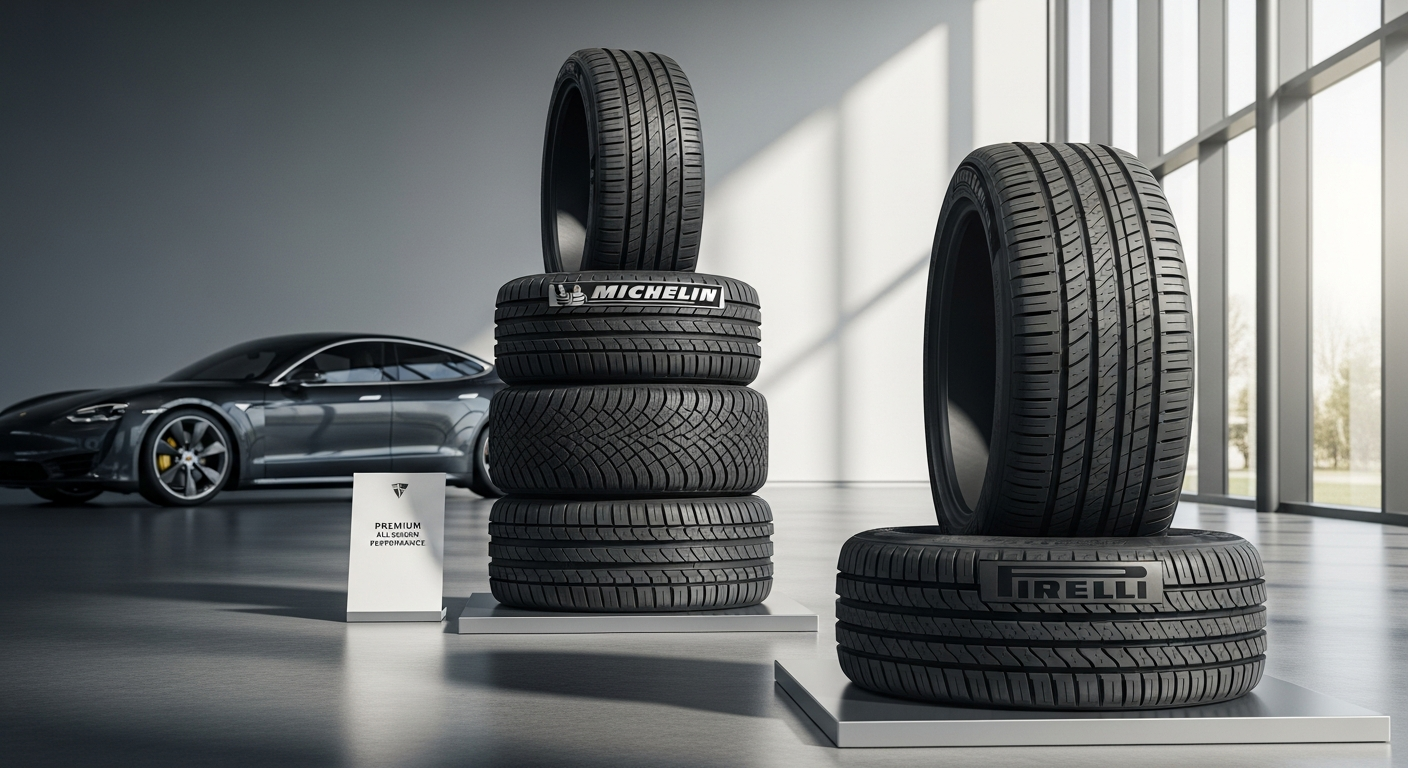
Discover how to select premium all-season car tires that match your vehicle and driving habits. Learn about tire specifications, top brands, and why online shopping saves you money.
Nearly 90% of drivers underestimate the impact tire choice has on their safety and fuel costs. Most vehicle owners rarely consider how critical this decision truly is until a blowout or poor handling in wet conditions forces the issue. Your tires are literally where the rubber meets the road—yet many treat tire selection as an afterthought rather than a foundational investment in vehicle performance.
The reality is that modern tire technology has evolved dramatically. Brands like Continental, Michelin, Pirelli, and Nokian now engineer sophisticated tread designs and rubber compounds that perform across multiple conditions—wet, dry, and light snow. Premium all-season tires deliver genuine versatility, eliminating the hassle of seasonal tire swaps for many drivers while matching the performance of specialized alternatives in most real-world situations. This means fewer trips to the tire shop, reduced storage headaches, and consistent performance throughout the year.
Explore premium all-season tire options at Dack Online SE today.
Understanding Tire Specifications That Actually Matter
Tire sidewalls contain a coded language that reveals everything about a tire's capabilities. The sidewall markings follow a standardized format: a three-digit number (tire width in millimeters), followed by a two-digit aspect ratio (sidewall height as a percentage of width), and finally the wheel diameter in inches. For example, a 225/65R17 tire is 225mm wide, has a sidewall height that's 65% of that width, and fits a 17-inch wheel. Understanding this sequence helps you identify whether a tire will fit your vehicle and perform as intended.
Speed Ratings and Load Indices: Safety and Performance Metrics
Every tire carries a speed rating (letters from A to Y) and a load index (a number) on its sidewall. The speed rating indicates the maximum velocity a tire can sustain safely—an H-rated tire, for instance, handles up to 130 mph, while a V-rated tire handles up to 149 mph. The load index number corresponds to how much weight each tire can carry. A tire marked with index 95 can support roughly 1,520 pounds per tire. Matching these specifications to your vehicle's requirements isn't optional; it's fundamental to safe driving.
Tread Pattern Technology: Grip and Braking Performance
Modern tread patterns aren't random grooves—they're engineered systems designed to evacuate water, maintain contact with the road surface, and optimize grip across conditions. Premium all-season tires feature multiple sipes (thin slits in the tread blocks), which act like miniature channels for water displacement. This design dramatically reduces hydroplaning risk and shortens braking distances on wet surfaces. Directional tread patterns, common in high-performance all-season tires, optimize wet-weather performance by directing water outward from the center of the tire.
Compound Composition: Durability Across Temperature Ranges
Tire rubber isn't a single material—it's a carefully balanced compound of natural rubber, synthetic polymers, carbon black, and chemical additives. Premium tire manufacturers invest significantly in compound development to achieve multiple objectives simultaneously: maintaining flexibility in cold temperatures, resisting hardening in heat, and resisting wear over tens of thousands of miles. The rubber compounds in Continental and Michelin all-season tires, for example, remain grippy when temperatures drop and maintain performance as they heat during extended highway driving.
Rolling Resistance Ratings: The Fuel Economy Connection
Rolling resistance—the energy needed to keep a tire rolling—directly impacts fuel consumption. A tire with high rolling resistance forces your engine to work harder, increasing fuel burn. Premium all-season tires employ low-rolling-resistance compounds and construction techniques to reduce this drag. The difference between a high-rolling-resistance tire and a premium low-rolling-resistance tire can mean 2-5% better fuel economy over a tire's lifespan, translating to hundreds of dollars in fuel savings depending on your annual mileage.
Load Capacity: Matching Tires to Vehicle Weight
Every vehicle has a specific curb weight plus maximum load capacity (including passengers and cargo). Your tires must accommodate this total weight safely. A sedan's tires need different load ratings than a truck or SUV carrying heavy equipment. Undersized load ratings risk tire failure under stress, while oversized ratings may be unnecessary and costly. The vehicle placard, typically found on the driver's door jamb, specifies the correct tire size and load index required for safe operation.
All-Season vs. Specialized Tires: When Premium All-Season Makes Sense
The debate between all-season and specialized tires often hinges on geography and driving habits rather than absolute superiority. Premium all-season tires now bridge a gap that once seemed impossible, delivering respectable performance across multiple conditions without the seasonal changeover burden.
Performance Comparison: Modern All-Season Capability
Modern premium all-season tires achieve this balance through advanced engineering rather than compromise. A Michelin all-season tire and a dedicated summer tire from the same manufacturer may differ by only 5-8% in dry handling performance, yet the all-season version handles light snow and maintains grip through temperature swings that would challenge summer-only tires. Conversely, all-season tires remain superior to winter tires on dry pavement and in light snow, offering better fuel economy and comfort on regular commutes.
Climate Considerations: Regional Suitability
Regions with mild winters and moderate temperature swings—much of the southern United States, coastal areas, and Mediterranean climates—benefit tremendously from all-season tires. These areas rarely experience the deep snow, ice sheets, or sustained sub-freezing temperatures that demand specialized winter tires. Conversely, regions with harsh winters, frequent ice, and extended cold periods see diminishing returns from all-season tires; dedicated winter tires provide measurably better safety in these environments.
Seasonal Transition Periods: Spring and Fall Advantages
All-season tires excel during spring and fall, when temperature fluctuations occur daily and weather patterns shift unpredictably. These shoulder seasons challenge specialized tires—a summer tire installed too early faces cold morning temperatures that stiffen the rubber, while a winter tire installed too late wastes performance on warm afternoons. All-season tires handle these transitions seamlessly, maintaining consistent grip as conditions vary.
Trade-Off Analysis: Convenience vs. Specialization
The real value of all-season tires lies in eliminated tire swaps. No seasonal storage, no installation appointments twice yearly, no concerns about missing the ideal changeover window. For drivers valuing convenience and willing to accept slightly reduced extreme-weather performance, this trade-off strongly favors all-season selection. For drivers in harsh climates who prioritize absolute winter safety, the trade-off tilts toward maintaining dedicated seasonal sets.
Vehicle Type Compatibility: Cars, Trucks, and Motorcycles
Compact cars and sedans represent the most natural fit for premium all-season tires; these vehicles spend most time on regular roads facing mixed conditions. Light trucks and crossovers also perform well on all-season tires, though heavier trucks may benefit from tires matched to their specific load-carrying purpose. Motorcycles present unique challenges where all-season tires must balance cornering grip with wet-weather safety—a consideration that demands careful specification review.
Driving Habit Assessment: Your Commute Pattern Matters
A 30-minute suburban commute on well-maintained roads presents entirely different demands than a mountain drive with elevation changes, or rural roads with unpredictable weather. Urban commuters rarely encounter conditions where all-season tires show limitations. Long-distance highway drivers may prioritize rolling resistance and comfort. Weekend adventure drivers pushing performance in varied terrain might benefit from more specialized options.
Top Premium Tire Brands and Their Standout Features
The premium tire market features several brands that consistently deliver quality, performance, and reliability. Each brings distinct engineering philosophies and strengths to all-season tire design.
Continental Offerings: Safety and Longevity Engineering
Continental tires prioritize safety through advanced tread designs and rigorous testing protocols. Their all-season offerings emphasize consistent wet-weather grip and predictable handling characteristics across temperature ranges. Continental's investment in safety research translates to tires that inspire confidence, particularly during unexpected weather events. Longevity is another hallmark—Continental all-season tires often deliver exceptional mileage when properly maintained.
Michelin Innovations: Fuel Efficiency and Comfort Technology
Michelin focuses heavily on reducing rolling resistance and improving comfort. Their all-season tires frequently achieve better fuel economy than competitors while maintaining responsive handling and low road noise. Michelin's comfort technology—subtle damping characteristics built into the tire structure—reduces vibration transmission to the vehicle, resulting in a smoother ride on imperfect road surfaces.
Pirelli Performance Characteristics: Handling Precision and Wet Grip
Pirelli's reputation centers on handling precision and responsive steering feel. Their all-season tires appeal to drivers who prioritize dynamic performance, offering quicker steering response and more direct feedback through cornering. Wet-weather grip is particularly strong, making Pirelli all-season tires suitable for drivers in regions with frequent rain.
Goodyear Reliability: Durability and Value Proposition
Goodyear builds tires around reliability and balanced performance. Their all-season offerings deliver consistent performance across conditions without specializing heavily in any single area. Goodyear's value proposition—solid performance at moderate pricing—appeals to practical drivers seeking dependability rather than extreme capabilities.
Dunlop Specialization: Balanced Performance Across Conditions
Dunlop specializes in balanced tire design, avoiding excessive compromise in any direction. Their all-season tires perform adequately in wet and dry conditions, provide reasonable winter capability, and maintain comfortable ride characteristics. Dunlop appeals to drivers seeking jack-of-all-trades tires that excel moderately across all demands.
Nokian Expertise: Winter Capability in All-Season Construction
Nokian, based in Finland with decades of winter tire experience, brings cold-weather expertise to all-season design. Nokian all-season tires, like the Powerproof mentioned by customers at Dack Online SE, deliver genuinely impressive light-snow performance and cold-weather grip compared to traditional all-season competitors. For drivers in transitional climates experiencing surprising winter events, Nokian represents a premium choice.
Brand Reputation Factors: Warranty and Satisfaction Metrics
Warranty coverage varies significantly across brands and specific tire models. Continental, Michelin, and Goodyear typically offer comprehensive warranties covering defects and often provide mileage guarantees (such as 60,000-mile coverage). Warranty value extends beyond marketing—it reflects manufacturer confidence in product quality. Customer satisfaction metrics, tracked through independent surveys and online reviews, consistently rank these premium brands at the top of reliability and performance satisfaction.
Decoding Premium Tire Pricing and Finding Real Value
Tire pricing spans a dramatic range: €50 to €300+ per unit. Understanding what drives these price differences separates savvy buyers from those overpaying or cutting corners on safety.
Price Range Breakdown: Why Tires Vary So Dramatically
Budget tires (€50-€120 per unit) prioritize basic function: moving the vehicle safely with minimal investment. They use simpler tread patterns, less sophisticated rubber compounds, and more conservative engineering. Mid-range tires (€120-€200) incorporate better compounds, more advanced tread designs, and engineering focused on balanced performance. Premium tires (€200-€300+) employ cutting-edge compounds, sophisticated tread patterns, advanced construction techniques, and extensive R&D investment. Brand reputation also influences pricing—a Michelin all-season tire typically costs more than an equivalent Dunlop tire, reflecting brand positioning and perceived value.
Budget vs. Mid-Range vs. Premium Tiers: What You're Actually Paying For
Budget tires get you from point A to point B reliably but may show performance limitations in wet weather, deliver shorter lifespan, and produce more road noise. Mid-range tires offer meaningful improvements in wet-weather grip, durability, comfort, and fuel efficiency while remaining accessible to cost-conscious buyers. Premium tires justify their cost through measurably superior wet braking performance, longer lifespan, excellent comfort characteristics, and advanced features like directional tread optimization or specialized sipes.
Longevity ROI: Calculating Cost Per Mile
A €60 budget tire lasting 40,000 miles costs €0.0015 per mile in tire expense. A €200 premium tire lasting 60,000 miles costs €0.0033 per mile—seemingly more expensive, but this ignores the premium tire's superior wet-weather safety, better fuel economy (potentially saving €200+ over the tire's life), and more comfortable driving experience. The true calculation includes fuel savings, safety value, and comfort—not just tire cost divided by mileage.
Compare premium tire pricing and find the best value at Dack Online SE.
Online Pricing Advantages: How E-Commerce Retailers Compete
Online tire retailers like Dack Online SE offer competitive pricing because they eliminate overhead costs associated with physical store networks, large inventories of slow-moving stock, and extensive sales staff. Dack Online SE can source directly from manufacturers, hold inventory efficiently, and pass savings to customers. Additionally, the online model attracts price-conscious shoppers, creating competitive pricing pressure that benefits consumers.
Seasonal Sales Patterns: Strategic Timing
Tire retailers typically offer discounts during seasonal transitions (March-April for summer tires, September-October for winter/all-season preparations). Manufacturers also run promotional campaigns at these times. Shopping during these windows can yield 10-20% savings compared to off-season purchases. However, waiting too long risks inventory depletion of popular sizes, potentially forcing compromises on brand or specific model selection.
Hidden Costs: Installation, Balancing, and Alignment
Tire purchase price represents only part of total ownership cost. Installation typically ranges from €30-€50 per tire. Balancing, essential for smooth operation and tire longevity, costs €15-€25 per tire. Wheel alignment, important for even wear, runs €100-€200. Dack Online SE partnerships with mounting networks streamline this process, often offering bundled pricing that reduces total acquisition cost below purchasing from traditional dealers.
Warranty Value: Extended Protection Plans
Premium tire warranties typically cover defects, uneven wear, and specific mileage guarantees. A 60,000-mile warranty on a €200 tire provides meaningful protection. Some retailers offer additional coverage options protecting against road hazards. Understanding warranty terms—what's covered, conditions that void coverage, and claim procedures—ensures you're prepared if issues arise during the tire's life.
The Online Tire Shopping Experience: Convenience Meets Practicality
Online tire shopping transforms what used to be a time-consuming, inconvenient process into a streamlined, transparent experience. Understanding what online platforms offer helps you maximize the advantages.
Selection Breadth: Inventory Traditional Stores Can't Match
Physical tire shops typically stock 100-200 tire models across various sizes. Dack Online SE offers thousands of options—every major brand, multiple tire lines per brand, and extensive size availability. This breadth means you'll find exactly the tire specifications you need rather than accepting compromises. You can compare Continental's latest all-season line against Michelin's offering, then review Nokian and Pirelli options—all without traveling to multiple locations.
Comparison Tools: Side-by-Side Specification Evaluation
Online platforms enable detailed specification comparison. You can view tread patterns, load indices, speed ratings, and available sizes simultaneously, evaluating technical differences that would require consulting multiple product brochures in a physical store. Many retailers display customer reviews organized by vehicle type, allowing you to learn how a specific tire performs on a car matching yours.
Delivery Logistics: From Order to Doorstep
Dack Online SE ships tires directly to your home or to partner mounting facilities. Delivery typically requires 3-7 business days, with tracking provided throughout. This eliminates the need to transport heavy tires yourself or coordinate around tire shop schedules. Some platforms offer expedited shipping for urgent needs.
Installation Partnerships: Seamless Mounting Networks
Dack Online SE maintains partnerships with tire mounting facilities, allowing you to purchase online and schedule installation at convenient local locations. This two-step process—buy online for selection and pricing, install locally for convenience—combines the best aspects of both channels. You avoid the markup and limited selection of traditional dealerships while maintaining local service accessibility.
Customer Review Insights: Learning from Real Driver Experiences
Online reviews provide invaluable insight into tire performance across diverse conditions and vehicles. A customer mentioning that Nokian Powerproof tires performed excellently on their sedan during an unexpected snowstorm tells you more about real-world capability than any marketing material. Reading reviews from drivers with similar vehicles and climate zones provides actionable information to guide your decision.
Return Policies: Understanding Guarantees and Exchange Procedures
Reputable online retailers maintain clear return policies. Most offer 30-day return windows if tires don't meet expectations, with full refunds or exchanges. Understanding these policies removes purchase anxiety—you're not stuck with unsuitable tires. Review the specific terms before ordering to understand restocking fees, condition requirements, and return shipping logistics.
Time Efficiency: Shopping Without Dealership Constraints
Online shopping eliminates time constraints entirely. Browse options at midnight, compare specifications while having coffee, and finalize your purchase on your schedule. No waiting for sales staff, no waiting for store hours, no facility visit required. For busy professionals, this time efficiency alone justifies the online channel.
Real-World Performance Expectations Across Seasons
Understanding how premium all-season tires actually perform across seasonal conditions helps establish realistic expectations and informs your decision.
Wet Weather Handling: Braking and Hydroplaning Resistance
Premium all-season tires reduce wet braking distances by 10-15% compared to budget tires, translating to potentially critical additional stopping distance in emergencies. Advanced tread designs evacuate water effectively, reducing hydroplaning risk significantly. In sustained heavy rain, premium all-season tires maintain grip and directional stability better than budget alternatives, though they won't match dedicated rain tires in extreme conditions.
Dry Pavement Grip: Acceleration, Cornering, and Stability
On dry pavement, premium all-season tires deliver responsive handling and confident cornering grip. Acceleration traction is excellent, and stability through highway sweepers feels planted and controlled. The driving experience is substantially more engaging than budget tires while remaining comfortable compared to performance-focused summer tires.
Light Snow Capability: Realistic Limitations
Premium all-season tires handle light snow capably—maintaining traction for normal driving, enabling moderate acceleration, and providing adequate braking grip. Steep inclines, heavy snow (more than a few inches), ice, or aggressive driving push beyond all-season tire capabilities. In these conditions, dedicated winter tires provide measurably superior safety. Understanding this boundary prevents dangerous overconfidence.
Temperature Fluctuations: Rubber Compound Behavior
Premium tire compounds maintain grip across the temperature range typical of all-season use. Cold morning temperatures don't stiffen these tires excessively, while highway driving heat doesn't soften them dangerously. As seasonal temperature patterns change, premium all-season tires adapt, maintaining consistent performance rather than showing dramatic shifts.
Road Noise Levels: Comfort Factor During Extended Driving
Premium all-season tires typically produce 1-3 decibels less noise than budget alternatives—a meaningful difference over highway miles. The sophisticated tread patterns and optimized rubber compounds reduce vibration transmission, creating a quieter cabin. For drivers spending hours on highways, this comfort factor matters considerably.
Fuel Economy Impact: Measurable Efficiency Differences
Premium low-rolling-resistance all-season tires can improve fuel economy by 2-5% compared to budget tires. Over a tire's 50,000-60,000 mile lifespan, this translates to potential fuel savings of €200-€400, partially offsetting the tire's premium cost. The improvement comes from optimized rubber compounds and construction techniques that reduce energy loss during rolling.
Wear Patterns: Rotation Schedules and Longevity
Premium tires develop wear patterns more evenly when properly rotated every 6,000-8,000 miles. Even wear distribution extends tire life significantly—a properly maintained premium tire often achieves 60,000+ miles, while neglected rotation may shorten lifespan to 40,000 miles. The investment in regular maintenance directly protects your tire investment.
Maintenance and Longevity: Maximizing Your Tire Investment
Premium tires represent a substantial investment; proper maintenance ensures you extract maximum value and safety from them.
Proper Inflation Practices: Pressure Checks and Seasonal Adjustments
Tire pressure should be checked monthly and before long trips. Your vehicle's specification placard (on the driver's door jamb) lists the correct pressure—not the maximum pressure printed on the tire sidewall. Underinflation reduces fuel economy, generates excess heat, and accelerates wear. Overinflation hardens the ride and concentrates wear in the tire's center. Seasonal temperature changes affect pressure—expect pressure to drop in winter and rise in summer. Adjust accordingly to maintain specification pressure.
Rotation Schedules: Why Regular Rotation Extends Tire Life
Front tires wear faster than rear tires due to steering and braking forces. Regular rotation—typically every 6,000-8,000 miles—distributes this wear across all four tires, extending overall lifespan by 10-20%. Rotation also promotes more even wear patterns, improving fuel economy and grip characteristics.
Alignment Importance: The Wear Pattern Connection
Misalignment causes tires to wear unevenly, often prematurely. A vehicle pulling to one side, uneven tire wear concentrated on inside or outside edges, or vibration during straight-line driving all indicate alignment issues. Professional wheel alignment, typically €100-€200, prevents wasteful tire wear and improves handling safety. Check alignment annually or whenever replacing tires.
Tread Depth Monitoring: Safety Thresholds and Methods
Tread depth directly correlates with wet-weather safety. Legal minimum depth is 2/32 inches in most regions; however, safety experts recommend replacement at 4/32 inches, where wet-weather performance degrades noticeably. Monitor depth using the penny test (insert Lincoln's head into tread—if you see the top of his head, depth is insufficient) or digital depth gauges. Check tread depth annually as tires age.
Storage Best Practices: Off-Season Tire Protection
If you maintain seasonal tire sets, store off-season tires in a cool, dry, dark location protected from direct sunlight. Store tires upright rather than stacked, which can cause flat spots. Avoid basements with moisture or garages with ozone-generating equipment like air compressors, which degrades rubber. Properly stored tires maintain performance characteristics for years without degradation.
Seasonal Preparation: Pre-Winter and Pre-Summer Checks
Before seasonal transitions, inspect tires for damage (cuts, bulges, punctures), verify tread depth adequacy, check pressure (adjusted for seasonal temperatures), and confirm rotation scheduling. These simple checks prevent problems mid-season when weather challenges tires most severely.
Professional Inspection Intervals: Expert Evaluation
Schedule professional tire inspections annually or whenever you notice changes in handling, ride quality, or noise levels. Professionals detect issues (alignment problems, suspension wear, uneven wear patterns) that drivers often miss. Early detection prevents catastrophic failures and extends tire life.
Common Mistakes Drivers Make When Selecting All-Season Tires
Even with good intentions, drivers frequently make decisions that undermine the value of premium all-season tires.
Ignoring Vehicle Specifications: Size and Load Rating
Selecting a tire with incorrect size or load rating is the most dangerous mistake. A tire too small or with insufficient load rating may fail under normal use. A tire too large may rub the vehicle during turns or when suspension compresses. Always consult your vehicle's specification placard, cross-reference owner's manual requirements, and verify compatibility before purchasing.
Overlooking Climate Requirements: All-Season Misapplication
Some drivers in harsh climates purchase all-season tires believing they'll handle winter conditions adequately. In regions with sustained sub-freezing temperatures, heavy snow, or ice, all-season tires genuinely cannot match winter tire safety. Conversely, some drivers over-spec for their climate, purchasing expensive winter tires unnecessarily. Match tire selection to your actual climate, not worst-case scenarios.
Prioritizing Price Over Performance: False Economy
Purchasing the cheapest available tire often backfires. Budget tires may deliver 40,000-45,000 miles versus 60,000+ for premium options, offsetting their lower initial cost through more frequent replacement. Worse, budget tire compromises in wet-weather grip may prove genuinely unsafe. Premium all-season tires, while costing more upfront, often deliver superior value over their lifespan.
Neglecting Maintenance Schedules: Skipped Rotations and Checks
Drivers investing in premium tires sometimes skip rotation and pressure checks, undoing the benefits. Proper maintenance is non-negotiable for maximizing tire investment. Set calendar reminders for rotation intervals and annual inspections.
Misunderstanding Warranty Coverage: Assuming Broader Protection
Warranties contain specific conditions and exclusions. Some cover only manufacturing defects, not wear or road damage. Some require specific maintenance records for validity. Reading warranty details prevents disappointment when issues arise. Dack Online SE and partner retailers can clarify warranty specifics before purchase.
Delaying Replacement: Dangerous Tread Depth
Tires at legal minimum tread depth (2/32 inches) are marginal for wet-weather safety. Tread at this depth provides minimal water evacuation, significantly increasing hydroplaning risk and braking distance. Replace tires at 4/32 inches minimum, or sooner if performance degradation becomes noticeable.
Failing to Compare Specifications: Overlooking Key Differences
Two all-season tires priced identically may differ substantially in tread pattern, load index, speed rating, and compound formulation. Purchasing without comparing these specifications risks selecting a tire unsuitable for your vehicle or needs. Use online comparison tools to ensure informed selection.
Making Your Final Decision: A Step-by-Step Selection Framework
Converting all this knowledge into an actual purchase decision requires a structured approach. Follow these steps to select tires with confidence.
Step 1: Assess Your Climate Zone
Determine your regional climate patterns. Note average winter temperatures, typical precipitation (rain, snow, ice), and seasonal variation. Research local driving conditions and winter weather severity. This assessment reveals whether all-season tires sufficiently match your climate or whether dedicated seasonal tires offer safety advantages worth the inconvenience.
Step 2: Evaluate Your Driving Patterns
Document your typical driving: daily commute distance, highway vs. city proportions, frequent long trips, mountainous terrain, or primarily flat roads. Consider driving style (conservative vs. aggressive) and vehicle load (typically empty vs. frequently fully loaded). This assessment reveals which tire characteristics matter most for your situation.
Step 3: Calculate Your Budget
Establish realistic budget parameters including tire cost, installation, balancing, and alignment. Consider whether you're replacing one tire (if possible), two tires (rear axle), or all four. Factor in longevity expectations—are you planning to replace these tires in 3 years, or keep them 6+ years? Budget clarity prevents post-purchase regret.
Step 4: Research Brand Options
Review the characteristics of Continental, Michelin, Pirelli, Goodyear, Dunlop, and Nokian all-season tires. Compare their engineering approaches, warranty coverage, and customer satisfaction ratings. Identify which brands align with your priorities (fuel efficiency, comfort, performance, winter capability, or balanced approach).
Step 5: Read Verified Customer Feedback
Search for customer reviews specifically for tire models you're considering. Focus on reviews from drivers with your vehicle type and similar climate zones. Notice patterns in feedback—multiple comments about noise, durability, wet grip, or winter performance reveal consistent characteristics. Balance generally positive reviews with specific concerns that might affect your satisfaction.
Step 6: Check Compatibility
Confirm your vehicle's correct tire size, speed rating, and load index using your specification placard. Verify that candidate tires meet these requirements. Check whether specific tire models fit your vehicle size range (compact cars have different options than large trucks).
Step 7: Compare Online Retailers
Evaluate Dack Online SE and other online retailers based on selection breadth, pricing competitiveness, delivery options, installation partnerships, customer service responsiveness, and return policies. Read reviews about the retailer itself, not just tire products, to ensure reliable service.
Step 8: Finalize Purchase and Arrange Installation
Once you've selected your tires and retailer, complete the purchase. Arrange installation through the retailer's partner network at a convenient location and time. Confirm all details (size, quantity, installation date, balancing, alignment if needed) before finalizing payment.
Drive Forward with Confidence: Your All-Season Tire Decision Made Simple
Selecting premium all-season car tires doesn't require an engineering degree—it requires clarity about what matters for your specific situation. Your driving habits, climate zone, and budget are the three pillars that should guide your decision. What makes this process smoother is having access to extensive selection and competitive pricing.
Online specialists like Dack Online SE remove the friction from tire shopping, allowing you to compare Continental against Michelin, evaluate Nokian's all-season engineering, and see exactly how specifications align with your vehicle—all without leaving your home. The tires beneath your car carry tremendous responsibility as your connection to the road in rain, shine, and unexpected weather. Investing in premium all-season tires means investing in safety, performance, and peace of mind.
Take the framework outlined here, match it to your needs, and make your selection with conviction. The right tires transform your driving experience, improve fuel efficiency, and provide the safety margin that matters when unpredictable weather strikes. Your investment in quality tires pays dividends across thousands of miles and countless driving conditions.