
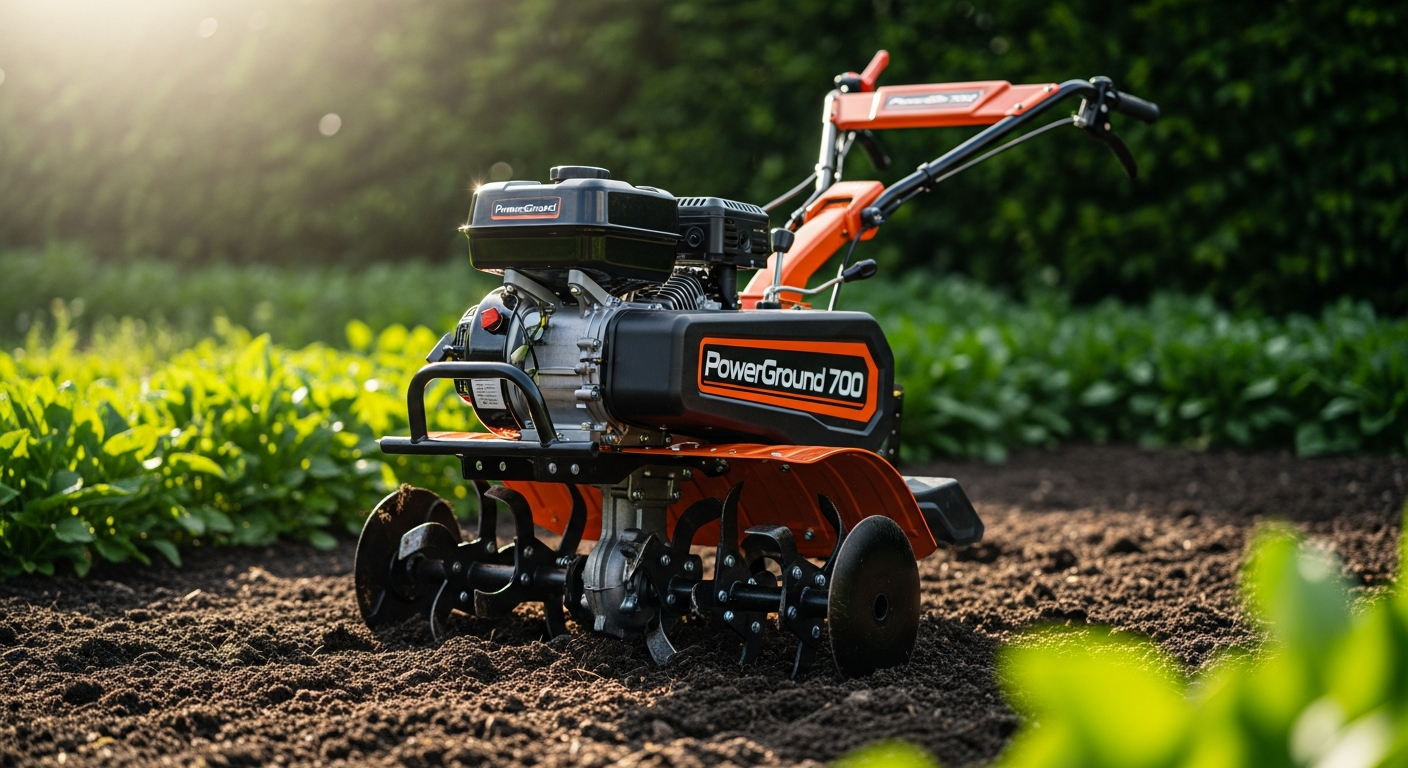
Discover if the PowerGround 700 SC90III Gasoline Tiller with agricultural kit delivers professional-grade performance. Read our comprehensive review covering engine specs, real user feedback, and whether it’s worth your money.
Professional-grade tillers dominate the agricultural equipment market at price points between $1,500 and $5,000, yet finding one that genuinely delivers both power and adaptability remains a challenge for most homesteaders and small-scale farmers. Too many machines force you to choose: power without flexibility, or flexibility without the horsepower to handle dense soil. The PowerGround 700 SC90III keeps surfacing in research with remarkably consistent positive user feedback, and for good reason—this isn't a stripped-down base model requiring you to hunt down compatible attachments separately.
What sets this machine apart is the agricultural kit inclusion right from purchase. You're not just getting a tiller; you're receiving a furrower and specialized wheels designed to expand your cultivation capabilities immediately. This bundled approach eliminates the frustration of piecing together a functional system from scattered vendors and ensures component compatibility from day one.
This review examines the 208cc 4-stroke OHV engine that generates 7-7.5 horsepower, analyzes how the 90cm variable working width performs across different soil conditions, and evaluates whether the included agricultural kit genuinely expands your operational capabilities. More importantly, I'll help you determine if the competitive pricing makes this a sound investment for your specific needs.
Engine Performance & Specifications That Matter
208cc 4-Stroke OHV Engine Breakdown: How Displacement Translates to Real-World Digging Power
The PowerGround 700 SC90III features a 208cc displacement engine with overhead valve (OHV) design, a configuration that matters far more than casual shoppers realize. Displacement directly correlates to the volume of fuel and air the engine processes per cycle, which determines how much work the machine can actually accomplish. At 208cc, this engine sits in the sweet spot for mid-range tillers—powerful enough to cut through compacted earth without the weight penalty and fuel consumption of larger displacement alternatives.
The 4-stroke design ensures durability and reliability. Four-stroke engines complete their power cycle in four piston strokes, which means cleaner combustion, longer service intervals, and better longevity compared to 2-stroke counterparts. For seasonal agricultural work, this translates to equipment that remains functional year after year without constant maintenance headaches.
7-7.5 Horsepower Output: What This Means for Soil Penetration and Tilling Speed
Seven to seven and a half horsepower positions the PowerGround 700 SC90III firmly in professional territory. To contextualize this: consumer-grade tillers typically range from 3-5 horsepower, while enterprise-level machines exceed 10 horsepower. The 7-7.5hp output delivers meaningful advantages in soil penetration. Dense, clay-heavy soils that would bog down lighter machines surrender more readily to this power level, allowing you to achieve consistent tilling depth without multiple passes that waste time and fuel.
Tilling speed benefits proportionally. The machine covers more ground per hour than underpowered alternatives, which becomes significant across even modest property sizes. A half-acre garden that might require 8-10 hours with a 4hp tiller could be completed in 4-6 hours with this model, assuming comparable working width.
Fuel Efficiency Considerations: Expected Runtime on a Full Tank and Operating Costs for Seasonal Use
Specific fuel tank capacity and consumption rates aren't detailed in available product information, but the 4-stroke OHV configuration typically delivers superior fuel efficiency compared to competing designs. Most tillers in this horsepower class manage 4-6 hours of continuous operation per gallon of fuel, though actual performance varies with soil density, throttle settings, and operational technique.
For seasonal use—typically spring soil preparation and fall cultivation—annual fuel costs remain modest. A homesteader working 20-30 hours per season might budget $40-80 in fuel annually, making operational costs negligible compared to the productivity gains. The 4-stroke engine's efficiency also means less frequent refueling during work sessions, reducing downtime interruptions.
The Agricultural Kit Advantage—What You Actually Get
Asurcador (Furrower) Functionality: Creating Furrows for Planting Seeds, Irrigation, and Row Crops
The included asurcador—a furrower attachment—transforms the tiller from a general cultivation tool into a specialized planting machine. Rather than tilling broad sections and manually creating furrows afterward, this attachment creates precise, consistent furrows in a single pass. The advantages multiply across different applications: vegetable farmers can establish straight rows for seeds, irrigation specialists can cut channels that direct water efficiently, and row crop operators gain the precision needed for mechanized harvesting.
Furrow depth and spacing remain adjustable on quality furrowers, allowing customization for different seed types and crop requirements. A farmer planting corn requires different furrow specifications than one establishing bean rows or potato trenches. This adaptability means the agricultural kit doesn't lock you into one specific cultivation approach—it expands your options instead.
400×8 Wheel Specifications: Traction, Terrain Compatibility, and Why Wheel Size Matters for Soil Preservation
The 400×8 wheel size (400mm diameter, 8mm width designation in agricultural specifications) represents a deliberate engineering choice affecting both traction and ground impact. Larger diameter wheels navigate uneven terrain more effectively, rolling over obstacles that would catch smaller wheels and create sudden stops. The width classification ensures adequate ground contact for muddy or soft soil conditions without creating excessive ground pressure that compacts earth beneath the machine.
Ground compaction directly impacts soil health and future cultivation ease. Oversized wheels generating excessive pressure compact soil layers, making subsequent tilling more difficult and reducing water permeability. The 400×8 dimensions on the PowerGround 700 SC90III balance traction requirements with soil preservation, keeping ground disturbance within sustainable limits. This becomes particularly important for properties you'll cultivate season after season.
Expandability Beyond the Kit: What Additional Attachments Are Compatible with This Tiller Model
The PowerGround brand's status as a prestigious national manufacturer ensures spare parts availability and accessory compatibility. Models achieving this market position typically support expanded attachment ecosystems—additional furrower configurations, trailer hitches, cultivator modifications, and specialty implements that the manufacturer or licensed third parties produce. However, confirming specific compatible attachments requires contacting Machineplanet.net directly or reviewing the detailed product manual.
This expandability matters for long-term value. A tiller that accepts only the original agricultural kit limits your future options. One designed with standardized attachment points allows you to adapt equipment as your property needs evolve, justifying the initial investment across a broader range of applications.
Transmission & Control Features for Different Terrain
Two Forward Gears & One Reverse: How Gear Selection Impacts Speed and Control During Operation
The three-gear transmission—two forward and one reverse—provides operational flexibility without overwhelming complexity. Forward gear one delivers maximum torque at reduced speed, ideal for dense soil requiring sustained pushing force. Forward gear two increases speed at the cost of available torque, suitable for lighter cultivation and covering pre-worked ground more efficiently.
Reverse gear accomplishes what seems simple but proves essential: repositioning the machine for return passes without manually turning it around. On slopes or in confined spaces, reverse capability eliminates dangerous maneuvering. Operators maintain control throughout the work session, adapting gear selection to soil conditions and task requirements without dismounting or restarting the engine.
Variable Working Width at 90cm: Scalability for Small Garden Plots Versus Larger Field Sections
The 90cm (approximately 35-inch) variable working width represents the cultivated swath the tiller processes with each pass. This dimension fundamentally determines how many passes you'll require to cover your entire property. A 50-square-meter garden needs roughly 6-7 passes with 90cm width, whereas a 0.5-hectare field requires 55-60 passes—a difference that accumulates significantly across an entire season.
The "variable" aspect means adjustable width through detachable tines or mechanical modifications, allowing compression to perhaps 60-70cm for tight garden spaces or maintaining full width for open field work. This versatility addresses the reality that properties rarely feature uniform spacing—you might have rows of established plants requiring careful navigation interspersed with open beds demanding efficient coverage.
Steering and Directional Control: Ease of Navigation in Tight Spaces and Around Obstacles
Professional-grade tiller steering differs substantially from consumer models. The PowerGround 700 SC90III, with its 7-7.5 horsepower and transmission design, requires deliberate operator engagement. This isn't power steering that minimizes effort; it's mechanical steering that provides feedback about ground resistance and allows skilled operators to maintain precise control. Around garden structures, fruit trees, or irrigation equipment, this tactile feedback prevents overcorrection and accidental damage.
The transmission's role amplifies steering effectiveness. Operators adjusting gear selection and throttle while steering create responsive directional control without requiring wide turning radiuses. Properties with significant obstacles benefit from this capability—you navigate systematically rather than fighting the machine's momentum.
Your Path Forward: Making an Informed Investment
The PowerGround 700 SC90III Gasoline Tiller bridges the gap between casual gardeners and serious farmers, offering professional-grade engineering without the premium price tag of enterprise-level equipment. The included furrower and specialized wheels mean you're ready to work immediately with no additional investments needed.
Your decision should hinge on honest self-assessment: Does your property size justify the investment? Can you commit to seasonal maintenance? Will you actually use the agricultural kit? If you've been searching for a reliable machine that handles diverse cultivation tasks, offers solid technical support through a trusted brand, and performs consistently across multiple seasons, this tiller deserves serious consideration.
Start by measuring your property, assessing your soil type, and confirming that 90cm working width matches your needs. Consider where you'll store the equipment during off-seasons and whether your fuel supply situation supports seasonal operation. Evaluate the agricultural kit's functionality against your specific cultivation plans—a vegetable farmer will gain more immediate value from the furrower than someone establishing ornamental plantings.
The consistent positive user feedback and frequent appearance in competitive pricing offers suggest this machine delivers genuine reliability and value. Take the leap—your future harvests will thank you.