
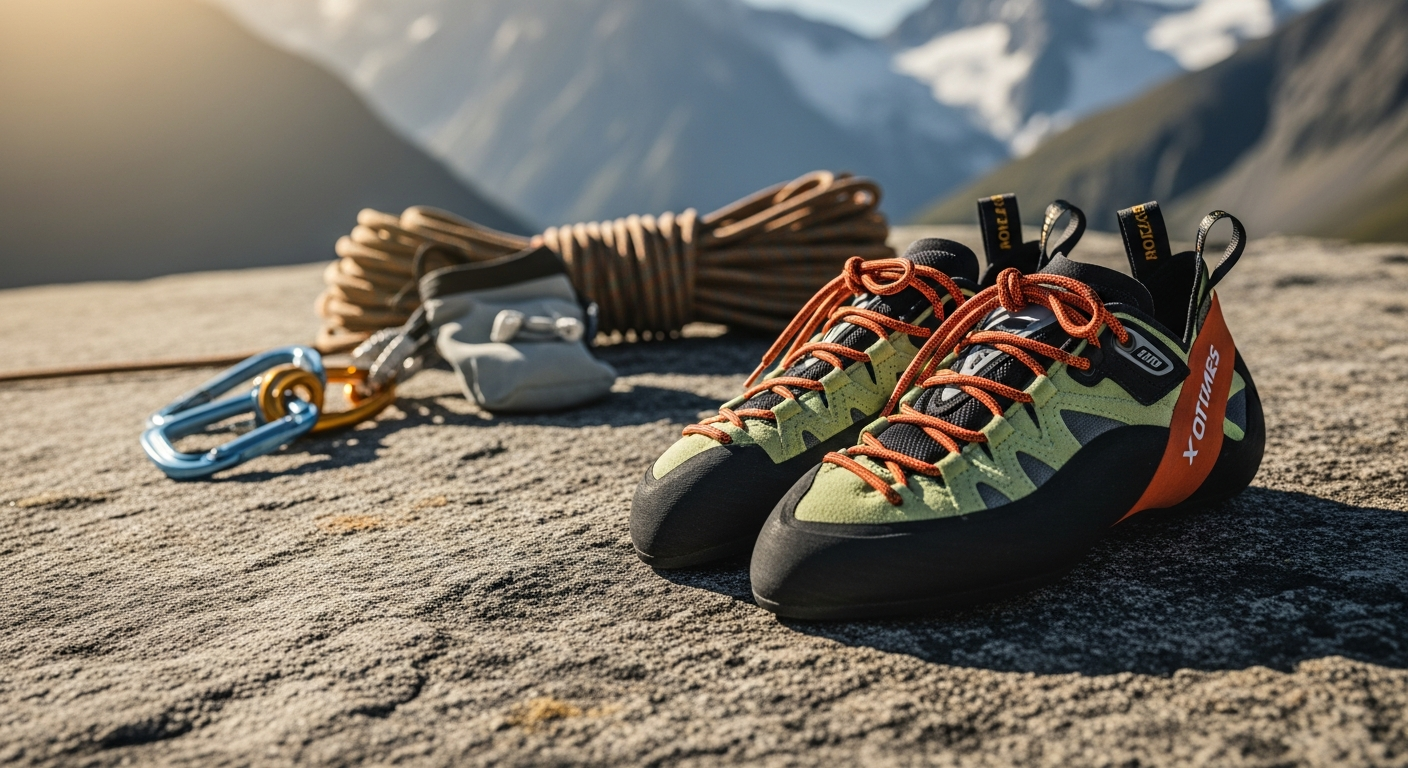
Discover how to select ideal performance climbing shoes for rock and gym training. Learn about fit, materials, features, and top brands like La Sportiva and Scarpa.
Over 50 million people worldwide participate in climbing activities annually, yet most beginners waste money on shoes that don't match their actual climbing style. Performance climbing shoes aren't just footwear—they're precision instruments designed to transform how you move on rock and gym walls. From specialized rubber compounds that grip microscopic texture to anatomical shaping that lets your foot work as nature intended, every element serves a purpose.
This guide cuts through the noise to show what separates a mediocre climbing shoe from one that elevates your climbing. You'll learn how shoe geometry affects your climbing style, which materials work best for different conditions, and how to nail the fit without sacrificing comfort or performance.
Discover the performance climbing shoes that match your goals at VerticalExtreme DE.
Understanding Climbing Shoe Geometry: Why Shape Matters More Than You Think
Climbing shoe geometry determines how your foot engages the rock. The shape of your shoe influences everything from your edging power to your ability to trust small holds. A shoe's profile—whether neutral or aggressive—directly impacts your climbing efficiency and comfort during extended sessions.
Neutral vs. Aggressive Profiles: How Shoe Downturn Affects Edging Power and Comfort During Long Sessions
Neutral shoes feature minimal downward curve, providing comfort for climbers who spend hours on the wall. These shoes work well for beginners and climbers focused on technique development. The straighter profile distributes pressure evenly across your foot, reducing fatigue during long gym sessions.
Aggressive shoes bend sharply downward, positioning your toes higher than your heel. This geometry amplifies edging power on small holds and overhanging terrain. However, the intense foot positioning exhausts muscles quickly, making these shoes better suited for short, intense boulder problems or sport climbs where technical precision matters more than endurance.
Toe Box Design Variations: Why La Sportiva's Asymmetrical Cuts Differ From Scarpa's Symmetrical Approaches
La Sportiva's asymmetrical toe boxes angle inward, mimicking your foot's natural shape. This design concentrates pressure on your big toe, which handles most of your body weight during climbing. The asymmetrical cut allows your foot to work more efficiently on technical terrain.
Scarpa's symmetrical designs distribute force evenly across all toes. This approach benefits climbers with different foot shapes and preferences for moderate, balanced performance. Symmetrical shoes feel more intuitive for gym climbers transitioning from street shoes.
Heel-to-Toe Drop Mechanics: The Relationship Between Shoe Angle and Your Climbing Technique on Different Wall Angles
Heel-to-toe drop refers to the height difference between your heel and toe box. High drop shoes (aggressive geometry) excel on overhanging walls where downward foot positioning drives power into the wall. Low drop shoes (neutral geometry) perform better on vertical and slab terrain where your foot needs flexibility to adjust positioning constantly.
Understanding your climbing environment shapes your geometry preference. Gym climbers who boulder across varied angles benefit from moderate drop, while outdoor rock specialists might own multiple shoes optimized for specific wall angles.
Foot Sensitivity and Precision: How Shoe Construction Influences Your Ability to Feel and Trust Small Holds
Sensitivity depends on sole thickness and midsole stiffness. Thinner soles transmit more ground feel, letting you sense micro-textures and trust holds intuitively. Thicker soles provide protection and durability but diminish sensitivity.
Advanced climbers often sacrifice comfort for sensitivity, choosing shoes with minimal padding between their foot and the rock. Beginners typically prefer moderate sensitivity, balancing feedback with protection as their skin adapts to climbing.
Climbing Style Compatibility: Matching Shoe Geometry to Your Preferred Terrain
Vertical wall climbers benefit from neutral shoes offering consistent foot positioning. Overhang specialists need aggressive geometry that drives power into steep terrain. Slab climbers require flat profiles with maximum sensitivity for friction-dependent movement.
Identifying your climbing preference helps narrow your choices significantly. Most climbers own multiple shoes optimized for different terrain types and climbing styles.
Material Science: Leather vs. Synthetic in Performance Climbing Shoes
The material your climbing shoe is constructed from determines how it performs, ages, and adapts to your foot. Leather and synthetic materials offer distinct advantages and trade-offs.
Leather Characteristics: Stretch Potential, Break-In Periods, and How Custom Fit Develops Over Time
Leather stretches as you wear it, molding to your foot's unique contours over time. New leather shoes feel tight initially, but within 10-20 climbing sessions, they expand slightly and conform to your foot shape. This custom fit becomes incredibly comfortable once the break-in period concludes.
Leather's natural elasticity allows climbers to size down aggressively without painful consequences. The material adapts and forgives minor sizing mistakes better than synthetics. However, leather deteriorates faster than synthetic materials, especially when exposed to moisture and rough rock.
Synthetic Advantages: Shape Retention, Consistency Across Multiple Pairs, and Durability in High-Friction Environments
Synthetic materials maintain their original shape throughout their lifespan. Shoes that fit perfectly on day one will fit identically on day 100. This consistency eliminates surprises and provides immediate comfort without break-in periods.
Synthetics resist moisture better than leather, making them ideal for gym climbers and wet climbing environments. The materials withstand repeated friction against plastic holds and rough outdoor rock without deteriorating as quickly as leather. If you climb frequently in harsh conditions, synthetic shoes last significantly longer.
Hybrid Constructions: Understanding Shoes That Combine Both Materials for Optimal Performance
Many modern climbing shoes combine leather and synthetic materials strategically. A synthetic toe box provides durability where abrasion occurs most, while leather in the heel and midfoot allows stretch and custom molding. Hybrid shoes balance durability, comfort, and adaptability.
Breathability and Moisture Management: How Material Choice Affects Comfort During Intense Gym Sessions
Leather naturally breathes better than synthetics, allowing moisture to evaporate gradually. During intense gym sessions where your feet sweat continuously, leather shoes feel more comfortable.
Synthetic materials trap moisture, making your feet feel damp during long climbing sessions. However, moisture-wicking linings in quality synthetic shoes mitigate this issue significantly. Premium climbing shoes from reputable brands incorporate breathable mesh linings regardless of their outer material.
Longevity Factors: Which Materials Withstand Repeated Use on Rough Outdoor Rock Versus Gym Walls
Leather shoes typically last 200-300 climbing sessions before requiring resoling or replacement. Synthetic shoes endure 300-500+ sessions depending on climbing intensity and terrain roughness. Gym walls (plastic holds) wear shoes faster than outdoor rock due to constant, uniform friction patterns.
Outdoor rock climbing, despite its harsh surfaces, often wears shoes more slowly than intensive gym training because climbers move less predictably and put less sustained pressure on specific shoe areas.
Climate Considerations: How Humidity and Temperature Affect Material Performance in Different Climbing Environments
High humidity climates accelerate leather deterioration. Climbing in tropical or very wet regions demands synthetic shoes that resist moisture damage. Dry, temperate climates allow leather shoes to age gracefully and stretch optimally.
Cold temperatures make both materials less flexible. Synthetic shoes maintain their properties better in extreme cold, while leather becomes stiff until warmed by climbing activity.
The Rubber Revolution: Grip Technology That Changes Everything
Rubber quality determines how your shoe grips different surfaces. Modern climbing shoe manufacturers invest heavily in proprietary rubber compounds that maximize friction across varied terrain and conditions.
Specialized Sole Compounds: How Different Rubber Formulations Provide Friction on Varied Rock Types
Soft rubber compounds grip extremely well but wear quickly, making them ideal for short sport climbs and bouldering. Medium compounds balance grip and durability, suiting most climbers' needs. Hard compounds resist wear but provide less friction, working best for crack climbing where foot precision matters more than aggressive grip.
Different rock types demand different rubber. Smooth granite requires tackier rubber than textured volcanic rock. Quality climbing shoe brands develop multiple sole compounds for specific climbing regions and conditions.
Rand Construction: The Role of Rubber Wrapping Around the Shoe's Perimeter in Edging and Smearing
The rand—rubber wrapping your shoe's perimeter—provides critical performance on steep terrain. A thick, durable rand protects your shoe during edging on small holds and allows you to smear effectively on featureless rock sections.
Aggressive shoes feature reinforced rands that concentrate pressure on your forefoot, amplifying edging power. Neutral shoes incorporate thinner rands, reducing rigidity and increasing comfort during extended climbing.
Sole Thickness Trade-Offs: Balancing Sensitivity with Durability and Protection
Thin soles maximize sensitivity, letting you feel micro-textures and trust your foot placement intuitively. Thick soles provide protection and last longer but diminish ground feel.
Gym shoes typically feature moderate thickness because plastic holds require less nuanced sensitivity than outdoor rock. Outdoor climbing shoes often sacrifice some durability for enhanced sensitivity, allowing climbers to make split-second foot placement decisions on unpredictable terrain.
Friction Performance on Gym Walls: Why Gym-Specific Rubber Differs From Outdoor Climbing Shoe Rubber
Plastic gym holds require rubber with specific adhesive properties. Gym-specific rubber compounds stick aggressively to synthetic holds, providing reliable friction on uniform surfaces. Outdoor rubber optimizes grip on natural rock's varied textures instead.
Some climbers dedicate specific shoes solely to gym training, reserving performance shoes for outdoor adventures. This rotation strategy extends overall shoe lifespan and ensures optimal performance in each environment.
Weather-Dependent Grip: How Wet Conditions, Temperature, and Rock Type Demand Different Rubber Solutions
Wet conditions reduce friction significantly. Rubber compounds optimized for wet climbing maintain better grip when moisture is present. Some modern climbing shoes incorporate hydrophobic rubber treatments that shed water and maintain traction in rain.
Temperature affects rubber performance dramatically. Cold rubber stiffens and loses grip, while warm rubber becomes tacky and responsive. Climbers in variable climates benefit from understanding their shoe's temperature performance range.
Brand-Specific Innovations: Ocún's Proprietary Compounds Versus Scarpa's Friction Technology
Ocún develops specialized rubber compounds matched to specific climbing disciplines. Their sport climbing shoes incorporate rubber optimized for endurance and repeated small-hold edging. Their bouldering shoes feature stickier compounds for maximum grip on short, intense problems.
Scarpa's engineering philosophy emphasizes consistent friction performance across terrain variations. Their rubber technology focuses on reliability rather than specialization, appealing to climbers who demand predictable grip regardless of conditions.
Finding Your Perfect Fit: The Most Critical Factor
Fit determines whether a shoe enhances or hinders your climbing. A perfectly fitted climbing shoe should feel snug across your entire foot without painful pressure points.
Sizing Philosophy: Why Climbing Shoes Fit Differently Than Street Shoes and What Snug Really Means
Climbing shoes fit significantly tighter than street shoes. Your heel shouldn't slip during downward foot movements, and your toes should feel supported without painful compression. Most climbers size down 1-1.5 sizes from their street shoe size.
"Snug" means no gaps between your foot and the shoe's interior walls, but your toes shouldn't fold painfully or cause numbness. New climbers often size too aggressively, confusing pain with proper fit. Comfort matters—climbing shouldn't hurt.
Width Considerations: How Foot Shape Influences Brand Selection
Narrow feet fit comfortably in La Sportiva's asymmetrical designs, which angle inward and suit slender foot shapes. Wide feet benefit from Scarpa's symmetrical approach, which accommodates broader forefoot geometry naturally.
Understanding your foot width prevents frustrating experiences buying shoes that never feel right. Many climbers try multiple brands before discovering which naturally matches their foot shape.
Break-In Expectations: Timeline for Leather Shoes to Mold Versus Synthetic Shoes That Fit Immediately
Leather shoes require 10-20 climbing sessions before feeling optimal. During this period, expect minor discomfort and tightness that gradually diminishes as the material stretches.
Synthetic shoes feel comfortable immediately, with no break-in period necessary. If synthetic shoes feel uncomfortable during your first fitting session, they likely won't improve significantly with use. Return them and try different sizing or brands.
Beginner-Friendly Comfort Zones: Why New Climbers Should Prioritize Fit Over Aggressive Features
Beginners climbing 2-3 times weekly benefit from neutral shoes emphasizing comfort over performance. Your foot needs time to adapt to climbing demands. Aggressive shoes tax your feet excessively when muscles and tendons aren't conditioned.
Prioritize shoes that let you focus on technique and enjoy climbing. Once you climb regularly for 6+ months, your feet strengthen and adapt. Then you can explore aggressive geometry without excessive fatigue.
Advanced Fit Strategies: How Experienced Climbers Sacrifice Comfort for Performance Precision
Climbers who train intensively sometimes choose shoes tighter than comfort dictates, knowing discomfort disappears as muscles warm during climbing. This strategy works only for experienced climbers whose feet have adapted to climbing demands.
Advanced climbers also accept aggressive geometry discomfort because their muscles handle the intense positioning required. They understand that short-term discomfort translates to long-term performance gains.
Common Fitting Mistakes: Gaps at the Heel, Pressure Points, and How to Identify a Truly Bad Fit
Heel gaps indicate shoes that don't match your foot shape or are oversized. Heel slip causes frustration and reduces climbing confidence. Your heel should contact the shoe's interior without gaps.
Pressure points across your toes or arch signal poor fit compatibility. Pressure should distribute evenly across your foot. If specific areas hurt disproportionately, the shoe doesn't match your foot shape regardless of sizing adjustments.
Testing Protocols: What to Look For During a Fitting Session Before Committing to Purchase
Walk around the store wearing potential shoes, then perform climbing motions if possible. Does the shoe feel stable during edging? Can you curl your toes comfortably? Does your heel stay planted?
Quality retailers like VerticalExtreme DE offer detailed buying guides and expert advice to help you identify proper fit. Their mountain sports expertise ensures recommendations match your actual needs, not sales targets.
Performance Climbing Shoes for Different Disciplines
Different climbing disciplines demand specialized shoe characteristics. Understanding your primary climbing focus narrows your selection significantly.
Bouldering-Specific Designs: Shorter Shoe Profiles and Stiffer Midsoles for Dynamic Movement
Bouldering shoes feature aggressive geometry optimized for short, explosive problems. Shorter shoe profiles enhance footwork precision on boulder problems requiring constant foot repositioning. Stiffer midsoles drive power into holds during dynamic movements.
Bouldering shoes often sacrifice endurance comfort for acute performance. You're climbing for 5-15 minute sessions, not spending hours on the wall, so aggressive geometry doesn't cause excessive fatigue.
Sport Climbing Requirements: Balanced Comfort and Performance for Multi-Pitch Endurance
Sport climbing demands shoes balancing comfort and performance. You're spending 2-4 hours climbing continuously, so foot fatigue becomes a limiting factor. Moderate geometry prevents excessive muscle exhaustion while maintaining edging capability.
Sport climbing shoes typically feature neutral to moderately aggressive profiles with adequate rand construction for small holds. The emphasis rests on sustained comfort without sacrificing technical performance.
Gym Training Shoes: Durable Construction and Grip Patterns Optimized for Plastic Holds
Gym shoes prioritize durability because plastic holds wear rubber rapidly. Reinforced toe boxes and thick soles extend lifespan beyond what outdoor climbing demands. Rubber compounds stick aggressively to plastic rather than optimizing for natural rock.
Many climbers dedicate gym-specific shoes to training, preserving performance shoes for outdoor adventures where sensitivity and terrain adaptability matter more.
Outdoor Rock Climbing: Reinforced Toe Boxes and Protective Rand for Sharp, Unpredictable Terrain
Outdoor shoes incorporate extra protection for unpredictable rock surfaces and sharp edges. Reinforced toe boxes prevent punctures and abrasion. Thick rands protect your foot during edging on unexpected sharp features.
Outdoor climbing shoes sacrifice some sensitivity for durability. Natural rock's variability means you sometimes trust foot placement on imperfect holds anyway, so extreme sensitivity becomes less critical than protection.
Slab Climbing Specialization: Flat Profiles and Sensitive Soles for Friction-Dependent Movement
Slab climbing demands flat, sensitive shoes that maximize friction on featureless rock. Aggressive downward geometry doesn't help on slabs where your entire foot contacts the wall. Low-drop shoes allow your foot to adjust constantly as you smear across granite.
Slab shoes feature thin soles transmitting maximum ground feedback. Your foot's sensitivity becomes your primary tool on slabs lacking clear handholds.
Crack Climbing Demands: Stiffer Shoes That Protect Feet While Maintaining Precision in Tight Spaces
Crack climbing requires stiff shoes protecting your foot from the crack's sharp edges and constant pressure. Rigid midsoles prevent your foot from bending painfully during jamming techniques.
Crack-specific shoes balance protection with precision. You need enough stiffness to survive intense pressure, but sufficient sensitivity to position your foot correctly in tight spaces. Specialized crack climbing shoes represent a distinct category within performance footwear.
Top Brands and Their Signature Approaches
Leading climbing shoe manufacturers each bring distinctive philosophies and innovations to their designs.
La Sportiva's Legacy: Why They Dominate the Performance Climbing Shoe Market with Anatomical Precision
La Sportiva builds shoes around anatomical foot structure, designing asymmetrical profiles that match how your foot naturally works. Their engineering emphasizes bio-mechanical alignment, ensuring every curve and angle serves your foot's geometry.
This anatomical focus makes La Sportiva shoes incredibly intuitive for many climbers. If your foot matches La Sportiva's design assumptions, their shoes feel like natural extensions of your body. Climbers with different foot shapes sometimes struggle finding comfort in their designs.
Scarpa's Engineering Philosophy: How Italian Craftsmanship Translates to Climbing Shoe Innovation
Scarpa approaches climbing shoe design through traditional Italian engineering, emphasizing build quality and consistent performance. Their shoes feel deliberately constructed, with attention to every seam and material interaction.
Scarpa's symmetrical designs appeal to broader foot shapes. Their engineering prioritizes reliability—shoes perform consistently across varied conditions and climbing styles rather than optimizing for specific specializations.
Ocún's Technical Edge: Specialized Designs for Specific Climbing Styles and Foot Shapes
Ocún develops specialized shoes for distinct climbing disciplines. Their sport climbing shoes differ markedly from their bouldering models, each incorporating rubber compounds and geometry optimized for specific demands.
Ocún's approach suits climbers with defined preferences. If you know you love sport climbing or bouldering specifically, Ocún offers options engineered for that discipline more precisely than generalist manufacturers.
Price-to-Performance Ratios: Understanding the €80–€200+ Range and What You're Actually Paying For
Entry-level shoes (€80-€120) offer basic performance with reliable construction. These shoes suit beginners and casual climbers climbing 1-2 times weekly.
Mid-range options (€120-€160) incorporate advanced rubber compounds and refined geometry. Most dedicated climbers find their ideal shoe in this range.
Premium models (€160-€200+) feature proprietary innovations and specialized designs. You're paying for research and development, specialized rubber compounds, and precision engineering for specific climbing disciplines.
Beginner vs. Advanced Tier Offerings: How Each Brand Structures Their Lineup for Different Experience Levels
La Sportiva, Scarpa, and Ocún each maintain beginner-friendly entry models alongside advanced performance shoes. Entry models emphasize comfort and durability, helping new climbers develop fundamental skills. Advanced models prioritize performance, assuming your foot has adapted to climbing demands.
Progression through a brand's lineup often makes sense as your skills develop. Starting with beginner models prevents early frustration, while upgrading later aligns with your advancing technical abilities.
Retailer Curation Advantage: Why VerticalExtreme DE's Tested on the Rock Approach Matters for Quality Assurance
VerticalExtreme DE curates its climbing shoe selection through experienced mountain sports expertise. Their "tested on the rock" philosophy means products undergo real-world climbing validation before inclusion in their catalog.
This curation advantage matters significantly. You're choosing from shoes that meet VerticalExtreme's quality standards, not simply every shoe a manufacturer produces. Their expert staff can guide you toward appropriate options based on your specific climbing goals and foot characteristics.
Durability and Maintenance: Protecting Your Investment
Climbing shoes represent investments in your climbing progression. Proper maintenance extends lifespan and maintains performance.
Expected Lifespan: How Many Climbing Sessions a Quality Shoe Typically Survives
Quality climbing shoes typically survive 200-400 sessions depending on climbing intensity, terrain, and material. Dedicated gym climbers who climb 3-4 times weekly for several hours per session might need new shoes every 2-3 months. Casual climbers climbing once or twice weekly might wear shoes for 8-12 months.
Outdoor climbing sometimes extends shoe lifespan because varied terrain distributes wear across your entire sole rather than concentrating pressure on specific areas like gym walls do.
Wear Pattern Recognition: Identifying When Your Shoes Are Reaching End-of-Life
Excessive toe box wear indicates your shoes approach end-of-life. Holes appearing in the toe box signal time for replacement or resoling. Heel separation or midsole cracking also indicate structural failure.
Some climbers ignore these warnings and continue climbing in deteriorating shoes. This risks foot injuries from inadequate support and diminishes climbing performance significantly.
Cleaning and Storage Best Practices: Extending Shoe Longevity Through Proper Care
Allow shoes to dry thoroughly before storing them. Moisture accelerates material deterioration. Remove insoles and dry them separately if they feel damp.
Store shoes in cool, dry locations away from direct sunlight. Excessive heat damages rubber and weakens adhesives holding the shoe together. Never store shoes in plastic bags where moisture accumulates.
Resoling Options: When and Why Professional Repairs Make Financial Sense
Professional resoling costs €30-€60 and extends shoe lifespan significantly if the shoe's upper structure remains intact. If only the rubber sole shows wear but your foot bed and upper construction feel solid, resoling makes financial sense.
If heel cups deteriorate, toe boxes collapse, or upper material separates, resoling won't help. In these cases, replacement becomes necessary.
Rotation Strategies: Why Climbers Benefit From Owning Multiple Pairs With Different Characteristics
Rotating between multiple shoes extends overall lifespan by distributing wear across several pairs. Each pair gets rest periods allowing materials to recover slightly. Rotation also prevents the scenario where your primary shoe wears out unexpectedly, leaving you without backup footwear.
Owning shoes optimized for different terrain types (gym shoes, sport climbing shoes, boulder shoes) keeps each pair fresher because you're using the most appropriate shoe for each climbing situation rather than compromising with a single general-purpose option.
Seasonal Considerations: How Weather and Climbing Intensity Affect Shoe Wear Rates
Winter climbing often involves less frequent activity than summer climbing. Less usage translates to extended shoe lifespan. However, cold weather may accelerate material degradation if you're climbing on ice or in extreme conditions.
Summer climbing seasons with high weekly climbing volume accelerate shoe wear. Multiple climbing sessions weekly wearing the same shoes rapidly depletes their functional lifespan. Summer climbers especially benefit from owning multiple pairs.
Making Your Selection: A Decision Framework
Choosing the right climbing shoes requires honest self-assessment and methodical evaluation.
Assessing Your Climbing Goals: Defining Whether You Prioritize Gym Progress, Outdoor Adventures, or Both
Clarify your primary climbing focus. Gym climbers benefit from durable, gym-specific shoes. Outdoor rock enthusiasts need shoes optimized for natural terrain. Climbers doing both sometimes own dedicated shoes for each environment.
Your climbing frequency also matters. Climbers training 4+ times weekly need durable shoes with sufficient performance for progression. Casual climbers can prioritize comfort over aggressive features.
Foot Shape Analysis: Understanding Your Arch Type, Width, and Toe Structure
Examine your feet carefully. High arches need shoes with adequate arch support. Low arches benefit from softer, more flexible shoes. Narrow feet fit comfortably in designs emphasizing fine geometry. Wide feet need shoes accommodating broader forefoot structure.
Understanding your foot shape prevents buying shoes that fundamentally won't work regardless of sizing adjustments.
Budget Alignment: Determining Realistic Spending Based on Frequency and Commitment Level
Casual climbers (1-2 times weekly) can find suitable shoes in the €80-€120 range. Dedicated climbers (3+ times weekly) typically find their ideal match in the €120-€160 range. Specialists pursuing specific disciplines might invest €160-€200+ for equipment optimized for their chosen terrain.
Balance your budget with realistic expectations. More expensive shoes perform better, but fit compatibility matters far more than price alone.
Brand Compatibility: Testing Multiple Brands to Discover Which Fits Your Foot Naturally
Your foot shape naturally fits some brands better than others. Testing multiple brands reveals your personal compatibility. Many climbers require trying several models before discovering which feels intuitive.
Quality retailers help expedite this discovery process through expertise and selection breadth.
Expert Consultation Value: Why VerticalExtreme DE's Buying Guides and Advice Matter for Confident Purchasing
VerticalExtreme DE's experienced staff can guide your selection based on detailed information about your climbing goals and foot characteristics. Their mountain sports expertise prevents mismatches between shoes and actual needs.
Quality consultation accelerates your path toward satisfaction rather than requiring extensive personal trial and error.
Trial and Error Reality: Accepting That Finding Your Perfect Shoe May Require Testing Multiple Options
Even with excellent guidance, finding your perfect shoe often requires testing multiple options. Your foot shape, climbing style, and performance expectations are unique. What works brilliantly for other climbers might not suit you equally well.
Expect to try several shoes before finding the optimal match. This exploration process, while sometimes frustrating, ultimately leads to confident satisfaction.
Your Climbing Shoe Journey Starts Here
The gap between a mediocre climbing experience and an exceptional one often comes down to one crucial decision: your shoes. You've learned the science of shoe geometry, the material choices that define performance, and the rubber technology that determines grip. Fit transcends comfort—it's the foundation of everything you'll accomplish on rock and plastic.
Your next step is to honestly assess your climbing style and goals, then spend time feeling how each shoe responds to your foot. Remember: the most expensive shoe means nothing if it doesn't match your foot and climbing ambitions. Start your search with confidence, knowing you understand what separates performance climbing shoes from generic footwear.