
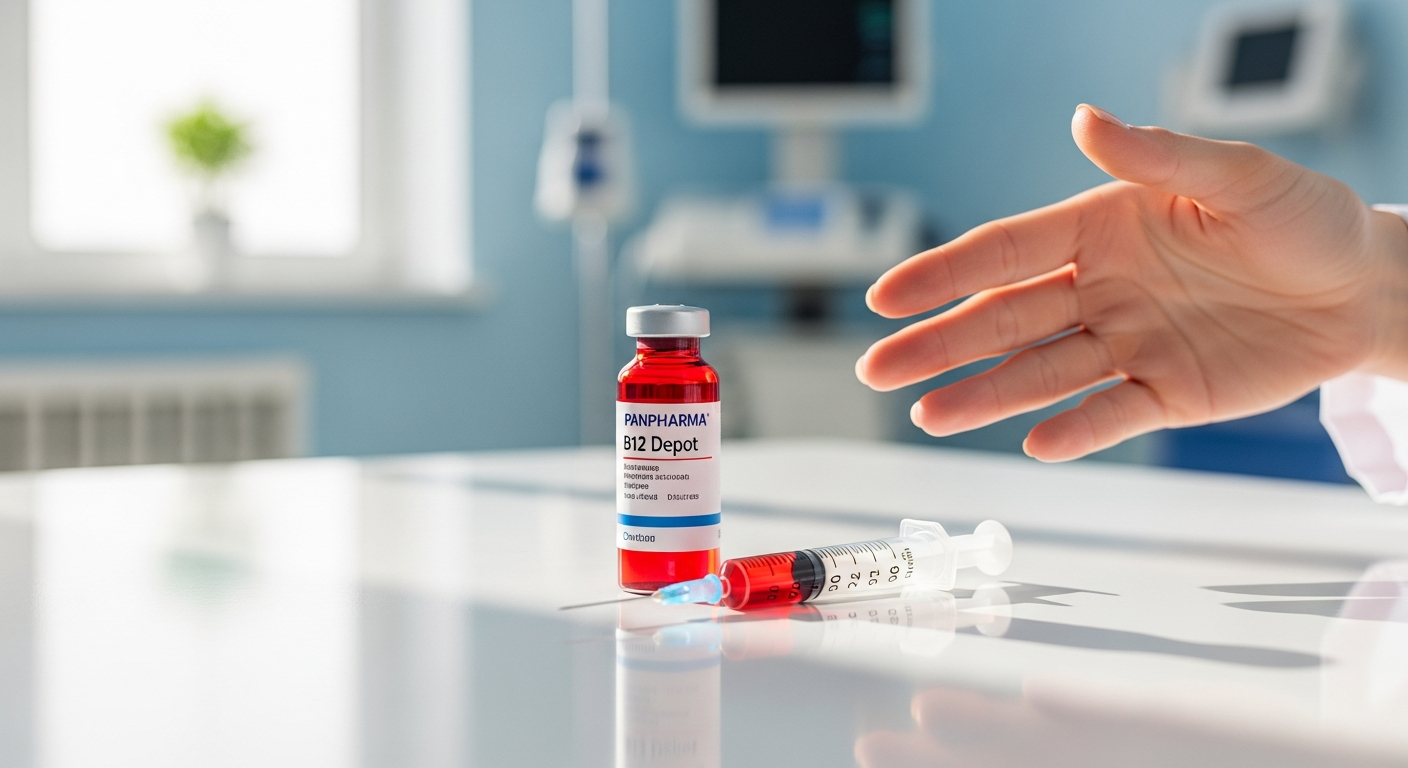
Discover why Panpharma Vitamin B12 Depot 1000 µg/ml injections are trusted by healthcare providers. Learn about hydroxocobalamin benefits, dosage, and how injectable B12 outperforms oral supplements for absorption issues.
Understanding Vitamin B12 Deficiency and Injectable Solutions
One in twenty adults struggles with undiagnosed Vitamin B12 deficiency—and many don't realize their chronic fatigue, brain fog, and weakness stem from this single nutritional gap. The symptoms creep up gradually, making it easy to dismiss persistent tiredness as simply part of modern life. Yet the consequences of prolonged deficiency extend far beyond exhaustion, affecting neurological function, cognitive sharpness, and overall quality of life.
Panpharma Vitamin B12 Depot stands out as a pharmaceutical-grade injectable solution that delivers 1000 µg/ml of hydroxocobalamin per ampoule, bypassing your digestive system entirely to ensure your body actually gets the B12 it needs. Unlike oral supplements that rely on complex absorption mechanisms, injections achieve near-complete bioavailability while sidestepping the common digestive barriers that prevent effective supplementation for so many people.
Understanding Hydroxocobalamin: The Active Ingredient Behind Panpharma's Effectiveness
What Hydroxocobalamin Is and How It Differs From Cyanocobalamin
Hydroxocobalamin and cyanocobalamin both contain vitamin B12, but they're fundamentally different compounds. Cyanocobalamin is a synthetic form created in laboratories, cheaper to produce, and commonly found in mass-market supplements. Hydroxocobalamin, by contrast, occurs naturally and represents a form closer to what your body actually encounters in nature.
The practical difference matters significantly. Your body recognizes hydroxocobalamin more readily, utilizing it more efficiently than the synthetic alternative. This distinction explains why pharmaceutical professionals favor hydroxocobalamin for serious deficiency treatment.
Superior Retention Rates and Reduced Injection Frequency
Hydroxocobalamin remains in your system substantially longer than cyanocobalamin. While cyanocobalamin circulates and excretes relatively quickly, hydroxocobalamin binds more effectively to tissues, creating a prolonged therapeutic window. This means fewer injections needed annually to maintain adequate B12 levels.
Patients on hydroxocobalamin often require quarterly injections after an initial loading phase, whereas cyanocobalamin-based protocols frequently demand monthly administration. Over years of treatment, this difference translates to fewer needle sticks and reduced overall treatment burden.
Activation Mechanism: How Your Liver Converts It for Cellular Use
Once hydroxocobalamin enters your bloodstream through intramuscular injection, your liver performs a crucial conversion. It transforms hydroxocobalamin into two active forms: methylcobalamin and adenosylcobalamin. These activated forms then circulate throughout your body, entering cells where they participate in essential metabolic processes.
This elegant biological mechanism ensures your body gets exactly what it needs. The conversion happens automatically; you receive the benefit without requiring additional supplementation of the active forms.
Safety Profile: Why Medical Professionals Prefer Hydroxocobalamin
Vitamin B12 is water-soluble, meaning your body excretes excess amounts through urine rather than storing them in fat tissue. Toxicity from B12 overdose is virtually impossible. However, hydroxocobalamin carries an additional safety advantage over cyanocobalamin: it doesn't release cyanide as a metabolic byproduct.
Though the amounts of cyanide from cyanocobalamin injections remain negligible for most people, hydroxocobalamin eliminates even this theoretical concern. For patients requiring long-term therapy, this distinction makes hydroxocobalamin the clear medical choice.
Bioavailability Advantage: Achieving Complete Absorption
Oral B12 supplements achieve approximately 2-3% bioavailability—meaning your body absorbs only a tiny fraction of the dose you consume. Digestive enzymes break down much of the supplement, and if you lack adequate intrinsic factor (a protein necessary for B12 absorption), you absorb virtually nothing.
Intramuscular injection bypasses these barriers entirely, delivering 90-100% bioavailability. The B12 enters your bloodstream directly, available for immediate cellular use. This dramatic difference explains why injections succeed where supplements fail for people with absorption issues.
Ideal For Specific Conditions
Panpharma's hydroxocobalamin formulation proves especially valuable for pernicious anemia patients, whose immune systems attack the cells producing intrinsic factor, rendering oral supplementation useless. Vegans and vegetarians benefit significantly since plant foods contain no naturally occurring B12. Those with Crohn's disease, celiac disease, or similar conditions affecting intestinal absorption find injections far superior to oral options. Post-gastric bypass patients, whose reduced stomach acid impairs B12 absorption, similarly experience dramatic improvements with injectable therapy.
The 1000 µg/ml Dosage: Is High-Potency B12 Right for You?
Standard Dosing Protocols
B12 injection schedules vary based on deficiency severity and underlying cause. Acute deficiency often begins with weekly or bi-weekly injections—typically 5-7 shots over an initial phase—followed by monthly maintenance injections. Some protocols call for quarterly injections once deficiency has been corrected and levels stabilized. Your specific schedule depends entirely on your individual response and physician recommendation.
Why 1000 µg Matters
The 1000 µg/ml concentration offers sufficient potency to address moderate to severe deficiency in a single ampoule. You don't need multiple injections per dose; one ampoule delivers a complete therapeutic dose. Lower-dose formulations—250 µg or 500 µg—occasionally necessitate multiple injections per session, adding complexity and discomfort without additional benefit.
Individual Variation Factors
Your age, metabolic rate, existing conditions, and absorption capacity all influence optimal dosage. A 30-year-old with simple dietary deficiency may thrive on quarterly maintenance injections, while a 70-year-old with pernicious anemia might require monthly administration. Your doctor assesses these individual factors when determining your specific protocol.
Avoiding Overdose Concerns
The water-soluble nature of B12 eliminates overdose risk. Your kidneys excrete excess B12 efficiently; your body simply cannot accumulate toxic amounts. This safety profile distinguishes B12 from fat-soluble vitamins like vitamins A, D, and E, where excessive intake genuinely poses risks.
Comparison With Lower-Dose Alternatives
250 µg or 500 µg formulations might seem more economical initially, but they often fall short for moderate to severe deficiency. Many patients require multiple injections to achieve therapeutic dosing, negating cost savings and adding unnecessary administration burden. Panpharma's 1000 µg concentration delivers complete doses efficiently.
Professional Guidance
Determining whether Panpharma's high potency matches your needs requires medical assessment. Blood tests revealing your specific B12 level, combined with symptom severity and underlying conditions, guide your healthcare provider's recommendation. Never self-initiate high-dose B12 therapy; professional guidance ensures appropriate treatment.
Injectable vs. Oral B12: Why Injections Deliver Superior Results
Digestive System Bypass
Oral B12 supplements require intrinsic factor—a protein produced by stomach cells—to facilitate absorption in your small intestine. If your stomach acid levels are low, if you've had gastric surgery, or if your immune system attacks intrinsic factor-producing cells, oral B12 simply cannot be absorbed effectively.
Injectable B12 circumvents this entire process. The vitamin enters your bloodstream directly through intramuscular injection, requiring none of the digestive machinery that fails for millions of people.
Absorption Rates Breakdown
The numbers tell a stark story. Oral supplements deliver 2-3% absorption in healthy individuals with normal digestive function. For those with malabsorption conditions, the rate approaches zero. Intramuscular injections achieve 90-100% bioavailability, meaning nearly every molecule reaches your bloodstream ready for use.
This difference isn't trivial—it's the reason why some people feel dramatically better within days of starting injections, while years of oral supplementation produced no noticeable change.
Speed of Symptom Relief
Patients beginning injectable B12 therapy frequently report noticing energy improvements within three to five days. Brain fog clears, fatigue lifts, and mental sharpness returns. These rapid improvements reflect the efficient delivery mechanism; your cells finally receive the B12 they've been depleted of, enabling normal metabolic function.
Oral supplements, by contrast, require consistent daily intake over weeks before any improvement appears—and only if absorption is occurring adequately.
Reliability for Malabsorption Conditions
Celiac disease, IBS, Crohn's disease, and similar gastrointestinal disorders fundamentally compromise nutrient absorption. For people managing these conditions, oral B12 supplementation remains unreliable regardless of dosage. Injectable therapy provides the certainty that treatment is actually reaching your cells, bypassing the damaged or inflamed digestive tissue creating the absorption problem.
Long-Term Cost Efficiency
An annual protocol of quarterly B12 injections costs considerably less than daily oral supplementation over the same period. Moreover, since injections achieve complete absorption, you're not wasting money on supplements that your body cannot process.
Consistency and Predictability
Oral B12 absorption fluctuates based on digestive health, food interactions, and medication status. Injections eliminate this variability; each dose delivers identical bioavailability regardless of your digestion state. This consistency allows your doctor to monitor your response and adjust protocols with confidence.
German Pharmaceutical Standards: What Apothekenpflichtiges Arzneimittel Means for Quality
Regulatory Oversight
Germany's BfArM (Federal Institute for Drugs and Medical Devices) enforces some of the world's most stringent pharmaceutical standards. Panpharma's classification as "apothekenpflichtiges Arzneimittel"—pharmacy-only medicine—means it has undergone rigorous regulatory review before approval. This classification protects consumers by ensuring medical-grade quality rather than allowing unregulated supplements to make therapeutic claims.
Manufacturing Standards
GMP (Good Manufacturing Practice) compliance dictates every aspect of Panpharma's production. Facilities must maintain precise temperature controls, sterility protocols, and quality documentation at every manufacturing stage. These requirements exist specifically to prevent contamination and ensure batch-to-batch consistency.
Quality Control Testing
Each Panpharma batch undergoes rigorous testing before distribution. Purity analysis confirms the presence of authentic hydroxocobalamin and absence of contaminants. Sterility testing ensures freedom from bacterial contamination. Potency verification confirms each ampoule contains exactly the labeled 1000 µg/ml concentration.
This testing depth reflects German pharmaceutical standards that value patient safety above cost reduction.
Traceability and Safety
Complete documentation exists from raw material sourcing through final distribution. If any quality concern emerges, regulators can trace the affected batch and remove it from circulation. This traceability provides accountability that unregulated supplements cannot match.
Why German Medicines Command Trust
Germany's pharmaceutical reputation developed through decades of consistent quality enforcement. The phrase "Made in Germany" holds weight precisely because regulatory standards remain non-negotiable. When you select a German pharmaceutical product, you're choosing an industry with regulatory teeth—meaning violations carry serious consequences.
Pharmacy-Only Classification
Only licensed pharmacists can dispense pharmacy-only medicines, adding another quality checkpoint. Your pharmacist verifies appropriate use, checks for drug interactions, and ensures you're receiving proper guidance. This professional oversight distinguishes regulated pharmaceuticals from over-the-counter supplements.
Who Benefits Most From Panpharma B12 Depot Injections?
Diagnosed B12 Deficiency Patients
If your blood work reveals low B12 levels and your symptoms match deficiency characteristics—fatigue, weakness, cognitive difficulty, numbness—injectable therapy becomes your most effective intervention. Medical confirmation of deficiency, rather than guessing based on symptoms, ensures appropriate treatment.
Pernicious Anemia Sufferers
Pernicious anemia represents an autoimmune condition where your body attacks cells producing intrinsic factor. Without intrinsic factor, oral B12 simply cannot be absorbed. These patients depend entirely on injections for adequate B12 levels, making Panpharma an essential therapy rather than an optional supplement.
Post-Bariatric Surgery Patients
Gastric bypass and similar weight loss surgeries intentionally reduce stomach size and bypass portions of the digestive tract. This anatomical change impairs B12 absorption permanently. Lifelong B12 supplementation becomes necessary, and injections provide the only reliable route for adequate levels.
Strict Vegans and Vegetarians
Plant-based diets contain no naturally occurring vitamin B12. While fortified foods exist, relying exclusively on fortified sources creates a precarious situation. Injectable B12 provides the security of knowing your levels remain adequate without depending on careful dietary planning.
Chronic GI Disorder Patients
Celiac disease, Crohn's disease, ulcerative colitis, and similar conditions damage intestinal tissue responsible for nutrient absorption. Oral supplements cannot overcome this tissue damage; only injections bypass the problem entirely, ensuring B12 reaches your bloodstream.
Medication-Induced Deficiency
Metformin (commonly prescribed for diabetes) impairs B12 absorption. Proton pump inhibitors (used for acid reflux) reduce stomach acid necessary for B12 release from food. Long-term use of these medications necessitates B12 supplementation; injections provide the most reliable route.
Neurological Symptom Sufferers
B12 deficiency causes neuropathy (nerve damage), cognitive decline, mood disturbances, and other neurological complications. If you're experiencing these symptoms and bloodwork confirms deficiency, injectable therapy becomes urgent—delayed treatment allows permanent neurological damage to develop.
Getting Started: Your First Steps With Panpharma B12 Injections
Medical Consultation Requirements
Never begin B12 injections without medical confirmation of deficiency. Blood tests measuring serum B12 levels, methylmalonic acid, and homocysteine provide objective evidence of deficiency and help identify underlying causes. This diagnostic foundation ensures you're treating an actual deficiency rather than assuming symptoms result from B12 insufficiency.
Prescription Acquisition
Your healthcare provider, after confirming B12 deficiency through laboratory testing, writes a prescription for Panpharma injections. This prescription requirement ensures proper dosing and monitoring of your therapy.
Injection Training
If you'll be self-administering injections, your healthcare provider or nurse trains you on proper intramuscular injection technique. This training covers needle angle, injection site selection, and injection depth—all crucial for safe administration. Alternatively, you can schedule regular visits with your healthcare provider for professional administration.
Baseline Symptom Tracking
Document your current symptoms before beginning treatment. Rate your energy levels, cognitive clarity, any numbness or tingling, and mood. This baseline allows you to objectively measure improvement as treatment progresses.
Injection Schedule Planning
Work with your healthcare provider to establish a consistent injection schedule. Whether weekly, bi-weekly, or monthly, consistency helps maintain stable B12 levels. Mark your calendar and set reminders to maintain adherence.
Response Monitoring
After your first injection, monitor how you feel. Most people notice energy improvements within three to seven days. Cognitive symptoms typically improve within two to four weeks. Neurological symptoms may require months to resolve, depending on deficiency duration and severity. Share these observations with your healthcare provider to confirm appropriate treatment response.
Ordering Your First Pack
Apohealth DE offers international shipping, making Panpharma accessible worldwide. Once you have your prescription, order your first pack through their secure platform. They handle the details, managing proper storage and rapid delivery to ensure your injections arrive in optimal condition.
Taking Control of Your B12 Health: Why Panpharma Deserves Your Consideration
Panpharma Vitamin B12 Depot injections represent a genuinely transformative option for anyone struggling with deficiency symptoms. The combination of hydroxocobalamin's superior retention, the 1000 µg/ml potency, and German pharmaceutical standards creates a formulation that actually works—delivering results where oral supplements consistently fail. If you've tried tablets without success, if you have absorption issues, or if you're simply tired of feeling perpetually exhausted, this treatment deserves serious consideration.
Your next step remains clear: consult with your healthcare provider about B12 testing and whether Panpharma's formulation aligns with your specific deficiency. Stop accepting fatigue and brain fog as normal. The energy, mental clarity, and physical vitality you've been missing remain within reach.