
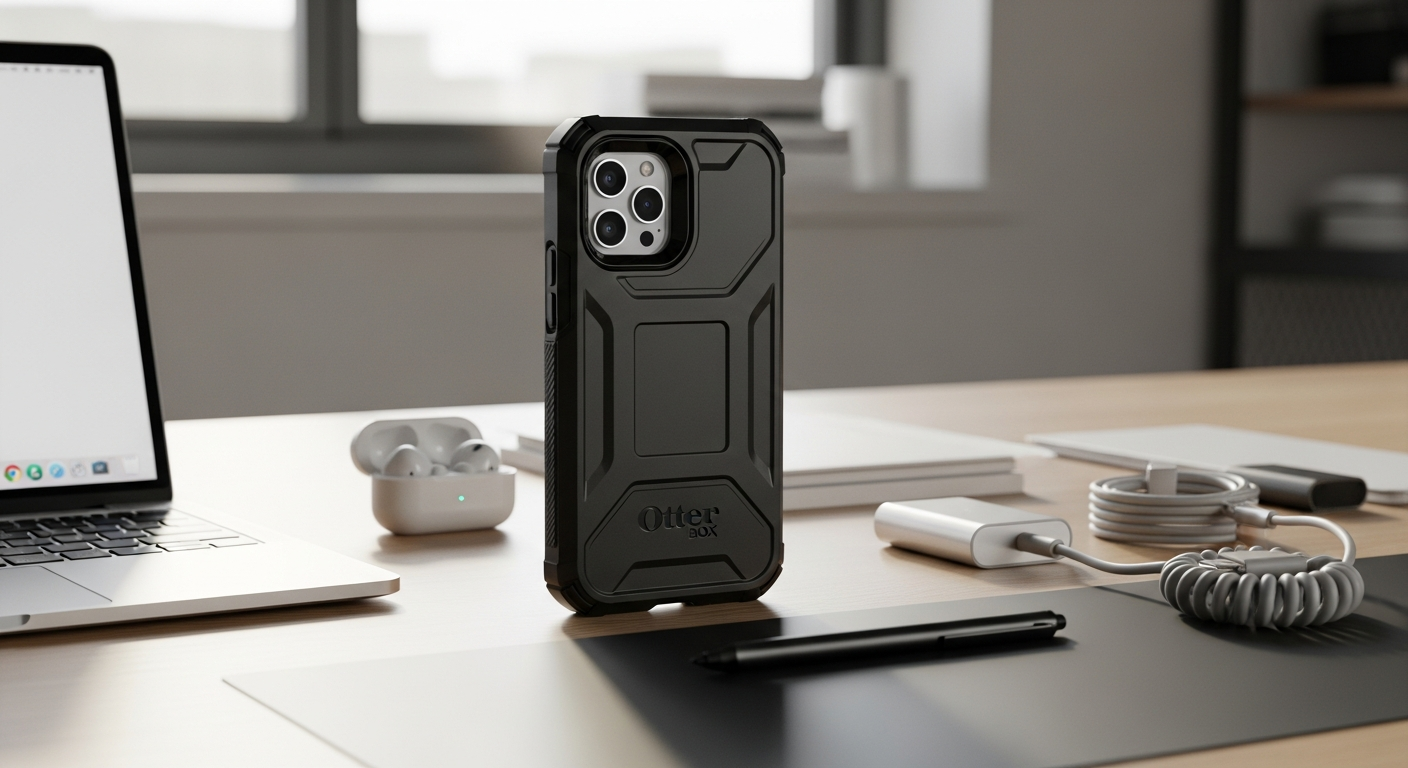
Discover why tradespeople and outdoor enthusiasts trust the OtterBox Defender Series phone case for unbeatable rugged protection. Learn about military-grade durability, pricing, and whether the premium investment is worth it for your lifestyle.
Your phone hits the concrete. Your heart stops. But when you flip it over, there's barely a scratch—because you chose the right protection. For professionals working in harsh conditions and adventurers pushing limits outdoors, a phone case isn't just an accessory; it's insurance for one of your most valuable tools.
The OtterBox Defender Series has earned its reputation as Australia's go-to rugged phone case, consistently topping retailer shelves and customer wishlists. This isn't a case designed for those who prioritize sleekness over substance. Instead, it's engineered for people whose lifestyles demand serious, no-compromise protection—whether you're climbing scaffolding, hiking remote trails, or working in dusty job sites where drops are inevitable.
Discover the ultimate protection with the OtterBox Defender Series today.
This guide breaks down exactly what makes the Defender Series stand out from lighter alternatives, explores the multi-layered technology that justifies its premium price tag, and helps you determine whether this investment aligns with your needs. You'll discover the real-world scenarios where this case shines, understand what you're sacrificing for that protection, and learn how it stacks up against other OtterBox options.
Who Actually Needs the OtterBox Defender Series?
Trade and Construction Professionals
Tradespeople and construction workers operate in dusty, high-impact environments where phones encounter daily abuse. Concrete floors, tool impacts, and equipment contact are standard hazards. For these workers, a phone isn't a luxury—it's a communication lifeline and appointment scheduler that can't afford downtime.
Outdoor Enthusiasts and Adventure Travelers
Outdoor adventurers tackling rugged terrain, camping trips, and remote locations face terrain hazards that urban users rarely encounter. When you're kilometers from civilization, phone replacement isn't an option. Rocks, branches, water exposure, and temperature swings demand genuine protective engineering.
Delivery Drivers and Field Service Professionals
Constantly moving between vehicles and worksites with exposure to drops, delivery drivers and field service professionals experience frequent falls and environmental hazards. Their phones endure repetitive impacts from climbing in and out of vehicles, rushing between jobs, and working in unfamiliar locations.
Parents Seeking Peace of Mind
Parents wanting protection for teenagers or children with a track record of accidental phone damage appreciate the Defender's reassurance. Rather than replacing devices repeatedly, a single protective investment can save money over time.
Active Individuals Who Refuse Compromise
Users who refuse to compromise on device protection despite lifestyle demands represent the core audience. These are people who understand that a phone's value extends beyond its purchase price—it's irreplaceable data, contacts, and daily functionality.
Users in Remote or Developing Markets
Active individuals in developing markets or remote areas where phone repair services are limited or expensive benefit substantially. When repair options don't exist locally, protection becomes genuinely critical.
Military-Grade Protection: What MIL-STD-810G Actually Means
Military drop test standards aren't marketing theater. MIL-STD-810G certification demonstrates that the OtterBox Defender Series has undergone rigorous testing against defined impact scenarios. This standard specifies drop heights, impact surfaces, and failure criteria that simulate genuine field conditions far more comprehensively than casual drop tests.
The three-layer construction breakdown reveals the engineering behind this certification. A solid inner shell serves as the protective core, absorbing and distributing impact force away from your device. A shock-absorbing outer slipcover provides secondary impact protection while enhancing grip. Raised edge technology around the screen and camera creates protective barriers that prevent direct contact with surfaces during drops.
Drop protection specifications detail the height and impact scenarios the case can withstand. Military standards don't test drops from waist height once—they involve multiple impacts at various angles and temperatures. This real-world durability matters when your phone encounters repeated abuse across months and years.
Dust and debris resistance comes through sealed port covers and deliberate design engineering. Sealed access points prevent dirt, sand, and lint infiltration that can damage charging ports and headphone jacks over time. Scratch and abrasion resistance emerges from the multi-material composition combining thermoplastic, rubber, and polycarbonate in specific protective zones.
However, real-world durability claims sometimes differ from laboratory testing conditions. A case certified to survive a 1.5-meter drop onto concrete might fail catastrophically if dropped at an odd angle onto a sharp rock edge. Military standards indicate superior engineering, yet they don't guarantee protection against every conceivable scenario.
Non-certified cases typically lack this methodical testing framework. They offer basic impact absorption but haven't proven durability across standardized impact conditions. The certification difference between the Defender Series and cheaper alternatives represents substantial engineering validation.
The Three-Layer Design Explained
The inner shell functions as a rigid protection core that absorbs and distributes impact force away from your device. When your phone hits the ground, this layer prevents the device from contacting the outer casing directly, maintaining a crucial buffer zone that saves screens and bodies from shattering.
The soft outer slipcover handles secondary shock absorption and grip enhancement for secure handling. This layer feels slightly rubbery or tacky, preventing the phone from slipping during quick movements or wet conditions. It also absorbs surface-level impacts before force reaches the inner rigid shell.
Raised screen and camera edges create protective barriers that prevent direct contact with surfaces during drops. When the case lands, these raised lips make contact first, keeping the vulnerable screen and camera lens slightly suspended above impact surfaces. This seemingly small design detail prevents countless screen cracks.
Built-in screen protector options on certain models provide additional glass or film coverage. However, they can impact touch responsiveness slightly. Some users appreciate the complete protection; others find the reduced sensitivity frustrating for typing and gaming.
Port cover technology seals access points against dirt, sand, and lint infiltration. These covers slide or flip open for charging or audio connectivity, then close again to block environmental contaminants. Over extended use, their reliability determines whether your ports remain functional years later.
Material composition combines thermoplastic, rubber, and polycarbonate in specific protective zones. Thermoplastic provides rigidity for structural integrity. Rubber absorbs shock and handles grip. Polycarbonate offers transparency where needed and additional strength. This engineered combination creates zones of varying flexibility—rigid where structural support matters, flexible where shock absorption helps.
Thickness and weight trade-offs are inherent to protective design. More material means better protection but also greater bulk. The Defender Series unapologetically embraces this trade-off, accepting added weight and size in exchange for superior impact resistance.
Rugged Durability in Demanding Environments
Construction site performance demands withstanding concrete drops, tool impacts, and equipment contact repeatedly. Workers drop phones from scaffolding heights, impact them against steel beams, and expose them to oil and dirt. The Defender Series handles these scenarios with engineering specifically designed for industrial abuse.
Outdoor adventure scenarios involve protection against rocky terrain, water exposure, and temperature extremes. Hikers dropping phones on stony trails, campers exposing devices to rain and temperature swings, and travelers navigating unfamiliar terrain all push protective limits. The case's sealed design protects against water ingress, while its material composition handles temperature variations.
Workplace hazards include resistance to chemicals, oils, and industrial substances common in trade work. Automotive mechanics, industrial plant workers, and construction professionals expose phones to fluids that damage many materials. The Defender's materials resist chemical attack better than typical phone cases.
Long-term durability means the case maintains protective integrity after months of heavy use. Unlike cases that degrade quickly, the Defender Series continues performing year after year. This longevity directly contributes to its value proposition—it survives your usage pattern and outlasts cheaper alternatives.
Warranty coverage and OtterBox's commitment to replacement or repair provide safety nets when failures do occur. The company's Australian service infrastructure means you're not stranded if something breaks. This institutional support matters for professional users who can't afford phone downtime.
Real customer experiences from professionals relying on the Defender Series daily confirm its durability claims. Construction workers report years of reliable protection. Outdoor guides share stories of phones surviving impacts that seemed catastrophic. Field service professionals testify that the investment saved them from multiple replacement cycles.
Comparative durability against lighter cases in identical impact scenarios reveals dramatic differences. Place a Defender Series phone and a budget case phone side-by-side, drop them from a ladder onto concrete, and the results are starkly different. The engineering gap becomes viscerally obvious.
Experience the difference military-grade protection makes with the Defender Series.
The Bulk Factor: What You're Trading for Protection
Size and weight specifications positioned against slimmer OtterBox alternatives like the Commuter or Symmetry Series reveal the physical reality. The Defender Series adds approximately 30-40% more thickness and noticeable weight compared to basic protective cases. This isn't subtle—users immediately notice the difference when handling the phone.
Pocket compatibility concerns arise with standard work pants, jeans, and utility clothing. The case's dimensions mean phones sit higher in pockets, creating visible bulges. Some users find this acceptable; others find it genuinely bothersome. Deep cargo pockets handle the case better than standard jeans pockets.
One-handed usability faces challenges due to increased thickness and grip surface area. Reaching the top corner of a Defender Series case requires stretching fingers further than with slimmer phones. Casual one-handed operation becomes slightly more demanding, though the grippy surface actually helps prevent accidental drops.
Holster and mounting options accommodating the larger case profile exist but aren't universal. Not every phone holder designed for standard cases will accept a Defender Series case. Users often need to purchase specialized holsters, adding to total investment costs.
Vehicle dashboard mounting and compatibility with phone stands require larger cradles or suction cups. Dashboard mounts designed for standard phones might not grip the case securely. However, the market for larger accessories has grown as protective cases have become standard.
Wireless charging limitations occur on certain models due to case thickness. Some Qi charging systems struggle penetrating the material layers. Users with wireless charging infrastructure should verify compatibility before purchasing, as this limitation affects daily convenience significantly.
Aesthetic considerations involve accepting a utilitarian appearance over sleek design. The Defender Series looks professional and serious—appropriate for work environments but perhaps too chunky for social situations. Users who value appearance might feel self-conscious carrying such a bulky device.
Pricing and Value Proposition
The AUD $70–$100 price range for Defender Series cases across Australian retailers positions these as premium protective investments. This substantial cost requires honest evaluation of whether your usage patterns justify the expense.
Cost comparison with other OtterBox protection tiers reveals the pricing ladder. The Commuter Series typically costs AUD $40–$60, offering moderate protection with lighter weight. The Symmetry Series occupies the AUD $50–$70 range, emphasizing slim profiles over maximum protection. The Strada Series, featuring wallet functionality, runs AUD $60–$80. The Defender Series sits at the premium tier, reflecting its uncompromising protection approach.
Price variation by phone model means flagship device cases cost more than budget phone options. An iPhone 15 Pro Max Defender Series case costs more than an iPhone SE variant, reflecting production volumes and device value protection calculations.
Durability-to-cost ratio calculation is where the Defender's value becomes apparent. A case lasting three years while preventing a phone replacement that would cost AUD $800–$1500 represents exceptional return on investment. Even one prevented drop damage justifies the premium price for expensive devices.
Warranty and replacement programs factor into total cost of ownership. OtterBox's commitment to repair or replacement means you're not permanently stranded if the case fails. This institutional backing adds genuine value beyond the physical product.
When premium pricing is justified: scenarios where device replacement costs far exceed case costs. A construction worker might drop their phone five times annually. Without protection, they'd face AUD $400+ in annual repair expenses. The Defender Series investment pays for itself quickly in these scenarios.
Budget-conscious alternatives exist but involve trade-offs in protection levels. Spending AUD $25–$40 on a basic protective case provides some impact resistance while keeping costs minimal. However, this approach assumes you won't experience serious drops or work in particularly harsh environments.
Defender Series vs. Other OtterBox Options
The Commuter Series comparison reveals a lighter-weight alternative offering moderate protection but better everyday portability. Commuter cases weigh substantially less and add less bulk, making them suitable for office workers, casual users, or professionals in controlled environments. However, their protection level drops noticeably in high-impact scenarios.
The Symmetry Series positions itself around slim profiles and premium materials, emphasizing moderate impact resistance with sleek aesthetics. Users choosing Symmetry prioritize appearance and pocket compatibility over maximum protection. It represents a genuine middle ground—better protection than bare devices, but not the comprehensive engineering of the Defender.
The Strada Series combines wallet functionality with moderate protection. This hybrid approach integrates card storage, so users carry fewer items in pockets. However, this functional integration means some protection gets sacrificed for wallet features.
When to choose Defender over alternatives depends on lifestyle and environment factors. Construction workers, outdoor adventurers, and field professionals need Defender-level protection. Office workers in controlled environments might find Commuter or Symmetry adequate. The decision hinges on genuine drop risks and environmental hazards.
A hybrid approach works for many users: carrying a Defender for work environments and switching to slimmer cases for social situations. This flexibility lets professionals get maximum protection when they need it while maintaining better aesthetics and portability during off-hours.
Feature differences across series include screen protectors, port covers, and design variations. The Defender typically includes both integrated screen protection and sealed port covers. Lighter series omit these features, relying instead on basic impact absorption. These seemingly minor differences create substantial protection gaps.
Customer satisfaction ratings across different OtterBox product lines show consistently high marks for all series, but for different reasons. Defender Series satisfaction centers on durability and protection. Commuter Series satisfaction emphasizes balance and portability. Symmetry Series praise focuses on aesthetics. Understanding what each series excels at helps match the right product to your needs.
Real-World Durability Testing and Customer Feedback
Drop test results from independent reviewers and YouTube durability channels consistently show the Defender Series surviving impacts that destroy competing cases. These reviewers test phones dropped from increasingly greater heights, onto varied surfaces, and at different angles. The Defender Series typically survives tests where competitors fail catastrophically.
Long-term user testimonials from construction workers, outdoor guides, and field professionals confirm theoretical durability in practical conditions. These aren't casual users reporting occasional drops—they're professionals whose livelihoods depend on phone reliability, describing years of heavy use and repeated impacts with minimal damage.
Failure scenarios reveal rare instances where even the Defender Series shows damage. Some users report issues with port covers degrading or becoming difficult to operate after extended use. Others describe unusual failure patterns when phones experience extreme impacts at awkward angles. These exceptions remain rare but deserve acknowledgment.
Longevity reports tracking case performance after 12, 24, and 36 months of heavy use paint a consistently positive picture. Users describe cases remaining protective and functional for years, sometimes longer than their phones. This extended lifespan justifies the initial premium investment.
Port cover durability determines whether sealed access points remain functional over time. Most users report covers continuing to work reliably after years of daily use, though some note occasional stiffness requiring gentle maintenance. This reliability is exceptional compared to cases where covers break or become loose after months.
Color and finish retention matters for users concerned about appearance. Defender Series cases resist fading and discoloration better than cheaper alternatives, maintaining their appearance across extended use. The utilitarian design doesn't show dirt or wear as readily as lighter-colored alternatives.
Repair and replacement experiences with OtterBox customer service in Australia reflect the company's strong commitment to supporting users. Those experiencing failures report straightforward replacement processes and responsive customer service, giving peace of mind about support infrastructure.
Making the Investment Decision
Assessing your lifestyle determines whether your daily activities justify premium protection. Ask yourself: How often do you drop your phone? Are you working in dusty, harsh, or impact-prone environments? Do you engage in outdoor activities that create drop risks? Honest answers to these questions guide whether the Defender Series is right for you.
Risk factors include frequency of drops, work environment hazards, and device replacement costs. Someone dropping their phone once per week in a construction environment faces genuine replacement risks. Someone with an office job dropping their phone once per year faces different calculations. The relationship between risk frequency and protection investment should guide your decision.
Budget alignment involves weighing the AUD $70–$100 investment against potential device damage expenses. If device replacement would cost over AUD $1000, spending AUD $100 on protection represents 10% risk mitigation cost. If you could replace your device for AUD $400, the protection calculation changes substantially.
Warranty considerations involve understanding coverage included with purchase. Knowing what OtterBox will replace and under what circumstances matters for long-term planning. Some users appreciate the institutional backing; others focus solely on the physical product.
Trial period strategies let you test the case weight and bulk before committing long-term. Many Australian retailers accept returns, allowing you to purchase, use for a week, and return if the bulk genuinely bothers you. This real-world testing often clarifies whether theoretical concerns become practical frustrations.
Resale value considerations involve whether investing in premium protection preserves your device's trade-in value. A well-protected phone in excellent condition fetches better resale prices than a damaged alternative. This factor, though subtle, adds to the Defender's value calculation.
Peace of mind factor involves quantifying the psychological benefit of uncompromising protection. For some users, knowing their device is protected against virtually any drop eliminates stress and anxiety. This intangible benefit holds genuine value beyond pure financial calculations.
The Bottom Line: Is the Defender Series Worth It?
The OtterBox Defender Series phone case represents a deliberate choice: you're prioritizing absolute protection over portability and aesthetics. For tradespeople navigating construction sites, adventurers exploring remote terrain, and professionals whose work environments demand serious durability, this case delivers exceptional value. The military-grade protection standards, three-layer design, and sealed port covers address real-world hazards encountered regularly in demanding environments.
However, if you're primarily using your phone in controlled environments with occasional drops, the bulk and premium price tag might outweigh the benefits. The Defender Series shines when your lifestyle or profession makes device damage a genuine risk—not a theoretical concern. Your phone is an investment; the right protection ensures it survives whatever you throw at it, literally.
For those who need uncompromising protection, the Defender Series remains Australia's most trusted choice.
Protect your device with the OtterBox Defender Series—invest in peace of mind today.