
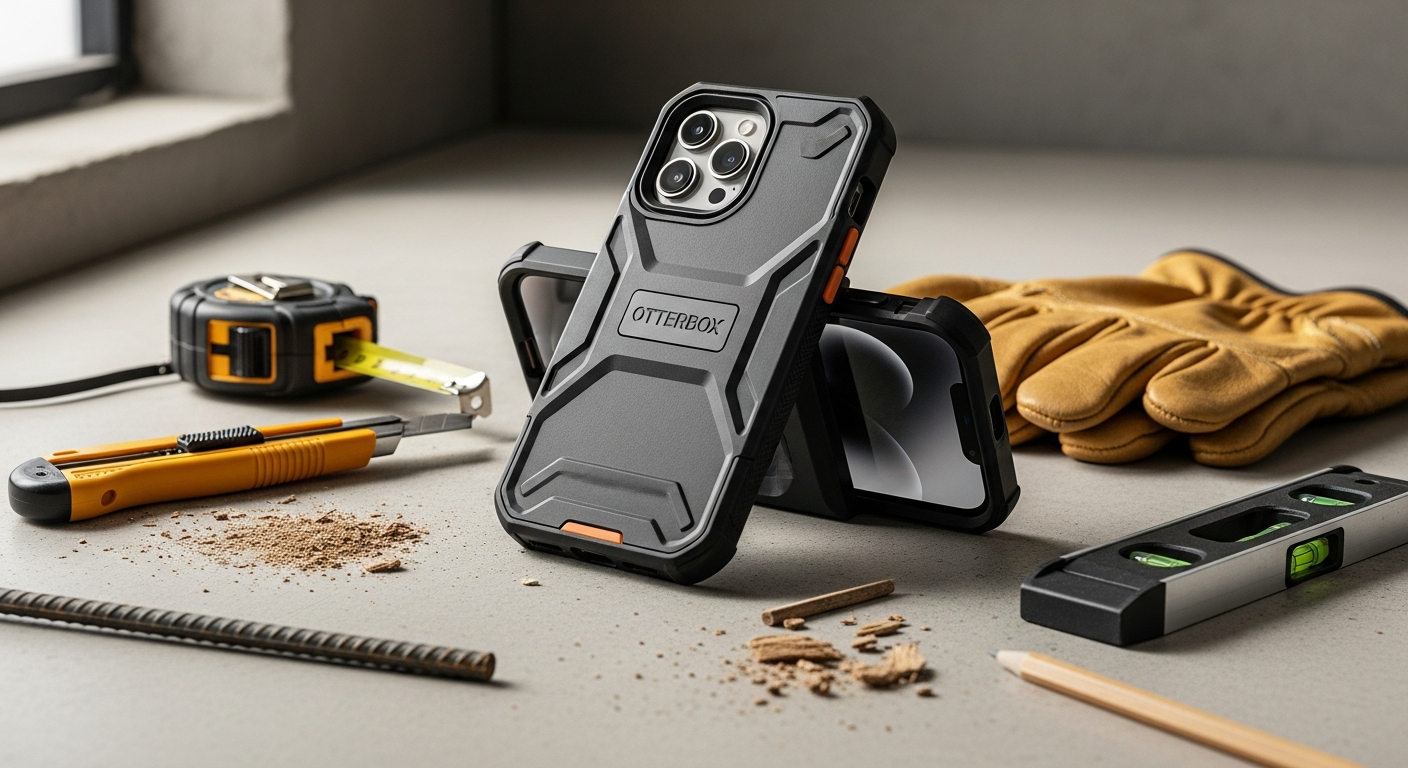
Discover whether the Otterbox Defender Pro Series phone case justifies its cost for tradies, outdoor workers, and demanding professionals. Learn about durability, real-world protection, and practical considerations for tough job sites.
Your phone hits the concrete floor of a construction site—hard. For most of us, that's a heart-stopping moment. But tradies and outdoor workers face this reality dozens of times a week, which is why rugged protection isn't a luxury; it's a necessity.
The question isn't whether you need a tough case—it's whether the Otterbox Defender Pro Series phone case delivers enough protection to justify its premium price tag for those working in genuinely demanding environments. The Otterbox Defender Pro Series has built a formidable reputation in Australia as the go-to choice for professionals who refuse to compromise on device protection. Unlike casual users who might prioritize sleekness or portability, tradies, construction workers, electricians, and outdoor enthusiasts operate in environments where phones encounter dust, water, extreme temperatures, and repeated impacts.
This case was engineered specifically for those scenarios—tested to military drop standards and built with multi-layer defense systems that most mainstream cases simply can't match. In this guide, I'm breaking down whether the Defender Pro Series is genuinely worth the A$99.95–A$119.95 investment for your specific work environment. You'll discover how its military-grade protection holds up in real-world job site conditions, what trade-specific advantages it offers, and where it might fall short for certain work scenarios. I'll also help you weigh the bulk factor and durability of components that matter most when you're working hard.
Military-Grade Protection: What the 7X MIL-STD-810G Rating Actually Means for Job Sites
Understanding the Testing Standards
The 7X MIL-STD-810G 516.6 rating sounds impressive, but what does it actually guarantee? This military drop-testing standard puts devices through rigorous drops from specific heights onto concrete surfaces, multiple times over. The rating translates to real-world protection that significantly exceeds consumer safety standards—your phone can survive impacts that would shatter unprotected devices or those in basic cases.
For construction workers, electricians, and roofing specialists, this rating means something concrete: a device dropped from scaffolding, a ladder, or a truck bed has genuine protection. The multi-layer defense system—rigid polycarbonate inner shell, soft silicone outer layer, and memory foam backing—absorbs impact energy rather than transferring it directly to your phone's internals. That layered approach prevents cracked screens, damaged processors, and compromised charging ports.
Real-World Impact Protection Across Trades
Different trades face different hazards. Roofers deal with multiple-story falls and hard surface impacts. Plumbers work in wet environments with constant dropping risks. Electricians need protection from both drops and occasional chemical exposure. The Defender Pro Series addresses these scenarios through its comprehensive approach—it doesn't just survive individual drops; it's engineered to withstand the cumulative abuse of demanding work.
Raised edges protect your camera lens and screen when the phone lands face-down on concrete or rough surfaces. When you're documenting a job site, snapping quick photos for records, or using your phone for measurements and estimates, that protected lens means you're capturing clear images even after hundreds of work days.
Understanding Protection Limitations
Military drop testing proves durability in controlled conditions, but real job sites present variables labs don't replicate. Extreme heat exposure during roofing work, chemical splashes in industrial settings, or vibration from heavy machinery differ from standard drop scenarios. The Defender Pro Series handles these reasonably well thanks to its polycarbonate construction and rubber sealing, but the case isn't specifically engineered for crushing forces (like being sat on under weight), sustained vibration damage, or prolonged exposure to harsh solvents used in certain trades.
Practical Features Built for Tradies: Beyond Basic Protection
Job Site Functionality That Matters
The integrated port covers blocking dust and debris aren't luxuries—they're practical necessities. Construction sites generate constant dust, and even brief exposure can clog charging ports, speaker grilles, and microphone holes. Port covers keep your device functional through entire job schedules without requiring constant cleaning.
Raised edges serve dual purposes. They protect against direct impacts and they prevent the device from sitting flush on dirty or wet surfaces. When you place your phone on a workbench, scaffold, or truck bed, those edges create a buffer between your screen and whatever surfaces surround you.
Grip and Carrying Solutions
The silicone outer layer provides significantly enhanced grip, particularly valuable when wearing work gloves. Leather-palmed gloves, nitrile gloves, or heavy-duty winter gloves all grip this case more securely than sleek metal or glass surfaces. That enhanced grip directly translates to fewer accidental drops during fast-paced work.
The included versatile holster functions both as a belt clip and hands-free kickstand. For tradies constantly moving between locations, the belt clip keeps your phone secured and easily accessible without fishing through pockets. The kickstand mode lets you prop your device for hands-free video calls with clients, viewing work instructions, or consulting measurements and blueprints during installations.
Modern Connectivity Features
Newer Defender Pro iterations include MagSafe compatibility, enabling secure mounting on magnetic work surfaces—metal shelving, vehicle tool racks, or fabricated metal stands. iPhone models even incorporate a built-in Camera Control button, streamlining site documentation by providing quick access to photo capture without unlocking your device or hunting for app icons.
Check out the current Otterbox Defender Pro Series features and find the perfect fit for your trade.
Durability Under Pressure: How Long Does It Really Last on the Job?
Expected Lifespan in Demanding Environments
Heavy daily use in construction, outdoor work, or trade environments typically yields 2–4 years of reliable protection from the Defender Pro Series, depending on specific work conditions and how aggressively you use your device. The polycarbonate shell and synthetic rubber construction resist UV degradation better than many competitors, and the materials don't become brittle in extreme temperature swings.
The multi-layer design maintains protective properties longer than thinner cases because impacts gradually compress components rather than causing catastrophic cracking. After months on job sites, you might notice some outer layer wear, minor discoloration, or slight compression of the silicone—these cosmetic changes don't significantly compromise protection until material degradation becomes severe.
Component Durability: The Real Test
Port covers and button mechanisms experience the most stress in everyday use. Some users have reported that port covers loosen or become difficult to access after extended periods, and button responsiveness can stiffen on certain models. These aren't universal failures—experiences vary significantly based on usage patterns and device models—but they represent the case's most vulnerable points.
The memory foam backing and rubber sealing around ports remain stable across temperature fluctuations. Roofing work in summer heat and winter cold, outdoor landscaping through seasonal changes, or work in unheated shops creates stresses that cheaper cases can't handle, but the Defender Pro Series material science stands up to these cycles.
Maintenance and Longevity
Regular cleaning prevents dirt accumulation that can compromise seals or cause material degradation. Rinsing with fresh water after dusty workdays, wiping dry, and occasionally using mild soap keeps the case looking functional and maintains grip quality. Avoid leaving the case in direct sunlight for extended periods when not in use, as UV exposure gradually lightens colors and can slightly reduce rubber flexibility.
Warranty coverage through Otterbox typically covers manufacturing defects but not impact damage or normal wear. Real-world experiences vary—some tradies report excellent support, while others have encountered difficulties with component replacement claims. Purchasing through authorized Australian retailers often simplifies warranty navigation.
The Bulk Factor: Trading Portability for Peace of Mind
Size and Weight Reality
The Defender Pro Series is undeniably bulky. Adding the case increases your phone's dimensions noticeably and weight perceptibly. Standard smartphones already stress jacket pockets; the Defender Pro tests pocket capacity further. For workers wearing multiple tool belts, carrying numerous devices, or working in confined spaces where bulk becomes a genuine operational obstacle, this thickness matters.
Roofing work requiring frequent climbing, plumbing requiring crawling through tight spaces, or electrical work in compact panels all benefit from slimmer profiles. Tasks demanding rapid device access or frequent pocket removal become more cumbersome with the case's added dimensions.
Practical Carrying Strategies
The included holster mitigates bulk challenges by securing your phone to your belt rather than forcing it into pockets. Workers who adopt the belt-clip approach universally report fewer complaints about pocket fatigue and better accessibility. Vehicle storage—keeping the case secured in your truck, toolbox, or job site setup—eliminates pocket pressure altogether.
Some tradies carry unprotected devices during active work and return the phone to the protected case during transport or storage. This approach acknowledges that not every moment requires maximum protection and optimizes for the specific hazards your work actually encounters.
Honest Trade-Off Assessment
For roofing, construction, or scaffolding work where drops genuinely threaten your device multiple times weekly, the bulk trade-off typically makes sense. For office-based trades like estimating, project management, or administrative work where impact risk is minimal, the Defender Pro Series likely represents overkill that unnecessarily impacts daily comfort.
Your specific work tasks, not your job title, determine whether bulk becomes a genuine problem. Consider your average workday: How many times do you actually access your phone? Are you climbing, crawling, or reaching? How much does device accessibility matter compared to protection? Honest answers to these questions clarify whether the bulk is an acceptable compromise.
Cost-Benefit Analysis: Is Premium Protection Worth the Price Tag?
Pricing and Comparison Framework
At A$99.95–A$119.95, the Defender Pro Series sits in the premium protection category. Mid-range protective cases run A$40–A$70 and offer meaningful but not maximum protection. Budget cases under A$30 provide cosmetic protection but limited impact defense. The pricing reflects genuinely different engineering—military-tested materials, multi-layer construction, and integrated accessories come with real costs.
Calculating return on investment requires understanding your replacement costs. A modern smartphone typically costs A$800–A$2,000. Screen repairs run A$200–A$600. A single impact preventing major damage quickly offsets the case investment. For workers in jobs where phone damage is likely to occur multiple times over several years, the Defender Pro Series cost becomes negligible compared to potential repair or replacement expenses.
Hidden Costs and Considerations
Warranty claims processing, potential component replacements, and occasional port cover issues represent minor additional costs. Some retailers offer discounts during sales periods, potentially reducing your investment by 15–25%. Purchasing during seasonal promotions can improve value considerably.
The sustainability factor adds intangible value for environmentally conscious professionals. The minimum 35% recycled content in the case's construction materials aligns with reducing environmental impact while maintaining protection quality. For businesses tracking sustainability metrics or professionals valuing responsible consumption, this represents genuine additional benefit.
Long-Term Financial Perspective
Choosing the Defender Pro Series over mid-range alternatives typically means spending an extra A$30–A$50 upfront. Over a three-year period with likely one prevented device replacement worth A$1,200, the premium investment becomes statistically logical. Your personal circumstances—budget flexibility, replacement cost tolerance, income impact of device downtime—ultimately determine whether the premium protection justifies the premium cost.
Sustainability and Build Quality: The 35% Recycled Content Factor
Environmental Commitment and Material Performance
The Otterbox Defender Pro Series incorporates minimum 35% recycled polycarbonate and synthetic rubber, reflecting commitment to reducing manufacturing environmental impact. This percentage continues growing as recycling technologies improve, and newer production batches often exceed this baseline. Using recycled materials without compromising protection quality demonstrates that sustainability and durability aren't opposing concerns.
Recycled polycarbonate maintains hardness and impact resistance equivalent to virgin material. The rubber components created from recycled sources retain grip and flexibility. For tradies prioritizing both device protection and environmental responsibility, the Defender Pro Series delivers on both fronts without requiring compromise.
Durability and Lifecycle Considerations
Cases built to last longer inherently provide environmental benefits by reducing replacement frequency and associated manufacturing waste. A Defender Pro Series case protecting your phone for four years generates significantly less environmental impact than replacing budget cases annually. The case's repairability—port covers and button mechanisms can sometimes be individually replaced—extends serviceable lifespan further.
Eventually, cases reach end-of-life. Otterbox cases contain recyclable materials, and many regional recycling programs accept them. The polycarbonate and rubber components can be processed into new products, completing the lifecycle. For professionals conscious of their resource consumption, understanding that your protective case itself eventually recycles meaningfully affects the decision-making process.
Real-World Feedback from Trade Professionals
What Tradies Actually Experience
Construction workers, electricians, and roofing professionals consistently praise the Defender Pro Series for protection reliability and grip quality. The holster functionality receives nearly universal approval from workers using the belt-clip approach. Impact scenarios that would destroy unprotected phones or damage cheaper cases demonstrate the case's genuine value proposition repeatedly across diverse work environments.
Recurring complaints focus on button stiffness on certain models, occasional loose fitting on specific device variants, and port cover durability concerns after extended periods. Not every user experiences these issues—variation between device models and individual usage patterns creates genuinely different experiences—but they appear frequently enough to warrant honest acknowledgment.
Scenario-Specific Performance
Roofing work, electrical installation, and general construction report the highest satisfaction rates. Landscaping and plumbing work likewise benefits from the case's protection. Trades involving less frequent drops, lighter impact risk, or work in controlled environments sometimes find the Defender Pro Series unnecessary. Creative professionals, office-based consultants, and administrative workers rarely need the protection level the case provides.
Experiences across different phone models vary slightly. iPhone users report generally positive experiences, while some Samsung and other brand users note occasional fit inconsistencies. Checking specific reviews for your exact device model provides more accurate performance expectations than general case feedback.
Recommendation Patterns
Experienced users recommend the Defender Pro Series investment when job sites genuinely involve repeated impact risks, dusty or wet environments, or situations where device failure directly impacts work ability. They suggest considering lighter alternatives when impact risk is occasional, work environments are relatively controlled, or bulk genuinely interferes with job tasks.
Alternatives Worth Considering for Your Work Environment
Other Heavy-Duty Options
OtterBox offers other protection levels (Symmetry, Commuter, Defender) at different price points addressing varying protection needs. Spigen, UAG (Urban Armor Gear), and Lifeproof provide alternative heavy-duty approaches. Each brand emphasizes different protection priorities—water resistance, drop protection, grip quality, or bulk reduction—potentially suiting specific work environments better than the Defender Pro Series.
Waterproof cases from Lifeproof specifically address water-based work like pool maintenance, water feature installation, or boating. Thermal cases designed for temperature-resistant properties benefit trades working in extreme heat or cold. Magnetic cases for metalworking environments provide specialized solutions for particular hazards.
Hybrid and Alternative Approaches
Combining a lighter protective case with additional accessories—tempered glass screen protectors, separate lens protectors, or protective storage solutions—sometimes provides adequate protection while reducing bulk. This approach suits tradies who experience occasional drops but don't face constant impact risks.
Budget-conscious workers in lower-impact roles might genuinely find mid-range protection sufficient. Workers with existing device insurance might calculate that repair cost sharing represents a better financial strategy than premium case investment. Honest assessment of your actual job site hazards, not assumed worst-case scenarios, clarifies what protection level you genuinely need.
Making the Decision: Is the Defender Pro Series Right for Your Job Site?
Assessment Framework
Ask yourself these clarifying questions: How many times per month does your phone actually hit hard surfaces or experience impact? What specific hazards does your work environment present? How would device damage or loss impact your work ability and income? How much do you value peace of mind versus budgetary flexibility?
Frequent impacts, dusty or wet environments, critical work reliance on your device, and adequate budget point toward the Defender Pro Series being a sound investment. Occasional impacts, controlled work environments, less critical device dependence, and tight budgets suggest exploring lighter, less expensive options.
Consider the timeline: immediate needs (your current case is damaged, device is new, work environment is particularly harsh) justify quick investment in maximum protection. Planned upgrades in six months allow time to evaluate alternatives and potentially catch seasonal sales.
Making the Most of Your Investment: Setup and Maintenance Tips
Initial Setup and Optimization
Remove the case from packaging and inspect for manufacturing defects before extended use. Install the holster according to included instructions, positioning it comfortably on your belt. Familiarize yourself with button and port cover locations and operation on your specific case variant.
If your model includes MagSafe functionality, test magnetic mounting on your planned work surfaces to ensure proper alignment and security. Apply the Camera Control button protector if included, and test all buttons for smooth operation before relying on them during active work.
Cleaning and Maintenance Practices
Rinse the case with fresh water after dusty workdays to prevent dirt accumulation in seams and port areas. Use mild soap and a soft cloth for deeper cleaning, avoiding harsh chemicals that might degrade rubber components. Dry thoroughly before reattaching to your device.
Port covers deserve particular attention. Keep them clean and operating smoothly, and ensure they close fully to maintain dust blocking effectiveness. Periodically apply a tiny amount of food-grade silicone lubricant to port cover hinges if they become stiff, improving operation without degrading materials.
Regular Inspection Checklist
Monthly, inspect the case for visible cracks, significant material compression, or seal degradation. Check port covers for loose attachment or damage. Test button responsiveness and ensure they return fully. Examine the camera lens protection for scratches or material separation.
When visible wear becomes significant—material thinning noticeably, rubber is cracked or separating, buttons are unresponsive, or ports no longer seal effectively—replacement timing approaches. Protection degradation occurs gradually, not catastrophically, but once materials lose integrity, protection efficiency declines meaningfully.
The Verdict: Protection That Pays for Itself on Demanding Job Sites
The Otterbox Defender Pro Series phone case represents a genuine investment in device longevity for tradies, construction workers, and outdoor professionals operating in genuinely harsh environments. Its military-grade drop protection, multi-layer defense system, and trade-specific features like integrated port covers and versatile holster functionality address real pain points that casual users simply don't face. For workers whose phones encounter concrete floors, dusty job sites, and repeated impacts daily, the A$99.95–A$119.95 price tag often pays for itself within months by preventing a single costly device replacement or repair.
That said, the Defender Pro Series isn't universally the right choice. Its bulk genuinely impacts pocket carry and accessibility during certain tasks, and some users have reported durability issues with smaller components like port covers. If your work environment involves less extreme impacts, lighter weight matters significantly, or your budget is tight, exploring mid-range alternatives might serve you equally well.
The real question comes down to this: How much is peace of mind worth when your phone is essential to your livelihood? For most tradies and outdoor professionals, the answer is clear. The Defender Pro Series delivers the protection level that matches the demands of your work environment, backed by proven performance and genuine durability. Assess your specific job site hazards, weigh the bulk factor honestly, and decide whether maximum protection aligns with your priorities. If it does, you'll find few cases that match the Defender Pro Series for comprehensive, reliable protection when it genuinely matters.
Invest in maximum job site protection with the Otterbox Defender Pro Series today.