
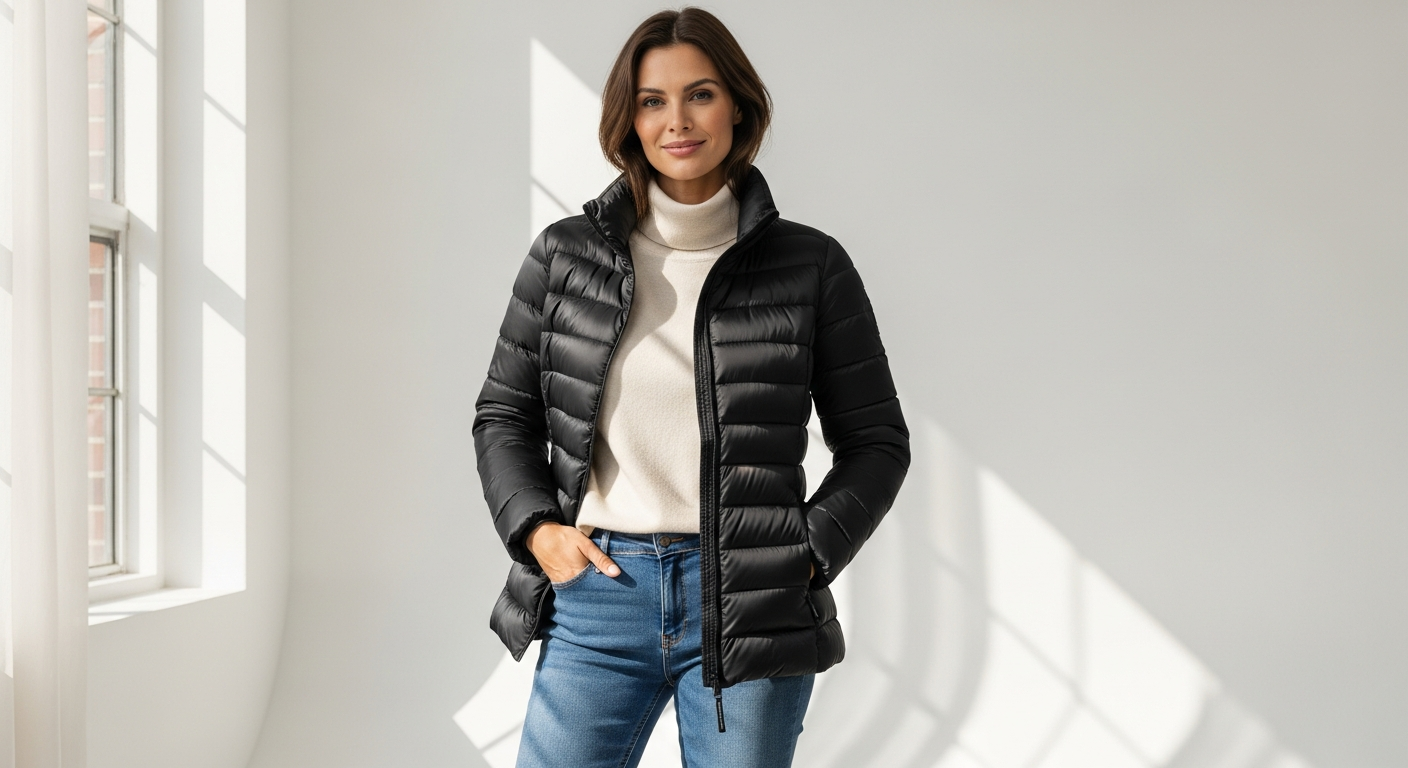
Master winter layering with the Orolay Women’s Thickened Down Jacket. Discover how expandable design, side zippers, and 700+ fill power down work together for maximum warmth and versatility. Get expert tips inside.
Over 500,000 women have ditched their bulky parkas for something smarter. The secret? Understanding how to layer strategically with the right mid-layer piece. The Orolay Women's Thickened Down Jacket earned its Amazon Coat nickname for a reason—since 2017, this jacket has dominated winter fashion conversations, landing on Oprah's Favorite Things list and getting featured in New York magazine.
What makes it special isn't just the 90% duck down filling or the 700+ fill power. It's how the jacket's expandable design and innovative side zippers create a versatile layering system that adapts to your body and your lifestyle. The real magic happens when you understand how to use this jacket as your winter layering foundation.
The Expandable Design: Your Secret Weapon for Layering Flexibility
The loose fit of the Orolay jacket is deliberate. Rather than hugging your body like a second skin, it accommodates multiple layers without creating excess bulk or restricting movement. This means you can wear a thermal base layer, add a fleece mid-layer, and still move freely beneath the jacket—something impossible with traditionally fitted coats.
How the loose fit accommodates multiple layers without excess bulk
The jacket's silhouette gives you breathing room while maintaining a refined appearance. Unlike oversized parkas that look shapeless, the Orolay's design maintains structure through its ribbed cuffs and hood while allowing internal volume for layering. Women with different body shapes benefit equally from this approach—smaller frames get comfortable room to layer without drowning in fabric, while curvier builds appreciate the coverage without the jacket clinging awkwardly.
The role of side zippers in creating adjustable insulation
Side zippers are game-changers for temperature regulation. Zip them closed, and you're sealed in a cocoon of warmth with the 700+ fill power down providing full insulation. Unzip them, and you create vents along your torso without removing the jacket entirely. This matters immensely during active pursuits—a brisk walk that generates internal heat becomes manageable when you can vent without getting cold again.
Why 700+ fill power down compresses efficiently under layers
Fill power refers to how much space each ounce of down occupies. At 700+, this jacket's down is exceptionally lofty, trapping air effectively while remaining compressible. When you layer underneath, the down conforms around your base and mid-layers rather than fighting against them. This efficiency means you gain insulation from the down and from your layers working together—not a situation where bulky materials fight each other.
Ribbed cuff design preventing cold air infiltration when wearing long sleeves
Those ribbed cuffs aren't purely aesthetic. They create a seal against your wrists and long sleeves, preventing wind from rushing up your arms. When you layer with a merino wool or synthetic long-sleeve base, the ribbed cuff locks in both materials, creating a continuous barrier from neck to fingertips.
How expandability accommodates different body shapes and layering preferences
Some women prefer minimal layering and maximum jacket insulation. Others build warmth through multiple thin, breathable layers. The Orolay's expandable design accommodates both approaches without compromise. You're not locked into one layering philosophy—you can experiment until you find what your body responds to best.
Real-world scenarios where the adjustable design shines
Picture your morning commute in November. You leave home when it's 38°F and arrive at an office heated to 72°F. With the Orolay, you zip up the side zippers during your walk, then partially unzip them once inside without removing the jacket. During lunch, you might fully unzip the side closures while keeping the front zipped, creating a vest-like effect. That afternoon outdoor meeting? Zip everything tight again. The jacket responds to your day instead of forcing you to make binary jacket-on or jacket-off decisions.
Mastering Base Layer Pairing for Maximum Warmth and Comfort
Your base layer sits directly against your skin, and its job is singular: move moisture away while retaining warmth. Get this right, and everything above it performs better.
Best fabric choices for base layers
Merino wool is the gold standard for cold-weather base layers. It naturally regulates temperature, wicks moisture efficiently, and doesn't trap odors like synthetics can. High-quality merino (typically 150-200 weight for layering under the Orolay) provides warmth without the bulk that heavy knits introduce.
Synthetic base layers made from polyester or polypropylene offer an excellent alternative, particularly if you have wool sensitivity. Modern synthetics wick moisture faster than merino and dry quicker, making them ideal for high-activity scenarios.
Silk-blend base layers occupy a middle ground—they're warmer than pure synthetics, less itchy than some merino options, and provide decent moisture management. They work particularly well for women who prefer lighter layering systems.
Thickness recommendations for different temperature ranges
For temperatures above 45°F, a lightweight base layer (100-150 weight) paired with the Orolay and no mid-layer typically suffices. Between 30°F and 45°F, move to a midweight base layer (150-200 weight) with the option of adding a fleece mid-layer. Below 30°F, a midweight base layer becomes essential, usually with a thermal mid-layer added beneath the jacket.
How the jacket's polyester lining works with various base layer materials
The Orolay's 100% polyester lining is slippery by design—it allows your base layer to move against it without friction. This matters more than you'd think. A rough lining can create drag against your base layer, reducing mobility and causing bunching. The smooth polyester lining lets your base layers glide beneath the down insulation, maximizing the system's effectiveness.
Avoiding moisture buildup: why breathability matters under down insulation
Down becomes useless when wet because compressed down loses all insulating properties. A breathable base layer that actively wicks moisture prevents this catastrophe. When you're layered under the Orolay and generating internal heat through activity, perspiration travels away from your skin through your base layer, then away from your body. The polyester lining and jacket shell allow some breathability, but your base layer does the heavy lifting. Choose materials rated for moisture-wicking—avoid cotton at all costs, as it absorbs and holds moisture.
Thermal efficiency gains from strategic layering versus wearing the jacket alone
Testing shows the Orolay jacket alone provides warmth to approximately 25°F in calm conditions. Add a quality merino wool base layer, and that effective temperature drops to around 15°F. Introduce a fleece mid-layer on top of the base layer, and you're comfortable in single-digit temperatures. The synergistic effect of layering creates warmth that exceeds the sum of individual pieces—a phenomenon called "layering multiplication" in outdoor gear circles.
Temperature testing: expected warmth levels with different base layer combinations
In calm 20°F conditions, a lightweight synthetic base layer plus the Orolay jacket keeps most bodies comfortable. At 10°F, that same setup becomes marginal unless you're moving consistently; adding a lightweight fleece mid-layer becomes prudent. In 0°F conditions, professional athletes and outdoor enthusiasts typically wear a quality merino base layer, a substantial fleece mid-layer, and the Orolay zipped completely closed. Wind speeds factor heavily—a 10°F day with 15 mph winds feels significantly colder than a calm 10°F day.
Explore the Orolay Women's Thickened Down Jacket and build your personalized layering system today.
Mid-Layer Strategy: Building Your Winter System
Your mid-layer creates a second insulating barrier while maintaining mobility. It's the invisible hero of winter layering.
Fleece mid-layers that complement the jacket's design without adding bulk
Fleece occupies a special niche—it insulates while remaining compressible. A 200-weight fleece mid-layer adds significant warmth without the thickness of heavy wool. The beauty of pairing fleece with the Orolay is that fleece compresses under the jacket's weight while maintaining its thermal properties. Unlike bulky wool sweaters that resist compression, fleece plays nicely with the expandable jacket design.
Synthetic insulation alternatives for wet conditions
The Orolay's primary weakness emerges in wet or humid environments because moisture compromises down insulation. For those situations, a synthetic insulation mid-layer becomes your solution. Polyester-based synthetic insulation (often called primaloft or similar brands) retains insulating properties even when damp. Layering a synthetic mid-layer under the Orolay in drizzly conditions maintains your warmth while the down provides wind protection.
Layering for extreme cold: when to add additional insulation
Below 5°F, even experienced winter athletes often add substantial insulation beyond a typical mid-layer. This might mean wearing a heavier-weight fleece or adding a lightweight synthetic parka beneath the Orolay. The expandable design accommodates this—the Orolay's side zippers can fully open to allow a bulkier mid-layer, then zip closed over it without restriction.
Balancing mobility and warmth through thoughtful mid-layer selection
More insulation doesn't automatically mean better. A woman commuting via public transit needs mobility to navigate crowded spaces, while someone sitting in a heated office needs less active insulation. Choose your mid-layer weight based on your activity level and environment, not on outdoor temperature alone. A lighter mid-layer with excellent base layer pairing often outperforms heavy insulation in mobility-demanding scenarios.
How the six pockets enhance functionality across layers
The Orolay features six substantial pockets—two hand-warming pockets with plush lining and reflective details, plus four additional storage pockets. When you're layered, these pockets become crucial. That reflective-lined hand warmer pocket accommodates tissues, chapstick, or your phone without creating unsightly bulges over your mid-layer. The additional pockets distribute weight evenly, preventing the jacket from sagging over multiple layers.
Seasonal transitions: adapting your layering strategy from fall to deep winter
Early winter (35-45°F) calls for a lightweight base layer and the Orolay jacket alone. Mid-winter (15-35°F) introduces a midweight base layer and optional lightweight fleece. Deep winter (below 15°F) means committing to midweight base layers, heavier fleece mid-layers, and sometimes a synthetic insulation layer beneath. Spring's transition reverses the process—remove layers gradually rather than making dramatic changes that confuse your body's thermoregulation.
The Side Zipper Advantage: Engineering Smart Versatility
Traditional jacket designs rely on a front center zipper. The Orolay's dual side zippers represent a fundamental rethinking of closure mechanics.
How side zippers differ from traditional center closures
A center zipper runs vertically down your chest and abdomen. Side zippers run horizontally along your ribs from armpit toward your back. This placement allows you to vent heat from your torso—where your body generates the most internal warmth during activity—without exposing your core to wind. A center-zipped jacket forces you to choose between sealed warmth and full ventilation; side zippers offer nuanced control.
Increased movement and space when unzipped for active wear
Unzip those side zippers, and the jacket transforms. Your torso gains freedom of movement and air circulation while the front and back remain closed, protecting your core and your back from wind. During intense hiking, this capability prevents overheating while maintaining weather protection—something impossible with traditional designs.
Enhanced wind protection and thermal sealing when fully zipped
Zipped completely, the side zippers create multiple layers of overlapping fabric that seal against wind penetration. The overlapping seams on side-zip jackets provide superior wind resistance compared to center-zip designs where the zipper itself can allow wind to whistle through gaps.
Venting options for temperature regulation during physical activity
You might partially unzip the side zippers—left one fully open, right one partially. This asymmetrical venting allows custom temperature control impossible with center-zip jackets. During a challenging hike, you could unzip until your internal temperature stabilizes, then re-zip as you enter a less strenuous section. This responsiveness eliminates the start-and-stop inefficiency of jacket removal and re-donning.
Why this design element reduces the need for multiple jackets
Without side-zip versatility, a woman might need three jackets: a light insulating layer for cool days, a substantial winter coat for cold days, and an active-wear jacket for high-exertion activities. The Orolay's side zippers condense all three functions into one piece. The expandable design handles varied insulation needs; the side zippers handle varied activity levels. You're genuinely moving toward a single-jacket winter wardrobe.
Practical applications: hiking, commuting, gym-to-street transitions
Imagine a winter hike. You start cold, so you zip everything closed. Within thirty minutes of climbing elevation, internal heat builds. You unzip the side zippers partially and adjust as needed. During a water break at the summit, you re-zip as your body cools. Commuting tells a similar story—zip for your walk, partially unzip on the train, unzip further when you arrive at your gym for a quick workout, then re-zip for the commute home. The jacket adapts to your day's complexity without requiring multiple pieces.
The Bottom Line: Building Your Winter Foundation
The Orolay Women's Thickened Down Jacket isn't just another winter coat—it's the intelligent foundation of a layering system that actually works. The expandable design, strategic side zippers, and premium 700+ fill power down create unprecedented versatility. When you pair this jacket with the right base layers and mid-layer pieces, you're not just staying warm; you're investing in a system that adapts to your body, your activities, and your climate.
Instead of buying three separate jackets for different scenarios, you're building one cohesive system. The jacket's expandability means it grows with your layering needs. The side zippers give you control over ventilation without sacrificing warmth. At $99.99-$149.99, you're getting performance that rivals jackets costing double or triple the price.
Start with your base layer—choose breathable merino wool or synthetic materials that wick moisture away from your skin. Add a mid-layer fleece or synthetic insulation when temperatures drop. Then slip into the Orolay jacket and adjust those side zippers based on your activity level. The six pockets keep your essentials accessible. The ribbed cuffs seal against cold air. The expandable design accommodates your body precisely as it is.
Winter doesn't have to mean sacrificing style, mobility, or comfort. It doesn't mean owning a closet full of jackets you wear a handful of times each season. The women who've made the Orolay their winter anchor understand something fundamental about cold-weather dressing: strategic layering beats thick, bulky insulation every time.
Get your Orolay Women's Thickened Down Jacket now and master the art of winter layering.