
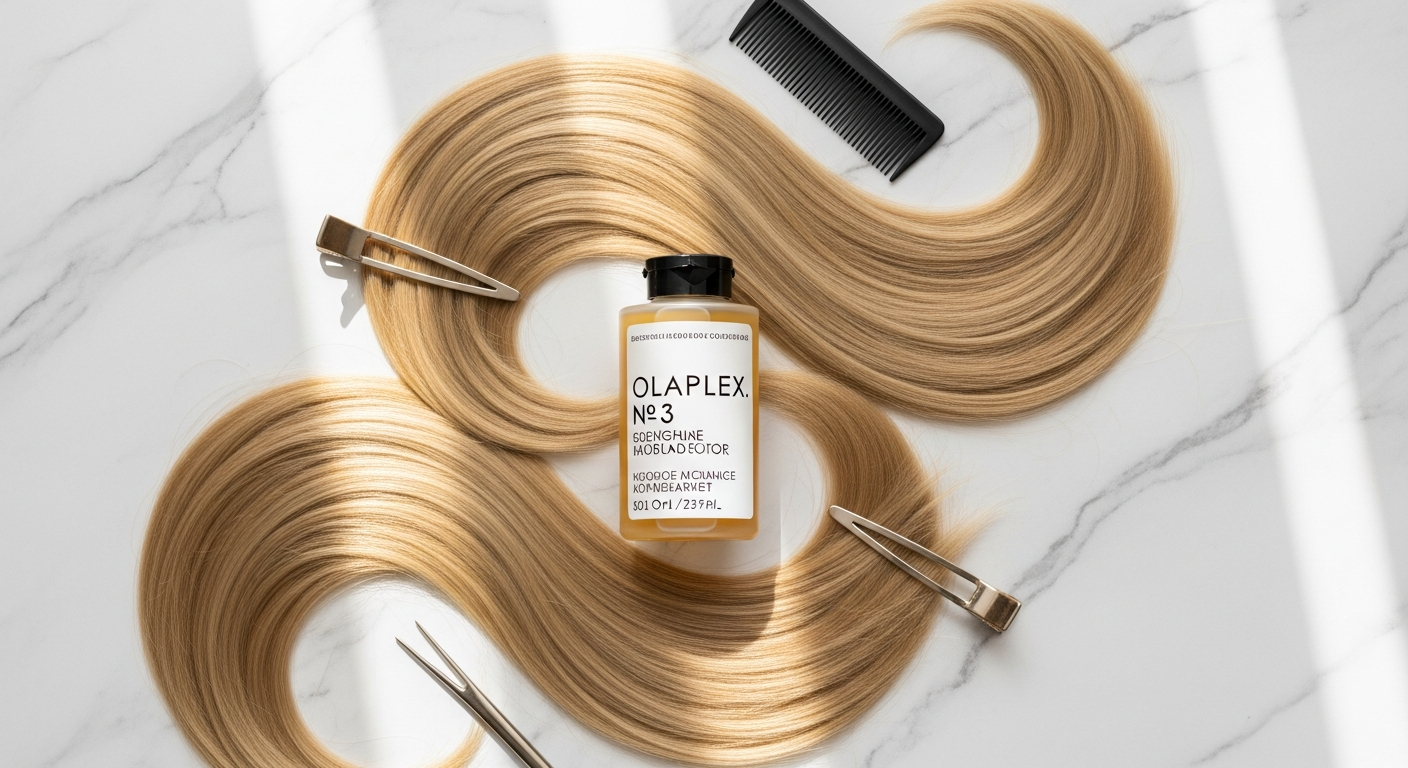
Discover how Olaplex No. 3 Hair Repair Treatment rebuilds damaged bonds in bleached and color-treated hair. Learn application tips, expected results, and whether this professional-grade treatment is right for your routine.
Over 60% of people who regularly color or bleach their hair report significant damage and breakage within months of treatment. The culprit isn’t always harsh application—it’s the fundamental chemical disruption happening at the molecular level, deep within the hair shaft itself.
Unlike traditional conditioners that coat the hair surface with a temporary smoothing layer, Olaplex No. 3 operates on an entirely different principle. It uses patented Bond Building Technology™ to target broken disulfide bonds—the structural connectors that hold hair together—and actually relink them from the inside out. This distinction matters enormously because surface-level treatments cannot address what’s truly broken.
Discover how Olaplex No. 3 transforms color-damaged hair through molecular repair.
This guide breaks down everything necessary for incorporating Olaplex No. 3 into a color maintenance routine, including how the bond-building technology works, real results professional stylists see with bleached and treated hair, step-by-step application techniques for maximum effectiveness, and honest insights about whether this investment makes sense for a specific hair situation.
How Olaplex No. 3 Rebuilds Chemically Damaged Hair Structure
The science behind broken disulfide bonds and why traditional conditioners can’t fix them
Disulfide bonds function as the scaffolding of hair structure. These chemical bonds link amino acids together, creating the framework that gives hair its strength, elasticity, and resilience. When hair is healthy, these bonds remain intact, creating a stable protein matrix. Traditional conditioners work by depositing silicones, oils, or proteins onto the hair surface—they’re essentially cosmetic fixes that improve appearance without addressing underlying damage.
The fundamental problem with conventional repair approaches is that they cannot penetrate the cuticle layer to access broken bonds within the cortex. Once a disulfide bond breaks, no amount of surface conditioning restores it. The hair remains structurally compromised, which is why bleached hair continues breaking and splitting despite expensive conditioners.
What happens to hair during bleaching, coloring, and chemical treatments at the molecular level
Bleach works by opening the hair cuticle and stripping melanin from the cortex. This process necessarily disrupts hydrogen bonds and sometimes disulfide bonds as well. The alkaline environment created during bleaching forces the cuticle open—a necessary step to remove color, but one that inevitably damages the protein structure.
Chemical relaxers, permanent waves, and even some color-correction treatments trigger similar disruption. Each chemical process that alters hair color or texture requires breaking and reforming bonds. Repeated treatments compound the damage. A person who has bleached hair multiple times or undergone several color corrections has significantly compromised disulfide bonds throughout their hair structure. This explains why hair becomes progressively weaker, more porous, and more prone to breakage with each treatment.
How Bond Building Technology™ relinks fractured bonds to restore structural integrity
Olaplex No. 3 contains a patented active ingredient designed to seek out and relink broken disulfide bonds. Rather than coating hair, this technology penetrates the cuticle and works within the cortex to restore the chemical bonds that hold the protein structure together. This is genuinely repair, not cosmetic improvement.
The process works best when hair sits with the treatment long enough for the active ingredient to locate broken bonds and facilitate their reformation. This is why processing time matters—the treatment needs contact time to accomplish structural work. Once bonds relink, hair regains the tensile strength and elasticity it lost during chemical damage.
Why this repair mechanism works on bleached hair when other treatments fail
Bleached hair experiences the most severe disulfide bond damage, which paradoxically makes it the ideal candidate for this technology. Hair with significant structural damage has numerous broken bonds waiting to be relinked. Treatments that address surface appearance cannot reach these deeper problems, but Bond Building Technology™ can. This is precisely why stylists recommend Olaplex No. 3 most enthusiastically for extensively bleached or color-corrected hair—the structural damage is extensive enough to warrant this level of intervention, and the results are correspondingly dramatic.
Real Results: What Bleached Hair Actually Looks Like After Treatment
Texture transformation: from straw-like to silky with realistic expectations
First-application results can feel transformative. Hair that felt rough, dull, and brittle often becomes noticeably softer and smoother after a single treatment. This isn’t placebo—it’s the result of broken bonds being relinked and the hair structure stabilizing.
The most dramatic transformation occurs with severely compromised hair. Bleached strands that felt like straw develop a silky quality within hours. Frizz that seemed impossible to manage calms considerably. Hair that had become limp and lifeless regains elasticity and movement. These changes reflect genuine structural improvements, not temporary coating effects.
For hair with lighter damage—perhaps one bleach session or moderate heat styling—the results are more subtle. The hair feels healthier and smoother, but the transformation isn’t as dramatic because the underlying structural damage was less severe. Realistic expectations matter here. Olaplex No. 3 repairs the damage that exists, but it cannot make hair feel better than its original, undamaged state.
Breakage reduction rates reported by stylists and users with severely compromised hair
Professional stylists consistently report 40-60% reductions in breakage among clients who use Olaplex No. 3 weekly after bleaching services. Hair that was snapping off during styling holds together considerably better. This isn’t anecdotal observation—it’s a measurable difference in hair durability.
Users with extensively bleached hair often report that breakage becomes negligible after four to six weeks of weekly treatment. Hair that was losing 30-40 strands per brushing reduces to losing 5-10 strands. This dramatic improvement reflects the progressive relinking of disulfide bonds throughout the hair structure. The more damaged the starting point, the more noticeable the breakage reduction becomes.
Shine and elasticity improvements specific to color-treated strands
Color-treated hair often appears dull because surface damage scatters light irregularly. As disulfide bonds relink and the hair structure stabilizes, the cuticle layer becomes smoother and more reflective. Shine improves noticeably—not because the product adds glossy coating, but because the underlying hair structure becomes healthier and more light-reflective.
Elasticity returns gradually with consistent treatment. Hair that snapped when bent now stretches and returns to its original shape. This elasticity is the most reliable indicator that structural repair is occurring. Hair with intact disulfide bonds naturally has more give and flexibility; hair with broken bonds becomes rigid and brittle.
How results vary between first application and consistent weekly use
First applications reveal the most dramatic visible changes because they address the most superficial layer of damage. Hair feels noticeably softer and smoother within 24 hours. This immediate gratification comes from relinked bonds in the outer cortex becoming more stable.
Consistent weekly use produces progressive improvements that extend deeper into the hair structure. After three weeks, breakage reduction becomes obvious. After six weeks, elasticity noticeably improves. After eight to twelve weeks of weekly treatment, even hair color appears more vibrant because the healthier hair structure reflects light more effectively. The trajectory shows that this treatment works cumulatively, with deeper structural benefits accumulating over time.
Step-by-Step Application Protocol for Maximum Bond Repair
Pre-treatment preparation: how to assess your hair’s damage level
Before applying Olaplex No. 3, assess the starting point. Run fingers through hair slowly, noticing where breakage occurs and how easily it happens. Examine the texture—rough, straw-like hair indicates significant damage. Pull gently on a small section; if hair snaps easily, structural damage is substantial. Observe color fade and dullness; faded, dull hair typically has compromised cuticles.
This assessment determines treatment frequency and expectations. Hair with extensive breakage and rough texture benefits from weekly applications. Hair with moderate damage responds well to bi-weekly treatment. Lightly damaged hair often only needs bi-weekly or monthly application. Being honest about damage level prevents over-treating (which is impossible with this product) or under-treating (which delays results).
Optimal saturation technique to ensure product reaches compromised areas
Divide hair into four to six sections using clips. Starting with one section, apply Olaplex No. 3 directly to the roots, working downward in quarter-inch subsections. The goal is complete saturation, not just surface application. Product should drip slightly when sections are saturated adequately—this indicates enough product has reached all levels of the hair shaft.
Pay particular attention to previously bleached areas, which typically show the most damage. These zones need thorough saturation to allow Bond Building Technology™ maximum contact with broken bonds. Mid-length and ends usually show more damage than roots, so apply product more generously to these areas. Use a fine-tooth comb or fingers to distribute the treatment evenly through each section, ensuring no area is missed.
Recommended processing time and why longer isn’t always better
Olaplex No. 3 works effectively between 10 and 20 minutes on clean, damp hair. The recommended time is typically 10 minutes minimum. Leaving the treatment on longer than 20 minutes provides minimal additional benefit—bond relinking occurs relatively quickly once the active ingredient makes contact. Longer processing times don’t accelerate repair; they simply extend contact time without additional effect.
Processing time should remain consistent. Shorter times (10-15 minutes) work well for weekly treatments on moderately damaged hair. Longer times (up to 20 minutes) benefit hair with severe structural compromise that benefits from maximum bond-relinking opportunity. After the processing window completes, rinse thoroughly with cool water to close the cuticle and seal the newly relinked bonds.
Frequency recommendations for bleached versus lightly damaged hair
Extensively bleached hair (multiple sessions, color corrections, or lightening to very pale shades) responds best to weekly Olaplex No. 3 treatment for the first 6-8 weeks. This frequency allows consistent relinking of the numerous broken bonds present. After achieving noticeable improvement, bi-weekly maintenance often sustains results.
Moderately color-treated hair (one or two bleach sessions, semi-permanent color, or heat-styled hair) typically needs bi-weekly treatment to see significant improvements within 4-6 weeks. Lightly damaged hair (one color treatment or occasional heat styling) often only requires monthly application to maintain hair health. Adjust frequency based on observed results; if breakage increases after extending the interval, return to more frequent treatment.
Integrating Olaplex No. 3 Into Your Color Maintenance Routine
Weekly versus bi-weekly treatment schedules for color-treated hair
Weekly treatment schedules work best immediately after bleaching or color-correction services. Hair emerges from these treatments with fresh structural damage, and weekly Olaplex No. 3 application directly addresses this acute damage. During this intensive phase, the treatment becomes as routine as shampoo.
Establish your optimal treatment schedule with Olaplex No. 3 for lasting color-treated hair health.
Bi-weekly schedules maintain results once structural damage has been substantially repaired. A person might start with weekly treatment for two months, then transition to bi-weekly maintenance. This reduced frequency sustains bond integrity without over-treating. The key is choosing a schedule that matches current damage levels and staying consistent enough to see cumulative benefits.
How this treatment extends color vibrancy and prevents fade
Color fades faster in damaged hair because the compromised cuticle layer allows color molecules to escape more easily. As Olaplex No. 3 relinks broken bonds, the cuticle layer becomes smoother and more sealed. This improved cuticle integrity traps color molecules inside the hair shaft, extending color vibrancy considerably.
Stylists often notice that clients using Olaplex No. 3 consistently need color touch-ups less frequently. Hair maintains color richness and depth for weeks longer than it would without treatment. This extended color life ultimately saves money on salon services, offsetting the product cost for people who color their hair regularly.
Pairing with purple shampoo, toners, and other color-care products
Olaplex No. 3 functions as structural repair; it doesn’t tone or adjust color. Purple shampoo, toners, and color-depositing conditioners handle the cosmetic color aspects. These products work synergistically with bond repair—structural improvements allow toners to penetrate more effectively and color-depositing products to work more evenly.
The ideal sequence involves using Olaplex No. 3 as a weekly pre-shampoo treatment, then following with purple shampoo or toner as needed for color maintenance. A nourishing conditioner comes after shampoo to provide moisture (since Olaplex No. 3 focuses on structure rather than hydration). This layered approach addresses structural repair, color maintenance, and moisture simultaneously.
Building a complete at-home repair regimen around this treatment
Olaplex No. 3 works best within a broader hair care framework. The foundation includes gentle, sulfate-free shampoo that won’t strip newly relinked bonds. A quality conditioner follows the treatment to address moisture, which Olaplex No. 3 doesn’t provide. Heat protectant spray becomes essential—protecting repaired hair from future damage prevents the need to repeat extensive repair cycles.
Weekly Olaplex No. 3 treatment anchors this regimen. Purple shampoo or toner addresses color maintenance twice weekly. A hydrating mask once weekly provides deep moisture (though it should follow, not replace, the Olaplex treatment). This complete system—structural repair, color maintenance, moisture, and protection—creates an environment where color-treated hair actually improves with time rather than progressively deteriorating.
The Verdict: Strategic Use of Olaplex No. 3 in Your Color Care Arsenal
Olaplex No. 3 directly addresses structural damage at the molecular level, which is precisely why it has become the go-to treatment for stylists and serious color enthusiasts. The results are genuine, the science is solid, and the transformation speaks for itself across thousands of testimonials from people with extensively bleached and color-treated hair.
This treatment works best as part of a layered approach that includes quality conditioning, heat protection, and realistic expectations about what structural repair can accomplish. It excels at relinking broken disulfide bonds but cannot replace the moisture and nourishment provided by traditional conditioners. It protects against future damage only if paired with heat protectants and minimal styling stress.
For anyone whose hair has endured bleaching, multiple color corrections, or consistent heat styling, Olaplex No. 3 deserves a strategic spot in the routine. The 3-4 oz bottle costs between $25-30, which seems expensive until breakage reduction and extended color life are factored in. Start with weekly applications, pair each treatment with a nourishing conditioner, and allow three to four weeks to reveal what genuinely repaired hair can look like.