
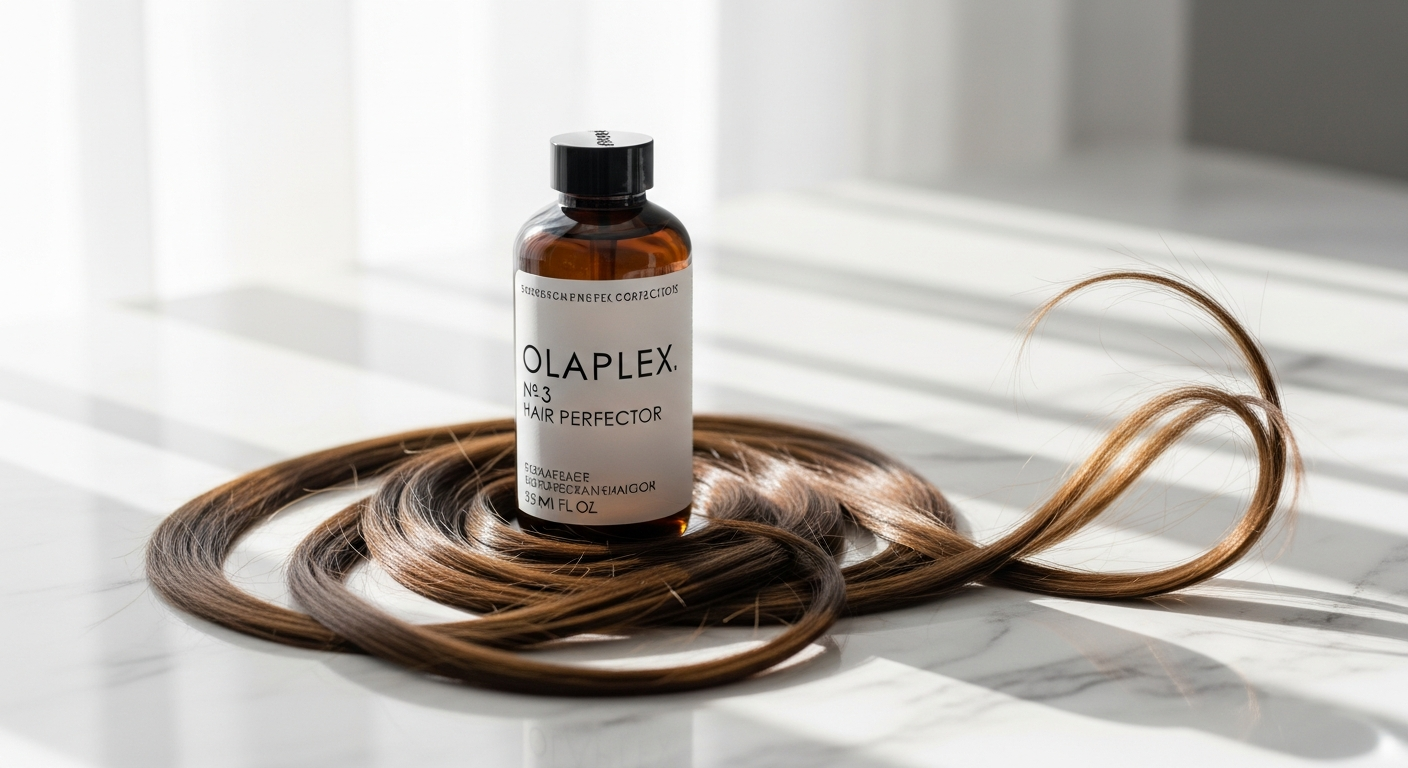
Discover how Olaplex No. 3 Hair Perfector uses patented bond-repair technology to restore color-treated and damaged hair. Learn the science, application tips, and whether it’s worth the investment.
Over 80% of people who color their hair report experiencing breakage, brittleness, or split ends within weeks of their treatment. If you've ever wondered why your freshly highlighted strands feel like straw or why your bleached ends snap off at the slightest tug, the culprit is broken disulfide bonds—the molecular structures that hold your hair together.
Olaplex No. 3 Hair Perfector takes a fundamentally different approach to hair repair by working at the molecular level to rebuild the actual bonds that chemical processes and heat styling destroy. Rather than coating your strands with silicones or heavy oils, this at-home treatment has become a staple in professional salons and home bathrooms worldwide.
How Bond-Repair Technology Actually Works
The disulfide bond breakdown
Your hair's structure relies on disulfide bonds—molecular cross-links that give your strands strength and elasticity. Chemical treatments like coloring and bleaching actively break these bonds. Heat styling from blow dryers, flat irons, and curling tools compounds the damage, as does prolonged sun exposure and environmental pollution. When these bonds fracture, your hair loses its structural integrity, leading to breakage, brittleness, and that straw-like texture you're trying to escape.
Bis-Aminopropyl Diglycol Dimaleate explained
Olaplex's proprietary ingredient, Bis-Aminopropyl Diglycol Dimaleate, works by identifying broken disulfide bonds and rebuilding them from within the hair cortex. This patented technology doesn't just coat the hair surface—it penetrates deep into the internal structure where damage occurs. The molecule actively reconnects severed bonds, restoring the hair's original architecture at a fundamental level. This is why results feel substantive rather than temporary.
Why it's different from conditioners
Most conditioners work through surface conditioning, depositing silicones, oils, and proteins that temporarily smooth the hair cuticle and create a protective coating. These products feel luxurious but don't address underlying structural damage. Olaplex No. 3 operates entirely differently. It ignores the cuticle layer and targets the problem itself—the broken bonds within the hair shaft. This distinction explains why users experience lasting improvements rather than a wash-and-fade effect.
The science of hair strength
As disulfide bonds rebuild, your hair's fundamental resilience improves. Strands become more elastic, less prone to snapping, and better able to withstand tension from styling and handling. This molecular reconstruction translates directly into reduced breakage, improved elasticity, and hair that feels genuinely stronger rather than just smoother on the surface.
Molecular-level restoration
Visible improvements typically emerge after the first application, though the most dramatic transformations occur over 4–8 weeks of consistent weekly use. This timeline reflects the time required for bonds to fully stabilize and for cumulative repair to reach deeper into the hair shaft. The depth and permanence of results depend on consistent application and ongoing protection from future damage.
The Ideal Candidate: Who Needs This Treatment Most
Color-treated and bleached hair
Anyone who colors, highlights, or bleaches their hair experiences the most significant benefits from Olaplex No. 3. Bleaching, in particular, causes severe disulfide bond breakage, leaving hair vulnerable to breakage and split ends. Users with color-treated hair report dramatic improvements in hair quality after a few weeks of treatment, making this demographic the ideal candidate for this product.
Heat-styling enthusiasts
Regular blow-drying, flat-ironing, and curling compound bond damage over time. If you style your hair with heat three or more times weekly, you're continuously creating new damage. Olaplex No. 3 becomes essential maintenance, not optional luxury. It allows you to continue your styling routine while preventing the cumulative deterioration that typically occurs.
Chemical processing survivors
Those who've undergone relaxers, perms, or multiple color corrections live with particularly compromised hair. Successive chemical treatments layer damage upon damage, creating a situation where regular conditioners prove inadequate. For this group, bond-repair technology offers real restoration rather than superficial improvement.
Textured and curly hair
Curly and textured hair types are inherently more vulnerable to bond breakage due to their structure and the styling techniques required to manage them. Protective styling, manipulation, and environmental stress all accelerate bond damage in these hair types. Textured-hair users often report exceptional results with consistent Olaplex No. 3 use.
Fine hair with breakage concerns
Fine strands might seem delicate for intensive treatments, but Olaplex No. 3 actually works beautifully on fine hair because it provides structural repair without heavy buildup. Fine hair suffering from breakage gains strength without the weighed-down feeling that other treatments create.
Long-haired individuals
The longer your hair, the more cumulative damage it experiences along the shaft. Ends that have been exposed to styling, environmental stress, and handling for months or years need significant repair. Long-haired users often see the most dramatic transformations because they have the most damage to address.
Application Protocol: Getting Maximum Results
Pre-treatment preparation
Start with clean, damp, towel-dried hair. This preparation step matters significantly because damp hair allows the product to penetrate more effectively than completely dry hair, while the towel-drying prevents excess water from diluting the formula. Never apply to soaking-wet hair, as this reduces the product's potency.
Dosage by hair length and thickness
For short hair (chin-length or shorter), use approximately a quarter-sized amount. Medium-length hair requires roughly a half-dollar amount, while long hair or thick, dense textures need a full dollar-sized portion or more. The goal is complete saturation from roots to ends without excess product dripping away unused. Err on the side of slightly more product rather than less—the treatment will only work where it's applied.
Root-to-end application technique
Section your hair into 4–6 manageable sections using clips. Apply the product starting at the roots, working through to the mid-lengths, then focusing on the ends. Roots and damaged lengths need the most attention. Use a wide-tooth comb to distribute the product evenly and ensure every strand receives treatment. Pay special attention to areas that receive the most heat styling or color processing.
Timing recommendations
The minimum processing time is 10 minutes, though many users achieve better results with 20–30 minutes. For intensive repair on severely damaged hair, leaving the treatment on for an hour or even overnight (with proper precautions to protect your pillow or clothing) significantly enhances results. Extended time allows deeper bond reconstruction.
Frequency guidelines
Weekly application is standard for maintenance and progressive improvement. Those with severely compromised hair may use the treatment two to three times weekly initially, then transition to weekly use once hair stabilizes. Frequency can be adjusted based on your hair's condition and how quickly you see improvements.
Rinsing and follow-up care
Rinse thoroughly with cool water until the rinse water runs clear. Cooler water helps seal the cuticle and lock in the bond repair. Follow with your regular shampoo and conditioner. The conditioner becomes especially important because Olaplex No. 3 isn't a moisturizer—pairing it with hydrating conditioner prevents the dryness some users experience.
Real-World Results: What to Expect and Timeline
Immediate improvements
After your first application, your hair will likely feel noticeably softer and smoother. Shine enhancement occurs immediately as the treatment smooths the cuticle layer. Texture improvements register right away, though more profound structural changes develop over time. These first-use sensations confirm that the product is active and working.
Progressive strengthening
Over the next 2–4 weeks of weekly use, you'll observe reduced breakage when brushing, styling, or washing. Split ends begin improving as the hair shaft strengthens from within. Hair becomes easier to manage, requires less force to style, and feels more resilient to manipulation. This progressive improvement reflects ongoing bond reconstruction.
Cumulative benefits
By week 4–8 of consistent weekly use, results compound significantly. Hair that was breaking apart becomes noticeably stronger. Color vibrancy improves as the reinforced hair structure better retains pigment. Overall manageability and shine reach peak levels. The longer you maintain the regimen, the more pronounced and lasting these benefits become.
Before-and-after transformations
Users frequently report transformations so dramatic that friends and family comment on their hair's improved appearance. Typical improvements include visibly shinier, smoother texture; significantly reduced breakage; improved curl definition (for curly hair); better color retention; and hair that feels genuinely healthy rather than compromised. These aren't subtle changes—they're noticeable enough to merit compliments.
Realistic expectations for different damage levels
Mildly damaged hair shows improvement within 1–2 weeks. Moderately damaged hair requires 4–6 weeks to show substantial results. Severely damaged or bleached hair may need 8–12 weeks of consistent use before major transformations occur. Unrealistic expectations about timeline lead to product abandonment, so honesty about your hair's damage level matters.
Maintenance phase
Once you've achieved desired results, weekly application maintains improvements and prevents new damage from accumulating. Some users transition to every-other-week use after results stabilize, though this depends on ongoing heat styling and environmental stressors. The commitment to consistency is non-negotiable—sporadic use won't sustain results.
Ingredient Transparency and Clean Beauty Standards
What's inside
The formula centers on the patented Bis-Aminopropyl Diglycol Dimaleate alongside water, glycerin (a humectant that draws moisture into the hair), and a minimal list of other conditioning agents. The simplicity of the formula reflects the focus on bond repair rather than complex cosmetic enhancement. Each ingredient serves a functional purpose in the repair mechanism.
What's excluded
Olaplex No. 3 contains no parabens, sulfates, or phthalates. These exclusions matter because parabens have faced safety scrutiny, sulfates strip natural oils and can cause irritation, and phthalates pose endocrine-disruption concerns. The clean formulation reduces the risk of scalp irritation and aligns with modern beauty standards prioritizing ingredient safety.
Cruelty-free and vegan certification
The product is both cruelty-free (never tested on animals) and vegan (contains no animal-derived ingredients). These certifications appeal to conscious consumers and reflect the brand's commitment to ethical beauty practices.
Compatibility with sensitive scalps
Most users tolerate the formula well, even those with sensitive scalps. However, some individuals experience mild irritation, particularly if they have underlying scalp conditions like eczema or psoriasis. A patch test on a small area of scalp before full application helps identify potential reactions.
Synergy with other Olaplex products
Olaplex No. 3 works as a standalone treatment but integrates into a broader product system. Olaplex No. 5 and No. 6 are leave-in conditioners that complement the intensive repair. Olaplex No. 1 and No. 2 are professional salon treatments that provide similar bond repair at the salon. Using multiple Olaplex products creates comprehensive, multi-level repair, though the No. 3 treatment delivers significant results independently.
Safety for all hair types
The formula doesn't discriminate based on texture, porosity, or curl pattern. Straight, wavy, curly, coily, fine, thick, oily, and dry hair all benefit from bond repair. This versatility explains why the product maintains popularity across diverse user demographics globally.
Cost-Benefit Analysis: Is the Investment Worth It?
Price point breakdown
At $25–$30 for a 3.3 oz bottle, Olaplex No. 3 costs significantly more than drugstore conditioners, which typically run $5–$10 for comparable volumes. This premium reflects the patented technology, ingredient quality, and manufacturing standards. The price stings initially, but understanding the investment's true value requires context.
Cost per use calculation
A 3.3 oz bottle yields approximately 4–6 applications depending on hair length and thickness. This translates to roughly $5–$7 per use. For comparison, a single salon bond-repair treatment costs $50–$100 and requires professional application. From this perspective, at-home use becomes genuinely economical.
Comparison to salon treatments
Professional salon bond-repair treatments deliver similar molecular repair but at significantly higher cost. A single salon appointment could fund 3–4 months of at-home Olaplex No. 3 treatments. Over a year, the savings compound substantially while delivering comparable results through consistent home use.
Longevity of results
A 3.3 oz bottle lasts 4–6 weeks for weekly users with shoulder-length to long hair. For shorter hair or less frequent use, it extends longer. Larger sizes—particularly the 16.9 oz or 33.8 oz bottles—offer significantly better value per ounce. The cost per application drops meaningfully when purchasing larger volumes.
Long-term hair health savings
This is where true ROI becomes apparent. Hair protected by consistent bond repair requires fewer corrective color appointments, extends time between trims, and reduces the need for intensive professional treatments. Over a year, these savings often exceed the product's cost. Hair that breaks less requires fewer haircuts; color that holds longer reduces corrective appointments; and overall health reduces the need for damage-recovery salon sessions.
ROI for color-treated hair
For those who color their hair professionally or at home, the investment pays immediate dividends. Repaired hair holds color longer, fading less dramatically between appointments. If you color every 4 weeks, extending that to 6 weeks through improved hair integrity saves hundreds annually. Similarly, reducing breakage between appointments means fuller-looking hair and fewer emergency trims.
Limitations and Honest Considerations
Not a hydrating conditioner
Olaplex No. 3 repairs structural damage but doesn't primarily hydrate. Some users with naturally dry hair or those with severely dehydrated strands report that the treatment alone leaves hair feeling dry without adequate moisturizing conditioner following application. If you have very dry hair, plan to use a rich conditioner after each Olaplex treatment.
Bottle size constraints
The standard 3.3 oz bottle is relatively small. Those with thick, long, or densely textured hair may find a bottle depletes quickly, making cost per application higher than expected. Planning to purchase larger sizes if you commit to the treatment helps manage this reality.
Commitment to consistency
One-off applications deliver minimal lasting results. The treatment requires weekly commitment over weeks to demonstrate significant improvement. Users expecting immediate dramatic change after a single use will feel disappointed. This product rewards consistency and patience.
Scalp sensitivity
While most users experience no issues, some report mild scalp irritation, particularly during the initial applications. A small patch test before full application prevents unpleasant surprises. Users with diagnosed scalp sensitivities should introduce the product cautiously.
Realistic repair boundaries
Olaplex No. 3 rebuilds bonds, but severely damaged ends that are split and compromised may still require trimming. The treatment prevents future damage and repairs ongoing deterioration, but it cannot magically resurrect hair that's already beyond recovery. Setting realistic expectations about what repair looks like matters.
Climate and lifestyle factors
Continued heat styling, sun exposure, and chlorine exposure create new damage that the treatment must continually address. Those who style intensively with heat daily will see faster reaccumulation of damage than those who minimize heat. Lifestyle factors directly influence how well results are maintained.
Pro Tips for Maximizing Your Olaplex No. 3 Experience
Strategic timing
Apply the treatment the day or night before scheduled heat styling or color appointments. This timing allows your hair to enter these damaging processes with reinforced bonds, providing a protective foundation. Similarly, using it before vacations involving sun exposure or swimming provides protective repair.
Extended processing
While 10 minutes is the minimum, extended processing times significantly enhance results. Applying the treatment and leaving it on for 30 minutes, an hour, or even overnight (protected with a shower cap to avoid staining pillows) allows deeper bond reconstruction. Overnight applications work particularly well for intensive repair on severely damaged hair.
Layering with other products
Combining Olaplex No. 3 with Olaplex No. 5 or No. 6 leave-in conditioners creates comprehensive multi-level repair. Apply No. 3 as a weekly intensive treatment, then use No. 5 or No. 6 on damp hair between treatments for ongoing protection and hydration.
Adapting frequency seasonally
Summer heat and winter dry air both accelerate hair damage. Increasing application frequency during these seasons (perhaps to twice weekly rather than once) provides extra protection when environmental stressors peak. Reducing frequency during gentler seasons when you style less can extend product longevity.
Tracking progress
Document your hair's journey by taking photos before your first application and at regular intervals (weekly or bi-weekly). Visual comparisons reveal improvements that might feel subtle in daily handling. Tracking progress also maintains motivation to continue consistent use.
Stretching product longevity
Precise dosing prevents waste without sacrificing results. Use exactly the amount needed for full saturation rather than excess. Additionally, sectioning hair thoroughly ensures even distribution, allowing you to use slightly less product while maintaining full coverage. Efficient application extends each bottle's lifespan.
The Verdict: Should You Add It to Your Routine?
If your hair has survived bleaching, frequent coloring, or aggressive heat styling, Olaplex No. 3 Hair Perfector delivers measurable repair that typical conditioners simply cannot match. The patented bond-building technology addresses damage at its source—the broken disulfide bonds within your hair shaft—rather than masking problems with temporary moisture. For color-treated hair especially, this treatment becomes an investment in longevity, vibrancy, and structural integrity. The premium price stings initially, but when you factor in reduced breakage, fewer corrective color appointments, and extended time between trims, the ROI becomes clearer. Start with the standard 3.3 oz bottle to test compatibility with your hair type and scalp. If results impress you, consider larger sizes for better value. For those serious about restoring and maintaining damaged hair, this is a game-changer worth the investment.