
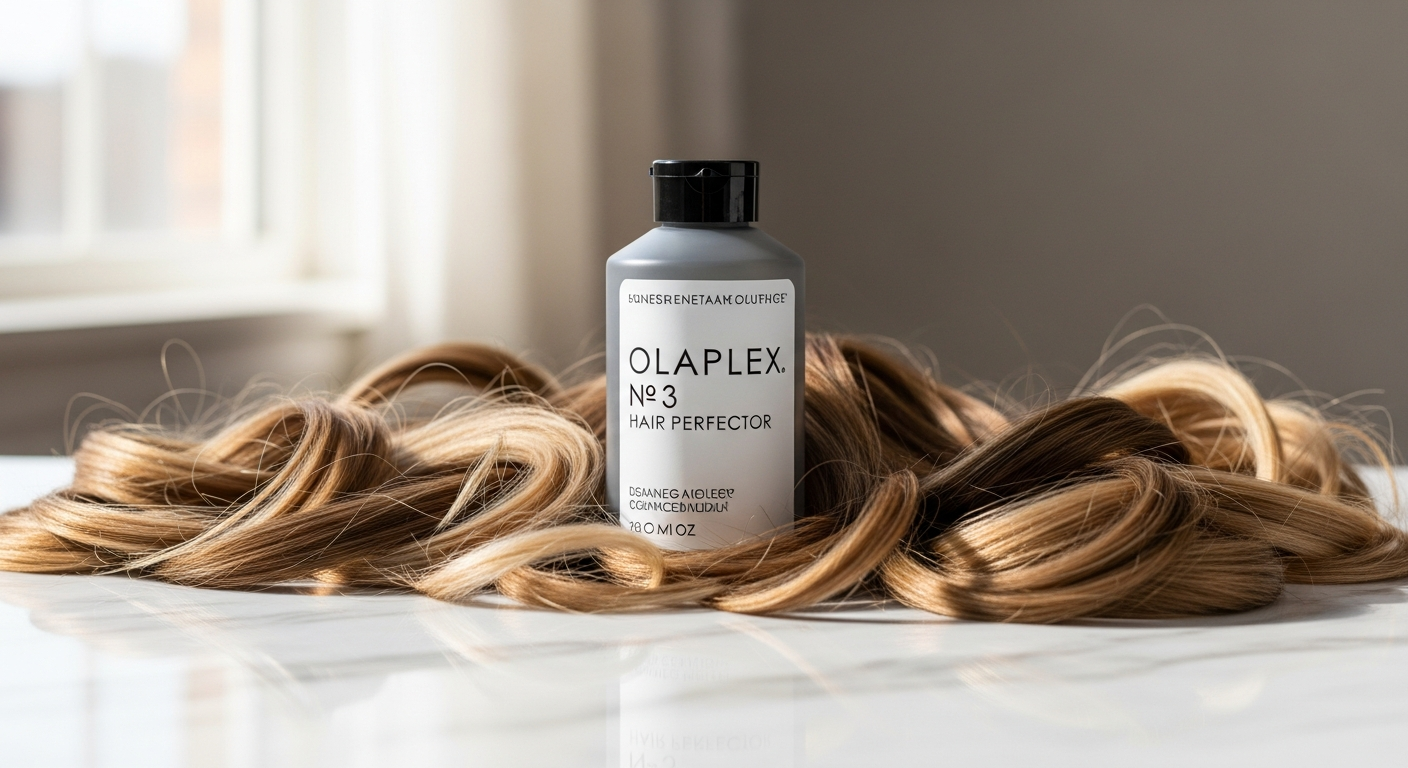
Discover how Olaplex No. 3 Hair Perfector repairs damaged hair at the molecular level. Learn the science, application tips, and whether this bond-repair treatment is worth the investment for your hair care routine.
Chemical treatments, heat styling, and environmental stress damage approximately 80% of women’s hair at some point in their lives—yet most of us reach for products that only mask the problem temporarily. The bathroom shelves overflow with conditioners and serums that promise transformation, only to deliver a few days of shine before reality sets in. Your hair still breaks, still feels brittle, still lacks the vitality you remember.
Unlike traditional conditioners that coat the hair shaft, Olaplex No. 3 is a pre-shampoo treatment engineered with patented bond-repair technology that works at the molecular level, specifically relinking broken disulfide bonds that form when hair undergoes chemical or heat damage. This distinction matters because it means the treatment addresses the root cause of damage rather than simply concealing it. The science behind it is as compelling as the results people report.
Discover how Olaplex No. 3 can restore your hair’s structural integrity.
How Olaplex No. 3 Repairs Hair at the Molecular Level
Disulfide Bond Breakdown
Hair’s strength comes from its structure, which relies on disulfide bonds—chemical bridges that hold the protein chains (keratin) together. When you bleach your hair, apply color treatments, use heat tools, or even brush too aggressively, these bonds break. Chemical processes are the most destructive. Bleach and permanent color literally crack open the hair’s protective cuticle layer and alter the proteins beneath, severing those crucial disulfide connections. Heat does the same thing, just more gradually. Each time you use a flat iron or blow dryer, you’re essentially applying controlled damage. Mechanical stress—from tight ponytails, rough brushing, or friction against pillowcases—contributes further degradation.
Once these bonds break, your hair loses its ability to hold moisture, protect itself, and maintain elasticity. The result is weak, porous hair that breaks easily and looks dull no matter what conditioner you use.
Bis-Aminopropyl Diglycol Dimaleate (The Active Ingredient)
This is where Olaplex’s patented technology enters the picture. Bis-Aminopropyl Diglycol Dimaleate is not a silicone, not a protein coating, and not a moisturizer. It’s a molecule specifically designed to seek out and interact with broken disulfide bonds. Think of it as a molecular matchmaker—it finds the broken ends of those disulfide bonds and facilitates their reconnection. This is fundamentally different from what standard conditioning ingredients do. A traditional deep conditioner might contain keratin, oils, or humectants that temporarily soften the hair cuticle, but they don’t rebuild anything. They just make damaged hair feel better temporarily.
The Olaplex molecule is engineered for one purpose: reconstruction.
Relinking Process
When you apply Olaplex No. 3 to your hair, the Bis-Aminopropyl Diglycol Dimaleate penetrates the hair shaft and begins reconnecting severed disulfide bonds. This doesn’t happen instantly—that’s why the treatment requires at least 10 minutes, and why many users extend it to 20 or 30 minutes for intensive repair. The relinking process is actually occurring during that waiting period. Your hair isn’t just being conditioned; it’s being chemically reconstructed.
This is why Olaplex feels different from other treatments. You’re not just coating your hair; you’re fundamentally changing its internal structure for the better.
Structural vs. Superficial Repair
The distinction between structural and superficial repair is why Olaplex commands the attention (and price premium) that it does. A silicone-based conditioner creates a temporary protective layer that washes out in one or two shampoos. The hair looks great while the product is in, but the underlying damage remains unchanged. Olaplex works differently. By relinking broken bonds, it creates lasting structural improvements. Even after you shampoo the treatment away, your hair is genuinely stronger because its molecular structure has actually been rebuilt.
This explains why users report cumulative benefits. The more consistently you use Olaplex No. 3, the more bonds get repaired, and the healthier your hair becomes over time. You’re not just maintaining damage; you’re actively reversing it.
Scientific Evidence
Olaplex’s bond-repair mechanism isn’t based on marketing claims alone. The technology has been validated through clinical studies and is widely endorsed by professional hairstylists. The company’s research demonstrates that the treatment significantly increases the tensile strength of damaged hair and reduces protein loss. Professional colorists and stylists use the full Olaplex system in salons because they’ve seen the results firsthand. When stylists recommend a product, particularly one used during professional treatments, that’s a meaningful endorsement.
Who Gets the Most Out of Olaplex No. 3 Treatment
Chemically Treated Hair
If your hair has been bleached, color-treated, or permanently waved, Olaplex No. 3 is essentially designed for you. Chemical treatments are the primary cause of disulfide bond breakage. Bleaching is the most aggressive—it doesn’t just change your hair color, it structurally alters your hair. Color-treated hair, even permanent color that’s gentler than bleaching, still disrupts the protein structure. Permanent waves chemically reshape your curl pattern by breaking and reforming bonds under controlled conditions. The aftermath of these treatments is exactly what Olaplex addresses. Someone with chemically treated hair will typically notice the most dramatic improvements because there’s the most structural damage to repair.
Heat-Damaged Hair
Those who regularly blow dry, flat iron, or use hot tools on their hair accumulate heat damage over time. Unlike chemical damage, which is acute and obvious, heat damage is cumulative and subtle. You might not realize how much damage has accumulated until your hair becomes difficult to style, breaks frequently, or loses its shine. Olaplex No. 3 repairs heat-damaged hair effectively because the mechanism of damage—broken disulfide bonds—is the same. Regular users of heat styling tools should consider Olaplex No. 3 not just as a repair treatment but as a protective investment.
Mechanically Stressed Hair
Breakage from brushing, tight hairstyles, or environmental friction contributes to damaged hair. This is often overlooked because it’s not as dramatic as bleaching, but the cumulative effect is real. People with longer hair, in particular, often deal with mechanical stress simply because longer hair is more fragile at the ends. Olaplex No. 3 helps by strengthening the hair, making it more resilient to mechanical stress going forward.
All Hair Types
Olaplex No. 3 works across hair types—straight, wavy, curly, and coily. However, the specific benefits sometimes vary. Curly and coily hair often benefits tremendously from bond repair because curls are naturally more fragile and prone to breakage. Straight hair tends to show faster visible results in terms of shine and smoothness. The underlying science remains consistent, but your hair texture will influence which improvements you notice first.
Severity Spectrum
For mild damage, occasional use (monthly or every other month) might be sufficient. For moderate damage, weekly use typically shows results within four weeks. Severe breakage and bleached hair often require more intensive protocols—weekly or even twice-weekly use for the first month, then weekly maintenance. Assessing your own damage level honestly helps you set realistic expectations about both results and product consumption.
Long Hair Considerations
Longer hair requires more product to achieve full saturation, particularly from mid-length to ends where damage typically concentrates. Someone with shoulder-length hair might use a quarter-sized amount per application, while someone with waist-length hair might need double that. This affects how quickly you’ll use through a bottle and influences the actual cost per application.
Step-by-Step Application Guide for Maximum Results
Pre-Treatment Preparation
Start with clean, damp hair—specifically, towel-dried hair. Shower first, then gently squeeze out excess water with a towel. Your hair should be damp, not dripping wet and not completely dry. This matters because dampness allows the treatment to distribute more evenly and penetrate more effectively than completely dry hair. Wet hair also swells slightly, making it more receptive to treatment. If your hair is already dry when you apply Olaplex, it’s less porous and the treatment won’t penetrate as effectively.
Amount to Use
The amount varies based on hair length and thickness. For shoulder-length fine hair, a quarter-sized amount is often sufficient. For medium-thickness, shoulder-length hair, use a dime to nickel-sized amount. For longer or thicker hair, a nickel to quarter-sized amount. For very long or very thick hair, you might need even more. It’s better to use slightly too much than too little, since insufficient product means incomplete saturation and therefore incomplete repair.
Saturation Technique
Apply the treatment in sections. Divide your hair into four to six sections (depending on thickness), then apply product to each section, working from roots to ends. Use your fingers or a wide-tooth comb to distribute the product evenly. The goal is complete saturation—every strand should be coated. Pay extra attention to the mid-lengths and ends, where damage typically concentrates. Some people apply it more generously to ends and work back toward roots. Others apply it section by section, carefully coating everything. The method matters less than the result: every part of your hair should have contact with the treatment.
Timing Options
The standard recommendation is 10 minutes minimum. However, this is truly a minimum—many users find that extended treatment times (20-30 minutes) deliver noticeably better results, particularly for severely damaged hair. Think of it this way: the longer the treatment sits, the more time the active ingredient has to find and relink broken bonds. For intensive repair sessions, 30 minutes is not excessive. For routine maintenance, 10 minutes is adequate. You can use this time productively—apply a sheet mask to your face, read, or relax.
The 3-Minute Express Version
Olaplex released a newer formulation claiming to deliver results in just 3 minutes. This is a significant time reduction, which appeals to busy people. However, the claim is somewhat debated among long-term users. The 3-minute version may work adequately for maintenance on minimally damaged hair, but for significant repair, the standard 10+ minute treatment appears to deliver more noticeable results. If you’re new to Olaplex, starting with the standard formulation and timing is advisable.
Rinsing Properly
Thorough rinsing is non-negotiable. Use lukewarm water and rinse until the water runs completely clear and you feel no residue between your fingers. Incomplete rinsing leads to product buildup, which eventually makes hair look dull and weighed down. Some people rinse, then rinse again just to be sure. This is not overkill—it’s the difference between getting full benefits and dealing with buildup issues later.
Follow-Up Care
After rinsing out Olaplex No. 3, shampoo and condition as normal. This is crucial. Olaplex No. 3 is not a conditioner, so your hair still needs moisture and hydration from a proper conditioner. The Olaplex treatment handles structural repair; your conditioner handles moisture and softness. Skipping the conditioner step means your hair might feel stronger but still dry. The combination of bond repair plus hydration is what delivers the full transformation.
Get started with your bond-repair treatment today.
Real Results vs. Realistic Expectations
Visible Improvements Users Report
Users consistently report four main improvements: increased softness, enhanced shine, reduced frizz, and smoother texture. These aren’t subtle changes—people often notice them within the first few applications. Softness is usually the first thing people comment on. Hair that’s been damaged tends to feel rough, almost straw-like. After Olaplex treatment, that changes noticeably. Shine returns because healthier hair reflects light more effectively than damaged, porous hair. Frizz decreases as the hair cuticle becomes more aligned and less prone to lifting. The overall texture becomes smoother because the internal structure is actually stronger.
Strength and Breakage Reduction
Reduced breakage is one of the most meaningful improvements. You’ll notice fewer hairs in your hairbrush, less breakage when you style your hair, and hair that feels more resilient overall. This doesn’t happen after one application—it’s cumulative. Most people notice measurable reduction in breakage within two to three weeks of consistent weekly use. By four to six weeks, the improvement is usually undeniable.
Before-and-After Scenarios
Someone with mild damage (light heat styling, one or two color treatments in the past year) might notice results after two to three applications. The change is noticeable but incremental. Someone with moderate damage (regular heat styling, frequent coloring) will likely see more dramatic results over four to six weeks. Someone with severe damage (bleached hair, frequent chemical treatments, extensive heat styling) might need six to eight weeks of weekly treatment to see substantial improvement, but the results are typically transformative.
Cumulative Benefits
This is one of Olaplex’s most compelling advantages. You don’t just get better results with consistent use—the benefits actually compound. Your first application repairs some bonds, strengthens your hair slightly, and creates some visible improvement. Your second application repairs additional bonds, builds on the foundation from the first treatment, and creates further improvement. By your fifth or sixth application, your hair isn’t just slightly better—it’s noticeably, meaningfully different. This is why professionals recommend committing to at least four weeks before deciding whether the treatment is worth it.
What It Won’t Do
Understand clearly: Olaplex No. 3 is not a moisturizer and won’t provide deep hydration on its own. If your hair is dry and dehydrated in addition to being damaged, you need both the Olaplex treatment for structural repair and a good hydrating conditioner for moisture. Someone with bleached, dry, brittle hair needs to address both the structural damage and the moisture loss. Olaplex handles one problem; you need proper conditioning to handle the other.
Professional vs. At-Home Results
Professional salon bond-repair treatments (like Olaplex salon treatments or similar professional services) cost $50-$100+ per session and deliver essentially the same mechanism as Olaplex No. 3. The at-home product doesn’t include the professional application expertise or any additional in-salon treatments, but the active ingredient and basic mechanism are comparable. At-home Olaplex No. 3 is genuinely positioned as the accessible, affordable alternative to professional treatments.
Pricing, Value, and Cost-Effectiveness Analysis
Bottle Size and Cost
A 3.3 oz (100ml) bottle typically costs $22-$30, depending on retailer and any available promotions. This is notably higher than most drugstore conditioners, which typically cost $5-$15. However, the comparison isn’t appropriate because Olaplex No. 3 isn’t a conditioner—it’s a specialized treatment. A more relevant comparison is professional salon treatments ($50-$100+) or professional-grade strengthening treatments, where Olaplex No. 3 is actually more affordable.
Cost Per Use
Calculate this based on your actual usage. If you use a quarter-teaspoon per application (about 1ml) and treat your hair weekly, one 100ml bottle provides roughly 100 applications. At $25 per bottle, that’s 25 cents per application. For someone treating weekly, that’s about $13 per month. This is actually quite reasonable when compared to a single professional salon treatment.
Longevity
A single bottle lasts much longer for someone with shorter, finer hair than someone with longer, thicker hair. Someone with shoulder-length fine hair might stretch one bottle to 8-12 weeks of weekly treatments. Someone with waist-length thick hair might use one bottle in 4-6 weeks. Adjust your purchasing based on your own hair profile and usage frequency.
Price Variations
Olaplex No. 3 is available through various retailers—Sephora, Ulta, Amazon, the official Olaplex website, and some professional beauty suppliers. Prices vary slightly by retailer, and sales/promotions occur regularly. Signing up for retail newsletters and checking multiple retailers before purchasing can save you a few dollars per bottle.
Investment Perspective
Consider the full picture: You could spend $15-$20 monthly on regular conditioners that provide no structural repair, or you could spend $20-$25 on Olaplex No. 3 that actually rebuilds your hair. If you’ve previously spent money on professional treatments, Olaplex No. 3 at-home is dramatically more cost-effective. Even compared to cumulative drugstore conditioning expenses, it’s competitive when you factor in results.
Money-Back Guarantee
Many retailers offer return policies on beauty products, including Olaplex. If your first bottle doesn’t deliver results or doesn’t seem worth the investment, most retailers allow returns. This reduces the financial risk of trying the product. Start with one bottle, see how your hair responds, and make an informed decision before committing to regular repurchases.
The Clean Beauty Angle—What Makes Olaplex No. 3 Stand Out Formulation-Wise
Paraben-Free Commitment
Parabens are preservatives used in many beauty and personal care products to prevent bacterial and fungal growth. Some concerns exist about paraben safety, though regulatory bodies generally consider them safe at the concentrations used in cosmetics. Regardless, many consumers prefer to avoid them. Olaplex No. 3 is paraben-free, which matters for people with sensitive scalps or those who prefer to avoid these preservatives for personal reasons. The paraben-free formulation is one reason the product appeals to health-conscious consumers.
Sulfate Absence
Sulfates are surfactants that create lather in shampoos and cleansing products. They’re effective cleansers but can be harsh, stripping natural oils from hair and scalp. This is particularly problematic for color-treated hair, where sulfates can accelerate color fading. Olaplex No. 3 is sulfate-free, which means it won’t strip your hair of protective natural oils during the rinsing process. This is especially relevant because many people using Olaplex No. 3 have color-treated hair that benefits from sulfate-free care.
Phthalate-Free Formula
Phthalates are chemical compounds used in some cosmetics to improve flexibility and reduce brittleness. Like parabens, they’ve generated some safety discussions, and many consumers prefer to avoid them. Olaplex No. 3 is phthalate-free, appealing to people prioritizing ingredient transparency and minimal chemical exposure.
Vegan Certification
Olaplex No. 3 is vegan, meaning it contains no animal-derived ingredients and is suitable for people following vegan lifestyles. The vegan certification also implies careful sourcing and ingredient selection, which appeals to ethically-minded consumers.
Cruelty-Free Status
The product is not tested on animals and is cruelty-free certified. For many consumers, this is a non-negotiable aspect of their purchasing decisions. Olaplex’s commitment to cruelty-free production aligns with values held by a significant portion of the beauty market.
What’s Actually In It
Transparency about ingredients is increasingly important to consumers. Olaplex’s inclusion of the patented Bis-Aminopropyl Diglycol Dimaleate as the star ingredient, combined with a relatively simple formulation without unnecessary fillers or silicones, appeals to people who want effective products without excessive ingredient lists. The formulation is designed around function rather than adding everything that might sound beneficial.
Comparing Olaplex No. 3 to Other Bond-Repair and Strengthening Treatments
Olaplex System Products
Olaplex makes several products beyond No. 3. Olaplex No. 0 is a pre-shampoo intensive bond-building hair treatment (similar to No. 3 but even more concentrated), No. 1 is a professional-only in-salon bond-building treatment, No. 2 is a bond-perfector leave-in conditioner, and No. 3 is the at-home pre-shampoo treatment. The full system is designed to work synergistically, with No. 1 applied in-salon during color treatments, No. 3 used at home for maintenance and repair, and No. 2 used as a daily leave-in. Many people use Olaplex No. 3 as a standalone product, but combining it with No. 2 (if you want a leave-in conditioner) creates a more comprehensive system.
Competitor Bond-Repair Treatments
Other brands have attempted to create bond-repair products, but Olaplex’s patented technology remains the most widely validated and recognized. Competitors exist—some claim similar mechanisms, others focus on protein strengthening instead. Most professional hairstylists still recommend Olaplex specifically because of its proven track record and the clinical research supporting it. When other brands claim bond-repair, they’re often using different mechanisms that don’t carry the same level of scientific backing.
Traditional Deep Conditioning Masks
Deep conditioning masks are fundamentally different from Olaplex No. 3. They typically contain moisturizing ingredients like oils, humectants (glycerin, honey), and proteins that soften the hair cuticle and add shine. They’re excellent for addressing dryness and improving temporary manageability, but they don’t address structural damage. Someone choosing between a deep conditioning mask and Olaplex No. 3 should ask: Do I need moisture/hydration (use a deep mask), or do I need structural repair (use Olaplex No. 3)? The ideal approach is both—Olaplex for repair, a good conditioner for hydration.
Protein Treatments
Protein treatments work by coating the hair shaft with protein (keratin, wheat protein, etc.), which temporarily strengthens and thickens the hair. They’re effective for making hair feel stronger and look fuller, but they’re a cosmetic fix. The protein washes out within a few shampoos, and the underlying structural damage remains unchanged. Protein treatments can be overused, leading to buildup and brittleness. Olaplex No. 3, by contrast, actually rebuilds the hair’s molecular structure rather than just coating it.
DIY and Budget Alternatives
Drugstore options like protein masks, coconut oil treatments, and keratin conditioners offer some benefits at lower price points. However, they address symptoms (dryness, temporary brittleness) rather than the root cause (broken disulfide bonds). If budget is the primary constraint, these alternatives are worth trying. However, they won’t deliver the same level of structural repair as Olaplex No. 3.
Professional Salon Treatments
Professional bond-repair treatments from salons or professional lines typically cost $50-$150+ per session. Olaplex No. 3 at-home use ($22-$30 per bottle for weeks of treatments) is substantially more affordable while delivering comparable results. Professional treatments might include additional services or expertise, but for the pure bond-repair mechanism, at-home Olaplex No. 3 is the budget-friendly alternative without sacrificing effectiveness.
Addressing Common Concerns and Limitations
The Price Objection
Yes, Olaplex No. 3 is more expensive than standard conditioners. However, the comparison is misleading because it serves a different purpose. You’re not choosing between Olaplex and a conditioner—you’re using Olaplex for structural repair and a conditioner for hydration. The real question is: Is structural repair worth the investment? For people with chemically treated, heat-damaged, or severely compromised hair, the answer is typically yes. The visible improvements in strength, texture, and appearance justify the cost. For people with minimally damaged hair, the investment might be harder to justify.
Application Time Commitment
The 10-minute (or longer) application time is a legitimate consideration for busy people. However, this is largely a matter of perspective. Ten minutes is short compared to a salon treatment (which takes 20-30 minutes plus travel time). You can use this time productively—apply a face mask, answer emails, or simply relax. Framing it as self-care rather than an inconvenience makes the time commitment feel less burdensome.
Moisture Needs
Olaplex No. 3 does not moisturize—this cannot be overstated. If your hair is dry, you need both the Olaplex treatment (for strength) and a good conditioner (for moisture). Skipping the conditioner will leave your hair stronger but still dry. Using Olaplex No. 3 as a complete treatment, without follow-up conditioning, is like rebuilding a house’s foundation but not painting the walls. Both elements are necessary for complete results.
Product Buildup
If you don’t rinse thoroughly or use too much product, you can experience buildup that makes hair look dull and feel weighed down. The solution is thorough rinsing and appropriate product amounts based on your hair length and thickness. Most buildup issues stem from user error (insufficient rinsing) rather than a product flaw.
Compatibility with Other Products
Olaplex No. 3 works well alongside most hair products. The key consideration is that heavy silicone-based products (some serums, some shampoos) can create barrier effects that reduce Olaplex penetration. Using sulfate-free shampoos and avoiding heavy silicone serums during your treatment weeks optimizes results. Beyond these considerations, Olaplex integrates well into most hair care routines.
Results Timeline
Expect incremental improvements within the first week or two (softness, shine), measurable strength and breakage reduction within three to four weeks, and substantial cumulative improvements by six to eight weeks. Some people see faster results, some slower—this varies based on damage severity, hair type, and individual hair characteristics. However, committing to at least four weeks of consistent use before evaluating whether the product is worth it is a reasonable standard.
Pro Tips from Stylists and Long-Term Users
Frequency Recommendations
For minimally damaged hair, monthly use is often sufficient. For moderately damaged hair, weekly use delivers visible results within four to six weeks. For severely damaged or bleached hair, twice-weekly use for the first month, then weekly maintenance, is common. After your hair reaches a healthier baseline, you can reduce to weekly or bi-weekly maintenance. This prevents damage from accumulating again.
Layering Strategies
Some users apply Olaplex No. 3, wait five minutes, then apply a hydrating conditioner or mask on top, allowing both products to work simultaneously. This dual-treatment approach addresses both structural repair and moisture needs in one session. Others apply Olaplex No. 3 for 20 minutes, rinse, then use a protein-based treatment. Experimenting with different layering strategies helps you find what works for your specific hair needs.
Seasonal Adjustments
Hair often experiences different stresses seasonally. Summer heat and sun exposure increase damage, making more frequent Olaplex use beneficial during warmer months. Winter dry air can compound moisture loss. Many users increase frequency during challenging seasons and reduce it during gentler seasons. This responsive approach optimizes results year-round.
Customizing Treatment Duration
Ten minutes is the minimum, but there’s no maximum. Some users treat for 30-45 minutes when addressing severe damage or doing intensive repair sessions. Extended treatment times allow more time for the active ingredient to work. For weekly maintenance, 10-15 minutes is typically sufficient. For monthly intensive treatments, 20-30 minutes is common.
Maximizing Bottle Longevity
Use the exact amount needed for complete saturation rather than excessive product that gets rinsed away. Track your usage for a few applications to understand how much you actually need based on your hair length and thickness. Some people divide their hair into sections and apply to each carefully rather than applying all at once, which improves efficiency. Being mindful about amounts stretches each bottle further without compromising results.
Combining with Heat Styling
After completing a course of Olaplex No. 3 treatments and achieving stronger hair, you can somewhat mitigate future heat damage by continuing regular (though less frequent) maintenance treatments. Weekly use becomes monthly or bi-weekly maintenance once your hair reaches a healthy baseline. This prevents damage from re-accumulating.
The Bottom Line—Is Olaplex No. 3 Worth It for Your Hair?
Best-Case Scenarios
Olaplex No. 3 delivers exceptional ROI for people with bleached, color-treated, or heat-damaged hair. Anyone who regularly uses heat tools, has undergone chemical treatments, or has mechanically stressed hair benefits significantly. If you’ve previously paid for professional salon treatments, the at-home product is unquestionably worth it from a cost perspective alone. People with severe damage who’ve resigned themselves to cutting significant length notice that Olaplex actually allows them to keep their hair healthy. For this population, the value is undeniable.
When to Skip It
If your hair is minimally damaged, healthy, and you don’t use heat or chemical treatments, Olaplex No. 3 isn’t necessary. Healthy hair primarily needs good conditioning and protective practices, not structural repair. If budget is extremely tight and your damage is mild, a quality drugstore deep conditioner might suffice temporarily while you save for Olaplex. People allergic to any of the ingredients should obviously avoid it, though the ingredient list is relatively simple and allergies are uncommon.
Trial Period Approach
Purchase one bottle and commit to consistent use for four weeks. Use it weekly, follow the application instructions precisely, and pair it with proper conditioning. After four weeks, assess your results honestly. Did your hair noticeably improve in strength, texture, and appearance? Do you see reduced breakage? Is the improvement noticeable enough to justify the investment? Most people using the product correctly will answer yes to these questions. Your four-week trial provides concrete evidence rather than speculation.
Building a Complete Routine
Olaplex No. 3 is one component of a comprehensive hair care strategy. You still need a good shampoo (ideally sulfate-free), a quality conditioner (chosen based on your moisture needs), and protective practices (heat protectant sprays, minimizing heat styling when possible, protecting your hair while sleeping). Olaplex No. 3 handles structural repair; the rest of your routine handles maintenance, protection, and addressing moisture needs.
Long-Term Maintenance
Once your hair reaches a healthier baseline through initial intensive use, you can shift to maintenance mode with less frequent application. This reduces product consumption and cost while preventing damage from re-accumulating. Think of it as a damage-prevention investment—the more consistently you use it, the less severely damaged your hair becomes, and the better it looks overall.
Final Recommendation Framework
Ask yourself these questions: Has my hair undergone chemical treatments, heat styling, or mechanical stress? Am I experiencing visible damage—breakage, dryness, dullness, or texture issues? Have I noticed that regular conditioners aren’t addressing my problems? Do I want to invest in genuine structural repair rather than cosmetic fixes? If you answered yes to most of these questions, Olaplex No. 3 is worth trying. If you answered no to most questions, you probably don’t need it.
Transform Your Hair From the Inside Out
Olaplex No. 3 Hair Perfector represents a genuine breakthrough in how we approach hair damage repair. Rather than settling for temporary cosmetic fixes, you’re investing in technology that actually rebuilds your hair’s molecular structure. Yes, the price tag is higher than standard conditioners and it requires a 10-minute commitment, but when you consider that you’re bringing salon-grade bond-repair technology into your home, the value becomes undeniable. Professional treatments cost three to five times more, and this delivers comparable results at a fraction of the cost.
If you’ve colored, bleached, heat-styled, or mechanically stressed your hair, this treatment is worth trying. Start with one bottle, commit to consistent use for at least four weeks, and pay attention to how your hair responds. You’ll likely notice softness and shine within the first two weeks, measurable strength improvements within three to four weeks, and cumulative benefits that compound with continued use. Your hair’s health is worth the investment, and Olaplex No. 3 makes that investment accessible and truly effective.