
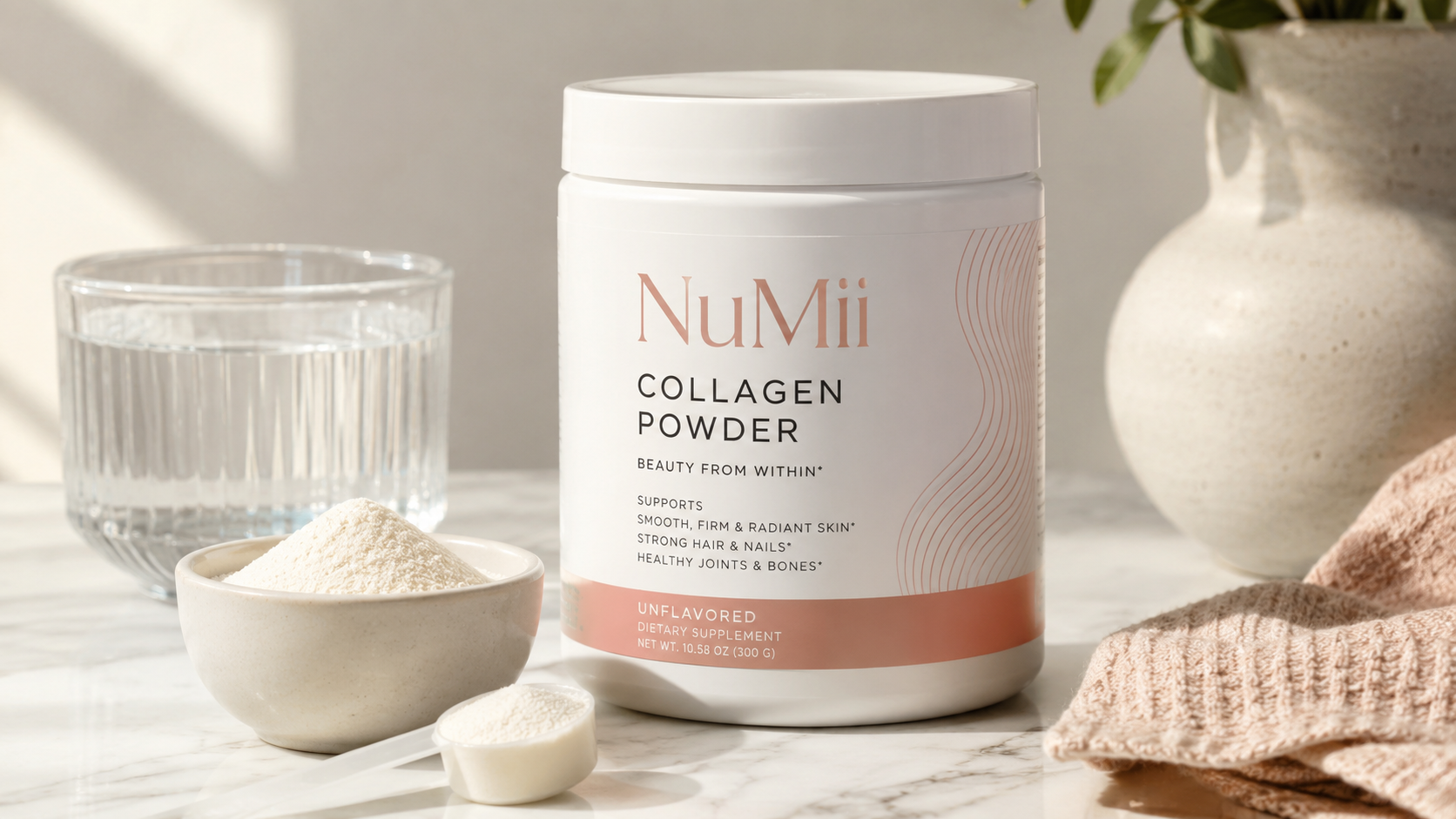
Discover why NuMii Collagen Powder is a top choice for healthier skin, hair, nails, and joints. Read our honest review, benefits, ingredients, and more.
Nearly 70% of athletes experience joint-related injuries during their careers. Whether you're a weekend warrior hitting the gym or a dedicated runner logging miles, joint stress is an unavoidable part of athletic life. The connective tissues that support your performance demand real nutritional support.
Collagen comprises 70% of your tendons, 85% of your ligaments, and forms the foundation of healthy cartilage. As you push your body harder through training, collagen naturally breaks down faster than your body can replenish it. This gap between demand and supply is where most athletes start experiencing the creep of chronic joint discomfort and nagging injuries that threaten performance.
Discover how NuMii Tri-Peptide Collagen Powder can support your athletic recovery and joint health.
Why Athletes Need Collagen More Than Most
How intense training accelerates collagen depletion in connective tissues
Intense training creates microscopic damage throughout your connective tissue matrix. Every heavy squat, every long-distance run, every explosive jump triggers a cascade of collagen breakdown. Your body responds by attempting repair, but recovery demands exceed production capacity during sustained training blocks. This deficit accumulates, leaving tendons and ligaments progressively weaker with each training cycle.
The difference between collagen loss and muscle loss in athletic populations
Muscle tissue gets attention because you see it and feel it. Collagen loss is insidious. You won't notice your tendons degrading until they stop functioning properly. While muscle soreness is acute and manageable, collagen loss compounds silently over months, manifesting as chronic joint pain, reduced mobility, or sudden injury that seems to appear from nowhere. Your muscles recover in days; your connective tissue needs weeks.
Why collagen supplementation targets areas that protein powder alone cannot
Standard protein powder builds muscle tissue. Collagen builds the infrastructure that holds everything together. These are fundamentally different physiological targets. Whey protein contains amino acids, but collagen's specific amino acid profile—particularly high glycine and proline content—directly supports connective tissue synthesis in ways generic protein cannot replicate.
Recovery timelines: how collagen supports faster bounce-back between sessions
Athletes consuming bioavailable collagen report noticeably faster recovery between intense training sessions. The reduction in next-day joint soreness accelerates your ability to return to hard training without compensation patterns that lead to secondary injuries. What might typically require 72 hours of reduced intensity can shrink to 48 hours when collagen status is optimized.
The role of collagen in preventing overuse injuries and micro-tears
Overuse injuries don't appear suddenly; they result from accumulated micro-tears that grow into structural problems. Adequate collagen maintains the elasticity and resilience needed to absorb training stress without accumulating damage. Prevention through collagen supplementation costs far less—financially and athletically—than managing injury rehabilitation.
Comparison of collagen needs for endurance athletes versus strength athletes
Endurance athletes experience repetitive loading stress that primarily affects tendons and ligaments. Strength athletes face higher absolute forces that challenge cartilage and joint stability. Both populations benefit from collagen, but their supplementation strategy might emphasize different collagen types. NuMii's tri-peptide approach addresses both populations comprehensively.
Understanding Bioavailability: Why 500 Dalton Molecular Weight Matters
What molecular weight means in supplement science and absorption rates
Molecular weight determines whether your digestive system can actually absorb a supplement. Larger molecules cannot cross the intestinal barrier, regardless of quality. The 500 Dalton specification indicates collagen peptides small enough to pass through, but large enough to retain biological activity. This sweet spot maximizes what reaches your bloodstream.
How NuMii's 500 Dalton specification ensures maximum bioavailability
NuMii engineered their collagen to this precise specification because larger peptides simply don't absorb effectively. At 500 Daltons, the peptide chains cross the intestinal barrier efficiently and accumulate in connective tissue where they're needed. You're not paying for collagen that passes through your system unused.
The journey of collagen peptides from gut to connective tissue
Once absorbed, collagen peptides circulate through your bloodstream. Your body recognizes these specific amino acid sequences and directs them toward connective tissue repair sites. This targeted delivery is why collagen supplementation works differently than consuming generic amino acids. Your body literally uses these peptides to rebuild damaged tissue.
Why smaller peptide chains cross the intestinal barrier more efficiently
Your intestinal lining acts as a selective barrier. Molecules under 1000 Daltons pass through relatively freely; larger molecules face rejection. Hydrolyzed collagen at 500 Daltons sits in the optimal absorption window, maximizing the percentage of your supplement that actually reaches your system rather than being excreted.
Common misconceptions about collagen absorption and athletic benefit
Many athletes assume all collagen supplements work identically. This misconception costs them money on poorly absorbed products. Others believe collagen only benefits skin—missing the performance gains from improved joint resilience. The science clearly demonstrates that bioavailable collagen directly impacts training capacity and injury prevention.
Testing and verification: how to know if your collagen is truly bioavailable
Reputable manufacturers publish molecular weight specifications because it's verifiable and directly relates to efficacy. If a collagen product doesn't specify molecular weight, bioavailability remains questionable. NuMii's published 500 Dalton specification allows athletes to verify they're purchasing genuinely absorbable collagen rather than generic powder.
Grass-Fed Bovine Collagen: Quality, Ethics, and Performance Impact
The nutritional difference between grass-fed and grain-fed collagen sources
Grass-fed cattle produce collagen with superior amino acid profiles and higher micronutrient density. Animals consuming their natural diet develop collagen with better omega-3 to omega-6 ratios and greater trace mineral content. These differences might seem marginal, but they accumulate when consumed consistently. Grass-fed collagen represents genuine nutritional superiority, not just marketing positioning.
Why ethical sourcing matters for supplement purity and contamination risk
Industrial grain-fed operations use antibiotics and growth promoters that concentrate in animal tissues. Grass-fed cattle receive no such interventions, producing cleaner collagen. For athletes consuming supplements consistently, contamination risk compounds. Starting with ethically sourced collagen eliminates this exposure from the beginning.
Amino acid profiles in grass-fed collagen versus conventional alternatives
Grass-fed collagen contains higher concentrations of essential amino acids and beneficial compounds like conjugated linoleic acid. These differences translate to superior bioactive support for recovery and adaptation. You're not just getting more collagen; you're getting more effective collagen.
The sustainability angle: why athletes increasingly prioritize ethical supplements
Modern athletes recognize that long-term performance depends on environmental sustainability. Supporting ethical sourcing aligns personal health goals with planetary health. This values alignment, increasingly important to committed athletes, distinguishes NuMii's positioning in the supplement market.
How NuMii's sourcing transparency supports informed purchasing decisions
NuMii publishes their sourcing practices openly. Athletes can trace their collagen back to grass-fed cattle and verify production standards. This transparency removes guesswork and allows informed purchasing decisions based on actual values rather than marketing claims.
Trace minerals and micronutrients found in grass-fed bovine collagen
Grass-fed collagen contains bioavailable minerals like magnesium, zinc, and selenium. These micronutrients support recovery, immune function, and adaptation to training stress. Your collagen supplement becomes a mineral source simultaneously, extending its value beyond connective tissue support.
Collagen Types Decoded: Type I, II, and III for Athletic Needs
Type I collagen: primary support for tendons, ligaments, and skin integrity
Type I collagen comprises 85-90% of your tendons and ligaments. If you're addressing chronic tendon issues or preventing tendon-related overuse injuries, Type I is your priority. This collagen type provides tensile strength—the ability to withstand pulling forces that training generates. Type I deficiency manifests as weak, injury-prone connective tissue.
Type II collagen: the cartilage specialist for joint cushioning and mobility
Type II collagen forms cartilage, the shock-absorbing tissue between bones. Athletes with joint discomfort, limited mobility, or cartilage concerns prioritize Type II. This collagen type maintains the cushioning capacity that protects joints during high-impact activities. Without adequate Type II, your joint surfaces degrade prematurely.
Type III collagen: structural support and flexibility in connective tissues
Type III collagen provides flexibility and elasticity to connective tissue. It works alongside Type I to create resilient structures that absorb stress without snapping. Type III supports the ability to move through full ranges of motion without compensation patterns that create secondary injuries.
Why comprehensive tri-peptide formulas outperform single-type supplements
Your body doesn't experience injury in isolation. A training session stresses your tendons, ligaments, and cartilage simultaneously. Comprehensive formulas addressing all three collagen types provide complete support, whereas single-type supplements leave gaps. NuMii's tri-peptide approach reflects actual athletic physiology.
Targeted benefits: which collagen types address specific athletic concerns
Athletes with tendon issues emphasize Type I; those with knee cartilage problems prioritize Type II; those seeking overall joint resilience benefit from the full spectrum. Understanding these distinctions allows personalized supplementation strategy, though the comprehensive approach addresses most athletic populations effectively.
How NuMii's product line covers the full spectrum
NuMii offers both the EveryDay Pure Tri-Peptide Collagen Powder and the Advanced Tri-Peptide Collagen Drink, with the Advanced option explicitly specifying Type I, II, and III collagen at a potent 10,000mg dosage. This range allows athletes to select products matching their specific recovery priorities and lifestyle constraints.
Practical Integration: Adding NuMii Collagen to Your Training Protocol
Optimal timing: pre-workout, post-workout, or daily maintenance dosing
Collagen timing differs from protein powder timing. While protein optimizes within the post-workout window, collagen benefits from consistent daily intake. Take your collagen dose whenever fits your routine—morning coffee, pre-workout smoothie, or evening water. Consistency matters far more than timing precision.
Mixing strategies: smoothies, coffee, water, and creative application methods
NuMii collagen powder dissolves readily in any liquid. Mix into your morning coffee, blend into recovery smoothies, stir into water—the flexibility makes daily consumption simple. No special preparation required; standard kitchen mixing achieves complete dissolution.
Synergy with other supplements: combining collagen with protein, BCAAs, and vitamins
Collagen combines seamlessly with protein powder, creating comprehensive recovery nutrition. BCAAs support muscle protein synthesis; collagen supports connective tissue. Vitamin C enhances collagen synthesis, so combining the two amplifies effectiveness. Build your supplement stack around collagen as the connective tissue foundation.
Dosage guidance for different athletic levels and body compositions
The 100gm container provides sustained supplementation for most athletes. Heavier athletes or those addressing specific injuries might increase dosing. Start with standard recommendations and adjust based on recovery quality and results. Your training intensity and body weight should guide personalization.
30-day, 60-day, and 90-day timeline expectations for noticeable results
Initial benefits—improved morning stiffness, reduced soreness—appear within 2-4 weeks. Structural improvements in joint resilience and mobility develop over 60-90 days. Long-term injury prevention benefits compound over months and years. Set realistic expectations; collagen builds infrastructure gradually but profoundly.
Tracking progress: metrics and signs that collagen supplementation is working
Monitor next-day soreness levels, morning mobility quality, and long-term injury frequency. Track range of motion in previously problematic areas. Note improvements in recovery speed between intense sessions. These subjective metrics reveal collagen's real-world impact on your training capacity.
Real Results: What Athletes Actually Experience
Reduced joint soreness and morning stiffness after intense training
Athletes consistently report marked reductions in joint soreness 24-48 hours post-training. Morning stiffness that previously required 10-15 minutes of mobilization diminishes noticeably. This practical improvement directly translates to higher training quality in subsequent sessions.
Improved recovery speed between high-intensity workout sessions
Recovery timelines contract measurably. Sessions that previously required 72 hours of reduced intensity feel recoverable in 48 hours. This accelerated bounce-back multiplies training volume and intensity over weeks and months, compounding performance gains.
Enhanced mobility and range of motion in previously problematic areas
Chronic restriction patterns resolve gradually. Shoulders that felt tight open up; hips that limited squat depth deepen; ankles that restricted movement loosen. These mobility gains often precede subjective soreness reduction, indicating structural improvements progressing systematically.
Stronger nails and healthier hair as secondary performance markers
Collagen's cosmetic benefits extend beyond performance. Nails strengthen, grow faster, and break less frequently. Hair quality improves, becoming visibly healthier. These secondary markers provide visible confirmation that collagen supplementation is working systemically, reinforcing consistency.
Long-term injury prevention and reduced downtime from overuse issues
The most valuable result appears over months: reduced injury frequency. Chronic issues that previously flared predictably remain stable. Injuries that would have sidelined training clear faster. This injury prevention directly extends athletic longevity and career span.
Testimonials and case studies from athletes across different disciplines
Distance runners report improved knee resilience and reduced shin splint recurrence. CrossFit athletes experience faster shoulder recovery between heavy pressing cycles. Cyclists note enhanced joint comfort during multi-hour training sessions. These diverse results across disciplines confirm collagen's broad athletic applicability.
Start optimizing your recovery today with NuMii's proven collagen formula.
Cost-Benefit Analysis: Is NuMii's Price Point Worth the Investment?
Standard pricing: £44.99 on sale from £54.99 for the powder
The EveryDay Pure Tri-Peptide Collagen Powder regularly sells at £44.99, reduced from the standard price of £54.99. This promotional pricing makes the supplement accessible without sacrificing quality or bioavailability.
Advanced Tri-Peptide Collagen Drink at £39.99 as an alternative option
The Advanced Tri-Peptide Collagen Drink offers a ready-to-consume alternative at £39.99, featuring the comprehensive Type I, II, and III collagen at 10,000mg dosage. For athletes prioritizing convenience over mixing flexibility, this option provides premium collagen supplementation.
Cost per serving breakdown and comparison to competitor products
The 100gm powder provides approximately 30-33 servings, placing cost-per-serving around £1.35-£1.50 at sale price. Comparable bioavailable collagen products from competitors typically run £1.50-£2.00 per serving. NuMii's pricing remains competitive while maintaining superior sourcing and bioavailability standards.
ROI calculation: prevented injuries versus supplement investment
A single significant injury can sideline training for weeks or months, costing hundreds in medical expenses and thousands in lost training time. A prevented injury eliminates these costs entirely. Collagen supplementation's injury prevention capacity creates substantial return on investment beyond mere performance gains.
Value of grass-fed sourcing and bioavailability premium pricing
Grass-fed collagen commands premium pricing because it delivers premium results. The 500 Dalton bioavailability specification requires additional processing. These investments in quality translate to meaningfully better outcomes—worth the modest price premium compared to conventional collagen.
Budget-friendly strategies: stacking products or purchasing during promotions
Ideal World TV regularly features NuMii products with promotional pricing. Purchasing during sale periods extends supplement budget significantly. Combining the powder with the drink offers variety without excessive spending. Strategic purchasing maximizes value without compromising consistency.
The Competitive Edge: Collagen in Professional and Amateur Sports
How elite athletes integrate collagen into periodized training plans
Elite athletes time collagen supplementation around training phases. During heavy volume blocks, increased dosing supports elevated recovery demands. During taper phases, collagen maintains connective tissue resilience while reducing training stress. This periodized approach optimizes both adaptation and injury prevention.
Collagen's role in injury prevention during peak competition seasons
Peak competition seasons demand maximal physical output while minimizing injury risk. Optimal collagen status provides the connective tissue resilience needed to handle extreme demands without failure. Athletes competing at elite levels cannot afford connective tissue breakdown; collagen supplementation becomes essential infrastructure.
Recovery acceleration during heavy training blocks and tapering phases
Heavy training blocks pile cumulative stress onto connective tissues. Collagen ensures these structures adapt rather than degrade under the load. Tapering phases demand rapid recovery; collagen accelerates this process, positioning athletes optimally for competition.
Preventative supplementation versus reactive injury management approaches
Smart athletes supplement collagen preventatively, maintaining tissue quality before problems develop. Reactive approaches attempt repairing damage after injury occurs—far more expensive and time-consuming. Preventative collagen supplementation eliminates most reactive injury scenarios.
Sport-specific applications: runners, CrossFit athletes, cyclists, and team sport players
Distance runners prioritize collagen for knee and ankle resilience. CrossFit athletes emphasize shoulder and knee support during explosive movements. Cyclists focus on chronic pain prevention during extended duration efforts. Team sport players balance rapid movement demands with joint resilience. Each population benefits from collagen, though emphasis areas vary.
Why Ideal World TV's best-seller status reflects athlete demand
NuMii collagen consistently ranks among Ideal World TV's best sellers because athletes recognize its genuine efficacy. This isn't marketing-driven demand; it's driven by real results and word-of-mouth recommendation from athletes experiencing measurable improvements in recovery and resilience.
Your Athletic Recovery Starts Here
The science is unambiguous: bioavailable collagen supports the connective tissues that absorb punishment during athletic training. With grass-fed sourcing, comprehensive tri-peptide coverage, and proven absorption at the 500 Dalton molecular weight, you're investing in infrastructure that directly impacts your longevity as an athlete. At £44.99 on sale, the cost per serving becomes negligible when measured against prevented injuries or extended athletic career span. Your joints, tendons, and ligaments have carried you this far. Give them the support they deserve. Start with NuMii's powder, track your recovery metrics over 60 days, and experience firsthand why this supplement consistently ranks among Ideal World TV's best sellers among serious athletes.
Begin your collagen supplementation journey with NuMii today and transform your athletic recovery.