
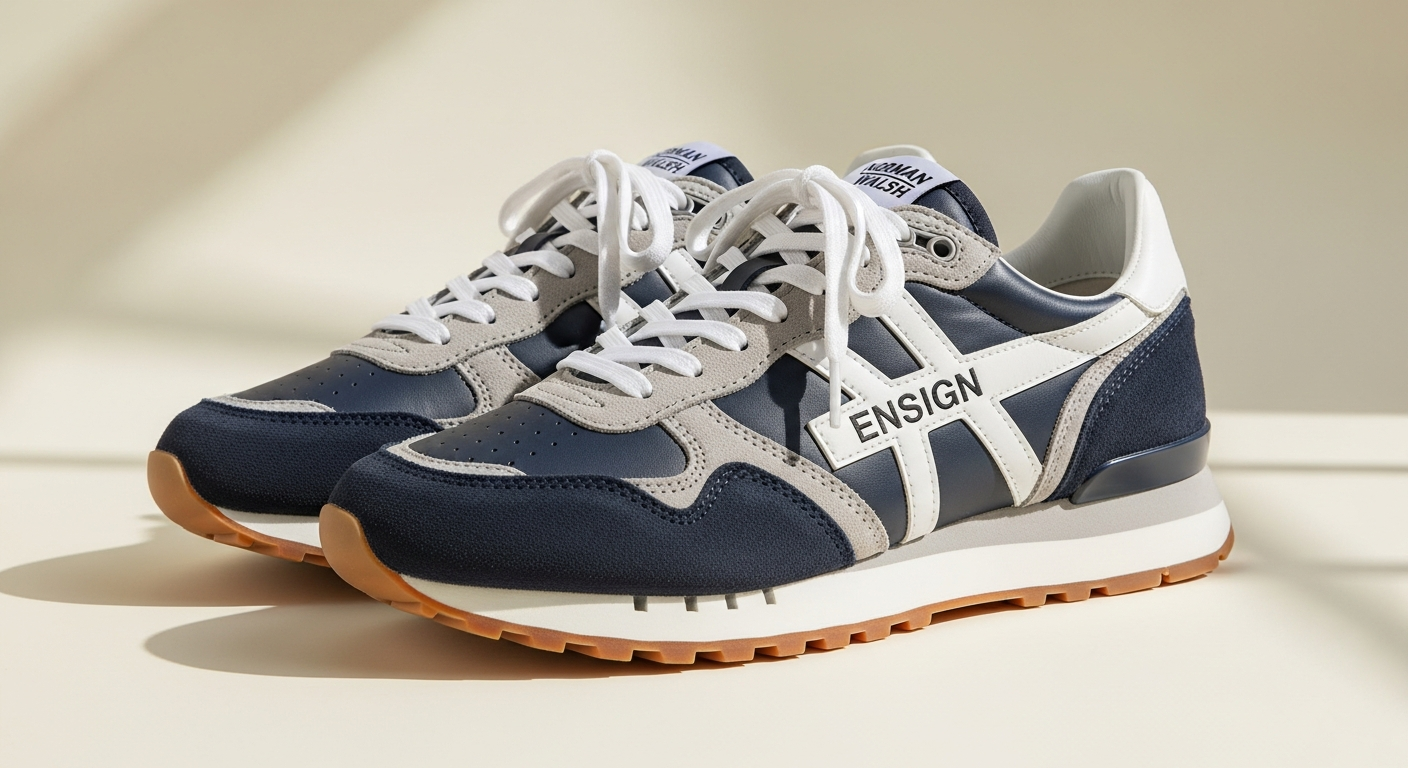
Discover why Norman Walsh Ensign Retro Trainers are the ultimate heritage athletic sneaker. Explore their 1981 origins, premium materials, and timeless design that blends British craftsmanship with modern comfort.
When a sneaker carries the weight of genuine athletic history, it commands respect. The Norman Walsh Ensign Retro Trainers have accumulated over four decades of cultural currency since their 1981 debut, yet they refuse to fade into irrelevance. These aren't nostalgia-driven knockoffs designed purely for Instagram aesthetics—they're the real deal, born from authentic performance requirements.
In 1981, Norman Walsh crafted the Ensign specifically for the Bolton Harriers athletes competing in the New York Marathon. That singular moment anchored these trainers to British athletic heritage and gave them credentials that most contemporary retro sneakers simply cannot claim. While countless brands manufacture "vintage-inspired" shoes by copying aesthetics, the Ensign arrived with a documented purpose and a track record of actual athletic achievement.
The question becomes whether these trainers justify their $130-$175 price range and whether their heritage status translates into real-world wearability for today's consumer. Understanding the construction, materials, styling potential, and genuine long-term value requires looking beyond the marketing narrative.
Discover the Norman Walsh Ensign Retro Trainers and experience heritage footwear that performs.
The Athletic Origins That Define Norman Walsh Ensign's DNA
Born from Genuine Performance Requirements
The Ensign's story separates it from the endless parade of retro-inspired silhouettes flooding the sneaker market. When Norman Walsh designed these trainers in 1981, the goal wasn't to create a future vintage item or to establish a brand aesthetic. The objective was functional: equip Bolton Harriers athletes with footwear capable of performing at the highest competitive level during the New York Marathon.
This distinction matters profoundly. The Ensign didn't evolve from a designer's nostalgic impulse or a trend-chasing marketing department. It emerged from the specific demands of elite distance runners who needed lightweight support, responsive construction, and materials that could withstand the punishment of marathon-distance running. The trainers had to deliver or the athletes would have failed.
A Legitimate Chapter in British Athletic Footwear History
That origin point placed the Ensign within a broader context of British athletic innovation. The UK produced some of the world's most significant running shoe developments, and the Ensign represented a meaningful contribution to that legacy. Rather than existing as a standalone product, these trainers became part of a documented historical narrative—one that collectors and sneaker enthusiasts recognize and respect.
This heritage carries tangible value that distinguishes the Ensign from competitors. When you purchase these trainers, you're acquiring a piece of verified athletic history, not merely a stylized reinterpretation of vintage design. That authenticity resonates with consumers seeking depth and legitimacy in their footwear choices.
Premium Materials That Explain the Mid-Range Price Tag
Sophisticated Upper Construction for Durability and Breathability
The Ensign's upper combines leather with 600D reinforced nylon—a pairing that addresses the fundamental tension in athletic footwear design. Leather provides elegance, durability, and that distinctive aesthetic that separates quality trainers from disposable sneakers. However, leather alone can restrict airflow during extended wear. The 600D nylon integration solves this problem by creating strategic ventilation zones while maintaining structural integrity.
This isn't arbitrary material selection. The specific nylon weight (600D) provides substantial reinforcement without adding unnecessary bulk or weight. It's a precise engineering choice that reflects the brand's athletic heritage and ongoing commitment to balancing form with function.
Thermo-Regulating Velvet for Enhanced Comfort
The integration of thermo-regulating velvet represents a more sophisticated approach to internal comfort than standard fabric linings. This material actively manages temperature regulation, preventing the foot from overheating during all-day wear while maintaining warmth during cooler conditions. The velvet also creates a luxurious tactile experience that immediately communicates quality to the wearer.
Most budget-conscious trainers utilize basic cotton or polyester linings. The Ensign's commitment to thermo-regulating velvet elevates the experience and justifies a meaningful portion of the price differential. When your feet remain comfortable throughout extended wear, the investment proves itself repeatedly.
Lightweight Support Architecture Built for Resilience
The Ensign's construction methodology prioritizes resilience—the ability to withstand diverse environments and usage patterns. Whether navigating urban concrete, suburban sidewalks, or occasional outdoor paths, these trainers maintain structural integrity and supportive characteristics. The lightweight support structure reduces foot fatigue during all-day wear, which particularly matters for consumers seeking trainers that function across multiple contexts rather than specialized athletic applications.
Styling the Ensign: From Casual Basics to Elevated Everyday Looks
Versatility Across Denim, Chinos, and Casual Trousers
The Ensign's retro silhouette possesses remarkable styling flexibility. Pair these trainers with well-fitted dark denim and a neutral sweater for effortless weekend aesthetic. Switch to chinos and a structured shirt, and the same shoes project understated sophistication suitable for casual professional environments. The trainers work equally well with relaxed-fit trousers or tailored casual pants, adapting to multiple styling contexts without requiring wardrobe augmentation.
This versatility directly impacts cost-per-wear economics. A specialized athletic shoe might excel in one narrow context but requires additional footwear for different scenarios. The Ensign functions across numerous outfit combinations, making it genuinely useful rather than situational.
Contemporary Streetwear and Minimalist Pairing
For consumers following contemporary casual aesthetics, the Ensign complements minimalist streetwear approaches beautifully. The clean lines and refined proportions integrate seamlessly with oversized hoodies, tailored joggers, and contemporary casual layering. The retro silhouette, rather than appearing dated, reads as intentional and curated—the visual language of someone making deliberate style choices rather than defaulting to whatever's convenient.
Bridging Vintage and Modern Sensibilities
The Ensign occupies a unique position within the sneaker landscape. It's genuinely vintage, yet it doesn't demand a specifically retro aesthetic environment to function visually. Consumers can wear these trainers with vintage-inspired outfits that emphasize their historical significance, or they can pair them with entirely contemporary clothing to create contrast and visual interest. This dual capability means the Ensign remains relevant regardless of how your personal style evolves over time.
Explore the versatile styling potential of the Norman Walsh Ensign Retro Trainers today.
Comfort and Wearability: What Users Actually Experience
Exceptional Comfort Across Varied Wear Scenarios
Users consistently report that the Ensign delivers exceptional comfort from the initial wearing experience. This isn't a sneaker requiring an extended break-in period or demanding gradual adaptation. The construction, materials, and interior design prioritize immediate wearability, meaning your feet feel supported and comfortable during first wear and throughout subsequent days.
The lightweight support structure contributes significantly to this immediate comfort. Rather than feeling constraining or rigid, the Ensign wraps around your foot with a responsive quality that adapts to individual foot shape while maintaining consistent structural support. This balance between flexibility and stability proves difficult to achieve and represents a meaningful engineering accomplishment.
Reduced Foot Fatigue During Extended Wear
The trainers' lightweight construction directly translates to reduced foot fatigue during all-day wear. When you're wearing footwear for eight, ten, or twelve hours continuously, every ounce of weight matters. The Ensign's disciplined material selection and construction methodology keep overall weight minimal without compromising durability or support. Your feet remain fresher at day's end compared to heavier sneaker options.
Supportive Structure for Light Activity and Urban Walking
While the Ensign originated as performance footwear for marathon runners, contemporary users typically employ them for lighter applications—daily urban walking, casual weekend activity, and general lifestyle wear. The supportive structure proves entirely adequate for these scenarios, providing sufficient arch support and stability without the specialized features necessary for serious athletic training. This positioning makes them genuinely practical for most consumers while maintaining the refined comfort characteristics that professional athletes originally demanded.
The Investment Question: Is $130-$175 Worth It?
Premium Positioning Within the Retro Trainer Market
The Ensign's price range places it firmly in premium territory within the retro trainer landscape. Budget-conscious alternatives exist, obviously, but they typically sacrifice material quality, construction sophistication, or design heritage. Mid-market options proliferate, but most lack the documented historical significance or the material refinement that characterizes the Ensign. Truly competitive premium alternatives from established heritage brands command comparable or higher pricing.
This positioning reflects supply-demand dynamics, brand reputation, and genuine material differentiation. The Ensign doesn't occupy premium pricing territory arbitrarily; rather, the market recognizes and values the specific characteristics that justify the investment.
Cost-Per-Wear Economics for Heritage Sneakers
Consider the economic mathematics underlying long-term footwear investment. A $150 sneaker worn 150 times per year across five years costs approximately $0.20 per wear. That calculation assumes the footwear remains wearable throughout that timeframe—a genuinely reasonable expectation for the Ensign given the durable material construction and generally positive user reports regarding longevity.
In contrast, a $50 budget sneaker that lasts two years costs approximately $0.27 per wear, assuming comparable wearing frequency. The Ensign's initial cost differential disappears when amortized across realistic ownership duration. Furthermore, heritage sneakers with established cultural value maintain resale potential that budget alternatives completely lack, further improving the economic equation.
Durability Expectations That Justify the Mid-to-Premium Price Range
Users frequently report that the Ensign exhibits durability characteristics exceeding expectations at this price point. The combination of leather and reinforced nylon construction ages gracefully, developing character and patina rather than deteriorating. The thermo-regulating velvet interior maintains integrity throughout extended wear without degradation common to lesser-quality linings. The sole structure proves resilient across varied surfaces.
These durability characteristics directly justify premium pricing. Brands using cheaper materials and less sophisticated construction methods necessarily price their products lower, but they cannot deliver equivalent longevity or aging characteristics. The Ensign's premium materials and engineering enable it to remain functional and visually appealing across years of regular wear.
Care, Maintenance, and Longevity Tips
Proper Cleaning Techniques for Leather and Nylon Upper Materials
Maintaining the Ensign's appearance and material integrity requires appropriate care. For routine cleaning, a soft brush or cloth gently removes surface dust and debris from both the leather and nylon components. For more substantial dirt accumulation, a slightly damp cloth with mild soap addresses soiling without damaging the materials.
Avoid submerging the trainers in water or using aggressive brushing on the leather portions, as excessive moisture exposure can damage the material's suppleness. Instead, focus on gentle surface cleaning with moisture applied selectively only where necessary. The nylon components tolerate more vigorous cleaning if needed, but gentle treatment across all materials preserves appearance and function.
Conditioning Recommendations to Preserve Leather Suppleness
The leather portions benefit from occasional conditioning to maintain suppleness and prevent cracking. A quality leather conditioner applied sparingly every few months sustains the material's natural characteristics and actually improves aging characteristics. The conditioning process requires minimal effort—apply a small amount of conditioner, work it gently into the leather, and allow it to absorb. Conditioning actually becomes part of the ownership experience, a tangible connection to the craft and quality inherent in these trainers.
Storage Methods That Prevent Creasing and Material Degradation
Proper storage extends trainer lifespan meaningfully. Store the Ensign in a cool, dry environment away from direct sunlight, which can fade materials over time. Use shoe trees or stuff the trainers with acid-free paper to maintain shape during storage and prevent unnecessary creasing. Avoid damp environments where moisture encourages mold growth or material degradation.
When traveling or packing the trainers, store them in a protective dust bag to prevent material contact with other items that might cause scuffing. These seemingly minor storage considerations compound into meaningful longevity improvements across months and years of ownership.
The Ensign Endures: Why This Heritage Trainer Remains a Worthy Choice
The Norman Walsh Ensign Retro Trainers transcend the contemporary sneaker landscape by combining genuine athletic heritage with authentic present-day wearability. They represent something increasingly rare: a product that doesn't require justification through trend appeal or celebrity endorsement because the fundamental value proposition speaks for itself. The materials genuinely perform, the construction demonstrably endures, and the styling versatility proves remarkably practical.
The $130-$175 investment sits firmly in premium territory, yet the pricing reflects material quality, engineering sophistication, and documented historical significance rather than arbitrary brand positioning. When evaluated through cost-per-wear economics across realistic ownership durations, the Ensign's premium pricing dissolves into reasonable value. The trainers function beautifully in urban environments, adapt effortlessly to casual styling contexts, and maintain comfort characteristics across extended daily wear.
For sneaker enthusiasts, the Ensign delivers legitimate heritage—not manufactured nostalgia, but a genuine artifact of British athletic history that somehow remains entirely contemporary. For practical consumers seeking quality trainers that complement diverse outfit combinations, the Ensign's versatility and comfort characteristics justify serious consideration. The combination of authentic historical significance, sophisticated material construction, and refined everyday wearability makes these trainers genuinely exceptional within their category.