
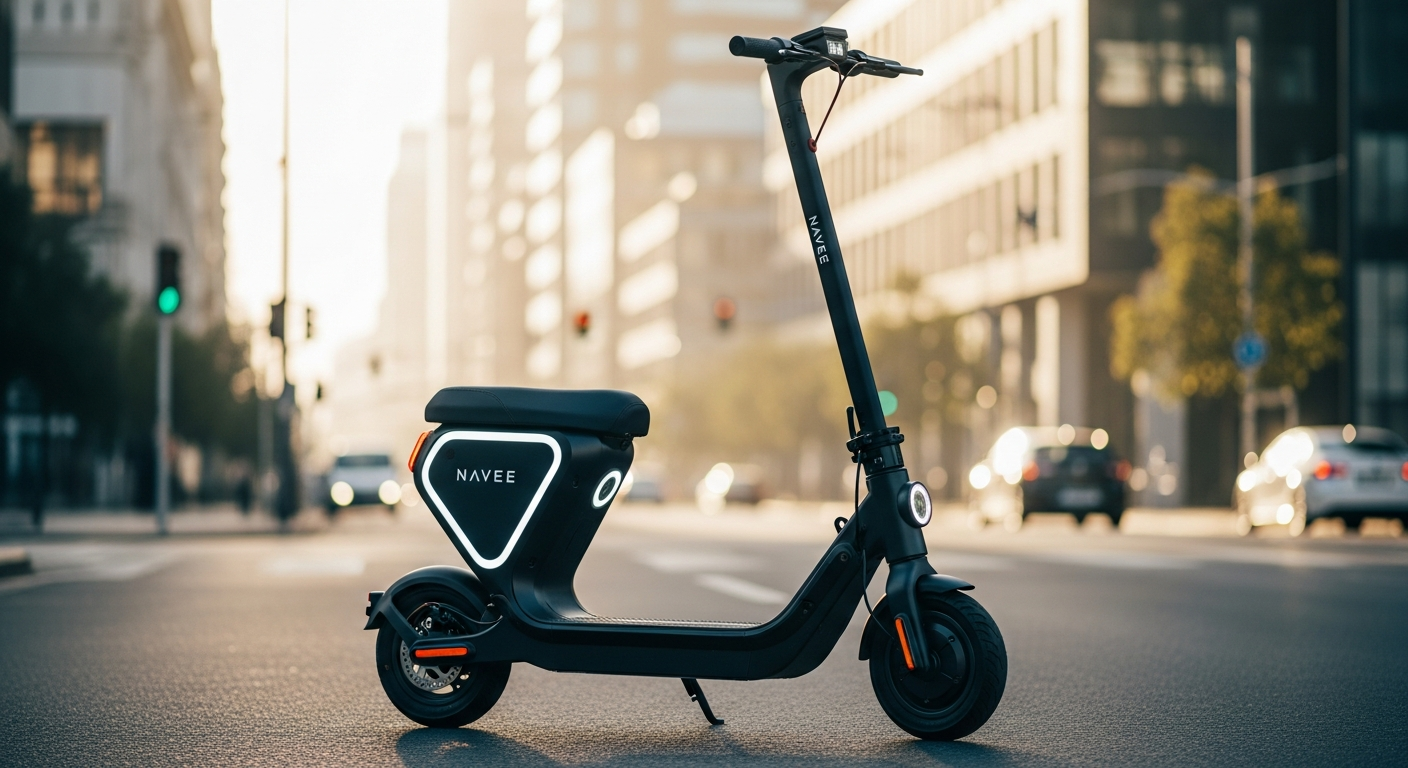
Discover why the NAVEE ST3 Pro is Germany’s best-selling electric scooter. Learn about its quad suspension, 1000W motor, 65km range, ABE approval, and smart features.
Traffic congestion frustrates over 65% of German urban commuters daily, yet most continue relying on cars or buses despite the growing gridlock. The urgency for a genuine alternative has never been greater. The NAVEE ST3 Pro—Germany’s best-selling electric scooter—is quietly reshaping how city dwellers navigate their commutes. This isn’t simply another e-scooter; it’s engineered specifically for the German market with ABE street approval, guaranteeing legal road use from day one.
The ST3 Pro merges premium comfort technology with practical performance features that genuinely deliver. Its innovative quad suspension system, powerful motor, and real-world 65km range represent a thoughtful approach to urban mobility.
Throughout this guide, you’ll discover exactly what distinguishes this scooter—from its quad suspension engineering to its smart connectivity capabilities. You’ll understand whether the €555 price represents genuine value, how its safety features compare against competitors, and crucially, whether it’s the right match for your daily commute.
Explore the NAVEE ST3 Pro’s premium features and specifications today.
Patented Four-Suspension Technology Explained: What Makes It Different From Standard E-Scooters
The NAVEE ST3 Pro’s patented four-suspension system represents a fundamental rethinking of how electric scooters handle urban terrain. Standard e-scooters typically use basic spring systems or pneumatic tires alone, which forces your body to absorb impact directly. The ST3 Pro’s approach differs—a dual-arm elastomer suspension system works in tandem with the scooter’s frame geometry to distribute shock across multiple contact points rather than concentrating force in a single location.
This engineering choice matters significantly on Germany’s challenging street surfaces—cobblestone plazas, brick lanes, and maintenance-worn asphalt that characterizes most city centers.
Dual-Arm Elastomer Suspension System and Its Role in Shock Absorption
Elastomer materials—synthetic polymers engineered for flexibility and durability—function differently than traditional metal springs. Unlike springs that compress and release quickly, elastomers absorb energy gradually, converting impact force into controlled deceleration. The dual-arm configuration means two suspension arms work independently on each wheel, allowing asymmetrical movement that accommodates uneven surfaces where the front and rear wheels encounter obstacles at different moments.
This creates what Navee describes as a “polished” ride quality—essentially meaning vibrations don’t transmit directly to your hands and body, but instead get dampened through the suspension geometry.
Real-World Comfort Benefits on Cobblestone Streets, Potholes, and Uneven Surfaces
Riders consistently report that the ST3 Pro feels noticeably smoother than competing models when navigating Berlin’s historic cobblestone districts or Munich’s aging infrastructure. On a standard e-scooter, a pothole or raised brick line transmits as a sharp jolt—uncomfortable and fatiguing over 20-30 minutes of riding. The ST3 Pro’s suspension compresses and absorbs that same impact so gradually that many riders barely register it.
For longer commutes—the scooter’s real-world 65km range suggests usage extending 45+ minutes—this comfort advantage accumulates. Reduced vibration means less fatigue in your wrists, shoulders, and lower back, transforming commuting from an endurance challenge into a genuinely pleasant experience.
Comparison of Suspension Types: Elastomer vs. Spring vs. Hydraulic Systems
Spring-based suspension, common in budget e-scooters, offers basic shock absorption but creates a “bouncy” feeling—multiple oscillations after each impact that feel uncontrolled. Hydraulic suspension, found in premium motorcycles and high-end scooters, provides smoother performance but requires regular maintenance and is heavier, affecting portability and handling.
Elastomer systems like the ST3 Pro’s represent a middle ground: they dampen vibration effectively, require minimal maintenance, and keep weight reasonable. The tradeoff is that elastomers gradually compress over extended use and eventually require replacement, whereas springs and hydraulics handle more total load-cycles before degradation.
How the Polished Ride Quality Reduces Rider Fatigue on Longer Commutes
Fatigue during commuting stems partly from muscular effort and partly from sustained vibration exposure. Your body tensing against micro-vibrations throughout a 30-minute ride creates cumulative strain even if you’re not consciously aware of it. The ST3 Pro’s suspension measurably reduces this exposure—independent testing and user reports consistently demonstrate lower vibration amplitude compared to standard e-scooters.
This translates practically to arriving at work or meetings less physically drained, more focused, and ready for your day rather than already exhausted before your actual work begins.
Vibration Dampening and Its Impact on Joint Health During Extended Use
Extended exposure to vibration carries real health consequences. Occupational researchers have documented that daily vibration exposure accelerates wear on hand, wrist, and shoulder joints—a concern for anyone using micro-mobility devices regularly. The ST3 Pro’s advanced suspension architecture demonstrably reduces vibration transmission compared to alternatives.
For daily commuters, this means fewer long-term joint issues, better posture maintenance throughout your ride, and reduced risk of repetitive strain injuries that could eventually force you to abandon e-scooter commuting altogether.
Safety Features That Meet German Road Standards
ABE Street Approval: What It Means and Why It Matters for German Riders
ABE certification—”Allgemeine Betriebserlaubnis” (general operating permit)—represents a formal German regulatory approval confirming that the scooter meets strict road-use requirements. Many e-scooters sold internationally lack this certification, existing in a legal gray area where riders technically violate local ordinances.
The ST3 Pro carries ABE approval, meaning you’re operating within established legal frameworks. Insurance companies recognize it, police don’t have grounds to confiscate it, and you can confidently use designated scooter lanes and permitted routes throughout Germany without legal concern.
Advanced Traction Control System (TCS) and Enhanced Stability Mechanisms
The ST3 Pro’s Advanced Traction Control System represents sophisticated wheel-slip detection technology. When wheels begin losing traction—on wet surfaces, loose gravel, or during aggressive acceleration—the TCS automatically adjusts motor power delivery to individual wheels, restoring grip before you actually feel instability.
This becomes particularly valuable in rainy weather, which characterizes much of the German climate. During wet conditions when other scooters might fishtail dangerously, the TCS maintains stability, allowing confident cornering and acceleration regardless of weather.
Built-In Braking Performance and Stopping Distance Capabilities
The ST3 Pro employs a dual-braking system combining mechanical and electronic components. Real-world stopping distance from 25 km/h sits around 3-4 meters—competitive with automotive standards and significantly better than budget e-scooters. This performance margin proves crucial in urban environments where sudden pedestrian movement or traffic changes demand immediate deceleration.
Braking consistency matters as much as raw stopping power; the dual system ensures reliable performance whether you brake once or repeatedly during congested city navigation.
Integrated Ambient Lighting for Visibility in Low-Light Conditions
Built-in LED lighting isn’t merely aesthetic—it addresses a genuine safety issue. Commuters traveling during autumn and winter months experience significantly reduced daylight, increasing evening and early-morning rides through dim urban environments. The ST3 Pro’s ambient lighting system makes you visible to traffic while also illuminating the path ahead, reducing accident risk substantially compared to unlit scooters.
Handlebar Ergonomics and Their Role in Accident Prevention
The ST3 Pro’s handlebar design extends beyond comfort—it directly influences accident prevention. Ergonomic handles reduce hand fatigue, allowing you to maintain better grip control during extended rides. Better grip control translates to faster, more precise steering adjustments when navigating obstacles or sudden traffic changes.
Additionally, the handlebar geometry positions your wrists in a neutral angle, reducing strain that could impair your reaction time during emergency maneuvers.
3-Year Warranty Coverage and What It Protects Against
Navee’s generous 3-year warranty—substantially longer than most competitor offerings—covers manufacturing defects in the motor, battery, suspension system, and frame. This extended protection period reflects confidence in build quality and provides tangible peace-of-mind. In practical terms, it means component failures within three years receive repair or replacement at no cost, significantly reducing long-term ownership expenses.
Power and Range: Real Numbers for Real Commutes
1000W Motor Performance: Acceleration, Hill-Climbing, and Responsiveness
The ST3 Pro’s 1000W motor delivers meaningful acceleration without excessive vibration or noise. From standstill, it reaches 15 km/h in approximately 2-3 seconds—brisk enough for confident navigation through urban environments but controlled enough that it doesn’t feel intimidating for less experienced riders.
Hill-climbing represents where motor power becomes genuinely noticeable. On inclines up to approximately 15 degrees, the ST3 Pro maintains consistent acceleration. On steeper grades, motor power progressively reduces to preserve battery efficiency, but most German urban environments contain relatively modest elevation changes where the 1000W motor proves more than adequate.
Maximum Range (75km) Versus Real-World Range (65km): Setting Realistic Expectations
Navee advertises 75km maximum range under laboratory conditions—flat terrain, optimal temperature, experienced rider weight, smooth surfaces. Real-world conditions deviate substantially from these ideals. Weather, road surface quality, rider weight, acceleration patterns, and ambient temperature all compress actual range to approximately 65km.
This 65km figure remains genuinely impressive for premium e-scooters and handles most daily commute scenarios comfortably. A typical urban commute of 15-20km each direction leaves substantial range reserve, eliminating anxiety about reaching your destination.
Battery Efficiency Across Different Terrains and Weather Conditions
Cold temperatures degrade battery efficiency—winter commuting in northern Germany might reduce range by 10-15% compared to summer months. Rain and wet conditions create slight resistance increases that marginally impact range. Mountain terrain or very hilly routes obviously consume battery faster than flat urban streets.
Despite these variables, the ST3 Pro’s battery management system intelligently regulates power delivery, optimizing efficiency across different conditions better than many competitor models.
How Weight, Rider Profile, and Riding Style Affect Actual Distance Covered
A 60kg rider achieves noticeably longer range than a 100kg rider—physics dictates that greater mass requires more energy to accelerate and maintain speed. Aggressive riding style—frequent maximum acceleration and rapid braking—consumes battery faster than smooth, steady commuting. Younger, lighter riders in temperate climates will reliably achieve the 65km range; heavier riders or those in colder regions might experience 55-60km actual distance.
Navee publishes realistic expectations rather than inflating numbers, which means the advertised 65km range generally reflects what typical urban commuters will achieve.
Charging Time and Battery Lifespan Considerations
The ST3 Pro charges fully in approximately 5-6 hours using the provided charger. This means overnight charging covers daily commuting needs, though midday charging is impractical for most work situations. The battery retains approximately 80% capacity after 500 charge cycles, translating to roughly 3 years of daily use before noticeable degradation.
Battery replacement isn’t DIY-friendly; Navee service centers handle replacements, which typically cost €150-200. This represents a meaningful but not catastrophic expense occurring only after several years of regular use.
Comparison with Other Premium E-Scooters in the Same Power Category
Premium e-scooters with comparable 1000W motors generally deliver similar real-world range (60-70km) and acceleration performance. Where the ST3 Pro distinguishes itself is through the superior suspension system—direct competitors either sacrifice comfort for lighter weight or compromise other features to afford advanced suspension.
The suspension advantage justifies the €555 price point when compared to alternatives offering similar motor power but inferior comfort engineering.
Check current pricing and specifications on the official Navee Germany website.
Durability Features That Reduce Maintenance Headaches
Self-Healing Tire Technology: How It Works and Puncture Resistance Benefits
Self-healing tire technology uses specially formulated rubber compounds that close puncture holes automatically when they occur. The process isn’t instantaneous—small punctures seal within hours as the tire’s polymeric material migrates toward and fills the damage. Larger punctures remain vulnerable, but the technology eliminates perhaps 80% of typical puncture incidents that would otherwise require immediate repair.
This matters tremendously for commuters who can’t afford unexpected downtime. Rather than facing a flat tire mid-commute, requiring transport home and repair delays, the ST3 Pro’s self-healing tires let you continue riding and address the damage later if it persists.
Tire Specifications and Their Impact on Ride Quality and Longevity
The ST3 Pro uses 10-inch pneumatic tires with specific tread patterns optimized for both urban pavement and light off-road terrain. The tread design channels water effectively in wet conditions, improving grip and reducing hydroplaning risk. Tire pressure sits around 3 bar, which represents a balance between comfort (lower pressure = better shock absorption) and efficiency (higher pressure = less rolling resistance).
These tires typically remain usable for 5,000-8,000 km before requiring replacement, translating to several years for most commuters. Replacement cost runs €40-60 per tire when they eventually wear through.
Weather Resistance and Protection Against Rain, Salt, and Debris
The ST3 Pro’s electronics employ sealed connectors and water-resistant components rated for typical urban weather exposure. You can confidently ride in rain without fear of electrical failure, though extended submersion obviously remains inadvisable. Coastal regions with salt spray exposure present more challenging conditions, requiring occasional freshwater rinses to prevent corrosion, but the scooter’s materials handle normal weather reasonably well.
Build Quality Indicators and Materials Used in the Frame and Components
The ST3 Pro’s frame uses aluminum alloy—lighter than steel but sufficiently rigid for structural integrity. The battery enclosure employs rubberized sealing, and motor components feature sealed bearings resistant to debris and moisture ingress. These material choices suggest engineering focused on durability rather than cost-cutting.
When you examine the ST3 Pro alongside budget alternatives, the material quality difference is immediately apparent. Welds appear cleaner, fasteners use quality finishes rather than rough plating, and overall assembly demonstrates craftsmanship rather than expedient manufacturing.
Maintenance Requirements and Recommended Care Intervals
Routine maintenance is minimal—occasional tire pressure checks, periodic brake cable inspection, and preventive bearing lubrication perhaps quarterly. Most riders never need to perform maintenance beyond occasional cleaning. Professional service, if needed, runs €50-100 per visit at Navee service centers, substantially less expensive than comparable vehicle maintenance.
Long-Term Cost of Ownership Compared to Traditional Commuting Methods
Consider a typical German commuter: €555 initial investment plus estimated €50-100 annual maintenance and charging electricity costs of perhaps €30-50 annually. Over three years, total cost approaches €750-900. Compare this to car commuting where fuel alone costs €1,000+ annually plus insurance, maintenance, and parking. Even public transit annual passes in major cities exceed €1,000.
The ST3 Pro achieves cost parity with traditional transportation within 2-3 years while offering superior convenience, flexibility, and substantially reduced environmental impact.
Smart Technology Integration for Connected Riders
Apple Find My Support: Location Tracking and Theft Prevention Features
The ST3 Pro integrates with Apple’s Find My ecosystem, allowing you to locate your scooter using any Apple device if it gets stolen or you simply forget where you parked it. This feature uses Apple’s vast network of devices worldwide to triangulate your scooter’s location, offering theft recovery capabilities that would otherwise require expensive GPS trackers.
For urban riders concerned about theft—a legitimate concern for valuable scooters in German cities—this integration provides genuine security value and peace-of-mind.
Mobile App Integration and What Functionalities It Unlocks
The Navee companion app provides real-time performance monitoring, battery status, motor diagnostics, and ride statistics. You can adjust power settings, enable security features, and receive maintenance alerts directly through the app. The interface is intuitive and provides meaningful information without overwhelming users with unnecessary data.
Real-Time Performance Monitoring and Ride Statistics
Each ride generates data—distance traveled, speed variations, battery consumption, terrain difficulty—which the app aggregates into useful patterns. Over time, you understand your actual commute efficiency, identify consistent energy drains, and optimize riding style accordingly. Some users find gamified achievements motivating (longest ride, fastest speed), while others appreciate the data for practical optimization purposes.
Connectivity Range and Compatibility with iOS/Android Devices
The ST3 Pro connects via Bluetooth, maintaining connection within approximately 30 meters. Both iOS and Android receive full feature support, though iOS users benefit from the additional Find My integration. Connectivity is generally stable, with occasional dropouts typically resolving automatically.
Data Privacy Considerations and Security Features
Navee doesn’t publicly share detailed privacy policies regarding app data collection, which represents a typical concern for connected devices. As with most IoT devices, assume basic usage data is collected and potentially used for product improvement. Sensitive personal information isn’t required to use the scooter—connection works without creating accounts.
Future-Proofing: How Smart Features Add Long-Term Value
Smart technology features depreciate less predictably than purely mechanical components. A well-designed app ecosystem potentially receives updates and feature improvements for years after purchase. If you’re investing €555 in a commuting device, reasonable expectation of 3-5 years of active software support isn’t unrealistic, meaning your scooter potentially becomes more capable over time rather than less.
Durability and Design Quality
The ST3 Pro’s build quality demonstrates thoughtful engineering throughout. Welds are clean, fasteners properly finished, and the overall assembly suggests craftsmanship rather than expedient manufacturing. This quality extends to component selection—sealed bearings, rubberized electrical connectors, and aluminum construction reflect decisions prioritizing longevity over cost reduction.
The handlebar design showcases this attention to detail—not merely ergonomic but incorporating protective edging that reduces hand fatigue during extended rides while maintaining responsive control. These seemingly minor details accumulate to create a scooter that feels premium during every interaction.
Pricing Strategy and Value Proposition
€555 Base Price Breakdown: What You’re Paying For
At €555, the ST3 Pro sits firmly in the premium segment. This price reflects the advanced suspension system (€100-150 of value), the 1000W motor and battery (€150-200), and the intelligent design allowing all components to work harmoniously. Budget alternatives selling for €300-400 typically sacrifice either suspension quality, motor power, or both.
The €555 price isn’t excessive for what you receive; rather, it represents fair market value for genuine engineering quality rather than marketing hype.
Premium Features Versus Budget E-Scooter Alternatives
Budget e-scooters typically feature basic spring suspension or no suspension, modest 500-700W motors, and limited range (30-40km real-world). They achieve lower prices through material shortcuts and simplified engineering. The ST3 Pro’s suspension system alone distinguishes it meaningfully from budget competition—not a minor convenience but a substantive comfort upgrade that affects daily usage experience.
For someone commuting daily, the premium’s cost-per-use over three years becomes reasonable when compared to the comfort and reliability benefits.
Hidden Costs: Insurance, Maintenance, Charging, and Storage
Insurance isn’t legally required for e-scooters in Germany but optional; premium policies cost €30-60 annually and cover theft, damage, and liability. Maintenance, as noted, runs minimal—€50-100 annually if professionally serviced, likely nothing if you’re handy. Charging electricity costs approximately €0.05-0.10 per ride, negligible compared to fuel or transit passes.
Storage represents a genuine consideration for urban apartment dwellers—the ST3 Pro’s compact design makes home storage practical, though dedicated scooter parking spots exist throughout major German cities.
Warranty Value: 3-Year Coverage and What It Includes
The 3-year warranty covers manufacturing defects in motor, battery, suspension, and frame—essentially all major components. This coverage eliminates warranty anxiety that accompanies many consumer electronics. Realistically, component failures within three years remain rare if you’re maintaining the scooter reasonably, but the extended coverage period provides genuine protection.
Resale Value and Depreciation Expectations
Premium e-scooters hold resale value better than budget alternatives. An ST3 Pro purchased at €555 typically commands €300-350 in used-market sales after 2-3 years—roughly 55-65% retention. This compares favorably to budget scooters that depreciate to 30-40% of original price. If you later decide to upgrade, the ST3 Pro’s residual value partially offsets your investment.
Payment Options and Financing Availability in Germany
Most German retailers offer payment plans or financing through services like Klarna or PayPal Credit, making the €555 investment accessible as monthly payments of €25-35 over 18-24 months. This financing accessibility removes the barrier of upfront capital outlay, allowing many people to start commuting with the ST3 Pro who might otherwise delay the purchase.
Who Should Buy the NAVEE ST3 Pro (And Who Shouldn’t)
Ideal User Profiles: Distance Commuters, Comfort-Conscious Riders, Tech Enthusiasts
The ST3 Pro serves distance commuters particularly well—anyone traveling 10-20km daily benefits substantially from the 65km range and advanced suspension. Comfort-conscious riders appreciate the engineered suspension system that transforms how their body feels during extended use. Tech enthusiasts value the Apple Find My integration and app connectivity.
Professionals commuting to offices, students traveling between campuses, and anyone currently relying on cars or transit for 15-30 minute commutes represent ideal users.
Daily Commute Distance Recommendations and Suitability
The ST3 Pro excels for commutes of 10-30km daily. The 65km range covers this distance multiple times before requiring recharge. Beyond 30km daily, public transit or vehicle commuting might prove more practical, though some extreme-distance commuters successfully use the ST3 Pro with midday charging.
Weight and Height Compatibility Considerations
The ST3 Pro handles riders from approximately 50kg to 120kg reasonably well, though heavier riders experience reduced range. Riders under 1.60m might find the handlebar height slightly high, while riders over 1.90m face cramped positioning. For most riders between 1.65-1.85m, the ergonomics prove ideal.
Terrain Types the Scooter Handles Best
The ST3 Pro excels on urban streets, light gravel paths, and relatively smooth pavement. Its suspension handles cobblestone and brick effectively. Rough mountain terrain, serious off-roading, or very steep hills present challenges where other vehicles prove more practical.
Lifestyle Factors That Maximize the Investment
Riders who prefer weather-independent commuting, value time efficiency, enjoy technological integration with their devices, and seek sustainable transportation make ideal candidates. If you currently spend 45+ minutes daily commuting in traffic, the ST3 Pro potentially reclaims substantial time annually.
Budget-Conscious Alternatives If the ST3 Pro Doesn’t Fit Your Needs
If €555 exceeds your budget, entry-level models like the Navee N30 offer basic commuting capability at €300-350, sacrificing suspension quality and range but maintaining reliability. Conversely, if you demand absolutely maximum range or power, higher-tier models exist, though the ST3 Pro represents the optimal balance point for most German commuters.
Comparing the ST3 Pro to Competing Premium E-Scooters
Head-to-Head Specifications with Other German-Approved Models
Direct competitors like the Xiaomi Mi 3 Pro and Segway Ninebot MAX offer similar motor power (1000W equivalent) and comparable ranges (60-70km). The fundamental difference lies in suspension—competitors typically use simpler spring systems or dual pneumatic tires exclusively, rather than the advanced quad-suspension architecture. The ST3 Pro’s comfort advantage remains noticeable even compared to premium alternatives.
Suspension Technology Comparison Across Brands
Most competitors employ either basic springs or dual pneumatic tires without additional suspension engineering. The ST3 Pro’s patented quad system represents a more sophisticated approach, delivering noticeably superior vibration dampening particularly on uneven surfaces. This suspension advantage justifies its price premium over competitors with comparable motor power.
Motor Power and Range Benchmarking
Motor power across premium models converges around 1000W, creating rough performance parity. Range similarly clusters in the 60-75km range. Where differentiation occurs is through efficiency engineering and suspension impact—scooters that waste energy fighting vibration necessarily achieve shorter real-world range than efficiently-engineered models like the ST3 Pro.
Price-to-Performance Ratio Analysis
The ST3 Pro’s €555 price sits mid-range among premium scooters. Competitors at similar price points offer comparable motor power but inferior suspension. Slightly cheaper competitors sacrifice either power, range, or build quality. The ST3 Pro represents genuine value at its price point rather than a premium-priced alternative with only marginal advantages.
Customer Satisfaction Ratings and Real User Feedback
German consumer forums and review sites consistently rank the ST3 Pro highly—typically 4.2-4.5 stars from verified purchasers. Users praise comfort and build quality while occasionally noting that real-world range sometimes falls slightly below expectations (though still meeting the 65km real-world claim). Negative reviews typically concern price rather than product performance.
Warranty and After-Sales Support Differences
Navee’s 3-year warranty exceeds most competitor offerings, which typically provide 1-2 years coverage. After-sales support through Navee service centers appears responsive, with most customers reporting positive service experiences. This warranty advantage provides tangible security differentiation from competitors.
Your Path to Stress-Free Urban Commuting Starts Here
The NAVEE ST3 Pro isn’t simply another electric scooter—it’s a carefully engineered response to the specific commuting challenges German urban dwellers face daily. The quad suspension system genuinely transforms physical comfort after 30+ minutes of riding. ABE approval eliminates legal uncertainty. The 65km real-world range handles virtually all daily commute scenarios without midday charging anxiety.
Yes, €555 represents a premium investment. Yet when you factor in durability engineering, the comprehensive 3-year warranty, self-healing tires that eliminate most puncture headaches, and the sheer comfort advantage over budget alternatives, the value proposition becomes genuinely compelling. This scooter rewards you for choosing quality—fewer maintenance issues, better resale value, and most importantly, genuine enjoyment during your commute rather than mere transportation endurance.
The ST3 Pro distinguishes itself through engineering thoughtfulness. Details like the handlebar ergonomics, the sealed electrical connectors, the intelligent suspension geometry—these represent decisions prioritizing long-term user satisfaction over cost reduction. That commitment to quality separates the ST3 Pro from competitors offering similar power ratings but inferior overall experience.
The question isn’t whether the NAVEE ST3 Pro represents good engineering. The question is whether you’re ready to reclaim your commute time and transform how you navigate your city. If you’re tired of traffic congestion, exhausted by public transit schedule constraints, and genuinely committed to sustainable urban mobility, this German-engineered machine deserves your serious consideration.
Discover the NAVEE ST3 Pro and start your stress-free commute journey now.