
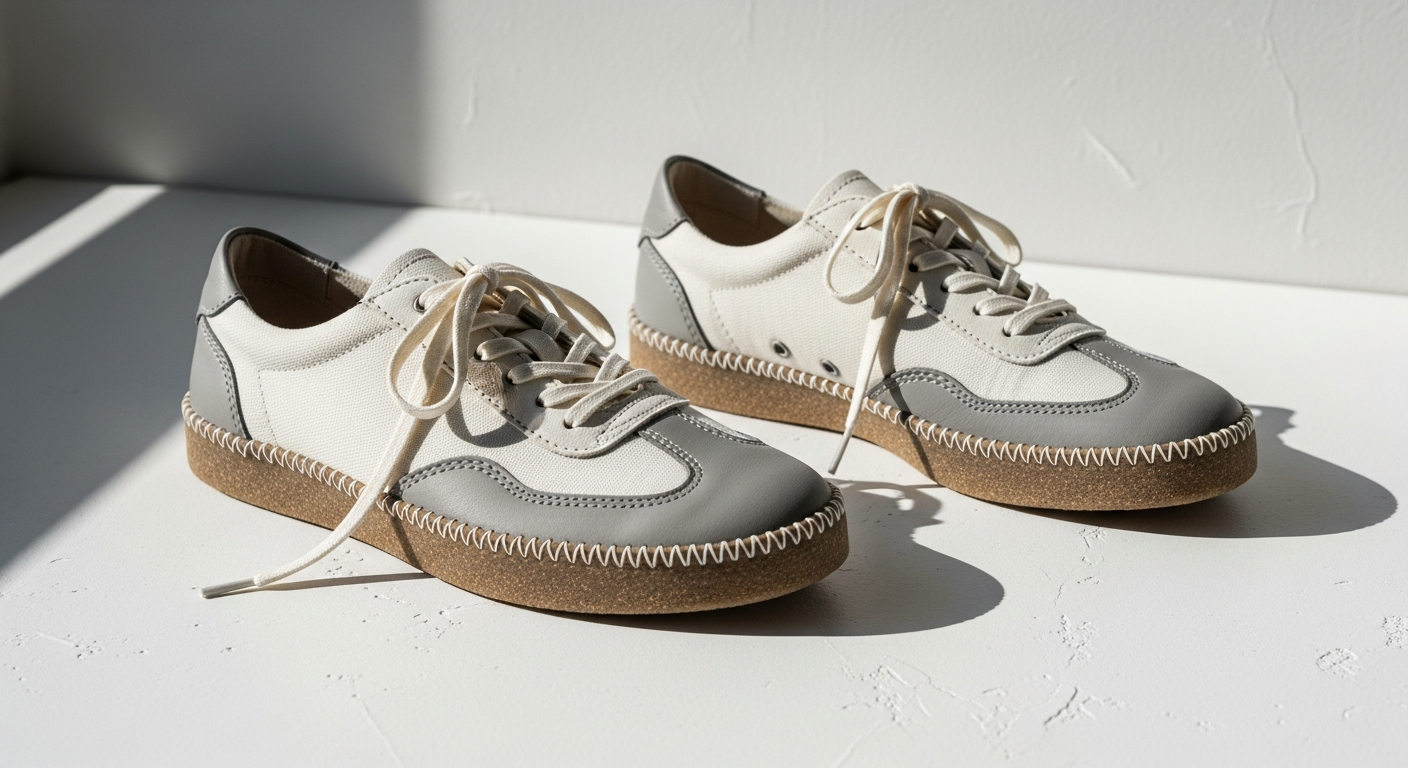
Discover why NAE vegan sustainable ethical sneakers are the top choice for eco-conscious shoppers. Learn about innovative materials, fair production, and stylish designs that prove ethical fashion doesn’t compromise on quality.
The fashion industry generates 92 million tons of textile waste annually, yet finding genuinely vegan and ethically made sneakers still feels challenging. Every year, countless pairs end up in landfills, their production leaving invisible marks on workers' lives and fragile ecosystems. The disconnect between what we wear and what it costs—beyond the price tag—has never been more apparent.
NAE, a Portuguese brand founded in 2008, stands for "No Animal Exploitation" and has revolutionized the sneaker game by proving that footwear can be 100% vegan, beautifully designed, and produced with genuine respect for workers and the planet. What started as a niche commitment to eliminating animal products from sneaker manufacturing has grown into a mainstream movement, with NAE becoming a bestseller on ethical retail platforms across Europe. The brand demonstrates that style and conscience aren't mutually exclusive—they can coexist in a single pair of shoes.
Discover NAE's collection of vegan sustainable ethical sneakers and find your perfect pair today.
The Story Behind NAE's Commitment to Vegan Footwear
A Portuguese Mission Since 2008
NAE's origin story reflects a deliberate choice to challenge industry norms. Founded with a singular mission to eliminate animal exploitation from sneaker production, the brand has remained rooted in Portugal, where manufacturing still happens today. This geographic commitment matters—it means transparency isn't a marketing buzzword but a tangible reality. When you purchase NAE sneakers, you're supporting a supply chain you can actually trace.
The Portuguese heritage brings more than just geography. Local manufacturing ensures accountability at every stage, from material sourcing to final assembly. Workers aren't hidden behind layers of subcontractors; they're part of a visible ecosystem where standards are verifiable and conditions are auditable. This approach requires patience and investment, but it's precisely what separates NAE from brands that claim ethics while outsourcing to opaque facilities.
From Niche to Mainstream: The Evolution of Ethical Sneakers
NAE began as a niche player in a market dominated by fast-fashion giants, yet something fundamental shifted. Conscious consumers started recognizing that buying shoes aligned with their values wasn't about compromise—it was about integrity. The brand's recognition as a bestseller on ethical retail platforms like Shop Like You Give A Damn reflects a broader cultural awakening.
This evolution matters because it signals something important: ethical production is no longer fringe. When vegan sneakers become bestsellers rather than novelties, the entire industry pays attention. NAE's growth proves there's genuine demand for footwear that respects both people and animals, forcing larger competitors to reconsider their own practices.
Brand Philosophy: Style, Sustainability, and Social Responsibility
NAE's approach balances three pillars that many brands struggle to align. Style isn't an afterthought—it's central. The sneakers are designed to be worn, admired, and integrated into real wardrobes. Sustainability isn't greenwashing; it's embedded in material selection and production methods. Social responsibility isn't a compliance checkbox; it shapes every decision from wage standards to worker safety.
This philosophy extends to the brand's transparency. NAE regularly communicates about its materials, production practices, and supply chain. It's not defensive transparency designed to deflect criticism; it's enthusiastic sharing of something the brand genuinely believes in. That distinction resonates with conscious consumers tired of corporate doublespeak.
Innovative Sustainable Materials That Actually Perform
Cork: Nature's Perfect Sneaker Component
Cork appears in NAE sneakers as more than a sustainable choice—it's a performance material. Lightweight and naturally breathable, cork regulates temperature and moisture without requiring chemical treatments. Its antimicrobial properties mean your shoes stay fresher longer, naturally resisting odor and bacterial growth. Unlike synthetic alternatives that require special processing, cork delivers these benefits through its inherent structure.
The material's durability surprises people expecting something delicate. Cork actually hardens slightly with wear, creating a shoe that molds to your foot while becoming more supportive over time. This contradicts the fast-fashion expectation of materials degrading with use.
Piñatex: Pineapple Leaf Fiber Revolution
Piñatex transforms agricultural byproducts into durable vegan leather alternatives. The material comes from pineapple leaf fibers that would otherwise be discarded, making it a genuine waste-reduction innovation rather than just another synthetic. The resulting texture is distinctive—not quite leather, not quite synthetic, but something uniquely tactile.
Beyond aesthetics, Piñatex delivers durability comparable to traditional materials. It resists cracking, maintains flexibility, and actually improves with wear. Each pair develops character, with color and patina changes reflecting genuine use rather than manufactured distressing.
Recycled PET Bottles: Plastic Gets a Second Life
Recycled PET—the plastic used in beverage bottles—becomes functional shoe components in NAE sneakers. This material addresses a real environmental problem: the billions of plastic bottles ending up in landfills and oceans annually. By incorporating recycled PET into uppers and linings, NAE participates in circular economy practices while creating durable, breathable components.
The process requires rigorous quality control to ensure recycled material meets performance standards. NAE doesn't compromise durability for environmental points; the material must perform as well as virgin alternatives or better.
Apple Leather: Fruit-Based Innovation
Apple leather represents frontier sustainability in footwear—using byproducts from cider production to create leather alternatives. The material reduces reliance on petroleum-based synthetics while utilizing agricultural waste streams. It's biodegradable and requires significantly less water and chemical treatment than conventional leather or synthetic alternatives.
Unlike some novel materials that sacrifice performance for novelty, apple leather performs. It's flexible, water-resistant, and develops a natural patina with use. Wearing sneakers made from apple leather feels like participating in a genuine innovation rather than supporting greenwashing.
Material Longevity: Building Shoes That Last
The fundamental difference between NAE construction and fast-fashion alternatives lies in material selection and assembly. Each component is chosen for durability rather than cost minimization. Durable outsoles withstand extended wear without degrading. Comfortable insoles maintain support rather than compressing into uselessness within months.
This matters economically and environmentally. A pair of NAE sneakers worn regularly for three years creates less waste and lower cost-per-wear than three pairs of cheap alternatives discarded annually. The construction philosophy embraces longevity as both an ethical and practical value.
Fair Trade Production and Ethical Manufacturing Standards
Portuguese Facilities: Transparency in Action
NAE's decision to keep manufacturing in Portugal reflects more than nostalgia for European production. Portuguese facilities undergo regular audits verifying fair labor practices and safe working conditions. This isn't theoretical commitment—it's verifiable reality. Workers have legal protections, reasonable working hours, and wages reflecting actual living costs.
The geographic proximity between brand headquarters and production facilities enables direct oversight impossible in distant outsourced arrangements. Management visits factories regularly, addresses issues immediately, and maintains relationships with actual workers rather than managing them through multiple intermediaries.
Worker Safety and Fair Wage Commitments
Fair wages begin with calculating actual living costs in the region where workers live, not minimum wage thresholds designed to be inadequate. NAE commits to wages allowing workers to afford housing, food, healthcare, and education for their families. Beyond wages, benefits include workplace safety equipment, regular training, and access to healthcare.
Working conditions reflect dignity and respect. Production facilities maintain reasonable hour limits, prevent excessive overtime, and provide safe working environments with proper ventilation and ergonomic considerations. When workers feel valued rather than exploited, productivity increases and quality improves—a sustainable cycle benefiting everyone.
Transparency in Production Processes
NAE publishes detailed information about its supply chain, including facility locations, worker counts, and audit results. This transparency allows customers to verify claims rather than accepting them on faith. The brand recognizes that conscious consumers want proof, not just promises.
Production documentation traces materials from source to finished product. Customers can understand where cork came from, how pineapple fibers were processed, and how recycled bottles became their shoe's upper. This traceability transforms abstract ethics into concrete understanding.
Certifications and Third-Party Validation
NAE's ethical claims undergo independent verification. Third-party audits validate fair labor practices, environmental compliance, and supply chain integrity. These certifications carry weight because they come from organizations with reputations to protect—entities that would face consequences for falsifying evaluations.
The brand welcomes scrutiny rather than resisting it, understanding that accountability builds trust more effectively than self-certification ever could.
Supply Chain Accountability From Raw Materials to Finished Product
Every component of NAE sneakers originates from verified sources meeting ethical and environmental standards. Cork suppliers follow sustainable harvesting practices. Pineapple fiber producers operate facilities meeting labor standards. Recycled PET comes from organized collection systems, not exploitative waste-picking operations.
This comprehensive approach prevents outsourcing ethical concerns to hidden corners of the supply chain. The shoe only qualifies as ethical if everything preceding it honors the same values.
Design Diversity: From Everyday Wear to Active Lifestyles
Contemporary Styles for Every Occasion
NAE sneakers aren't restricted to a single aesthetic. The collection spans classic minimalist designs for professional environments to bold colorways for expressive personal style. Models suit casual wardrobes, social occasions, and active pursuits equally well. Design diversity ensures ethical footwear doesn't require reinventing your entire wardrobe.
Contemporary styling reflects current fashion trends without chasing throwaway trends. NAE designs endure multiple seasons rather than becoming obviously dated within months, supporting the longevity philosophy integral to the brand.
Colorways Reflecting Fashion Trends
The palette extends beyond basic neutrals. NAE offers rich jewel tones, earthy naturals, vibrant accent colors, and everything between. Multiple colorway options per model mean most people find something matching their aesthetic preferences and existing wardrobe. This design commitment recognizes that ethics shouldn't require visual sacrifice.
Versatility Across Different Settings and Occasions
A single pair can transition from casual weekend wear to creative work environments to social gatherings. This versatility reduces the number of shoes necessary, supporting both budget consciousness and environmental responsibility. Design versatility means ethical footwear doesn't require compartmentalizing your wardrobe.
Specialized Models for Various Activities and Lifestyles
Beyond everyday sneakers, NAE develops models for specific activities and purposes. Whether you need something for commuting, casual sports, artistic pursuits, or daily adventure, the collection offers options optimized for different needs. Specialization ensures comfort and performance across diverse activities.
Aesthetic Appeal Without Ethical Compromise
The central promise of NAE design is that you never sacrifice aesthetics for ethics. These aren't "ethical shoes despite their appearance"—they're beautiful shoes that happen to be ethical. That distinction might seem subtle, but it profoundly impacts wearing experience and real-world adoption.
When conscious consumers can choose ethical footwear they genuinely love wearing, the commitment becomes sustainable. You're not enduring unattractive shoes out of moral obligation; you're enjoying footwear reflecting your values and personal style simultaneously.
Understanding the Price Point and True Value Proposition
Price Range Context: €85.00 to €169.00
NAE sneakers range from €85 to €169, positioning them solidly above fast-fashion alternatives but below luxury designer brands. This pricing reflects specific production choices, not arbitrary markup. Understanding what drives costs clarifies why ethical footwear costs more.
Cost Breakdown: What Actually Drives the Price
Material costs form the largest component. Cork, Piñatex, recycled PET, and apple leather cost more than virgin synthetics or petroleum-based alternatives. Sourcing these materials involves vetting suppliers, conducting audits, and often paying premium prices for quality and ethics. The supply chain simply doesn't offer volume discounts available through exploitative manufacturing.
Labor costs represent another substantial factor. Fair wages in Portugal exceed minimum wage thresholds. Worker safety equipment, training, and benefits require investment. Quality assurance processes ensuring each pair meets standards add production time. None of these represent inefficiency—they're intentional choices valuing people and quality.
Sustainability investments include renewable energy usage, waste reduction systems, and environmental compliance exceeding legal minimums. These commitments increase operational costs while reducing environmental impact.
Longevity and Durability Justifying Higher Investment
A €100 sneaker worn for three years costs €33 annually. A €30 fast-fashion sneaker replaced annually costs €30 annually, with the additional €3 barely registering. But across five years, NAE costs €100 while cheap alternatives cost €150, plus the environmental burden of four pairs discarded to landfills.
This calculation excludes the intangible but real difference in wearing experience. NAE sneakers feel better, perform better, and hold up better. The confidence of wearing footwear aligned with your values adds to this experience in ways purely numerical comparisons miss.
Long-Term Cost-Per-Wear Analysis
Consider realistic usage patterns. A person wearing NAE sneakers four days per week amortizes the cost across 200+ annual wears. Over three years, that's 600 wears, reducing cost-per-wear to mere cents while improving with familiarity. The shoe molds to your foot, developing character and personalization.
Compare this to cheap alternatives. The same person might replace them twice, using the shoes for perhaps 1,200 total wears across six years, but with the first pair becoming uncomfortable after 18 months. The cost-per-wear difference narrows considerably when accounting for actual comfort and wearability.
Value Beyond Price: Alignment with Personal Ethics and Environmental Impact
The premium reflects more than materials and labor—it represents alignment between your purchases and values. For conscious consumers, this alignment carries genuine value. Wearing shoes knowing they didn't exploit workers or animals, knowing they won't languish in landfills for decades, provides psychological and moral satisfaction.
Environmental impact reduction adds measurable value. Each NAE purchase prevents the consumption of virgin materials, reduces manufacturing pollution, and diverts waste from landfills. Over a lifetime of ethical footwear choices, individual impact compounds into meaningful change.
Making the Shift to Ethical Footwear That Feels Right
Choosing NAE vegan sustainable ethical sneakers isn't just about acquiring another pair of shoes—it's about casting a vote for the kind of world you want to inhabit. These sneakers prove that ethical doesn't mean sacrificing style, comfort, or durability. The innovative materials, transparent production practices, and thoughtful design create footwear that actually delivers on its promises.
Yes, they cost more than fast-fashion alternatives, but that premium reflects real value: fair wages, environmental responsibility, and quality that lasts. The investment transforms from a transaction into participation. Every time you lace them up, you're experiencing the tangible result of commitment to something larger than footwear convenience.
The transition to ethical shoes doesn't require sudden wardrobe overhaul. Start with one pair matching your most-worn style. Experience how they feel, how they perform, how they hold up. Notice the difference in your own comfort, confidence, and peace of mind. Once you experience what it means to wear sneakers aligned with your values, it becomes difficult to return to compromising on ethics for marginal cost savings.
The shift happens at the intersection of intention and action. You've already identified the gap between your values and your purchasing habits, or you wouldn't be reading this. NAE makes closing that gap achievable—offering genuine alternatives rather than greenwashed compromises, delivering quality rather than requiring sacrifice.