
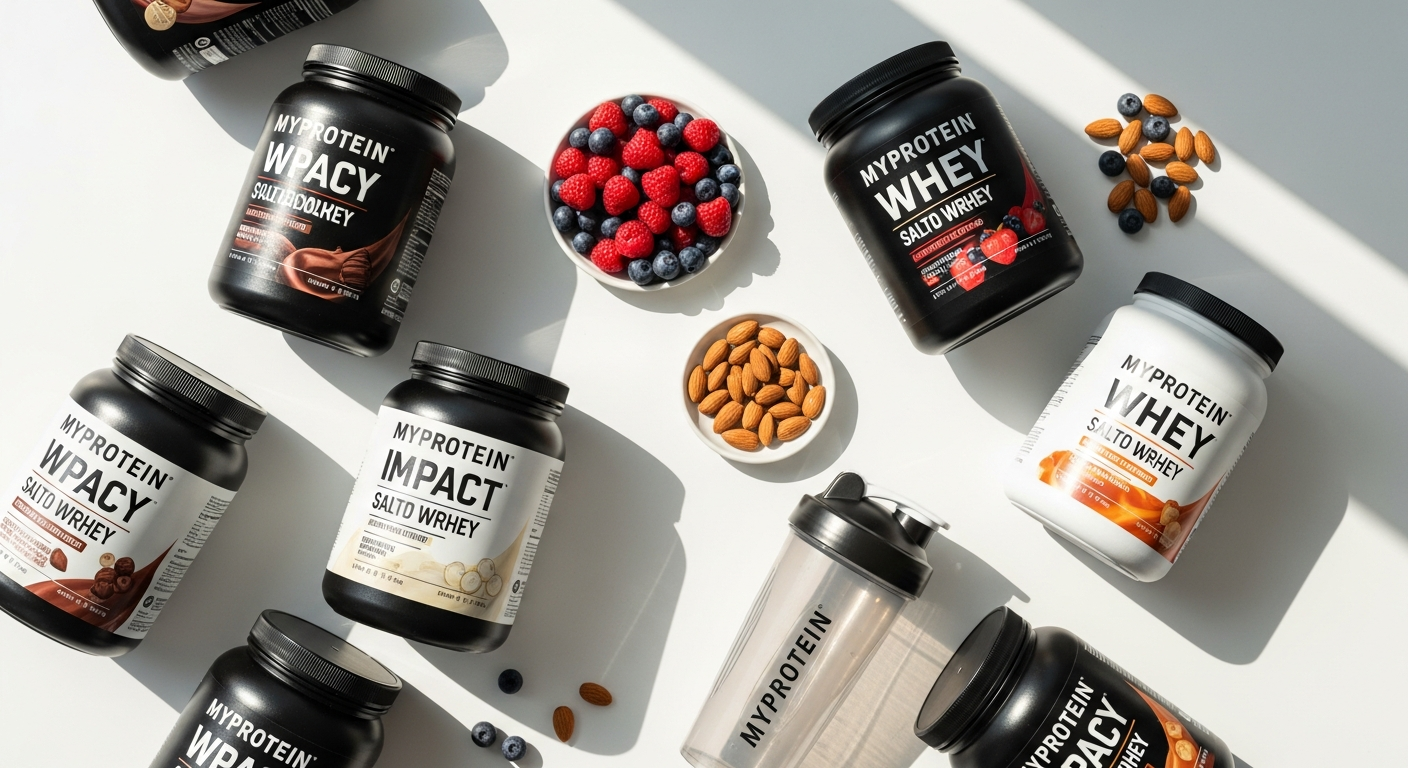
Discover which Myprotein Impact Whey Protein flavors deliver the best taste and value. Compare nutrition, pricing, and real user experiences to find your perfect match.
If you're serious about fitness, the protein powder sitting in your gym bag matters. Myprotein Impact Whey Protein has earned its place as one of Australia's most trusted supplement staples—and for good reason. With over 15 flavor options ranging from straightforward chocolate to creative combinations, this whey concentrate delivers 21g of protein per serving without the calorie bloat that derails your nutrition goals.
The real question isn't whether Impact Whey works. Countless Australian gym-goers have proven it does. The genuine questions are about flavor quality, actual value for money, and whether the product experience matches the promising nutrition label. You'll encounter claims about artificial sweetness in certain flavors, occasional packaging inconsistencies, and pricing that's shifted over the years. These aren't minor details—they directly affect your daily supplement experience and long-term satisfaction.
This guide cuts through the marketing and explores what Impact Whey actually delivers. You'll understand the flavor landscape, decode the nutrition science, analyze real costs, and discover which types of users should genuinely consider this product versus alternatives.
Shop Myprotein Impact Whey on the official Australian store.
Beyond Chocolate & Vanilla—Exploring Myprotein's Extensive Flavor Range
Flavor diversity across categories: Sweet dessert flavors versus subtle options
Myprotein's Impact Whey roster extends far beyond basic chocolate and vanilla. The range spans bold dessert-inspired flavors like Salted Caramel, Cookies & Cream, and Strawberry Cheesecake alongside more subtle options such as Vanilla, Unflavored, and Natural Strawberry. This spectrum allows different users to align their supplement with personal taste preferences rather than forcing themselves through unpleasant daily servings.
The dessert-heavy selections appeal to users who view protein powder as a treat component of their daily routine—mixing into smoothie bowls, blending with oats, or creating protein-enriched treats. Conversely, the understated flavors work better for straightforward gym-to-shaker scenarios where simplicity takes priority over indulgence.
Taste profile variations: Which flavors lean toward artificial sweetness and authentic taste
User feedback reveals consistent patterns regarding flavor authenticity. Chocolate Smooth generally receives praise for genuine cocoa notes without overwhelming artificial sweetness. Vanilla tends to divide opinion—some appreciate its clean profile, while others detect chemical undertones. The dessert-forward flavors like Cookies & Cream and Salted Caramel generate mixed responses: users with lower sweetness sensitivity enjoy them, while those prone to sweet fatigue report artificial aftertaste.
Strawberry variants consistently receive feedback regarding artificial strawberry notes. Peanut Butter flavor performs well among users seeking less sweet options with authentic taste delivery. Starting with middle-ground flavors like Chocolate Smooth or Unflavored helps identify your personal sweetness threshold before experimenting with bolder selections.
Seasonal and limited-edition releases: How Myprotein rotates flavors to keep fresh
Myprotein periodically introduces seasonal and limited-edition flavors, creating variety without cluttering the permanent roster. These limited releases appear during specific promotional periods and generate enthusiasm among long-term users seeking novelty. Australian customers have encountered flavors like White Chocolate, Sticky Toffee, and Maple that rotate availability.
The limited-edition strategy serves a dual purpose: it maintains user engagement through novelty while allowing Myprotein to test flavor viability before permanent inclusion. Tracking these rotations helps capture flavors you enjoy before they disappear.
Flavor stacking potential: Combining Impact Whey with different beverages and foods
Impact Whey's versatility extends beyond straightforward water or milk mixing. Different flavors perform predictably well with specific applications. Chocolate Smooth blends seamlessly into oatmeal, coffee-based beverages, and banana smoothies. Vanilla provides a neutral base for creative combinations—mixing with fruit juices, almond butter, or Greek yogurt. Strawberry works particularly well in smoothie bowls layered with granola and coconut flakes.
Peanut Butter flavor stands out for baking applications and protein energy balls. Unflavored Impact Whey serves as the ultimate blank canvas, adapting to savory applications like high-protein pancakes or smoothies where flavor neutrality matters. Experimenting with flavor-beverage combinations transforms protein supplementation from functional necessity into genuinely enjoyable consumption.
Regional flavor preferences: Why certain flavors dominate in the Australian market
Australian fitness culture shows distinct flavor preferences compared to global markets. Chocolate variants dominate sales volume, reflecting widespread preference for straightforward, proven options. Vanilla ranks second, appealing to users prioritizing mixability and versatility. Salted Caramel performs particularly well in the Australian market, suggesting higher acceptance of dessert-inspired flavors compared to some regions.
Peanut Butter and Coffee flavors command steady demand among serious athletes seeking less sweet supplementation. Regional preferences reflect broader Australian attitudes toward supplementation—pragmatic, value-conscious, and preference-aligned rather than trend-driven.
User reviews by flavor: Common feedback patterns about specific flavor performance
Analysis of user reviews reveals consistent performance patterns. Chocolate Smooth generates the highest satisfaction scores, with users praising natural taste and reliable mixability. Vanilla receives positive feedback for versatility but occasionally encounters criticism regarding perception of artificial sweetness. Strawberry Cheesecake scores well for taste novelty but sometimes divides users on sweetness level.
Cookies & Cream performs strongly among dessert-preference users but less favorably among those sensitive to artificial flavoring. Unflavored receives niche but enthusiastic praise from users prioritizing nutrition over taste. Peanut Butter generates consistent positive feedback from muscle-building focused users appreciating lower sweetness and authentic flavor delivery.
Mixability differences across flavors: How some flavors dissolve cleaner than others
Flavor selection influences mixing experience more than many users realize. Vanilla and Unflavored variants dissolve most readily with minimal shaking, requiring less vigorous agitation. Chocolate Smooth mixes well but occasionally forms small lumps requiring brief extra shaking. Denser flavors like Peanut Butter and Cookies & Cream demand more thorough mixing to achieve smooth consistency without grainy texture.
Lighter flavors like Strawberry dissolve cleanly, while some dessert-heavy options create slightly thicker, less pourable results. Understanding these differences helps match flavor selection to your mixing environment and equipment. Standard shaker bottles handle most flavors adequately with proper technique, while blenders eliminate differences entirely.
Decoding the Nutrition Label—Protein Quality vs. Macro Efficiency
Per-serving protein content breakdown: Consistent 21-22g delivery across all flavors
Every serving of Impact Whey delivers consistent protein content regardless of flavor selection. The standard 25g serving provides 21g of protein, translating to 84% protein by weight—a solid concentration for a whey concentrate product. This consistency eliminates the need to calculate different protein targets based on flavor choice. Whether you select Chocolate Smooth or Salted Caramel, your post-workout protein needs remain met equally.
The consistent 21-22g per serving creates predictable nutrition planning across your entire supplementation routine. Unlike some brands varying protein content between flavors, Impact Whey removes guesswork from daily macro calculations.
BCAA profile and Leucine concentration: Why 4.5g BCAA matters for muscle synthesis
The 4.5g BCAA (Branched-Chain Amino Acids) content per serving represents a legitimate advantage for muscle protein synthesis. More critically, the 2g Leucine concentration per serving directly triggers mTOR pathway activation—the physiological mechanism initiating muscle protein synthesis. This Leucine threshold makes Impact Whey particularly valuable for post-workout recovery windows when rapid amino acid availability influences muscle adaptation.
For comparison, whole food protein sources require larger volumes to achieve equivalent Leucine delivery. A chicken breast provides similar total BCAA but requires higher total consumption. Impact Whey's BCAA efficiency addresses the practical reality of post-workout recovery: athletes need rapid protein delivery without excessive calorie addition. The 4.5g BCAA profile positions Impact Whey competitively against premium isolate products costing substantially more.
Calorie density comparison: How 103 calories per 25g stacks against competitors
Impact Whey's 103 calories per 25g serving (Chocolate Smooth example) creates favorable calorie efficiency for supplement-focused diets. This low calorie density means you're consuming protein without significant calorie expenditure against daily budgets. For athletes managing strict macro targets, this efficiency matters substantially.
Premium isolate products often provide 110-120 calories per equivalent serving despite higher protein concentration. Budget concentrate alternatives sometimes deliver slightly fewer calories but with reduced protein content. Impact Whey's 21g protein in 103 calories represents optimal balance between calorie efficiency and protein delivery—the precise equation that drives its sustained popularity.
Carbohydrate and fat minimization: The low-carb, low-fat approach for fitness goals
The 1g carbohydrate and 1.9g fat content per serving exemplifies Impact Whey's minimalist macronutrient approach. This composition allows flexible macronutrient allocation—you're not forced to adjust entire daily nutrition around carbs and fats from protein supplementation. For users following ketogenic, low-carb, or fat-restricted protocols, this minimal carb and fat profile eliminates common supplementation conflicts.
This minimalism extends Impact Whey's applicability across diverse dietary approaches. Whether you follow high-carb training nutrition or prioritize fat-based energy protocols, Impact Whey adapts without requiring macro recalculation. The low carb and fat content means supplementation supports your chosen approach rather than constraining it.
Amino acid completeness: Essential amino acid profile supporting recovery protocols
Beyond BCAA focus, Impact Whey provides a complete essential amino acid profile. Whey concentrate naturally contains all nine essential amino acids required for protein synthesis, recovery, and adaptation. This completeness matters: incomplete protein sources force additional dietary planning to achieve adequate amino acid balance.
The essential amino acid spectrum supports not just muscle protein synthesis but broader recovery processes including immune function, collagen synthesis, and neurotransmitter production. Impact Whey's complete profile means single supplementation addresses multiple recovery pathways rather than requiring specialized amino acid combinations.
Ingredient transparency: Clean ingredient list without unnecessary fillers or blends
Impact Whey maintains relatively straightforward ingredient composition. Primary components include whey protein concentrate, flavoring, sweetener, and minimal additives. The ingredient list avoids proprietary blends that obscure actual nutrient quantities. This transparency aligns with current consumer preferences for understanding exactly what enters your body.
The clean ingredient approach contrasts with some competitors padding formulations with inexpensive fillers or requiring mystery "proprietary blends" obscuring actual nutrient content. Users reading Impact Whey's ingredient label understand protein source, sweetening strategy, and additional components without decoding marketing language.
Micronutrient additions: Whether added vitamins justify premium positioning
Impact Whey maintains relatively minimal micronutrient additions compared to premium-positioned products. The product focuses on protein delivery rather than comprehensive vitamin supplementation. For most users, this approach makes sense: dedicated multivitamin protocols address micronutrient needs more cost-effectively than relying on protein powder micronutrient additions.
Some competitors justify premium pricing through micronutrient enrichment. Impact Whey's pricing strategy focuses value on protein quality and flavor delivery rather than auxiliary micronutrient additions. This distinction allows transparent cost comparison—you're paying for protein and taste, not paying premium for micronutrient additions that could be sourced separately at lower cost.
Explore the full nutritional breakdown and purchase options.
The Real Cost of Consistency—Pricing, Package Sizes & Value Calculations
Current Australian pricing structure: A$35.99 for 250g and package size comparisons
Myprotein Impact Whey pricing in Australia reflects the brand's value positioning. A 250g container—approximately 10 servings—retails around A$35.99 when purchased at standard pricing. Larger containers ranging from 1kg to 5kg significantly reduce per-kilogram costs, with 1kg containers approaching A$143.96 per kilogram based on 250g pricing.
Bulk packaging creates substantial savings versus purchasing multiple smaller containers. A 2.5kg container costs considerably less per serving than purchasing five 250g units sequentially. Determining appropriate package size depends on personal consumption rate and storage capacity. Regular daily users benefit from bulk purchases, while occasional users avoid waste through smaller initial purchases.
Price volatility and promotional cycles: When to buy for maximum savings
Myprotein operates consistent promotional cycles, particularly around fitness-focused holidays and seasonal shopping events. Black Friday, Boxing Day, and New Year promotional periods generate discounts reaching 40-50% off standard pricing. Mid-month promotions and flash sales create additional opportunities for savings.
Understanding these cycles allows strategic purchasing. Regular users benefit from stocking up during promotional windows, purchasing multiple containers at discounted rates for consumption over following months. Email subscription notifications alert customers to upcoming sales. Timing significant purchases around predictable promotional periods directly reduces annual supplementation costs without changing product selection.
Cost-per-serving analysis: Breaking down actual daily supplementation expense
Breaking down actual daily cost reveals competitive positioning. At A$35.99 for 250g (10 servings), cost-per-serving reaches approximately A$3.60 at standard pricing. During promotions reaching 40% discounts, per-serving costs drop to approximately A$2.16. For budget-conscious daily supplementation, this represents reasonable investment.
Over annual consumption (365 servings), standard pricing creates approximately A$1,314 annual cost assuming daily use. Promotional purchasing reduces this to roughly A$788 annually. Compared to alternatives ranging from A$2-5 per serving, Impact Whey's positioning remains competitive across pricing tiers. Most fitness enthusiasts recognize supplementation as essential nutrition requiring budget allocation; Impact Whey's per-serving cost fits typical supplement budgets.
Bulk purchasing advantages: How larger containers affect unit pricing
Purchasing 5kg containers provides the most dramatic savings per serving. Rather than A$3.60 per serving at 250g pricing, bulk containers reduce costs to approximately A$2.88 per serving even at standard pricing—a 20% reduction. During promotional cycles, bulk purchasing at 40% discounts approaches A$1.73 per serving.
The mathematics clearly favor bulk purchasing for regular users. Storage becomes the limiting factor rather than cost optimization. Users with adequate container storage and consistent consumption benefit substantially from quarterly 5kg purchases during promotional periods. Conversely, users uncertain about flavor preferences or consumption consistency better serve themselves purchasing smaller containers initially, then scaling up after flavor validation.
Coupon code effectiveness: Realistic savings with promotional codes and coupon applications
Myprotein consistently offers coupon codes providing 10-25% discounts on orders. These codes stack inconsistently with existing promotions—some promotional periods prohibit additional code application, while others allow supplementary discounts. During non-promotional periods, coupon codes generate meaningful savings. Email subscribers typically receive exclusive codes exceeding publicly available discounts.
First-time customer codes often provide 20-25% initial purchase discounts, making early purchases from Myprotein particularly advantageous. Returning customer codes typically offer 15-20% discounts. Understanding which promotional periods allow code stacking optimizes overall savings. Users regularly purchasing should maintain email subscription for exclusive code access and promotional notifications.
Long-term price trends: User observations about cost increases over years
Long-term users consistently report price increases over recent years. Containers that retailed for A$25-28 five years ago now approach A$35.99 at standard pricing. This represents approximately 28-44% price increase over five-year periods. Some users attribute increases to inflation and broader supply chain costs; others view increased pricing as reducing product value despite maintained quality.
Price increases matter for budget-conscious long-term users planning supplement routines across years. Users who discovered Impact Whey during lower-cost periods sometimes explore alternatives when prices climb substantially. Myprotein appears aware of price sensitivity, implementing more aggressive promotional strategies to offset perception of increased base pricing. The broader pattern suggests stable to increasing prices rather than promotional fluctuation within consistent baseline.
Value proposition against premium alternatives: Why Impact Whey remains competitive
Comparing Impact Whey against premium alternatives (typically A$4.50-6.00 per serving) and budget competitors (A$2.00-2.50 per serving) reveals its positioning. Premium products often justify higher costs through isolate purity, micronutrient enrichment, or specialty ingredients. Budget alternatives typically use cheaper protein sources and limited flavor variety.
Impact Whey occupies the practical middle ground: genuine flavor variety, proven nutrition delivery, and competitive pricing without premium positioning or budget compromises. For most fitness enthusiasts, this middle positioning delivers optimal value—you're investing in a product that works without paying for premium branding, and you're avoiding budget alternatives that typically reduce quality below acceptable thresholds.
Mixability, Texture & Practical Performance in Your Shaker
Dissolution consistency: How quickly the powder mixes in standard shakers
Impact Whey dissolves readily in standard wire-ball shaker bottles when proper technique is applied. Most flavors require 15-20 seconds of vigorous shaking before consuming. Vanilla and Unflavored variants perform best, dissolving within 10-15 seconds. Denser flavors like Peanut Butter require slightly extended shaking but consistently achieve smooth consistency.
The dissolution speed remains practical for post-workout scenarios where rapid consumption matters. No extended settling periods are necessary. Users employed in time-constrained environments benefit from Impact Whey's relatively quick mixing compared to some competitor products requiring 30-45 seconds of vigorous shaking or blender preparation.
Lump formation and prevention: Common issues and shaker techniques
Users occasionally report small lump formation in standard shaker preparation. These lumps result from inadequate mixing or adding powder to insufficient liquid. Prevention strategies include adding liquid first, then powder, and maintaining vigorous shaking throughout consumption. Some users add ice cubes, which create agitation assisting dissolution.
Lump occurrence remains infrequent compared to some competitor products, suggesting Impact Whey's formulation mixes reasonably well. When lumps do occur, they typically remain soft and easily broken down during consumption rather than hard, undissolved clumps. Users switching from blenders to shaker bottles occasionally experience adjustment periods before mastering proper technique; standard shaker practice reliably prevents problematic lump formation.
Texture variations by flavor: Which flavors create smoother versus grittier products
Vanilla and Unflavored variants produce the smoothest, most pourable final texture. Chocolate Smooth creates slightly thicker texture but remains smooth. Peanut Butter and Cookies & Cream produce noticeably thicker, less pourable consistency—some users describe these as milkshake-like texture. Strawberry variants create slightly grainy texture, requiring additional mixing attention.
Texture preferences depend on personal consumption method. Users drinking supplementation quickly prefer thinner, pourable variants like Vanilla. Users consuming protein shakes as meal-replacement-style snacks enjoy thicker, milkshake-like textures from Peanut Butter and Cookies & Cream. Understanding these texture differences helps match flavor selection to preferred consumption experience.
Blender versus shaker performance: How powder behaves in different environments
Impact Whey performs significantly better in blender preparation compared to shaker bottles. Blending eliminates lump formation entirely and creates genuinely smooth, uniform texture. For users preparing post-workout smoothie bowls or protein-enriched breakfasts, blender mixing represents the optimal approach.
However, blender requirements introduce inconvenience in gym or work environments where shaker bottles provide practical single-tool solutions. The comparison isn't about superior performance but practical reality: blenders eliminate texture concerns entirely while shaker bottles require proper technique for acceptable results. Most users accept this practical tradeoff, reserving blender preparation for home smoothies while using shaker bottles in convenience-focused scenarios.
Shelf stability and clumping during storage: Packaging quality and humidity resistance
Impact Whey maintains reasonable shelf stability when stored in cool, dry conditions. The resealable pouch design protects powder from air exposure during extended storage. Humidity represents the primary concern—users in tropical climates or high-humidity environments occasionally report product clumping during storage regardless of proper sealing.
Myprotein's packaging quality remains adequate for standard storage conditions but doesn't approach premium premium competitor standards featuring desiccant packets or completely sealed containers. Users in high-humidity environments benefit from additional storage solutions like sealed airtight containers or desiccant addition. For standard Australian climates, standard packaging maintains product integrity adequately.
Cold water versus warm liquid mixing: Temperature effects on mixability and taste
Cold water creates superior mixability compared to warm liquid. Cold temperatures reduce powder density separation, promoting more uniform mixing. The cold temperature also enhances palatability for many flavors, particularly chocolate and fruit variants. Warm liquid mixing remains possible but produces slightly slower dissolution and occasionally affects flavor perception negatively.
Mixing with milk rather than water improves texture and mouthfeel regardless of temperature, though cold milk mixing performs best. Some users intentionally mix with heated water for specific applications (creating hot chocolate-style protein drinks) accepting slightly reduced mixability in exchange for desired final product. Cold mixing remains the practical default for optimal results.
Flavor intensity and sweetness perception: How mixing method influences final taste
Mixing method significantly influences flavor perception. Cold water mixing with shaker bottles emphasizes sweetness and flavor intensity. Blending with fruits, oats, or milk moderates sweetness perception, making sweeter flavors more palatable to sensitive users. Adding ice significantly dilutes sweetness while reducing final drink temperature.
Users sensitive to artificial sweetness benefit from blending-based preparation methods incorporating diluting ingredients. Simple shaker-bottle preparation with water emphasizes flavoring compounds without dilution, suitable for users seeking flavor intensity. This flexibility represents a genuine advantage—the same flavor powder delivers different final taste experiences depending on preparation method.
What Users Actually Experience—Honest Strengths and Legitimate Drawbacks
Reliable post-workout recovery support with proven amino acid profile
The 21g protein and 4.5g BCAA profile delivers genuine post-workout recovery support. Athletes consistently report improved recovery speed and reduced delayed-onset muscle soreness when incorporating Impact Whey into post-workout nutrition protocols. The Leucine concentration (2g per serving) actively triggers muscle protein synthesis within the critical post-workout recovery window.
Users who previously consumed solid food protein sources report practical advantages through Impact Whey supplementation: improved convenience, faster consumption, and precise macro tracking. Post-workout recovery represents Impact Whey's strongest use case—the product directly addresses the physiological need for rapid protein delivery when digestion speed matters.
Exceptional flavor variety catering to diverse taste preferences
The 15+ flavor options genuinely cater to diverse preferences rather than offering superficial variety. Users encounter legitimate flavor differences beyond minor sweetener modifications. This variety means most fitness enthusiasts identify at least several flavors they genuinely enjoy consuming daily.
Flavor variety transforms supplementation from obligatory task into actually enjoyable consumption. Users who previously struggled with "chalky" vanilla protein powders discover Cookies & Cream delivers genuinely pleasant daily consumption. The breadth of flavor options reduces the common experience of supplement fatigue where users eventually abandon products due to taste monotony.
Consistent quality across batches with minimal variation
Long-term users report minimal batch-to-batch variation. Flavor consistency, mixability, and nutritional delivery remain predictable across purchases separated by months or years. This reliability distinguishes Impact Whey from competitors where quality fluctuates based on manufacturing source or ingredient availability changes.
Consistency matters for users building supplement routines across years. Reliability allows confident supplementation planning without concerns about unexpected product changes. Users who discover preferred flavors expect consistent performance across future purchases—Impact Whey delivers this expectation reliably.
Effective muscle-building support for regular gym-goers and athletes
The amino acid profile and protein concentration directly support muscle adaptation protocols. Users following progressive resistance training combined with consistent protein supplementation report measurable hypertrophy progress. The cost-effective pricing means serious athletes can afford daily supplementation without budget constraints limiting consistency.
Impact Whey functions as genuine performance tool rather than superficial supplement. Users committed to progressive training protocols experience tangible benefits through reliable protein delivery across months and years. This effectiveness extends from novice gym-goers to advanced athletes—the fundamental protein delivery remains valuable regardless of training experience level.
Competitive pricing without sacrificing nutrition quality
The per-serving cost (A$2.16-3.60 depending on promotional timing) delivers substantial nutrition without premium pricing. Users comparing cost-per-gram-protein across alternatives consistently identify Impact Whey as competitive value. This pricing accessibility means serious athletes don't sacrifice budget for supplement consistency.
The price-to-value ratio allows sustainable long-term supplementation. Athletes maintaining routines across years benefit from pricing that doesn't continuously escalate beyond budget tolerance. Myprotein's promotional consistency means regular users anticipate annual savings through promotional cycles.
Versatility for smoothies, baking, and meal prep applications
Impact Whey extends beyond post-workout shakes into diverse applications. Chocolate flavors integrate naturally into oatmeal, protein pancakes, and brownies. Vanilla serves as blank canvas for creative applications from smoothie bowls to protein energy balls. Peanut Butter functions as ingredient for high-protein snacks.
This versatility means supplementation doubles as cooking ingredient, expanding application beyond straightforward beverage mixing. Users planning weekly meal preparation incorporate Impact Whey into multiple applications, maximizing value beyond post-workout scenarios.
Certain flavors perceived as overly sweet or artificial by sensitive palates
Some users report artificial sweetness perception in specific flavors. Dessert-focused options like Cookies & Cream and certain Strawberry variants receive occasional feedback regarding chemical aftertaste. Users with lower sweetness tolerance sometimes struggle with baseline flavor intensity.
The artificial sweetness concern remains flavor-specific rather than universal—many users enjoy identical flavors without detecting artificial notes. Individual sweetness sensitivity creates legitimate variation in flavor experience. Users uncertain about sweetness tolerance benefit from starting with understated options like Chocolate Smooth rather than bolder dessert selections.
Occasional packaging inconsistencies affecting product freshness
Some users report receiving containers with compromised seals or reduced product quantity. These incidents occur rarely relative to overall purchase volume but create genuine frustration when they occur. Damaged packaging risks clumping during transit and potential product degradation.
Myprotein's customer service generally addresses packaging issues through refunds or replacements, though some users report inconsistent responsiveness. The packaging quality remains adequate for standard conditions but doesn't match premium competitor standards featuring reinforced protection. Users concerned about packaging quality benefit from purchasing larger quantities less frequently, reducing opportunity for transit damage.
Variable customer service experiences reported by long-term users
Customer experiences with Myprotein support teams vary substantially. Some users report rapid, solution-focused responses to concerns. Others describe lengthy resolution processes or limited flexibility with damaged shipments. This inconsistency frustrates users expecting uniform service quality.
The variability appears correlated with issue complexity—straightforward refund requests receive faster resolution than complex product concerns. International customers sometimes experience longer resolution timelines. Users requiring immediate support should anticipate potential delays and plan supplementation accordingly.
Price increases over time reducing perceived value for loyal customers
Long-term users consistently mention price increases reducing appeal despite maintained quality. Products once retailing for A$25-28 now approach A$35.99 base pricing. While inflation partially explains increases, some users perceive aggressive pricing especially problematic given company scale and production efficiency improvements.
Price increases particularly frustrate customers who committed to Impact Whey during earlier lower-cost periods, then discover subsequent price escalation. Myprotein's response involves more aggressive promotions rather than base price stabilization, creating requirement for promotional timing understanding to maintain value perception. Users building long-term supplementation routines should anticipate continued price pressure.
Who Should Choose Impact Whey—And Who Might Look Elsewhere
Ideal for daily gym-goers seeking affordable, effective post-workout nutrition
Impact Whey directly addresses the core need of regular gym-goers: reliable, affordable protein delivery supporting muscle adaptation. Users training 3-6 days weekly benefit from consistent supplementation supporting recovery protocols. The cost structure enables sustainable daily use without budget pressure that discourages consistency.
Regular gym-goers represent Impact Whey's core user base because the value proposition aligns perfectly with their requirements: proven effectiveness, practical pricing, and convenient delivery.
Budget-conscious fitness enthusiasts prioritizing value without compromising quality
Users with limited supplement budgets find Impact Whey's value compelling. Compared to premium isolates costing 50-100% more per serving, Impact Whey delivers 90% of performance benefits at substantially lower cost. Budget-conscious users also benefit from promotional cycles allowing maximal value extraction.
The product philosophy appeals to practical-minded fitness enthusiasts skeptical of premium positioning and marketing spend. Users who question whether expensive supplements truly outperform mid-range alternatives find Impact Whey's transparent approach refreshing.
Flavor-preference driven consumers wanting options beyond vanilla and chocolate
The 15+ flavor variety appeals to users whose preferences fall outside standard chocolate and vanilla. Peanut Butter enthusiasts, Salted Caramel devotees, and Cookies & Cream fans find legitimate options matching preferences. Users avoiding certain artificial sweeteners find diverse choices allowing optimal fit.
This flavor diversity extends supplementation appeal to users whose preferences limit alternatives. Rather than compromising with unappealing standard options, Impact Whey's variety enables genuinely enjoyable consumption.
Muscle-building focused individuals targeting consistent protein intake
Individuals pursuing hypertrophy protocols benefit from consistent daily protein supplementation supporting muscle adaptation. The 21g protein delivery and strong BCAA profile directly support muscle protein synthesis. Consistency across time matters more than single-serving optimization—Impact Whey enables reliable, affordable daily consumption.
Users tracking macronutrients precisely appreciate Impact Whey's consistent serving specifications enabling accurate daily calculation. The low carb and fat minimization supports macro flexibility across diverse dietary approaches.
Meal prep specialists incorporating whey into recipes and smoothie bowls
Creative supplementation users leverage Impact Whey's versatility across applications. Meal prep specialists incorporating protein into oatmeal, energy balls, and baking benefit from flavor variety and reliable mixing in diverse environments. The affordable cost structure encourages experimentation without budget constraints.
Users viewing supplementation as cooking ingredient rather than pure beverage benefit from Impact Whey's application flexibility. Chocolate variants integrate naturally into sweet preparations; Vanilla adapts to creative applications; Unflavored serves as genuine blank canvas.
Recovery-focused athletes needing reliable BCAA and Leucine content
Athletes prioritizing recovery protocols benefit from consistent BCAA and Leucine delivery. The 4.5g BCAA per serving with 2g Leucine directly addresses muscle recovery physiology. Athletes with advanced training experience understand amino acid specificity; Impact Whey's profile meets legitimate recovery requirements.
Recovery-focused training emphasizes optimal post-workout nutrition—Impact Whey directly serves this requirement reliably and affordably.
Not ideal for lactose-intolerant individuals, isolate-level purity seekers, or premium-ingredient buyers
Lactose-intolerant users should avoid Impact Whey, as whey concentrate contains lactose. Myprotein offers separate isolate products addressing this concern, but Impact Whey specifically remains problematic for lactose sensitivity.
Users seeking isolate-level purity (99% protein) won't find it in Impact Whey's concentrate formulation. Concentrate provides 80%+ protein, adequate for most users but insufficient for those prioritizing absolute purity. Premium product seekers expecting specialized ingredients, comprehensive micronutrient additions, or ultra-premium positioning should explore alternatives better matching those criteria.
Making Your First Purchase—Selection Strategy & Optimization Tips
Starting with sample sizes to test flavors before larger commitments
First-time purchasers benefit substantially from beginning with 250g containers rather than bulk quantities. Flavor testing prevents committing to 1kg or larger containers of flavors potentially unsuitable for personal preferences. The A$35.99 250g investment enables flavor validation with manageable financial commitment.
Myprotein occasionally offers flavor sample packs containing multiple small servings—these represent ideal entry points for uncertain first-time purchasers. Testing flavors systematically before bulk commitment optimizes initial purchase experience and prevents expensive mistakes.
Flavor selection framework matching preferences to consumption methods
Determine your primary consumption method before flavor selection. Post-workout shaker-bottle users benefit from straightforward flavors like Chocolate Smooth or Vanilla. Smoothie bowl and blender users enjoy fuller flavor intensity from options like Strawberry Cheesecake or Cookies & Cream. Meal prep specialists incorporate flavors complementing intended applications.
Consider personal sweetness sensitivity when evaluating flavor options. Users with lower sweetness tolerance should start with understated options (Chocolate Smooth, Vanilla, Unflavored) before exploring bolder dessert selections. Those enjoying pronounced sweetness can immediately explore Salted Caramel, Cookies & Cream, or Cheesecake variants.
Timing purchases to identify seasonal sales and promotional windows
Tracking Myprotein's promotional calendar optimizes cost efficiency. Predictable promotional periods—Boxing Day, Black Friday, New Year, Easter—generate 40-50% discounts. Mid-cycle flash sales offer 25-35% reductions. Email subscription notifications alert to promotional opportunities.
Strategic purchasing timing during 40-50% discount periods followed by 2-3 month consumption intervals maximizes value extraction. Users purchasing at random intervals often pay 30-40% more annually compared to promotional-focused purchasers.
Subscription options offering additional discounts for recurring delivery
Myprotein's subscription service provides incremental discounts (typically 5-10% additional savings) on recurring orders. For users confident in flavor preferences and consistent consumption patterns, subscriptions eliminate promotional timing strategy requirements. Subscription flexibility typically allows pausing or canceling without penalties.
Users uncertain about long-term commitment or flavor preferences should avoid subscriptions initially. After 2-3 months validating flavor preferences and consumption patterns, subscriptions become appropriate for consistent users seeking simplified ordering.
Storage solutions maintaining freshness across multiple servings
Bulk purchasing requires proper storage to maintain product quality. Sealed airtight containers prevent humidity infiltration and oxidation. Users in tropical or high-humidity climates benefit from desiccant packet additions maintaining dryness. Cool, dark storage locations optimize shelf stability across extended consumption periods.
Proper storage extends product freshness across months of consumption, supporting bulk purchasing strategies. The resealable pouches work adequately for standard conditions but airtight container transfer provides additional protection for extended storage.
Mixing equipment investment enhancing overall experience
Standard wire-ball shaker bottles (A$10-20) reliably handle Impact Whey mixing. Premium shaker bottles with electric mixing or improved sealing offer marginal improvements not justifying significant cost premiums. Users preparing blended smoothies benefit from quality blenders, but expensive blender investment exceeds supplementation-specific requirements.
Affordable shaker bottle investment represents optimal equipment balance—adequate performance without unnecessary expense.
Tracking results monitoring protein intake consistency and recovery improvements
Establishing baseline metrics before