
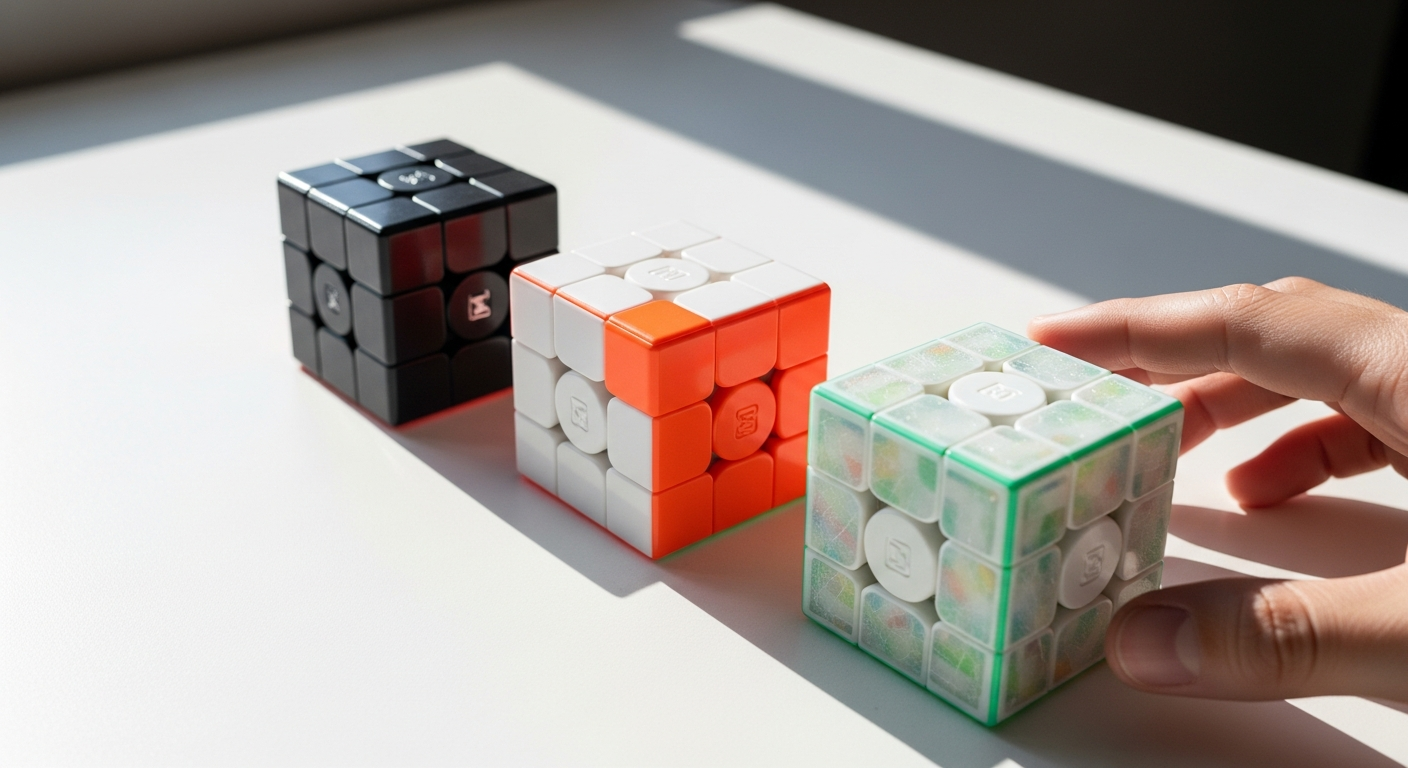
Discover which MoYu RS3M speed cube variant matches your solving style. Compare Magnetic, MagLev, and Ball-Core versions with detailed specs and setup tips.
Speed cubers spend thousands of dollars chasing marginal performance gains, yet the world's most popular 3×3 cube costs less than a coffee. The MoYu RS3M series represents a pivotal moment in speedcubing accessibility, offering three distinct configurations—Magnetic, MagLev, and Ball-Core—each engineered for different solving preferences and budgets.
The speedcubing market has traditionally operated on a simple equation: better performance means higher prices. Premium flagship cubes command $40, $60, even $80 price tags, creating a barrier that keeps many enthusiasts from experiencing truly modern speed cube technology. The RS3M shattered this assumption by proving that exceptional engineering doesn't require exceptional spending. Since its debut, the series has sold millions of units globally, fundamentally reshaping how the cubing community thinks about value.
Throughout this guide, you'll discover which RS3M variant matches your cubing style, learn customization mechanics that unlock full potential, and find setup strategies that eliminate common frustrations. Explore the complete MoYu RS3M collection and find your perfect match today.
The Evolution of the MoYu RS3M Lineup: From 2020 to Today
The RS3M's journey reflects MoYu's responsiveness to the cubing community's evolving demands. When the original RS3M 2020 launched, it introduced factory-installed magnets at an unbeatable price point—a revolutionary combination that overnight made magnetic cubes accessible to everyone. This foundational model featured a spring compression system, semi-frosted surface texture, and weighed approximately 84 grams. The 2020 quickly became the gateway cube for beginners and the reliable backup for advanced solvers alike.
The Super RS3M arrived in 2022 with incremental but meaningful refinements. MoYu incorporated a dragon scale surface texture that improved lubricant distribution across the cube's interior, creating smoother turning characteristics. The magnets themselves received a subtle strength increase, addressing feedback from early adopters who wanted more magnetic feedback during rapid solves.
Today's RS3M V5 represents the current generation pinnacle, available in three distinct configurations that cater to different solving philosophies. The progression across these generations matters because each iteration addressed real limitations identified by the cubing community. Rather than chasing gimmicks, MoYu focused on eliminating previous friction points—literally and figuratively—while maintaining the core value proposition that made the original RS3M revolutionary.
Consistency across all versions defines the RS3M family identity. Every model maintains the standard 56mm size, vibrant stickerless finish, and dual-adjustment system that cubers recognize and appreciate. You're not buying into a different product line with each generation; you're experiencing thoughtful refinement of a proven design.
Magnetic vs. MagLev vs. Ball-Core: Decoding the Three Configurations
Magnetic Configuration: Entry-Level Foundation
The Magnetic version carries forward the original RS3M philosophy—exceptional performance without complexity. Forty-eight embedded magnets provide crisp alignment and satisfying tactile feedback that tells your hands exactly when each turn locks into position. Traditional spring compression allows fine-tuning of layer tension through accessible screws on the cube's exterior.
Priced in the $8-$12 range, the Magnetic configuration targets beginners establishing fundamental solving technique and intermediate cubers who prefer controlled turning over outright speed. The blocky, defined feel provides confidence during learning, reducing the frustration that comes from a cube behaving unpredictably. Many experienced solvers maintain a Magnetic RS3M specifically because its forgiving nature builds consistency.
MagLev Configuration: Speed-Focused Performance
MagLev technology replaces traditional springs with repelling magnets—essentially creating a frictionless layer suspension system. This configuration arrives noticeably faster out of the box, sometimes shocking first-time users with its responsiveness. The magnetic resistance between layers creates a slick, responsive feel that rewards quick, precise rotations.
Positioned in the $12-$16 price range, MagLev appeals to intermediate speedcubers seeking measurable speed advantages without jumping to premium flagship pricing. The configuration maintains the RS3M's adjustability through magnet tension control, allowing solvers to dial back the inherent speed if needed. However, the learning curve is steeper than Magnetic versions—you'll need more solves to adapt to MagLev's inherent quickness.
Ball-Core Configuration: Premium Stability Zenith
Ball-Core represents the technological apex of the RS3M lineup, combining MagLev technology with corner-core magnets and a ball-core system that virtually eliminates lockups and corner twists. Advanced speedcubers recognize this configuration as the sweet spot between RS3M's affordability and flagship cube stability.
At $16-$20, Ball-Core costs more than its siblings but remains dramatically cheaper than $60+ alternatives offering similar stability profiles. The configuration produces a buttery, forgiving feel that allows imperfect rotations without mechanical failure—a critical advantage during high-speed solves when your fingers don't execute perfectly precise movements.
Turning Feel Comparison Across Configurations
Magnetic versions feel blocky and controlled, providing clear feedback with each rotation. MagLev feels slick and responsive, almost frictionless, rewarding speed-focused technique. Ball-Core delivers the butter-smooth experience that advanced solvers crave—fast without feeling chaotic, stable without feeling constraining.
Noise levels vary noticeably. Magnetic configurations remain quietest, which some solvers appreciate during competitions. MagLev and Ball-Core can produce audible clicks during rapid turning, which either adds satisfying tactile feedback or becomes distracting depending on personal preference.
Customization Through the Dual-Adjustment System
Spring Compression Adjustment
Magnetic RS3M versions feature accessible screws that control spring compression between cube layers. Tightening compression increases control and reduces overshooting—beneficial if you're getting frustrated with your rotations flying too far. Loosening compression increases speed and fluidity, allowing faster turning with less resistance. Most solvers discover their sweet spot within three to four adjustment cycles, though the process rewards experimentation.
MagLev Tension Control
MagLev and Ball-Core versions replace spring mechanics with adjustable magnetic resistance. Rather than tightening physical springs, you're controlling the repelling force between magnetic layers. This system offers even finer control than spring compression, as magnetic adjustment affects not just tension but also the cube's responsiveness and feel.
Screw Depth Customization
Beyond tension adjustments, screw depth directly impacts corner-cutting capability and overall stability. Deeper screws tighten the internal mechanism, improving stability at the cost of corner-cutting capability. Shallower screws increase cutting ability but can introduce wobbliness. The interaction between screw depth and compression/magnet tension creates a complex adjustment space that separates RS3M from one-size-fits-all competitors.
Finding Your Sweet Spot
Most solvers require 2-4 adjustment sessions before discovering their optimal configuration. The key is changing one variable at a time, then solving 10-15 times before evaluating the change. This methodical approach prevents endless tweaking and helps you understand how each adjustment actually impacts your solving experience.
A critical advantage of the dual-adjustment system is maintenance flexibility. Rather than replacing an aged cube as it loses performance, you can refresh its feel through re-adjustment. A cube that felt perfect six months ago might feel sluggish after lubricant settling or magnetic wear—minor adjustments can restore that lost magic without purchasing a replacement.
Start customizing your RS3M today and unlock the specific feel that matches your solving style.
Out-of-the-Box Performance and Initial Setup Challenges
The Speed Issue
MagLev and Ball-Core versions arrive remarkably fast—sometimes disturbingly so for cubers accustomed to spring-based magnetics. This speed isn't a flaw; it's inherent to how frictionless magnetic suspension works. However, "remarkably fast" and "controllable for your current skill level" aren't always the same thing. Many first-time MagLev users describe their cube as borderline unusable until they address the inherent quickness through lubrication adjustments.
Lubricant Strategy
Slower, thicker lubricants like Traxxas 50K reduce turning speed by increasing core friction, dialing back the MagLev's inherent velocity. Apply this to the core and internal mechanisms initially, then solve 20-30 times to assess the change. As you adapt to the cube's quickness, gradually introduce faster lubricants like DNM-37 to the core edges, increasing responsiveness incrementally.
This staged lubrication approach prevents the common mistake of permanently limiting a MagLev's potential because you applied too much slow lubricant too early. You're building up to the cube's actual speed capability rather than fighting against it from day one.
Break-In Timeline
Expect 50-100 solves before the cube settles into its optimal feel. Magnetic cubes benefit tremendously from this adjustment period as lubricants distribute throughout the mechanism, springs compress and settle, and your hands adapt to the specific feel. Judging a cube's quality after five solves is like evaluating a car's performance on the test drive—you're experiencing the freshly-assembled state, not the settled condition.
Magnet Strength Evolution
Newer versions—Super RS3M and V5—addressed complaints that the original 2020's magnets felt slightly light. Stronger magnetic feedback reduces overshooting and provides more satisfying tactile sensation. If you're comparing a 2020 model you bought three years ago to a brand-new V5, expect noticeable differences in magnetic responsiveness. This evolution represents genuine improvement, not product inconsistency.
First-Time Solver Expectations
Beginners should start with the Magnetic version and stock lubrication for immediate usability. The Magnetic configuration arrives in a performant state requiring minimal adjustment, allowing new solvers to focus on learning technique rather than cube configuration. As your skill develops, you'll understand what adjustments benefit your solving style and can migrate toward MagLev or Ball-Core when ready.
Performance Metrics That Matter: Speed, Stability, and Corner Cutting
Turning speed varies meaningfully across configurations. MagLev versions are noticeably faster due to reduced friction, enabling lightning-fast rotations with minimal resistance. Magnetic versions provide controlled speed—plenty quick enough for competitive solving but not so fast that control becomes a challenge. Ball-Core offers the best balance, delivering MagLev-adjacent speed while maintaining stability through its corner-core magnetic system.
Magnetic stability benefits extend across all configurations through factory-installed magnets that provide precise alignment and reduce overshooting during rapid rotations. This stability advantage proves critical during speedcubing, where hand movements aren't always perfectly precise. The magnetic alignment compensates for slight imprecisions, keeping your rotations locked and on-track.
Corner-cutting excellence distinguishes all RS3M versions from budget alternatives. The mechanism allows slightly imprecise rotations—where your finger executes a 45-degree turn but the cube rotates 42 degrees—without locking or popping. This capability separates cubes suitable for casual solving from cubes capable of competitive performance.
Lockup resistance varies between configurations. Ball-Core versions virtually eliminate lockups due to their ball-core system and corner-core magnets working in concert. Magnetic and MagLev versions experience occasional lockups under extreme pressure—unavoidable when you're executing rotations at tournament speed with imperfect precision. These lockups represent the cost of higher adjustability; they're rare enough not to impact most solving sessions.
Tactile feedback differs noticeably. Magnetic and Ball-Core versions provide satisfying click sensations that many solvers find rewarding, giving audible confirmation of successful rotations. MagLev feels smoother but less tactile—some appreciate the refined sensation, while others miss the definitive clicks.
Choosing Your RS3M: A Decision Guide for Every Cuber Type
For complete beginners, the Magnetic version ($8-$12) offers forgiving performance, manageable speed, and an excellent learning platform. You'll solve at your own pace without fighting against the cube's inherent quickness, building confidence and technique simultaneously.
For intermediate speedcubers, the MagLev version ($12-$16) provides speed advantages that correlate directly to faster solve times. The magnetic feedback remains satisfying, though the turning speed demands more precise technique than Magnetic versions require.
For advanced competitors, the Ball-Core version ($16-$20) delivers the stability and precision required for sub-10-second solves. The combination of MagLev speed and mechanical stability eliminates excuses, allowing focus purely on technique optimization.
For backup cube seekers, any RS3M variant functions excellently as a reliable secondary cube. Many advanced cubers maintain multiple RS3M configurations—a Magnetic for technique work, a MagLev for speed sessions, and a Ball-Core for competition. The low cost enables this multi-cube approach.
For budget-conscious enthusiasts, the Magnetic version punches above its weight class. The performance-to-price ratio remains unmatched in the speedcubing market; no cube costing less delivers comparable performance.
For customization lovers, all RS3M versions reward fine-tuning, though MagLev and Ball-Core offer more adjustment variables and greater control range. If adjusting your cube's feel is part of your cubing enjoyment, these configurations maximize that satisfaction.
Durability, Maintenance, and Long-Term Value
High-quality plastic construction resists wear from thousands of solves—cubers regularly use RS3M cubes for 5,000+ solves without mechanical degradation. The plastic remains structurally sound, corners don't chip or crack, and the overall mechanism maintains its performance characteristics.
The stickerless finish provides a significant advantage over sticker-based cubes. Vibrant colors don't fade through years of handling; you'll never need restickering. The colors actually brighten slightly after break-in as dust settles and the surface stabilizes.
Factory-installed magnets maintain their strength for years of heavy use. No degradation has been reported in long-term testing, even for cubes that have experienced 10,000+ solves. The magnetic technology proves remarkably durable.
A practical maintenance routine keeps your RS3M performing optimally. Occasional core cleaning with light compressed air removes dust accumulation that creates grinding sensations. Lubricant reapplication every 2-3 months of heavy use restores smoothness as the original application settles and disperses.
The cost-per-solve analysis tells the real durability story. At $8-$20, your RS3M costs approximately $0.002-$0.004 per solve if you reach 5,000 solves. Compare this to $40+ flagship cubes, and the affordability combined with durability becomes irresistible.
Resale value strengthens the investment case further. RS3M cubes maintain 50-70% of original value if resold, meaning upgrading or experimenting costs significantly less than the initial purchase. You can try different configurations without financial risk—buying a MagLev, deciding it's too fast, and selling it recoup most of your investment.
Common Setup Mistakes and How to Avoid Them
Over-tightening screws represents the most common setup error. Tightening screws reduces turning speed and increases friction, the opposite of what most cubers want from an RS3M. Start loose and gradually tighten until you find the sweet spot. You'll discover that slightly loose often feels better than slightly tight.
Incorrect lubrication transforms a fast cube into an uncontrollable one. Using fast lubricant on an already-fast MagLev version creates chaos. Layer your lubricants strategically—start with slow core lubrication, then add faster edge lubrication only after you've adapted.
Ignoring the break-in period leads to premature adjustments based on first-solve impressions. Your new RS3M will feel slightly different after 50 solves, and noticeably different after 100. Judging performance before this adjustment period yields inaccurate conclusions and likely unnecessary tweaks.
Neglecting core cleaning creates grinding sensations as dust accumulates inside the mechanism. Regular compressed air cleaning every 2-3 weeks prevents buildup. If your cube suddenly feels gritty despite proper lubrication, cleaning usually solves the problem.
Misunderstanding magnet strength variations causes false expectations when comparing models. The RS3M 2020's slightly lighter magnets differ noticeably from V5's stronger magnets. Expecting identical feel between generations sets you up for disappointment. Each represents its generation's optimized balance.
Skipping the adjustment system entirely leaves hidden potential unexplored. Many users never customize their RS3M, accepting the default configuration indefinitely. Spending 30 minutes exploring your cube's adjustment range often reveals improvements that better match your solving style.
The RS3M in Competitive Speedcubing: Real-World Performance Data
RS3M variants appear in speedcubing tournaments worldwide, held by cubers across all skill levels. The cube's presence in competitive settings proves legitimacy—it performs under pressure when actual solve times matter.
Multiple sub-10-second solvers use RS3M as their primary competition cube, demonstrating that world-class performance doesn't require $60+ cubes. These aren't hobbyists praising a budget purchase; they're specialists choosing to compete with RS3M because it delivers required performance.
The community trust backing RS3M is measurable. Millions of solves have been logged across all skill levels, with consistent positive feedback from verified users. Cubing forums, YouTube reviews, and competition reports paint a unified picture: RS3M performs as advertised.
Professional endorsements reinforce this legitimacy. Sponsored cubers across multiple countries rely on RS3M variants for competition and training. Brand sponsorships typically require cubes to win competitions regularly, meaning sponsored RS3M usage reflects genuine competitive viability.
While RS3M cubes don't hold absolute world records, they regularly appear in top-100 fastest solves. The distinction matters: flagship cubes with multiple world records cost 3-4x more, yet RS3M occupies the same performance tier due to modern manufacturing and engineering efficiency.
Reliability during tournaments separates pretenders from legitimately competitive cubes. Minimal mechanical failures occur during tournaments; cubes perform consistently even under pressure and adrenaline-fueled intensity. A cube might pop or lock during casual solving, but during competition, RS3M demonstrates rock-solid mechanical integrity.
The beginner-to-advanced pipeline tells the RS3M's strongest story. Many current competitive cubers started their journey with RS3M and never felt compelled to upgrade. This retention rate—where buyers stick with RS3M despite having the financial means to purchase alternatives—reveals genuine satisfaction beyond budget constraints.
Comparing RS3M to Premium Alternatives: Is the Price Difference Worth It?
Flagship cubes from premium manufacturers range from $40-$80+, while RS3M variants cost $8-$20. This 75-90% price reduction dramatically changes the purchase calculation.
The performance gap reality emerges through honest assessment: flagship cubes offer marginal improvements over RS3M. Most solvers can't exploit the differences. Advanced speedcubers pursuing sub-8-second times might extract marginal benefits, but intermediate and beginner solvers won't notice substantive differences.
Magnetic technology parity illustrates how technology democratization actually works. RS3M's magnetic systems rival cubes costing 3-4x more, proving that MoYu cracked the engineering code rather than premium brands discovering secret sauce. You're not paying for proprietary technology; you're paying for brand prestige.
Customization depth across RS3M configurations rivals or exceeds customization options on premium cubes. The dual-adjustment system provides granular control, and switching between Magnetic, MagLev, and Ball-Core configurations offers flexibility expensive alternatives can't match at similar price points.
The best-value verdict emerges clearly: for 95% of cubers, RS3M delivers 95% of flagship performance at 20% of the cost. This "good enough" equation applies to most hobbies—paying 5x more for 5% improvement rarely makes financial sense.
When premium cubes make sense is a narrower question. Only elite speedcubers pursuing sub-8-second times might extract sufficient marginal benefits from $60+ cubes to justify the expense. Even then, they're chasing optimization rather than foundational performance improvements.
The Cubing Community's Verdict: Why RS3M Dominates Market Share
Sales volume proves the RS3M's market dominance. Millions of units sold globally, with the RS3M 2020 remaining the best-selling 3×3 cube ever produced. This isn't a niche favorite; it's the default choice for most cubers worldwide.
The beginner gateway dynamic matters significantly. Most new cubers' first speed cube is an RS3M, creating positive first experiences that build brand loyalty. When your introduction to speed cubing happens through an RS3M, and you immediately experience dramatic improvement, you remember that cube fondly.
The accessibility revolution initiated by RS3M proved that premium performance doesn't require premium pricing. Before RS3M, top-tier cubes were expensive—creating a barrier separating casual players from serious enthusiasts. RS3M broke this mold by offering magnetic, adjustable, fast cubes at accessible prices, shifting entire market expectations.
MoYu's commitment to improving the series (2020→Super→V5) maintains relevance across generations. Rather than resting on initial success, the company continued investing in RS3M refinement. This dedication signals long-term support and suggests future improvements are likely.
Social proof dominates RS3M's community presence. The cube appears constantly in cubing YouTube channels, forums, and competitions; the community consensus favors RS3M through sheer repetition and positive mentions. New cubers encounter RS3M recommendations constantly, reinforcing its status as the safe, proven choice.
Affordability for collections enables enthusiasts to build multiple-cube portfolios around RS3M variants. Collectors maintain Magnetic for technique work, MagLev for speed sessions, and Ball-Core for competition—total investment remains under $50. This collection-building affordability creates deeper engagement than buying single expensive cubes.
Future-Proofing Your RS3M Investment: Longevity and Relevance
MagLev and Ball-Core systems represent the current cutting edge of speed cube technology. These innovations aren't trending features likely to disappear; they're fundamental improvements in mechanical design unlikely to become obsolete soon. Your RS3M purchase captures current-generation engineering, not yesterday's technology.
MoYu's demonstrated commitment to the RS3M line suggests long-term support and potential future improvements. The company views RS3M as a flagship product category deserving continuous investment, not a budget line destined for abandonment. This corporate commitment provides confidence in long-term relevance.
Starting with the Magnetic version doesn't lock you into permanent Magnetic usage. The upgrade path remains flexible; you can transition to MagLev or Ball-Core later as your skill develops and preferences clarify. Your initial investment isn't wasted if you evolve toward different configurations.
Secondary market strength for RS3M cubes enables low-cost experimentation. Resale value holding at 50-70% of original cost means trying different configurations costs minimal money. Buy a MagLev, decide it's not for you, sell it, and recoup most investment, then try Ball-Core with minimal net spending.
Compatibility with accessories matters practically. Standard 56mm size ensures compatibility with cases, stands, and other cubing accessories. Proprietary sizing—like some premium brands employ—can make accessory shopping frustrating. RS3M's standard dimensions integrate seamlessly into the broader cubing ecosystem.
Community longevity provides perhaps the strongest future-proofing argument. Even as new cubes emerge, RS3M remains relevant due to proven performance and affordability. The community doesn't abandon proven products for flashy alternatives; it absorbs innovations while maintaining appreciation for reliable classics.
Your RS3M Journey Starts Here: Making the Right Choice
The MoYu RS3M series isn't just a budget option—it's a paradigm shift in what affordable speedcubing performance actually looks like. Whether you're grabbing your first speed cube or building a collection of backup solvers, the RS3M lineup offers something genuinely exceptional: flagship-level engineering at prices that won't drain your wallet.
Start by honestly assessing your cubing goals. Beginners thrive with the Magnetic version's forgiving nature and accessible price. Intermediate solvers unlock speed advantages through MagLev's frictionless design. Advanced competitors appreciate Ball-Core's stability and precision. Then commit to the break-in period, explore your cube's adjustment range, and resist the temptation to constantly tweak settings. The cubing community's verdict is clear: the RS3M earned its reputation through consistent performance, not marketing hype. Millions of solves across every skill level prove that MoYu cracked the code—delivering genuine value without compromise.
Your RS3M won't just improve your times; it'll restore your faith that quality doesn't always demand premium pricing. Ready to experience why the RS3M dominates the speedcubing world? Choose your configuration today, and join the millions of solvers already discovering what flagship performance actually costs.