
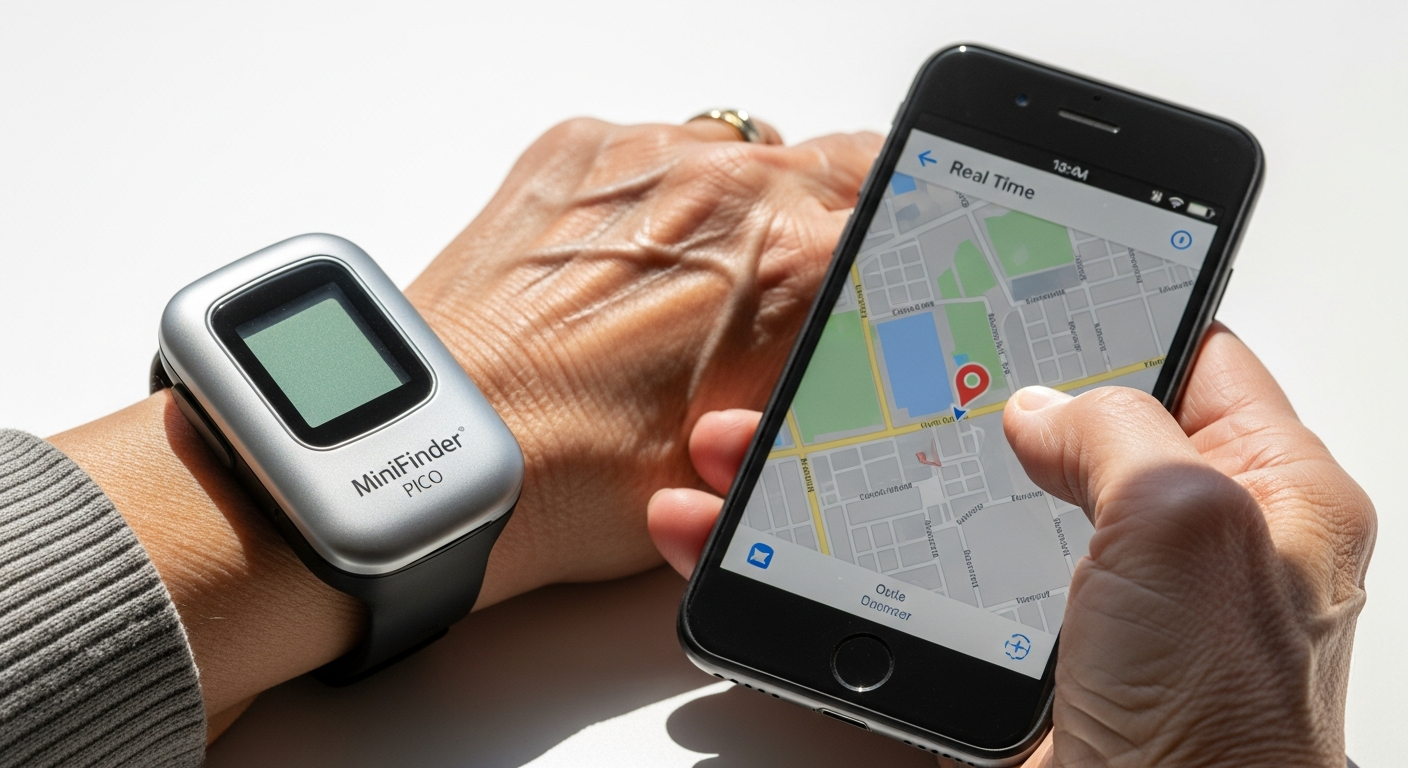
Discover how MiniFinder Pico compact GPS alarm provides elderly care with fall detection, real-time tracking, and emergency SOS features for seniors in 200+ countries.
Protecting Independence: Why Fall Detection Technology Matters for Aging Adults
One in four adults aged 65 and older experiences a fall each year—and many of those falls go unnoticed for hours. The consequences can be devastating: delayed medical attention, prolonged suffering, and escalated health complications. For families managing elderly relatives, the fear of what if becomes a constant companion, especially when distance separates them from their loved ones.
The MiniFinder Pico Compact Personal GPS Alarm represents a shift in how we approach elderly care and independent living. Rather than relying on traditional check-in calls or hoping someone notices an emergency, this wearable device combines satellite positioning, automated fall detection, and two-way communication into a package small enough to fit in a pocket. For seniors seeking autonomy without sacrificing safety—and for families seeking peace of mind—this technology changes the game.
Discover how the MiniFinder Pico can protect your loved one today.
Automated Fall Detection—The Feature That Could Save Your Life
How fall detection algorithms distinguish between normal movement and actual falls
The MiniFinder Pico uses accelerometers and motion sensors to continuously monitor movement patterns. The device distinguishes between everyday activities—sitting, standing, walking—and the distinctive acceleration signature of an actual fall. When sensors detect a sudden, uncontrolled descent combined with a rapid impact, the algorithm recognizes this as a potential fall event rather than intentional movement or vigorous exercise.
Real-time alert mechanisms that notify emergency contacts immediately upon detection
The moment a fall is detected, the MiniFinder Pico springs into action. The device sends immediate notifications to pre-set emergency contacts through the MiniFinder Live app, providing precise location data and fall confirmation. This rapid response window is critical—studies show that prompt medical intervention following a fall significantly improves outcomes and reduces complications.
The role of accelerometers and motion sensors in capturing fall events
These sensors form the backbone of fall detection. Accelerometers measure changes in velocity and direction, while motion sensors track position shifts. Together, they create a real-time profile of body movement. When the pattern matches the characteristics of a fall—rapid downward motion followed by sudden stillness—the system activates alert protocols.
Customizable sensitivity settings for different activity levels and living environments
Not all seniors move at the same pace or engage in the same activities. The MiniFinder Pico allows adjustment of fall detection sensitivity based on individual circumstances. A more active senior who exercises regularly might need different settings than someone with limited mobility. These customization options reduce false alarms while maintaining protection for genuine emergencies.
Integration with the MiniFinder Live app for caregiver notifications
Family members receive alerts through a dedicated smartphone application, providing immediate notification regardless of their location. The app displays the senior's exact position, fall confirmation details, and options for two-way communication with the wearer. This centralized notification system ensures no alert gets missed or delayed.
Response time expectations and emergency service coordination
Once a fall is confirmed, caregivers can initiate two-way communication with the senior to assess the situation. If emergency services are needed, the device's precise GPS location accelerates response times. In urban areas, emergency dispatch can typically arrive within 15-20 minutes of notification, though this varies by region and service availability.
Limitations and false-positive scenarios to understand before relying on this feature
Fall detection technology remains imperfect. Seniors who fall onto cushioned surfaces may not trigger alerts if the impact signature differs from typical falls. Vigorous exercise, jumping, or rapid sitting movements occasionally register as falls. Additionally, some falls occur too gradually for sensors to classify as emergency events. Understanding these limitations helps families maintain realistic expectations and avoid over-reliance on automated detection alone.
Geofencing and Movement Monitoring for Independent Living
Creating custom safety zones around home, medical facilities, or familiar locations
Geofencing allows families to establish virtual boundaries around locations where seniors spend their time. Home, the local pharmacy, a favorite restaurant, or a doctor's office can all be designated as safe zones. When the senior enters or exits these predefined areas, the MiniFinder Pico triggers notifications to caregivers, providing assurance that movement is expected and routine.
How boundary notifications work when seniors enter or exit designated areas
The device uses GPS positioning to monitor proximity to established zones. When a senior approaches a boundary—either entering or leaving—the MiniFinder Live app sends real-time alerts to family members. This creates a gentle oversight system that respects independence while catching unexpected departures.
Real-time alerts sent to family members through the mobile app
Caregivers receive immediate notifications on their smartphones whenever zone boundaries are crossed. These alerts include timestamp, location data, and direction of travel. For seniors prone to confusion or wandering, this feature provides critical situational awareness.
Movement detection features that flag unusual activity patterns
Beyond geofencing, the MiniFinder Pico monitors overall movement patterns. If a senior remains stationary for an unusually long period—suggesting a possible problem—the system can generate alerts. Conversely, unusual nighttime movement might indicate confusion or sleep disturbances.
Speeding alerts for seniors who drive or travel by vehicle
For active seniors who continue driving, speeding alerts notify families if the device detects vehicle speeds suggesting reckless driving or potential traffic incidents. This feature recognizes that transportation safety extends beyond falls at home.
Location history tracking for reviewing daily routines and patterns
The MiniFinder Live app maintains historical location data, allowing caregivers to review where seniors traveled throughout the day. This information reveals daily routines, identifies frequent destinations, and helps families spot deviations from typical patterns that might warrant concern.
Privacy considerations and data retention policies
Location tracking necessarily involves privacy trade-offs. The MiniFinder Pico collects detailed movement data that remains stored on MiniFinder's servers. Families should understand data retention policies, encryption standards, and who has access to location information. Privacy settings allow customization of what information is shared and with whom.
Using geofencing to support independence while maintaining oversight
Geofencing represents a middle ground between constant supervision and complete disconnection. Seniors can move freely within and between safe zones without triggering notifications, preserving autonomy. Only unexpected departures generate alerts, creating a system that watches without hovering.
Explore the geofencing capabilities that keep your loved one safe and independent.
Two-Way Communication and Emergency Response
Direct voice communication through the MiniFinder Pico device
Unlike traditional medical alert systems that connect to monitoring centers, the MiniFinder Pico enables direct conversation between the wearer and family members. A senior experiencing difficulty can speak directly to a son, daughter, or designated contact without intermediaries. This personal connection often provides reassurance and faster problem-solving.
SOS and panic button activation for immediate emergency contact
The device features an easily accessible SOS button for deliberate emergency activation. Pressing this button immediately notifies all pre-set emergency contacts with precise location data. This manual control ensures seniors can summon help intentionally when they recognize they need it.
How two-way calling differs from traditional alert systems
Conventional medical alert systems typically connect users to call centers staffed by operators who assess situations and dispatch help. The MiniFinder Pico's two-way calling instead creates direct family connection. While this approach requires family availability, it eliminates intermediaries and enables loved ones to assess situations directly.
Pre-set emergency contacts and customizable response protocols
Families can designate multiple emergency contacts—typically adult children, neighbors, or close friends—who receive alerts in sequence. Customizable protocols can specify which contacts are notified for falls versus boundary alerts, enabling appropriate response levels.
Integration with emergency services in different countries
The MiniFinder Pico operates across 200+ countries, but emergency service integration varies by region. In some areas, the device coordinates with local emergency dispatch; in others, family members must contact services manually. Understanding regional capabilities ensures appropriate setup for your location.
Advantages of voice communication over text-based alerts for elderly users
Many seniors find voice communication more natural than typing or navigating app notifications. Hearing a family member's voice provides immediate reassurance and enables faster communication during stressful situations. For seniors with visual impairments or limited tech comfort, voice interaction proves significantly more practical.
Testing emergency features before they're actually needed
Families should conduct regular tests of the SOS button, two-way communication, and app notifications before genuine emergencies arise. This practice ensures everyone understands the system, troubleshoots technical issues, and confirms that emergency contacts are properly configured and receive alerts.
Global Coverage and International Reliability
Satellite-based positioning combined with 2G and 4G mobile networks
The MiniFinder Pico uses GPS satellites for positioning while relying on cellular networks for data transmission. This hybrid approach provides coverage in urban areas with robust 4G service as well as remote regions where only 2G connectivity exists. The combination ensures functionality far beyond what cellular-only devices can achieve.
Functionality across 200+ countries and territories
The MiniFinder Pico operates in over 200 countries worldwide, making it suitable for seniors who travel internationally or families managing elderly relatives across borders. This extensive coverage removes geographic constraints on monitoring capability.
Coverage in remote areas where traditional cell service may be limited
Satellite positioning functions in wilderness areas, mountains, and rural regions where cellular towers are sparse. Senior hikers, rural residents, or those visiting remote family properties remain trackable even when conventional cell service disappears. This capability proves particularly valuable for adventurous seniors who refuse to abandon outdoor activities.
Roaming considerations for seniors who travel internationally
The MiniFinder Pico automatically adapts to local networks in different countries, though international roaming data costs may apply to the monthly subscription. Families with seniors who travel frequently should clarify roaming policies and any additional charges with MiniFinder before committing to international use.
Network redundancy ensuring consistent connectivity
The device maintains connections across multiple network types and carriers, providing redundancy that ensures service continuity. If 4G networks experience disruption, the device shifts to 2G backup systems, maintaining core positioning and communication functions.
Differences in coverage density across urban, suburban, and rural regions
Urban areas typically offer reliable high-speed 4G connectivity and precise GPS positioning. Suburban regions generally provide adequate coverage with occasional dead zones. Rural and remote areas may experience slower 2G connections, though positioning remains functional. Families should test coverage in their specific locations before fully depending on the system.
Choosing the right subscription plan based on travel frequency
MiniFinder offers various subscription tiers based on expected usage patterns. Seniors who rarely travel internationally might choose basic regional plans, while frequent travelers benefit from comprehensive global packages. Evaluating anticipated travel frequency ensures cost-effective subscription selection.
Battery Performance and Charging Reality
Active use battery life: 40-72 hours of continuous operation
When actively using GPS positioning, two-way communication, or app features, the MiniFinder Pico maintains operation for 40-72 hours depending on usage intensity. Heavy GPS use and frequent communication deplete batteries faster than light monitoring. This active-use range means seniors engaging in regular activities typically charge every 2-3 days.
Standby mode longevity: approximately 30 days without charging
With minimal feature usage, the MiniFinder Pico operates for approximately 30 days in standby mode. This exceptional longevity means seniors who don't actively use the device can charge infrequently, reducing daily burden and ensuring extended protection during extended trips or situations where charging access becomes limited.
Factors affecting battery drain (GPS frequency, app usage, network connectivity)
Battery consumption varies significantly based on usage patterns. Continuous GPS tracking drains batteries much faster than periodic location updates. Frequent two-way calls consume more power than alert-only operation. Constant app interaction and high network activity accelerate depletion. Understanding these factors helps optimize battery life through adjusted settings.
Practical charging schedules for different usage patterns
A senior using the device primarily for fall detection and occasional check-ins might charge every 3-4 days. One actively using GPS navigation and two-way calling daily should charge every 1-2 days. Light users traveling internationally might establish weekly charging routines. Families should tailor charging schedules to match anticipated use patterns.
Low battery warning system that prevents unexpected shutdowns
The MiniFinder Pico sends battery status notifications to both the wearer and caregivers when power drops below critical levels. These warnings provide ample time to charge before shutdown, preventing the device from dying during emergencies when it's needed most.
Comparison to other wearable devices and personal alarms
Compared to smartwatches, the MiniFinder Pico typically offers longer battery life due to its focused feature set. Traditional medical alert devices often match or exceed MiniFinder's standby time but may offer shorter active-use duration. The balance between features and battery longevity positions the Pico competitively within the personal safety device market.
Extended battery life as a feature for seniors with limited charging access
For seniors with arthritis affecting dexterity, cognitive decline affecting charging routines, or limited access to power outlets, extended battery life represents a crucial advantage. The 30-day standby capacity ensures the device remains functional even if charging gets delayed or forgotten.
Taking Action: Making the Right Safety Decision for Your Aging Loved One
The MiniFinder Pico Compact Personal GPS Alarm addresses a genuine need in elderly care—the ability to maintain independence while ensuring rapid response during emergencies. Its fall detection system, geofencing capabilities, and two-way communication create a comprehensive safety net that extends across 200+ countries. The impressive battery life means seniors can go days without charging, and the discreet design ensures the device doesn't become a source of embarrassment or resistance.
That said, this investment requires honest assessment. The €235 upfront cost plus €10 monthly subscription adds up over time, and the technology works best when seniors embrace it rather than resist it. GPS accuracy indoors remains a limitation, and the device functions optimally for those comfortable with basic smartphone app navigation.
If you're managing an aging parent's safety from a distance, or if your loved one has experienced falls or mobility concerns, the MiniFinder Pico deserves serious consideration. Start by discussing the concept with your senior—their buy-in matters more than any feature list. Request a demonstration from MiniFinder or explore their trial options. Compare it against other medical alert systems in your region. Then make the decision that aligns with your family's specific circumstances, budget, and comfort level. Your peace of mind, and your loved one's safety, are worth the conversation.
Start protecting your aging loved one with the MiniFinder Pico today.