
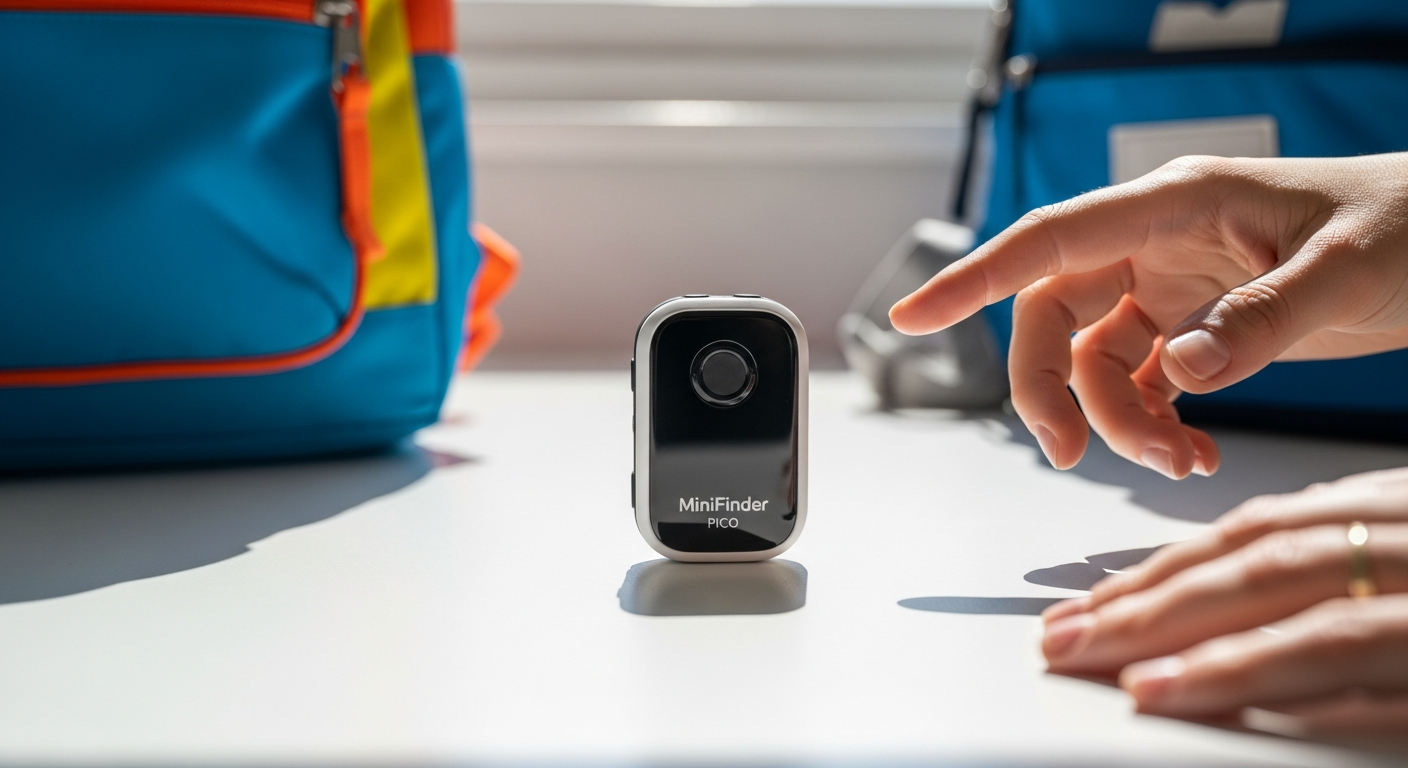
Discover how the MiniFinder Pico compact personal GPS alarm delivers real-time tracking, emergency alerts, and fall detection in a pocket-sized device. Perfect for lone workers and professionals on the move.
Lone workers face unique safety challenges that traditional security measures simply can't address. Whether you're a delivery driver, field technician, or traveling professional, you need protection that fits in your pocket and works anywhere. The MiniFinder Pico represents a breakthrough in wearable safety technology, combining military-grade tracking with emergency communication capabilities in a device smaller than a car key.
In this guide, you'll discover how the MiniFinder Pico delivers enterprise-level safety features to individual users, including real-time GPS accuracy, intelligent fall detection, subscription costs versus peace of mind, and why thousands of lone workers have made it their go-to safety device. This device has earned recognition as one of the industry's most popular personal safety alarms, particularly among professionals who operate independently across varied environments.
The stakes for lone workers are simply too high for compromises. Every minute matters in an emergency, and every location matters when help is on the way.
Discover how the MiniFinder Pico transforms lone worker safety today
Why Lone Workers Need Compact GPS Tracking Devices
Understanding the unique safety risks faced by solo professionals across industries
Lone workers operate in an inherently vulnerable position. You're separated from colleagues, working in unfamiliar locations, and often facing unpredictable situations. Field technicians entering client properties, delivery drivers navigating urban streets at night, security guards patrolling empty buildings—each faces distinct hazards that require active monitoring and rapid response capability. The nature of solo work means you can't rely on a coworker noticing something's wrong. Your safety system must work independently, responding instantly when circumstances change.
How traditional panic buttons fall short for field-based workers
Standard panic buttons operate on a fundamental flaw: they require connection to a specific network or location. You press the button, but if you're out of signal range or the infrastructure isn't in place, that alert goes nowhere. Lone workers need systems that function globally, across all environments, and without dependence on fixed infrastructure. Additionally, traditional panic buttons don't tell emergency responders where you actually are—you still have to communicate your location verbally while potentially injured, panicked, or unable to speak clearly.
The role of real-time location data in emergency response times
Response speed depends on precision. When a first responder knows your exact location within meters, not blocks, arrival times drop dramatically. Real-time GPS positioning eliminates the critical minutes wasted triangulating your location or waiting for verbal directions that might be unclear or inaccurate. In medical emergencies, trauma situations, or security threats, those saved minutes directly impact outcomes. Your location data becomes actionable intelligence that paramedics, police, or security teams can use immediately upon dispatch.
Why device visibility matters: the advantage of discreet personal safety alarms
A safety device only works if you have it with you, and you'll only carry what feels practical. The MiniFinder Pico's ultra-compact design—smaller than a car key—means you'll actually wear it consistently without the weight, bulk, or visibility concerns of larger trackers. The discreet form factor also matters strategically. In security-sensitive situations, a visible safety device can draw unwanted attention or escalate certain encounters. The Pico's small profile keeps your protection operational without broadcasting your security measures.
How GPS tracking protects both the worker and the employer
Employers face genuine duty-of-care obligations toward lone workers, and GPS tracking systems fulfill those obligations while protecting the organization from liability. Real-time location data confirms that workers are where they're supposed to be, responding to emergencies with documented accuracy, and following established routes and safety protocols. This accountability cuts both directions—workers benefit from rapid response and employer support, while organizations demonstrate they've implemented industry-standard safety measures. The system creates verifiable proof that safety protocols were in place and functioning.
Regulatory compliance and duty of care for lone worker safety programs
Depending on your industry and jurisdiction, regulations around lone worker safety have become increasingly strict. Many regions now mandate that organizations provide lone workers with traceable, location-capable safety devices that enable two-way communication. GPS-equipped personal alarms like the MiniFinder Pico directly address these compliance requirements, ensuring your organization meets legal standards for worker protection. Beyond compliance, though, these devices represent the current industry standard for responsible lone worker management—what's expected rather than what's merely recommended.
Breaking Down the MiniFinder Pico's Essential Safety Features
SOS and panic button functionality: How one-touch emergency alerts work in critical situations
The MiniFinder Pico's prominent SOS button operates on immediate response principles. Press it, and pre-configured emergency contacts receive alerts instantly. You don't navigate menus, don't second-guess yourself, don't waste precious seconds on confirmation screens. The button delivers emergency notification in a single action—exactly what you need when seconds count. The device can be configured to alert family members, emergency services, colleagues, or a combination of contacts depending on your situation. This flexibility means your safety network reflects your actual circumstances rather than forcing standardized responses.
Live GPS positioning: Understanding accuracy levels and how real-time tracking differs from periodic updates
The MiniFinder Pico delivers highly accurate live GPS positioning that updates continuously rather than at fixed intervals. This constant stream of location data means responders aren't working from a snapshot taken five minutes ago—they're tracking your actual, current position. The continuous update capability also detects movement patterns, direction of travel, and route deviations that periodic updates would miss. If you're supposed to be traveling along an established route and suddenly go stationary in an unusual location, the system recognizes that change instantly rather than waiting for the next scheduled position report.
Geofencing technology: Setting safety zones and receiving instant notifications when boundaries are crossed
Geofencing transforms the device from reactive to proactive. You establish digital boundaries around safe locations—your home, your office, designated work sites—and the device notifies you and your safety contacts whenever those boundaries are crossed. For parents monitoring teenagers' movements, this means knowing immediately when a child leaves school or deviates from an expected route. For employers managing field teams, geofencing confirms workers are reaching assigned locations and alerts supervisors if someone enters restricted areas or leaves their designated territory unexpectedly. The technology works silently in the background, providing continuous verification without requiring manual check-ins.
Integrated fall detection: How the device recognizes falls automatically and alerts emergency contacts
The integrated fall alarm represents a critical advancement for vulnerable populations and certain professions. The device's sensors automatically detect falls—the characteristic acceleration pattern of a body dropping followed by sudden impact. When a fall is detected, the device sends alerts to pre-configured emergency contacts automatically, without requiring the fallen person to press a button or communicate their situation. For seniors living independently, lone workers in hazardous environments, or individuals working at heights, this automatic detection capability can be genuinely lifesaving. If you're injured and unable to reach a button, the device responds to your physical situation directly.
Two-way voice communication: Direct conversation capabilities with family, colleagues, or emergency services
The MiniFinder Pico enables actual conversation, not just one-way alerts. You can speak directly with emergency services, family members, or supervisors through the device itself, eliminating the need to locate a phone or shout for help in chaotic situations. For emergency responders, this two-way capability means they can gather critical information—your condition, what happened, specific location details—while en route rather than waiting to arrive on scene. The communication capability also enables workplace check-ins, status confirmations, and coordination during routine operations, making the device useful for regular communication beyond emergency-only scenarios.
Movement detection and intelligent alarms: Proactive alerts that respond to unusual activity patterns
The MiniFinder Pico doesn't just respond to emergencies you announce—it detects unusual patterns that might indicate problems. Movement detection recognizes when the device hasn't moved for unexpected periods, alerting you to investigate or notifying supervisors that a worker has gone stationary without explanation. Low battery warnings prevent situations where your safety device becomes non-functional exactly when needed. Combining these intelligent alarms creates layered protection: you get emergency functionality when you activate it, automatic response when you fall or stop moving, and proactive alerts before battery failure renders you unprotected.
Location history: Reviewing past routes and movements for accountability and safety analysis
The device maintains detailed location history that you or authorized supervisors can review. This historical data serves multiple purposes: confirming route compliance, analyzing response times to specific locations, identifying patterns in work territory, and documenting exactly where incidents occurred. For safety analysis, location history reveals how workers move through their environments, whether they're following established protocols, and whether certain patterns precede security concerns. From an accountability perspective, location history creates an objective record of movements that supplements worker reports and provides defensible documentation for liability or compliance investigations.
Explore the complete feature set of the MiniFinder Pico and protect yourself today
Your Safety Deserves Better Than Compromise
The MiniFinder Pico compact personal GPS alarm represents a fundamental shift in how individuals and organizations approach safety. Whether you're a lone worker navigating unpredictable environments, a caregiver monitoring vulnerable loved ones, or a professional protecting valuable assets, this device adapts to your needs rather than forcing you to adapt to its limitations.
The €235 investment paired with a modest monthly subscription transforms personal safety from a passive concern into an active, responsive system. The fall detection works, the GPS accuracy matters, and the two-way communication genuinely saves time in emergencies. The real question isn't whether you can afford a MiniFinder Pico—it's whether you can afford the risk of operating without one.
The device's ultra-compact design means you'll actually carry it every day. Global coverage across more than 200 countries ensures protection wherever your work takes you. Battery life extending up to 40-72 hours of active use combined with 480 hours in standby mode guarantees your device remains functional through demanding schedules. Real-time tracking eliminates guesswork, geofencing prevents wandering, and intelligent alarms catch problems you might miss.
Your safety network responds faster when they know exactly where you are. Emergency responders arrive quicker when location data reaches them instantly. Your employer meets compliance obligations while demonstrating genuine commitment to worker protection. Your loved ones sleep better knowing you carry professional-grade safety technology that works globally.